
The #1 Tool to Spot New Memecoins
52sDirectly addresses a common pain point for beginners and offers a specific tool recommendation, driving high engagement and saves.
▶ Play Clip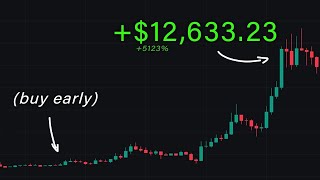
"The title promises a complete strategy, and the video delivers a detailed walkthrough of filters and analysis, though it's padded with personal anecdotes and a pitch at the end."
This video presents a comprehensive strategy for trading memecoins, focusing on identifying and buying new token pairs early to achieve significant returns. The creator shares personal experience and specific tools, filters, and analysis techniques to minimize risks and spot potential 100x opportunities.
The video aims to explain memecoins from A to Z, highlighting the potential for 100x or 1000x gains in a single day. The creator emphasizes that this is based on personal experience and not financial advice.
The creator has been trading memecoins for over 3.5 years and shows an example of a token bought at a $7,000 market cap, realizing over $14,000 in profit. The profit is displayed in Ethereum, so its dollar value fluctuates with ETH's price.
To spot new pairs efficiently, the creator recommends using BaseBot Terminal over Axiom because it tracks more blockchains (19 vs 8), allowing for a broader view of newly launched tokens.
For those with limited capital, the creator offers a pump.fun referral link that provides a $50 bonus for a $50 deposit. A full method is explained in the creator's Telegram channel.
The creator demonstrates filters for the 'New Pairs' section: select launchpads with real volume, no token age limit, minimum $150 trading volume, minimum 5 transactions, max 35% top 10 holders, and max 5% developer holdings.
These settings are based on average usefulness, not strict rules. They aim to reduce scam exposure while still spotting tokens quickly. Missing some tokens is acceptable if it avoids larger losses.
The creator sets max 20% for sniper, bundle, and insider metrics. They also consider the developer's history, noting that a history of rug pulls is a bearish signal, while a new wallet for a known developer isn't necessarily negative.
For the 'Migration' section, set max 3 hours to migration, min $1,000 volume, min $10,000 market cap, min 10 transactions, max 35% top 10 holders, max 5% developer holdings, min 10 holders, and max 20% for bundle/sniper/insider. For 'Audit', use basic metrics with max 20% sniper.
Use the screener to find top movers, focusing on tech projects (AI, RWA, gaming) that are performing well. Study successful tokens in these categories to understand their market caps and common traits.
Check the project's Twitter for official announcements and assess its credibility. Examine the website for red flags, such as copied content or claims of affiliation with pump.fun, which could indicate an unofficial project.
Inspect the developer's wallet and token holders. Look for fresh sniper wallets and assess the concentration of supply among top holders. If multiple wallets appear connected to the team, it may suggest an official launch, but this isn't proof.
Wait for an official tweet to confirm the project's legitimacy. If a team-connected wallet starts selling, consider exiting quickly. Use X tracker to monitor the project's Twitter in real-time.
Follow successful wallets whose trading style matches yours to receive notifications when they buy new tokens. This can serve as an additional source of information, but remember that a wallet buying doesn't guarantee success.
The strategy can be applied to other blockchains by configuring filters accordingly. It requires consistent practice, careful analysis, and good risk management. There are no guarantees of profit.
For those with over $5,000 in capital, trading new pairs may not be the best option. The creator offers a consultation for a strategy aimed at growing $5,000 to $50,000 through memecoin trading.
The video provides a detailed, step-by-step approach to memecoin trading, emphasizing the importance of using the right tools, filters, and analysis techniques to identify early opportunities while managing risks. The creator stresses that success requires practice and a thorough understanding of the market, with no guaranteed profits.
Real Profit Example
Provides concrete evidence of the strategy's potential, showing a $14,000 profit from an early buy.
00:42Tool Recommendation
Highlights the importance of using a tool that tracks multiple blockchains to not miss opportunities.
02:19Filters Are Not Guarantees
Emphasizes that filters are based on averages and not strict rules, encouraging adaptability.
07:14Focus on Tech Narratives
Identifies a specific market trend (AI, RWA, gaming) that can guide token selection.
12:20Strategy Limitations
Acknowledges that the strategy is not foolproof and requires practice and risk management.
20:01[00:01] buy before everyone else and then sell at a much higher price, making a substantial profit. That is clearly what everyone trading memecoins wants to do. memecoins is that you can buy cryptocurrencies that may go up 100x or
[00:15] even 1000x in a single day. In this video, I'm going to explain from A to Z these kinds of cryptocurrencies before they take off. So, make sure you watch until the end and thank you so much to everyone who subscribes to the channel.
[00:30] It means a lot and really supports me. Before we go any further, I want to make it clear that I am not an investment advisor. Investing involves risks, so always do your own research. I'm only sharing my personal experience.
[00:42] For those of you who don't know, I've been trading memecoins for more than 3 and 1/2 years. Everything I'm going to teach you is something I've already done with plenty of tokens. For example, this token here, which I was able to buy
[00:54] extremely early when its market cap was around $7,000 and from which I made a substantial amount of money. If we open the P&L card, we can see that I realized more than $14,000 in profit. The figures shown on the P&L card can
[01:08] change over time for anyone who saw this same card in an earlier video. Why? Because the profit is shown as its equivalent value in Ethereum. And since the price of Ethereum is currently falling, instead of showing $16,000 or
[01:21] $17,000 in profit, it now shows a little over $14,000. You should know that I straight away. Even so, the card shows around $14,000 $850. In reality, when I bought the token, the
[01:37] amount invested was closer to $900 or $950 and I managed to make a huge If we look at my wallets, you'll see that I bought in very early when the that I bought in very early when the market cap was around $9,000. In fact,
[01:51] this was a new pair as you can see here. For example, in this wallet, I bought when the market cap was just $6,930. So, I started buying very early and sold at a market cap of $160,000, then at $500,000, and so on. That
[02:06] allowed me to make a very large multiple on a substantial amount of money. So, I how to trade new pairs and how to make large multiples on tokens to grow your portfolio significantly. The first thing you need is a tool that
[02:19] lets you spot new pairs as efficiently as possible. As you know, if you don't miss out on the potential multiple it could offer. You might be thinking, I use Axiom, so that's great. I can see all the new
[02:32] But, look at how many blockchains are available on Axiom. There's 1 2 3 4 5 6 7, let's say 8. There are many more on BaseBot. 1 2 3 4 5 6 7 8 9 10 11 12 13
[02:49] BaseBot. 1 2 3 4 5 6 7 8 9 10 11 12 13 14 15 16 17 18 19. That means you can track a much larger number of newly launched tokens. Of course, the because some blockchains have more tokens launching than others. But, my
[03:03] trading new pairs, you need to look beyond just those eight blockchains. You need to be able to track new pairs across as many blockchains as possible. So, if you want to use this strategy as effectively as possible, you should use
[03:17] BaseBot Terminal. You'll find a link in the description. It's a great tool that blockchains and their new pairs. If you want to apply this strategy, And if you're interested in this
[03:30] approach, but don't have much capital, you can use my pump.fun referral link, which will also be in the description, to get $50 when you deposit $50, this briefly because I know a lot of people watching this video are looking
[03:43] capital into something bigger. So, this is another method that could a a I'll explain the full pump.fun method in my Telegram channel, which will also be linked in the description. When you look
[03:57] number of tokens. So, first I'm going to show you the filters I use. Why? Because if I turn all the filters off, I'll get lost in the sheer number of tokens. New coins launch every second, and as you can see,
[04:10] even though I've selected multiple blockchains at the same time, I still and several coins are appearing every minute. That means you have a lot of tokens to analyze. If you're a beginner and you
[04:22] pairs, you need to understand that you can't analyze them as quickly as more You also don't necessarily have your tools configured as well as theirs. For example, I have a wallet tracker with more than 100 wallets, and I have an X
[04:36] tracker that follows more than 829 Twitter accounts. compared with you. So, it's essential to optimize these tools and make the most of them. That's exactly what we're going to do now.
[04:49] I'll show you the filters I use to help you improve your setup. Let's start with Robinhood, for example. The first thing I do is select only the launchpads that currently have real trading volume. There's no point adding
[05:01] launching on it every second, but never reach a market cap above $5,000. There are no meaningful multiples to capture, and all that happens is that more tokens appear in the list and make the analysis harder. That's why it's so
[05:15] on what is worth watching. using. In the settings, I don't set a minimum or maximum token age. Why? Because the goal is to spot tokens as quickly as possible right from the
[05:28] moment they launch. Next, I only include tokens with at least $150 in trading volume. That gives me a basic first filter. My assumption is that the developer should buy at least $100 worth of the token using the dev wallet, and
[05:41] also buy through another wallet that snipes the token early. If the developer isn't willing to buy using even two wallets, it makes me question how much they believe in their own project. That means in my view the chances of it being
[05:53] a good project may be lower. In any case, if you're a beginner, it's not a problem if you don't see every token. Think about it this way, even if wouldn't be able to buy within the first $150 of trading volume because you need
[06:08] what's happening. So this filter doesn't really change much for you as a beginner. I don't need to set a minimum market cap here. The goal is to spot tokens when their market cap is as low as possible.
[06:21] For the number of transactions, I set a minimum of five. Why? As I explained earlier, I assume the developer may buy through several wallets. If they don't, that may be a sign that they don't have much confidence in their own project. If
[06:34] using several wallets, why wouldn't they do that if they genuinely believe their project is good? You see what I mean? For the top 10 holders, I set a maximum If the top 10 holders control too much of the supply, that means a large share
[06:49] of the tokens is concentrated in the hands of a small number of people. That gives them a lot of influence over the price and leaves me too exposed to risk. Next, I set the developers' holdings to a maximum of 5%. If the developer owns
[07:02] more than 5% of the supply, they may be able to sell their holdings quickly and cause the price to collapse in what's known as a rug pull. I want you to understand that these settings are based on what I've found useful on average.
[07:14] They are not guaranteed rules. Of course, you can find coins where the top 10 holders own 40% of the supply and the market cap still rises to $100 million. Maybe it won't reach $100 million in
[07:26] every case, but you get the point. The goal of these filters is to reduce exposure to scams as much as possible while still spotting tokens quickly. all the tokens that appear and decide which ones are worth buying and which
[07:39] There's another thing you should know. You may miss some tokens because the developer owns, for example, 5.1% of the supply, so the token won't appear But in my view, that can be acceptable
[07:53] the opportunities you miss. Let's say you missed several tokens because of them, but you also avoid rug pulls and big losses. You might otherwise have lost $1,000 over the week because of scam tokens.
[08:07] On the other hand, one of the tokens filtered out might have made you $700. In that case, you avoided losing $1,000, but missed out on a potential $700 profit. That leaves you $300 better off overall.
[08:21] useful in the long run. For holders, I use the same logic. I assume the developer may buy through several wallets. If they don't, that is explained earlier. As for professional traders, there
[08:35] shouldn't normally be many of them in a token that has just launched. professional traders there are, the better for this strategy. I don't pay number of tokens the developer has launched before or how many have
[08:49] developer whose launches keep collapsing. If the developer repeatedly launches tokens that rug, it's better to avoid them because the token may rise a little and then go all the way to zero.
[09:01] On the other hand, if the developer is known for launching major tech projects, but is using a new wallet address for another project, that isn't necessarily In other words, the number of tokens launched by a developer can be either a
[09:13] bullish or a bearish signal. You need to assess each case individually. For the sniper bundle and insider metrics, I set a maximum of 20% for each. Why? Because if the developer or people connected to them buy too much of
[09:27] bundled purchases, they may end up controlling a large portion of the That can create a serious risk for everyone else. In my view, if a project is good, its sniper, bundle, and insider metrics shouldn't be excessively high.
[09:42] So, I use 20% as the maximum for each metric. Of course, as I said before, you might find a coin with around 30% insider becomes a great opportunity. But, on average, when these percentages are too
[09:55] high, the risk of the token collapsing quickly may be greater. In the final switch section, I leave all protocols enabled. Why? Because you good token will appear in the middle
[10:07] launchpad. If I don't see that token in the new pair section, that's fine. As I explained earlier, missing a few tokens worthwhile if it helps you avoid a larger number of bad tokens that could
[10:20] cause losses. Next, in the migration section, I set a maximum of 3 hours. If a token has been close to migrating for more than 3 tracking it is worth it. So, I'd rather not see those tokens.
[10:34] particular filter. For trading volume, I set a minimum of $1,000. The reason is that some tokens may appear in this section because they launched using a swap mechanism and have low liquidity, which causes them to show
[10:47] In some cases, it's simply because the launch system being used isn't ideal. So, I also set a minimum market cap of $10,000. required for migration at around $11,000.
[11:02] That means if a token launches with a market cap of only $5,000, it may appear in this section straight away. I don't want that, so I use this minimum. For the number of transactions, I set a minimum of 10.
[11:14] transactions, it may mean that one person has bought almost the entire crash the token. I don't want those types of tokens showing up. For the top 10 holders, I set a maximum of 35% just as before.
[11:29] For the developers' holdings, I set a maximum of 5%. I then set a minimum of 10 holders so that the supply isn't almost entirely in the hands of one person. For bundle, sniper, and insider, I set the maximum
[11:41] back to 20%. In the migration section, I use fewer filters and leave myself more room to inspect tokens manually. I don't set an additional limit for some metrics because there aren't many tokens migrating, so I have enough time to
[11:54] check each one properly. In the audit section, I use only a few basic metrics and I set the sniper metric to a maximum of 20%. So, those are the filters I use. These settings should already help you avoid a significant number of rug pulls,
[12:07] but the most important question remains, once you've filtered the tokens, how do you know which ones might take off? Now, let's look at how to find tokens with filtering. It's fairly simple and we'll divide it
[12:20] into several stages. The first stage starts with the screener. on. In this example, we'll select Robinhood big moves. Scroll through the list and look at the
[12:32] tokens that have risen the most. I'll explain this quickly. Among the projects that have performed well, we're seeing tech projects and real-world asset projects known as RWAs. In other words, AI projects, RWA projects, projects
[12:46] linked to the stock market, and similar categories can perform strongly, memecoins. So, when you're looking for new pairs on Robinhood, I recommend focusing on tech projects. For example, you can see here that JWallet bought a
[13:00] projects because they may have significant growth potential and this some cases. Once you find a tech project, what do Go to its Twitter account and ask yourself this question, compared with
[13:14] all the other tech projects I've seen, does this one have a real chance of And is it the kind of project people would actually want to buy? Take a look at this example. We have a project called Pump Tropica, a personal
[13:26] trading agent that uses AI and explores the United States. be interesting. Why? Because another game called Balls recently made a big move on Robinhood.
[13:38] We also have Farming Season, which is connected to AI. In other words, some games linked to artificial intelligence are performing well. So, when I see a project that combines gaming and AI, I start analyzing it to
[13:50] looking for. At this point, you need to have a clear idea of which types of market. When you browse the list of themes or narratives, as they're called in crypto.
[14:04] Gaming is one example. So, when you study tech projects related to gaming, "What market caps have the successful tokens in this category reached? What are these projects about? What makes them attractive to investors?
[14:17] And what do they have in common?" Once you understand those points, you can look for similar characteristics in other projects. Just remember that a new different idea or narrative, so that it isn't simply a copy of another one.
[14:31] interesting projects. How do you decide which one is worth buying? is relevant, and that there is genuine interest in that category of tokens. If the project belongs to a category that
[14:44] positive starting point, but it isn't enough on its own to justify buying. its wallets. The first thing I do is check the developer's wallet. In this example, we can see that it's a fresh wallet.
[14:59] associated with the token. Some wallets aren't especially important, while others need to be examined carefully. Are these wallets early buyers, known as snipers? One of them is probably a
[15:11] sniper wallet as well. If we look at its history, we may notice that it has never bought another token before. The same applies to some of the other wallets. So, it looks like many of these are fresh sniper wallets. In this example,
[15:23] through several wallets. At this point, I start considering whether this could be the project's official token, especially if several wallets appear to be connected to the launch. That may suggest that the team
[15:35] beginning and is now preparing to promote the project. However, that isn't proof that the project is official or trustworthy. Next, we look at the token holders. Take a look at these wallets. We can see that
[15:48] connected to the team or to people who bought in early. One wallet holds 1%, another holds 1%, another holds 1%, another holds 1%, and then there are wallets holding 2% and 3%. If we add those percentages
[16:04] together, these wallets may account for around 10% of the supply. but it's still something to consider when assessing the risks. Next, I wait for the project to publish an official tweet. At that point, I
[16:17] "If we confirm that the project is official and the team starts promoting it, the token may rise." But there's one very important point. If you see one of these wallets selling, it may be best to exit the trade quickly,
[16:29] connected to the same team. Why? Because if one wallet connected to the team starts selling, the others may though, that new wallets don't necessarily belong to the team. You
[16:42] should verify the connections between them as much as possible before making a That's why it's important to monitor the project's Twitter account in real time. I recommend opening X tracker and adding the project's account. Type the at
[16:55] symbol followed by the account name, then click add. After that, depending on notification when the account posts a new tweet. That way, you won't need to whether the team has made an official announcement. While you're waiting for
[17:09] the project's website and check whether it looks credible and provides clear information. If you find a warning sign or a red flag, it's better to skip the project. At first glance, this website looks pretty good. But there's a
[17:22] possibility that the project has copied another project's website or used content it doesn't own. How can you check that? Look at the statement on the website. Pumptropica is not affiliated with pump.fun.
[17:35] affiliated with pump.fun. Along with the other information that content taken from another project that was previously launched on pump. fun. For example, if you notice that the
[17:48] website presents a project that already exists on Solana, while the new token is trying to present itself on Robinhood, you should investigate the connection out that the team used another project's website and simply created a new Twitter
[18:01] account, that could be a strong sign that the project is unofficial or In cases like that, the token may collapse quickly. That's why it's Twitter account, the developers' wallets, and the token holders before
[18:15] entering a trade. When you find a token that looks interesting, don't rush into buying it. Gather the information first. Check the wallets. Monitor what's being Study projects that have made big moves in the same category.
[18:29] actually connected to the trends that are performing well in the market? If the answer is yes, assess its potential based on all the information you've gathered, not just one indicator. There's something else I recommend.
[18:42] To do that, you can open the wallet tracker, go to the call section, and look for the best wallets worth following. Try to find wallets with good results whose trading style matches the way you want to trade. That way you can
[18:55] receive notifications when those wallets buy new tokens, depending on the features available in the tool. When you use the right filters, your token list to identify coins that may rise significantly.
[19:08] you'll see every token that goes on to reach a market cap of millions of dollars, and no method guarantees profits. But, combining good filters, can help you save time and improve your research process.
[19:22] promising projects early, and you can use their activity as an additional source of information. If you see one of those wallets buying a token linked to ecosystem, you can investigate before making a decision. And if the project
[19:36] publishes an official tweet confirming an important development, that may help interested in the token. But, remember, the fact that a wallet buys a token doesn't mean the token will succeed. Tracking wallets should be part
[19:49] it. By combining these steps, you can improve the way you discover and analyze new pairs. Don't forget to understand which narratives are taking off so you can identify what to buy and which
[20:01] delivering strong multiples. be applied to other blockchains. All you need to do is configure the filters for each chain and follow the same process. The strategy may sound simple when
[20:14] explained because it relies on a small number of steps, but putting it into practice correctly is far from easy. It's not just about following four rules. It takes consistent practice, careful analysis, an understanding of
[20:26] the market, and good risk management. At the end of the day, this is still trading, and there are no guarantees of profit. So, take your time learning these steps and applying them carefully. Focus on improving your skills rather
[20:38] That will help you improve your chances of finding tokens worth watching. Now, if you have more than $5,000 in capital, you should know that trading new pairs option for you. There are many other types of tokens where you may be able to
[20:53] use your capital more effectively, depending on your experience, strategy, and risk tolerance. If you're interested in learning a trading strategy aimed at going from $5,000 to $50,000 in capital by trading memecoins, feel free to book
[21:07] description. We'll discuss how we may be able to help you improve your strategy and trading approach. I hope you enjoyed this video. If you did, don't forget to hit the like button and subscribe to the channel.
[21:19] That's it, guys. See you in the next video. Bye.
The video opens with the promise of buying before everyone else and making substantial profits, immediately creating a curiosity gap about how to achieve this. This hooks viewers who are interested in high-reward trading.
Want to [ACHIEVE RESULT]? Here's the [NUMBER]-step strategy to [SOLUTION] before everyone else.
AI-generated clip ideas for Shorts based on the transcript
Directly addresses a common pain point for beginners and offers a specific tool recommendation, driving high engagement and saves.
▶ Play ClipSpecific, actionable filter settings promise to protect viewers from scams, a top concern in the memecoin space.
▶ Play ClipStep-by-step walkthrough of checking wallets and red flags empowers viewers with a practical skill, boosting perceived value.
▶ Play ClipSnapshot 2026-11-29
Every observation TubeSum recorded, plotted as measured.
The vertical axis starts at 10, not zero, so later observations stay readable.
Based on 4 observations · last observed Nov 29, 2026 · solid lines connect consecutive measurements (≤2 days apart); dashed lines span days TubeSum did not measure. · vertical axis focused on the observed range (starts at 10)
Based on 4 observations · last observed Nov 29, 2026 · solid lines connect consecutive measurements (≤2 days apart); dashed lines span days TubeSum did not measure. · vertical axis from zero
Exact daily observations; gaps mean no observation was taken that day.
| Date | Views | Avg views / hour | Channel median |
|---|---|---|---|
| 2026-11-29 | 10 | 0.0 | — |
| 2026-11-28 | 10 | 0.0 | — |
| 2026-11-27 | 10 | 0.0 | — |
| 2026-11-26 | 10 | 0.0 | — |
Audience reaction — separate from the performance metrics above.