

How to Know if You're Underpricing
45sStartling data on close rates vs pricing gives immediate actionable insight that can transform profit margins.
▶ Play Clip"Title accurately reflects content: Alex delivers 12 actionable business rules of thumb backed by his experience."
Alex Hormozi shares 12 business rules of thumb he has developed over 14 years of building a $250 million portfolio. He covers pricing, LTV to CAC ratios, lead response times, gross margins, and the importance of making trade-offs to achieve success.
Alex introduces himself, his portfolio doing over $250 million per year, and his Guinness World Record for fastest-selling non-fiction book. He sets the stage for sharing 12 business rules of thumb.
If you close at 80% or more, you're likely underpriced by 3-4x. At 60-80%, underpriced by 2-3x. At 50-60%, underpriced by 1.5-2x. At 40-50%, underpriced by 1.25-1.5x. At 30-40%, appropriately priced with proper sales motion. Below 30%, fix avatar or sales motion before lowering price.
For fully scalable businesses (no humans in loop), target 3:1. With one human in loop (e.g., salesperson), target 6:1. With two humans, target 9:1. With three humans, target 12:1. Alex shares his first year of Gym Launch had a 100:1 ratio.
Do 100 actions per day for 100 days on a single channel to overcome volatility and generate consistent results. This applies to all levels of business, from startups to scaling new channels.
Call leads within 60 seconds. Doing so can 4x sales. Delaying response increases cost per customer and lowers close rates.
Salespeople should have about 70% of their calendar booked. Below 60% leads to low morale; above 85% leads to lower conversion rates due to inconvenient times and lack of pipeline management.
Aim to recover customer acquisition cost within 30 days. This allows using credit card float for growth. For bootstrapped businesses, pull cash forward with initiation fees, prepayment discounts, or layaway.
Target at least 80% gross margins for service businesses. Higher margins allow more room for other expenses and profit. Small differences in margin percentage significantly impact net profit.
Ensure cash collected in the first 30 days exceeds cost of goods sold plus customer acquisition cost. This creates a self-funding growth loop.
Focus on retaining customers. For B2B, aim for above 80% annual retention. Higher retention dramatically increases lifetime value and allows spending more on acquisition.
Offer discounts or bonuses for prepayment to pull cash forward. Use layaway to incentivize faster payment. Third-party financing can increase sales by 35%.
Ignore industry averages; they represent mediocrity. Aim to be exceptional by focusing on what's possible, not what's typical.
Success requires making trade-offs. The biggest gains come from uncertainty and delayed gratification. Most people overestimate downside and underestimate upside.
Learning is same condition, new behavior. Deconstruct skills, define success, ignore the black box (focus on inputs), observe top performers, and iterate rapidly. Speed of iteration is the key to winning.
Alex's 12 rules of thumb provide a framework for analyzing and improving business performance. By focusing on key ratios and making conscious trade-offs, entrepreneurs can scale their businesses effectively.
What is the rule of thumb for close rates vs. pricing if you close at 80% or more?
You are typically underpriced by 3 to 4x.
03:45
What LTV to CAC ratio does Alex recommend for a business with one human in the loop (e.g., a salesperson)?
6:1
08:20
What is the 'Rule of 100'?
Do 100 actions per day for 100 days on a single acquisition channel.
14:30
How quickly should you call leads to maximize sales?
Within 60 seconds.
18:00
What is the ideal calendar utilization percentage for salespeople?
70% (range 60-85%).
20:45
What is the target payback period for customer acquisition cost?
Within 30 days.
23:30
What minimum gross margin does Alex recommend for service businesses?
80%.
27:00
What is the '30-day cash collected' rule?
Cash collected in the first 30 days should exceed cost of goods sold plus customer acquisition cost.
31:15
What annual retention rate does Alex target for B2B businesses?
Above 80%.
33:00
What is the definition of learning according to Alex?
Same condition, new behavior.
52:00
Pricing Ladder
Provides a clear, actionable framework for pricing based on close rates, a common pain point for businesses.
03:45LTV to CAC by Human Involvement
Challenges the common 3:1 rule and gives specific targets based on business model scalability.
08:20Lead Response Time Impact
Emphasizes a simple, high-leverage action (calling within 60 seconds) that can dramatically improve sales.
18:00Gross Margin Importance
Illustrates with math how small changes in gross margin percentage massively impact net profit.
27:00Trade-offs and Uncertainty
Highlights that the biggest gains come from uncertainty and delayed gratification, a counterintuitive but powerful insight.
45:00[00:00] We're live. >> We're live. Are you guys live? Am I live? Is life real? Where are we right now? I don't know where you are, but I'm in the exact same chair that I'm always in. So, this shouldn't be s super surprising. But how are you guys doing today? This is a Monday. Well, Monday live is aggressive. Yeah, Monday live's aggressive. People's heads are on fire. Business is uh business is rocking. Yeah, we got a New
[00:24] Jersey. We got some America in here. That's nice. Uh we Littykitty. Okay, I can appreciate that. What's up, claims department? Greetings from Poland. Okay, I changed your life. Thank you, Paco. You probably actually changed your life. I made videos. Um so that's on you. Uh David, little Israel action. Um okay, so we are we are all over the world. We're we're international, baby. So today, uh, I have three kind of separate topics that I want to
[00:48] talk about. Um, the first one is, uh, I've been developing kind of like this little like rules of thumb, kind of like ratios to pay attention to. That sounds less sexy than I'm going to make it sound. Um, but fundamentally like just different relationships between numbers in your business that you can look at and immediately kind of assess whether this is a problem or something that you can improve. So, we'll talk about that first. Um, then
[01:12] I'm going to talk a little bit more uh broadly around just trade-offs. It's been something that's been on my mind um a lot lately that I think is underappreciated or under under discussed I'll say um for goal achievement in general. I'll probably relate it mostly to business because that's the world I live in, but it probably applies to anything. And then a third topic I'll keep as a nice mystery surprise for you because open loops and
[01:36] all of that kind of good stuff. Um so key kogenic properties Nigeria hello bonjour Alex do Canada what's up Alexis North Carolina little a little Arizona Utah Kenya Chicago I love that we have like countries cities states all mixed in. Hi from Germany. What's up? Greetings from the UK. What's up Oscar? Um, okay, cool. From Russia. I don't know how to say your name, but greetings from Russia as well. Um, greetings from Las Vegas. Sin City.
[02:01] So, yeah, we're going to talk about the the making of money and specifically rules of thumb uh that I live by. Cool. Sound good? That's what we'll kick this kick this [ __ ] off with. They're going to have to censor that. Um, but you know, what are you going to do? Um, the number one thing that people are surprised of when they meet me in person, they're like, "Uh, you make way more inappropriate jokes and you are
[02:25] far crudder." And so I'm working on that. Uh, and so my public persona will likely have a little bit more whitewashing in it. Um, and that is apparently the one of the number one time constraints that my team has to deal with is just constantly scrubbing the ridiculous and uh, uh, just frankly disrespectful things that I say on a regular basis. Um, with that being said, no one's feelings were hurt in the making of this video,
[02:49] nor will they be hurt in the making of this video. And if they are hurt, remember that I'm on a video um, saying words into the internet, so don't take it too seriously. Um, but this is some stuff that's helped me make some dollars and hopefully it helps you make some dollars as well. So, without further ado, I've been in business for 14 years. acquisition.com. Our portfolio does over $250 million per year recently. Uh nine weeks
[03:13] ago, just did $106 million in sales alone, making the Guinness fastest selling non-fiction book of all time. We doubled the formal record. And so that is just my credibility for what I'm about to share with you, which is 12 of the most important kind of rules of thumb that I've learned or picked up along the way in my business career that you can use to analyze your business to know where you are versus where you could
[03:37] or should be. whether this is a problem to solve or something that you just need to manage and pay attention to. And so this will help you allocate where you're spending your time within the business with a clear yes no answer of am I doing a good job or not. So let's dive in the first one. The first one is close rates versus pricing. So if you sell people stuff, now this is be specifically for people
[04:01] who sell with a salesperson in person or a salesman online. So on the phones or zoom if that's how you fancy it. Um, I want to kind of give you kind of a tier ladder list to think through in terms of rules of thumb. And so the reason that there's a relationship between obviously price and close rate is that if you lower the price, we know our old supply demand curves. If you lower price, demand goes
[04:25] up, etc. Um, the idea is if you're closing at 80% or more in whatever you sell, so four out of five people you talk to buy your thing, you're typically underpriced by 3 to 4x. That might sound mindblowing to you, but that is just the data that I've again rule of thumb that I've collected over many years of business. Now, underneath of that, let's say that your closure isn't necessarily over 80%, but let's say it's 60
[04:49] to 80. So, you're closing between, you know, uh, three and four out of five who are there. You're probably underpriced by between two and 3x. So, if you're currently charging 100, you might definitely consider going to 200. and you might have a 250 or 300 in you and you'd be able to make more money. Now, the next tier above that is between 50 and 60%. So, as we get closer, you'll notice that the uh the jumps
[05:13] compress. If you're between 50 and 60%, typically you're underpriced by one and a half to 2x. So, that $100 price point should probably be one and a half, so 150 or $200. Now, if you're between 40 and 50% close rates, you're probably between 1.25 to one and a halfx underpriced. Meaning now you should be at maybe 125 or consider 150 as a final price point. Now if you're like okay between I'm at 35%. Well you're between
[05:38] 30 and 40%. Which for me is appropriately priced under the assumption you have all of the selling mechanisms in place to educate a consumer prior to the purchase so that you're not creating a pitch or a spiel. Instead they've already consumed all of this stuff prior to the pitch. And then the entire close call is about personalization helping them make the decision. That is appropriately designed sales motion. If you have that sales motion and you are
[06:02] closing 35% you're appropriately priced. Now sometimes people have that close rate but they don't have any of that stuff and in those conditions then you still probably have a double or triple on your price if you set a proper sales motion in place. Now if you're below 30%. So that means that less than one out of three people who you talk to buy, then you either have an avatar issue, you're selling to the wrong person, you
[06:26] have a sales motion issue. Um, and I fix those two first before ever considering lowering price because it almost always is the thing that the sales team might consider wanting to do if you have a bad culture on your sales team or an entrepreneur who's afraid. But more realistically, raising prices is almost always the direction that businesses go in with one clear exception, which is if you have a business that has unlimited scale. Let's say you
[06:50] sell a software product. uh that pricing is going to be that pricing decision is going to be incredibly important to you because it balances two of the strongest uh influencers on the value of your company which is going to be if you lower the price it will also typically increase growth. And so uh you've got your gross margin which is what the price dictates and also the growth as a result. So if you have these two
[07:14] things then you lower the price growth rate goes up. If you raise the price uh gross margin goes up but growth rate goes down. And so the idea is we want to maximize both of those things. Now that's only for SAS companies, which is probably like 5% of you here. For everybody else, that is kind of my point here, which is that you probably have an unscalable business, which 80% of businesses are. Unscalable, meaning they're service-
[07:38] based. And in those conditions, there's only one way you go in service, which is up. Because if you play it out long enough, you get good. You get enough demand because you're good. You can't service everybody. So you change your chart, you go up, you go up in price, and then around and around you go. And the faster you spin that loop to going up in price, the more you will progress in business because your gross
[08:02] margins will go up, your reputation will go up, you'll be able to hire better talent because you can pay them now. And it becomes a virtuous cycle versus the vicious cycle of trying to serve more people and paying less, having lower gross margins, hiring worse people, having worse customers at lower prices, and around and around you go into the toilet. So that is the end end all beall. That is the pricing ladder that I use between
[08:26] price and close rate which brings up rule of thumb number two LTV to CAC. So you'll notice that a lot of these are relationships between numbers. And the reason that's important is um it's not like oh your price should be this. That would be ridiculous. Every business is different but when we take two different pieces of the business we're t typically paired or anothetical in nature. Uh so like an example of this would be like speed
[08:50] and quality. These are things that are going to be ratios. So, you want to settle as many support tickets as you can, but you want to make sure that the support tickets are done right. If you cleaned buildings, it would be I want my cleaners to clean as many places as they can as long as we still get five star reviews or we still get we still get retention. We still get referrals. So, it's always going
[09:14] to be relationships between two things that are paired which create rules of thumb. And again, these are not written in stone. These are rules of thumb. So, let's go to the second one. LTV to CAC. So, for those you don't know, lifetime value, how much a customer spends with you, how much gross profit you make over the entire lifetime of the customer. CAC is cost of getting that customer in the door. So in plain speak that's
[09:39] how much money does it cost you to make more money. CAC is how much money it cost you. Lifetime gross profit or lifetime value is how much you make. Now a very traditional rule of thumb here in the software world was 3:1. And this has been you know pushed all over the internet. And many businesses took that because all these big tech giants and very you know huge company CEOs talk about 3 to1 as though it's
[10:03] a rule of law. And I want to say it is true under specific conditions which only apply to like 5% of businesses. So let me give you the other scenarios and what I consider to be ideal for that. So 3:1 and this relates to I don't have anything drawn. Hold on. I'll draw this for you guys so this will make more sense. So let's imagine Do we have overhead cam on? Okay. You guys digging this? All
[10:27] right. So, we have our attraction, right? How we get people in the door. That's number one. We have our conversion, which is how do we actually get them to give us money? Number two. And then number three, we have our delivery. So if we were to use a binary scale of uh zero or one, zero or one, zero or one, then we would say if we have zero basically of unlimited scale, I put zero operational drag
[10:51] for attraction, conversion, and delivery. What is that? That's probably a SAS product, right? You can run ads to a checkout page and then the SAS, the software does the delivery, right? All the way zeros all across. And so for that when you have all zeros, three to one between how much it cost you to to get a customer and how much you make is an appropriate uh uh ratio. But what if one of these three things
[11:15] includes a human? So let's give a simple example. You run ads to a checkout page and then you have somebody who does delivery. You have a human being who does delivery. Well, as soon as that occurs, or said differently, maybe you run ads to a salesperson and then you have some sort of lighter touch delivery on the back end. In any of these scenarios, I want to now have six to one. Sorry, this is a one.
[11:39] I want to have six one. Now, why would I double this? So, let me explain. As soon as you add a human in the loop, as soon as you add a human to the system, you're going to have lumpiness or inconsistency. So, what do I mean by that? If let's use the salesperson example. You're running ads to a salesperson. As soon as you get to a certain point where you've capped that salesperson's calendar, what do you
[12:03] have to do? You have to hire another salesperson. And what happens when you hire a new salesperson? That person's not going to be as good as the main person, especially right off the bat and maybe even ever. And so, we have to build into the business padding so that we can incur the cost of trading somebody up and also having them suck. Because if we're at six to one uh with our one guy or rather if
[12:27] we were at 3:1 with one guy selling as soon as the next guy comes in, we're below 3 to one, right? And so we have to be at six to one so that when that next person comes in, we have some we have some we have some cushion. We got a little cushion for the cushion, if you will. Uh that that gives us again padding. I'm keep saying padding, so you'll probably hear padding a bunch of
[12:51] times, but that's what it is. Now, let's say that you've got two of these three. So now let's say we're uh we're running ads and we have a we have a manual person who's taking the phone call closing and then the delivery is also service. This is honestly this is many of you guys is that you are in service businesses and this like this is what it is. Okay, when I'm in this situation I want 9
[13:16] to1. Now the reason this is so difficult for people to wrap their heads around is that most people want to scale when their business model has not been nailed yet. And so that's why we say nail it then scale it. And so people get ahead of their skis, they overexpand, they they bring on, you know, they try to open more locations or bring on more reps too fast because their ego is tied to the number rather
[13:40] than looking at the fundamental economics of their business and saying, is this ready to scale? Because if I had the pick of like I would rather scale really fast for three years and then realize the business is broken or spend three years just nailing all my nailing the model, getting all the metrics right and then scaling it, I would obviously pick the second one. But the thing is is people if I say that to you, most
[14:04] people be like, "Well, of course I pick the second one." But people don't behave that way. And so what you say you would do versus what you actually do are typically very different. And so because now I have two humans in the loop, I'm going to have uh inefficiencies on delivery when I bring in a new rep or a new technician or a new whatever who's not going to be as good, not as not as effective
[14:28] as the other people. I got to be able to eat that. If I have a bad uh salesperson when they come in, I'm going to have to be able to eat that. And so now I got to be at nine to one to have the cushion to scale. And then finally along the same line of thinking, if I have three people all the way through, I've got humans who are doing the attraction, humans who are doing
[14:52] the conversion, and humans who are doing the delivery, then I want to be at 12 to one. All right. Now, I want to put this in perspective for you guys. One of the gifts that I could hopefully give is frame shifts. Is a change of perspective. So let me know in the chat the first year of gym launch when I started running ads. Okay, so we had automated here and I would say we like probably a.5
[15:16] here. It has half media um but we had half kind of like some support reps that help with tech stuff and then this was human-based. All right, we had a phone sales team. What do you think my LGV to CAC ratio was? Let me know in the chat. 5 to one, 10 to one, 4:1, 6 to1. What do you guys think? What do you guys think? Let me see some numbers. Let me see some digits. 6:11,
[15:40] 4:1, 9 to1, 2:1, 30 to1. Liam, nice. 30 to1, 3 to 1, 15 to1. I appreciate the the belief, guys. Our pit 100 to1, you crazy mofo. Uh Ronald, 5 to1, 25 to1, 20 to1. Okay, you guys want to know what it was? [snorts] I'll tell you. The first year of gym launch, my LTV CAC was 100 to one. I spent a hundred grand and made 10 million. Wild recommend. Uh it was wild, wild times. Okay,
[16:04] now what? How is that how is that possible, right? How is that possible? Most of the money that I've made in my life has happened during these distinct windows of opportunity where there was huge arbitrage between what it cost me to get a customer and what a customer was worth to me. And uh I've had that happen four times in my life. And each of those times have been above 30 to1. And so the reason I'm
[16:28] so adamant about this is that I know because I've had it happen that you have to just keep beating up the system. You have to keep tweaking the money model, which is why I made the book Money Models. You have to keep cranking on this thing until eventually you crack through that lever. And so you see 12 to one and people like that's crazy. I'm like this is the minimum. And again this is if you want
[16:53] to scale big you can absolutely run a business that does six to one and you know make a million bucks a couple million bucks a year. Like you can do that. I'm saying if you want to see what the biggest companies in the world have they have absurd LTV to CAC. Now what is there's only two ways to improve that ratio right? Way one is you drive CAC down to zero because there's only two long-term winning
[17:17] strategies in business. Have extremely low CAC, which means you build massive brand A, or B, you have a product that is viral. Those are the two types of things that great really big companies on the cost side. On the other hand, you have the extremely high LTV side. So, Flickville company, I'll give you an example of each. So, Facebook is a company that wasn't, oh, we have unlimited LTV. No, they have a business where CAC approached
[17:41] zero. And so if you can get CAC to zero, you could figuratively get eight billion people for zero dollars. And when you do that, even if you make a couple hundred bucks a year on them, you still make a lot of money. On the other hand, you might have a company that's like Salesforce, right? Uh and a company like that, they might make a million dollars or $5 million per year on an enterprise level customer. Now,
[18:05] that customer isn't coming to them for free. Now, they do have some brand of course that's going to offset some of those CAT costs, but there's still going to be huge cost of getting those customers, especially the larger customers with contracts. They have to bid against other CRM, etc., etc. And so, both of those are big companies. The idea is that you have to know what type of company you're going and your winning strategy to scale.
[18:29] And so, to make this extraordinary LTV to CAC ratios, one of these has to approach zero or infinity. That's the game. So, that's the second rule of thumb. Look at your three steps. Am I zero to one on attraction? Do I have unlimited scale on attraction? So if if you're like, what's an unscalable version? This would be like I do manual outreach. That would be human in the loop versus I run ads or I make content.
[18:53] Conversion here would be checkout page is scalable human uh phone team or sales team in person that has a human. Delivery. If I sell services, I'm going to have humans. If I sell software, I sell media that's going to not have humans. I sell physical products for example, that would still not have humans by my definition. That's the idea. You can see what your LTV to CAC ratios are. You can see where you're at and whether
[19:17] you need to improve them. Which brings me to rule numero t. That is uh Spanish for rule number three. I think it be regalo, but like let's not get crazy. Um no, is regalo gift? [ __ ] Why mess that one up? Either way, hopefully you're with me. So rule number three is rule of 100. So fundamentally, if you're trying to grow the business, I have never seen a business not grow when they implement the rule of 100
[19:41] when they're starting out. And to be clear, this works for all levels. So it's either rule of 100 on your first acquisition channel or rule of 100 and ideally for 100 days. So 100 and 100, right? And if you're like, wait, 100 times 100, you're like, you're right, that's 10,000 actions. And what happens when you take 10,000 actions in one specific direction, you tend to get results. And the amount of like screenshots of like uh content
[20:05] and reach and impressions that I've gotten from people who actually check the box a 100 days in a row doing a 100 actions that they get their first customer. Most people get it by like the third week. But you have to commit to doing 100 days. And it's kind of like the very the the the idea of like the heart of a missionary versus the mercenary. You have to commit in your heart that you're going to
[20:30] do 100 days and then it happens very quickly. If you try to do this for 100 days to try and prove me wrong, congratulations. you won. You're still not succeeding. Probably not the perspective because it won't change anything in my life. All right? And so where this uh becomes a symptom that you can recognize in your business is volatility. All right? And I said this applies to all levels. So if you're a bigger business owner, you
[20:54] take the rule of 100 and you just apply it to new channels. And so if you're like we run meta ads, it's like great. Well, we need to take the same perspective on how we're going to run YouTube ads or Google ads, right? If you're on the content side, it's like we make, you know, reals. Uh, awesome. It's like, okay, we do it on this platform. We need to do this on a second platform. If you're
[21:18] doing outreach, you every time you expand into the new platform or medium or channel, you would implement the rule 100 yet again. Now, if you're a smaller business, which most businesses are small by statistics and reality, 95% of business left a million dollars. So, here we go. If your business feels feast or famine, meaning if you get a sale this week and then there's nothing and there's nothing and then next week you get one and then
[21:42] two more weeks and then one two and then another three weeks of famine. The issue is not that you have quote inconsistent lead flow. It feels inconsistent because the timeline you're measuring it on is too small. So, if I were to look at it year-over-year, if you're the type of business that does a small amount of advertising, you might sell about the same amount of number of customers every single year, but that volatility or the perception
[22:06] of volatility is a symptom of insufficient volume. You're not doing enough to get enough out. Now, if we expand that time horizon, let's say that we expanded to 30 days and let's say that you on average get third three customers a month. Okay? 30 days, three customers a month. That means you get one customer per 10 days. And so that means that in 10 days what we can reverse this into is that there is an amount
[22:30] of advertising that is occurring either through content through word of mouth through uh outreach through paid ads whatever affiliates people referring them to you who are partners or you know centers of influence if you will or we're sending you business that in that 10 days there's enough advertising for one sale to occur. And so the idea is, okay, well, if I can just look at the amount of advertising that I'm doing probably haphazardly over a 10-day
[22:54] period and then do it deliberately instead of on accident on a daily basis, then I could take what I do in advertising in 10 days and do it in one. And if I do it in one, then I'm going to get the same outcome as doing one sale every 10 and I'll get one sale every day. And so the companies that are doing 30 times more sales than you are typically doing 30 times more advertising than
[23:18] you are. real. And so I've put this in perspective many I've seen I mean because obviously businesses fly out here every every week.com so I know a lot of numbers around what businesses are doing at different revenue levels. If I look at a one or $2 million business and I look at how much content they're putting out just on a pure volume basis and the thing is is like of course there's quality of content. But the
[23:42] thing is is if if you look at it across all pieces of content with the outliers already baked in that you know that one out of 10 or one out of 100 are going to be super outliers. Of course the top 1% the top one out of 100 the top 10% you know one out of 10. Um with that volume baked in things tend to normalize again. And so we make whatever it is, 450 pieces of
[24:07] content a week, right? Almost 500 for simple math. So we're looking at third, you know, 25 30,000 pieces of content per year. And many of the people that are at $1 million are doing something in the neighborhood of like one a day. And so they're doing 365 and we're doing like 25 or 30,000. And so we get nine or 10 times the uh sorry uh uh way way more than that. Sorry, that's a thousand times uh
[24:31] thousand times the outcome that they are. Now, you could even make the argument that I'm even less efficient than they are, but diminishing returns are still returns, right? So, like if I do a thousand times more than you, but I get a hundred times the outcome, I'm good with that. And I think this is the piece that people really mess up is they see diminishing returns and then think, "Oh, I should stop because my return per
[24:55] action has gone down." Rather than thinking, "I'm still getting more and it's still worth it." And that's the part that I think most people who are smaller miss out on. The amount of conversations I've had with small business owners who are all about optimization. Again, there's nothing wrong with that. You just can't have both. You can be like, I want to optimize. It's like, fine, you can get the most for the least, but you're not going
[25:19] to get the most. Period. And the difference is that the people who want the most are the ones who win. Which leads me to, drum roll, please. Rule number four. Yes, Julian, it's live, [ __ ] Of course it's live. Why would I be doing this live? Of course it's live. Muhammad, what's up? Okay, back to it. Rule number four, lead response times. So, rule of thumb here, for the love of God, please call your leads within 60
[25:43] seconds. I don't know how how many times I have to say this across how many videos. And it's just like, do you hate helping people? Do you hate having more revenue and more profit in the business? Would you prefer to pay four times more per customer than you currently are because you are like, you know what we're gonna do? So, this person just opted in. They're like, you know what? I really want to solve this problem.
[26:07] This company looks interesting. And then you're on the other side saying, let's let them cool off a little bit. They're a little they're a little too he and heavy. You know what I mean? Like, let's make sure they don't make a decision that they would regret. You know, I don't want them to take that wallet out too fast because that might be unreasonable. And so, let's let them simmer. Let's let them marinate for a couple days.
[26:31] And you know what? Let's let them date around. Let's let them call some other businesses so that by the time we finally get to them, if we ever do get to them, they have a lot more information from different competitors so they can compare the pros and cons of our business and our offering to everyone else so that we can get in a pricing war all the way to the bottom. And so when we do that,
[26:55] not only are we spending four times as much as we should to acquire a customer, we're also not able to make as much per customer because your close rates will go down on top of that and so will your gross margins. And so it's one of those like I think Brian Johnson from Blueprint was talking about this. You're like, where is he going with this? I'll bring it back home. He said he has boiled down like
[27:19] however many years of doing all this research and stuff into one number, which is your resting heart rate before bed. He said, if you show me that number, I can see your soul. To me, I would say LTV to CAC would be that number. But underneath of that number would be would be your lead response time. And the reason for that is like it's how you do one thing is how you do everything. And I have
[27:43] some elements that I take take uh offense to that particular term. But I do think that it is a way of doing business. How dedicated to excellence are you, right? And if you know if you know this has been proven over and over again in business studies and in the real world, right? that if you call leads faster because saying, "Hey, you're going to 4x your sales." People think, "Yeah, but I can't I can't afford to
[28:08] hire somebody to call my leads in that speed." Well, do you think if you had four times the revenue you currently do that you'd be able to afford it with the revenue that you would now make from that person? This is how business works. You invest and then you get something back. That's how it works. But this is the first time I think I framed it the other way around. Look at how much it cost you
[28:32] to get a customer. If you divided that by four, would that improve your LTV to CAC ratio? Would that be the thing that you need in order to scale? Do you think that if your leads cost too much might be a factor of the fact that you don't know how to sell? So, when I look at rules of thumb, it's like, well, I'm going to attack these areas first because there's huge returns for minimal effort. Talk
[28:56] about, you know, maximizing optimizing. For the love of God, please call your leads quickly. Sorry, a little passionate about that one. All right, I think the spirit moved. Sorry. I don't take it back. We can just move on. Okay, which brings me to rule number five. Yoyo Sai, I thought maybe it's just a video that is played live. No, Yoyo Sai, it is not a video that's playing live. Oliver Nakos, hi. Okay, rule number five, 70%
[29:20] calendar utilization. Okay, so this is a rule of thumb. So when you have more salespeople, there's another issue that starts to come up, which is my sales team's underutilized or they're booked out. So what's the sweet spot? The reason this is important is because well, if you miss it, you will let me let me go either extreme. If you have your sales team completely booked out, fully utilized, here's two things that happen as a result that
[29:44] are bad. Number one is that your total lead conversion will go down. you will make more sales because they're booked out for sure. Absolute will go up, but your your conversion rates will go down, meaning your CAC, your cost to acquire customers will go up. Um, which is depending on how sensitive your numbers are. Could be very bad for the business. And so that utilization happens and as a result, one people have to start booking out
[30:08] further and further because tomorrow, the next day, they're all booked out. They can't find convenient times. So, one, it's further out. And so show rates on further out appointments compared to sooner appointments goes down. Number two, show rate on appointments that are inconvenient versus convenient. Maybe they do it a little bit sooner, but it's still not the time they'd ideally like. Show rates go down. Number three, what happens if a sales guy is making calls all
[30:32] day long? What are they not doing? They're not doing outbound. What are they also not doing? They're not following up on the the calls that they should just they have sixinch putts. They have some tipins that they need to do that they just aren't doing because they're on calls today. And rightfully so. They should be focused on like they should reasonably focus on the leads that are in front of them but it is your job as
[30:56] the entrepreneur to move their calendar better utilize their time so you can maximize conversion. Okay. So on the other extreme let's say that you have 30% utilization uh so you know 70% of their calendars uh empty. The problem with this that I found is that sales team morale can start to drop because they're they don't really ever get in momentum. So, if you have like two calls a day, like the calls sometimes mean too much. And
[31:20] so, guys will have kind of commission breath. They're like, I have to close the sale, right? I'm not going to get paid. And so, it's a balance between both those things. So, I found 70% is kind of the sweet spot. I don't let it get above 85. Um, and I try not to let it drop below 60. And so, that's kind of give you a range. I would say 70 75 is right around the sweet spot
[31:45] for this. And I'll and I'll explain the reasoning why. when we see conversion rates as in if we get a 100 leads we want to maximize the conversion of those leads which function functionally is what a sales team is supposed to do why why you have sales team rather than just a checkout page if we want to maximize that conversion then we want to give the time we want to give one enough times for the prospect
[32:09] to book soon two enough times for that time to be convenient for them both of these things increase show rates number three we want to have the salesperson have enough blank space in their calendar so they can work their pipeline and bring people back in and I remember the realization I had around this was we would have high weeks and low weeks with ads in terms of book calendars, but our sales remained relatively the same. And
[32:33] I was like, how does that work? And it was just because when a big wave came in, the guys were really inefficient. And when there was, you know, a famine, if you will, and there was more empty calendars, the guys squeezed their pipelines. And so I was like, man, if we just squeezed our pipelines all the time, we would just make on the high weeks, we'd make so much more money. Well, how do you do that?
[32:57] You typically need to hire more salespeople. And I will say as a as a personal note, I have yet to make less money by hiring more sales people. So like when in doubt, sales tends to drive business. And I also have some belief around the fact, and this is most cultures, not ours here at acquisition, but the vast majority of sales cultures, guys will get fat and happy. They will make enough sales to make whatever that
[33:21] nut is for them, that they don't want to work that hard anymore. And so I would rather have the guys just below whatever that that that amount is. So they're always striving. they're always squeezing the pipeline rather than you know they can sell to their goal within the first two weeks and then they take the last two weeks of the month off and that's where um you know entrepreneurs will say hey do I need to change
[33:45] my sales commissions maybe but more often than not it's like you can just add salespeople so that they can squeeze their opportunities better. All right, which leads me to rule number six. So that is payback. Anyone done six figures a month? Rudy, I have done six figures a month. I've done six figures a day. I've done nine figures in a weekend. Um, so thank you for thanks for hanging out, Rudy. Appreciate that. Um, five figures a
[34:09] day. Thanks. A viral is that hopefully I didn't say that name wrong. A viral. Okay, Kyle. Second 5K a month like a wage for all of my time. A wage. I hope that's a UK term for an employee because that's awesome and I will use that. Are you a wagy? Sounds like a wedgie. Anyways, um, go and eat your money, Alex Rosie. Web three SAS guy. I don't think you can eat money. I think it's a
[34:33] bit gross. It's so funny when people have like weird views around money because it actually just shows who they are because if someone has an issue with someone making a lot of money, it's like it's like trying to decry a thing that you want. It's like I don't want to get I'm going to make fun of somebody who's in shape. It's like here's a great way to never get in shape. And then on top of that,
[34:57] it's the assumption that somebody like money is just potential, right? Like whatever you do with it is a dictation of whatever you're going to amplify. So, do you give more back, right? Do you help more people? Uh I don't know. So, they they they build they build uh they build skyscrapers and hospitals just as much as they they fuel uh bad movements. It's just potential. That's all it is. So, thanks for that, Web 3 SAS guy.
[35:22] Uh so uh appreciate appreciate you bro. Uh that being said, rule number six, payback period. Actually that felt very aggressive. Payback. Um so what is payback period? It's how quickly you can recover the cost of getting a customer. Now for me ideally I try to do within 30 days. So payback period in general is how fast you get the money back from what it cost you to get somebody. My goal is within 30 days. Why? Because
[35:46] just about every business owner, at least in America and at least the developed world, can typically gain access to a credit card, which gives you 30 days of interest free money. Now, the reason that's important is that if you have interest free money, then it means that you can grow without money out of pocket. And that allows you to have limitless growth. If it if I can take $100 of credit card money, which I don't have
[36:10] to pay anything for until the end of the month, and I can take that $100 and go get me a customer, and at the end of the month, make that $100 back, then at the end of the month, I owe no one anything, and I now have a customer. That is the power of this. Now you can repeat that at infin item which is Latin for lots of times it's in into infinity but let's not get
[36:34] let's not get too technical. Um so the reason that I use that as my as my as my rule of thumb is for that very practical reason. Now you might think to yourself well our payback period is 90 days. There's nothing wrong with that. It's the same as like you know we had LTV CAC launch of 100 to1. It didn't stay 100 to1. It was 1001 the first year right and over time it ended up being
[36:58] somewhere in the neighborhood of 30-ish to1. Um but the idea because as you scale more levels of of infrastructure will get introduced to the business and so that will drive down operating margins and that's okay as long as you have a business that scales. Now back to payback period. You could I want to shift the perspective on this which is that like even if you currently spend and get paid back in 90, you should still think
[37:22] to yourself like is there a way is there a money model? Is there a setup? Is there a configuration of pricing and products of what I currently have without introducing operational drag or too much operational drag that could pull cash forward? And functionally, this is literally what the entire book for money models was about was driving more cash flow forward. Now, if you have a business where you're funded from the outside, A or B, you're very
[37:46] large business that has huge capital reserves, you have a huge base of recurring customers, then you can get more aggressive, of course, right? Like if if you're going to go head-to-head with, you know, Apple, then sure, they can they don't need to get their money back in 30 days. I mean, they are a bank at this point. Like, they can they can borrow money from the entire world and and fund whatever they want. Um, but for
[38:10] again everybody who's watching this, most of you guys are bootstrapped. Actually, can we do a poll real quick? Can we do a poll? >> All right, let's say who here is bootstrapped versus has investors. That's it. Bootstrap versus investors. Um, and if you don't own a business, you can actually put third uh wage. Wage as the third option. All right. So, wiji bootstrapped and an investor. No, no. I want to get I want to get the
[38:34] poll answers. Put it in the poll. Don't put it in the chat. Put in the poll. I'm already seeing Bootstrap. [laughter] Justin, Justin, such a Get these wages out of here. [laughter] I think that might become permanent. Okay, put put it in there. Put it in there. I want to see I want to see. >> Okay, 97 votes. Okay, we had 200 votes. Okay, great. Let me see what we got. What? Let me see some results.
[38:59] Brazil tales. See what we got. Okay. >> Okay. Great. So, one out of 25 of you guys, you don't have to worry about the payback period, but you still should. Uh, which is all the investor bros. Now, all the guys who have in outside investors, I promise you, you will get investors frothing at the mouth if you can, uh, show that you can get payback grade within 30 days. Number one. Number two, if you have payback
[39:23] period in 30 days, guess what? You also don't need investors. Because you don't need their money to scale, which gives you a huge amount of leverage into when you're getting into your fundraising period. Now, that's the one out of 25. For the other 20 out of 25 of you who are bootstrap business owners, y'all are like me, which is that I like Bank of Alex is what's funding this stuff. And so, we have to think, are
[39:47] there initiation fees? Are there setup fees? Are there is there an onboarding process? Is there an on-ramp? Is there a front-end defined program or setup that I can sell? Can I can I bundle in some sort of physical product upfront with my services? Can I sell a bundle of an extended period of time to cash flow at day one? Can I do a buy one get two? Can I get them to pay for the last month
[40:11] upfront? All of these are different tactical versions of solving for the same problem, which is I want to pull cash forward so I can recover CAC within that first month. Because when that happens, I'm telling you, like all of my businesses, every single one that's gotten really big, we have been able to recover what it cost us to get a customer in the in the first 30 days. Period. So, it's the strongest recommendation I can give
[40:35] you. All right, with that being said, let's go. Rule number that's a six. There you go. Rule number seven, gross margins. So, gross margins are wildly misunderstood, which is interesting. Um, if you are if you are a business owner, you you have to learn the language of business. All right? It is it is for sure. There there are different languages, but there's there's not a huge amount of words that you have to know. You might need
[40:59] to know like a hundred terms. And think about this as like you were studying for a test, right? Like learning a 100 terms not that hard to understand it. Almost all of them are relationships between two things. That's what almost all of these terms are. So what is gross margin? It's one word that's a relationship between two things. How much you charge and how much it costs you to deliver the thing. And the difference between those
[41:23] things is your gross margin. To be clear, that's not your net profit margin, which is a different ratio, right? Between two, not necessarily ratio, but the difference between two different numbers, right? But your gross margins are very important because it is what dictates everything else in the business. So what do I mean by that? If you like your net margins cannot exceed your gross margins. Think about that for a moment. If you have if you're like,
[41:47] "Man, I'd love to run a 50% net margin business." That's an amazing goal and I love that goal for you. If your gross margins are 50%, that means that you can have literally no other cost besides the thing you sell in the entire business. You can't have any cost of acquiring customers. You can't have any fixed overhead. You can't have any employees that are not specifically in delivery. You can't have any admin, any help. course. Now,
[42:11] the likelihood of of you getting to a 50% margin when you have 50% gross margins is basically zero. And so, this is why and and traditionally small business owners will undercharge because they sell out of their own wallet, right? And they sell out of their own wallet in two different ways. They sell out of their own wallet because they don't have that much money and so they feel bad charging other people when they don't have much
[42:35] money because they're like, "Man, I get what it's like to struggle." And I think there's nothing wrong with that. is just understand the business is not going to grow and you're not going to help more people. The other reason they sell to their own wallet is that they believe that the service they deliver is not that valuable because they know how to do it. So to quote the joker, right? My father always told me when you're
[43:00] good at something, never do it for free, right? And so the idea is that like you I like if you're good at fixing cars, right, you're like well it comes naturally. It's not that hard. You got to know where the, you know, it's like it's what we do is really straightforward to you to you. But to a customer, we have to sell off the value of what their life would be like if they didn't have this
[43:24] problem solved. That is what we have to charge off of. And when we charge off of those prices, then we create more opportunity for gross margin. Now, here's why this is so important. Let me give you a math example that will blow your minds. And I always, you know, everyone everyone gets harpations when I say math. So, let's just say a money example. Okay. So, let's give you a money example that'll get you really happy. All
[43:48] right. So, let's say that I've got some service that I that I deliver, okay? And it costs me a h 100red bucks a month. Okay? That's what it cost me in services and whatever. All right? So, if I want to have 80% gross margins, which I said these are rules of thumb. My rule of thumb for services is at least 80. Okay? So, I want to show you two different scenarios here. So, at 80% at 80%
[44:12] this $100 I have to have $500 has to be my price. Okay. At 70% and I have a $100 cost. Oh god. Can someone do the math on this one? Hold on. Um, God, I got to do this backwards. Let's see. There's a there's a Who can do this math for me? 350ish. Thanks, Leo. [laughter] Yes, this is live. Obviously, I think it's a little higher than that. Is it 400 350? Is it now? Now, now
[44:36] it's all [ __ ] up. Hold. Who's Who can do this math for me? All right, I got to do this. All right. 100 equals.7. Julian, you were premed. do it for me or I'll tell you what [laughter] I'll tell you what 90% looks like [laughter] equals $1,000. [laughter] All right, where is it? Where where we at? Why you jackasses keep asking? Thank you. Gross salons. Is it 350? Is that it? We should We should know this. I
[45:00] feel like as a collective community we should be able to figure out when uh 30% okay so it should be 100 divided by.3 is what it should be so 100 divided by.3 right is 333 thank you so that would mean that 233 should be 70%. Um, so 233 divided by 333, correct? Thank you. Okay, so 333. Okay, so look at how big of a difference this is, right, between these between these numbers. Um, really significant, right?
[45:24] Like very materially different. And so the reason, and I'm sure somebody will correct this in post, but fundamentally look at how like when people are like, "Oh, well my my margins are at 60%, so I'm close to 80." It's like, bro, we're not even like, you're in a different stratosphere. Okay, so let's take this to the natural end. If you have a business, let's say that runs 20% margins at net margins at the end of the
[45:48] year, what you can pay yourself, right? If we say, hey, is there a way you think we could go from 70% to 90%. Well, that that sounds like it's not that big of a deal. But when you go from 70 to 90, what happens to the actual margin? You double. You make way more money. And sometimes it means a lot more than that because sometimes the incremental margin is all margin whereas every dollar of revenue up
[46:12] to that point covered cost, right? And so what is our we make $233 here, right? We make $400 here and we make $900 here per customer. Big difference, right? And so when people hear these numbers, because these numbers look similar, they think that these are going to be very similar and they are not. And so this is why I'm so adamant that 80% is my minimum. I target like that's my baseline. And then from like I
[46:37] will not get into a business with less than 80% gross margins. I won't do it because I know that I then have to run everything else off of this 80, right? So if I want to have a 50% net margin business, I only have 30% left. I got 30% to cover everything else. I got to cover rent. I got to cover admin. I got to cover insurance. I got to cover um I got to cover uh
[47:01] marketing. I got to cover sales. I got to cover everything else with just this 30% so I can have 50% left over. Is this is this ringing? Is this ringing with you guys? Is this making sense? Even if it's a service based business, bro, this is for service- based businesses, not DN Australia. This is for service- based businesses. And this may this is why like so ideally I like to have I mean again this is minimum
[47:25] and I know this is going to blow your minds here like I like one of the first things we did when we fixed gyms is we made sure the pricing was at least 80% gross margins. That's a service business. Now some of you are like well there that's not possible. Of course it's possible. It's not possible when you sell a commodity. If a customer can look at your thing and somebody down the street's thing and say,
[47:49] "These are about the same. I'll buy the cheaper one." You sell a commoditized service just like you can sell a commoditized product. And so you might have salt and salt and you got FSG salt and whatever, you know, pink Himalayan, it's salt, right? And so how do we make these two things different? We have to brand. It's pink Himalayan versus just normal salt, right? And they charge a premium for that. And so you have to figure
[48:13] out how to reconfigure. If only there were a book written about how to make an offer that's decommoditized so that you could achieve 80% or higher gross margins, that would be amazing, wouldn't it? And for those of you who don't know, I wrote a book on this. It's called $100 million offers. 27,000 five star reviews. You should read it. But I I want to draw this because this like if you're trying to figure out what's wrong
[48:37] with your business, it's usually because your margins are off. You're mispriced. But again, sometimes this is this is the this is the fundamental mathematical problem with the business. But this might really be the symptom of the fact that you have a commoditized offer. A B you have a sales process that doesn't function properly, right? Um, and so that's the that's the big idea. So if you want to run a high margin business, then you have to
[49:01] run exceptionally high gross margins for whatever it is that you sell. Okay, cool. That math was tough, wasn't it? All right, so let's do rule number eight. Rule of thumb number eight, if you will. Uh, 30-day cash collected. So, this is a this is an add-on to the the the 30-day payback period. So, what is the exact amount of money that I want to have collected within that 30 days? It's going to be COG. So, the
[49:25] cost of delivering cost of goods sold. I'll just write out cost of goods sold. Now, the goods sold can be services too to be clear. So it's cost of goods sold, how much it costs you for the stuff plus cost of getting customer. Okay, so if we have the cost of getting the customer and the cost of whatever we got them back, we want both those things together. We want whatever we collect to be greater We
[49:49] want the gross profit or the cash we collect in that first 30 days to be greater than this plus this. The reason this is so magical is that once this occurs, customer comes in, you acquire that customer and then you have to deliver on that customer. And then that customer pays you back all of that cost and then what can you do? Go get you another customer. That is why it's so magical. And so that is
[50:14] what the whole point of this 30-day cash collected thing is. We want to pull it forward. Cool. Great. Now, manufacturing study with Zoro. No. Manufacturing, you're going to have different margins because you have cost of goods sold and that's going to be a little different. Um I would to be fair, I would still prefer to have a business that has 80% gross margins. But with services, for human services, um I I have that as my rule
[50:38] of thumb is that I always want 80% or higher gross margins. Okay. That brings us to rule numero nee. Is this all about just raising price the whole thing? No. My god, gingerbread. We talked about a lot of different things. Talked about the call and leads a little faster was one of my it was rule number five which you missed. Back to rule number nine. Salesfunnel benchmarks. Okay, so [sighs] let me think about the best way
[51:02] to explain this. being able to analyze a business to figure out where the hole in the process is. Um, let's I'm going to skip this one and come back to it because I think it's too many numbers for everyone. Okay, so let me I'll do I'll do a different rule number 10, which is functionally rule number nine, but we're calling it 10 because I skipped number nine. Let's just go with it, which is turn and retention.
[51:26] So, I want to only have to acquire customers once. The reason that most businesses cannot get big is because they are always filling a leaky bucket. Now, you've heard this terminology before. But think about how difficult it is to acquire a customer. It's a lot of work, right? And to go through that entire process only to lose them, to have to go get another one is exhausting. And so, you want to be, and this is John
[51:50] Paul Deorio, uh is the quote from him. He said, "You don't want to be in the sales business, you want to be in the reselling business." And so what he meant by that is how do we get customers to just buy again and again and again which does come down to product primarily and then brand secondarily. And so the idea here is that for your business to be a significantly more valuable but b way more fun
[52:14] to run you want to keep the customers you have. And so when you're a small business owner you're typically just barely figuring out what's going on. And so what happens is people will typically try to scale too fast before they've actually figured out revenue retention and churn. And so what are quote good benchmarks? Well, good benchmarks for anything B2B is you probably want to be above 80%. In terms of retention annually, so that means that if
[52:38] I get a 100 customers, Jan 1, right? So, this is January 1, let's say 2025, Jan 1, uh, 2026. I want to make sure that I have at least 80 of these customers. Now, this is where people get confused. Let's say that they grow because they get better at marketing and sales throughout the year. They and they come January 26 and let's say they're at 160 customers is how many they have. They think, "Oh, well, I
[53:02] definitely retained all 100 customers and I also got 60 more." Uh-uh. We're looking at of the original 100, how many of them made it to here? This is the issue. Now, you can take whatever your annual retention is and then you can basically reverse engineer into what your lifetime uh value of a customer is. So, if you have 50% annual retention, then you can take whatever someone pays over a year. Let's use simple math and say
[53:26] someone pays $100 per year. If you have 50% annual retention, then it means that you can basically double it. So, you divide it by 50%. Equals $200 is what you're going to make from a customer. Now, here's where this gets really wild. Let's say that you have 80% annual retention. Doesn't seem like that much different, right? It's only 30%. What is it actually different from a math perspective? It means that you're going to get functionally four
[53:51] turns, five turns, five turns because every year you're going to lose 20%. Right? And so simple math on that is around the back of napkin on that is about $500. What a lot. All right? And so think about two businesses and this is why this is so important. The cost of getting customers between different businesses is typically very uh commoditized. So CAC in an industry is a commodity. Think about how weird that is as as a
[54:15] sentence. If there's two social media marketing agencies that both sell generically similar services, now of course we don't want to do that, but this is how the the industry by and large works. If you have two different businesses that are selling the rel relatively the same thing, the cost of getting customers there is typically about the same. Here is where one business can become 5, 10, 100 times more valuable is that those customers are worth five,
[54:39] 10, 100 times more to the other business. And so they are able to to play a huge arbitrage game. So they can spend way more money in the acquisition than the than the the business that only has call it 50% retention, right? This guy's getting two and a half times more per customer than the first company. Even though maybe the cost of getting the customer in both these scenarios might be the same. This is where there's
[55:03] a huge amount of alpha or kind of arbitrage above what market could get um in terms of improving a business. And so right now if you don't know how many customers stay with you year-over-year, definitely worth figuring out. And so that is my rule of thumb is that I target. And so for each of these numbers as I'm sharing them is like this is my target. This is what I want to get to. And if I
[55:27] don't have that, I see this is a huge problem in the business and I have to go fix it. Otherwise, I just know that I'm going to create a I'm going to scale problems. Right? When you scale problems, they just get meaner and uglier and they have more faces on them. Right? You do not want to do that. And this is where most people's ego gets tied, which is why most entrepreneurs can't scale. All right? So,
[55:51] rule number 11 or rule number 10 for those you are following along. Uh what like what is a good rule of thumb for how many people prepay? So, a lot of you guys uh some of you guys follow my stuff. Um, I'm obviously a big fan of pulling cash forward because of all the reasons I already mentioned. One is if someone prepays for a year. No one can churn if you prepay, right? You already pay for
[56:15] the year. Can't really turn out, right? Uh, what other benefits uh happen when when you prepay? Well, if you uh prepay, you get all that cash today. If you get all that cash today, what can you do with that cash? Go get more customers, right? Think about this. Everybody here should at least give a 10% discount for getting paid in full today. Why? Because the value of money today is typically at least or at least that
[56:39] same value of that money in a year will be worth 10% more at minimum. You could take the money, put it in the darn stock market, right? And then wait a year and it would be worth 10% more. All right? And so like at minimum that is a that is the amount that I'm willing to give to pull cash forward. All right? Now, what percentages rule of thumb uh should you expect? So let me give you
[57:03] a couple. So, um, if you have, uh, call it a a, uh, like a buy 10 get two type deal, like you pay for 10 months and you get, uh, you get two for free, you can expect somewhere in the neighborhood of like 15 to 20% of people to take that offer. All right? If you give uh, discounts in excess of that and and you give bonuses for people prepaying. And so, the way I think about
[57:28] that is three ways you can do that. How can I how can I deliver something to them faster? How can I make it less risky? Uh and then how can I make it easier? So if I say, "Hey, um you can prepay and if you prepay, you skip the line." Ah, that sounds nice. Hey, if you prepay, you'll get a dedicated concierge versus being in group. Hey, if you uh prepay, I'll also add in our guarantee
[57:52] or I'll double the length of our guarantee. Right? So these are some of the things that you can manipulate in terms of variables to pull cash forward. Now, when you have a a moderate discount plus one of one or more of those kind of like um ancillary benefits that I just rattled off, you should expect 30 to 40% of people to prepay. That's a monster difference in terms of cash forward. Now, simply offering that for many
[58:16] of you, if you're not doing it, we'll pull cash forward. Now, a correlary to that is whether you have a third party financing company. Now, this is directly from um a firm. Uh, so I know a lot of the high ups at a firm. Not a lot. I just know a very high up at a firm. I'll just say that. Um, a handful of them. Uh, and the the metrics that they quote is a 35% increase
[58:40] in sales overall. Kind of interesting. So, not only does that money come forward if you have good financing, you can also increase sales overall. People who would not have been able to buy are now willing to because they have more convenient ways of paying. So that kind of gives you a double whammy of oh people who wouldn't buy did and they went from not buying to me having all that cash today which is why having very
[59:04] good financing partners can be a huge game changer for a business. Now I will I'll put this little caveat in place which is that financing will not save your business. If your if your food sucks at your restaurant financing it will just get more people to find out that the food sucks faster. All right. So I've never seen a business get saved by this but I have seen businesses grow for sure by making some of these
[59:28] deals and putting them in place. Now, let me give you a couple payment structures that you can use um that have worked really well for me. So, right off the bat, if you just say like, hey, people go into monthly, it's like that's a way of doing things. But I would prefer to sell durations and then say, cool, prepay and get guarantee, priority, and concierge, right? Let's pull it forward. If they still can, I say great,
[59:52] let's split it. Half now, half in a month. Now, this is little little pro tip on this. Half now, half in a month. I might sell three months or six months of stuff. There's no need for me to wait three to six months to get paid. I still want to get paid now and in 30 days because they got the money. I might as well ask, right? The worst they can say is no. After they say
[1:00:16] no to two, I say great, let's go for a third payment again. 1, two, three. Even if it's a six-month or 12-month, I want to pull that cash forward. Now, a little pro tip again is always ask if it's to uh if you're if you're talking to a wage, uh ask them when they get paid and then align the payments on those days. If you're not talking to a wage, you can ask when they have the
[1:00:40] pre uh the majority of their deposits hit, when they have the most cash flush cash flush in the business, and then you can set it for those dates. Um, you do not need to coordinate payments with your delivery. Now, one of my favorite uh methods of payment so that I can pull cash forward is something that came out of the depression in the 1930s, which is something called layaway. It might be something as old as time.
[1:01:04] I'm sure it was in 2000 BC, but I just know from the from the depression because of course I lived there um at that time. And so the way it works is simple. You start paying now and when you finish paying, you get the thing. Very straightforward. That's it. So you can I remember and I remember the first time I did this um I had I was selling this is with Allen. I was selling uh we
[1:01:29] had this big onboarding because what Allen was hire kind of enterprise SAS. So we would sell to agencies. Uh it was $25,000 to white label and then they would use it kind of as their own operating system. And so it cost 25 grand to kind of like get onboarded. And so I would do two two agencies at a time. We do as a full day on boarding with me and my team and we'd help them get
[1:01:53] set up, walk them through everything, etc. Right now I remember having uh uh two partners who were on the phone uh saying uh they were like 25 grand. They're like that's awesome. Um and then uh they said can we split into payments? And I said sure. And they said,"Well, um, how many payments can I split it up to?" And I said, "As many as you want." And they were like, "Oh, amazing. We'll just spend, you know,
[1:02:17] we'll just do 2,000 bucks a month, um, and we'll we'll pay it off, you know, this year." And I said, "Okay, cool. So, we'll just set your onboarding for a year from now." And they're like, "Oh, we got to like pay before we come in." And I was like, "Yeah." And they, it was, this was why it was such a reinforcing moment for me. They just said, "Oh, okay. Well, we'll do half now and half in
[1:02:41] a month. and we'll be out next month. And so what's cool about layaway is that when people understand that like the faster they pay, the faster they get, they are now incentivized to pay it off as fast as possible rather than you trying to pull it forward, which is why I'm such a big fan of layaway as a payment option. In addition to that, collections become significantly easier because they haven't got anything yet. And so they've
[1:03:05] already decided they want this thing. I also like layaway because people have anticipation. Think about the last thing. Maybe you were a kid when you did this, but like I remember there was this pair of Oakley sunglasses that I thought were the coolest ones. You might have remembered them. They were um X-Men. Cyclops had that like orange that orange pair. I think I was like I don't know young when that came out. And I thought he
[1:03:29] looked like the coolest guy ever. So I saved up for a whole summer doing chores to buy $160 sunglasses, right? Which is absurd, but I I I think they were $120 or $160 at the time. Inflation. Um, and they were like the hottest, coolest sunglasses. So, anyways, I save up the money. I get the sunglasses. And I remember the anticipation of being able to get the sunglasses at the end of the summer was better than the
[1:03:53] sunglasses ever were. In fact, it was so good. I literally never wore them because I was so afraid of losing them because I spent so long to save them. Um, which was also a great lesson in like sometimes you got to just learn to spend money and enjoy what you spend. A different thing for a different time. Um, but that being said, you also benefit from that customer anticipation when you set up the payment this way.
[1:04:17] So, there's a lot of benefits to doing this way. And the biggest one of all, you risk nothing. They pay before you deliver anything. And so, you get to have the cash before you have to risk delivery. So, those are all different ways you can accelerate cash flow in the business. Um, I'll give you a uh let's see here. Do I have do I have any more notes that I wanted to go over? Um, yeah, I
[1:04:41] was going to give you guys some rules of thumbs for like different kind of conversion metrics. So, one of the simple ones would be like if you're doing cuz thing is there's so many variations. So, it's like if you're closing off of metal leads for in person, it's like you should close 10% of the leads that that you have. So, you get 100 leads for an inerson service business, you should close about 10%. Um, if you're,
[1:05:06] you know, above that, amazing. If you're below that, you probably have some opportunity for improvement. Um, if you're closing off cold webinar leads, um, if you're selling to broader markets, you're probably looking at 2 to 3% conversion of those leads, as in webinar opt-ins to sales. If you are a little bit more niched, then that can go up to 5% of leads. Um, the craziest I've ever seen. And like again, that's leads, not shows, right? Or
[1:05:30] people who are there during the offer. That's just overall like you had 100 people opt in for a webinar. All right. Um, if you have a salesperson that's in person, right, if you're going to someone's home, um, again, my rule of thumb with sales people in general with a proper sales process is 35%. I would like them to close at least one out of three, um, of the prospects that they're getting in touch with. Typically, if
[1:05:54] it's higher than that, I will raise price. Um, if it's below that, then uh, then I will fix the process before I would even consider lowering the price. Um, web pages, most times it's going to be between 1 and 2% um, in terms of conversion rate on those pages. I'll I'll give you a fun factoid for uh school. So I think school right now is at like 4%. It's really good u for school about pages and
[1:06:18] it's because when you have trust in a platform that starts to increase your conversion overall. So I'll give you a wild example on this. Again these are rules of thumb. Um my Amazon page for my books so like offers for example this last time I looked um we convert roughly a quarter of the traffic that hits that page. Think how crazy that is. one out of four clicks buys. Now, what you trade off when you have
[1:06:42] a platform like an Amazon, right, is that I'm not making all that money. Amazon's basically making all the money and then like paying me a small commission. And so, you just have to play with the numbers there, which is like, okay, instead of it being uh, you know, 25% I'm getting two and a half%. So, I'm getting 10x the conversion per click and I might be getting onethird the gross profit. Is it worth it? Yeah, I'm
[1:07:06] still making three times as much money, right? But you just have to understand the difference between those things. So those are just a handful of rules of thumb that I have followed that have served me well in business in services um in order to scale. And so um I'll leave you with a final uh rule number nine which is my I'm filling the holes back up for rule number nine. Uh anybody remember Love Potion Number Nine?
[1:07:30] I might be dating myself. Uh that was a that was a movie. You can Google it. Anyways, uh I'll bring this up which is this industry averages are dumb. And so what do I mean by that? The amount of times I've had a conversation where someone says hey you know manufacturing these these uh you know these are these margins are pretty good for manufacturing or hey uh you know our margins are this in our industry. It's
[1:07:54] like if the average American is in debt, divorced twice, overweight, and just mid as [ __ ] right? Why would I want to have that be my bar to compare myself against? You say you have this I mean so many so many, you know, business owners have this hatred for their competition. They hate their competition. They want to crush their competition. And yet you want to measure yourself by the same stick that your competition measures themselves. Well, it's
[1:08:18] a great way to be average, right? is use averages as as your determination of whether or not you're good. And so I would highly encourage you to just ignore averages altogether and play to win. And that is just something that has that has really served me well, which is like somebody will I'll come into his space. We'll say, "Well, you know, you'll learn, you know, I don't know if you guys have seen this clip um of
[1:08:43] Tiger Woods when he's doing his first interview before his first masters or something." And the guy's like, he's like, "Well, uh, you know, how do you feel being so young, you know, coming on on the Masters tour?" And he's, I don't know how he gets to it, but he's like, "I'm here to win or I'm playing to win." And the guy's like, "You'll learn. you know, you'll see. And then they play it forward like a year
[1:09:07] or two or whatever and he's there with his jacket talking to the same guy and the guy just has to like eat his words. Like it's so visceral. Like the moment is amazing. And so like that is what I envision when I go into an industry that I don't know anything about. It's like that is the advantage. I'm not going to you I'm not going to I'm not going to operate within your frame of reality. Like
[1:09:31] why would I operate within the frame of beliefs that what the average person has achieved is what I will achieve. Why would I say that is the appropriate outcome that I should be shooting for? Why? Because fundamentally when you quote an average to say this is good enough, you've accepted that you are no longer going to try to get better. And I just wholeheartedly reject that. Like like the winner of every category is not the industry
[1:09:55] average. And I and I can almost promise you that they don't look at the industry average because why would they care? Like there is only like one rule that matters which is physics. If it's as long as the rules of physics allow it to exist, there's no reason these that that we cannot get this outcome that we desire. Period. And so I'll get asked a question like, do you think you can have uh margins in a
[1:10:19] manufacturing business that are above 10%. Yes. You know how I know? I also have a friend of mine who does complex machinery. You know what his margins are? Net 70%. Net. Well, what does that mean about his gross margins? That means they got to be way above 70. You want to know what how he did it? He builds machines that he sells to big industries that automate a huge function of different workflows. And he will charge
[1:10:43] $400,000 and a machine will cost him 17 grand because he has knowhow. And so if you think about what a business is, a business is functionally a black box that transforms raw materials into an output where the value is higher than the inputs. That's it. That's all a business does is we have raw inputs. We transform these inputs into something that is more valuable at the end. That is all a business does. And when we do
[1:11:07] this over and over again over an entire civilization, we take many raw inputs and we we increase value and that is how the entire world moves forward. And so that being said, those are my 12 rules of thumb uh that I have learned uh in business. Different ratios that I use as my guidepost, my lights, my lights, my what's the light towers? What are those things on the edge of oceans? >> Lighthouse. Those are the lighouses
[1:11:31] that guide my path. Um and I hope they serve you as much um as they have served me. big trust trading. Is school still a great platform to use? Yes, that was a good question. That was an excellent question. Thank you for that. Uh, okay. This we're going to shift gears here. Um, because I want to talk because I'm like looking at these comments, right? Um, and this was something that I was I was messaging Julian
[1:11:55] about. I was like, "Okay, I want to I want to I want to talk about this topic when we go live." Um, so I think I think you will like it. Joan Montalvo, ola. Hello. Hello. Salutations. Okay. So, you guys ready? You guys ready to to to rock and roll? Is is school good for wine makers? Yes. Instead of saying, "Is school good for wine makers?" I want you to think differently about this and say, "Is
[1:12:20] having a place for all of my ideal customers to gather and talk to me and get feedback good for my business?" And if the answer is yes, if my customers were together and I could create a community about about my business with my customers, I would make more money. If you believe that to be true, which I think almost all businesses would believe that to be true, then school is a good idea for your business. Now,
[1:12:44] school can also be a business in and of itself. Um, but for many of you or many people who use school, they just use it as a place for the people that they meet in the real world to exist online. So if you have a prayer group, you can start a school group for those people. So you can stay in touch between prayer groups, meetings. If you have a fantasy football league, you can have a school
[1:13:08] group about the face football league. Like if you have a sports team, even a wck league, you can have a school group about that, right? It's just where it's just a place for people to meet online um to to build community. That's the whole platform. That's all it is. Um and obviously we have lots of cool features to make it like fun and easy and accessible. Um but that's it. It's n bucks a month. All right.
[1:13:32] So, uh, it's free if you want to just be a user, but if you want to host a group, it's it's nine bucks. Okay. Um, that being said, [snorts] I'm up next. BTO and good stuff. I don't know what BTO means. Is that is that some internet slang, Luke? >> Yeah, he doesn't. And he's like 17, so if he doesn't know, you're just making stuff up, man. Okay. Uh, big picture. Let's dive into this next one
[1:13:56] because this one is has been on my heart. You're not getting what you want out of your business or your life because you want too many things at the same time. You're not willing to make tradeoffs. And I will prove it to you. And so in this video, I will break down the core problem and the way to frame the trades that you make at different seasons in your life. And so if you don't know who
[1:14:20] I am, my name's Alex Rosie. I own an acquisition.com. It's a portfolio companies that did $250 million in aggregate revenue last year. Uh just a few weeks ago, I broke the Guinness Book World Record of fastest selling non-fiction book of all time and doing $106 million in sales. You sold 3.6 million books in just under three days. And I've only gotten there by making trade-offs. Now, some people would not agree with the trades that I've made,
[1:14:44] and that's okay because their life is theirs, and my life is mine, and each can live according to their preferences. And so, everything in life has trade-offs, and people just need to determine the price versus the value. Like anything, there's going to be both of these things. And so, when people say, "I can't believe he did this." It's because they're only looking at the cost and not the payout. Now, if you say, "Hey, that guy made
[1:15:08] this trade. I wouldn't have made that trade." Awesome. And that's why you don't have to make that trade, right? And so, let me give you kind of like a a frame of mind for this. I was thinking about this because we were Leila and I were looking at uh home stuff lately and we're thinking about uh you know, buying homes and all that kind of jazz. And one of the things that was such a striking example
[1:15:32] is that you cannot have it all. There are many examples in life where it is this is not a I'm sure you've seen it like you can have it all. You can't. Let me give you the example. If I say I want to have a house that's in a ski town, but I also want it to be near the beach, and I also want it to be secluded, but I also want to have uh town and
[1:15:56] shopping and walking distance, and I also want it to be cozy and not too busy, but I also want it to have lots of space for activities and a yard. I can't have all those things. They are literally structurally impossible for them to all be in the same thing. One, the beach and the and the snow mountain, probably not going to exist in the same house. If I want to have something cozy versus lots of uh
[1:16:21] land and space, probably not going to happen. If I want somebody to be in walking distance, but also have a great aerial view, might not happen, right? And so each of these things, that one could happen in a high-rise downtown. Okay, that one maybe. All right, but but there's going to be some of these that you have to make trades. And I think basically like confronting that is like the core element of what you have to
[1:16:45] do in life to move forward. And so many people stay in decision limbo. They stay in purgatory. And purgatory translated into reality is that they don't achieve what they want. They don't get what they want out of life because they never make a trade to begin with. Right? And so I'll give you a couple more common ones like should I get married versus should I not get married. This not should I. It's just am I willing
[1:17:09] to make the trade, right? Should I have kids versus not having kids? Should I sacrifice my 20s versus sacrificing your 30s? There are always tradeoffs. Like, if you sacrifice your 20s, you will miss out on some of the kind of youthful fun experiences that some people have. Like, that's a trade. That's real. You will give up on some of that stuff. The question is, what are you trading it for? Now, the worst trades of all are
[1:17:33] the trades that we don't consciously make but still trade anyways, right? like you didn't get the fun experience of your 20s, but you also didn't build the nest egg, you didn't build the reps, you didn't build the experience so that you could set yourself up in your 30s, right? And so a lot of like your 30s is a is a reflection of how you lived your 20s just kind of taken forward. Now some people I meet
[1:17:57] love their 20s. They backpacked across Europe. They had all these different experiences. They got culturally enriched. And I love that for them. that wasn't the trade that I wanted to make. And so it would be ridiculous for me to say like I I want that and I want to develop this very deep well of skill set that I can use for the rest of my life. Now those people for sure build skills. Are those skills as
[1:18:21] marketable? Maybe, maybe not. I don't know. Some people were like, well, I could travel and learn. Maybe. I don't know. I mean, I haven't like Zuck didn't do that. Bill Gates didn't do that. Elon didn't do that. So again, it's there's also to what degree, right? How big do you want to go? And so I think like you can't expect a 1% outcome without having a 1% tradeoff, right? And I'll give you a different kind of
[1:18:45] like I give you a house example. Let me go really really small. You walk into a store, there's a pair of shoes you like. Okay? A pair of shoes you like. You look at the price tag. It says $500. At that point, you make the decision. Is it worth the trade? That's all it is, right? And then if you see somebody else make the trade, this is how dumb the internet is. They will then say like,
[1:19:09] "That guy's an idiot. That guy's a moron." But the thing is is that if that guy's a billionaire, who cares what he traded? Like for him, it made sense. And if you're on food stamps and minimum wage, $500 shoes probably doesn't make sense for you. Probably not worth the trade. And so, is the trade inherently good or bad? No. It's it's dependent on the person and their context. All right? All of these are examples of trade-offs,
[1:19:33] right? And so, the question is, what are the trades and are they worth it? And so there's also a big component of knowing what you have to lose. But also, let me say this differently. The reason people struggle so much with making trades is because they know what they stand to lose, but not what they stand to gain. So the cost is guaranteed and fixed, but the upside is not, which is why it's so hard for
[1:19:58] so many people to make bets, especially on themselves. And so if you had a single belief that I could transfer to you is that you will figure it out if [ __ ] hits the fan. And when [ __ ] hits the fan, if it does, and it will, the reality is it's not going to be as bad as you think it is. And so you have this fixed cost that you believe that will happen, but isn't actually real because
[1:20:22] it's a fear inside of your mind. You think if this bet doesn't work, I will go homeless, lose all my friends, and die. But that's not reality. The worst case scenario for most people who are social as in like just are functioning members of society is that you crash on someone's couch for a while. That's the actual worstc case scenario. And I only say this because um if you look at homelessness, right, the vast majority of
[1:20:46] homelessness, not all, the vast majority of homelessness um is due to addiction and mental health issues. As in like they they struggle to live in reality. I'll just say that. Okay. And coming from a family of people who struggle with that. All right. So I guess I have my card there. Do I have my card there for mental illness? I have a I have a card there. All right. I can say that. So my point is
[1:21:10] most people have this fear now. Even the people who are I'll say I'll be politically the unhoused, right? The unhoused. Even the unhoused uh it's hard to say. It's so funny. Anyways, um even those folks still have food, still keep living, still have access to medical attention. Okay? At least in the US in the developed world. Okay? And so I say this because the worst case scenario is that you have no boss, you have food, right?
[1:21:34] You have medical attention if you need it, and you walk on the streets doing whatever the hell you want. That's the worst case scenario. Some people might say that's better than their current scenario. And so when I when I think about this, I I think I think about this in in order to man. I'll say that to be honest with you, which is that like your level of subjective well-being doesn't change a dramatic amount throughout your
[1:21:58] life. A lot of it is inherited, right? Like your your demeanor, your disposition. And I'll give you a a simple example that makes people uncomfortable. So think about how how were dogs created, right? So there were wolves, right? And then there were some wolves that were a little nicer than the other wolves. And they were like, "Let's breed the nice wolves." And then nicer wolves, breeding nicer wolves, breeding nicer wolves. Eventually you get a Labradoodle. Okay,
[1:22:22] take it enough times. And so people don't like to think about humans in that same way. But like fundamentally, if you've got [ __ ] breeding [ __ ] they tend to make more [ __ ] And if you've got nice guys and nice gals, they tend to make more nice people. Of course, there's genetic variety that happens there, but over time that does happen. And so that also happens with happy people and unhappy people, believe it or not. And so a
[1:22:46] lot of that, like of course you operate within your genetic potential, of c like you can move things like you can have genetics for muscle and never work out and you're not going to have the same level of muscle, right? Period. And so you might have genetics for more happiness or genetics for less happiness. Sure. And you want to maximize those things. But I only bring this up to say we have this idea that we're going
[1:23:10] to like I'll do this thing and then I will be happy. I will do this thing and then all my problems will be solved. But our brains are only meant and evolved to keep us alive. And most of that is about finding problems and potential threats within our environment which tend to keep us stressed out and unhappy. And that core unhappiness, that core anxiety tends to move humans forward because we continue to innovate. We continue to
[1:23:35] try to solve problems because we all think that when we solve that problem, we're going to be happier. And we're not. But we do move civilization forward. And so I bring all of this up to say that the downside of your bets are not as bad as you think they are. And the upside of you making it all work is also not as good as you think it is. And so it's really what do we want
[1:23:59] to do with our time? And so the people who are rewarded most in life are the ones who are willing to simply embrace uncertainty and just embracing the idea that you do not know what will happen. I have no idea what this is. Okay. And so big picture, zooming back out, if we were to quantify the trades that we're willing to make, right, in terms of I know I'm going to lose these years, but I will
[1:24:23] probably look back on this time and not be upset by it because of what I got in return. And a lot of this comes down to the framing of life happening for you, not to you. And I think that you can live a life without regret as long as you always believe that you had to go through that to get to where you are now. Period. So as much as you say like and believe me, I
[1:24:47] can go back and say if I had known this at this time, my god, I'd be so much further. But how could I have known that at that time? I had to go through this to know this, right? and played out the other way. Let's say that I did know it at that time and then I I was better off now. Now what? I'm just better off and I'm still going to be probably about as dissatisfied
[1:25:11] and satisfied as I am right now. And so some of you guys are sitting on the edge in decision purgatory. You're trading the time you have. You're trading the years of life, but you're not getting anything for it. And so the only thing that I would encourage you to do is be number one conscious of what you're trading and number two be conscious of what you're trading it for. And as much as the people around you
[1:25:35] will decry or speak down or speak against you for making trades. The question is do you want their life? Because I have yet to receive criticism from somebody who is ahead of me on in any domain. I have not had people who are bigger than me say that I sucked at fitness and that I shouldn't work out. I haven't had people who are richer than me say that I shouldn't work as hard as I do. I
[1:25:59] haven't had people who were married longer than me tell me that I'm doing something wrong with my marriage. The only people who have [ __ ] to say are the people who have time to say it because they're on the sidelines doing [ __ ] as in jack [ __ ] And so I only say this because like it I really struggled for a long time to get over what other people thought. It was very hard for me. Um and then I
[1:26:23] think like at some level like at some point you just have to prove to yourself that you will survive that you will not die. And I'll tell you a very weird version of this story but I think it it could wrap us up which is this. So, believe it or not, um, when I was in up until eighth grade, I was actually very like, uh, what do you call it? Um, not a hypochondriac. When you're afraid
[1:26:47] of germs, what's that? Is that a hypochondriac? But like a afraid of like dirty stuff like what I had. I had a I was germaphobe. There you go. I was a germaphobe. And uh, that seemed probably maybe weird for you to see now. I mean, mind you, it was a long time ago. Eighth grade was a while ago for me. Um, but before that point, I like like I would hold my breath if someone was walking
[1:27:12] in front of me because I didn't want to breathe in their germs. If someone hit a doororknob that I saw, I would like, you know, use my arm and work my way around and do all sorts of crazy, you know, canoodling. Um, I would do all sorts of craziness. You're like, where is this going? I promise there's a point. And it was it it got to the point where it started to become a little bit debilitating.
[1:27:36] It started to get in the way of like how I live my life. And so, we had to go on this trip back in the day called Expedition 8. So, you did it in eighth grade. It was like you went camping. It was like a field trip. And so we had to go five days uh in the middle of the woods with like our crate. And so we went out camping. Um and I committed that it
[1:28:00] was going to be impossible for me to like be a germaphobe in the forest. I was like this is like I this is not going to work. I'm not able to eat right. And so I basically was like I'm just going to not wash my hands and I'm just going to eat everything that's there and just just not worry about any cleanliness. And if I die, I die. And so the craziest thing happened. I did the
[1:28:24] five days. I had dirt on my hands while I was eating the food. I didn't wash my hands once. And then at the end of the trip, I was still alive. And then I waited another week to see if all of the maladies that were probably inside of me were going to come to fruition. And none of them did. And then at that point I was like so all of the energy that I had been putting
[1:28:48] in to all of this concern around germs amounted to nothing. That was a hu it was actually a very big moment for me and I I have maintained that viewpoint um you know for the rest of my life. Like I just don't sweat about that stuff. And so other people's opinions are a lot like those germs. You think the whole time like you know what if they like you're holding your breath. What if they say this?
[1:29:12] What if this happens? It's like, well, what if? And let's play it out. And then you realize that not only did you not die, no one cared to begin with. And no one's even thinking about you. And so, like, and as somebody who has had a fair amount of like different people try to take shots at me, nothing's changed in my life. Nothing. People make hit videos. People take stuff out that I said out of context.
[1:29:36] Um, that's okay. It's the internet. if I expect to be completely understood, that is a that is a that is a silly goal to have. And I'll give you another story that really drove this home for me. So, I was on TikTok, I think this is this is a a while ago, and I saw this really old white dude, just normal generic white dude, just giving like financial advice, talk about the economy or whatever, and he
[1:30:00] was getting roasted in the comments like, you know, grifter, like old man go home, like all sorts of craziness, just telling him like he was a, you know, fake guru, whatever. The guy was Ray Dallio. He's worth $30 billion and he's like 79 and he's just trying to like help people. He's like on TikTok trying to like help the younger generation. And when I saw that, I realized that you cannot save like you will never be
[1:30:24] legitimate to the ignorant and to and and that to be hated by a bad person is a good thing. Think about that. Many of us want to avoid being hated in general. And I understand why. It makes sense. No one wants to get hated when they're when you're growing up, etc. But think about the worst person in the world, right? Wouldn't you want them to hate you? Right? Like we should judge, we should judge our character
[1:30:49] by the quality of our enemies. And so if somebody who's completely ignorant, who has no context, wants to speak ill of you or your goals or way of life, take it as a compliment or at the very least just feel bad for the fact that they don't know any better. But in no way should put weight on what they say in the the scales of how you decide how to live. And so anyways, I just say
[1:31:13] this because like I had I've had too many voices that were too loud for too long in my life that prevented me from doing the things that I wanted to do. And so I share that little story about Expedition 8 and the dirt under the fingernails, if you will. Um that those germs, you think that they're going to kill you and then nothing happens. They're just germs. So be easy, guys. Um you can't teach people who
[1:31:37] aren't ready to learn. Yeah 100%. So, you guys want to rock one more? I got some time. I think I got time. I got time. You guys good? You guys You guys feeling energy? Socrates ass statement. I appreciate that, Fitzy. That's that might might have been my might [laughter] have been my might have been the comment of the day. Socrates ass statement. All right, we'll do one more. No, I mean that dudes like and dudetss [clears
[1:32:01] throat] obviously for this for my for my 13% female audience. Um, dudetss. Actually, can I can I have a can I have a shout out for duets? Can we get some uh Can I get some Actually, what would be a female emoji? What's a female be like a heart? Is that an emoji? Uh is that I feel like a heart could be a female emoji. Actually, females. Oh, bows. Bows would be good. Bose is a good
[1:32:25] one. If you're if you're a female uh female founder Corin, what's up Karen? Rock and roll, baby. Got a bow. We got some hearts. Hey. So, all the dudes are like I'm saying like, "You guys having trouble finding a girl?" I'm like, "Here they are, man. They're right there. >> [laughter] >> We got ladies. Mosy Nation got some ladies. We here. What's up? There's like seven. [laughter] Do I speak for you as well? Yeah. Um, okay.
[1:32:49] So, uh, how Okay. So, let's do, um, how do you how do you get ahead of stuff, right? So, big picture, we talked about some rules of business very tactically, right? We zoomed out and we're like, listen, we got to make trades to get what we want. Period. And you got to be willing to make those trades and be willing to bear the costs of the trade which you know right now you're going to what you're
[1:33:13] going to incur but not necessarily what you're going to gain. Okay. I'm going actually make one more point on that and then I'm going transition my we could feed it into the into the other video. The biggest gains come from the unknown. So that unknown upside and so functionally like you can only go to zero right and if we really play it out the likelihood of you going to zero as a regular person is almost zero
[1:33:37] right but bas said this best which is uh humans underestimate the upside and overestimate the downside is one of the fundamental psychological biases that humans suffer from and it's because there's no real benefit for humans besides avoiding death. And so it makes sense that we'd have cognitive biases that disproportionately represent downside because if you didn't do that, your genes would not have proliferated and come down generations, right? The guy who thought, hey, maybe there's some upside
[1:34:01] if I eat the the berries, it's like, well, then they die, right? And then that's that's the end of that guy, right? And the end of his line. And so all the optimists are dead, right? All those genes ended. And so all that's left is the pessimists that continued to believe that the worst was happening and the world and the sky was falling. But it's like the world has changed. Our genetics haven't. And so it's like
[1:34:25] we have to make these conscious decisions to realizing that all of the upside is in the uncertainty. And the fact that you were uncertain, so is everyone else. But that is where the arbitrage lies. The arbitrage lies in the uncertain and the delayed. I'm going to say this again. All the upside that you want in your life is on the other side of uncertainty and delay everything. And it's because those the two things that people are
[1:34:50] unwilling to to bear the price of. They will not pay that price because it feels like too much because they don't know how much they have to pay and they don't know how long they have to pay it for. But I'm telling you that it is it is faster than you think it is and it is not as scary but you have to take the first step. And this again apply it scales all the way up,
[1:35:14] right? like we're taking some huge bets at acquisition.com and there's a lot of stuff that I don't know how we're going to do it yet. But I believe that we have the ability to figure it out because if somebody else can figure it out, so can you. It's not like they're made of different tissue than you. It's not like they spend different money than you do. Every like these things are solvable. And at the very least,
[1:35:38] there's somebody who knows how to solve it and you can figure out how to do something for that person so they can help you. Whether that's money, whether it's a favor, whether that's relational capital, whatever you have to do. And so like if I I want to transfer this to the greatest degree possible because I had so much fear like what if I don't figure it out you keep trying if you don't figure it out of
[1:36:02] like you just you didn't figure it out that time you'll just figure it out the next time right like unless you die right and this a jollic quote which I I'm so angry that it's this quote because I love it so much but basically all failure besides death is psychological. Did you die? No. Did you figure it out? No. Guess what? You're not dead. Try again. And I just wish I could pass it on because like
[1:36:26] that's the worst case. And everyone's so afraid. What if it doesn't work? Okay, what if it does? Because if it doesn't work, it'll change nothing. But if it does work, it'll change everything. Okay, let's hit this. So, the girls are here, too. Anera Beauty, what's up? What's up, girl? How you living? Okay, you guys ready for for numero trace? All right, then we'll do some then we'll do a Q&A. You died. Aam, you died. Nice. Um,
[1:36:50] okay. So, uh, in this video, I'm going to show you how to learn anything very fast. And this is the exact process that I use to learn stuff for the past 14 years in business. And more recently, I just broke the Guinness World Record fastest selling non-fiction book, which generated $106 million in sales in less than three days. So, if you see everyone who's moving ahead of you faster than you, and you hate that everyone's moving
[1:37:14] ahead faster than you, you might not be as smart as you think you are. Now, that has good news and bad news. The bad news is you might not be as smart as you think you are. The good news is it's under your control to change and you can do it quickly. So this is the process that I'm going to walk through on how to learn anything fast. So number one is that was pretty see that
[1:37:38] was pretty that was pretty good. Hold on just we'll use the original one. That was pretty good. Okay. So number one is we have to understand what learning is. All right. So what is learning? So learning is same condition new behavior. So that means you do something different in the same exact situation. So if I go knock and then open the door and you say, "Hi, this is Alex." And then I say, "Close the door." Next
[1:38:02] time I want you to say, "Welcome to Starbucks." So then I go knock, they open the door and they say, "Welcome to Starbucks." Same condition. Knock-k knockock. New behavior. Welcome to Starbucks. Right? To the same degree. If I go knock after saying that and the person says anything besides welcome to Starbucks, that person is a little dumber than the person who got it on the first shot. The number of times it takes you to change your
[1:38:27] behavior in the same condition is a dictation of how intelligent you are because learning is same condition, new behavior. Intelligence is speed of learning. Intelligence is a rate. It's a it's a question of speed. If you think about how you describe somebody, like he's quick. He picks he picks things up fast. So for you, there's a couple ways to think about this. Way one is, oh, he picks things up in terms of it takes fewer iterations
[1:38:51] for that person to change their behavior. That's good. But guess what else you can do if you're somebody who didn't have that level of call it intellect. Let's say it does take you more iterations. Guess what you do? You can change how quickly you do them. So some people might take three iterations to get something right, but they delay the iterations once a week, another week, another week. If you say, "I'm going to lock in and
[1:39:15] I'm going to do seven iterations because I'm twice as dumb as they are, but I'm going to do them all in one day because I'm going to not let any light in my room and I'm just going to lock in." Then guess what? You are smarter than them because you change your behavior faster than they did on a timeline basis rather than an iteration basis. So, there's two vectors you can think of here. And this was
[1:39:39] important to me to realize this because I so um I went to Vanderbilt fancy school. I think it's like top five or seven or whatever in the US right now. And when I was there, I felt like I had below average intelligence of the people who are in the room. And so I was like, how am I going to be able to beat these guys? And so I just said, "Oh, okay. I'll just work from the
[1:40:03] time I wake up until 9:00 p.m. every day." So that's what I did from 9:00 to 9:00. I was in the library unless I was in class or I was in the cafeteria or the gym. Those are the only things I did. I ate, I studied, and I worked out from 9:00 to 9:00. That was it. That was all I did. And once I realized that, I was able to move forward a lot faster than other
[1:40:27] people, even though I felt like they had intellectual capacity superior to me. They might have been able to learn things in three iterations, but I was able to do my 10 iterations faster than they were able to do their three. And so, fundamentally, learning is same condition, new behavior. Now, what is a skill? People have said this a lot. A skill is a chain of adapted behaviors. All right? That means you learn multiple things. Same condition,
[1:40:51] new behavior. Same condition, new behavior. Same condition, new behavior. when you chain those together that is a skill. So thing one understand what learning is. Number two deconstruct the skill. So what does this mean? So skills are typically chunked up or chunked down. So basketball so people like he is good at basketball. They're saying he has many skills as it relates to this thing. Now, within basketball, you've got dribbling, you've got shooting, you've got passing, right?
[1:41:15] These are subsklls underneath of basketball. To the same degree, in business, you can be good at business versus good at marketing, good at sales, but good at product, good at hiring. All of these are subsklls underneath of those larger skills. Now, if we were to go uh even deeper than that, we also have generalizable skills across domains. So, if I have great hand eye coordination, I might be better or learn something faster, like I will learn
[1:41:39] how to shoot faster, but I'll also learn how to play ping pong faster. I'll also learn how to serve a tennis uh serve faster because I have generalizable skills. And so, a specific skill is a skill that does not generalize across domains. Now, when you have more specific skills, the the am it's more a degree to which it generalizes rather than does it generalize or not. So, I could have that eye hand coordination thing, which would
[1:42:04] pretty much generalize to anything that I use my hands and my eyes, which is a lot of stuff, right? But would would uh would shooting the specific skill uh generalize over to, I don't know, chess? Probably not. It's like, well, you're using your eyes and hands, but not really. It's a lot more about decision-m, right? And so, are there are there closer ones? Would it would that go uh better for beer pong? Probably. that would generalize
[1:42:28] over my foul shots versus beer pog probably does generalize to a great degree not 100% but decent and so the reason this is important is that people like language matters and so some of you will say I want to get good at business Alex but business is not something you can get good at it is a bucketed term that has many skills underneath of it and since we just defined what skills are which is adaptive chains
[1:42:52] in behavior you start something and you do three or four things in a row that get an outcome, right? Business has marketing. And guess what? Marketing is also a skill that is an adaptive chain. And so you basically have to keep chunking down until you finally figure out the the the skills that you can quantify in terms of behavior. And so this goes all the way up and all the way down. like reading, writing, and speaking
[1:43:16] are are are generalizable skills that will apply to everything. Learning in and of itself is a skill. Like your ability to learn, your ability to figure it out, right? And so, back to this little example I have here. Many of you want to learn more stuff, but because you have not broken down the thing you want to learn, you stare at the screen and keep searching, hoping that you're going to get some recipe. But the recipe
[1:43:40] is that you have to keep breaking it down into smaller and smaller constituent parts so that you can get it into an understandable unit that you can change your behavior within. So I say this, but that then leads to point number three. I know, right? a little bit open loops. Keep it keep it spicy. Which is that we have to define success. Now this is a bit of a trit term but fundamentally this is what it
[1:44:04] is. Success of the skill. And so we need to identify the specific behaviors and actions that demonstrate mastery of each subskll. So we want to get clear in what good looks like in practice. What does this actually mean? Okay. So if I said I want to get good at foul shots. All right. So foul shots probably have different parts associated with it. There's probably going to be I have to measure the distance and I could probably
[1:44:28] say what percentage of my shots did I hit within the box. Okay, what percentage of the shots did I get within the hoop? What percentage of them did I get in altogether? Right? Um and then within that I could probably say how many times did I finish my follow through? And like I don't know anything about basketball, but I would be like okay am I finishing above my head because that's where I want the followrough to
[1:44:52] be and where is my shoulder position? Am I twisted? Am I straight up? Am I scored with the basket? How many times did I do this? And so you might hear this and be like, "Wow, this sounds overly complex." It's like, well, welcome to winning, right? We have to break things down and you have to think about yourself in some ways like a child because our ability to learn gets worse over time, right? We are less
[1:45:16] plastic, but our skill at learning, so rather our horsepower at learning is worse, but our skills at learning can get better. All right? So how how do we how do we reconcile this? If our skills get better, then it means that we are better at at at being specific about the thing that we need to change, right? And if you were not specific about those things, you will wander for a long time why you were not
[1:45:41] getting good. So, you have to quantify to the highest degree possible. And to be clear, you'll start quantifying things in the beginning and then you'll get better at describing them. But if you do not track, you do not care. Period. on anything in any skill worth learning. If you aren't tracking it, you already demonstrate that you don't care because there's no way for you to know if you're getting better. So that brings me to number four,
[1:46:05] which is ignore the black box. Okay, so ignore black box. Okay, so let me explain what I mean by this. A lot of times people will try and create this narrative around psychology, around emotionality, around biomolecular whatever the hell gobbledygook. And so I can say that it is incredibly difficult to understand why something works or why people do things. But what we can observe is whether something works or whether they they did something. And so we
[1:46:29] want to say okay we have this box. There is an output. Instead of trying to figure out what magic is happening inside of this box, we just want to focus first on the inputs. And what's interesting about focusing on the inputs is that the inputs themselves will give you the feedback loop that is required in order to get better at the skill. So basically being inefficient, sucking for a lot of reps will get you better at
[1:46:53] not being bad because you will be so bad that you'll think, "My god, I suck at this. I wonder if I could suck less at this." And then you'll tweak a couple things and you'll be like, "Wow, I'm not as bad as I once was. I'm not good." But eventually you keep doing things that make you less bad until eventually you look back and you're like, you know, if you if you less bad yourself 100 times,
[1:47:17] you're actually pretty good. And so this is where doing more in the beginning without the obsession on understanding why will get you closer to your goal. Because so many times people say like, "Well, I want to understand why You want to have a narrative that someone gives you to scratch a psychological itch, not because it inherently does anything. I'm going to give you an analogy here. Let's say that you're like, I have this issue with sales
[1:47:41] and I think it's because my mother didn't hug me enough as a child. Right? Why? That's your why. I want to give you a sports analogy that I think will make sense. Imagine we do a tennis lesson. You go to a tennis pro, right? And let's say you're gripping the racket wrong. In order for you to grip the racket correctly, does the tennis pro then say, "Hey, we should really discover why you grip the racket incorrectly,
[1:48:05] what different teachers didn't describe to you the proper way to hold a racket, and let's try and understand the undermining emotionality behind the grip that you have." No, they're just going to get you to grip the racket correctly. And so for you, I would encourage you to ignore people who try to put on all of these wise and these psychology and the subconsciousness and the neural linguistic programming and all this hollowalo when like you just need
[1:48:29] to send this email, say these words, move your body in this way, use your voice like this, hold your head up, stare straight. If someone cannot tell you what to do with either your mouth or your body, they are not giving you clear directions to succeed. And so I would encourage you to use that as your razor is who is good at teaching [ __ ] and who isn't because they will try to appeal to some sort of
[1:48:53] mysticism that they are tapped into the universe like like and they'll anthropomorphize fancy word the universe saying that it's whispering the secrets like you can you can have it it's telling like no there is observable reality if you can describe that observable reality by the way very difficult right much easier to tell someone to be charismatic than it is to actually come up with these 37 activities that people then later ascribe as charisma. So the way
[1:49:17] to think about teaching yourself is to look at situations through an observational lens like a scientist like uh like somebody who does not understand the emotional context and then say why do what does this person do that gets these people to smile? Output smile what are the inputs? The inputs is this person shook that person's hand. When did he do it? When he walked in the room. Okay. Did he smile? Yes. So, you walked in, he
[1:49:42] smiled, he shook their hands. How is he holding his body? Is he like this? Is he like this? Okay. So, I need to contract my traps and my midback so that I can stand up straight. Okay. When I do that, people perceive me in a different way. How do I know they perceive me in a different way? I don't. But what I do know is that they have a higher likelihood of complying with my requests. And
[1:50:06] so this is the idea when I say like have you ever heard my stuff where I'm like listen people will say like he bought because we hit his emotional trigger. Where is this trigger that we can observe that it got hit? We only know did he buy? Did he not buy period? And so we just want to manage the variables prior to the desired outcome. And can we do more of this stuff that increase the likelihood
[1:50:30] these things occur? which obviously in order for us to do all of this stuff, we have to measure. And so I said it before, but if you don't track, you don't care. And so you have to find a way to measure your success, measure the outputs, or you will never improve. And so what I do in my learning process for whether I'm learning from a guru, from a a course, a webinar, a a podcast, a anything,
[1:50:54] right, is I look at the top 10%, the top 1% of people first. And then I try to observe what do they do, not what they say about what they do. What do they do that I can replicate? And I want to give you like the hack of all hacks here. Most people who are good at stuff don't know why they're good. Michael Jordan not a very good coach player the goat bar on no question right
[1:51:18] and so how can we how can we have this guy who's so good at basketball not be good at getting other people to be good at basketball because this is another skill transferring skills teaching is a different skill than doing and so it's difficult because when we this is why if I could probably transfer something that has been helpful for me is that I struggled socially earlier and so I had to observe I'm like why are
[1:51:42] they cool and I I am not now to be clear not saying I am now but I'm saying that for them I was like these guys do something different than me because their outcomes are certainly different than mine are right but it's that observational muscle which is like I have to just only describe the world by what I can see and when you do that it becomes significantly easier to break things down because you say like
[1:52:06] because the reason this is important is because that's the only medium through which you can communicate. And so all of the rest of the hull doesn't transmit the physical plane. Now, for those of you who believe in all of the other hull, I'm with you. Let's go. Let's go. Manifestation, but manifest on your own time and just focus on doing the behaviors that increase the probability of these of these good outcomes occurring. Now, when you're doing
[1:52:30] it for yourself, once we've observed the top 1%, top 10% and said, "Okay, I'm going to observe the things they do, and I'm going to replicate them to the best of my ability, you will suck." And it's probably because you have not observed all of the things they do. And so, you don't have complete context to every single one of those micro steps that they did that made it good. Because if you look at a good
[1:52:54] reel and a bad reel, like on Instagram for example, let's say you want to get better at making reels, you might not have the awareness, the perspective from which to make a judgment, the observational skill to delineate why this is different than this. But you can say that this sucks and this doesn't, it's a great first step. Right? Now, if you can't even say why does this suck versus this one, we don't know. And we don't
[1:53:19] know why it sucks. We know that it sucks because of the algorithm and because of the views and because of the likes, right? And so we just like fundamentally all we're doing is replicating skills that we can observe in other people. And once we replicate them at at some point you will start to learn from firstparty data meaning you will start to learn from yourself. Now what do I mean by that? So some of you guys
[1:53:43] may have seen the interview that I did with Amjod and Replet the CEO uh the founder of Replet. We talk about how learning works. AI has to get trained on data. We have to clean data and say good bad good bad good bad over and over again. Once AI can learn in the real world, the feedback loops are significantly faster. And so it's first party data. It's it drove in the road here and then all of
[1:54:07] a sudden someone honked and it got feedback and it went back in the lane, right? And so at a certain point you'll stop relying as much on modeling all the people who are doing better than you at the thing. And then you will start to do a tremendous amount of volume. And then from your volume you will look at your So let's say this is the volume we did. This is all of our reps and we
[1:54:31] say, "Okay, what made these different from all these? What is the difference?" Now, there is for sure a difference because these are the top 10%. You might only be able to identify one or two differences. So, you will take the things that you find different and then you will do another set of many repetitions where you'll do this and then you'll have a top 10% again. And on here you'll get another inference of why that's the
[1:54:55] top 10%. And then but wait there's more. We will then go taking all those inferences and then we have our top 10% again. And here you get the idea. Your idea and observation density will increase like coats of paint. Every time you go over it you will learn one more thing. But I would say that the key to learning is observation. Once you ha once you can observe the differences between current and ideal and this is
[1:55:19] honestly the gap people like I get the compliment often that Alex breaks things down in such a simple way. It's it's really just looking at the world through the lens of analysis of observation and saying what is different about these things and looking at it almost as an autist where there is no meaning behind anything. Just simply this person extended his hand. That person extended their hand. This person nods when that person talks. When that person
[1:55:43] stops talking, this person doesn't nod. Why doesn't this person nod when that person's talking? Oh, okay. People determine that this person has more influence. The person who nods when the other person is talking. Okay. If I want more influence when other people talk, I should nod and then occasionally interject. Yeah, sounds good. That's interesting. Go on. Tell me more about that. Okay, great. So then I could start observing that. What else does this person do? This
[1:56:07] person when he asks for things takes a step back. This person doesn't. Okay. So when I ask for things, if I want to increase likelihood of compliance, I'll take a step back. And so it's these observational differences which separate the people who win from the people who won't. Now of course there are naturals. What I would determine as a natural is someone who observed not consciously but still learned. So I'll explain. Many of us we we
[1:56:31] learn a lot of our stuff not consciously. When you were a kid, when you're a toddler, you learn from your surroundings. You when you were 2 years old, you weren't like, "Huh, what observation is papa doing today? I will I will observe him and I will model his behavior." No. All you did, and here's a wild thing, is that if you see someone get rewarded, you will automatically want to do that. What do you think testimonials
[1:56:56] are? It's modeling. Oh, that person is like me. They got what I want. their behavior was they bought this thing I will therefore buy this thing model what they did to get what they want that's how it works so step six is that we have to analyze the differences analyze and iterate which is what this is look at the top 10% of people take their initial and then use that as batch one then look at the
[1:57:20] top 10% of your stuff look at the observational differences and keep doing it like coats of paint. Then step seven is repetition. So if innovation if was it uh if necessity is the mother of innovation, repetition is the father of skill, which is that you repeat these steps over and over and over again until people call you a natural. And so I've had I've been, you know, blessed, if you want to use that word, um, at
[1:57:44] being good at I I was good at school. I was not bad at school. Some people are like, I became an entrepreneur because I sucked at school. I was good at school. Um, I was good at school. And when I got into the business world, I took it like a like a I took it like curriculum. You know what I mean? Like I wanted to learn all the language. I wanted to learn the lingo. I wanted
[1:58:08] to learn how it all worked. And uh what became difficult for me was that many people described similar things with different words and that became very confusing. And so I get asked a lot now like what are my primary sources of learning like what do I learn? Like where do I where do I go for for learning now? And the honest answer is that the vast majority of my learning is first party. It's we do lots
[1:58:32] of stuff. We look at what worked and we do more of the stuff that worked and then we do it again. And this pro and then I tell you guys what I did, right? This is the process. This is what we do. Now, if we're going to go into a new field, I'm going to hire experts and I'm going to hire them so that they can they can get me on iteration nine as iteration one. And
[1:58:56] then I'll start at nine and then my goal is to beat them at that thing just by simply applying this process with a faster feedback loop than they have. And so if you if and the this this is important if like on a long enough time horizon the speed of iteration is the only thing that matters. So think about this for a second. Your speed of iteration andor improvement from the iteration to be clear not just
[1:59:20] changing things for no reason but improvement. Your rate of improvement on a long enough time rit independent of your starting point is the most important rate that is required for you to win. The team that gets better the fastest wins on a long enough time rit because your rate of growth, your rate of improvement beats everyone else. And so you mastering this process, although it may seem simple, being able to observe objectively what is this person
[1:59:44] doing differently? Why do these videos do better? Why do these salespeople outcon convert the other salespeople? And I want to reemphasize point four. Ignore the black box. Do not try to explain. And like there will be very few things that you've probably seen in my channel where I actually commit to the word why. The only things that I can say that I feel like I can say why someone does something is because they've been reinforced for
[2:00:08] doing it in the past. They've been rewarded for doing so or punished for doing something opposite to that. That is all. That's the only thing I'll commit to saying why. Everything else I should know that. And so I have saved an inordinate amount of time in my development cycles by not trying to figure out why people do things because the reality is they don't know why they did it either. If I were to ask you why
[2:00:33] did you do X, Y, and Z, you probably can't consciously answer it. Now what you might do is you might mouth noise something back to me because you've been reinforced in the past for responding to questions. But whether or not what you say is true is irrelevant. And so this is why when sometimes experts, people who have great outcomes, try and teach how they got the great outcome, their mouth words don't actually help anyone because they're
[2:00:57] just responding to a question. So if you've ever had someone say, so I'll give you an example of this. So let's say um you ever had someone say like, "Hey, what's up?" And you say, "Uh, I'm good." You right? You probably don't even think about saying, "I'm good. how about you or whatever, it's automatic, right? And so to the same degree, people are rewarded for answering questions a certain way. And so is that person good when
[2:01:21] they say I'm good you? Maybe, maybe not. Who knows, right? And so in that same vein, when you ask someone, how did you become successful? The first time they get asked that question, they might think a little bit and then they start using the same answer over and over again. Especially if people say, "Oo, ah, so intelligent, so smart." Ah, right. And so they get rewarded for doing that. But that has zero bearing on whether what
[2:01:45] they said is what they actually did or whether that was the reason that they were successful. And so there's a uh there's a famous professor, Professor Bergman from Stanford, who said this quote that I I always think about. He said, "It's better to fail and know why you failed than to succeed and not know why." And it's because if you failed and you know why you failed, then there's a possibility that you can course correct and
[2:02:09] then improve. If you succeed and don't know why, you won't be able to recreate it. And I am not somebody who believe like I like I never want to say somebody got lucky if they're successful. It's just not really in my ethos. But over my career, I always look at somebody who anybody who's done better than me at anything, I'm like, they've done something I haven't done. What is it? Right? And I'll say that honestly, and
[2:02:33] I probably could say that 99, which is a pretty 99 out of 100, which is a lot, right? 99 times out of 100 when I meet somebody who's better than me at something, they've done stuff I haven't done. I can name on maybe one hand people that I met. And I was like, I actually just think they got lucky. Um, and the thing is is that when I say that though, it almost makes me feel sick
[2:02:57] to say it because I'm like, maybe I don't have the observational skill to see what they did well. And that's still on me because me calling someone else lucky makes me better in zero ways. No ways. And so when I think about that, I would encourage you to remove luck from your lexicon. In no way am I saying that it doesn't affect things. Of course, luck, you know, probability, chance, etc. is a reality of life. To
[2:03:21] the same degree, your genetic hand for whether you gain muscle or lose fat is something that you get dealt at birth. But the question is, and so what are you going to not work out, not eat healthy, not try hard because your genetics are half as good as somebody else's? No. You still want to be cut. You still want to be in shape. You still want all those things. So guess what? You got the card. That
[2:03:45] means you got to work twice as hard. And so what? Right? They got lucky. And so what? You're both going to die eventually. And five generations from now, your progyny won't remember what you did to begin with. And the whole point of this game was for who you become, not what you get along the way. So it doesn't matter if they got lucky. If anything, luck robs them of the opportunity to become as good as they
[2:04:10] possibly could because they won. And I'll tell you a really weird story just to show you how how how messed up I am. I remember this is I was 20 20 21 somewhere in there 20. I bought a Powerball ticket with my uh girlfriend at the time and uh it was like what it was like a billion dollars or something crazy, right? Every everyone got a ticket like what what do we want? And I remember after
[2:04:34] we bought it that I had this or after I bought it that I had this moment of like sheer terror when the drawing was happening. And the terror that I had was that I would win because I thought if I win, I will never be able to prove that I could do it. And thank God I didn't win the Powerball and win a billion dollars because if I had, I don't think I would I don't think
[2:04:58] I'd be me. I'm very happy with who I am. And so I think that luck, as much as you could say, man, that guy's lucky. Think about how unlucky they are because they never had the opportunity to go through the gauntlet that you get to go through to become the person that you're gonna become. And I think that's something I'll rest my case on that. I think I'll wrap on that. So, hope you guys dug that.
[2:05:22] That's how we learn anything. Um, at least that's how I learn [ __ ] Uh, and so let's do let's do some Q's and A's. Let's do some Q's and A's, baby. Uh it's interesting he feels this way because if someone won a billion dollars was able to level up to more billions, you'd say, "Uh, they're still smart." But here's the reality. If you want a billion dollars, the reason that my favorite magic card is Burning Wish is
[2:05:46] they wished for a weapon, but not for the skill to wield it. And so if you win a billion dollars, the potential energy, if you will, the potential output that a billion dollars has, it's very hard to comprehend. So, let me let me give you guys a [ __ ] up visual for this. The difference between $1,000 and a million dollar is the same difference between a million dollars and a billion dollars. Think about how little $1,000 is
[2:06:10] compared to a million. That's how little a million dollars is. To a billion wild. So, I think there's another one that's like if you do it with time, I think a thousand seconds is like 14 minutes or something. I could do the math on it. And then uh a million seconds is I don't know, a few weeks and then a billion seconds is like 30 years. It's very hard to comprehend just how much that is. So,
[2:06:34] with that being d with that being said, um let's do let's do a couple um we're going I'm going live chat. So, for all you guys in the chat, I'm I'm dedicating this time right now to you guys. Okay. So, how do I get over imposter syndrome if you ever had it, of course. Great question. Um I will tell you how I've avoided imposter syndrome, which is state the facts and tell the truth straight up. I'll
[2:06:58] tell you a story that'll drive this home. So I had an agency owner um who came to me one of the uh one of our workshops and uh he said hey how do you you know deal with imposter syndrome and I was like well what do you mean and he was saying that he used to own an agency right and now he like got appointments for other agency owners. I said okay. I said so what do
[2:07:22] you feel what do you feel imposter about that? He's like, "Well, you know, like just like the success level, blah blah blah blah blah." And I was like, "Well, I mean, from what you told me, you had an agency, you sucked at agency work, and you were good at getting customers, but not a retention." And he's like, "Yeah, that's true." And I said, "Right." I said, "Are you saying that in your marketing? Is that how you're
[2:07:46] depicting that?" And he was like, "Well, not exactly." And I was like, "Right. So, you're lying. And that's why you feel like an impostor. I was like, if you state the facts and tell the truth, two things happen. One, you won't feel like an imposttor. Second, you'll sell more. Think about this for a moment. If I got if I got on the, you know, like if I started marketing and said, "Hey, listen. I was really good
[2:08:11] at getting, you know, uh, agency clients, sucked at delivering, really not that good at like client services, don't really enjoy it, but very good at getting appointments and closing them." And so, I just stopped doing that. And if you're an agency who's actually good at doing delivery, I'd love to just like sell appointments for you or set them up and show you how we sell so that you can feed your own business. This is just what
[2:08:35] I'm good at and so I stick to this. What is wrong with that? Where is the imposttor? Like either you can do it or you can't do it. And so I think the imposttor syndrome comes from getting ahead of yourself, getting above your skis. If you state the facts and tell the truth, what is there to argue about? you did this stuff or you didn't do this stuff. And the I think the the issue comes from
[2:08:59] when we're not being honest with ourselves about how we're portraying or positioning ourselves to the public, right? But the ironic thing is that if you just honest about your deficiencies, you will become more compelling, more authentic, and persuade more people, not fewer. Real. Okay. Um I'm 21 and have big goals in business and content and been at it for six years. Any recommendations? keep going. You're 21. You're a [ __ ] Just keep getting better. I mean, you're
[2:09:23] doing it for for six years. Um, the question is like how how much feedback are you taking to improve? And again, what is the nature of the content? So, I'll be clear here like what makes people interesting is that they're exceptional in some way, right? How do you become exceptional in some way? You work at something. You have feedback loops. And so you can absolutely become like Charlie D'Amelio, right? She she got famous really young. Why?
[2:09:47] Because she's exceptional in a lot of ways, right? She's a pretty girl, right? She's also like a very good dancer from what I understand. I'm not like a dance judge, but like she's a she's a good dancer. And here's the third element that I think makes it really makes her really unique. She also, from what I understand, I'm not like huge consumer of herself. Um she's also really humble. And so you've got when you've got like
[2:10:11] pretty in shape girl, really good at dancing, humble, now you have something that's unique, something that's interesting. There are tons of really good dancers, but do they have the other two? No. Now also pair that with like knowing social media, which would be a fourth skill, right? It's these stacks of skills that when combined together create these exceptional outcomes. And so you might be good at one thing, but you might need to be good at four
[2:10:35] or five for those things to stack together, right? Like this is this is like a very important point. You can't just be good at one thing and be exceptional. There's lots of people who do that. You have to be good at like three or four things and you have to be very good at all of them and that takes time. Okay. Uh all box uh very complimentary. Okay. Um love you. Love you do stuff and how
[2:10:59] most legit real people face things. Okay. Okay. That was just compliments. Thanks, man. Okay. Um Trenton, how would you go about increasing revenue at pawn shop? Okay. requiring large capital expenditures. We're modeling new locations and the business is for sale. Uh I probably wouldn't do a big I probably wouldn't make a big capital expenditure if I'm about to sell the company. I would just like pencil that out and have it prepared for the next guy, but
[2:11:23] I wouldn't I wouldn't take a bet like that at that point. That wouldn't make sense. Um unless I mean that's obviously off of one sentence of context, but like at at the face value that doesn't make sense. Rasvan, are local service businesses best for beginners, especially who can charge a minimum of $1,000. I mean, I like local services a lot. Um, I mean, obviously I came from that space. I'm a little bit biased, but the re
[2:11:48] I'll tell you why I like local services. I like local services because you have no inventory and the acquisition process is the easiest. Now, the limit is that it's more difficult to scale and more expensive to scale. not impossible by any stretch, but just more difficult to scale. And so I love it as a as a great way to start a business because either B2B or B toC as in business to business or business to consumer
[2:12:12] works for both. But like if you're like, hey, I want to start a car wash business, it's like not that hard to be 16 years old and knock doors, right? It's if you want to start lawn, you know, mowing lawns, it's not that hard to knock doors and mow lawns. Like it's just not that difficult. Um, so that's kind of like that's kind of the that's it's just it's not difficult to do. If you want to
[2:12:36] and sell B2B, it's the same thing. you could just phone call, email, show up. It's just the acquisition process is hard. And so because there's the real thing is that there's an inherent trust local. And so what somebody who markets nationally has to make up for is the fact that no one trusts you. And so you have to you have to you have to make up for it with marketing skill, more content, proof uh so you
[2:13:00] know, social like proof is in like your own proof like this the stuff that I've done, but also proof in terms of customers customer success. So there's a lot more that has to get done because you're competing against you're competing the oceans. Your game has to level up. But you can absolutely start as a local business with almost no dollars out of pocket. Start doing stuff, make the money, and then use that, leverage that into into
[2:13:24] bigger bigger opportunities. Okay. [snorts] Is it possible to increase enterprise value by converting a standard business into SAS? All right. I'm going to answer this question for you, Luke. Software is not inherently valuable, just like a standard service business isn't inherently not valuable. The thing that makes software valuable are business characteristics that software companies when done right typically have. And so they will typically have high gross margins. They'll typically have high revenue retention and ideally some
[2:13:48] sort of viral coefficient that allows them to grow quickly. But if you think about any business that had high gross margins, high revenue retention, and lots of growth, you would want to invest in that business. And so software or SAS s software as a service, right? typically has when done right all three of these things. If you take a service business and then have an identical software business that has the same characteristics, let's say you have
[2:14:12] shitty retention, shitty gross margins, and no growth, that is not inherently valuable and probably not even more valuable than the service business. If anything, might be less valuable because now you have this whole dev team that you have to maintain where a service business you can just keep going and it's less operationally complex. So no, software does not inherently make anything valuable. It just has characteristics that when done right can be incredibly valuable. Okay. Uh let's
[2:14:36] go. Let's go. Cycling. Geez. [snorts] Calm down. Uh emergency dental leads. How do you print more leads? Uh you spend more money on Google search would be the fastest way to get more leads if you want emergency dental leads. That's number one. Fastest. Number two would be probably doing partnerships with people who do triage for inbound emergencies or health really like urgent care type stuff. That would probably be my second thing. But Google search inbound is
[2:15:00] going to be is like for that type of thing like toothache near me kind of stuff. That that's what's going to that's what's going to pull it. Um okay. How would you scale a car garage car mechanic business? Well, we're going to want uh you know maximize utilization of the space first. So, like, can I have the guys working 12 hours a day, all the bays completely, you know, used up? Can I make them more efficient
[2:15:25] at um turning cars faster? Is there can I triage the types of work that is getting done so that I can um move the cars out more quickly in terms of like am I going to take jobs that I think are basically we have to look at dollars per hour. Now, you can have an hourly billing rate, which is one way to do it. um not the biggest fan of that model, but it is a way
[2:15:49] it is a simpler way of running the business. Not necessarily a better way, but it is simpler. Um because then you could just say like this took this many hours and that way your costs are kind of controlled. Um but the more profitable way is to sell to solve the problem and then try as hard as you can to solve the problem as fast as you can. So you can do more jobs per unit time, meaning
[2:16:13] you make more money per dude per minute functionally. Um that is how I would think about it. Now once you go from like okay I've maximized this location you have to follow the same um MMO of nail it then scale it and so we got to nail it first which is like do these four walls work without you is it growing month over month are we getting good retention of customers year-over-year that they come they come
[2:16:37] back they refer uh friends etc if all those things are true then I say okay great let's let's open another one or buy one that's failing which is I think in your space probably a better move because there's going to be tons of really old mechanics who've had the business for 35 years. There's tons of capital expense, you got all the lifts, you got, you know, the zoning. There's all these, you know, components to that business.
[2:17:01] You can probably seller finance those things. What is kind of interesting for the retiring folks and interesting deal structure that I've seen working a lot is um kind of like call it like 15 or 20 year uh earnouts or like seller finance deals. Finance deals meaning they just basically use the business as an annuity. And so that way it's like they just use like if they're 70 they're like okay I'll just take 20 years of payments
[2:17:25] and they're like great this will probably take me till I die. So that's like one way of structuring it if you want to have as much cash out of pocket and maybe there's some elements of the business that aren't as like sexy. Okay. Uh [snorts] Pratt B I've already built an ERP app for one client a barber shop. How can I expand and get the next client? Um, I mean, you should advertise, man. Like, reach out
[2:17:49] to other barbers, run ads to other barbers, make content about barber stuff and then get them to buy your thing. Affiliate with people who have barbers as their audience. So, that would be like go to somebody in a school community that has 500 barbers in their community and ask if you can white label the app for them or give them some sort of commission for doing it. Like, there's a lot of opportunities that you can do
[2:18:13] there. Um, and I'll tell you this because I remember doing something like this when I started. Don't reach out to one person, have the deal not work, and be like, I guess this doesn't work. Obviously, it works. You just have to work it. You have to work it like you mean it. Okay. PQ, what did you learn about selling to chiropractors? I'm currently selling SAS to chiropractors. Been struggling, though. Um, big thing is you're not selling
[2:18:37] SAS to chiropractors. Uh, you're not really ever selling SAS. You're not selling products. You're not selling service in general. We're selling an outcome, right? And so if you're struggling to sell SAS to chiropractors, it's because no one wants to buy software. But everyone wants their problems to go away. And so we have to sell to the problem and then we ascribe our value relative to the problem as the chiropractor suffers from it. And so as far
[2:19:02] as I'm concerned, chiropractors would love to have more time. They'd love to be more efficient with their patients. They'd love to charge more money. They'd ra they love to have better margins. They'd love to improve their team. They'd love to get more leads. Like all of these things are things that um chiropractors would like to do. The problem is that their CRM doesn't allow them to do those things. Yours does. That's why they want to buy
[2:19:26] yours. Okay. Um, Musa, I sell randomized eight item mystery surprise cups. How should I drive customers into I'm going to assume you said into this business. Um, okay. Surprise cups. That is a weird thing to sell. Okay. Well, I mean, fundamentally, you got to advertise it, so I'm not really sure. I'm actually not really sure. It's kind of an odd thing to sell, but um I'm guessing they're themed in some way. Like, it's like I mean,
[2:19:50] think of like a booster pack for Magic the G gathering cards or like a booster pack for Yu-Gi-Oh or Pokemon. Like, you're selling a mystery box. The question is that there's is there some degree of promise that they're going to make an amount above that? Like Amazon sells mystery boxes. Kind of interesting. I don't know if you knew this. Uh where it's like I think it's like two or three times the money. It's like 30 or
[2:20:14] 40 bucks and it's 80 to $120 worth of items inside. So that's like one of the things that they do. It's like a mystery box. So people just are willing to take a risk on money if they believe they will get significantly more than what they paid for and they're willing to gamble to some degree um and do it. And I actually I actually did a big analysis for a thrift store that had this model. that's
[2:20:38] why I'm familiar with it. Um, and one thing that they found, or at least that I found at least, is that like people might complain when they don't get, you know, any of the items that they want, but it didn't mean that they stopped buying. And so, this is why we have to divorce what people say versus what they do. And so, people will complain that they didn't that their lottery ticket didn't win, but they will
[2:21:02] still buy another lottery ticket, which is why we observe behavior rather than what people say. Okay. Uh, Samuel Chapman, Alex, how do I find my niche? It looks like I'm not good at anything. [laughter] Thank you. Thank you for saying that, man. Uh, I listen. Um, you might be right, you might not be. So, I I'll give you I'll give you an answer for both sides. Here's why I think you are good at something. You probably
[2:21:26] just aren't good at something that is immediately as monetizable as you would like. But if you chunk up a level to generalize skills, so can you read? Can you write? Can you speak? Can you type? Okay, great. So we have these skills. What's a what's a degree closer to that? Well, I can learn relatively quick. Okay, great. So it's like we're we we can take these skills approximate. It's like, all right, well, what things do other
[2:21:50] people want? And can I learn how to do them faster than they can so then I can sell them the thing that they want? Right? Hopefully. And the reason that you might not be good at uh anything is that you're just not good at anything that people want to buy from you yet. Nothing wrong, but just nothing that people want to buy yet. So, we just go learn that stuff. You want to do some You want
[2:22:14] to do some uh some hotline? Yeah. Do we have some phones? Okay, cool. >> Oh, my headphones. Oh, here they are. Okay, guys. We're gonna we're gonna take some call-ins. We're gonna take some fun fun time with Alex and the gang. All right. Hello, >> Alex. >> What's up? >> What's up? What's up? >> Hey, what's going on, man? >> You know, just hanging out on YouTube live with my with my my buddies. What's up with
[2:22:38] you? >> I love it, man. Well, I appreciate everything you do for the community. >> Thanks. >> Um, absolutely. So, to give you some context for my business, uh, I own a landscape design construction company in the Florida panhandle. We sell primarily to homeowners. Last year we did around $1.5 million in revenue, around 300k net. This year closer to 2.2 million and 400k net. Uh I have one main crew, seven crew members, and then I sub
[2:23:03] out another like five guys. >> Okay. >> Um I got [clears throat] about 300k in cash. And my big goal is to have, you know, a $50 million plus landscaping construction firm with multiple divisions. >> Enterprise value. >> My main >> What is it? >> Enterprise value or sales? >> Enterprise value. >> Okay, got it. >> Yeah. So, my main bottlenecks right now, uh, it's it's kind of a little bit of everything. recruiting ops, uh, deciding
[2:23:27] where to place the big bets, you know, buy property, invest in crews, um, you know, where to put that big allocation of money. So really the main question I have is with everything that you have with context as far as what I do with the the revenue, the net cash, what I have in uh you know dry powder, where do you think I should put the next investment that gets the highest compounding return over the next
[2:23:51] 12 to four or 24 months that'll give me the closer to my goal? more trucks, you know, buying or leasing a property that I've thought of that's high traffic area that can get me ideal clients, more marketing brand or something else I'm not seeing. >> Yeah. Well, first off, uh kudos on the question and context and getting to it. It actually gives me very helpful. Um so, basically, you have to 20x, right, if you want the
[2:24:15] $50 million enterprise value. So, 8 million in IBIDA, call it 6x, 6 and a halfx, uh is what you're going to get in multiple. So, that gives you your $50 million enterprise. you're currently doing 400k. So 20x that uh would be uh 8 million. So uh we got to get to like 44 million, you know, topline as the goal. So that's a great long-term goal, but in terms of short term, the best allocation of resources is
[2:24:39] always going to be the constraint because that's where you're going to get the highest return. And so the question is number one, why can't you do more of what you're currently doing? So what stops you? So right now I am kind of in everything. You know I'm in what you call the swamp. Sure. You know that one to three million dollar where I'm my hands are kind of in everything and I don't really have like two
[2:25:03] to three sellers >> that can run crews or you know eventually division like I kind of have to put out all the fires. Yeah. >> I have to make all the decisions. Yeah. >> And I can market and sell. I've marketed and sold up to this point. And I think if all I had to do is market and sell, I could easily take it to 10 million plus. >> Yeah. pretty quickly, but I'm only able to
[2:25:27] allocate maybe 20 hours of my time per week to actually >> go do consultations, market. >> What are close rates right now? >> Close rates are right around 30%. >> Okay. What's the sales motion? >> The sales what? Sorry. >> How do you sell people? Like what's walk me through the the process of selling? >> So the process is >> So lead comes in from what? >> They usually Yeah. And I usually come in um inbound
[2:25:51] through organic search, organic social. That's where I get about 70% of my lead flow right now. >> 60 to 70%. And then they fill out a form and then we schedule an in-person consultation where we decide what they want to do with their property. And I have a range of services from everything from >> yeah, >> you know, full refreshes to, you know, 150k plus landscape design and renovation projects. So there's kind of a huge range
[2:26:15] >> and you close on that meeting problems. >> No, it's a two-part clo. It depends on what I do. So if it's a design, then we have to walk through the property, get a design, and then from the design, I try to close during the design presentation because I bring a proposal with all the numbers with it. >> Yeah, got it. Um, do you have any like videos or anything that they see in between there? >>
[2:26:40] So I have my social media content. We post like three times a day between Instagram. >> No. Yeah, I don't have a video, >> right? Yeah. Okay. So, um, one is there's two VSSLs that are missing. Number one is VSSL between um setting appointment and then and then you showing up there. So, that's VSSL number one. Number two is between first appointment and second appointment. Need a second second VSSL. So, video sales letter for anyone who's
[2:27:04] listening. Um, we need to do that. I would do that so that you could like that might be the single largest influence on your close rate. And so basically like you are properly priced without the correct sales motion. So if we do that you might boost like 50 maybe 60% close rates. And at that point we'd be able to increase the price by like 25% 35%. And so when we do that we more than double the
[2:27:28] profit. When we double the profit that'll then free up the cash so that we can hire some like a crew chief um or crew looter that we need. So, is there somebody inside of the company right now that you think is a leader? I'm guessing no, because that person would have already come up. >> Well, there's one guy that is definitely uh head and shoulders above everyone else. Okay. >> He leads he leads the main crew,
[2:27:52] so like the bigger projects, more complex projects. He's been in the industry for a long time. Then he helps on the smaller projects whenever it's needed. And then he also oversees some of the subs. So, he's honestly kind of spread thin. And the goal is to get a crew leader to make him a full-time project manager to make him a pure pro, you know, operational. He handles all of the operations that cost, you know, 20 hours
[2:28:16] a month. >> Yeah. How much would that cost >> right now? He he's at about a 75K. >> How much would it cost to No. How much would it cost to get him the help that he needs? >> Another probably 60k position. >> Okay. So, two options here. I do think you should do the VSSL regardless. I'll just say that. Number one. Number two, are you willing to make $340,000 so that you can get the time
[2:28:40] back to be able to like double the revenue of the business? >> 100%. >> Okay. So, if we wanted to go like two-step plan, make the two VSSLs, that should take a day. This is not long, right? And then number two, immediately go put out the ads that you need to or do the outreach to get the crew leader, which would be easier than replacing the main guy, right? >> Mhm. >> So that you can debottleneck
[2:29:04] that constraint so that you can have that person handle most of the fires so you can get another 20 hours a week back so you can scale the business. >> Got it. Okay, >> that's it. >> And >> that's it. >> Awesome. >> Just do the VSSLs. That'll improve the crows rate. That's that's upside. If nothing happened, we should still put we should should still make 340 so that you can get the time back because you
[2:29:28] can still double it assuming no margins change, >> right? I gotcha. And where do you think we should allocate the the large kind of, you know, amount of cash I'm sitting on now? >> Well, you're going to need more you're going to need more trucks and equipment soon. You're going to need more trucks and equipment soon. That's what I'm going to save it for. >> Yep. >> Okay. >> So, for your business, like where is capital
[2:29:52] going to go? It's always going to go towards the constraint. Right now, the constraint is talent. So, we're going to allocate of the 400, we're going to make 340. 60 is going to go to the tental so we can increase capacity. Once that talent comes in, you're going to free up your time to do more marketing and sales. With the improved motion, you should be able to close at slightly higher prices, which will make up for
[2:30:17] that 60k pretty easily. With that, right, we can still grow the business. What's going to be the next constraint? You're going to be like, well, I don't have enough crews or I don't have enough uh, you know, mowers, whatever, right? U, at that point, it's like, great. Well, I'm going to need to put out another 150 grand, you know, for equipment or whatever. So, it's like, great, we're going to put that out and that's that's how
[2:30:41] we're going to roll. And then at that point, it might be uh talent constraint again, >> right? Gotcha. Okay, >> cool. >> And as Yes. And I did have one more question if uh if I have the time. Um as far as enterprise value goes, because right now my business is kind of smash and grab. you know, we go in, we do the project, and more or less, unless somebody calls us for a project down the
[2:31:05] line or, you know, they give us word of mouth, you know, that's about all I get from them. >> Should I try to allocate, you know, maybe this is a six or 12 month play, more reoccurring revenue into the business to get a higher enterprise value? >> The thousand% if you want to sell this, yes absolutely. So, the the best >> should be done sooner than later. >> Uh, I mean, yeah, I mean, I would rather
[2:31:29] get you out of the weeds first. So, like get your time back. the the first basically the first two steps that we just said get the time back right then from there with the extra time is do I want to expand the existing model or do you want to add more reoccurring either of those would be the next step >> so I would probably say I would add the reoccurring nature to the business the reason I
[2:31:53] think this is important or the way that I would think through this is that most people that I've seen who succeed with this model they will run they basically run this as their way of acquiring customers profitably and then that serves as a phenomenal price anchor for the ongoing maintenance and continuity Got it. >> So, it's like it's $75,000 for a whole backyard, you know, a whole backyard redo, whatever, you know, plants and all that [ __ ]
[2:32:17] right? And then afterwards, it's, you know, 800 bucks a month uh to to mow the lawn and and keep it going. You just made the $75,000 investment. You'd rather just have the guys who like >> know where all the pipes are, know they're not going to cut one of the one of the water hoses, you know, they just know where everything is, so you're just like not worried about it. Cool. >> Yeah, absolutely. And then as
[2:32:41] far as acquiring leads for that type of uh you know caliber client because that's really what I'm looking for with your >> with you going through everybody that you contractors and home service are using through the workshops. What's been the most effective lead source? >> It's not like most effective lead source because all like >> there's many so Google search crushes for it. You know again all of them every lead source is a different sales motion.
[2:33:05] So the way that you treat Google search inbound leads is going to have a different motion than how you're going to treat Facebook meta ads. And the conversion rate like you should be converting 30, you know, 30% of your, you know, Google inbound leads um at minimum and then on meta it might be 10, >> right? It's just going to be different because it's colder. It's interruption invasive versus intention based. >> Gotcha. Yeah. The only reason
[2:33:29] I ask is because we've invested a lot honestly since consuming your content over the last two years. We made like a thousand pieces of content and I haven't really leaned into meta ads or Instagram ads and I've started to gain some traction and got some branding from it. So that's why I asked. >> No, that's good. I mean, don't stop doing that. It's an and, not an or. >> Cool. >> Right. Got it. >> All right.
[2:33:54] Rock and roll. Appreciate you man. >> Thanks, man. >> You bet. Don't worry, chat. I'm still here. Matt Y. Alex, come back to the chat. We miss you. I'm still here. Uh, bro, I just made 1K from zero. Amazing cravings clarity big footstepper. Alex is legit. Thank you. I like videos so I can see more of these lives. They are my favorite. My favorite too, Bronce. I appreciate you. All right. I will answer one of these
[2:34:18] and then I'm going to hit the next guy. All right. When uh to jump to a PEN corporation to do to doing my own from a P corp to doing my own operation. Currently a general manager of a large national roofing company. Dude, you do you jump the day that you decide you're ready. And I'll give you a secret about being ready. you're never ready. Basically, you have to make an argument for why you being older
[2:34:42] is going to make it more likely for you to succeed, right? That's how I think about that. Um cool. Ping me. Ping me. >> What's up, Alex? >> What up? >> Hey, so um 8.7 million um trailing 12 months, 1.2 2 million profit. Uh we my brothers and I own a designer handbag resale company. >> Oh, interesting. Okay. >> And a pawn shop specializing in gold, silver, jewelry, and luxury watch. >> Are these two different businesses?
[2:35:06] >> They're two different. They're in the same office, but they're very they're usually compatible. So, they work together, but they're separate. >> Okay. Got it. Okay. Is and so the handbags I'm guessing you're selling nationally, right? That's just online. >> Yes, sir. Okay. And then the pawn shops in person. >> Yes. >> And it's single location or you have multiple? >> We have a singular primary location where all the primary clients come in and then we
[2:35:30] have two buying locations. >> What's the revenue mix between handbags and pawn shop? >> Uh revenue for handbags is five and then revenue for the pawn shop is 3.75. >> Okay. And then what's profit on on both? Profit for the pawn is 900,000 and then profit for bags is 210. >> Oh, interesting. So bags is low. >> Mhm. >> Huh. [snorts] H. >> And so I asked you the question like a few weeks ago about this
[2:35:54] and we've been like working at it. So, >> um, >> it's it's a tricky one to grow right now because an added caveat to this is we're in the we're in the process of selling and we're in the later process. So, we've >> the whole thing >> LOI signed. >> Yes, sir. APA signed, LOI are both signed, >> waiting for the lenders to get SBA approval. >> Okay. >> And then I have a hyper specific question.
[2:36:18] >> Okay. Um, I've recently caught one of our main employees kind of skimming off the top stealing. What would you do in that scenario? >> It's uh, is it the guy or is it like what guy is? I mean, it's not really going to change my answer, but I'm just curious. >> It's It's someone who is replaceable, but it would be a huge hit. >> What is it? What is a hit? like we would have to
[2:36:42] >> well the financials are worse because they're stealing. Correct. >> Not sign. So it's it's it's like it's small. It's not >> let me give you the TLDDR on this. Ruin the company. >> Let me give you the TLDDR on this. >> When you're 85 looking back, you're going to want to have been honest. >> Period. Also, you expose yourself to liability because as soon as you as soon as you know or it's demonstrated anyway that
[2:37:06] you knew about something, all of the reps and warranties that you're doing in the sale are going to be flipped. And so, if you basically are knowingly giving somebody an organization that has some liability that you have not um came forth with, um you take on that liability and they could basically take off basically take back not take back the money, but you sue you. It would suck, right? The good news is this is I think
[2:37:30] that all of this is going to be how you frame it when you're going like when you're telling the the the buyer, right? Um I would just say, "Hey, like you know the business you're getting into, right? Like we deal with some nefarious characters. That being said, it's a very profitable business and it's a good business. I've got good news and bad news. The good news is we're slightly more profitable than we've let you know and
[2:37:55] we're willing to honor the existing price. The bad news is I have to replace one of the people because I found out he was skimming." Mhm. >> But fundamentally, you have to be upfront, state the facts, and tell the truth. I don't think it's going to blow the sale up. >> Yeah. No, I agree. I agree. And truth be told, I already did talk to this person. I'm more interested in what you would do because I
[2:38:19] spoke to them, met a middle ground, didn't ask for any money back. We changed the >> Oh, I mean, I would kick him out >> moving forward. Dude, they they they stole >> before the sale. >> Yeah, they stole, man. >> That's interesting. >> They stole. >> Okay. >> Would you say that for if it was a like a $100 versus 10,000? >> Have you seen Yeah. Have you seen [sighs] Have you seen Hold on. Hold
[2:38:43] on. What What show am I? I'm trying to figure out the show. Have you seen Ozarks? >> The show? No. >> Okay, I'll give you the scene. I'll give you the scene. >> So, drug lord finds out the main character and his partner are skimming in some way, right? So, drug lord shows up. The guy, the main character is an accountant. His partner is also an accountant. They have a legit accounting firm. They also do this
[2:39:07] drug cartel stuff on the side. Um, the main character doesn't know what's going on because he's not the one skimming. The drug lord tells a story about when he was growing up they ran a grocery store and uh he says his father called Lupita. Everybody loved Lupita. Lupita was amazing, right? And he caught her pocketing like a $5 bill on her way out the door. And so the drug lord then goes to uh you know the
[2:39:31] secretary of the of the accountant who's the main character and says, "What would you do?" And you know, the secretary says, "Yo, it's just $5. Not a huge deal." Um, and so then he kills her. And then he goes to the next one and says, "What would you do?" And he's like, "Well, I mean, hey, you know, there's we got to understand the situation, blah blah blah blah blah." And so finally he goes to Marty, who's
[2:39:55] the main character, and he says, "What would you do, Marty?" And he says, "Well, I'd get rid of her." He says, "Why?" He said, "Because it's not the first time she stole. It's the first time you caught her." >> Gotcha. [snorts] >> I would not want a snake >> in my business. Whether it's a $100, $1,000 they stole. >> Mhm. >> To be fair, that's how I do business. >> Yeah. >> It's just like, what kind
[2:40:19] of signal does that I mean, it's like what signal do I send to my team? What signal would I send to myself? It's just like there's no reason. >> Well, I can tell you I can tell you what happened is I got tremendous push back >> on a different person on the gold side >> because this was an inherited business, which is one of the reasons we're selling. >> Yeah. >> And that was kind of the
[2:40:43] way things were. >> Yeah. >> That was the status quo >> that people skimmed >> and I can't I Yeah. I was like, I I do this. I make your company this much money. This is the way we do. [laughter] >> That's >> I know. I'm looking at you. I I did the same thing. I did the same ex I almost I couldn't believe it. >> But we're selling the company and I don't know how much
[2:41:07] to push back to how much to and to be lenient on it. And so that's the scenario that >> I mean my I stand by 100% what I said originally which is like I think the game is long and reputation is something the only thing that you defend with your life and like when you do a deal in the future because hopefully you will they will call your last acquirer and say how was it. So I
[2:41:32] think state the facts tell the truth be upfront about it. I don't think it's going to blow the deal up. I think that you get it bas basically putting things on the right foot the right way like you will feel better about it there is a short like this is I mean these are real these are real you know I mean there's many people who wouldn't do this this is a judgment call this is an ethics
[2:41:56] call not a business call but I will tell you 100% that is what we would do and it would pain me to be clear I'm not saying I would be happy about it I'd be pissed I'd be like why did you have to do this [laughter] right sometimes I'd be like why did I have to catch you >> why couldn't you have been better at stealing Right. But like when you know, you know, right? The best
[2:42:20] day to catch someone stealing was 20 years ago. The second best day is today. >> Copy. >> I do think that the people who you do business with will respect you for bringing it to them. And I again when I have these hard conversations, I'm going to go longer on this because I think it's going to affect more than one person here. Um is when I say state the fact the truth, it's stating the whole facts
[2:42:44] and the whole truth. And that's what actually gets you through these things. It's the half-truths and the half facts that get you that get you [ __ ] So basically, it's like saying, "Listen, I had a big like I'm talking to the buyer, right? Listen, I had a big internal debate about whether to even bring this up, right? Paul, as you guys have met, he's one of the four leaders that we have here. I caught him pocketing 200
[2:43:08] bucks." All right. I in with integrity, I do not want to I don't want to res represent something that isn't. Now, the good news is, you know, it wasn't a huge amount of money. Um, the bad news is I did let him go because of it because it's not something that I stand for. And so, that being said, I don't think it's going to affect the operations. I think there's a potential the profit goes up. You
[2:43:32] know, when you remove cancer, that's usually a good thing. Um, but I want to be upfront with you guys and at least at the very like at the very least you will know that this is I'm the type of person that you're doing business with and that what I said the numbers are is what the numbers are. If somebody did that to me, I'd be like, "Fuck, I love this guy. I I wish I could do
[2:43:56] more business with this guy. Yeah, I figured there's always going to be skeletons. I know that. I'm a buyer. >> Yeah. No, I I hear you. It's tricky. >> No, I mean it is. It is. But like that's why they are ethical dilemmas. And it's it's way more a question of what type of business person, what type of reputation you want to have uh than it is >> like again this is a values question. more than
[2:44:20] a business question. >> Copy. Yeah, I already I I saw the Q&A before was all psych based and this was something that happened literally a week ago. Yeah. >> And then you already answered my question earlier in the chat. So >> Oh, good. [laughter] >> That's all for me. Yeah. >> All right. Rock and roll, man. Appreciate you. Sorry that this had to happen, but I'll say this. You will always be proud of how you acted
[2:44:44] in this in this moment. And the real real is that the business seems like it's solid. You were able obviously to get a buyer. If this actually does fall through, you'll be able to get another one and you'll have time to improve the business, get a higher multiple. >> Hope so. Appreciate it. >> Appreciate you, man. Thanks for calling in. >> All right. Thanks. Byebye. >> Yo, was that wild? Right. This is why we do this.
[2:45:09] This is why we do this. the good [ __ ] right? That was good. That was fun. That was a good one. All right, I'm answer one and then I'll hit back. Okay, Flavia, you're the one. Hey, Alex. How to make good media buyers work for me and my agency instead of leaving to build their own. Uh, huge hugs from Brazil. Well, huge hugs back. Um, you have to make basically you probably have to compensate them better than
[2:45:33] you are right now. [laughter] That's the truth of it. Probably have to pay them better. Um, and the way that I prefer to have like client services is not like one to many, but many to one if you can. So, it's like or many to many. Meaning, let's say that you've got client services that have four components to it. I'd rather have a four-person team doing the work. It's much harder for four people to leave and
[2:45:57] take customers than one person to leave with their book of customers. Does that make sense? So, it's like you get a pod approach rather than a single uh service provider approach and it makes the business significantly more robust. So, that's the that's the real tactical answer. Um, so that's structural versus paying them more. If I had to pick, I would go structural because then it'll be business model focused. Bingo. Bango. Let's do it. Money mangoes. Live
[2:46:21] and interactive. That's right. That's right, baby. We got someone coming on. How do you base business ethics so you have fewer regrets? act in a way that you would be proud of looking back on. I think if you can think that way, you will always feel better. Um because even when it feels hard after suffering the the cost of the decision, you will know that you I'm just saying like I've had obviously I've had plenty of
[2:46:45] these types of scenarios and the more I've done the quote right thing, the more reinforced for doing the right thing I've been. So it's my two cents. We have somebody coming on. >> Hey, Alex. >> Hello. Oh, what's up? I can hear you. What's going on? Hello. Hello. I heard Hey, Alex. >> Hello. Can you hear me? >> Yeah, I can hear you. Okay, shoot. Tell me the stats. What's going on? >> My name is Jordan.
[2:47:09] >> Okay. >> Yeah. So, I I run a digital marketing business that helps uh clinics in the golf markets attract Arabic speaking patients for elective procedures. >> Okay, hold on. Hold on. Digital marketing agency helping golf like the Gulf of Gulf of >> like like the Arab Gulf or the Persian Gulf like like talking about like Saudi Arabia, >> UAE, Persian. Okay. Marketing agents helps Persian people find >> No, Arabic speaking. Okay, cool. >> People. >>
[2:47:33] Okay. >> Elective procedures. >> So, this is plastic surgery. >> So, yeah, plastic surgery, dental, this elective, you know, like years, things like that. >> Got it. Got it. Got it. >> Um, and then >> we're not making a ton. We do about 300 in revenue. I probably get about 150 in total takehome. Um, >> okay. >> And, uh, as far as like my my my profit and comp and >> Okay. >> Um, right now we're
[2:47:57] kind of struggling because I'm not sure the market is big enough. Um, because we're we're doing like a ton of cold outreach. We've been doing it for two years. We use Instantly and we use Apollo and kind of all the main services there. The thing we struggle with is like we I'm struggling with doing the whole 100 action thing because when we like research cosmetic surgeons in Saudi Arabia, >> yeah, >> we might be lucky to
[2:48:21] put together a list of 150 of them >> and then it's like we do the outreach, you know, for a week and then it's like we run out of prospects and then, you know, we try to look for for dentists and then, you know, we find another two 200 to 300 that can do, you know, elective procedures and then we run out and so kind of struggling What made you start with that as what made you
[2:48:46] get into Arabic speak? Like what made you do that? >> So originally back in 2012, I started an agency doing like Arabic SEO and we were like the only one in the market doing it. Um I I lived in the Middle East for four years and and uh and just thought I'd try this skill out >> and it worked really good for a while until probably a couple years ago there just like was a ton of
[2:49:10] competition in the market. So, we started niching down and since we've had a lot of medical clients, I thought, you know, let's focus on elective stuff >> and try to get uh clinics, but I'm I'm kind of like struggling with the market size like it's kind of a developing market. >> So, you can get leads for them. What's your I mean, do you do they retain? >> Yeah. So a lot of them a lot of them
[2:49:34] retain you know they stick around or with some of the clinics you know they'll pause for like a period where you know like >> what's annual revenue retention >> what's annual what's annual revenue retention they stick around what's that >> what's annual revenue retention >> annual revenue retention so I we're we're churning about 50% of our clients every year I would say >> yeah you have an acquisition issue um the problem is so you you have
[2:49:58] kind of like you have two you two issues, right? So, issue number one is that you're dealing with very small businesses and so there's going to be structural turn that exists there because they are not very big business owners and so as a result their volatility translates to your volatility. That's thing one. Okay. >> The second issue is that you don't have a reliable way of getting them. Uh outreach is obviously a way of doing it.
[2:50:22] Um you might benefit from just straight running ads for anything that's elective. The good news is that with Andromeda, you can be very specific and still keep the targeting relatively open. Meaning your, you know, creative can be like, "All right, well, we're going to run a campaign for, you know, uh, dental cosmetics. We'll run a campaign for, uh, ocular facial, uh, one for, uh, just pure facial. We'll run one for noses. We'll run one for necks.
[2:50:46] We'll run one for boob jobs." Like, we'll run one for each of, you know, I mean, each of the different, you know, surgeon types. Um, and I would bet that if you ran ads with those objectives, you would probably do better. There are certainly more than 150 of each of these things. There are tens of millions of people, you know what I mean? Um, in in that whole area, there's for sure some issues with like um
[2:51:10] wealth and money and whatnot, but I I I feel confident in saying that you could um just run ads rather than do outbound because I just think you're just not getting as many leads as exist. Um, but >> okay. So, so maybe cold outreach isn't a good channel. >> It's not a bad channel. It's just that you don't have you just don't have the ability to get the leads. So, it's like I could say, hey, try
[2:51:34] harder at getting leads. It's just you have been doing this for a while. So, I didn't feel like barking up that tree. And so, I think just running ads to get them might be a better next step. I would still say like I like you niche down to a super super niche. >> Um, you might be cons like it you might do well just like opening it up to like the US. um and not make it
[2:51:58] Arabic and just open up to the US. That would be like my second thing. I would still try try the ads ads angle first though. >> Yeah. One of the things that we struggle with like with the the ones that we do work with is their budgets are relatively small and we we constantly are getting compared against having like a freelancer in the market that's super cheap. They're like, you know, I could hire five people for
[2:52:23] the price I'm paying you. >> Well, here's the services. Here's the downside of what you're doing is that you're kind of reverse market arbitrageing. >> Yeah. >> So, the ideal way to do this is live in Indonesia and sell to Americans. You're like living in America and selling to people who don't live here. >> Yeah. >> Right. So, I think that um >> Yeah. I mean, I would prefer like I'll bet you you'll just be able
[2:52:47] to not have any of these issues if you probably were US- based. If you have the skill, you could just market here and compete. um you've been doing this for like 12 years. So um I would say it might be worth considering to expanding to the market where like the most buying power is. >> So you think it you think it's a lot easier being in the US where there's more competition because at least the thing
[2:53:11] we have in the Middle East is like there's less competition that's you know hyperfocused on this? >> Yeah. No, there's less competition. I mean how good are you? Do you feel like are you good? >> Yeah, I feel like we're we're really good. Yeah. Well, dude, if you're really good, then you So, here's here's the big secret. If you're really good, you want to go where the competition is because that's where all the pie is. >>
[2:53:35] Okay. >> If you're not good, you start by niching down so you can be really good in a tiny pond. >> Yeah, that makes sense. >> That's why you niche down to begin with. I'm not in a niche. I mean, business is my niche, but that's a pretty big, you know, pretty big ocean there, right? And so like as you get better, as you can compete in the wider and wider ocean and you're a bigger and
[2:53:59] batter shark, the more you want to go where all the fish are at. >> Yeah, that makes sense. >> So you might have just leveled up. If you're if you're good, if you're good, then compete, man. >> Like go and win. >> That's what I'm going to do. >> Yeah, you got this, man. >> Just win. >> Awesome. Thanks, Alex. >> Yeah, you bet. Rock and roll. Thanks for calling in, man. Appreciate it. Sure. >> All
[2:54:23] right, Matt, the chat does not die. I'm still staring at the chat, guys. Back to my roots. Uh, systematic versus unsistatic risk. What a question. [laughter] All right, I'll do uh I'm going answer one of these chats. Let's see here. Hey, Alex. Left my job, jumping into uncertainty. Personal training is the goal, but right now, I'm using my creative agency skills to live and paying for a fitness business course, but no ROI. That's okay. you might
[2:54:47] have to buy five more or go through all the ones online and then you'll get it. Just like fundamentally, you have to believe that there is a way to get customers for fitness for sure. And you just do not have the skill to do it. And there will be somebody who does. And so I'll give you guys this analogy. You've probably every single thing you've seen online that sells any kind of information, even ones that don't,
[2:55:11] will have testimonials, case studies, etc. Anything around education for sure. And so I want you to imagine a bridge that has lots of bricks on it. Okay? When you take your first course, you take you do your first learning experience, whatever you want to call it, to get your first credit. Okay, think about it like you got the first three bricks on the bridge. Was it a waste? No. It's just that you need more bricks. And
[2:55:35] so maybe the next one you get the next three bricks on the bridge. Was that a waste? No. and maybe the third one you get the last three bricks and then the dollars can start going across the bridge and then you can be over here, you know, nice and happy and celebrating. But the thing is is like we do not look at arithmetic, our first grade math teacher, and say, "Wow, you're such a scam because I
[2:55:59] couldn't do calculus after I finished arithmetic." No, of course not. But you have to do arithmetic in order to to get to calculus or to get to algebra. And so I I always have this very big issue when people are like um and to be clear there's for sure there charlatans charlatans there's people who you know give give bad stuff and I don't think it's nefarious though I think the vast majority of people try to help
[2:56:24] and try to do a good job they are limited by their skill at teaching and so more realistically someone might be able to teach you skills let's say there's 10 skills required they might be able to teach you skill one three and seven well and then people who happen to have had skills two four, five, six, 8, nine, 10 will succeed and then people will be like, "Holy cow, this thing was amazing. That guy changed my
[2:56:48] life." And then you'll see that testimonial and think, "Oh, therefore, I should buy this thing." The issue in the alternative education world is not the products, it's the promises. If that person just promised, I'll be able to get you brick one two three, you probably be fine with it. And so I always try to reframe like of course I'm going to try and be the best student I possibly can. But I want to learn everything that
[2:57:12] person has to teach me and then I want to go learn what the next person has to teach me and the next person. I want to learn from everybody. I'm not going to be like, "Oh, I only want to learn from one person. I want to learn from them all because every single person has some stuff that I don't know. And if I learn it all, I might be able to do all of their stuff better
[2:57:36] than all of them." And so I think about it like that. I would encourage you to not get down or learn the wrong lesson from a mistake, which is, oh, I tried to learn this thing. I didn't learn this thing. Therefore, this thing doesn't work. That's that's the wrong lesson. It's just that you weren't skilled enough or that person wasn't skilled enough at teaching, and so what? We try again. You're not going to stop having dreams.
[2:58:00] You're not going to stop having goals. Um, you just got to keep going. So, um, with that being said, I love you all. Hope you guys had an amazing time doing the live. I certainly did. Um, keep slaying dragons, keep taking chances, just win. Love you guys. Rock and roll out.


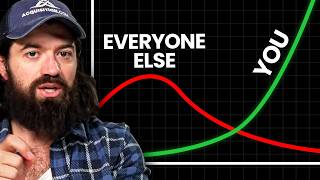
⚡ Saved you 2h 58m reading this? Transcribe any YouTube video for free — no signup needed.