
Layered Architecture's Fatal Flaw
60sChallenges a widely used architecture with a clear, controversial critique that sparks debate among developers.
▶ Play Clip"The title accurately reflects the content: the speaker demystifies hexagonal architecture by simplifying it and explaining its core concepts."
Zvonimir Spajic demystifies hexagonal architecture (also known as Ports and Adapters) by contrasting it with traditional layered architecture. He explains the core concepts of inside/outside, ports, adapters, and dependency inversion, then shows a PHP implementation example and discusses benefits like delayed technical decisions and testability.
Hexagonal architecture was introduced by Alistair Cockburn in 2005 as a response to layered architecture. He later suggested the name 'Ports and Adapters' as more descriptive.
In layered architecture, layers are stacked vertically and communication flows downward. In hexagonal architecture, layers wrap around each other like an onion, with communication flowing inward.
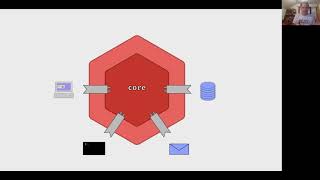
The system has two parts: the inside (core application) and the outside (everything else, including database and web client). Adapters translate between outside formats (HTTP, SQL) and inside formats (PHP objects).
Ports are interfaces defined by the core. Adapters implement those interfaces to allow different ways of communicating (e.g., HTTP controller, CLI command). The core remains ignorant of how it's called.
Driving (primary) ports initiate communication with the core; driven (secondary) ports are called by the core. This distinction helps organize adapters.
To avoid violating the inward dependency rule, use dependency inversion: define an interface in the core, and have the concrete implementation in infrastructure depend on that interface.
Benefits include delaying technical decisions (e.g., database choice), easy technology swapping, focus on domain logic, and improved testability by replacing real adapters with test doubles.
Use hexagonal architecture when the domain is complex enough that the added complexity pays off through decoupling, testability, and flexibility.
Who introduced hexagonal architecture in 2005?
Alistair Cockburn
02:05
What alternative name did Alistair Cockburn later suggest for hexagonal architecture?
Ports and Adapters
02:11
Why did Alistair Cockburn choose a hexagon shape for his diagram?
It was easier to draw than a pentagon.
10:37
What is the difference between driving and driven ports?
Driving (primary) ports initiate communication with the core; driven (secondary) ports are called by the core.
11:31
How does hexagonal architecture solve the dependency inversion problem when the core needs to call infrastructure?
By introducing an interface (abstraction) that lives in the core, and having the concrete implementation in infrastructure depend on that interface.
18:38
What is one major benefit of hexagonal architecture regarding technology choices?
It allows you to delay technical decisions until you have more project knowledge, and makes it easy to swap technologies later.
20:43
How does hexagonal architecture improve testability?
You can replace real adapters with test adapters (e.g., in-memory repositories) to test business logic in isolation without hitting real infrastructure.
24:21
When should you consider using hexagonal architecture according to the speaker?
When the domain is complex enough that the benefits of decoupling, testability, and technology flexibility outweigh the added complexity.
26:32
Inside vs Outside World
Fundamental shift: the database and web client are both 'outside', not front-end/back-end.
05:03Dependency Inversion via Interfaces
Shows how to keep core independent of infrastructure by defining interfaces in the core.
18:38Delaying Technical Decisions
Explains the paradox of making big tech choices when knowledge is minimal, and how hexagonal architecture mitigates it.
20:43Why a Hexagon?
Humorous but true: Cockburn chose a hexagon because it's easier to draw than a pentagon.
10:37[00:00] okay so hi everybody I want to talk
[00:03] about my type of my pock is exactly
[00:06] teacher demystified so why this world
[00:09] demystified in the title why should it
[00:11] be kind of demystified well for me for a
[00:15] long time hexagonal architecture was
[00:17] kind of this mystical thing because
[00:19] whenever I start trying to learn
[00:21] something about it and there's no
[00:23] shortage of articles blog posts videos
[00:26] tutorials conference conferences people
[00:28] speak about it so there's a lot of
[00:30] resources but whenever I try to read
[00:33] something about it I would get over them
[00:35] pretty fast because all these articles
[00:38] they often talk about they would start
[00:40] talking about things like dv/dt d d pd d
[00:43] c ql c q RS ears comment and comment
[00:48] past pairs so yeah it was just too much
[00:51] for me to take and another problem is
[00:52] all these kind of articles they often
[00:54] kind of offer a slightly different view
[00:57] of what hexagonal architecture is so for
[01:00] me for a while for a long time i was
[01:02] never quite sure what hexagonal
[01:04] architecture is it was kind of mystical
[01:06] for me so my my goal for today is to
[01:08] kind of do for you what I did for myself
[01:11] and that is to simplify it or maybe even
[01:13] the world he still would maybe be a good
[01:16] choice of word for the title to distill
[01:18] this kind of clutter about around
[01:20] hexagonal architecture design in what it
[01:22] easy like what the original idea of
[01:24] hexagonal architecture is and then we
[01:26] can also see how we can kind of expand
[01:28] it and combine it with all this other
[01:30] architectural approaches that people
[01:32] often tend to do so before I start just
[01:35] a little bit about me my name is Juan
[01:37] Amir I come from Croatia but I've been
[01:39] living in Berlin for almost two years
[01:42] now this is my twitter handle if you if
[01:44] you wish to follow me on twitter and
[01:46] yeah i work at a company called made it
[01:49] love which is budget company but it's a
[01:52] remote force company so yeah I can I can
[01:55] barely care where I live alongside
[01:57] commit Michael Dauphin and I my tests
[02:00] are s so exact no architecture in 2005
[02:05] alistair cockburn
[02:06] published published an article called
[02:07] hexagonal architecture and then he later
[02:09] revisited and his
[02:11] that the name ports and adapters would
[02:13] be actually a better name for this
[02:15] architecture he said he believes it's
[02:18] it's a very description of the intent
[02:20] behind his architecture but it seems to
[02:23] me like the name hexagonal kind of
[02:25] people use it more often I guess it's
[02:26] just more cool cool name again it is the
[02:30] same thing those doctors allister's
[02:34] starts is article by saying it is a
[02:36] response to the discussion on the
[02:39] traditional layer architecture so this
[02:41] is how we got to start our tour by
[02:44] looking at layered architecture first so
[02:47] layered architecture states that in
[02:49] order for us to better to help ourselves
[02:53] with comprehending and dealing with
[02:54] software systems the complexity of our
[02:57] software systems we should divide them
[02:58] into distinct layers and the difference
[03:00] between layers is in the level of
[03:02] abstraction where these layers are going
[03:04] to result there's no limits to the
[03:06] number of layers and usually if you look
[03:08] at depending on the authors you are
[03:10] you're reading usually there's like
[03:12] three to four layers and here I'm going
[03:14] to use a four layered approach as it was
[03:16] explained in the brew DDD book by Eric
[03:19] currents so on the top of your stack of
[03:22] layers you have your user interface
[03:24] layer so this is the layer where users
[03:26] talk to your application this is kind of
[03:28] like the entry point to your application
[03:30] and also this is the layer way to show
[03:33] some data types or some data back to the
[03:35] user you communicate with the used below
[03:38] this layer you can give your application
[03:40] layer which orchestrates some domain
[03:43] objects in your domain layer to perform
[03:45] some action required by the end user and
[03:47] the domain layer it contains your domain
[03:49] objects your business logic is very very
[03:52] key results and then at the bottom of
[03:55] this layers stack you have your
[03:56] infrastructure infrastructure layer is
[03:58] there just two technical capabilities to
[04:01] support the upper layers so it's usually
[04:03] it's more it's about persisting a
[04:05] messaging right now the way the
[04:08] communication between this layer goes is
[04:10] you can only go downwards so layers can
[04:13] only talk two layers below them and here
[04:15] you have you can have two approaches one
[04:17] is the struct approach where a layer can
[04:18] only talk to the layer that is directly
[04:20] below within the stack and then there is
[04:22] like
[04:23] relaxed approach where a lair can talk
[04:26] to all the layers that are below in the
[04:28] stack so in this case the UI layer could
[04:30] directly talk to the infrastructure
[04:32] layer instead of going through like
[04:34] these all these others layers layers so
[04:36] you don't have to have this kind of
[04:37] proxy calls between an X now another way
[04:42] to look at these layers the way that we
[04:45] traditionally tend to think about them
[04:46] is to say that their user interface
[04:49] layer this is the front end of your
[04:50] application the infrastructure layer
[04:54] this is the back end and then this
[04:56] middle part I chose to call the core but
[04:58] you can also call it may be part of your
[05:00] software if you wish to be and more 20
[05:03] now then came Alistar in 2005 and he
[05:07] proposed a different look at the system
[05:10] so in our stars is in his view there is
[05:13] only two distinct parts to a system
[05:15] there is the inside world and then there
[05:18] is the outside world the inside world
[05:20] this is your core this is your
[05:21] application and everything else is the
[05:24] ink is the outside world so in this view
[05:26] the database and the web client are no
[05:30] longer back into front-end
[05:31] they're simply outside now as we know
[05:36] the outside world in this case our
[05:39] database and our web client they
[05:40] probably don't talk the same language as
[05:42] our core budget HP developers so our
[05:44] core folks HP while our web client talks
[05:47] HTTP and our database probably some
[05:49] flavor of SQL so in order for them to
[05:53] communicate to talk to each other we
[05:55] need this kind of transformer wrapper to
[05:58] Solon layer better they're going to
[06:00] wrapper another hexagon that is wrapping
[06:02] our core hexagon and in this XML what's
[06:04] going to happen is people are going to
[06:06] translate data from the or what the
[06:08] outside world can understand to the
[06:10] format that the inside world can
[06:11] understand so in this case we need to
[06:13] transform some HTTP requests into some
[06:16] PHP PHP data structure so a core can
[06:20] understand and also vice versa if our
[06:22] core needs to talk to the outside world
[06:23] it we need to transform this PHP PHP
[06:26] data structures probably some HP objects
[06:29] write to some to something that our
[06:31] outside world can understand in this
[06:32] case the web client can understand HTTP
[06:34] responses and
[06:36] singles with our database we need to
[06:37] somehow translate data between deserve
[06:39] my sink relational data and our hp8
[06:42] structures probably objects and this
[06:46] transformer wrapper this is where your
[06:49] adapters are going to live
[06:50] so this is where reports and afters
[06:52] coming to place into into plain this in
[06:55] this page so how does this work let's
[07:05] say in record you have written use case
[07:07] may be a registered user action it can
[07:11] be as simple as some kind of a service
[07:14] class that accepts some kind of hint
[07:16] right so you use case using the word use
[07:19] case here to be a bit more abstract but
[07:21] technically it can be it can be just a
[07:23] service class right in reality and this
[07:27] use case it defines kind of like an
[07:29] interface right it says if you want to
[07:31] register user you need to send me as
[07:33] with this data this is like the
[07:35] interfaces to the contract for talking
[07:37] to this your screen stand-in in the
[07:38] context of doctors architecture this is
[07:41] the point so your your core is defining
[07:43] a port of how you can talk to it now as
[07:46] we already mentioned our web client
[07:48] cannot directly access this sport
[07:51] because a web client talks HTTP and our
[07:54] interface for use case that is that
[07:56] space free right so what we now need is
[07:58] an adapter class and we have all written
[08:02] these kind of adapters a controller
[08:04] class right so what the controller class
[08:05] does is it takes the HTTP request
[08:07] transforms it into some PHP PHP data
[08:11] data structure again probably object and
[08:13] sends the passes that they type now in
[08:15] in this PHP data structure passes it to
[08:18] abuse case and vice versa if I use case
[08:22] needs to return some data the controller
[08:24] class can also transform it to HTTP
[08:26] response so now suppose that we need to
[08:28] support another way of talking to our
[08:30] application another way of kind of
[08:32] plugging into our use case may be a
[08:34] silicone mat right maybe we want our
[08:36] developers to be able to Association to
[08:38] the server and manually like here the
[08:40] CLI interface register users or maybe
[08:43] our clients are kind of factly and they
[08:45] also want like a CLI command to
[08:47] do these kind of actions so again we
[08:51] need an adapter class so we write and
[08:53] another another adapter now write the
[08:54] console command adapter which will take
[08:56] data from CLI input and again transform
[09:00] it to the same data structure and as it
[09:02] why your skis now there is an
[09:05] interesting thing here to note that is
[09:07] when we needed to add this new way of
[09:09] talking to our use case talking to our
[09:11] core we didn't have to touch the code in
[09:13] our core we only needed to write new
[09:15] code we only needed to write a new
[09:16] implementation you adapt you complete
[09:18] adapt so you see our core is kind of
[09:21] blissfully ignorant of all the different
[09:23] ways of talking to all the different
[09:24] methods talking to the earth to the core
[09:27] we are going to support so in future if
[09:29] we are going to maybe support maybe we
[09:31] were going to have some kind of rabbitmq
[09:34] then we proper implementer rabbitmq
[09:36] listener and after that will take data
[09:38] from the rabbitmq messages trust condom
[09:40] to PHP objects and pass them to are
[09:42] useless so you see our core our use case
[09:45] only cares about interfaces it only
[09:46] cares about a port and it says as long
[09:49] as you can plug something that obeys the
[09:51] sport something the pen talk to this
[09:53] port
[09:53] I don't care where this data comes from
[09:55] so this this kind of architecture has
[09:58] this kind of as the baked version call
[10:00] it potential for for timelessness why
[10:03] because you don't care in the future
[10:06] they can be many other many other ways
[10:09] of talking to application your colony on
[10:11] only cares about the ports so now you
[10:14] see why
[10:15] Alistair chose them when he revisited
[10:17] the article chose the name ports and
[10:19] adapters to describe this act
[10:20] architecture so this view we can say
[10:23] that our system is we can look at the
[10:25] system as kind of our core that is
[10:27] surrounded with interfaces to the
[10:29] outside world and the reason why I also
[10:32] chose to call it exactly why he chose to
[10:34] draw a hexagon I was actually quite
[10:37] simple because it was easier to draw
[10:39] than a Pentagon and yeah I'm not kidding
[10:42] he he really stated it but also be the
[10:44] disguise clean you get the same a notch
[10:46] with the Pentagon is easier to draw but
[10:48] you also get this analogy nice visual
[10:50] analogy where you can say that one edge
[10:53] of a hexagon represents one way of
[10:55] talking one reason
[10:57] application now as I already mentioned
[11:01] in this blue right picture there's only
[11:04] the east side role in jobs so it's
[11:08] already like this very symmetrical image
[11:10] where the database and the web trying to
[11:12] move on the back of the front end
[11:13] they're sitting outside outside so it's
[11:15] very symmetrical image but in time it is
[11:18] also a bit of an asymmetrical image so
[11:21] what I mean by this is that we can still
[11:23] kind of divide our ports into two
[11:25] distinct groups ports adapters and the
[11:28] way we are going to divide them is based
[11:29] on the way they communicate with the
[11:31] core so on the left side of this image
[11:33] and it doesn't have to be on the left
[11:35] side I just chose to draw it like this
[11:37] on the left side of the this image we
[11:39] have our primary ports called the dragon
[11:42] box and they're called the driving force
[11:44] because they are the ones who are
[11:45] initiating the communication with the
[11:47] core so they are kind of driving their
[11:49] behavior of our application usually our
[11:52] web client will say to our jorge do
[11:54] something for me or give me some data
[11:56] show something to me right it is it has
[11:58] this kind of active active role in
[12:00] communicate in communicating with all
[12:02] while on the other hand the driven ports
[12:04] or the secondary port so let's cannibal
[12:08] as supports when they communicate in the
[12:11] core it is our it is the core that
[12:13] initiates communication with them so the
[12:15] core will tell the database came
[12:17] give me some data or can persist some
[12:19] data for me so they have this kind of
[12:20] more passive passive role in this
[12:22] communication so that's why they called
[12:24] the driven or secondary ports so this is
[12:28] this is a business portal Aptus
[12:30] Architect reduces hexagonal architecture
[12:32] Alistair didn't mention any kind of
[12:35] general instructions on how you should
[12:37] actually structure your code inside the
[12:39] poor you didn't say that you can that
[12:42] you should use layers or and he also
[12:44] didn't say that you shouldn't use layers
[12:46] so what about layers right because a lot
[12:49] of people usually use layers con
[12:52] combined with examine architecture and a
[12:53] lot of people will say when you say
[12:55] example architecture all your layers and
[12:57] things are talking about layers right
[12:59] right away
[13:00] so yeah you can use you can combine
[13:02] Excel architecture with layers and but
[13:05] there's a there is a slightly it's like
[13:06] a subtle difference or maybe not so
[13:10] subtle between what you gonna have now
[13:13] with example architecture and layers and
[13:15] a traditional layered architecture so
[13:19] again we have our domain domain layer
[13:21] it's in our core right then we have this
[13:24] application layer that is kind of
[13:25] wrapping our our main layer and then the
[13:29] infrastructure and the user interface
[13:31] layer there they both live in this kind
[13:33] of transformer retro as we chose to call
[13:35] so as you see the difference between
[13:38] this and traditional layered
[13:39] architecture is that in traditional
[13:41] layered architecture we have like a
[13:42] stack of layers so layers were strike
[13:44] one on each other while he were here the
[13:47] layers are kind of like wrapping each
[13:48] other so it's more like a like like
[13:51] peeling an onion right like an onion and
[13:54] actually there is this thing called an
[13:56] onion architecture and this is very
[13:57] really similar to that this kind of
[13:59] formation of onion architecture and
[14:01] hexagonal architecture and this
[14:03] difference also means that let me talk
[14:05] about that communication between layers
[14:07] as you remember in traditional layered
[14:11] architecture the communication would go
[14:13] downwards while it goes inwards right
[14:16] because layers are wrapping each other
[14:17] so communication goes from the outside
[14:19] to the inside to the two towards our
[14:21] core and this row for communicate about
[14:23] communication well it only goes inwards
[14:26] this this applies this applies to
[14:28] several architectural even if you are
[14:30] not combining
[14:31] layers with okay so now that we know
[14:35] what the exact role of architecture is
[14:37] let's let's take a look at one example
[14:38] how we can actually implement it in PHP
[14:41] this is how I kind of usually go about
[14:43] it and also it's a combination of what I
[14:45] saw other people do it in in workshops
[14:48] and and some tutorials so we're gonna
[14:52] take a look at the driving side first so
[14:53] here I have a simple simple let's say
[14:57] I'm cooking cooking app so we have our
[15:00] recipes and we have some users if you're
[15:02] into DDD as you see I kind of have two
[15:06] bounded contacts here if you don't know
[15:08] what that means
[15:09] think of it like this everything related
[15:11] to a recipe will be in the recipe folder
[15:13] everything related to user will be in
[15:16] the user folder so it's kind of like two
[15:18] soft parts of your application two
[15:20] modules distinct modules in your
[15:21] application and I'm gonna have one
[15:24] hexagon for module one hexagon per
[15:26] bounded context here
[15:27] I didn't here I didn't choose to use
[15:30] layering but I did choose to put my
[15:33] infrastructure and my UI in different
[15:35] folders so I I did make distinction
[15:37] between primary portion and secondary
[15:39] ports or driving for George and German
[15:41] ports and then I have my mic or phone so
[15:47] one way of talking to my application is
[15:49] going to be bearish a bit so I have this
[15:51] great controller to create a recipe and
[15:54] in it on all that my controller does is
[15:58] it takes some HTTP data from HTTP
[16:00] request this is kind of simple it's
[16:02] simply like code and all it is to do is
[16:05] take this HTTP request take some data
[16:07] from it and pass transform the data to
[16:10] some PHP structure and pass it to our to
[16:12] our core and in our core we have this
[16:14] create recipe serves it is a very simple
[16:17] stories Here I am passing just this
[16:19] string primitive string value probably
[16:23] want to have something more robust like
[16:24] a data transfer object or that object or
[16:27] something like that and keeping it
[16:29] simple for that for the sake of this
[16:31] example and what is important here is
[16:33] not that we want to support another way
[16:35] of talking to our to our core of
[16:37] creating a recipe we are another way of
[16:39] talking to our application we just
[16:41] implement another adapter and here again
[16:44] the only difference is that now we take
[16:46] input from different source but we still
[16:48] just pass pass data to our to our great
[16:51] recipe
[16:51] service that still lives on our core and
[16:53] we didn't have to do any adjustments to
[16:56] the code of that lives in our core which
[16:58] is great recipe service we only added
[17:00] new code this new in concrete adapt and
[17:03] again our core really doesn't care if we
[17:05] are calling this service from from our
[17:08] CLI command or HTTP control right
[17:12] it is blissfully ignorant of the ways of
[17:15] talking to an application you are going
[17:16] to use so this is only driven on the
[17:19] driving side let's take a look look at
[17:22] the driven sir now and it is going to be
[17:24] a bit more complex but yeah it's it's
[17:27] but pay attention so on the German side
[17:31] we have our creators in the core we have
[17:32] our create recipe service this is our
[17:34] axle so is that kind of use case winner
[17:36] so again it's really simple all it does
[17:39] is it takes this input this string name
[17:42] of the recipe it creates the recipe
[17:43] entity and then it persisted by calling
[17:46] the same method on the dependency that
[17:48] it has and that is the recipes
[17:49] repository now if they were paying
[17:53] attention you realize that we have a bit
[17:55] of a problem here so we said that the
[17:57] dependencies are going inwards so as we
[17:59] see in this image the infrastructure can
[18:01] talk to the core but the core the core
[18:04] cannot talk directly to infrastructure
[18:05] core should be unaware of concrete
[18:08] infrastructure you are use and if you
[18:10] look at our code here
[18:11] our create recipe use case the great
[18:14] recipe service it is dependent on the
[18:17] recipes repository it is talking to it
[18:19] directly because it is a dependency and
[18:21] the recipes repository it lives in the
[18:24] infrastructure because it has some
[18:26] infrastructure related code to actually
[18:27] persist this end right so this is
[18:29] problematic because we are we are not
[18:30] violating this this rule of dependencies
[18:33] only going in bus so what can we what
[18:35] can we do about this well we can use
[18:38] something that is called inversion of
[18:40] control or people also call it the
[18:43] pendency version principle and again it
[18:46] sounds a bit scary but what it actually
[18:48] means as a rule of thumb what you need
[18:51] to do is when you have a situation like
[18:52] this is to introduce an abstraction
[18:55] usually an interface so what we're going
[18:58] to do now is we are going to introduce
[18:59] this interface so now the recipes
[19:02] repository we're going to introduce an
[19:04] interface for you and this interface is
[19:07] going to live in our code because this
[19:10] is a concept that belongs to our domain
[19:12] right
[19:12] saving recipes and patching them this is
[19:14] a concept that belongs to our court or
[19:17] domain so now our create recipes service
[19:19] is dependent on this recipes interface
[19:22] which lives in the core Andy this is
[19:24] okay right because they are born in the
[19:27] core so we are not probably think any
[19:29] any and dependencies here and our
[19:31] concrete implementation of this
[19:33] interface and sqlrepository that will
[19:36] actually persist this lives in the
[19:38] and it is also dependent on this
[19:41] interface but that is also okay because
[19:43] infrastructure core code can talk to our
[19:46] core it can be dependent on the code so
[19:48] we are now not violating any of those
[19:51] dependencies going inwards rule and this
[19:54] is what you see it's kind of like called
[19:56] dependency version because now you see
[19:58] dependencies are kind of inverse but
[20:01] yeah that's that's a bit of another
[20:02] story but this is how it is how you can
[20:05] kind of treat this trick to not not
[20:09] violate these dependencies rules and
[20:12] yeah our sqlrepository now have some SQL
[20:16] specific code here we are using doctrine
[20:18] or m to actual persist this persist this
[20:21] entity so now that we know what our
[20:26] exceptional architecture is how we can
[20:29] we know one will be shown one way of
[20:32] implementing it the question remains is
[20:34] why should we do it right
[20:35] are there what are the benefits of
[20:37] developing your applications this way
[20:40] well the first big benefit is that it
[20:43] allows you to delay technical decisions
[20:45] so why would this be important why would
[20:48] we want to delay technical decisions
[20:50] well if you think about it there is a
[20:52] certain paradox to how we develop
[20:54] software how we will work on our
[20:55] projects and that is at the beginning of
[20:57] our project where a project knowledge is
[20:59] at the minimum because it's always going
[21:01] to like with time your project nor with
[21:03] knowledge is only only going to grow so
[21:05] at the beginning beginning it's always
[21:07] at the minimum point and this minimum
[21:09] point we are making big decisions on the
[21:12] technical decisions on what technology
[21:14] we are going to use so wouldn't it be
[21:16] nice if we could delay these technical
[21:18] decisions to some point in time where
[21:20] our project knowledge will be at the
[21:22] bigger point and then we can make a much
[21:24] more informed choice of the hold key we
[21:26] are going to use and hexagonal
[21:28] architecture allows us to do just this
[21:31] so for example maybe you are not sure in
[21:34] your in your project you're starting
[21:35] your new project maybe you're not sure
[21:37] do you want to use a sequel database or
[21:39] a no sequel database so what you can do
[21:42] is you can help us recipes your
[21:45] repositories interfaces you introduce
[21:47] interfaces for your repositories and
[21:49] then you have this concrete
[21:50] implementation
[21:51] interpretations of these repositories
[21:53] these interfaces and you can implement
[21:56] them in plain PHP it can be as simple as
[21:59] they just take your entity they
[22:00] serialize it and save it to some text
[22:03] file now this is not something you want
[22:05] to push the production obviously but it
[22:07] will work it'll it will work you will be
[22:09] able to develop your domain play around
[22:11] with it model it even write test for it
[22:14] and then when you are when you have some
[22:16] more knowledge when your lecture more
[22:19] sure what college you wanna use then
[22:21] maybe you say okay now I'm going to use
[22:22] my sequel database at that point all you
[22:24] need to do is I mean call it look you
[22:27] need to do only only thing you need to
[22:28] do easy from any new adapters now
[22:31] they're gonna really persist to to my
[22:34] sequel database and then you just plug
[22:36] those adapters instead of those naive
[22:37] PHP ones and everything still works
[22:39] right another thing about this is
[22:42] exactly architecture allows us to even
[22:45] when we make these decisions we can
[22:47] still kind of change our mind
[22:48] right so we can swap technologies
[22:50] relatively easy right so say we said
[22:53] okay we're gonna use my signal and then
[22:55] for some reason later in the project we
[22:58] say oh now we want to switch to post
[23:00] cast on it so again only thing you need
[23:02] to do is write new adapters and of
[23:05] course writing your adapters can still
[23:07] be a lot of work but you don't have to
[23:08] touch any existing code again you don't
[23:11] have to touch any code in your core you
[23:13] don't have to make any adjustments in
[23:15] your core in your domain only thing your
[23:17] only thing you need to do is and you
[23:19] want a new adapters right some
[23:21] integration tests for them and once
[23:23] you're sure that is the latter's work
[23:24] you just plug them in instead of those
[23:26] my cheap ones and you're good to go
[23:28] everything still works as no and you can
[23:31] swap these technologies like do this for
[23:34] every technology you are use this is my
[23:36] kind of link has this potential for
[23:37] timelessness examine architecture
[23:40] another thing like excitement
[23:42] I like hexagonal architecture and why I
[23:44] think it's so popular in the dimension
[23:46] design community is that it really does
[23:49] allow you to really focus on the core
[23:51] and developing your application so your
[23:53] core your domain can really be domain
[23:54] driven instead of kind of technology
[23:56] driven now of course it is maybe a bit
[23:59] more idealistic to think that you can
[24:01] really model your core without any
[24:03] influence from the
[24:04] infrastructure from the technologies you
[24:06] are going to use but still it does allow
[24:08] you to really focus and not not think
[24:10] about technologies you won't use too
[24:12] much which is I guess why it's real
[24:15] popular in the DDD community and another
[24:18] big thing for about architecture
[24:21] actually one of the big motivations for
[24:22] Alistair to kind of start thinking about
[24:24] it is testability so when it comes to
[24:26] testability on the drive inside what you
[24:29] can do is you can replace your real
[24:31] adapters with test adapters and test
[24:34] enough actors in this context this is
[24:36] your your your testing shoot right and
[24:39] maybe you can have like this nice set of
[24:41] BDD start s with P head there is where
[24:44] you can just yeah plug them in and test
[24:47] your test your use cases test your you
[24:49] have your acceptance test like this so
[24:52] you can really test your application in
[24:54] isolation and you don't have to go test
[24:58] your application by going through the UI
[24:59] you can just plug in this test instead
[25:02] of your UI and and test your code direct
[25:04] and when it comes to the drill site to
[25:08] the secondary infrastructure again you
[25:11] can replace your test infrastructure
[25:13] with some kind of you can replace your
[25:15] real our infrastructure is some kind of
[25:17] test infrastructure sold again let's say
[25:19] maybe maybe you are talking to some
[25:21] cloud provider or whatever you can again
[25:24] create these adapters that will just
[25:26] needs a kind of PHP implementation but
[25:28] you will just check if this is calls are
[25:31] getting true and this is this will help
[25:34] you because not really tester you can
[25:37] test your own in isolation and your
[25:39] tests are going to be much faster
[25:40] because now you have to test time in the
[25:43] real infrastructure now don't get me
[25:46] wrong you will still have your set of
[25:47] integration tests for your real adapters
[25:50] but when you are testing your core what
[25:52] you want to do is you want to test your
[25:53] business logic inside your core you
[25:55] don't want to every time you're testing
[25:57] certain a certain business case in your
[25:59] core you don't really want want it to
[26:01] ping the real infrastructure because you
[26:03] don't we need to retest this integration
[26:05] with real infrastructure
[26:06] every time you are testing every single
[26:08] business case in your domain this is why
[26:10] you can give this you can switch it with
[26:13] some testing infrastructure so your
[26:14] tests are gonna but so your test when
[26:16] you're testing your core it's work
[26:18] gonna run much faster and then you have
[26:20] a separate set of integration tests to
[26:23] really test your adapters to make sure
[26:25] that this integration also will work
[26:28] okay then finally the the final question
[26:32] to answer is when you actually use
[26:34] exactly no architecture because some
[26:37] people I mean one thing that that is
[26:40] true exactly larger exact architecture
[26:44] like every architecture course adds a
[26:46] complexity to your code right and as I
[26:48] say as every architecture because every
[26:50] every design pattern they all add some
[26:52] complexity right and the question for me
[26:55] here is not not that I should we should
[26:59] should we add this more complexity but
[27:02] the question is does it pay off
[27:03] right because the reason why we have
[27:05] design patterns and and hire anyone like
[27:08] higher higher languages is because we as
[27:10] humans have a problem with grasping the
[27:13] complexity of a computer right a
[27:15] computer doesn't really care you can you
[27:17] can write your application in binary in
[27:19] machine code right people used to do
[27:22] that but you cannot write write it now
[27:24] like a boom your complex application
[27:25] this is why we can you know these nice
[27:27] languages and then we get these design
[27:29] patterns and all that stuff and
[27:30] architectures to help ourselves to grasp
[27:33] the complexity of our programs so I
[27:36] would say that if the if your domain is
[27:39] compact X enough and you think that you
[27:41] will gain the benefit of this little
[27:43] added complexity by using a certain
[27:45] architectural approach like cell
[27:47] architecture then I would say you should
[27:49] use it and it will pay off so the real
[27:51] question is does it does it pay off and
[27:54] that was it thank you for your attention
[27:56] and if you have any questions I believe
[27:59] we we do have some time for questions
⚡ Saved you 0h 28m reading this? Transcribe any YouTube video for free — no signup needed.