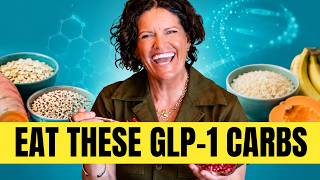

Why Your Carbs Are Not the Enemy
32sChallenges common diet beliefs with shocking stats about metabolic health, sparking curiosity and debate.
▶ Play Clip"Delivers on the promise of five specific carbs and explains the GLP-1 connection, though some stats and explanations are repeated."
This video argues that carbohydrates are not the enemy of weight loss, but rather that certain fiber-rich carbs can naturally boost the body's own GLP-1 hormone, mimicking the effects of popular weight-loss drugs. Dr. Mindy Pelz presents five specific carbs—oats, lentils/beans, sweet potatoes, berries, and cooked-then-cooled potatoes—and explains the science of how fiber feeds gut microbes to stimulate GLP-1 production, improve blood sugar control, and support metabolic health.
Only 6.8% of Americans have healthy blood sugar, blood pressure, cholesterol, and waist circumference. One in eight adults take GLP-1 drugs. There's a 3% increase in colorectal cancer in young adults.
Healthy carbs are nature's carbs, containing fiber. Fiber feeds gut microbes that produce GLP-1 hormone. Most Americans get only 5 grams of fiber daily, far below the recommended 30 grams.
Fiber goes to the gut, feeds microbes, which produce metabolites that stimulate gut cells to make GLP-1. This signal takes about 20 minutes to reach the brain, hence the advice to 'eat your fiber first'.
Fiber creates butyrate, a byproduct that repairs gut damage and supports GLP-1 production. Only about 5% of adults eat enough fiber, linking fiber deficiency to rising colon cancer rates.
After 40, declining estrogen increases insulin resistance and belly fat. The estrobolome (gut bacteria that break down estrogen) needs fiber to function; without it, even low estrogen isn't processed, accelerating fat storage.
Steel-cut oats contain beta-glucans, a sticky fiber that slows digestion, reduces blood sugar spikes, and feeds GLP-1-producing bacteria. Recommended with chia seeds, cinnamon, or in bone broth.
Lentils and beans have two types of fiber that slow glucose spikes, reducing insulin secretion. A 2022 European Journal of Nutrition study found lentils best at lowering post-meal blood sugar.
Sweet potatoes are high in fiber and potassium, and raise blood sugar less than regular potatoes. Different colors (purple, yellow) feed different gut microbes; purple ones reach the lower intestine.
Berries are high in fiber and antioxidants, acting as fertilizer for good gut bacteria. One cup of raspberries has 8 grams of fiber. Frozen berries retain nutrients and are convenient.
Cooking then cooling potatoes (or rice) converts starch into resistant starch, which feeds GLP-1-producing microbes and prevents blood sugar spikes. This is a cheap, easy way to boost GLP-1.
A sample day: oats, chia, berries for breakfast; big salad with lentils for lunch; sweet potato or cooled potato with veggies and protein for dinner. Daily goals: 30-40g fiber, 30 different plants per week, protein at every meal, fermented foods, and water.
1) Cook and refrigerate potatoes/rice. 2) Eat steel-cut oats for breakfast. 3) Aim for 30 different plants a week. 4) Get 30-40g fiber daily with protein. 5) Eat a cup of berries a day.
The video concludes that carbohydrates are not the enemy; fiber-rich carbs can naturally boost GLP-1 hormone, improve metabolic health, and support weight loss. By focusing on whole, fiber-dense foods, individuals can reclaim their metabolic power without relying on pharmaceuticals.
What percentage of Americans have healthy blood sugar, blood pressure, cholesterol, and waist circumference?
Only 6.8%.
00:18
What is the recommended daily fiber intake, and how much do most Americans get?
Recommended: 30 grams; most Americans get about 5 grams.
02:33
How long does it take for the fiber-to-GLP-1 signal to reach the brain?
About 20 minutes.
04:18
What is the estrobolome and why is it important for women over 40?
The estrobolome is gut bacteria that break down estrogen. Without fiber, these bacteria die, leading to higher insulin resistance and belly fat.
07:35
Which carb was found best at lowering post-meal blood sugar in a 2022 study?
Lentils.
13:45
What is resistant starch and how is it created?
Resistant starch is a type of starch that resists digestion and feeds GLP-1-producing microbes. It is created by cooking and then cooling potatoes or rice.
21:25
What are the five carbs recommended in the video?
Oats, lentils/beans, sweet potatoes, berries, and cooked-then-cooled potatoes.
09:02
What is the daily fiber goal recommended in the video?
30-40 grams of fiber per day.
23:34
Alarming Metabolic Statistics
Provides concrete data on the poor metabolic health of Americans, setting the stage for the importance of dietary changes.
00:18Fiber Feeds GLP-1 Production
Explains the mechanism by which fiber stimulates GLP-1, linking diet directly to hormone production.
03:30Estrogen and Belly Fat
Highlights the connection between estrogen decline, gut bacteria, and weight gain in women over 40.
06:33Cooked and Cooled Potatoes
Introduces a simple, cost-effective method to create resistant starch, boosting GLP-1 naturally.
21:13Carbs Are Not the Enemy
Challenges the common anti-carb narrative, emphasizing that fiber-rich carbs are essential for metabolic health.
26:08[00:02] pasta. You cut the carbs because you were promised better weight loss. And yet the belly keeps growing. The scales going in the wrong direction. And hm, maybe the medication is my only solution. And what we know right now
[00:18] metabolically is that only here in America, only 6.8% >> 8% of Americans have healthy blood sugar, good blood pressure, great cholesterol, great [music] waist circumference. 6.8.
[00:33] And that was out of the American College of Cardiology. We also know that one out of Cardiology. We also know that one out of eight adults are taking GLP1 drugs at this particular moment. And probably the most scary stat I can give you is that
[00:47] [music] 3% increase in colorctyl cancer in young adults [music] happening now. Is it the carbs fault? Did we get carbs wrong? On
[00:59] this video, I'm actually going to show you why carbs can be the best weight loss tool. Why carbs [music] can be the thing that increases your GLP-1 hormone GLP1s. And I'm going to show you five carbs
[01:16] specifically. And you know me, I love giving you action items so you can leave this video and put what you learned here right into [music] action in your own life. Ready? Let's dive in.
[01:37] there are healthy carbs and there are not healthy carbs. So unfortunately we sort of put it all in the category of carbs. And what I have tried to do here on my videos in my books is really pull those apart just like we did with fat
[01:53] many years ago. So a healthy carb is nature's carb. What does nature's carb nature's carb. What does nature's carb have in it? Fiber. Fiber is the key. Every time you eat a carb, if you want to make sure that it helps you maintain
[02:09] your weight or lose weight, we got to have fiber in it. And nature's carbs everything from fruits to vegetables to potatoes. Some of the things I'm going
[02:21] going to shock you. Carbs that come from like pastas and breads and desserts, I mean, those are all carbs. They don't have fiber in them. And this fiber is
[02:33] doing something really magic to your gut microbes because it's these gut microbes that make GLP-1 hormone. GLP1 hormone wasn't a hormone that was just invented
[02:45] by the pharmaceutical company. It was in response to a culture that stopped eating fiber. Think about that for a moment. They say that we need about 30 grams of fiber a day and most Americans are getting about five. even do some
[03:01] self-reflection like fiber, how much how many fruits and vegetables do you eat? I know for me, I have to persistent. I have to keep my eye on it and keep reminding myself more fiber, more fiber because many of the fiber foods are ones
[03:15] that we don't typically gravitate for or two. So, but I'm going to show you five that you will. So, first I want you to understand that GLP1 understand that GLP1 hormones are made in your gut and you
[03:30] weren't like unlucky like all of a sudden you got the poor GLP-1 lottery. You actually started to eat in a way that killed the microbes that made GLP1. So, if we start to bring, let's just say fiber back into the picture, let me tell
[03:45] you what happens. So that when you eat fiber, it goes down into your gut and it fiber, it goes down into your gut and it starts to feed the microbes in your gut. Those microbes break all those that fiber down and they have a a byproduct
[04:00] of that. Oftentimes we call byproducts of of breakdowns metabolites. And that metabolite after your little microbes eat all these fiber actually goes and stimulates the other cells in your gut to make GLP-1 hormone. Now
[04:18] something really important I want you to understand is it takes 20 minutes for understand is it takes 20 minutes for that signal to go from eating the fiber the breakdown to with the microbes and then the signal to the brain that comes
[04:31] in the form of GLP1 hormone. It takes about 20 minutes for that signal to hit. This is why you will always hear me say, "Eat your fiber first." I just did this restaurant. I knew the restaurant I was
[04:46] going to wasn't going to have my favorite food. But I w I wanted to make sure that I walked out of that experience feeling healthy. So, I literally took a red pepper, I cut it up, put a little bit of Himalayan salt
[04:59] on, and I eat ate the whole pepper before I went to the restaurant. Most people wouldn't think to eat before you go to a restaurant, but I wanted to make sure I wasn't eating because I was hungry. I was eating because I wanted
[05:11] extra fiber. One thing that we want to look at is that fiber also protects the colon. This is why there's it's been really interesting in doing these videos for you all. There's been a lot out there about colorctyl cancer and the
[05:25] fact that it's coming in the form of of children is really scary. So, we've got to again bring fiber back into our guts because there what happens when we eat because there what happens when we eat fiber, not just from the GLP1 angle, but
[05:40] it actually creates a byproduct called butyrate. And butyrate actually will go butyrate. And butyrate actually will go in and start to repair any damage that's happening in the gut. It also makes sure that your gut starts to make more GLP1s.
[05:56] It's like an ecosystem in there. It's like a rainforest. It's like your garden. Think about your garden at your house. Like you have to fertilize it and water it and give it what it needs in order for plants to grow. You've got to
[06:08] do the same thing in your gut. And what the research is saying that is only the research is saying that is only about five out of a hundred pe adults right now are eating enough fiber. So when colon cancer rises in younger
[06:21] people and blood sugar problems rise as well, we have to say that the missing ingredient is fiber. Okay. Now let's talk about women after 40. So we know
[06:33] fiber feeds GLP-1 hormone and if we're not eating enough, we know that colarctal cancer is a byproduct of not eating enough fiber. What about why do we gain weight after 40? especially women. And there's thousands of women
[06:48] right now who after 40 eating the same meal, working out in the same way that are finding that they are gaining weight. Put in the comments if you're one of them. You're not alone. This is a this is a massive problem for women
[07:03] because after 40, as your hormones go down, you you have a whole neurochemical change that goes on in the body that makes you more insulin resistant. estrogen kept you a insulin sensitive
[07:18] estrogen kept you a insulin sensitive and it also makes it so that your body fat will start to go more towards the center. There are many reasons that we start to gain that belly fat and a drop in hormones is a really important one to
[07:35] I want you to get this like I don't want you to lose sight on this if you're a woman over 40 is that you have a set of bacteria inside your gut called the estrobalom and they estro estro meaning estrogen
[07:52] balom is meaning bacteria these are bacteria that break down estrogen so if I've been eating an ultrarocessed food diet with very little fiber I haven't
[08:04] been feeding those microbes I come slamming into my 40s and now my estrogen goes down, my insulin resistance goes up, and I don't have enough microbes to
[08:18] up, and I don't have enough microbes to actually start to break that estrogen down. So, even the little amount of estrogen that you're making, it's still not getting broken down. And so with the lower your estrogen levels, the more
[08:33] that fat starts to be put in that midsection because the signal for your midsection because the signal for your body, for a female body over 40, the signal for fat to start accumulating on the belly is a decline in estrogen. So
[08:50] let's make your decline not as steep by making sure that we are feeding feeding our guts fiber. Okay, so we got a good picture here, right? Here are the five.
[09:02] The first one cracks me up, but the research continues to show it and it's oats. When I was in clinical practice and I would sit with people's food journals all the time, I I would always ask people, "What are you eating for
[09:16] breakfast?" And the most common thing was oatmeal. Put in the comments if that's you. Are you eating lots of oatmeal? And what's interesting about oatmeal, I just want to say, is there is healthy oatmeal and there is not healthy
[09:29] oatmeal. So the statistics I'm about to read you don't mean quick instant oatmeal with lots of sugar in it. I'm talking about like steel cut oatmeal
[09:41] that you've got to spend some time cooking on the stove top. So that's the first thing I want to say. So oats, oats have a soft, sticky, we know they're sticky fiber called betaglucans. And beta glucans, you know what they do?
[09:57] And beta glucans, you know what they do? They slow digestion down. H. What else slows digestion down? What else are we hearing slows digestion down? The weight loss drugs. That's one of the things that they're finding with these weight
[10:11] loss drugs. Why they stop the hunger is because they have sent sent a chemical because they have sent sent a chemical signal to the stomach to let go of food when it's eaten at a very slow rate so that your brain thinks that it's full
[10:28] for a longer period of time. Oats do the same thing. So you have less of a blood sugar rise. you actually this sticky betalucan starts to feed those bacteria
[10:41] starts to slow down the emptying of your gut while it also makes GLP1 because oats are full of fiber and starts to turn off the hunger s signals. So it's a
[10:53] perfect for your break fast meal and there's a lot of different ways you can eat it. You can do, you know, oats with with chia seeds. Chia seeds are amazing with oats. And the reason I want to recommend that to you is because chia
[11:07] seeds are great at detoxing, too. You could take a breakfast and you could do oats, chia seeds, and you could do a scoop of protein powder and mix it all together. You can also do the steel cut, like I said, and you can add cinnamon.
[11:22] What does cinnamon do? Cinnamon has been known to speed up our metabolism. Not to mention that it's really tasty. And if you're like, I'm not a sweet person, try oats in bone broth. Cook it in bone broth and put an egg on top of it. Bone
[11:38] broth has glycine in it, which is going to help repair that inner lining of your gut. So, there is so much to appreciate about the oat. Okay, food number two,
[11:50] lentils and beans. Now, I'm going to tell you the reason I've separated these out is because lentils have a very specific quality that you're going to want to hear about. It's fascinating a study I found for you. But lentils and
[12:04] beans have two types of fiber. So, and they're both fibers that your gut loves. they're both fibers that your gut loves. So, one of these fibers starts to slow down how fast your glucose spike will be. Now, think this through with me.
[12:19] be. Now, think this through with me. When you slow down the glucose spike, what does that mean inside your body? It means your pancreas has to secrete less insulin. When you get a big glucose spike, you're going to get a big rush of
[12:34] insulin. So, slowing that down, that glucose spike is important. Also, something that these drugs do for you. So, we want to slow down the glucose spike so that your energy will stay consistent. But check this out. The
[12:50] second thing it does is that lentils were best of all the beans at lowering your blood sugar postmeal. So remember how I've talked to you all about when we put glucose monitors on,
[13:05] we actually want to see your blood sugar return back to its pre-meal amount within two hours. That's what standard, you know, American Diabetes Association
[13:17] says should happen. I want better for you. And so I always recommend 90 minutes within a meal. I want your blood sugar to come down to that pre-meal
[13:29] status. And if you are going to have beans, they have fiber in them. They have these two types of bacteria that slow down blood sugar. But according to the European Journal of Nutrition in 2022, lentils of all the beans were the
[13:45] 2022, lentils of all the beans were the best group at lowering blood sugar after the meal. It's called postrandial blood sugar. And if you have lentils with your meal, that blood sugar coming back down to normal will be a quicker process.
[14:01] Which again, think about that from a fasting level. If we have lentils at night, we're going to start to see blood sugar come down, which means you're going to switch over into the fat burning mode in maybe less than 12
[14:15] see ketones. Those of you that are trying to fast and get more ketones, we're having lentils at night as a way of blowing bringing down that blood sugar. It's going to bring you over into fat burning so that you can go deeper
[14:29] fat burning so that you can go deeper into fasting quicker. Who wants that? into fasting quicker. Who wants that? Okay, third carb. My favorite, and I've who have been following me for a while, what is it? I know you I know you know
[14:42] what I'm about to say. My favorite carb is sweet potatoes. And there's a reason for that. Sweet potatoes not only are full of fiber, more fiber than other potatoes, they have potassium. And I
[14:57] want to point something out about the sweet potato because I've had this this too. When you look at sweet potatoes at the grocery store, we have yams, we have sweet potatoes, we have Japanese yams. They're all different
[15:10] colors. And for the sake of this conversation, that is very, very important because a sweet potato that has a really yellow inside compared to one that's purple gives you not only different antioxidants,
[15:25] but it actually feeds your microbes that make GLP-1 hormone in a different way. For example, the Japanese sweet potato that's purple on this outside purple
[15:37] skin and the purple on the inside can actually go into the lower large intestine, a place that some back fiber can't get to to help support growth of bacteria in that part of your colon. So, it's really interesting research that I
[15:53] read years ago and it we started in our household really looking at not just doing the one with the yellow on the inside and the and the brown skin, but actually looking at the ones on white on the inside and purple and mixing them
[16:06] all up so that we're feeding the microbes in our gut differently. Now, the other thing that sweet potatoes can do is they will raise your blood sugar do is they will raise your blood sugar less than a potato, which fascinates me
[16:21] because it's sweet. And we tend to think of things that are sweet are going to raise our blood sugar really high, but no, the sweet potato doesn't do that. It's a slow blood sugar spike. Slow blood sugar spikes mean less insulin
[16:38] secretion. less insulin and and lower blood sugar spike means that you can start switching from sugar burner to fat burner. Your metabolic switch is going to work much better. Now, I'm hoping that you're thinking, well, what if I do
[16:54] this at dinner? What if I put a sweet potato at dinner and I pair it with some lentils? I do this all the time. I do micro greens with lentils. I drizzle it
[17:06] with olive oil. We'll do a sweet potato, different color all the time. And then we eat meat in my family. We'll do some grass-fed steak. Sometimes I'll do fish. But that's a dinner that now, although yummy and fulfilling, is actually
[17:21] keeping my blood sugar more stable. So that when I decide to fast going into the next day, I'm going to get better results in my fast compared to if I had
[17:33] a really big blood sugar spike. Remember, if you have a very big blood sugar spike, it's going to have to come all the way down and then switch over. Whereas, if I have a meal where there's just a little bit of a blood sugar
[17:48] spike, it's a your blood sugar's ability to come down and switch over will be much quicker, meaning you can get into that fasted state easier. Now, how do you cook sweet potatoes? There's lots of ways. And those of you that have Eat
[18:01] Like a Girl, my cookbook, I purposely made sure that my chefs who I hired for this, my professional chefs, that they made great sweet potato recipes. So, there. I can tell you the way I like
[18:16] them. Um, I love a great baked sweet potato with some grass-fed dair on it. That's a very common go-to for me. Um, we also do sweet potato coins where we cut them up into little little round segments and then drizzle them with
[18:31] olive oil and some sea salt and put them on a cooking pan and put them into the oven. We've also made sweet potato fries. And sweet potato fries, make sure you just cook them in olive oil or avocado oil and they're really easy to
[18:46] make at home. You don't have to go out to get sweet potato fries. Okay, the fourth carb. Anybody hungry yet? Fourth carb is berries. There is nothing wrong with the berry. The berry continues to be the fruit hero. And berries are high
[19:03] in fiber. They're full of all kinds of antioxidants and plant compounds. And what's really interesting for GLP1 production is they act like a fertilizer production is they act like a fertilizer for the good gut bacteria. So think
[19:18] about that. You're trying to grow this garden in your gut. And if you're doing berries, then what you're doing is you're fertilizing it just kind of like you're fertilizing it just kind of like Miracle Grow for your gut. And one cup
[19:33] Miracle Grow for your gut. And one cup of raspberries has eight grams of fiber. of raspberries has eight grams of fiber. What if you combined that with oatmeal? Now you're getting two kinds of fiber together. Now, there's a couple ways to
[19:46] together. Now, there's a couple ways to use it. One is that always keep a a a bag of frozen berries in your freezer. I used to think years ago that frozen wasn't as healthy, but actually what they're proving is that many of the
[19:59] frozen fruits um have more nutrients because you were they were able to flash freeze them when vitamins and minerals, antioxidants were at their highest level. So, you can definitely always have one on hand. Um you can put it on
[20:14] your morning oats. And I'll tell you the way I like it. Anybody snackers out there, those of you who just constantly are putting stuff into your mouth, I put a bowl of berries out on my on my countertop because I want to see them
[20:29] and I'll just reach for them and snack on berries. And there is no guilt for me on that. An interesting study in nutrients 2022 study said that your gut bacteria turn berry plant compounds, the
[20:44] compounds that come from plants into stronger forms of nutrients that help with not just blood sugar but with heart health, specifically blood pressure. So those of you that are worried about
[20:58] cardiovascular health, berries can be in all kinds can be an incredible resource for you. and they're yummy and they're inexpensive. Give them a try. Okay, carb number five. This is a this is a new one that's starting to percolate in the
[21:13] that's starting to percolate in the world. Cook and cool potatoes. What does that mean? You cook a potato and then immediately cool it. You can put it in
[21:25] the freezer. You can put it in the refrigerator. And what we now know is refrigerator. And what we now know is that takes the starch on the inside of that potato, the starch that was going to give you a higher blood sugar spike
[21:38] than a sweet potato, and it turns that starch in starch into resistant starch. starch in starch into resistant starch. And resistant starch is really helpful for your gut. It will stop a blood sugar spike and will specifically feed those
[21:54] spike and will specifically feed those microbes that will make GLP-1. It is one of the easiest and cheapest ways to boost the GLP1 hormone. How do you do that? I [snorts] just showed you how. But what if you do like a potato salad?
[22:08] You can do the same thing, by the way, with rice. Cook it, cool it down quickly. Resistant starch, GLP-1 hormone. That's what I want you to think. That's as simple as we can we can do this. Um, personally, I love
[22:22] forbidden rice. I find it nuttier and chewier. It takes a little longer to chew, so you're still going to get that resistant starch. You can do a potato resistant starch. You can do a potato salad would be great. And once again,
[22:35] um, just making sure that you can those little new potatoes are so cute and they're easy and just put them right on your plate next to you instead of a piece of bread. What would a typical day look like if you were going to create a
[22:49] look like if you were going to create a GLP1 fiber plan first in the morning? You would have your oats, your chia seeds, and your berries. Anybody deprived yet? Does that sound good? It can be your break fast meal. So, if
[23:03] you're breaking your fast at 11, let's have that. Okay, lunch. Let's have a big salad for lunch. And let's make sure we put some lentils in it. Sometimes I put chickpeas in my big salad. So big salad at lunch with lots of beans. And dinner,
[23:19] we've got our sweet potato or you can do your cooled down regular potato or rice plus some veggies and then a meat of your choice. If you don't eat meat, you can do some beans there. Here are your daily goals. I want you to focus on 30
[23:34] daily goals. I want you to focus on 30 to 40 grams of fiber coming every day, to 40 grams of fiber coming every day, coming from 30 different plants a week. coming from 30 different plants a week. I want you to focus on eating protein at
[23:47] every meal with healthy fats. I want you to look at more fermented foods because they're also going to have more fiber in it and drink lots of water. Literally, that is GLP1. That is how you create more GLP-1 hormone. And we have given
[24:03] more GLP-1 hormone. And we have given once again our power away to the pharmaceuticals looking for the easy route. Anybody deprived in the story in the in the food daily food list that I gave you? I'm not
[24:17] sure. I mean, put if you are I I want to hear because I want to know like if you're like that sounds horrible, Dr. Mindy, put I tell me. I want to see it in there so that we can come up with some lateral changes for you that might
[24:29] sound great. Now, those of you who want to have an experience with this type of eating plan, come join me in my reset academy. We are going through two different two weeks experiences every other month. Just put Reset Academy in
[24:43] your comments and my team will give you a link. Um, I want to show you in my that membership group we're showing you in action how to apply this and customize it for you. Five action steps you can take right now. Okay. Go grab
[24:59] your potatoes, go grab your rice, cook them, and refrigerate them immediately. That we're gonna start that trend now. Second, you're going to have oats for your break fast meal. Go out and buy your steel coat cut oats and let's have
[25:14] them and break your fast with it so we can send a signal to your bacteria it needs to make GLP-1 hormone. Number three is you are going to focus on 30 different plants a week. Not hard. You can have an apple's a plant, a carrot's
[25:30] a plant, your greens are a plant. You can do you can just focus on 30 different ones a week. Not hard to do. Number four, you're going to focus on 30
[25:42] Number four, you're going to focus on 30 to 40 grams of fiber a day. So that and we're going to get our protein in with that fiber. And then the last one is we're going to make sure this is so easy. Just a cup of berries a day. Just
[25:54] put them out, put them in your hand, pop them in your mouth. A couple of berries a day. This is not hard, folks. I'm cheering you on. And I want you I I want you to do well with this style of eating. We have handed over our power to
[26:08] these medications. We think they're doing something miraculous, but they're only replicating what your body knows how to do naturally when you feed it the right food. And the carb is not the enemy of the weight loss story. [music]
[26:22] this way and you are getting this kind of result because I keep getting DMs sent my way. We get emails, people telling us stories about how this kind of thing kind way of eating is having them drop hundreds of pounds. I want you
[26:37] in the comments if you've been applying these techniques and you're noticing significant weight loss. And [music] most importantly, don't give up on yourself. You have more power than you have been taught. I understand that the
[26:52] food noise gets loud. I understand that the ultrarocessed food world made you addicted to food. You have the power to change it around. And it's in really good carbs like this that is a huge step forward. As always, I hope that helps.
[27:08] If you like this video, you're definitely going to want to check out definitely going to want to check out the next


⚡ Saved you 0h 27m reading this? Transcribe any YouTube video for free — no signup needed.