
How I Made $5,776 Betting Baseball
45sPersonal profit claims and a concrete ROI hook viewers interested in sports betting.
▶ Play Clip OddsJam: Sports Betting Strategy & Education
"Solid, actionable tips buried under a heavy layer of self-promotion and a long ad for Odds Jam."
The video presents a data-driven approach to MLB betting, claiming to have generated nearly $6,000 in profit last season. The creator shares five specific strategies: focusing on first-half markets, betting pitcher strikeout props based on matchups, preferring hits plus runs plus RBIs over total bases, ignoring short-term performance trends, and strict bankroll management. The video is a mix of actionable advice and promotion for the Odds Jam positive EV tool.
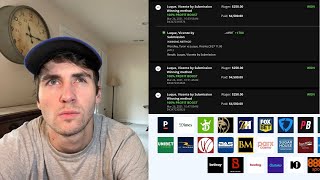
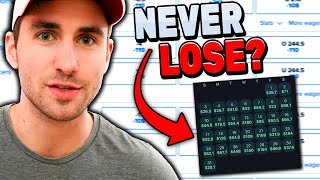
The creator states they made $5,776 betting on MLB, a 6.32% ROI with 380 winning bets, setting up the video's premise.
Advises focusing on first-half money lines, run lines, and totals to avoid the volatility of bullpens and late-game decisions. Recommends using a positive EV tool with filters for odds between -150 and +130 and a 2% edge, using Pinnacle as the sharp sportsbook with the 'worst-case' D'Vig method.
Suggests betting on pitcher strikeout props by analyzing the opposing lineup's strikeout rate, not just the pitcher's average. Recommends a specific odds range (-175 to +130) and a 3% edge or higher, potentially using a custom EV formula with multiple books.
Recommends betting on player hits plus runs plus RBIs instead of total bases, as it offers more ways to win. Advises using BookMaker as the sharp book for this prop and sticking to a 2-3% EV edge with odds around +/-200.
Warns against overreacting to a player's last five games, calling it a 'false narrative' due to the small sample size. Advises focusing on season-long data and matchup history instead.
Emphasizes the 1-3% rule for bankroll management, risking no more than 3% on a single straight bet. This is presented as the key to long-term profitability and avoiding account blow-ups.
Recaps the five tips and directs viewers to another video on favorite and least favorite player prop markets.
The video provides a structured, strategy-based approach to MLB betting, emphasizing market selection, statistical analysis, and risk management. While the advice is presented as a path to profitability, it also serves as a promotion for the Odds Jam platform and its tools.
What is the primary reason to focus on first-half markets in MLB betting?
To reduce variance from bullpens, late-game management decisions, and random chaos in the later innings.
00:14
What is the recommended odds range for betting pitcher strikeout props?
Between -175 and +130, with a minimum edge of 3%.
02:31
What is the suggested alternative to betting player total bases?
Betting on player hits plus runs plus RBIs.
03:02
Why does the creator suggest ignoring a player's last five games?
Because it's a tiny sample size that creates a false narrative, and a five-game sample means nothing in a 162-game season.
04:42
What is the 1-3% rule in bankroll management?
Never risk more than 3% of your bankroll on a single straight bet, with most bets in the 1-2% range.
05:11
First Half Market Strategy
Provides a concrete, actionable strategy to reduce variance by focusing on a specific market segment.
00:14Alternative Prop Bet
Offers a specific, less-known betting market (hits + runs + RBIs) as a strategic alternative to common bets.
03:02Sample Size Fallacy
Correctly identifies a common cognitive bias in sports betting, emphasizing the importance of larger sample sizes.
04:27Bankroll Management as Key
Reinforces the fundamental principle that bankroll management is more important than individual bet selection for long-term success.
05:11[00:02] Last year, I made nearly $6,000 betting on Major League Baseball. $5,776 on Major League Baseball. $5,776 to be exact. A 6.32% ROI with 380 winning bets. And today, I'm going to share the exact five tips that made this
[00:14] possible. If you're tired of losing money betting on baseball, pay attention because these five strategies will change everything. Tip number one, and this is absolutely crucial, focus on first half markets. First half totals,
[00:27] first half run lines, first half money lines. Here's why this is pure gold. When you bet a full game, you're not just betting on the starting pitchers, you're betting on both bullpens, late game management decisions, and random
[00:39] chaos that happens all the time in the seventh, eighth, and ninth innings. But first half, you're only dealing with the first five innings, which is primarily mound. Over here at the Odds Jam positive EV tool, open up the filter
[00:52] section, and this is where I focus on a minus 150 minimum odds to plus 130 maximum odds, looking for plays that have of a 2% edge, and most importantly, we're using Pinnacle as our sharp sportsbook, and worst-case D Vig method.
[01:08] Out of all the D Vig methods, this is the most conservative, and so if we see a 2% edge with worst-case, I have confidence that there's a higher edge using any other of the D Vig methods. Last, go over to your market section and
[01:21] specifically select first half money lines, first half run lines, and first half total runs. Click save filter, and then set this up for MLB first half. And that's all you have to do. Click save, and you're set to go. When you can come
[01:35] back over here now and just click refresh and see the plays pop up for you, and then bet them. Depending on the sports books that you have accounts with, you can also set that up over here as well to make life very simple. Tip
[01:47] number two, bet pitcher strikeout props based off of the matchups. This is where most casual bettors get it completely wrong. Don't just look at the pitcher's season strikeout average. Look at the opposing lineup strikeout rate against
[02:01] facing a lineup that struggles against lefties, bet the over. That's gold. But on the flip side, if you have a ground ball pitcher that pitches to contact, in play a lot, well then bet the under. These tips allowed me to earn over
[02:16] $1,500 in the month of April just betting pitcher strikeout. Sticking to a minus 200 to plus 200 odds range is optimal. I love to go between minus 175 and plus 130, and I love to find plays that have a minimum of a 3% edge or
[02:31] higher. Using Pinnacle and worst case was fantastic for me last season, but for my platinum members over at Odds Jam, don't be afraid to mix in the custom EV formula builder, where you can add in Pinnacle, Circa, and let's say
[02:46] BookMaker, and get a three book blend where you can find the truly elite strikeout plays. Tip number three, and this one's a game changer. Stop betting player total bases, and start betting player hits plus runs plus RBIs instead.
[03:02] half total bases on a hitter. He goes one for four with a single, but drives and a half total bases on that player, you lose. But the over one and a half hits plus runs plus RBIs, you cash because he got a single plus an RBI.
[03:17] This prop gives you multiple ways to cash the over. Sacrifice flies count as RBIs for that hitter. Or if your hitter draws a lot of walks, and they get into scoring position, this gives you another opportunity to cash. You're betting on
[03:30] an overall offensive contribution instead of hoping to get that extra base hit or multiple singles within a same game. When you come over here to Odds Jam, make sure that you click on both of these props. And then for our D-Vig
[03:43] settings, make sure that you use BookMaker as your sharp book, because Pinnacle doesn't offer odds on this specific prop. Next, you can set to either power default or worst case, both are fine for this specific prop.
[03:56] Focusing on a 2 or 3% EV edge is optimal, and then as always for your minimum maximum odds, stick between a plus minus 200. If you want to see less variance, go to that plus minus 150, or take it a step further, plus minus 125.
[04:12] far, make sure to smash that subscribe button, click that thumbs up button, and miss the next video that we release. Tip number four, and this might save you more money than anything else. Stop paying attention to the last five games.
[04:27] statistic because they think they're providing you inside information. And this is a classic misdirection. The books know that casual bettors love pitcher that gave up eight runs in their last outing, or a hitter that's went 0
[04:42] for 15 in the last five games. But this creates a false narrative on tiny sample sizes. Remember, Major League Baseball plays 162 regular season games. A five-game sample means absolutely nothing. What matters
[04:57] is season-long data, matchup history, and finding plays that actually have an edge in the sports betting market. And tip number five, and the one that kept me profitable all season long, strict bankroll management using the 1 to 3%
[05:11] rule. No matter how confident I was in a bet, I never risked more than 3% of my bankroll on one single wager. And I'm not talking about parlays, I'm talking about single straight bets. Most of my bets lived in that 1 to 2% range, and
[05:26] this isn't sexy, but it's what separates long-term winners from those who blow up their accounts within a week. So, there you have it, the exact five tips that helped me earn almost $6,000 betting on Major League Baseball last season. Start
[05:39] markets. Pay attention when you're betting pitcher strikeouts on the team. Do they make a lot of contact, or do they swing and miss a ton? Stop betting player total bases and start betting player hits plus runs plus RBIs. Stop
[05:53] looking at the last five games. It's a trend and it's setting you up to fail. And last but not least, pay attention to your bankroll management, sticking to that 1 to 3% range. Outside of these tips, take a look at this video that's
[06:05] popping up on the screen right now that's going to show you my favorite and least favorite player prop markets to attack for this baseball season.


⚡ Saved you 0h 06m reading this? Transcribe any YouTube video for free — no signup needed.