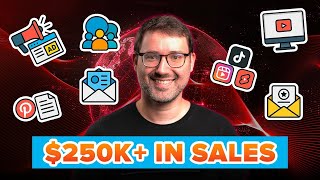

7 Affiliate Strategies That Actually Work in 2025
45sThe video opens with a bold promise and a relatable metaphor about outdated strategies, immediately hooking viewers who want to make money in affiliate marketing.
▶ Play Clip"Delivers on the promise of seven strategies with actionable details, but the 'crazy commissions' hype is oversold; it's solid content with some fluff."
This video presents seven affiliate marketing strategies for 2025, emphasizing the need to adapt to changes like AI and shifting consumer behavior. The strategies include native advertising, short-form organic social, YouTube, newsletters, Pinterest plus blogging, community management, and brand-based email marketing, each with practical tips for implementation.
Daniel Thrasher, Senior Content Manager at ClickBank, introduces seven affiliate strategies that are currently generating significant income, emphasizing the importance of choosing the right vehicle over mere hustle.
The digital landscape is rapidly changing due to AI, with Google's AI mode stealing clicks, content channels flooded with AI-generated text, and consumer behavior shifting toward AI chatbots for answers.
Native advertising on platforms like Taboola, Outbrain, and Newsbreak is the third largest traffic source for top ClickBank affiliates. It blends with content, offers rich targeting, and ClickBank provides $500 in ad credit for new campaigns.
Short-form video on TikTok, Reels, and Shorts is the fifth biggest traffic source for top affiliates. It's built for discovery, not followers, allowing new creators to gain reach without an existing audience.
YouTube remains a goldmine for affiliate marketing, offering five discovery avenues (search, suggested, browse, channel, direct). Long-form videos build trust and have a longer shelf life, with multiple links allowed in descriptions.
Email newsletters have seen a renaissance, with platforms like LinkedIn, Beehive, Kit, and Substack. They offer high engagement (open rates often exceed 30%) and position the creator as an authority.
Google has killed traditional affiliate blogging, but Pinterest acts as a visual search engine, driving warm, high-intent traffic. Blog posts promoted via Pinterest can rank in Google, AI search, and Pinterest itself.
With social media algorithms throttling organic reach, communities (Facebook groups, Discord, Circle, Skool) provide an owned space to deepen relationships and increase the likelihood of following affiliate recommendations.
The old 'blast-for-cash' email model is failing due to deliverability issues and audience fatigue. Instead, focus on value-first, story-based selling, warm-up sequences, and maintaining strong engagement metrics.
The most common mistake is trying to implement too many strategies at once. Pick one strategy, master it over 3-6 months, and then expand. This builds expertise and audience understanding.
The video concludes by urging viewers to commit to one strategy and master it over three to six months, rather than spreading efforts thin. It emphasizes that success comes from deep focus and understanding your audience, not from trying to do everything at once.
Taboola
tool
Outbrain
tool
Newsbreak
tool
Anyword
tool
Jasmine
tool
StanStore
tool
Linktree
tool
ClickBank Accelerator
tool
Minichat
tool
Descript
tool
OpenClip
tool
SoonO
tool
Levin Labs
tool
Beehive
tool
Kit
tool
Substack
tool
Canva
tool
Tailwind
tool
Circle
tool
Skool
tool
ClickBank
service
Daniel Thrasher
person
Bark by ClickBank
link
AI is disrupting affiliate marketing
Highlights the critical impact of AI on traffic and consumer behavior, setting the context for why strategies must evolve.
01:06Native advertising is a top traffic source
Reveals a less-saturated, scalable traffic channel that many affiliates overlook.
02:04Short-form video is built for discovery
Explains how algorithms now favor content over followers, enabling new creators to gain reach without an audience.
04:25Google has killed affiliate blogging
Acknowledges a major shift in SEO, prompting affiliates to pivot to alternative platforms like Pinterest.
14:28Email marketing must shift from blast to brand
Emphasizes the need for value-first email strategies to combat deliverability and audience fatigue.
21:24[00:00] Today, I'm sharing the 7 affiliate strategies that are putting serious money on top of affiliates' pockets. These are the tips to help you build momentum and finally start earning crazy commissions. Because here's the thing, affiliate marketing isn't just about hustle.
[00:13] It's about picking the right vehicle. These days, most affiliates are riding a lawnmower in a 401k. You may be moving, but not fast enough to actually win. And in 2025, if you're still clinging to outdated affiliate strategies, you're not just slow, you're stalled out.
[00:27] I'm talking about vehicles like blogging, coupon sites, or expanding Facebook groups. Those things used to work, but the game has changed. If you want to win in this new era of affiliate marketing, you've got to change with it.
[00:39] By the way, I'm Daniel Thrasher, Senior Content Manager here at QuickBank, and our team works to record with hundreds of top-performing affiliates, including Platinum Partners doing over $250,000 in annual sales,
[00:51] so we can see exactly what's driving results in 2025. Let's get into it. I'm going to cover seven strategies here, but before I do that, I want to quickly point out that there is a reason we're making this video right now. Because a lot of the strategies affiliates have been following for years are suddenly not working very well anymore.
[01:06] Obviously, exact strategies and tactics will shift from year to year, but we're legitimately in that fast-changing digital landscape that ChatGPT likes to talk about. In fact, AI was one of the biggest reasons why this is happening.
[01:18] Google's AI mode is stealing clicks from websites, content channels are getting inundated with AI-generated text and media, and consumer behavior is changing as more and more people jump into AI chatbots to ask questions and get their answers.
[01:31] With all that in mind, I want to point you toward traffic sources and strategies that affiliates actually see results from, because we don't want anyone spinning their wheels trying to make the wrong business go. Let's start with number one, native advertising and large-scale traffic channels.
[01:45] You've probably heard plenty of hype about Facebook ads and YouTube ads for making affiliate sales, but you might be missing out on one of the most scalable affiliate strategies working right now, Native advertising. We're talking about platforms like Taboola, Outbrain, and even newer channels like Newsbreak, which combine native ad inventory with massive first-party user data.
[02:04] Native is actually the third largest traffic source that top six fake clients are using to make affiliate sales right now. Facebook ads is still number one. But this is perfect for so many types of affiliate products, and it's nowhere near as saturated as the other big ad networks.
[02:17] The reason native ads are so powerful is because they blend in with the content people are already consuming, which makes them less disruptive and more engaging. Now, what specifically sets Newsbreak apart is that it's not just an ad platform, it's a popular news app itself, featuring millions of active users.
[02:32] And because these users are logged in, you get rich targeting options that you wouldn't find on traditional native ad networks. So, instead of spray-and-pray targeting, you're tapping into behavioral signals and smart segmentation while still driving the game.
[02:45] For a quick example, let's say you're promoting a clickbait health offer like Helvets for Strong. On Newsbreak, you can target women over 40 in urban areas who actively engage with wellness or lifestyle articles and serve them a native ad that looks like a piece of content they already trust.
[02:58] This is exactly how affiliates are getting dirt sheet clicks and serious conversion volumes, all without needing a massive budget up front. And best part, ClickBank is currently offering $500 in ad credit for ClickBank affiliates who launched their first campaign on Newsbreak this year,
[03:12] as long as you already earn a paycheck and are in good standing on ClickBank. And if you're a platinum level affiliate, you can qualify for up to $2,000 in ad credit. So this is one of the few paid strategies to actually lower your area of entry instead of raising it.
[03:25] Just make sure you take advantage of this offer before the end of the calendar year. So to get started, here are a few things to know about native ads. First, you should build free landers specifically for mobile. Those bridge pages or landing pages that you build should work best on mobile
[03:39] because that's where most native ad traffic comes from, people reading an article on their phone. So make sure that your landing page loads quickly and presents a compelling case for your affiliate offer within seconds. Keep your paragraphs short, use bulleted lists, and incorporate scroll-stopping visuals to encourage lots of clicks through to the vendor's pitch page.
[03:56] Next, focus on the click-through rate and on-page conversions. Native platforms reward engaging content that performs well, which will reduce your cost per click as your click-through rate improves. So develop headlines that promise clear benefits or arouse curiosity without veering into clickbait territory.
[04:11] Lastly, aging test your ad copy and creatives with AI-assisted tools. Platforms like Anyword or Jasmine can help you generate variants of your best-performing ads, while visual AI tools can help create multiple versions of images to identify what is resonating most with your target audience.
[04:25] Okay, the second strategy is short-form organic social. We're talking TikTok, Reels, Shorts. Believe it or not, organic is currently the fifth biggest traffic source for top ClickBank affiliates,
[04:37] and short-form video specifically is the perfect opportunity for massive organic reach this year. The biggest platforms are TikTok, Instagram Reels, and YouTube Shorts. So if you're not running paid traffic like native ads, then the short-form video format might be the fastest way to start seeing results as an affiliate in 2025.
[04:54] And yet, a lot of affiliates are completely ignoring it. The reason short videos are so powerful is because the format is still up and coming, believe it or not. There's a ton of demand for short videos, and not necessarily as much supply as you would see for the longer videos on YouTube,
[05:07] or articles and pages on the wider internet through Google search. Now, I get why you might not be active in these places. Maybe you're an elder millennial like me who don't get these platforms that the kids are on today. Or maybe you just don't see an obvious connection between creating short-term content
[05:21] and making actual affiliate sales. Well, here's the good news. Within the last few years, there's been a huge shift in social media algorithms. And today, short-form video platforms are really built for discovery, not followers.
[05:33] That means you don't need an existing audience to start winning on organic social media. You just need compelling videos around a very targeted subject or niche. It's like big tech is handing you a fresh lottery ticket every single day, and each time you tap publish is another chance to hit the social media algorithm jackpot.
[05:49] But the best part is, if you know how to create content that hooks curiosity and delivers value quickly, you don't really need luck to find success and drive traffic to affiliate links in your bio, through your link tree, or directly to a landing page or email opt-in.
[06:02] So as an example, let's say you're promoting a digital product from ClickBank, such as the spirituality offer in numerology. You could post a 30 to 60 second video like a quick myth-busting tip, a mini-story, or a mistake you made,
[06:14] a reaction to a viral post within that manifestation niche, or a visual demo or a before and after testimonial. And then at the end of these short clips, you could say something like, Want to learn how I did it? Links in bio. Or Retraining the link This changed everything for me Or Interested Comment viral in the comments and I DM you the link And because you can post daily test new hooks fast and remix what working you have a powerful feedback loop for better conversions
[06:38] especially once you figure out what kind of videos your audience reacts to. And no, you don't need to be a creator. You just need one repeatable format that keeps growing your audience and gets consistent clicks to your landing page. Some of the top ClickBank affiliates we work with are using faceless reels with AI voiceovers
[06:53] or talking head tip videos and building real traffic streams in just weeks. Short form video is a traffic source you can easily test today, even if you're just starting out, completely unknown, or still figuring out your niche.
[07:05] So, how do you get started with short form? I would start by creating quick tutorials or how-to videos. The idea is to create content that ties your show's affiliate product to a specific pain point. In other words, you're not selling a product.
[07:17] You're proving that you understand the viewer's pain point and then encouraging them to take the next step, which might be DMing you, commenting, or clicking the link in your bio. Next, you should use new tools for your sales funnel. We know that short-form video platforms don't love links or sending viewers away,
[07:32] but in order to make money with affiliate marketing, that's exactly what you have to do. So consider paid building tools like StanSore, Linktree, or ClickBank Accelerator, which make it really easy to stand up a quick landing page to link to from your bio and embed that tracking link.
[07:46] Or secondarily, you could try a chat marketing tool like Minichat, where you can send your affiliate link to followers who leave a comment asking for it. And then lastly, you can use AI to accelerate production. These days, there are countless AI tools available to speed up your workflow for creating short videos.
[07:59] Things like Descript for scripting and editing, OpenClip for extracting the most engaging segments from longer videos to repurpose on other platforms, SoonO for AI-generated music, or Levin Labs for AI-generated sound effects and voiceover. The kind of video quality you can see these days with a phone in your pocket,
[08:14] plus AI-powered tools, is off the charts. Now, short form video is fantastic for awareness and discovery, but if you want a more intimate connection with your audience, something that will drive clicks and engagement day after day, that's where our next strategy comes in.
[08:27] YouTube video. Organic YouTube is still a goldmine for all kinds of marketers, and that includes affiliate marketers. Whether you're focused on building a brand or just promoting affiliate products, YouTube continues to be the number two largest search engine in the world, behind only Google, at least for now.
[08:42] The key with YouTube is discoverability. That's what rankings, blog articles, and Google search used to be all about for affiliate marketers. And many of those same tactics that you may have employed with affiliate blogging back in the day can work just as well now with YouTube.
[08:54] But here's the cool thing. On YouTube, you actually have five different discovery avenues, if not more, for your videos. Things like YouTube search, the suggested videos, the browse features, the channel page itself,
[09:07] and direct traffic, such as from Google search, embeds on other websites, or even AI mentions. Snared is an example of traffic sources from one of my top performing YouTube videos for ClickBank's channel. Like short form video, YouTube is powerful for discovery, but it's also incredible for
[09:21] engagement. Because YouTube videos tend to be long form, usually in the 8-15 minute range, or sometimes even longer, you have the ability to engage an intent driven audience in your niche for several minutes at a time. A viewer who watches one of your YouTube videos may need to consume 20 or more short videos
[09:36] to hit the same total watch time. Plus, the shelf life of YouTube videos is also much longer than a short form video, which is why many of ClickBank's most viewed YouTube videos this very month were posted a few years ago. On YouTube, you can build trust remarkably fast.
[09:49] There's a credibility that comes from seeing a real person, demonstrating a product, or explaining a topic on video. And of course, you can easily include multiple links to your affiliate products in the description of your video, which is a great benefit of YouTube over short-form video platforms.
[10:02] In the big picture, YouTube continues to be one of the best channels for affiliate marketing. Let me show you an example. There are plenty of videos from people reviewing popular ClickBank products, such as brain training for dogs. Product review content is one great way to address a solution aware
[10:16] or product aware audience and generate affiliate commissions. But you can create more topical content as well. In the pet niche, that could be topics like which breed of dog is right for you or grooming tips for black labs.
[10:28] The point is you want an audience that's primed to buy and who know, like, and trust you enough to take your recommendation and click through your affiliate link to make a purchase. So how do you get started with YouTube? First, create in-depth affiliate product reviews and tutorials.
[10:41] There are all kinds of video types that feature products, from unboxing to product reviews to tutorials or how-to content. In these videos, address the specific questions and concerns your target audience may have about the product you're promoting,
[10:53] or for a more general audience, dive into the biggest pain points that your chosen affiliate products will alleviate. Next, leverage YouTube Shorts for top-of-funnel reach. I know we just talked about short-form video, but there is actually a place for YouTube Shorts in your longer-form YouTube video strategy.
[11:08] YouTube's vertical short form videos can introduce your channel to new viewers and then direct them towards your longer, more detailed content that contains your affiliate links. While shorts themselves can't contain clickable links, they're perfect for higher reach and channel growth.
[11:21] Lastly, focus on consistency over perfection. Establish a sustainable publishing schedule and focus on providing genuine value rather than overt selling. The most successful YouTube affiliates position themselves as trusted advisors first and promoters second.
[11:35] Ideally, you should be publishing at least one longer video each week. And last of all, I would highly recommend taking just one specific niche or topic to drill your channel around. This will help the algorithm know where to push your content and help you get momentum for your videos over time.
[11:49] Now, let's switch gears and talk about a written format that can help you make money as an affiliate. Number four is newsletters. Email newsletters have experienced a remarkable renaissance this past year, powered by popular publishing platforms like LinkedIn, Beehive, Kit, and Substack.
[12:06] Newsletters are a reliable way for a brand or content creator to craft words that are truly written for human readers and not algorithms. In fact, many top affiliates are now focusing intensely on building and monetizing newsletter audiences.
[12:18] Like with video content, newsletters are actually content, which means the idea is to deliver value, not just invoke curiosity or grab attention. A well-produced newsletter positions you as an authority in your niche while creating regular text points with your audience, which you can leverage to promote affiliate products.
[12:33] But the best part is, newsletters typically see high engagement rates and conversion metrics. Open rates for niche newsletters can frequently exceed 30%, which makes it an ultra-reliable channel to promote affiliate offers to an engaged audience.
[12:46] So, in a newsletter example, let's say you're promoting an e-business or personal finance offer on ClickBank. You could run a weekly newsletter like Money Made Simple, where each edition offers a quick tip for managing finances or growing an online business a short story or case study about someone who trained their finances around and a featured tool or product like your ClickBank affiliate offer with a natural tie Each week for your newsletter you build trust and offer value
[13:09] And when an affiliate promotion makes sense, your readers already know life interrupts you, which means they're primed to convert. Even if only a small portion of your audience buys, the math starts to work pretty quickly with recurring newsletters. Especially if you're combining high-ticket digital offers with a list that's growing every month.
[13:24] These are the kind of products that cost a lot, but pay out a lot, so they can be the best when you've got a strong relationship with your audience. Do you want to get started with newsletters? First, I would blend curated content with soft affiliate pitches.
[13:37] The most effective newsletters provide genuine value through industry news, useful resources, and original insights with affiliate promotions woven in naturally rather than dominating the content. Next, I would experiment with solo ads and dedicated affiliate offers.
[13:50] Once you've established trust with regular value-driven content, you can experiment with sending some dedicated promotional emails that do feature just that single affiliate offer. Just make sure you're still focused more on delivering value than making the ask.
[14:02] Lastly, build your newsletter using platforms that are designed for growth. Services like Beehive or Kip offer specialized features for newsletter creators, including native monetization options, automated workflows, and detailed analytics.
[14:14] Like with any other affiliate strategy, newsletters will only work if you focus on delivering consistent value that addresses your audience's interests and pain points. If you can get this right, you can monetize through not just affiliate marketing, but sponsored ads, and even your own products and services.
[14:28] Speaking of writing, let's talk about blogging. As a long-time SEO guy, I hate to say it, but Google has basically killed the affiliate blogging business model that so many publishers and smaller affiliates have relied on for the past two decades.
[14:40] It's much harder to rank in Google and get traffic these days, especially with Google's push into AI mode and AI overviews that now result in a lot more zero-click searches. That's where Pinterest comes in. This long-standing social media site is more like a visual search engine than a traditional social platform.
[14:56] That means users aren't just scrolling to kill time, they're actively looking for inspiration, ideas, and products that solve their problems. So, if you're looking to create a new affiliate blog, or you're sitting on an existing blog that isn't feeling the love from Google anymore,
[15:10] Pinterest is an incredible fit for evergreen blog content in niches like health and fitness, recipes and food, relationships and lifestyle, Music and creative hobbies, DIY, fashion, and personal finance.
[15:23] Best of all, the blog posts you promote via Pinterest can rank in traditional search like Google, but also AI search and in Pinterest itself all at the same time, which gives you several discovery engines working together to drive long-term affiliate sales.
[15:36] As an example, I've been experimenting with this exact strategy on my music niche website to promote a ClickBank music offer called Piano For All. Years ago, I wrote a blog post featuring 101 songwriting prompts that I optimized for SEO, aka Google.
[15:50] When I wanted to start promoting the post and my chosen affiliate products on Pinterest, I was simply able to slice and dice all those different prompt ideas that I'd already created for the blog post into more than a dozen different vertical graphics using Canva.
[16:02] It takes a while to find what works best for your niche and get the momentum going on Pinterest, but it does work. I've been getting dozens of monthly outbound clicks to my website, plus affiliate sales. I like that Pinterest sends warm, high-intent traffic, often better than TikTok or Instagram for affiliate blog conversions.
[16:18] Also, Pinterest content sticks around for a lot longer, so a single good pin can generate traffic for months or even years, just like how SEO content should do. So, if you want to get started with Pinterest and blogging, I would recommend first creating an SEO-optimized blog post with strategically embedded affiliate links.
[16:34] You should focus on mostly informational keywords with some commercial intent, such as best product for a specific use case or how to solve problems within product category. Pin every blog post with multiple creative variations.
[16:47] There's different visual styles and text overlays that allow you to test what will resonate best with Pinterest users. So create at least three to five unique pin designs for each important blog post to maximize visibility. And don't be afraid to publish a winning pin design again later.
[17:00] This is actually a best practice on Pinterest. Lastly, I would leverage scheduling tools like Tailwind to maintain a consistent presence. Pinterest really rewards regular activity on their platform, and scheduling tools will help you keep up a daily posting cadence without nearly as much manual work.
[17:15] Whether you're in a creative niche like mine, or something more commercial like fitness or finance, Pinterest plus blogging gives you a compounding content strategy that grows over time and keeps working long after you hit publish. I would note that when you're going the Pinterest plus blogging route, patience is essential.
[17:31] Unlike paid traffic or viral short-form content, the Pinterest plus blogging combination typically builds momentum over months rather than days. However, once your Pinterest account has momentum, you've got an organic traffic source to power your blog
[17:44] and deliver affiliate commissions with minimal maintenance. Now, let's shift gears and talk community management. Have you noticed that everyone seems to have an online community lately? Well, there's a good reason why this is happening, and it's sort of the dark side of what I mentioned earlier about the rise of short-form video.
[18:00] See, social media used to work on a follower model where you would subscribe or follow people, and that meant you would definitely get notified and watch their new content when they posted it. But these days, most social media is modeled after the For You page popularized by TikTok,
[18:15] with an algorithm that curates content to watch based on what viewers have already engaged with. So, that's amazing for getting discovered by new people, but it actually throttles your organic reach with your own audience on these big platforms,
[18:27] whether you're talking YouTube or TikTok or Instagram. So once you want to engage with your followers on a regular basis, for that, you need a community. With shared interest and ongoing interaction, you can deepen that relationship you have with your audience and make it a lot more likely that they'll follow your affiliate product recommendations
[18:42] as well as other monetization opportunities like a paid subscription, coaching, or online course. To run your startup with communities, here's what I recommend. I personally follow a few different content creators around the topics of content marketing and writing,
[18:55] one of them primarily on YouTube, another primarily on LinkedIn. In both cases, after I consumed some of their content and joined their email list, I was invited to their free school community. Separate from those, I've also joined paid circle communities and private Facebook groups based on digital products that I paid for.
[19:10] But whether a community is free or paid, it's a key step away from one of those rented platforms like social media and into a dedicated owned space where you can connect with your audience consistently as a brand or a creator.
[19:22] And I'll admit, when I'm in a community following someone I admire and whose opinion I respect, I take their recommendations seriously whether they talking recording gear books to read or software to try in one case someone I follow even listed out the team he uses to edit his videos which is essentially a cost affiliate recommendation
[19:40] Pretty smart. So, if you want to get started with communities, first I would recommend that you build a community on a platform that aligns with your audience's preferences. Facebook groups are very popular for many demographics.
[19:52] Discord tends to attract a younger, more tech-savvy audience. Then you have black communities which work well for professional or B2B niches, and then something like school is great for a more casual audience that responds well to gamification.
[20:04] Next, I would prioritize engagement and value creation before attempting monetization. To monetize your community, you're going to need to establish yourself as a helpful and knowledgeable leader in your space rather than just someone interested in making sales.
[20:16] So create some sort of rituals, traditions, or participation opportunities inside your community that keep members actively engaged. don't make the mistake of thinking that your community will sustain itself without you personally adding value, because you're the reason everyone joined in the first place.
[20:31] And then lastly, introduce affiliate offers that naturally address the problems that are frequently discussed in your community. The most effective community-based affiliate promotions are solving the issues that members are actively talking about. In other words, rather than just
[20:43] finding a product and then trying to make people want to buy it, why not wait and see what they say they need help with, and then go find a solution for that that you can promote. With this approach, you're actually providing real value when you promote affiliate products,
[20:57] as long as those products are addressing one of your audience's things for you. Community-based affiliate marketing does require a longer-term perspective and genuine interest in serving your members. While it may not generate immediate returns compared to paid advertising tactics,
[21:10] community is a fantastic foundation for sustainable affiliate income in the long run. But of course, community is only one pillar of your owned audience strategy. That last one that you're going to need is brand-based email marketing.
[21:24] For years, one of the go-to affiliate strategies has been simple. Build an email list and blast it. A lot of successful ClickBank affiliates have used this approach, sending out three, maybe even five promotional emails per day to drive quick commissions
[21:37] while allowing their subscribers to come in and leave like a revolving door. And for a while, that model worked pretty well. Volume-based promotions, curiosity-based subject lines, and a rinse-and-repeat formula could deliver consistent revenue. But in 2025, it's getting harder and harder to make that blast-for-cash model work for two primary reasons.
[21:54] First, you have deliverability. With Gmail and other providers tightening spam filters, the more you blast your list, the less often your emails will even hit the inbox. High unsubscribe rates and low engagement can tank your sender reputation fast.
[22:08] And then number two is audience fatigue. Your subscribers are more savvy than ever. They don't want just another sales pitch. They want real value, unique insight, or a sense that they're following a trusted brand, not just a rotating door of affiliate tracking links for them to click.
[22:22] So, as an example, let's say you're in the dating and relationships niche, and you're promoting a ClickBank product like Consecrated Sessions. Instead of hammering your list with daily open now style subject lines, you can structure your email strategy around a brand identity,
[22:35] like Manifest Mondays or the Inner Power Digest, where each email includes a quick inspirational tip, a short story or testimonial, a single affiliate link with some sort of context. Because your readers see your name in their inbox
[22:47] as a source of helpful, consistent content and not just another pitch, they're much more likely to open, click, and convert over time. It's not necessarily about mailing less, it's about mailing better. It doesn't mean you have to become a newsletter either.
[23:00] You can still be a brand or an individual creator with an email list, but it does mean focusing on value first, promotion second. So, you want to get started with brand-based email marketing. First, use soft CPAs and story-based selling.
[23:13] It's a really good practice to tie your affiliate product to a personal story or a user journey rather than a raw pitch. This could be your own story, the story of one of your customers, maybe even someone you've seen as a product reviewer or a testimonial for the product.
[23:27] Next, warm up new leads with automation. I would set up a 5-7 day welcome sequence that builds a relationship and trust with new subscribers before you aggressively pitch anything. And lastly, pay close attention to your engagement metrics.
[23:39] You can be cleaning your list regularly, segmenting based on behavior, and focusing on maintaining strong open and click rates above industry averages, which is typically 20 plus percent for open rate and 2 percent plus for click rate.
[23:51] If you do this, it'll ensure your list doesn't burn out and you can continue getting the most value out of your email list. When building out your email marketing strategy, I highly recommend focusing on list quality over quantity. In the world of email, a smaller list of engaged subscribers who trust your recommendations will always outperform a larger but more disengaged audience.
[24:10] So, provide genuine value in every email, even the strictly promotional ones, to keep your emails landing and winning. As I've covered in this video, affiliate marketing in 2025 offers many possible pathways to success.
[24:22] So, what now? Commit to one strategy and do it really well. The most common mistake that aspiring affiliate marketers make isn't choosing the wrong strategy, it's trying to implement too many of the right strategies at the same time.
[24:37] Especially if you're doing so as an individual without the tools, teams, and systems to support all of these different strategies at once. Think about it this way, you are competing against people who are all in on a single traffic channel, whether that's newsletters, YouTube, Instagram, native ads.
[24:51] Not only that, but those people are experts at their chosen strategy. So how could you possibly compete with them while you're trying to master two or three or even more of these strategies at the same time? In my experience, you can't.
[25:04] So pick one strategy, block out all the rest, and master it over at least three to six months. Not only will this help you master that specific strategy or traffic channel, but it'll also help you get to know your audience or niche a lot better too.
[25:18] So if you then want to expand to other strategies later, you already understand what makes your audience tick and then can find success in those other areas that much more quickly. Anyway, that's all I have for you in this video. I hope it helped a lot.
[25:30] For me, it's always nice to know that if I'm starting something, there's proof it will actually work. So with these seven affiliate strategies, if you're still trying to decide how to start, you should have the confidence to finally pick a path. Drop a comment if you have any questions or want more advice on any of these strategies.
[25:44] And of course, if you want to dive deeper into any of these traffic channels, we actually have an online education platform called Bark by ClickBank. And it's a fantastic place to dive deeply into everything from email to native ads to short form video.
[26:00] So be sure to check that out. We'll have a link in the description. Until next time, happy scaling.
![The New Type of Affiliate Offer You Need to Promote! [Beginner-Friendly]](https://img.youtube.com/vi/PtBauapO5NA/mqdefault.jpg)
⚡ Saved you 0h 26m reading this? Transcribe any YouTube video for free — no signup needed.