
What Passive Income Actually Means
40sChallenges the myth of get-rich-quick and sets realistic expectations.
▶ Play Clip"Delivers on the promise of eight income streams and provides realistic earnings examples, though the weekly figure is an extrapolation."
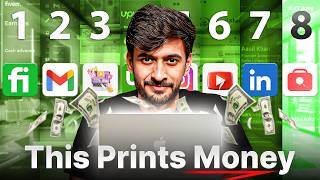
This video explores eight methods for building passive income, including YouTube content creation, digital products, affiliate marketing, online courses, investing, paid communities, consultations, and automated businesses. Each method is rated on ease of startup, time to first earnings, and how passive it truly is.
Passive income means money not directly tied to your time; it requires upfront work but can earn while you sleep.
Easy to start but hard to grow; requires understanding of algorithm and psychology. Time to first rupee: ~1 year+. Passive score: moderately passive; older videos continue earning.
In 2025, $576,000 rupees from AdSense, mostly from older videos. Current passive income ~ 50k rupees/month from past content.
Create once, sell forever with zero marginal cost. Examples: Notion templates, motion graphics, ebooks. Barrier to entry is low; challenge is making something people want.
Recommend products you use; earn commission. Requires audience to generate significant income. Very passive once links are placed.
High upfront effort but very passive after launch. Example: Fiverr course earned $2,600 in first month, $5,000 lifetime. Requires months of work.
Corporate bonds offer 9-12% returns. Platforms like Wind Wealth make it accessible. Requires capital; returns are long-term.
Monthly recurring revenue from exclusive content. Example: 200 members at 500 rupees = 1 lakh/month. Not fully passive; requires ongoing engagement.
Trade time for high-value advice. Topmate example: pricing from 3k to 15k. Not passive but can lead to productized offerings.
Build systems and a team. Speaker's Fiverr business with 10 editors generates 7-8 lakh/month with minimal personal involvement. Hardest to start but most scalable.
Building passive income requires significant upfront effort and skill stacking, but once established, these streams can generate money with minimal ongoing work. The key is to start with one core skill and diversify around it.
What are the requirements to monetize a YouTube channel?
1,000 subscribers and 4,000 watch hours.
03:04
How much did the speaker earn from YouTube AdSense in 2025?
576,000 rupees.
03:38
What is a digital product?
Something created once and sold infinitely with no shipping or manufacturing cost.
04:17
Name one example of a digital product mentioned in the video.
A Notion template for a business book club.
04:44
How much affiliate income did the speaker earn from Epidemic Sound?
$200.
06:54
How long did it take the speaker to build his online course?
About a year.
09:18
What is the typical return range for corporate bonds mentioned?
9-12% depending on the bond.
11:53
How much does the speaker charge for a Fiverr profile review?
3,000 rupees.
17:09
What is the difference between a freelancer and a business owner according to the video?
A freelancer owns a job; a business owner owns a system.
19:17
What is the monthly revenue of the speaker's automated Fiverr business?
7-8 lakh rupees per month.
18:53
True definition of passive income
Clarifies that passive income still requires upfront work.
00:38YouTube older videos keep earning
Illustrates the long-term compounding effect of content.
03:38Online course generated $2,600 in first month
Demonstrates potential for high return on upfront effort.
09:31Automated business generates 7-8 lakh monthly
Shows the ultimate goal of passive income through systems.
18:53Skill stacking around core skill
Key strategy for diversifying income streams.
20:25[00:02] really struggled with when I started my freelance career. I already made a video about how much I made across multiple income streams last year, but in this different ways you can make passive income. And for each one, I'm going to
[00:16] tell you three things: how hard it is to get started, how long it realistically takes before you see your first rupee, and how passive it actually is once you everything that you see in this video took years to build, so don't expect to
[00:31] be hitting those number when you're just starting. But this generally is the video which I wish I had when I was starting, when I was trying to build [music] income, I want to be very careful because there is truly nothing
[00:45] like passive income. There's no way to make money without doing nothing at all. What passive income actually means is making money which is not directly tied spent a few months building an online course last year, and now that course
[00:59] sells [music] while I'm sleeping, while I'm on vacation, or while I'm recording the course [music] keep earning. That's what passive income actually means. The other thing I want to say up front, all these things take [music] time. There is
[01:13] literally no get-rich-quick scheme. Everything that you see in this video will take days to weeks to even years. And the only way to make passive income is to provide value in a way that is not directly tied to your time. So, for
[01:25] every income stream, I'm going to give it three ratings. [music] First is getting started. This is how easy or hard it is to actually begin, and the anyone can start today with zero experience and zero money, all the way
[01:38] to very hard, meaning it requires serial skill, capital, or technical knowledge to even get off the ground. Second is [music] time to first rupee. This is how long it realistically takes before you see actual money. It ranges from days,
[01:50] meaning you could earn almost immediately, all the way to 1 year plus, meaning you need to be in for the long game before anything [music] meaningful comes in. And third is passive score. This is how hands-off it actually is
[02:04] passive, meaning you still have to show up and grind regularly, all the way to fully passive, meaning once it's set up, it earns with [music] almost no ongoing effort from you. We will cover all eight passive income methods. Method five and
[02:18] eight are the ones I personally rate the highest, so make sure you stick around for those. That being said, method one is content creation or YouTube. I am obviously going to talk about it because YouTube is a big part of how I
[02:32] make money. So, how easy it is to get started on YouTube? Just getting started is very easy. You go to YouTube, create a channel, film something on your phone, and upload it. That's genuinely it. Anyone can start today, but here's the
[02:44] thing, getting started is the easy part. Getting any attention or views is the difficult part. Because to grow on YouTube, you need to understand multiple things at once. How the algorithm works, how to catch someone's attention in the
[02:56] first few seconds, and a basic understanding of human psychology and starting is very easy, getting good at these things will take months to years. Time to first rupee is close to one year plus. To even qualify for monetization,
[03:10] you need 1,000 subscribers and 4,000 watch hours. I started my YouTube channel in August 2023, and it got monetized by December 2023. But, I did not see any meaningful income for the next 1.5 years. All I was making was $20
[03:24] per month. That's over a year of uploading consistently before the money thinking you'll start this month and you'll start earning by next few months, Passive score, I would say it's very passive. Here's what makes YouTube
[03:38] genuinely powerful as a long-term income stream, older videos keep earning. In 2025, my YouTube AdSense generated 576,000 rupees, and a big chunk of that came from older videos. These days, I get close to 50,000 rupees every month
[03:52] from YouTube ads just from the past videos. Now it's not fully passive because you have to keep uploading and keep showing up, but the older content passive. And on top of AdSense, a growing YouTube channel opens up
[04:04] multiple income streams like brand deals, affiliate marketing, courses, etc. Now how do you get started? I've already made a complete video on how to monetizing. I'll add the link in the description. Now method two is selling a
[04:17] digital product. Now this is one of my favorite because of how simple the economics are. A digital product is something you create once and can sell shipping cost, no manufacturing. You
[04:29] make it once and almost every sale after that is pure margin. This could be an literally anything that solves a specific problem for a specific person. people doing this. The first one is Deia and she is selling a business book club
[04:44] Notion template for $15. A simple, well-designed template that helps people Stephen Zieminski, who is a motion designer who packages his motion graphics template and sells them on Envato. Editors and designers buy his
[04:57] work to speed up their own projects. And closer to home, Radu is selling an ebook knowledge, wrote it down, and put a price on it, and people are buying it. Three completely different people, three completely different industries, but the
[05:10] same core idea: build it once and sell it forever. Now how difficult is to get started? I would say it's easy. Barrier to entry is genuinely low. You can write an ebook in Google Docs and sell it on Gumroad in single afternoon. The
[05:22] technical side of setting this up is not the challenge. The challenge is making something people actually want to pay for. And the way you do that is by identifying a very specific problem that a very specific group of people has and
[05:35] then solving it better than anyone else out there. That is harder than it sounds, but the starting part itself, very doable. Next time to first rupee, I actually one of the faster ways to start earning on the list. If you already have
[05:49] launch day can generate multiple sales. The bigger your audience, the faster it a little longer because first people have to trust you. Only then they'll agree to purchase something from you. But compared to something like YouTube,
[06:03] for which you have to wait for an entire 1 year, this is relatively quicker. Next passive score, I would say it's fully passive. This is as passive as it gets. selling. So, how do you get started? Think about one problem you have already
[06:16] solved for yourself. Could be a workflow, a system, a framework, or anything else. Package that into a simple document template or guide. Put it on Gumroad, set a price, share the link. That's your first digital product.
[06:28] Now, before we move on to the next method, make sure you're subscribed. 80% regularly don't subscribe. Make sure you do that. It will just take 1 minute. Idea number three is affiliate marketing and the concept is very simple. You
[06:41] recommend a product or service that you already use, someone buys it through That's it. Now, I want to be very honest. Last year my affiliate income was fairly low. It was close to 1,000 rupees. But even without focusing it,
[06:54] this year I have generated close to $200 through affiliate marketing and it was through my Epidemic Sound link and in March it's close to $100 now. I put it in my video description, people click it when they need music for their videos
[07:07] [music] And the thing is affiliate marketing is everywhere once you start that you already use have an affiliate program. Amazon has one too. Every headphone, your mic, your desk setup, you can create an affiliate Amazon link
[07:24] Instagram bio. Someone buys it through your link and you earn a small commission. The key thing that you need for affiliate marketing to work is recommendation from people they trust. So, how difficult is to get started? I
[07:37] would say it's very easy. You sign up to an affiliate program, you get your link and you put it in your content. That's it. There's no technical skill required and there's no upfront investment. But here's the truth again, getting started
[07:49] is easy but actually getting someone to buy from your link is the hard part. So, getting results without an audience is very difficult. That's why I put YouTube or content creation as the first method because for passive incomes to work, you
[08:01] need some sort of audience. This is why affiliate marketing works so well on top of something else. [music] For example, YouTube, Instagram, or blog or first and then you build these passive income. Affiliate marketing is a numbers
[08:14] game but if you do it in isolation, you'll struggle for a very long time. Now, time to first rupee, I would say it's few weeks to months. It heavily depends on your audience size and how relevant the product is to your
[08:26] audience. For example, Epidemic Sounds is very relevant to my audience. That's why I'm able to generate income without doing a lot of effort. And next passive passive. This is the most passive source in the list. A link you place in your
[08:39] video description or Instagram bio can make you money years from now. So, how do you get started? Go through every tool and product you already use. Check up, get your links, and start putting them in your content description today.
[08:53] Idea number four is creating an online course and this one is very close to my heart because this was the hardest thing that I had done last year. An online already have, structure it into a proper learning experience, record it as a
[09:06] video program, and sell it. The difference between this and a regular digital product is that this is more in-depth, more transformation focused, and usually priced higher because it delivers more value. I spent almost a
[09:18] full year building my Fiverr freelancing course on Udemy and I was doing it everything else. But here's what happened after I launched the course in June 2025. In the very first month, it generated $2,600
[09:31] consistent passive income stream. And without me doing anything actively. Total lifetime earning of this course is close to $5,000 now. And the most important part, after creating it once,
[09:44] I did not do anything. I did not promote it. The course just sells from organic traffic from Udemy and the links from my video description. I would say getting started is very hard. This is a high effort upfront commitment. You're
[09:56] looking at weeks or months of planning, recording, and editing before you see a put together on a weekend. Along with that, you need to have some sort of people. Then you need to structure the content properly and produce it at a
[10:10] high quality level people are willing to pay for. The barrier to entry is not technical. It's the time and discipline required to create a good course. Time months. Again, if you already have an audience, you can make sales on the
[10:23] That's exactly what happened with me. The launch month was the biggest, but after that it settled down. Even without an audience, there are platforms like Udemy and Coursera where you can upload your course, but it will take some time
[10:36] score, I would say it's very passive. Once the course is live, it's very you doing anything. You might need to relevant, but other than that, it's just passive. Every month I get a payout from
[10:50] Udemy for work I did a year ago. That's what passive income actually feels like. Now, how do you get started? Pick one skill you have that people are actively trying to learn. For me, it was freelancing. I already saw that there is
[11:02] demand. People were actually asking me for a course about it. I then structured it into a step-by-step journey from beginner to result. You can do the same about topic you are expert in. Record it, upload it. You don't need a fancy
[11:15] studio. You need clarity on what you're teaching and discipline to finish what you started. Now, fifth income stream is investing. Investing simply means putting your money into financial instruments that follow a defined
[11:27] structure. But there's another category of investment instruments that gets unnoticed, bonds. I recently started exploring this through Wind Wealth. It's one of the platform that gives retail investors access to corporate bonds
[11:40] starting at just 1,000 rupees. They are also SEBI registered broker bringing rated bond access to retail investor. Here is what that means in very simple terms. You're lending money to companies for a fixed tenure and in return you
[11:53] earn fixed returns that typically range between 9 to 12% depending on the bond. These bonds are generally rated between BBB to A and go through a detailed due diligence and risk assessment process before being listed. Quarterly audits of
[12:09] the issuing company or entity are also conducted. These bonds are listed on exchanges and can be sold before maturity if needed. What I personally proper dashboard where you can track
[12:22] investments and repayment schedules and even choose to reinvest. The investing experience is seamless with UPI and net banking integrations. Wind Wealth even invest 2% in all the bonds listed on the platform showing alignment with the
[12:37] bonds they offer. It's just another way to diversify your investing strategy. If in the description and do your own research before investing. Now, here's the honest reality for most people in India. Average person maybe has 5,000
[12:50] 10,000 rupees by end of month and while investing that is still better than not investing at all. Let's be real, 5 to 10,000 rupees a month compounding at even 12% a year is not going to change your life in the next 5 years. It takes
[13:03] decades for small amounts like these to become something big, which is why investing works best when you already have a strong primary income. You build the income first and then you invest the surplus. That said, the habit of
[13:15] investing is still important. Starting small is still starting and as your income grows, so does what you can put in it. So, getting started is very easy. You can just open account in 10 minutes and start investing with as little as
[13:28] 100 rupees now. The barrier to entry has never been lower. The apps have made it very easy for anyone to invest. Time to first rupee, I would say months to the entire list. You're not going to see life-changing returns in the next few
[13:42] years because compounding takes time. The longer your money stays invested, the more money you'll make. In the short term, the returns on small amounts feel almost invisible, which is why most people give up too early. Passive score,
[13:54] money is in, you don't have to do anything. Your money is literally more passive than this. The only catch is that you need significant upfront capital for this to generate any meaningful income, which of course takes
[14:09] time. Idea six is paid community, so it can be school or maybe even YouTube membership. As I said, there are two main ways to do it. The first one is a platform like school or paid social media membership. The concept is very
[14:22] simple. People pay a monthly fee for exclusive content. So, for school, group where they get structured resources, live sessions, peer support, thing that makes it different from selling a course. People are not just
[14:36] belonging. They want to be around same people who are on a similar journey. Let me give you two real examples. First is Tom from Tom's Project who runs a paid community for video editors on school called Full Stack Editors. Editors pay a
[14:50] monthly fee to get access to resources, community discussions, direct guidance from someone who's already doing it full time. And another example can be Tanmay Bhat, whom you all know, of course, who has 5 million subscribers, but he also
[15:02] has a membership called Bot Army. His entry tier starts at 59 rupees, and members get exclusive videos, loyalty badges, and of course first access to the videos. Now, two very different ways to do it, but the same core idea. Give
[15:14] your most loyal audience a reason to pay you every month. For example, this is you're are who wants to grow on Fiverr. Would you pay 500 rupees a month to be in a community of serious freelancers, get
[15:26] your profile reviewed by me, attend weekly Q&A sections, and have direct access to me, who is someone who has already built it to the top-rated level? Now, most people who are working as a freelancer would instantly say yes. And
[15:38] the math is generally exciting. Let's say 200 members at 500 rupees per month is 1 lakh rupees in recurring income. By recurring income, I mean it will be a subscription-based thing, where the members pay same fee every single month.
[15:51] Now, how difficult is to get started? I would say it's easy again. Setting up a membership is very straightforward again. The harder part is convincing people to actually pay a monthly fee. You need to be very clear about what
[16:04] value they are getting in return. Time to first rupee, I would say is few weeks to month. Again, it comes down to if you already have an audience or not. Without an audience, you need to build trust first, which takes time. But once people
[16:16] word of mouth will start doing a lot of work for you. Passive score, I would say passive thing on the list, and I want to be honest about it. A community needs to be fed. You need to do live sessions. This is a lot of ongoing work. If you
[16:30] start canceling. It will mostly require a lot of ongoing work. How to get started? Pick a specific topic or skill you are already known for. You can create a school community or enable YouTube memberships. Define clearly what
[16:43] members get. Launch to your existing audience first, even if it's small. Your first 10 members are always the hardest to get, and after that, it starts to grow on its own. Method seven is one-on-one consultation. The idea here
[16:55] is simple. People can book direct time with you to get specific guidance on at. You set your availability, and you set your price, and people book you like In my case, I offer three things on my Top Mate page: a Fiverr profile review
[17:09] for 3,000 rupees, a one-on-one Fiverr consultation for 7,000 rupees, and a freelancer to agency session for 15,000 rupees. This technically is not passive at all because you're trading your time for money, but here's why it makes it to
[17:22] enormous. You're not charging for hours of generic work, you're charging for years of experience compressed into a 30-minute call, and it can become more passive over time. You can create recorded version of your most common
[17:34] products or course modules, and eventually replace some of the live stepping stone rather than a final destination. Without promoting my consultation service heavily, I made around 50,000 rupees from it. So, it's a
[17:48] really good side income. Getting started, I would say it's very easy. You go to Topmate or any other consultation platform, write a clear description of what you're offering, set your price, and share the link. That's genuinely it.
[18:00] Time to first rupee, I would say it's just few weeks. You just need to know also seen a lot of people sell career guidance. So, the key is being very specific about who you help and what problem you solve for them. The more
[18:13] specific your offer, the faster people book. Passive score, as I said, not passive at all. Every rupee you earn here requires for you to show up. So, think of this as planting seeds for future passive income. And the last idea
[18:25] is automating a business. This is the best one on the list. Most people think everything on your own, but the real move is to build systems and a team that In my case, this is my Fiverr freelancing business. I started on
[18:39] Fiverr as a solo editor doing everything on my own in 2020. Every order that came in, I edited every revision, I handled. For years, this is how I worked, but over time I built a team of 10 editors and set up proper workflows. So, today
[18:53] team. I just handle client communication, and the business still generates close to 7 to 8 lakh every single month. This is what automation and delegation actually looks in practice. Your goal as a business owner
[19:05] unnecessary in the day-to-day operations. When you reach that point, the income the business generates starts becoming genuinely passive. You go from being a freelancer who owns a job to being a business owner who owns a
[19:17] system. Getting started, I would say it's very hard. You need to first build difficult and then learn how to systematize and delegate it. This building quality control process, and being okay with things not being perfect
[19:31] in the beginning. It takes time, money, and a lot of patience. Time to first rupee, I would say it would take few years. Personally, I took around 2-3 the longest game on the list. You're looking at least a year or two before
[19:45] without you for the income to feel genuinely passive. So, the first phase is building systems, and removing yourself from it. Both will take a lot of time. Passive score, I would say moderately passive. It's never fully
[19:59] oversee a lot of things in your business. With the right team and system in place, you can reach a point where the business runs on few hours of work weekly while generating serious income. So, there you have it, eight different
[20:12] ways to build passive income. And now when you look at all these at once, you would realize that they have one thing in common. They all require a lot of upfront work. You'll also see that they all require skill stacking. For me, I
[20:25] have one ideal core skill and I've created these multiple income sources around it. And if you want to see exact number of how much all these made me Don't forget to subscribe. Fixed returns do not constitute guaranteed or assured
[20:38] securities municipal debt securities and securitized debt instruments are subject default risks including delay and/or default in payment.
⚡ Saved you 0h 20m reading this? Transcribe any YouTube video for free — no signup needed.