

Got 1,000 Subs in 4 Videos with AI?
51sThe promise of rapid channel growth with AI sparks curiosity and challenges common beliefs about YouTube success.
▶ Play Clip"The title promises a proof of success, and the video delivers a practical guide, though it includes some fluff and self-promotion."
The video details a step-by-step process for growing a YouTube channel to 1,000 subscribers and 1,300 watch hours using AI tools and strategic content creation. The creator shares their personal experience of starting an anime summary channel, emphasizing that success is not luck but the result of following a specific formula involving idea selection, keywords, thumbnails, and editing.
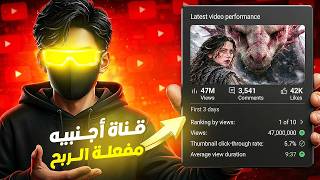
The channel gained 1,000 subscribers and 1,300 watch hours from just four videos, demonstrating rapid growth.
The creator addresses skepticism from previous videos and commits to proving that YouTube success can be engineered through deliberate actions.
The creator selects a trending story, writes a script as if explaining to a friend, and uses AI voiceover from FanLabs.
The video identifies four critical components for success: video idea, keywords, thumbnail, and editing. If any fails, the video is unlikely to get views.
Small channels often fail by creating varied content; instead, focusing on a single niche (like anime highlights) is essential.
The creator researches similar channels, finds videos with high viewership, and selects a story with proven appeal.
The script is written by summarizing each manga image in a few words, adding a hook at the beginning, and keeping captions brief.
Using diacritics in AI voiceover scripts makes the speech sound more natural, avoiding robotic tones.
Small channels often sacrifice quality for quantity; instead, focus on high engagement by removing silent parts and keeping images under three seconds.
Keywords are crucial; big channels spend a full day on them. Use tools like Youssef VIDIC to copy competitor keywords for title, description, and tags.
Thumbnails should be simple with one to three elements, centered or with the most important element larger. Use Photoshop or mobile apps.
The creator provides a checklist to evaluate each video: trending idea, keyword usage, editing software, thumbnail quality, and continuous improvement.
Success on YouTube is achievable through a systematic approach: choose a trending niche, craft engaging scripts, optimize keywords, and create compelling thumbnails. Consistent application of these principles, rather than luck, leads to growth.
What are the four key elements for YouTube video success?
Video idea, keywords, thumbnail, and editing.
01:33
Why is focusing on a single niche important for small channels?
It helps attract a specific audience and improves video performance.
02:11
What is the recommended maximum duration for each image in an anime summary video?
No longer than three seconds.
04:51
How can AI voiceover be made to sound more natural?
By adding diacritics to the script.
03:44
What tool is recommended for keyword research?
Youssef VIDIC.
05:44
What is the recommended number of elements in a thumbnail?
One to three main elements.
06:10
Rapid Growth Achieved
Demonstrates that the method works, gaining 1,000 subscribers and 1,300 watch hours from four videos.
00:02Four Pillars of Success
Identifies the core elements that determine video performance, providing a clear framework.
01:33Natural AI Voiceover
A practical tip to improve AI voiceover quality, enhancing viewer experience.
03:44Keyword Importance
Emphasizes that keywords are often neglected but critical for visibility, with big channels spending a full day on them.
05:05Self-Evaluation Checklist
Provides a practical tool for creators to assess and improve their videos systematically.
06:36[00:02] just four videos, and suddenly gaining 1000 subscribers and 1300 watch hours in record time. That's secret behind this success, step by step. So, if you ever want to start getting views and growing your channel quickly, believe me, this video will completely change your
[00:15] way of thinking about YouTube. Stay with me until the end because I'm going to make a practical video for you from A to Z, using the same secrets I learned from here and there. Three months ago, I uploaded a video about creating a YouTube channel to summarize anime for seven days, but at the end of the video, I didn't
[00:29] get the results I expected because the video had just been uploaded. Some people commented that I was fooling them and lying, but thank God, I was confident that I could get views at the beginning of the channel, and I even said at the end of the video that the video I made had a
[00:41] high probability of reaching its target audience, God willing. Because it got really good views even before it was released, and thank God it did get good views. This proves that what I'm saying isn't true, and I decided to continue with it to prove that success on YouTube isn't just luck, and that there are things you
[00:53] can do to get the views you want in any content you want to create. One day, I decided to start uploading the first video on the channel, and honestly, I was unsure what to make a make a video about a story that had gotten good views, and I found
[01:06] at that time. So, I decided to make a similar video, but in a way that involved finding out the name of the story, going to the website where it was, and watching the whole story. Then, honestly, I started writing a script. I wrote the script as if I were explaining the story to a friend, and I started creating the voiceover.
[01:20] At that time, I honestly used AI-powered voiceovers from the website FanLabs. And of course, I want you to ask yourself, what is the main reason that makes Is it the video settings, title, and description that get views, or the thumbnail, which is the first thing the
[01:33] viewer sees, or of course, the editing that makes the viewer want to watch the whole video? Well, all of these things are key to a video's success, but you need to know the correct order of these elements. There are four very important things that must be done in a video: the
[01:46] video idea, keywords, thumbnail, and editing. If one of these fails, the video is very unlikely to get views. The first thing you must do is choose the right idea, and then you'll base the rest on it. So now we'll apply this practically
[01:58] and make a new video to upload to the channel. First, the video idea: most people start with a bad or weak video idea, and this is why your videos don't get views even if you do everything else. Unfortunately, most small channels make videos that are different from each
[02:11] makes videos like "download this," " football highlights," or "a specific game like audience to target with your videos. You need to focus on one niche and stick to it. I've focused on
[02:23] anime highlights, for instance. So, we've done the first thing right. Now, let's we've done the first thing right. Now, let's I went to channels with similar content and started watching them, checking their viewership relative to
[02:35] For example, I found that this video had just been released and had nearly a million views, which is very good. So, I decided that my next idea would be about a story similar to this video. I then went to the website to find this story or a similar one, and
[02:48] I found this manga or this movie. I created a new folder and put the script file in it. And a file to download the images and an audio file. Then I started watching the manga or comic until I understood the whole story. That's when I started splitting the screen in half, one side for the
[03:02] manga images and the other for the script. I watched each image and tried to summarize it in just a couple of words. This is where the problem for many people is that they write weak or unoriginal scripts. This is normal at the beginning, but try to improve yourself by first adding something called a hook at the beginning of the
[03:17] video. This tricks the viewer into understanding what the video is about, giving them a concise summary so they'll watch until the end. After that, don't talk too much about each image. Keep each caption brief and to the point. I applied
[03:31] all of this, and when I finished the first chapter, I downloaded each image and put it in a folder called "Chapter 1." I did the same for all the chapters. And then, honestly, what happened next? I went to Live Labs to... The voice, and let me tell you, is one of the most important things that many people
[03:44] use with AI. The mistake is that it doesn't use diacritics. I want to tell you that there are find them on your phone, that allow you to add diacritics to the speech. Try adding diacritics so that the speech produced by the AI sounds like a natural voice, not just a human voice. Then we come to
[03:58] editing. The problem, unfortunately, is that small channels sacrifice quality for quantity. Their priority is to upload a lot, and it doesn't matter if the video is good. This is very wrong, by the way. A video needs to be well-made so that you can make the viewer watch it to the end and have a
[04:10] high engagement rate. Engagement is a percentage or audience retention rate for each video. percentage or audience retention rate for each video. and that's what makes the video reach more people.
[04:23] As for the content of the anime summary, it's simple. So, regarding the editing of the anime summary content, it's simple. It consists of images, sound, and sound effects, so try to do the best this content this way: First, I opened CupCat. I know it's paid now,
[04:38] but there's an older free version, and I'll leave it as is. I'll just leave its name in the description, and you can download it yourself. So, I went to CupCat and then added the first chapter with its audio. After that, I added the audio and started removing all the silent parts because that's what
[04:51] makes the viewer bored. You keep saying "oh" or "oh," and that won't work. The audio has to blend seamlessly into the second audio for the viewer to follow. I started putting each word with each image, and at the same time, each image shouldn't be longer than three seconds. I added
[05:05] effects between each image, and finally, I finished the first chapter. Honestly, I did the same thing with all the chapters. Now, let's talk about keywords. Of course, this is a problem for all channels that fail. This is what makes them wonder why they aren't getting the views
[05:18] they expect. It's simply because they neglect this particular aspect. Most big channels literally spend an entire day on keywords, so you don't want to waste five or ten minutes on it. Believe me, every word you write affects the video. Here, you have three
[05:30] things: the title, the description, and the video's specific keywords. The title should be similar to a video with the same content, with a slight modification. Secondly, the description uses the same idea: you take the keywords found in the descriptions of well-known channels and add them to your own. The same applies to the video's specific keywords in
[05:44] the tags. First, you download the Youssef VIDIC program. This program is specifically for keywords. You connect it to your channel and start using it. Then, you go to your competitors' channels, take their keywords, and add them to your own. Now, let's get to the last thing, which is one of the most important things.
[05:57] Because you've done everything, now you need to get the viewer to click on the determine this because you have thousands of videos on your homepage, so you need to stand out. I recommend using Photoshop or looking for a
[06:10] mobile app that works with the same system. And I've decided to tell you something very important about thumbnails: don't put too many things in them. Keep one to three main elements to keep them simple and clear. For example, if you have only one element, it should be
[06:23] in the center of the image. If you have two elements, make the more important one bigger. I advise you to learn how to create thumbnails because nothing comes easy. God willing, I'm working on a course where I'll cover everything a successful YouTube channel needs. Once you've finished
[06:36] all of this, start publishing. That way, I'll have done everything, and the rest is up to God's will. Believe me. The mistakes you all make, and if you can solve even one of these problems, that's a great start for you. This is a test for you to evaluate yourself and identify your mistakes
[06:49] each time you make a video. Is the idea currently trending? Does it have a high viewership in the shortest possible time? channel subscribers? Secondly, keywords: how many times do
[07:04] you use keywords? Next, what program do you use exactly? Do you create a title similar to a popular video? Does the description contain keywords? What editing software do you use? Is it CapCat, Premiere, Filmora, or something else?
[07:19] each video? Is it one hour, two hours, or more? Do you improve your skills with each video? Do you add extra editing to each video? Fourthly, the image What program did you use for your thumbnail? Photoshop or another program? How long did it take you to learn how to create this thumbnail? Are
[07:32] you improving the entire image? I want you to save this video so you can refer to it every time you make a video. And believe me, if you apply all of this, you will, God willing, 100% reach the views you want. So, are you really planning to start, or is this
[07:46] just a bit of enthusiasm that you'll go back to your normal life as if nothing happened? Look, my friend, your choice will determine your destiny in the end. It's your life, and you're free to do what you want. The key word in this video is SEO. Thanks for watching, and I hope you
[08:00] SEO. Thanks for watching, and I hope you liked the video. Peace.


⚡ Saved you 0h 08m reading this? Transcribe any YouTube video for free — no signup needed.