
AI Overviews Slash Clicks by 58%
48sShocking statistic about click-through rate drop grabs attention and sparks debate about SEO's future.
▶ Play Clip"Title accurately reflects the course content: a practical guide to AEO with clear stats and roadmap."
This video introduces Answer Engine Optimization (AEO), a strategy for making content visible to AI systems like Google AI Overviews, ChatGPT, and Perplexity. The instructor explains why AEO matters, how it differs from traditional SEO, and provides a roadmap for the course. Key statistics show AI traffic converts 23x higher than organic search, and ignoring this shift risks significant traffic loss.
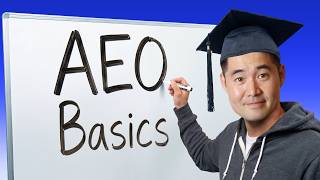
Samo introduces the AEO course by Ahrefs, emphasizing execution and that SEO is the foundation of AEO.
As of Dec 2025, Google AI overviews reduce CTR for #1 ranking page by 58%. ChatGPT has 900M weekly users, handling ~12% of Google search volume. AI traffic to websites grew 9.7x in the past year.
In June 2025, AI search drove 0.5% of traffic but 12.1% of sign-ups, a 23x higher conversion rate than organic search.
AEO (Answer Engine Optimization) is making content visible and useful to AI systems that deliver direct answers. Also called GEO or LLMO.
SEO optimizes for ranking in a list of results; AEO competes for mentions in AI-generated answers. AEO builds on SEO, not replaces it.
Ethan Smith's zero-sum bias: assumption that new channels kill old ones. Like mobile apps vs web in 2010, AI search will grow alongside traditional search.
Ahrefs content was mentioned 7,470 times across 2,309 pages in AI search without intentional optimization, showing potential for proactive AEO.
Four modules: (1) How AI search works, (2) Strategy (brand mentions as strongest lever), (3) Execution (content, citations, YouTube optimization), (4) Measurement (analytics, competitive audits).
AEO is a critical evolution of SEO that leverages AI's growing role in search. By understanding and optimizing for AI citation, businesses can capture high-converting traffic and future-proof their online presence.
What is the click-through rate reduction for the #1 ranking page due to Google AI overviews as of Dec 2025?
58%
00:45
How many weekly users does ChatGPT have?
900 million
00:45
What percentage of Google search volume does ChatGPT handle?
Roughly 12%
00:45
How much did AI traffic to websites grow in the past year?
9.7 times
00:45
In June 2025, what percentage of Ahrefs traffic came from AI search, and what percentage of sign-ups did it drive?
0.5% of traffic, 12.1% of sign-ups
01:30
What is the conversion rate comparison between AI search and organic search for Ahrefs?
AI search converts 23x higher than organic search
01:30
What does AEO stand for?
Answer Engine Optimization
02:15
What are other names for AEO?
GEO (Generative Engine Optimization) and LLMO (Large Language Model Optimization)
02:15
In AEO, what are you competing for instead of positions?
Mentions
03:00
What cognitive bias did Ethan Smith discuss on the Ahrefs podcast?
Zero-sum bias
04:00
How many times was Ahrefs content mentioned in AI search without intentional optimization?
7,470 times across 2,309 pages
05:00
What is the single strongest lever for AI visibility according to the course?
Brand mentions
06:00
AI Overview CTR Drop
Quantifies the immediate impact of AI on traditional search traffic, motivating AEO adoption.
00:45AI Traffic Conversion Advantage
Demonstrates that AI traffic, though small, is highly valuable, challenging assumptions about its importance.
01:30Zero-Sum Bias
Provides a psychological framework to counter fear that AI will kill SEO, encouraging a balanced strategy.
04:00Organic AI Mentions
Shows that existing SEO efforts already yield AI visibility, suggesting proactive optimization can amplify results.
05:00[00:00] Hey everyone, my name is Samo and welcome to the answer engine optimization or AEO course by Ahrefs. In this course, I'll be teaching you how to get traffic from AI search and to get more brand visibility in it. This course will have a heavy focus on execution and while the topic might be new to many of you, I don't want you to feel intimidated, especially if you have a background in SEO because SEO is the foundation
[00:28] of AEO. Now, here's why you need to pay attention to this right now. As of December 2025, the presence of an AI overview on Google reduces the click-through rate for the number one ranking page by 58%. That means for every 100 clicks you used to get, Google now keeps 58 of them. ChatGPT alone has 900 million weekly users. It handles roughly 12% of Google search volume and AI traffic to websites has grown 9.7 times in the
[00:57] past year. So, you can either ignore this shift and watch your traffic shrink while raising your fist at the clouds or you can learn how it works and capitalize on it. Because here's the thing most people miss. In June 2025, AI search accounted for just 0.5% of our traffic, but it drove 12.1% of our sign-ups. That's a 23 times higher conversion rate than organic search. Search has changed and it's no longer just about clicks because AI
[01:25] traffic is one of the highest converting channels we've ever seen. So, let's start with the basics in this first lesson. I'm going to explain what AEO actually is, why it matters, and give you a road map for the entire course so you know exactly what's coming. So, what is answer engine optimization? AEO or answer engine optimization is the practice of making your content visible and useful to AI systems that deliver direct answers. That's Google AI overviews
[01:54] ChatGPT Perplexity Gemini Copilot, basically any platform where AI is generating a response and choosing who to cite. You'll also hear this called GEO, generative engine optimization or LLMO, large language model optimization. They all mean essentially the same thing, so we'll use AEO throughout this course. Now, you might be wondering, how is this different from traditional SEO? Well, in traditional SEO, you optimize web pages to rank higher in a list of search results. You're competing for positions.
[02:22] The user sees your blue link, clicks it, and lands on your site. In AEO, there is no list. The AI reads from dozens of sources, synthesizes an answer, and decides who to mention or cite. You're not competing for a position, you're competing for a mention. And the rules for getting mentioned are a bit different from the rules for ranking in organic blue link results. Now, we'll break down exactly how that works in module one, but for
[02:51] now, the key thing to understand is this. AEO doesn't replace SEO, it builds on top of it. Think of SEO as your foundation and AEO as future-proofing your online presence. The fundamentals still matter, quality content, authority, technical health, but the strategy needs to evolve because the way people find information is changing. Now, I know some of you might be thinking, is AI just going to kill SEO completely? And I get it, but this is not the
[03:19] end of SEO. Ethan Smith from Graphite talked about the zero-sum bias on Ahrefs podcast and this is a cognitive bias based on the assumption that if something new goes up, something old must go down. And we saw the exact same thing in 2010 when the app store blew up. Everyone said, "The web is going away. Mobile apps are taking over. Only old people use websites." And yes, mobile apps did blow up. That promise was real, but
[03:48] the web didn't die. It grew alongside these apps. AI search is likely going to be the same story. It is growing fast. Those numbers I just showed you are real, but Google still processes billions of searches per day. Traditional organic traffic still drives massive business value. So, the smart move isn't to panic, it's to play both games. And let me be real with you. Most businesses haven't even started thinking about this. We looked at Ahrefs' own
[04:16] data and found that our content and product pages have been mentioned 7,470 times across 2,309 pages in AI search without any effort to optimize for it. That's all happening organically because we've been doing solid SEO and creating content that people find useful. Now, imagine what happens when you actually start intentionally optimizing for this. When you know which platforms cite what, when you understand how AI decides who to recommend, when you're actively building the signals that make
[04:44] AI want to mention your brand. That's exactly what this course will teach you. The course is broken down into four modules plus this introduction. Module one is about how AI search actually works. We'll cover the mechanics, how AI finds content, how it decides what to cite, how different platforms like ChatGPT, Google AI overviews, and Perplexity actually differ from each other, and what AI visibility actually looks like for different types of businesses. This is the Module two
[05:13] is all about strategy. I'll show you the data behind why brand mentions are the single strongest lever for AI visibility, stronger than backlinks, domain rating, or anything else. You'll learn keyword research for AEO, prompt research, and how to figure out where your brand stands versus competitors. Module three is about execution. This is where the actual work happens. How to create content that gets cited, how to earn mentions and citations for other sites, YouTube optimization for AI
[05:41] visibility, which no other course covers, and the technical stuff to make sure AI can actually find and crawl your content. And module four is about measurement. You'll learn how to set up your analytics for AI traffic, how to run competitive audits to find your brand gaps, and how to evaluate whether AEO is actually worth the investment for your business. By the end of the course, you should be able to put together a concrete action plan that's
[06:10] bespoke for your business with workflows to actually do this stuff immediately. All right, so that's the lay of the land. In the next lesson, we're diving straight into how AI search engines actually find and cite content, including the concept of query fanout, which is probably the single most important thing to understand about why AI search works the way that it does. I'll see you in the next lesson.
⚡ Saved you 0h 06m reading this? Transcribe any YouTube video for free — no signup needed.