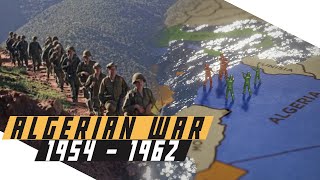

Algeria: France's Bloody War for a 'Part of France'
44sThe shocking revelation that France considered Algeria an integral part of France, not a colony, sets up a high-stakes conflict that hooks viewers immediately.
▶ Play ClipThe Algerian War of Independence (1954-1962) was a brutal conflict between France and Algerian nationalists, marked by guerrilla warfare, terrorism, and widespread human rights abuses. The war led to the collapse of the French Fourth Republic, the rise of Charles de Gaulle, and ultimately Algerian independence, but at a cost of hundreds of thousands to over a million lives.
Algeria was under French control since the 1830s, with over 1 million French settlers (pieds-noirs) dominating urban centers and land ownership, while the majority Arab and Berber population faced marginalization.
On November 1, 1954, the National Liberation Front (FLN) launched coordinated attacks across Algeria, killing seven people and marking the start of the war for independence.
On August 20, 1955, FLN fighters attacked the town of Philippeville, killing 71 French civilians and 52 Muslim Algerians. French reprisals killed up to 1,200 Muslims, escalating the conflict.
A year-long urban guerrilla campaign in 1956-57, where the FLN used bombings and strikes. French forces, using torture and mass arrests, broke the FLN network but faced international condemnation.
France used the quadrillage system, forced relocations of 2 million Algerians into camps, and destroyed 8,000 villages. The Morris Line on borders aimed to stop FLN reinforcements.
In May 1958, the French army in Algeria seized power, demanding Charles de Gaulle's return. This led to the collapse of the Fourth Republic and de Gaulle becoming prime minister with broad powers.
The Secret Army Organization (OAS), formed in 1960 by French settlers and army officers, launched terrorist attacks to prevent Algerian self-determination, but failed to stop the referendum.
Negotiations led to the Evian Accords in March 1962, granting Algeria independence. A July 1962 referendum saw overwhelming support, and Algeria became independent on July 5, 1962.
The Algerian War of Independence was a devastating conflict that exposed deep divisions in French society and led to the birth of a new nation. The war's legacy of violence, displacement, and political instability continued to shape Algeria and France for decades.
[00:02] characterized by the process of decolonization with dozens of imperial possessions gaining their independence in some places this was done by a peaceful legislative process but for many the road to national independence
[00:15] was marked by insurgency violence and warfare france and its colonial empire were on the leading edge of this not only in indochina but far closer to home in the territory it didn't consider a colony
[00:29] but rather a full part of france the algerian war was a protracted and bloody affair that cost the lives of several hundred thousand people collapsed a republic and largely set france on a course of opposition to its
[00:43] western allies today we are bringing you an episode on the algerian war of independence i'm your host david and this is the cold war
[01:01] are a great compliment for cold war channel videos and if you're interested in learning more about the history of 20th century france you need to watch the day when de gaulle chose war this documentary looks at the decision
[01:14] of one man to openly rebel against the policies of the legal french government a man who would go on to dominate french politics for decades defining cold war france don't forget to check out other documentaries in magellan tv's current
[01:29] history section to explore fascinating topics from the 20th and even 21st centuries and the good news is magellan tv has much more than that there are more than 3 000 documentaries waiting for you and
[01:44] hundreds of them are on the history of various eras we particularly love the travel documentaries on magellan tv as they are a perfect way to visit various countries in stunning 4k from the comfort of your own home
[01:58] new documentaries are added weekly and available on most devices including phones and pcs magellan tv has a kind and exclusive offer for our viewers click the link in the description to get a one month free
[02:12] trial and watch hundreds of history documentaries anytime anywhere the end of the second world war south france looking to maintain its overseas colonies included in this of course was the crown jewel of the empire algeria
[02:27] which had been under french control since the 1830s given the close proximity of algeria to france it had been extensively colonized with over 1 million people or 13 of the population being french from france the
[02:43] term pienoar or black feet is often used to describe those of french background who lived in algeria it's a term without a firm etymology and has gained a somewhat pejorative meaning since algerian independence
[02:57] now most of the french algerians were located in the urban centers with approximately half of urban areas being made up by french colonizers in a city like iran algeria's second city that percentage was as high as 60
[03:10] now on top of that into nobody's great surprise the colonizers also held the largest and best pieces of land in algeria for most of the arab and berber populations the lands they held were too small or too marginal to sustain their
[03:26] families this led them to seek work as seasonal laborers for french landlords or even to their immigration to france only a small percentage of the population was considered europeanized with a french education while the
[03:39] majority of the local population was not integrated into french society now one further note on algeria's status which made it rather unique unlike most other overseas possessions algeria was not legally a colony but rather by the
[03:55] constitution of 1848 was considered an integral part of france algerians could even apply to become full french citizens in exchange for renunciation of it was an option that few took but was constitutionally available what we
[04:11] should keep in mind from this legal status though is that in the eyes of the french algeria was not a colony it was not a foreign land it was a part of a sovereign france of course the non-europeanized algerians
[04:24] didn't necessarily agree with this viewpoint and agitation for a free and independent algeria or at least a more autonomous algeria began to emerge as early as the first world war many algerians were recruited into the
[04:37] war effort and there was a growing sentiment that algeria sacrifice should this feeling only grew during the second world war when three french forces including from algeria by this time however there was a much
[04:54] service to france would be the recognition of algerian's sovereignty france however was not prepared for that step and instead only offered full french citizenship for algerians once the war was concluded
[05:09] this was not enough for the pro-independence leaders in algeria and as early as may 8 1945 the day of the german capitulation organized demonstrations against french rule and in favor of independence were carried
[05:23] out in cities across algeria these demonstrations were violently dispersed and even resulted in the deaths of some protesters in response to this members of the majority muslim algerian community began
[05:36] attacks against french algerians it eventually took the intervention of the french army against muslim algerians to suppress the attacks suppressions claimed the lives of at least 6 000 people but also failed to
[05:52] achieve any resolution to the underlying desire for independence the stage was set for the upcoming confrontation between algerian nationalists and the french determined to maintain the status quo in a region
[06:05] vicious was and had sound oh yeah and the presence of oil in algeria likely played a part too so by 1954 on the eve of act of resistance by pro-independence forces the french found themselves in an
[06:20] she had been defeated in indochina forced to withdraw from its former closer to home in the maghreb itself both tunisia and morocco were succeeding in their struggles for independence not far from algeria in egypt britain was
[06:36] being forced to withdraw its presence there as pro-arab forces gained in prominence and legitimacy the soviet union was showing itself to be a major supporter of many of the arab nationalist groups leaving france in a
[06:49] vulnerable position while you might assume that the united helping the french in the face of soviet support you would actually be wrong despite being nato allies the us didn't want to alienate what washington had
[07:04] independent nation france may have been an ally but the u.s didn't want to risk further soviet influence in emerging regions we also need to consider the impact of the losing struggle in indochina
[07:19] thousands of algerians served in the french armed forces fighting for france to try and retain their asian colonies not only did the tactics and strategies employed by the viet minh inspire algerian soldiers but many felt that
[07:32] algerian soldiers but many felt that their service demanded a larger reward so the vanguard organization of the algerian independence movement and the first to take firm action against the french was the front deliberacion
[07:44] nacional the national liberation front or fln on november 1 1954 it launched a series of attacks against military and police targets across algeria in which five french algerians as well as two muslim
[07:59] algerians were killed the fln from its headquarters in cairo called on algerians to join in the fight for algerian independence based on the principles of democracy and social justice within the framework of the
[08:11] islamic principles french prime minister pierre mendes condemned the attacks affirming that the algerian departments were an integral part of france stating quote one does not compromise when it comes to
[08:24] defending the internal peace of the nation the unity and integrity of the republic the algerian departments are part of the french republic they have been french for a long time and they are irrevocably french
[08:37] between them and metropolitan france there can be no conceivable secession the interior minister juan francois mitterall dispatched an additional 600 soldiers to algeria to reinforce the existing french forces there
[08:53] so at this point we should talk a little bit about the algerian forces who were struggle as mentioned the fln was at the forefront headquartered in the egyptian capital many of its supporters were
[09:06] based in both tunisia and morocco still part of france at this time but with their own well-advanced independence movements committed to the removal of france from algeria held a variety of different
[09:19] positions on what an independent algeria should actually look like some wanted the establishment of an islamic republic while others felt that some form of socialist governance would be the best way forward also heavily
[09:32] invested in the independence movement was the algerian communist party which itself had separated from the french communist party in 1936 membership was primarily made up of french algerians with only some support
[09:45] coming from muslim algerians the pca remained an independent organization separate from the fln but it supported the fln and even merged its military wing with the military wing of the fln the national liberation army by
[10:01] 1956. the last major active group inside algeria was the democratic union of the algerian manifesto led by ferhat abbas a longtime advocate of non-violence abbas pursued the idea that algeria
[10:15] should remain a part of france but as an autonomous state inside the french this position never gained a huge amount of support and by 1956 the decision was
[10:27] of support and by 1956 the decision was made that the udma would join the fln now there is one independence group that we also need to talk about but they were not located in algeria or even africa the left-leaning algerian national
[10:40] movement the mna was largely based in france itself led by the longtime advocate of algerian independence masali hajj the m a was actually founded after the revolution had begun and there are suggestions that it was only founded as
[10:55] a rival to the fln because hajj had not been consulted in the formation of the fln now although the m a had low levels of support in algeria the support it had in france itself proved important in the
[11:08] furtherance of the cause especially from a financial standpoint it must be noted that the fln and the m a engaged in the so-called cafe wars where bombings and assassinations between the two groups claimed the lives of thousands
[11:22] eventually the fln gained the upper hand and the m a was subsumed into the fln so the initial french reaction to the november first attacks was rather lacking they were not overly concerned about the fln's efforts as they were
[11:37] militarily quite weak and were operating primarily in the rural areas of the country as such only a small transfer of troops a new governor general was appointed in 1955 jacques soustel he had been a
[11:52] leading member of the free french forces during the war and had even been the head of the special service branch based in algiers at the time sistel returned to algeria and began a program of promoting and improving the economic
[12:05] situation of all algerians as a means to reconcile with the muslim algerian he called for investment of funds in the economy began infrastructure projects to create jobs and started education projects with the idea being that the
[12:20] discrimination faced by muslim algerians could be alleviated through greater he also made attempts to improve the agricultural situation in algeria sustained believed that all of these things would greatly improve the daily
[12:35] living conditions of muslim algerians and would convince them to support union with france rather than give their support to the fln the fln for its part continued attacks for the rest of 1954 and into 1955
[12:50] targeting only government-related and military targets largely in the rural areas these consisted of numerous small-scale engagements using guerrilla tactics by mid-1955 however the fln was looking
[13:03] to make a larger statement and although it wasn't strong enough to attack any large cities it was felt that an attack against a mid-sized urban area could be carried out successfully the town of philippville modern day
[13:17] skikda was selected for the attack on august 20th 1955 approximately 3 000 fln soldiers attacked the town with its garrison of 400 french troops
[13:29] town in the weeks leading up to the attack the french were aware of their presence and the attack was very costly for the fln with up to two-thirds of the casualty however one of the key aspects of the
[13:45] attack was that in part focused on targeting french civilians as well as muslim algerians who were suspected of working with the french authorities working with the french authorities 71 pianoart and 52 muslim algerians were
[13:59] at the same time that the fighting in philip villa was occurring an attack was laid against the nearby mining community of el halya the same targeting of french civilians occurred and dozens were killed there as well
[14:14] subsided and the fln had withdrawn the french algerians began a program of reprisals resulting in the deaths of hundreds of muslim algerians with some estimates ranging to over 1200 people
[14:27] french authorities both the army and the police stood aside and let the civilians carry out their reprisals even afterwards no official investigation by the authorities was ever carried out
[14:40] fleeing in fear many muslim algerians fled from the town with many ending up members of the fln philippville marked a turning point in the algerian war the distrust between the two sides already significant
[14:54] escalated beyond any point of finding a reconciliation what had been an intercommunal distrust turned into hatred and open warfare governor general cistel began allowing french algerians to arm themselves while
[15:08] shifted their position on matters to align with the fln the response from paris was to call up algeria however these troops were not trained to
[15:21] fight what was developing into a guerrilla war fought by the fln's armed faction the aln on the 18th of may 1956 21 soldiers of the 9th colonial infantry regiment were ambushed by the ali khoja commando unit
[15:37] of the aln while on patrol near the town of jarrah in the palestro region now called lakhdaria southeast of algiers the ambush resulted in the outright deaths of 17 of the french soldiers with the remaining four soldiers captured
[15:52] three of whom were killed while being held prisoner the ambush at palestro incensed the french military and muslim algerians the entire community not just members of the alnr fln began to be portrayed as savages and as legitimate
[16:06] targets for french military attacks so clearly we can see the cycle of escalation that was occurring however through the summer of 1956 secret been taking place between representatives of the french government
[16:21] and the fln clearly there were thoughts on both sides that a war would not be a productive endeavor despite this however while the negotiations were happening both sides continued to organize arm and
[16:34] prepare themselves this escalation nullified the efforts of the negotiations leading into what has become known as the battle of algiers a protracted guerrilla warfare campaign carried out by the fln
[16:48] now the battle of algiers was not a set-piece battle but rather a year-long campaign consisting of urban guerrilla warfare warfare in june of 1956 two fln prisoners at the
[17:00] barbarous prison were executed by guillotine by the way because this is france sparking an immediate reaction from the fln whose commander in algiers from the fln whose commander in algiers yasif sadi ordered his troops to quote
[17:14] shoot down any europeans from 18 to 54. no women no children no elders end quote the deaths of 49 french civilians was the result in retaliation the french
[17:26] algerian organization union frances norapregem detonated a bomb inside the casbah an fln stronghold in algiers killing 73 muslims the situation quickly
[17:38] spiraled out of control as the fighting escalated in algiers on august 20th the leadership of the fln met at the suman conference where a platform and a leadership structure was agreed to this is widely accepted as the
[17:52] foundation of the future algerian state a national council of the algerian revolution was established consisting of 34 members and led by a five-man executive these men havane ramdane ben mahiri krim belkasim ben yusef ben kara
[18:09] and saad dalab were the leaders of the revolution inside algeria outside of algeria the struggle was to be led by men such as ben bella mohammed buddha men such as ben bella mohammed buddha muhammad and hosni ahmed operating
[18:22] mainly from egypt tunisia and morocco however on october 22nd a plane these men were traveling on was diverted to algiers and the men were arrested the arrest of these men considered relative moderates served to radicalize the fln
[18:38] and deepen the conflict now back to the suman conference a general strategy was agreed to it was agreed that there would be no ceasefire with france until france was prepared to recognize algerian independence
[18:52] it was recognized that the goal of collective leadership without internal conflict would be necessary in order to achieve their aims and finally it was agreed that the best way to maintain pressure on the french
[19:04] and force their departure was to conduct a war of attrition the fln leadership knew that they could not defeat the french in direct open combat so a more covert methodology would need to be undertaken
[19:17] this was a lesson and strategy that had been learned from the french experience been learned from the french experience in indochina the french could be beaten second point about maintaining a unified leadership this was on paper but in
[19:31] reality there was an ongoing and sometimes violent power struggle going on so much so that in 1957 the flm likely even had abane ramdane killed to prevent his own personal power base from
[19:44] overshadowing the rest of the fln back in algiers the escalation continued the fln set up its headquarters in the khasba the citadel area at the center of the city which was dominated by algerian muslims
[19:57] bomb attacks began to be carried out often by female recruits as they were forces on september 30th three bombs were detonated killing three and injuring 50 while a fourth bomb failed to explode
[20:13] their own response general raul salan was appointed commander-in-chief of forces in algeria he as well as the group of commanders he selected to support him was a veteran of the war in indochina and was proficient
[20:28] in counter-insurgency tactics the fln response to this as you can likely guess was to escalate even further deciding on a prolonged bombing there are claims that in the first three months of 1957 over 800 bombs per month
[20:44] were detonated by the fln in addition a general strike was organized which even spread to florence itself it lasted eight days before the authorities including the military
[20:56] forced people back to work in algiers the military began taking steps to restore general order troop deployments were increased including the transfer of the 10th parachute division under general masu
[21:09] and made up largely of veteran troops from the war in indochina and the sinai in addition several thousand more troops were transferred to algiers including police intelligence agents as well as regular army and territorial army
[21:23] a quadrillage system was implemented in the city this consisted of the city being divided up into squares with each being assigned to a regimental command within each of these squares checkpoints
[21:35] conducted these tactics resulted in the arrest of many fln sympathizers weakening the fln's position in the city it's estimated that approximately 80 000 algerians were subjected to
[21:50] interrogation during the battle of algiers including perhaps as much as 30 to 40 percent of the population living in the casbah torture was often used during these interrogations including beatings
[22:02] electroshock waterboarding and sexual assault in addition collective punishment often featured as well as summary execution perhaps as many as 3 000 muslim algerians died or just simply
[22:15] disappeared during the battle by late march of 1957 the fln structure in algiers had largely been broken and a relative peace had been restored the 10th parachute was withdrawn from the city needed elsewhere giving the fln
[22:31] of saudi yasev a chance to reorganize and rebuild by may fln attacks had resumed against the french and the 10th parachute was operations throughout august and september finally resulted in the
[22:47] capture and arrest of yasuf effectively ending the ability of the flm to operate in algiers and ending the battle while a clear and substantial military victory for the french it was politically a black eye while widely
[23:02] terrorist tactics against civilians the broad french use of torture repression and illegal acts had created a great deal of international sympathy for algeria on the global stage
[23:16] algiers prompted similar methods to be employed across the rest of algeria by employed across the rest of algeria by 1956 470 000 french troops had been famous infamous
[23:31] a large number of the units being deployed already had experience in guerrilla warfare and counter-insurgency tactics largely gained during the war in you guessed it indochina covert and psychological operations were
[23:45] also employed including subverting fln agents uncovering and disrupting fln plans before they can be carried out and even sowing distrust inside the fln this was largely overseen by the notorious fifth bureau
[24:00] so the quadrilage system that was used in algiers was rolled out across the sector collective responsibility and summary execution like in algiers was used to try and maintain control
[24:14] villages caught helping or hiding fln or aln rebels were subject to aerial bombardment and as many as 8 000 villages and settlements were destroyed by french forces at the same time the so-called morris
[24:28] line was established on the algerian border with tunisia and morocco this was to prevent the influx of up to 1 000 fighters per month crossing the border and joining the fight against the french the line itself consisted of kilometers
[24:43] and kilometers of barbed wire electrified fencing and minefields support for the fln the french government forcibly relocated upwards of 2 million algerians from their villages gathering them into what effectively
[24:59] amounted to large concentration camps this was done on the pretext of protecting those villagers from the violence and harassment of the fln thousands however fled the relocations and the camps hiding in urban areas or
[25:12] fleeing the country altogether as a result of all of this by 1958 control over the situation across algeria while simultaneously weakening but like so many countries during the cold war despite winning the military
[25:28] situation france was losing the political side of the equation back in mainland france how to handle algeria was exacerbating political instability manifesting itself in frequent cabinet changes as more general
[25:41] discontent with the conduct of the war grew the result of the frequent reports of brutality and torture sympathy for algerian independence grew with it especially among the communists and other french leftists
[25:54] the armed forces became very concerned that their hard-fought military victories in algeria would be undermined by the political ineptitude of the french leadership this was a general sentiment shared by
[26:06] many french algerians on may 13 1958 the army with the support of the french algerian population seized power in algiers demanding charles de power this was a move that politically had
[26:21] been coordinated by the former governor general jacques sustal and was backed up commander-in-chief of the armed forces in algeria who assumed the leadership of a committee of public safety never a
[26:34] good sign in french history by the way to demonstrate their commitment to the cause the army seized control of corsica and began to prepare to move on paris itself if the president or parliament showed reluctance for their plan
[26:49] de gaulle for his part publicly stated that he was prepared to return to office but firmly denied that he sought to become a dictator finally the french parliament voted in favor of making de gaulle prime minister
[27:01] french would become a presidential republic led by a president who held a significant amount of power as the fourth republic collapsed de gaulle was given the authority to rule by decree for six months as the fifth
[27:15] republic was being established one of de gaulle's first tasks was to begin working on resolving the situation in algeria stating his support for french algeria while still promising to improve life for muslim algerians
[27:29] as part of the new constitution that was being put together for the new fiat republic de gaulle offered to make algeria a region associated to france but not an integral part of france one where muslim algerians held the same
[27:42] equal right to vote as french algerians already held the fln seeing that de gaulle's offer would decrease muslim algerian support for the fln took the next step in an attempt to gain legitimacy for the
[27:54] struggle for independence the fln formed a provisional government for the algerian republic formed in tunis in 1958 and led by the moderate farhad abbas as the president headquartered in tunis the provisional
[28:07] government was quickly recognized by regional countries like tunisia morocco egypt and other arab nations as well as other countries like china and pakistan the provisional government also posted diplomats to major global capitals to
[28:21] act as advocates for the cause of an independent algeria the french military in the meantime continued to dominate algeria even going back on the offensive in 1959 although this was causing severe
[28:34] problems for the aln it was also creating a massive drain on french resources as well as damaging france's position on the international stage not to mention it was reinvigorating support for the fln
[28:46] the position that france was being put into was so severe in fact that de gaulle was strongly considering making algeria a part of france where every person had the same rights or even just granting independence
[28:59] by the autumn of 1959 he had made a statement considering the possibility of self-determination for algeria of course this was poorly received by the pioneer who understood that they would lose their privileged position in
[29:12] their home as well as likely suffer from retribution and likely violence retribution and likely violence on january 24 1960 in what has become known as the week of the barricades french algerians rebelled hoping the
[29:25] army would come to their side in support the army was slow to move against the rebellion initially refusing to disperse them until de gaulle intervened giving an impassioned speech calling for the support of the people in the face of
[29:38] rebellion the army responded to this and the barricades were dispersed with the arrested with the french government now referendum on self-determination for algeria in january of 1961 the piano
[29:54] opposed to this step began to work to actively undermine the process this was largely spearheaded by right-wing elements of the army and by french algerians in december of 1960 the secret army organization oas was formed
[30:09] whose leadership was made up of former leaders of the week of the barricades as well as general raul salan our old friend from the battle of algiers the oas organized assassinations and terrorist attacks in both france and
[30:23] algeria hoping to dissuade paris from moving forward with the referendum despite the attacks the referendum went ahead on january 8 1961 resulting in a 75 approval rating for algerian self-determination
[30:38] triggering negotiations to be held between algerian representatives and paris but this isn't the end of the story in april of 1961 the last desperate actions of the army and the french algerians
[30:51] took place in what has been dubbed the general's pooch algeria was seized by general salon and several other generals commanding the paratrooper divisions in algeria as well as the foreign legion
[31:03] troops there while the rest of the armed forces refused to join remaining loyal it took de gaulle one day to take to the airwaves again making his plea directly to the french people for support millions of people across the country
[31:18] took to the streets condemning the push and supporting de gaulle by the 26th of april the coup had failed its leadership having been arrested or having fled the next month in may of 1961 talks
[31:31] began in evian between the french government and the fln the french position at the start of the talks was that independence would only be granted to the coastal areas of algeria as france wanted to maintain
[31:43] algeria as france wanted to maintain control over the oil fields in the south the fln as you may well imagine wasn't in agreement achieved between the french government and the fln but fighting still continued
[31:57] between the algerians and ois and french algerian groups negotiations continued until a final agreement the evian accords was arrived at in february of 1962 while the french government agreed to
[32:10] grant full independence to all of algeria the fln agreed to grant french algerians legal protections for a three-year period after which they would need to become either algerian citizens or be classified as resident aliens
[32:25] the fln also agreed to allow french military bases on algerian territory including the nuclear test site of regane and the naval base at maricel france would also have privileged access to algerian oil
[32:39] the ois hoping to spark attacks against french algerians and draw the army to side against the fln led a massive bombing campaign the fln though having achieved its goal and refusing to let the prize get away
[32:54] ordered zero retaliation a second referendum was held on july 1 a second referendum was held on july 1 1962 on the evian accords and with around 6 million votes cast only 16 534 votes were recorded against
[33:08] independence it's important to note from that however that very few piedlar or harkies the muslim algerians fighting for the french side bothered to cast their votes two days later on july 3 1962 charles de
[33:22] gaulle proclaimed an independent algeria which was then accepted by the provisional government on july 5th exactly 132 years after france first in the years that followed independence it's estimated that as many as 1.4
[33:38] million people fled algeria for france including most pianore most of the harkies and their families and the entire algerian jewish community the war had been a drawn-out and bloody affair which claimed the lives of
[33:51] perhaps as many as one and a half million people it was characterized by terror attacks extrajudicial killing pogroms torture and mass incarcerations and expulsions of people it laid bare not just the
[34:04] divisions between different cultural groups but the fault lines in french society as well right versus left progressives versus conservatives it caused attempted revolts and coups the war even collapsed an entire french
[34:17] republic a new nation was born in northern africa but it was born in blood and destruction and quickly saw a large part of its population leave dictatorship loomed and the seeds of war
[34:29] independence would grow to bear the fruit of a new war and to make sure you don't miss all of our future episodes please make sure you subscribe to our channel and have formed a provisional government to fight for
[34:43] the freedom and independence of the bell button even if it means the collapse of been affiliated for years thecoldwar channel gmail.com and we're
[34:56] thecoldwartv if you enjoy our work your financial support would be greatly appreciated via www.patreon.com membership this is the cold war channel and as we
[35:11] think about the cold war i will leave you with the words of jfk in the final analysis our most basic common link is that we all inhabit this small planet we all breed the same air we all cherish our children's future and
[35:25] we all cherish our children's future and we are all mortal
⚡ Saved you 0h 35m reading this? Transcribe any YouTube video for free — no signup needed.