American Cartoons Tried to Be Anime
34sStarts with a relatable confession, then pivots to a hot take about American animation's long attempt to mimic anime, sparking curiosity.
▶ Play Clip"Title is accurate; video thoroughly covers American attempts at anime-style cartoons with depth and humor."
This video explores the 28-year history of American cartoons attempting to emulate anime, examining successes, failures, and cultural implications. It traces the influence of Japanese animation on Western creators from the 1970s through the 2020s, highlighting key shows and trends.
Pokemon's 1998 debut caused a seismic shift, leading executives to seek anime licenses and develop homegrown IP to compete.
Western animators were inspired by Japanese films like Laputa, Akira, and Totoro before the mainstream boom, learning from imports and outsourced work.
Batman TAS (1992) consciously emulated Japanese cinematic storyboarding and atmosphere, setting a new standard for action cartoons.
An anime from Sunrise conceived as 'Batman TAS if the Batmobile was a super robot,' exemplifying cross-cultural collaboration.
Post-Pokemon parodies often relied on tired tropes, but evolved into more balanced and accurate tributes over time.
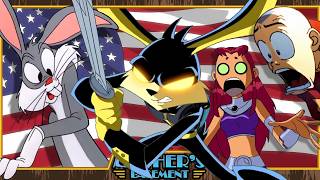
A gritty post-apocalyptic Looney Tunes sequel exemplifies corporate panic during the anime boom, later cited as a cautionary example.
A standout hybrid of anime and Western cartoon, making Robin cool and influencing future shows.
A perfect blend of cartoon humor and shonen-style adventure, using the tension between the two to reflect character growth.
A failed attempt at anime-inspired comedy, criticized for its lack of cultural understanding and poor writing.
Shows like Young Justice, Generator Rex, and Symbionic Titan demonstrated learned lessons, leading to a golden age of anime-influenced Western animation.
American 'anime' has evolved from clumsy imitations to genuine artistic cross-pollination, making Western cartoons better by embracing anime's storytelling and visual techniques.
What was the first anime to truly eclipse Western cartoons on American TV?
Pokemon (1998).
02:17
Which 1992 cartoon consciously emulated Japanese cinematic storyboarding?
Batman: The Animated Series.
04:47
What anime was conceived as 'Batman TAS if the Batmobile was a super robot'?
The Big O.
06:10
Which show is cited as a prime example of what not to do when making anime-inspired cartoons?
Loonatics Unleashed.
12:52
What show made Robin the Boy Wonder genuinely cool?
Teen Titans (2003).
16:46
Which 2005 show is described as a perfect blend of cartoon humor and shonen adventure?
Avatar: The Last Airbender.
23:57
What was the main gimmick of Kappa Mikey?
A failed American actor becomes the star of Japan's most popular Tokusatsu series, with a flash cartoon style contrasting with anime-style Japanese characters.
26:10
Which 2010 show gave a more condensed serialized narrative than Teen Titans?
Young Justice.
28:02
Pokemon's Seismic Shift
Marks the beginning of the anime boom in America, forcing networks to adapt.
02:17Batman TAS Sets New Standard
Demonstrates early intentional adoption of anime techniques in Western animation.
04:47Avatar's Perfect Hybrid
Exemplifies how blending cartoon and anime elements can enhance storytelling and character development.
23:57Kappa Mikey's Failure
Illustrates the pitfalls of cultural misunderstanding and poor execution in anime-inspired shows.
26:10Making Cartoons Better
Summarizes the positive impact of anime influence on Western animation, moving past stigma.
30:07[00:00] You ever wish you could be someone else? Most of us go through a phase like that at some point in our lives, be we teenagers, adults, or entire countries, animation industries. But today, we're going to be looking back on one particularly tender year from my youth when—
[00:16] Oh, sorry, that's some— that notes from my therapist. Today, we're going to be looking at the 28-year-long phase in which American cartoons have been trying to be anime,
[00:31] where they've succeeded, where they've failed horribly, and what the attempts themselves say about America's evolving feelings toward its favorite cultural import. But before we dive into that, we'll be looking at one particular American company
[00:47] that's been doing amazing things with anime lately. Today's sponsor, StarForge Systems, who make powerful gaming PCs with anime co-labs that look as good as they run,
[00:59] take their new Witchwatch model, a sleek and stylish work of very functional art, painted in bold bubblegum pink with charming pastel accents, where their other rigs are built to whisk you away to fantastical worlds
[01:13] or get your blood pumping with raw shonen hype. This delightful piece lets you game with the unrivaled power of gag manga supremacy. Also, if your gaming room is on the cuter side
[01:27] or your anime collections more waifu focused, it's the perfect piece to tie the whole setup together. And with swappable plate lights and a wide selection of matching desk mats and wall art to complement it,
[01:39] including a poster for the in-universe anime Udon Mirage, you can mix and match to make something that's perfect just for you. And they sell the cases standalone in case you want to build an even more custom rig than that,
[01:52] though you would be hard pressed to beat their prices in the current component market, even without accounting for all the extra goodies they pack in their PC bundles. Regardless of how you want it, all you gotta do is click the link in the doobly-doo
[02:05] to get the most beautiful PC you'll ever own today. Pokemon caused a seismic shift in the American media landscape when it hit in fall 1998.
[02:17] As the first anime to well and truly eclipse everything the West had to offer on its own televised turf, the one-two punch of power rangers and Pikachu sent execs scrambling to pick up some lucrative licenses of their own
[02:31] and develop some homegrown IP that could compete in this brave new Saturday morning meta game. But our story doesn't quite start there. While mainstream and elite America remained blissfully unaware of the soft
[02:46] power nuke headed their way in the late 90s, the people actually making cartoons knew what was up a long time before then. As Disney was still desperately clawing its way out of the dark age,
[02:58] Japan was pumping out films like Laputa, Akira and Totoro whose narrative nuance and technical acumen would put most of the renaissance era to shame. And many of the most passionate western animators of the day were watching those works,
[03:14] learning whatever they could from them. Thanks to imports like Samurai Pizza Cats, Star Blazers, Robotech and Speed Racer, many future animators of the day also found themselves enamored with anime from a very early age
[03:28] and as they grew up, renting the likes of bubble gum crisis and ninja scroll from Blockbuster helped keep that passion burning. Add to that the vast number of cartoons from the 70s, 80s and 90s that were outsourced
[03:43] to Japan and you'd be hard pressed to find a show that wasn't influenced by anime in some way, even back then. Some more obvious than others like Frankenstein Jr., which explicitly shouted out Gigantor aka Tetsujin 28 Go as one of its inspirations,
[04:01] or the blatantly Japanese mech designs of the Transformers not to mention the half-dozen Japan exclusive sequels that dramatically expand on the continuity of Generation 1, or Inspector Gadget, who literally only exists because Deak couldn't secure the western rights
[04:16] to the futuristic spin-off of Lupon III they were working on, speaking of Lupon. The great mouse detective famously lifted its entire climactic clock tower fight directly from Castle of Kagliostro, which would not be the last time that Disney
[04:32] cribbed Miyazaki's notes. The creators of Tale Spin were said to have shown Noseka and Loppeta to every new animator they hired without even putting subtitles on, just to set the standard for the show's flying scenes. But ultimately,
[04:47] all of those examples amount to blending some anime elements into conventional American cartoons. For 1992's Batman the Animated Series, creators Bruce Tim and Eric Rodomsky made a conscious
[05:02] effort to emulate the cinematic storyboarding and intense atmosphere of Japanese animation in the process creating quite possibly the first ever Wilhelm screamification of the Akira slide and
[05:15] setting a new more anime-esque standard for basically every action cartoon of the preceding decades, especially the ones about superheroes. That was true both of the DC animated universe that
[05:29] would eventually spring out of Tim's Batman and Superman shows, and many Marvel cartoons throughout the 90s and 2000s starting with the classic Fox Kids Run of X-Men and Spider-Man. Batman
[05:43] beyond leaned even harder into those cyberpunk anime influences to create a monster of the weak vehicle that feels an awful lot like Bubblegum Crisis for 12-year-olds, and I mean that
[05:55] as the highest compliment. Well, maybe the second highest, as forms of flattery go, it's hard to beat the big O, an entire anime from former Batman subcontractors Sunrise, which was literally
[06:10] conceived as Batman the Animated Series if the Batmobile was a super robot. It's fucking awesome you should watch it. Of course, there were other anime-inspired 90s classics that emerged before or
[06:24] alongside Pokemon. 1993's Exo Squad sought to emulate the mature, serialized storytelling of Gundam and space battleship Yamato with its morally gray war story about a slave revolt gone too far.
[06:40] Oh, I won't have to say that sentence again in this video. One of my personal faves growing up was 97's mummies alive, whose elaborate transformation sequences were clearly inspired by Super Sentai
[06:52] and Sailor Moon. And on that note, the Powerpuff Girls was designed from the outset as a medley of high octane shonen battle action and cutesy magical girl aesthetics. Though that wasn't actually
[07:04] the first time that Craig McCracken showed his love for anime on Cartoon Network. One year before Powerpuff Girls debut, he storyboarded Mach 5, an episode of Dexter's laboratory that masterfully
[07:18] spoof's speed racer with a pitch-perfect parody of its idiosyncratic dub and a loving homage to its distinctive style of animation. The episode was also co-directed by two notable anime lovers
[07:30] in Robren Zetti, who would go on to make his own Maho Shojo take on Astro Boy with My Life as a Teenage Robot and Dexter's own creator, Gendi Tardakovsky, who actually got his start animating on Batman
[07:45] and would go on to do more than almost any other western animator to make cartoons more like anime, from the shonen-chanbara stylings of Samurai Jack and Clone Wars to the tragically short-lived
[07:59] super robot called classic symbionic titan. And of course, we can't forget the world-class waifu engineering that gave us Mavis Dracula. But before we can get into any of those,
[08:11] we've got to take a quick detour with the Mach 5 into the world of anime parodies, as they'll better help us understand where America's head was at with all these weird Chinese cartoons
[08:23] taken over the airwaves. Besides Mr. Sparkle, a riff on weird Japanese advertising from the Simpsons episode in Marge We Trust that came out earlier that same year, I believe that 97 Dexter's lab episode
[08:38] is the very first example of an American cartoon riffing on Japanese tropes, but it would be far from the last. As Poke Mania and the anime boom took hold of the nation's youth, American artists
[08:51] started lining up to offer their own commentary and criticism on the whole phenomenon, which often came off as a wee bit salty if I'm being honest. With very few exceptions like that one Angry
[09:20] Beaver's episode, there was little ball knowledge to be found in any of these post-Pokemon parodies which artlessly mashed up the same three or four anime the creators were all aware of, while regurgitating all the same tired talking points. Just look at their cartoons so full of
[09:38] imitatable violence, they're abusing those cartoon animals, they give you seizures, the dubs, they talk so weird and they try so hard to sell you stuff. American media would never, on occasion,
[09:56] one of these would deliver a solid original gag or two. Matrix, stop trying to hit him and hit him.
[10:09] But for the most part, if you've seen the South Park episode Chin Poke Man, you've already caught a lot of them all. That reboot made for TV movie even called its monsters Pansu Heavy or
[10:21] Trouser Snakes, which is literally the exact same joke as Chin Poke Man just worst. As the years went on though, more cartoons began to acknowledge that anime actually was kinda cool and kids might have
[10:36] good reasons to like it, leading to more balanced and entertaining parodies overall. And even some of the less flattering ones were clearly being made by people who actually watched anime. Perhaps even
[10:49] too much anime. Just five years after Chin Poke Man, even as their Comedy Central Contemporary is it drawn together, we're busy subjecting the world to Ling Ling and every low hanging fruity joke
[11:03] you can think of about a JRPG protagonist, South Park came back around with a genuine love letter to bloody action anime like Ninja Scroll and Fist of the North Star, so clearly brimming with
[11:16] passion for its inspiration that Matt and Trey wrote and performed their own anime OP. Full of Japanese dick and ball jokes, naturally. And in the years since the show's anime references have
[11:30] only gotten more specific and accurate to the subculture. Even back at the turn of the millennium, you could see hints that Stone and Parker were at least a little weeby, but nowadays they really
[11:42] wear it on their sleeves, and that's kinda true across the board in cartoons for kids and adults alike. Across the 2010s and 20s, we got regular show doing whole TV specials based on Ava and
[11:56] G Gundam, Gravity Falls turning Toki Meki Memorial into horror, a couple years before DDLC, Bob's burgers using Totoro as a metaphor for Bob's whimsical approach to cooking,
[12:08] the Animaniacs fending off itano circuses and shows like Gumball and even the Simpsons contracting real Japanese studios to do their anime spoof's justice. And of course we can't forget all the brilliant
[12:24] independent animators across the internet making fun of and paying tribute to all the anime that have inspired them, far too many to name even a fraction. And yet somehow, out of all of them,
[12:37] not a single one manages to be conceptually funnier than that time Warner Brothers unironically turned the loony tunes into an anime type thing. No piece of media from the mid-2000s
[12:52] better demonstrates the sheer state of panic that the anime boom induced in American TV execs than lunatics unleashed. A gritty post-apocalyptic sequel to Mary Melody's in which the teenager
[13:06] with attitude, descendants of Bugs Bunny, Daffy Duck and so on use their alien gifted superpowers to save the world. Because apparently Duck Dodgers just wasn't hitting that tween demographic hard
[13:21] enough. But while lunatics is very much the perfect punchline to every joke about Americans making anime, it's not really representative of the broader endeavor. Sam Register, the president of
[13:34] Warner Brothers animation, has singled it out as a prime example of what not to do. And while he did say that mainly in regards to the then new loony tunes show, he has also produced many anime
[13:47] inspired cartoons throughout his decades in the industry that do not do any of the terrible things lunatics does. And it's not just him. I remember a lot of these shows being painfully cringy for a
[14:02] young me and search of real anime back in the day. But looking back, most of the cartoons to come out of this movement were pretty good and even great. And they got there almost immediately.
[14:14] Powerpuff Girls and Batman Beyond worked a little too early to have been made in direct response to the anime boom. But they arrived just in time to surf the wave and they both absolutely
[14:27] 2000's X-Men Evolution is notable for putting a greater emphasis on teen drama than the 90s version. And taking a notably more anime-esque stylistic direction, it must have been very comfortable for
[14:41] Mad House and MOOC animation to work on, though it does still feel like an action cartoon at its core. Samurai Jack hit in 2001 and it still feels ahead of its time. A quiet, slow-paced,
[14:54] contemplative series that lets its decidedly anime style action speak more and louder than its characters most of the time while respecting its audience's intelligence at every turn. But one show
[15:06] which often gets lumped in with the early anime likes that really ought to be questioned more is Jackie Chan adventures. While its martial arts action, she-based magic system and
[15:19] McGuffin hunting plot structure do bear some very obvious similarities to Dragon Ball. That's mainly because it taps into the same sources as Toriyama did of Wuja and Kung Fu cinema. Personally,
[15:32] I think it more belongs in a separate lineage of Kung Fu cartoons with challenge showdown, Jake Long and Juniper Lee. But maybe that's a distinction without difference, I don't know. 2003 is when anime likes really started taking off and they started with a bang.
[15:48] Fresh off of working on Batman Beyond, producer and character designer Glen Murakami was given free reign to put his own stamp on a DC Comics property separate from the Timiverse that was then
[16:00] developing. And the result was a show whose cancellation we still gripe about two decades later. Bang and J Rock opening aside, Teen Titans wasn't quite anime. The comedy was a bit too cartoony,
[16:20] the episode's a bit too episodic. But what it was was a damn good show that stood out from every other cartoon and anime on the air with a distinctive style that represented the best of both worlds.
[16:34] It could be gut bustingly funny one minute and devastatingly dramatic the next. The fight scenes always hit hard and its interpretation of the Titans would go on to be arguably the definitive
[16:46] version of the team as a whole and each of the individual characters even over the comics they started in. This is the show that made Robin the Boy Wonder genuinely unambiguously cool.
[17:00] Something Teen Titans go has been trying to undo ever since and it's almost certainly the show that convinced Warner Bros they could get away with lunatics so I can't even say he doesn't deserve
[17:12] that on some level. Though of course it wasn't just WB who thought their IP could benefit from an anime style refresh. Some legacy series were a little more subtle about it, hewing closer to the
[17:24] D.C.A.U. in style while others just said ah fuck it let's hire Gonzo. And then you have the Transformers which basically let the Japanese side run the entire brand for half a decade before
[17:36] Teen Titans are fighting the next fully American iteration. And while individually a lot of these shows were decent or even good, their collective existence is I think what really put the stink of
[17:50] corporate desperation on this whole wave of anime-esque cartoons. Networks would also try to satisfy our bottomless demand for punchy cartoons by importing and commissioning anime-inspired works from
[18:04] other regions like Cubics from Korea, the Italian-made Winks Club, or Frances Witch, and Code Lyoko. And Skyland and Obon Star Racers, totally spies Martin Mystery, the team Galaxy. The French made a lot
[18:19] of these sort of things back in the day and they still do. But it feels a little wrong to cover French and European animation here and not just because I'm gonna be AB testing America does anime
[18:31] for the video title. Europe and France in particular have a long history of working with the Japanese on full-blown anime co-productions dating way back to the early 80s, which has resulted in quite a
[18:45] bit of cross-pollination of both techniques and talents between their industries. As such, many of these shows have an authentic anime feel about them that their American contemporaries would
[18:57] struggle to match for years even decades to come. I mean, Obon Star Racers straight up has an M.A.L. page, so I mostly just think of these shows as anime. That is what the French already call it
[19:12] after all. That's where Japan got the word. At the same time, though, nothing from that era quite embodies the greasy hello fellow kidsiness of fake mid-2000s anime in my mind at least,
[19:26] quite so thoroughly, as the marathon media trilogy. With their way too wacky animation and decidedly western episodic approach to storytelling, they all sit right at the bottom of the uncanimated
[19:40] valley. And yet, I do owe at least half of my fetishes to totally spies, so maybe it is a real anime after all. It's hard to say. Perhaps the problem lies with them being Canadian co-productions?
[19:52] We did have our hand in quite a few of these sorts of things in the mid-2000s too. Some pretty good, some... my life mate. Besides, I'm not pom-pom girl material. I'm going back to skateboarding,
[20:05] where I belong. I don't want to talk about that one, though, so let's get back to America in the early arts. 2004 saw the release of Megas XLR, an actual deconstruction of mecha anime tropes
[20:22] about a shrubby burnout from New Jersey who installs his hot rod as the head of a giant future robot that he finds buried in a junkyard and uses it plus his gaming skills to protect the Jersey shore
[20:35] from time-traveling aliens and other space goons, but not himself who accidentally blows up at least half the city like every other episode. It's fantastic. One of the best things cartoon network ever
[20:48] cancelled and the first dedicated anime parody show that really made me think, damn, these guys get it. Seriously, if there is one thing that you take away from this video, it should be Watch Megas XLR.
[21:03] 2004 also gave us Super Robot Monkey Team Hyper Force Go, which I didn't actually watch, because none of our Canadian channels got it, and High High Puffy Ami Yumi, a cutesy comedy about the real-life J-Rock band behind that bang-and-teen Titan's OP, who tragically had to change their
[21:21] original name, Puffy, for fear of legal trouble with America's third most famous pedophile, which makes a great segue into 2005 and one of the first American anime that really got it.
[21:34] Wow, technically that episode of the Boundox is about Arkelly, but it still very much applies. In writing terms, the adult swim adaptation of Aaron McGruder's transgressively progressive manga-style
[21:46] newspaper comic is very much in line with other adult cartoons of the era, maybe a touch more slice of life-y, but in terms of how it looks, how it moves, how it feels, the rhythm of its editing,
[22:00] and especially its action scenes, it is anime through and through. McGruder and his co-director, Leshan Thomas, were some of the earliest members of the anime generation to break into the business, going from mainline and cowboy bebop on adult swim to
[22:16] airing alongside Samurai Shampoo, just a couple years later, and their excitement about that whole situation bleeds through in every episode. Literally everyone, you can tell they were watching Shampoo
[22:30] while they storyboarded the OP. Now as an adult-oriented sitcom with deep America-centric political undertones, I expect a lot of folks will probably argue that this one especially shouldn't
[22:42] count as anime, but that never stopped King of the Hill, and it doesn't even look like anime. That wasn't the only anime style hit that CNN had on their hands that year either, as just a few
[22:54] weeks after the Boundox, Ben 10 would make its debut on their end of year sneak peak week, going on to be one of the most enduring franchises in their entire catalog, with 22 seasons and
[23:06] nearly 300 episodes spanning multiple sequels and reboots. Of those, the most anime of the bunch is probably Alien Force, which follows Ben as a teenager, dealing with teenager stuff,
[23:18] plus morphing into aliens to fight other aliens, at least according to my friends who've actually watched Ben 10. Personally, I never got that into it. The original series was more of a cartoon anime hybrid like Teen Titans, and you know, I already had Teen Titans so I didn't feel
[23:35] too compelled to keep up with that, especially considering the other thing 2005 had to offer.
[23:57] Whether or not you call it an anime, and I absolutely do, Avatar The Last Airbender is a perfect TV show. It, too, has a bit of that cartoon hybrid feel early on, not necessarily in how it's
[24:11] scripted or animated 90% of the time, but rather in the very Nick Toon's tone of its humor. Its hero, Ang is a goofy little guy whose main goal in life is doing a bunch of goofy things in a world full of
[24:24] weird and cuddly magical animals that he can have goofy little rides on. Potty humor abounds, and it is not unheard of for characters to get slimed. You might think that this would clash with the more serious tone of a shonen style magic martial arts adventure about taking down an evil
[24:42] genocidal empire, and you would be right, but that is precisely the point. Avatar uses the tension between its two identities of cartoon and anime to reflect the tension between the childlike
[24:56] whims of its hero and the very adult responsibilities that he's destined to fulfill. And as he accepts that destiny and begins to grow up, so too does the show with him, getting darker and more serious
[25:10] with each passing season, casting away a lot of the more goofy humor, though never fully abandoning that naive sense of whimsy joy and hope. It's a work that could have only emerged out of this
[25:24] very specific moment in the evolution of American animation, and that only works as well as it does because its nature is so in line with what it has to say. And while it has stayed incredibly relevant
[25:38] to this day, in fact I'll be dropping a whole video about its latest attempt to stay relevant on the 30th, there was something really special about living through that moment. It honestly felt like western animation was on the cusp of finally catching up to anime, of finally telling stories that
[25:57] would matter to me again on a much grander scale. Sadly history is not simply a forward march of progress, and one year after Avatar debuted, Nickelodeon proved they'd learned absolutely nothing
[26:10] from it with Kappa Mikey, the tale of a failed American actor who becomes the star of Japan's most popular Tokusatsu series by winning a scratch-off contest, with the main gimmick being that he looks
[26:22] like he stepped out of a typical mid-2000s flash cartoon while all of the Japanese characters look like they stepped out of a typical mid-2000s flash hen-tie quiz. As a child, this was the show that
[26:34] made me write off almost everything like it except Avatar and Teen Titans as cringy and out of touch. But looking back on it now as an adult, I think I actually hate it more. The sound designer's
[26:47] use of whip cracks could give Johnny test to run for his money, maybe one in 30 jokes is actually funny, and while the background artists and animators clearly know at least a little anime and Japanese
[26:59] culture ball, none of them bothered to pass it on to the writer's room who let me put it this way. The show's title is a pun on Kappa Mikey sushi, meant to echo Mikey's status as a fish out of water
[27:11] in Tokyo, which would be very clever if Kappa Mikey had any f***ing fish in it. If this show was about some shrub moving to New York, the only thing that would have to change is its art style.
[27:24] The one unambiguously good thing to come out of Kappa Mikey is its theme song performed by beat crusaders who also gave us the only good thing about Bleach's Bound Arc and hit in the USA
[27:37] from Beck Mongoli and Chop Squad, but sadly the rest of the show's vibe sits somewhere between Gwen Stefani's Harajuku girls and that Kyrsten Dunst cover of Turning Japanese. Okay, done roasting it now.
[27:50] Sorry, I just had to get that out of my system. The next few years would be relatively quiet on the American anime front, mostly seeing continuations of the shows we've already touched on, but by 2010
[28:02] the industry seemed to have learned its lessons from the big hits of 2005 and the scene exploded. In one year, young justice gave us a more condensed serialized narrative than teen titans. Generator
[28:15] Racks gave us even cooler morphing powers than Ben Tan. Symbionic Titan gave us a mecha story just as good as Megas XLR, as well as Tartikovsky's most mature work to date. Stan Lee took a trip to
[28:28] Japan to make his own anime with studio bones and mystery incorporated took the Scooby-Doo franchise in a bold new continuity driven direction that is still for my money the best take on the meddling teens
[28:41] to date. And the shows just kept stacking up from there from ThunderCats 2011 to Korra in 2012 to the point that individual releases kind of stop being notable. By 2013, even internet-based
[28:55] indie animators were getting in on the fun. With Rooster Tees, Roobia telling a high-octane tale of magically-empowered battlewifers fighting to stop a villainous slave revolt gone to a son of a
[29:07] bitch America. These days, some of the hottest cartoons on the biggest networks are Isokai and magical girl stories. The biggest movie of the now is a sympho gear clone. And we can't forget about
[29:19] all the other streaming originals that call them anime or not are pretty fucking badass. Not to mention all the great indie cartoons with obviously anime influences that some of which have gotten shockingly big in Japan. Well, maybe it's not that shocking. Many of the titles we've
[29:36] just been talking about have Japanese made anime of their own enough that I could make a whole separate video just about those and also the entire Japan exclusive season of Lilo and Stitch in which experiment 626 abandons his ohana to go live with a brand new Kazoku in Okinawa. See?
[29:54] It's not just America that ruins things. In fact, I'd say most of the things that we've just gotten through talking about show quite the opposite. From Megasex LR to Neo-Yokio, Avatar to the Dragon
[30:07] Prince, Samurai Jack to Blue Eye Samurai, almost none of them have been making anime worse. They've just been making cartoons better. Moving past the corporate roadblocks and cultural stigma that
[30:20] held the medium of animation back in the West for so long by following in the footsteps of artists who figured that shit out in the 70s and 80s. Without which, we simply would not have all of the
[30:33] vibrantly creative and expressive cartoons and American anime that are getting written off for tax purposes today. I'm Jeff Thue, professional anime identifier saying no to Kappa Mikey but yes to
[30:47] King of the Hill, only the first six seasons though.
⚡ Saved you 0h 31m reading this? Transcribe any YouTube video for free — no signup needed.