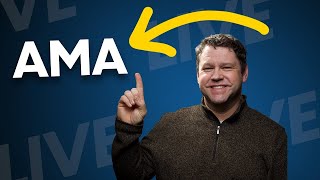

Blogging Is Dead? The Truth in 2025
60sDirectly addresses the controversial question of whether blogging is dead, offering a nuanced take that sparks debate and curiosity.
▶ Play Clip"The title promises an AMA and delivers exactly that, with Ricky answering a wide range of questions and sharing personal updates."
In this AMA-style live stream, Ricky Kesler from Income School discusses the current state of blogging, the impact of AI on content creation, and the shift from a blog-centric business model to building an online brand. He shares personal updates, including his recent divorce and mental health journey, and answers audience questions about SEO, YouTube, and using AI tools effectively.
Ricky starts the live stream, welcoming viewers and explaining the AMA format where he answers questions from the chat and comments.
The old model of writing 30-50 blog posts and making a full-time income through affiliate marketing and ads no longer works due to saturation, AI-generated content, and Google's helpful content updates.
Blog traffic has declined significantly because people use AI (like ChatGPT) for quick answers. However, the remaining traffic is more qualified and valuable, leading to higher conversion rates.
Blogs must be treated as part of a larger brand, not a standalone business. Email lists, social media, and YouTube are essential to capture and nurture audiences.
AI should be used as a tool to enhance efficiency, not replace human creativity. Ricky uses custom GPTs to generate timestamps, summaries, and action items from his videos.
Focus on one primary social media platform where your audience is, then repurpose content to other platforms using tools like Opus Clips for short-form videos.
Remove or redirect underperforming blog posts to stronger, related content. This improves site quality and aligns with current SEO/GEO best practices.
Creating a Google Business listing (even for service-area businesses) can improve rankings because Google treats real businesses differently than blogs.
Starting a new channel is often better than pivoting an existing one, as the algorithm rewards fresh content and engagement from a new audience.
WordPress is superior to Wix for customization, performance, and scalability. Moving from Wix to WordPress is recommended, especially while the site is small.
Invest time in training AI to match your voice and style rather than writing everything from scratch. Use AI to draft content, then edit for quality.
Abandon low-earning ads in favor of affiliate marketing, sponsorships, and info products. The qualified traffic that comes to your site is more likely to convert.
YouTube offers better monetization potential than blogging for most people. However, a website is still valuable for capturing emails and building authority.
Ricky shares his struggles with depression, people-pleasing, and burnout, which led to a divorce and a break from the channel. He emphasizes the importance of self-care and setting boundaries.
Ricky plans to continue creating content focused on building online brands, using AI, and integrating YouTube, social media, and email marketing. He will also update Project 24 courses.
Blogging is not dead, but the model has shifted from passive income through ads to building a brand with multiple marketing channels. Success now requires treating your blog as part of a larger business, using AI as a thought partner, and focusing on high-quality, qualified traffic.
What is the main reason the old blogging model no longer works?
Saturation, AI-generated content, and Google's helpful content updates have reduced traffic and made it harder to rank.
01:00
How has AI impacted blog traffic?
People use AI for quick answers, reducing click-through rates to blogs, but the remaining traffic is more qualified.
03:00
What is the recommended approach to using AI for content creation?
Use AI as a thought partner, not a thought leader. Train it on your own content to match your voice and style.
07:00
Why is starting a new YouTube channel often better than pivoting an existing one?
The algorithm rewards fresh content and engagement from a new audience, whereas pivoting can cause existing subscribers to disengage.
18:00
What is GEO?
Generative Engine Optimization – optimizing content so that generative AI uses it as a source and links to it.
22:00
What is the key difference between Wix and WordPress according to Ricky?
WordPress offers more customization, better performance, and lower long-term costs compared to Wix.
22:00
What should you do with underperforming blog posts?
Remove or 301 redirect them to a closely related, stronger post to improve site quality.
12:00
How can a local business listing help a blog?
It signals to Google that you are a real business, which can improve rankings and attract more qualified traffic.
15:00
What is the recommended monetization strategy for blogs today?
Focus on affiliate marketing, sponsorships, and info products rather than low-earning ads.
30:00
What personal challenge did Ricky share that affected his content creation?
He went through a divorce and struggled with depression and people-pleasing, leading to burnout and a break from the channel.
40:00
Old Blogging Model is Dead
Clearly states that the passive income model of 30-50 posts no longer works due to AI and saturation.
01:00AI as a Thought Partner
Introduces the concept of using AI to enhance creativity and efficiency, not replace it.
07:00Pivot vs. New Channel
Provides actionable advice for YouTube creators on whether to pivot or start fresh.
18:00Personal Mental Health Journey
Ricky shares his struggles with depression and people-pleasing, emphasizing self-care and boundaries.
40:00Future Focus on Brand Building
Outlines the new direction for Income School: building online brands with integrated marketing channels.
45:00[00:00] All right, there we go. We're back at it. We're live. Okay, everybody, welcome. Um, glad you're here. This today, this is a going to be an ask me anything sort of format. So, um, you can jump on here and type any question you want to in the chat that you want an answer from me and I'll do my best to answer your questions. Um, to get started here because I know it always takes a couple minutes.
[00:27] First of all, if you're here, let me know if in the chat if the sound is working, if everything is good. Um, if you just let me know real quick, that's great. Um, but now, let's go ahead and get into it. Uh, I'll take any questions. So, I'll start with a couple questions that were posted in comments on a post I did yesterday, as well as a couple from Project 24 community. Um, Lewis, awesome. All good.
[00:53] I'm doing I'm doing pretty good now. Um, we'll talk a little bit about that. Uh, but yeah, that's that's kind of part of it. Um, okay. Um, but yeah, we got a couple of questions that have come in. Probably the biggest question I've been asked though in YouTube videos recently is just what's the plan for blogging? Like what what are we doing now? Um, let me give you kind of a high level of what I'm seeing.
[01:20] Um, we've been doing a lot over the last little bit, which we'll talk about as well. That's another big question I keep getting. Um but uh but what's going on with blogging? The the simple answer and probably like not the one that most people want to hear is that the the old model that we used to that we taught for years, right? And the that um a lot of people joined Project 24 for a lot of
[01:46] people watched this channel for there was a business model where essentially you just like wrote some blog posts. Um, back in the day you could get by with like 30 as a starting point and then that started to increase. You needed more and more and more content. Um, and the strategy sort of changed over time, but essentially you created content and then you could monetize your website with very simple means. In the beginning for us, it
[02:13] was mostly just affiliate marketing. We didn't even do ads at first, but then ads started to become more lucrative and um, so affiliate and ads and that was enough. and you could make a full-time income from one blog with 30 to 50 blog posts. Um, and that started changing obviously over time, especially as it got more and more saturated, but also um, uh, you know, AI tools have been around for a while and some people had
[02:39] started using them. But not only that, there were other people out there using tools to spin content. And so you'd put a lot of work into a blog post. Somebody else goes and spins a bunch of your articles and the articles from 12 other websites in your niche and next thing you know they have a bigger more authoritative looking website. There's that kind of crap going on too. But then obviously when chat GPT just came out,
[03:06] right? just the chat because GPT the GPT models have been around for a little while and used in in tools and available but but chat GPT came out and suddenly there was just an explosion of content um a lot of people just started quickly taking advantage of that um kind of understandably so but at the same time it's like what did they think was going to happen right and so um Google had already been putting a
[03:32] lot of effort into helpful content right trying to use other metrics other than just just the text and just traditional SEO. Um, but trying to look for other things to figure out how helpful the content was. So those EAT factors became really important. Um, and we were all working on that, right? But then with Chatbt when that came out, um, it only took a few months for Google to push out an update that basically just decimated
[03:59] most blogs. It's been a couple years now. Um, and in the time since then, we've seen several blogs, um, Project 24 members are telling me regularly that they're seeing traffic come back. So, there's a couple of things that have changed. One is traffic numbers are not going to be what we used to see. 100,000 page views a month on a blog used to be like, "Okay, cool. This is really, this is great. Um, and I can
[04:25] get plenty of ad revenue from that." um that same blog today might only get 10,000 views a month, maybe 50, but usually a lot lower than what it used to get. And the reason for that, as we can understand, is people are using AI to answer their questions. Either they go straight to chatbt or they get their AI generated response right in the search engine right from Google. And for those highle questions, it's enough. I mean,
[04:52] think of what snippets were and it's just it's taken that to a whole new level. Those answers aren't always accurate and we can we can be frustrated about that, right? But because of that, fewer people are just clicking all the way through to go to your blog. But what that does mean is that the people that do click through to go to your blog are the people that are the more qualified audience, right? They're the people
[05:18] that are the more interested audience and so they're a higher value audience. So the the game has changed. We can't just use totally passive income. I mean, you can still do things that are quite passive um information products. You can do a lot of things that earn you great income overnight um while you're sleeping, but um a totally passive model like we used to have is not um it's not as likely to work. For some blogs
[05:45] it's working, but usually blogs that have been around a while that establish themselves really well and do some other things that we can talk about here too. So, um, so the model's changed. If the audience that's coming to your website is a more interested and more qualified audience, great. That means that you can probably get a much higher um, conversion rate on selling an info product or at least converting to an email list. But usually people
[06:11] aren't buying an info product just from a blog visit, right? We've got to capture them somehow. Oh, email lists have become more important. They were valuable before, they're even more valuable now. But other social media to drive traffic beyond just expecting Google and other search engines to do the job anymore. Like we need to do other social, we need to do other outreach. We got to participate in the industry. And those are some of the things
[06:38] that I've talked about on the channel over the last couple years um quite a bit actually is treating your blog more like a business and more like a brand. It's a brand, not just a blog. Does that make sense? The blog is one piece of it and your website is kind of the center of where you're trying to send people because you can have all the social media, you can have um a YouTube channel, you can
[07:04] have a Tik Tok, you can have Instagram, all those things, you can even have a blog, but if you don't own that customer list, then it it's not worth nearly as much, right? I can sell stuff to an audience on YouTube, but if I can get them watching my YouTube videos, but then also get them on an email list or get them into a free community of some kind, now I can know who they are and
[07:31] I can send them additional stuff that's going to be interesting to them and valuable to them and warm them up more for a real sale. Does that make sense? So, that is the main shift that we've made and it's it's not brand new, right? This is stuff we've been talking about for quite a while. Um, Terry, my traffic starting to move up, although still dismal, and I'm looking at refurbishing the site. Exactly. Traffic's starting to come
[07:57] back for people that stuck around and kept working on it, but it still looks dismal by comparison to where we were at. So, um, we've got to, again, we've got to think of it differently. It's not the same numbers game it used to be. It's not just I can get 50,000, 100,000, 200,000 page views every month on my blog um of just, you know, people clicking through getting an answer to their question. The simple answers to
[08:24] the questions, those are getting answered by the AI summary. And honestly, I didn't think I would be one of those people that would just skip Google altogether for a lot of questions. There are quite a few that I do. Um, the reason for that is I now have I have a chatbt um pro account. I have the app on my phone and chatbt now um I've been able to give it a lot of context. So when
[08:50] I ask it a question, it's not just a one-off question. It's a question with context. It's a question where I'm asking an AI that has a lot more information about me. And so the answers that I get are way better suited to me. And it has a better understanding of what I'm asking and why I'm asking it. And so there are certain types of things that I don't just want a random blogger's opinion. I want to
[09:17] be able to kind of talk through something and I want to have an iterative like back and forth discussion. And for that, instead of just poking around Google for an hour trying to find a bunch of different opinions from a bunch of different blogs, um, instead I can have a back and forth with the AI that's got a body of knowledge that's greater than I mean it's the body of knowledge is all the bloggers um, plus
[09:43] other re um, other resources as well. So, um, I was I was a skeptic at first, but realistically, I have a feeling that more and more people are going to be using AI. So, there's a lot of talk for content creators about um about GEO. You know, there's SEO, right? GEO, um, where we're optimizing for basically for the AIs, um, so that you can get cited by the AIS. That's reasonable. That's helpful. Um, but honestly, even
[10:10] more than that, I think what matters is that we have to build a brand. So, you can do the work to get seen by the AIS. Great. I think that's a good that's a good thing. And it's not all that different from SEO before. Um, it it really isn't. It's it's maybe the way we write, right? The way we structure an article might change a little bit, but not a whole lot. In fact, the way that
[10:36] we've been teaching here at Income School is pretty well suited actually for GEO as well as it was for SEO. So, we're not having to change a whole lot. But what we really need to do is we need to think of our blog as a brand and have the blog just be one of the marketing arms of it. Now, I am not um I am not opposed to using AI to help us write. I use AI
[11:03] for a lot of things. I got called out recently um because you know we make lessons in uh Project 24 and we just completely redid our whole YouTube system um and it's vastly better than it's ever been. Um but one of the things is we used to go through each of the lessons and so like we'd we'd film the video like we've outlined this whole thing and it's got all this information. We pack it in, we
[11:29] film a video, and then afterwards, somebody watches the video and records timestamps and tries to write up a little summary. Why would I need a human to do that anymore? Instead, I created a custom GPT that create that gives me timestamps, a summary of the lesson, and then it pulls out any action items from the video, and then it also gives me a reminder of any links that I promised in the video. So, it's like, "Oh,
[11:56] you promised that you would link to this, and you promised that you'd give them a downloadable PDF of this." And so, I get all that literally just by copying and pasting the transcript from the video. Now, the AI is doing the work that I could pay an intern to do. It's doing a better job. It's doing it in seconds. and the output. I also uh played around with the GPT to get the tone of the output
[12:23] right so that it would feel like the kinds of things I would write um or that my team would write, you know, in in a summary for the lesson. And so what does that do? It makes the lesson really nice because you can go refer back to the lesson and just look at the text real quick and be reminded without having to rewatch a 20-minute video. Um you get the action items from the video, just bullet
[12:49] points listed out. It's incredibly helpful. And it's not information that the AI generated. It's information that I put into it because it's the transcript from the video I recorded. But someone called me out and was like, "Hey, I thought you guys don't use AI tools." I'm like, "Oh, no. We use them all the time. We just want to use them in a way that is is positive, right? In a way that is um we're I I
[13:16] heard this in a podcast. It was really good. There's a podcast um I think it's beyond the prompt. I can't remember if that's the one. It's Jeremy Utley and the guy's awesome. Um, I met him a year ago and he's awesome. Um, so, uh, but in this podcast, the guy he was interviewing said, "Use AI as a thought partner, not as the thought leader." You be the thought leader. You use it to bounce your thoughts off
[13:42] of, to organize your thoughts, to ask you questions, to challenge you, all those kinds of things. And that's where it's super powerful. Okay, I know there's a lot of questions coming in. We'll get we'll get to those now. So, that's where we're going with blogging. Um, blogging is not dead. Blogging has a lot of value, but blogging itself as a business model. I make a blog and that is my business. It's not likely to very be
[14:09] very successful. Um, and so that's again, it's what I've been trying to steer you toward over the last couple of years on this channel. But I and I feel like in some videos I've been pretty bold in saying that, but um I want to be very very clear at this point. All right. All right. We're going to go ahead and get to the questions you guys are asking right now. Um let's see. Young Boy Mike says,
[14:35] "What are your thoughts on using every question query as a post on thread Twitter to build topical authority and to make it easier for Google to index?" Um, so yeah, using using the queries that you would use like to pick your topics to write about in a blog post, all that kind of stuff. going and creating posts on threads on Twitter on um Instagram, you know, um you can have text posts on, you know, obviously like
[15:02] Twitter and threads and stuff, but then, you know, images on threads and Twitter and Instagram and stuff with the caption that um and even like text over the image um that is just kind of a oneliner answering a question or just sharing a principle or sharing a fact or something that's of interest. Absolutely. I think that's a lot of that has a lot of value. Um, it gets you followers on those social media platforms and if
[15:28] that and if your social media account is branded the same as your blog, like those are some of the kinds of things that make you visible all over the place. And the thing is is you can repurpose some of the same content to post on all the different social medias. I would say that it can be really overwhelming to think, I've got to create content for Tik Tok and YouTube and Instagram and Facebook, but they all
[15:55] have somewhat different audiences. And so, do I need to really curate the the content for each one separately? Ideally, yeah. But if you're one person, it's probably just not going to happen, right? So, use the tools available to you. Um, if you're making videos for YouTube, you can use Opus Clips to clip it up and make it vertical and um, put a bunch of short form content out on on uh, Instagram, Tik Tok, uh, Facebook and
[16:21] and the reality is is I would probably focus on the primary social media platform where your audience is likely to be. So, if you're talking about people who are middle-aged and older, their social media platform of choice is mostly going to be Facebook, then Instagram, probably. If you're trying to target younger people to middle-aged people, then, you know, Tik Tok's not a bad place to be, but also probably Instagram. So, you know, and and just depending
[16:48] on who it is that you're targeting, pick that as your primary social media platform, but then take that content you're creating for that platform and post it everywhere else, too. Um, I I think that works great. Um, all right. Terry says, "What are your thoughts on doing 301 redirects on blog content Google won't index or that doesn't rank and isn't part of the channel focus?" Yeah, I think um, yeah, essentially abandoning that content, removing it. We
[17:14] don't want a website full of content that is either not getting indexed or not getting traffic. So, you know, in we have a YouTube video from several years ago, uh, as well as a it's a part of project 24 in blogging. Um, we called it the battleship method. And it's about using the data that you get from your Google Analytics to figure out what content is working, what's not. Use that in the planning of new content,
[17:41] but also use that to try to revitalize some old blog posts. And then we have some blog posts that were just a complete miss. those ones. A lot of times it's probably more valuable to just get rid of it. But if you're going to get rid of it, redirect it to another page on the website that is as the closest related possible because you don't want a bunch of 404 errors. You don't want a bunch of
[18:07] like this page doesn't exist stuff showing up on your website. Um, ideally we would start to really kind of cultivate our websites and and focus in on the content that has the most value. Um, it could be that, you know, you wrote a blog post. It was a response post answering a pretty niche query. It doesn't get much traffic, but maybe a little bit. So, what if you went and answered that question in another blog post
[18:34] that's really closely related? Just beef up that blog post a little bit and redirect to that one. Now, that question is still being answered on your website and it's not going to hurt that other article, especially if it's very closely like it's it's part of the same topic. and then you have that 301 redirect pointing to that other resource that's now better. So now instead of having hundreds of articles on your website, maybe you have fewer
[19:00] articles, but each article does a better job of more thoroughly covering the topic. So we end up with more staple and pillar posts than response posts in the end, if that makes sense. That's probably a much better fit for the way SEO and GEO and stuff are working today. Um, and it's going to make your website have fewer better resources, if that makes sense. All right. Um, yeah, at Williams, I don't use Google unless it's a
[19:27] local search for a business. That's pretty um I think that's a really good uh insight to share here. If you um if you have a business, like if you have something to sell and you create a local business listing, even if what you're selling is a digital product, but you exist locally and you'd be willing to do a consult in person or over the phone with somebody local. I mean, you do consults for people that aren't
[19:53] local, too, but you know, but you can create a Google business listing if you would have any reason to do business locally. You don't even have to use a physical address. You can just use a service area and have people be able to contact you through a a telephone number or a form on your website to be able to consult with you or buy your product, right? Um, now you have a local business, but it's also
[20:20] not just a local business, right? It's but you have a business. When you have a real business, um, Google treats your website differently than when it's just a blog. That, uh, something I talked about on YouTube probably a year or more ago, but Google is treating businesses differently. They're showing up in the rankings, and that's the kind of stuff people are looking for. They're looking for a solution, not just information. So having the information in your
[20:46] blog, you might wonder like, what value does that have then if people are just using AI? the blog content still gives you authority and for those people who are looking for more information than just what the AI is providing them, you can give them a more complete picture through your blog content. But um but and so anyway, so having that is going to help support your business, but your website is actually for your brand. It's for
[21:13] your business. It's not just a blog, if that makes sense. And that's going to help you a lot. Um, yeah, Terry, I've been trying to optimize for Bing since that's where I hear GPT polls from. Um, that's great. Yep, optimize for Bing. Um, I don't know if that's the only place chat GPT polls from, but it does make sense because OpenAI does have an arrangement with Microsoft. Um, so it would make sense that they're getting a
[21:39] lot of data from Bing. Also, the antitrust ruling with Google now, um I think is going to make it so that in the future, not immediately, but in the future, it it's possible that we'll start to see search traffic um spread more across other search engines, and Bing is number two. So, um not a bad idea. I'm also finding it's a lot easier to rank on Bing. Um, Lewis says, "I've been working a a lot with
[22:06] SEO still for businesses and company sites and it works really well. Obviously, not high volume traffic, but highly qualified leads. For e-commerce, it also still works 100%, Lewis. Um, that's back to that like if your website has a purpose beyond just information, it's going to do better. um the content that you make and the SEO work you do with that content is going to help your business rank better and people are looking for businesses online a
[22:32] lot more than they are just for information. Someone says, "I was sad to see channelmakers channel end." Yeah, that channel I mean it's on a break kind of like income school was. We just um actually announced it on channel makers. Um and we're going to see kind of what happens. Um we're going to see what happens with channel makers. Uh, a lot of I mean, if you know, you know, right? Um, a couple years ago that
[22:59] channel took a really big hit. Um, we thought that with time and with enough content, the algorithm would kind of pick back up and start showing us to new people. It seems to have not done that. And so, we put a lot of work into it and it just would not grow. Um, and so we're taking some time away from that channel and kind of evaluating what we're doing there. But also what we're doing mostly is
[23:25] we're working a lot on our own content for our own other projects. Um really one of the things that we struggled with was we were split and spread across too many things which is why I took a break on this channel and we we'll talk about that a little bit more too because um I've been asked about that. But the main reason I took a break on this channel was I personally and my whole team we
[23:52] were spread across too many things. And so none of those things was being done with the level of excellence that we needed it to. And so um we took some time to focus on channelmakers. Um even with that level of focus, it wasn't it wasn't working. And I don't know if it's a reputation issue. So people that used to watch the videos, they see the notification pop up and they deliberately choose not to watch the videos
[24:19] anymore. and or or if it's um an algorithmic issue, which I would have thought with enough time the algorithm would adjust, but it seemed to have never done that. Speaking of algorithm stuff, like we just did an interesting case study here about the algorithm um with pivoting a channel versus starting a new channel and really interesting findings. So, I'm kind of teeing that up right now. We'll talk about I think we'll probably do a podcast episode
[24:45] about it for the Project 24 podcast here soon and we'll probably talk about it in a video before long that we'll publish somewhere. I don't know, maybe it'll be here, maybe it'll be back on channel makers. But, um, as we see this play out, I'm really interested to see what happens. Basically though, starting a new channel versus pivoting. Starting the new channel is probably a lot easier and a lot better, especially like if you're trying to
[25:12] really do a big pivot on a channel. Um, if you can announce to the old to the existing channel like, "Hey, I'm starting a new channel. It's a new topic, but if you're interested in the new topic and you like me and want to follow me over there, go check it out." That's going to give a boost to the new channel, which is going to look amazing to the algorithm. On the other hand, if you try
[25:38] to pivot your channel and a bunch of people that used to watch don't watch anymore because they're not interested in the new topic, that looks really bad to the algorithm. And so, um, you can actually take a new channel and grow it bigger than the old channel a lot of times, a lot faster than you can pivot the old channel. Anyway, um, interesting interesting stuff. Um, they say, "I like the new direction you took with the
[26:05] prepper channel." Yeah. And so that's that's the one I was trying to pivot it. Um, and it was it wasn't working. The videos just weren't getting very many views. Um, last week, I think just just week and a half ago, we decided remove the videos from the prepper channel, put them on a brand new channel. We didn't even announce it on the Prepper channel. We're about to. We're going to tell that audience. Um, but uh even
[26:31] without announcing it, just publishing these videos fresh on a brand new channel, they're getting more videos than they were getting on that existing channel that already had over 5,000 subscribers. It It's crazy. Um, and then once we announce it to that channel, I think that's going to give us another little surge, and I think that's going to look really good to the algorithm. Um, let's see. What's the future of this channel going to be? Is blogging
[26:58] really dead? Blogging is not dead. We'll continue talking about blogging. I'm going to be talking about the broader aspect though. So, I'm going to be talking about building um building essentially an online brand. We'll still be focused on the same things we were before. We'll talk about info products. We'll talk about SEO. We'll talk about GEO. Um we'll talk about AI and how to use AI. Um at Williams asked, "Can you teach us how you're using
[27:24] Chat GBT?" Yeah, I'll make videos about that. I'm not going to be the like the premier AI channel. Um I earlier this year I met Matt Wolf. He's he's a cool guy. He's got a channel that I mean he's paying attention to everything AI that's coming out as it's coming out. That's not going to be me. Um I learn from those guys. I take what makes the most sense for what we do and I'll share that
[27:51] with you and I think that'll be the most helpful for you anyway. Um so yeah, we'll talk about that. We'll talk about basically all the same stuff we used to, but not from the standpoint of I'm building a blog, but from the standpoint of I'm building an online brand and using a blog in addition to other social media, if that makes sense. I'll probably never be the channel that's like the best Pinterest channel and the best
[28:17] Instagram channel and the best I'll probably mostly be best known for the blogging side of it, but um but we'll we'll integrate all the other stuff too and you'll see how it all fits together, if that makes sense. Um any suggestions for converting a blog website from Wix to WordPress? How inferior is Wix compared to WordPress? Um it's very inferior. Um, I say that mostly because Wix is far more limited. Um, and everything that you want
[28:44] to be able to do on your website, like as you're building a brand out of it, uh, basically Wix has a handful of options that you have to pay for with WordPress where it's open source, you've got tons of different plug-in options for anything that you want to do. And so, you can build it to be far more custom, even just by using plugins. And then if you want to use a developer, they can jump in
[29:10] and do all sorts of stuff too. Wix is just going to be way more limiting. And then the cost gets a lot higher once you're doing anything beyond like ultra ultra basic blogging. Um WordPress websites can load faster. They can be they can be more secure. Um there's there's just a lot of things about WordPress that I like way better than Wix. I've used Wix. I've used Squarespace. I've tried um I've tried doing content on a
[29:37] Shopify website before. I would use I mean Shopify is a great storefront. You can also use WordPress plugins, but Shopify does a great job of a lot of things. I would just have Shopify be your store on a subdomain and have your content all be your content and all your other stuff just be on WordPress. That's what I would do. Um so yeah. Um, moving it over can be a pain. Um, I think you can export
[30:03] all the content for WordPress. I think there's ways to do that. You'll still have to format it all and stuff when you move it over. So, it's kind of a pain. Um, if it's something you're thinking of doing, doing it like while your site's as small as possible is better. Um, is the team still intact or is everyone doing their own thing now? Um, the team is partially intact. Um, we did we did do a little
[30:30] downsizing recently. Um, so some things have changed, but um, some of the team is still here and working and making things work. Um, let's see. Zed says, "Followed you guys for five plus years. Honestly, blogging for affiliate marketing is dead. YouTube affiliate marketing is much better." Yes, it is. And that's why we've been trying to push. I mean, Project 24 members have mostly figured it out, but um we've been trying to encourage YouTube for at least
[30:56] five years. I mean, Jim's been gone for four years, and we were pushing YouTube long before he left, so five or six years. Um, okay. There were a couple other questions that came in. One person did ask, "Where's Jim?" Um, it's been four years. Uh, he he he is doing his own thing. He's working on the Backfire channel and um and that brand and doing great with it. He moved to southern Utah um which is kind
[31:23] of like the precursor to why we divided. He moved away. The team was here. We tried it for about half a year and it was a lot harder to run the business with one of the owners totally remote. Um and so that's kind of what led to splitting and going separate ways. We still are in contact. We talk every now and then. um been friends for years and so uh is he going to come back to
[31:49] income school? No. I I I mean I bought his share of the company. It's it's my company. Um he's a good guy. He knows a lot of stuff. He hasn't been as focused on this stuff as I have. He's been doing a YouTube channel. Um not studying what's going on with SEO and AI and all sorts of stuff, if that makes sense. Um okay. And then let's see if I had any other questions here from Project
[32:16] 24 members. Then we'll jump right back to your questions here in the feed. Um, okay. Looks like it's just you guys. Uh, next question. What do you think of copyrightiting these days? So, um, as much as I hate to say it, it doesn't make sense to put a lot of effort into writing all of your own copy. Um, I do think it makes a lot of sense if you're going I think it makes a lot of
[32:42] sense to train AIS really well. I think it makes a lot of sense to be good at copywriting so that you can see what's good and what's not from the AIS. just asking ChatPT to write something for you, it's not going to be good. I mean, it'll be fine. It'll be as good as a lot of bloggers, but it won't be really good. Um, but if you can give if you can give an AI copy that
[33:09] you've written as a starting point so it can understand your tone and your style, if you can feed it the information that you want it to write out. So, I create a lot of YouTube content, right? Well, it's pretty easy then to feed it the transcripts of all my YouTube videos. In fact, um there's a guy who's also really awesome and for some reason his name just left my mind. I I'm I follow him on Facebook.
[33:35] We're friends on Facebook. I've been to um he did a call a while back where he I mean it cost like a hundred bucks to to join this Zoom call with him. And in the call, he literally walked through and then he gave us like all the resources. Um, the guy could charge way more for what he's doing. Um, but uh I think his Instagram handle is Utah SEO Ninja and but for some reason his name
[34:02] is gone from my brain mostly because I need it right now. Um, but he taught us he showed us how to write a goo a script um to literally uh pull all the transcripts from any YouTube channel for every video from the channel and then how to create an agent. So, not just a custom GPT but like an agent um within chat GPT or other AIS. um how to create an agent that would then um use
[34:28] all of the transcripts from those videos as a as like the source information but also respond as if they were that person. So then you now you've got like a chatbot that that is essentially the person whose YouTube channel. Um and it's just going to have all the knowledge of everything they talked about in their YouTube videos. So, you could create that custom agent and then have it and that custom agent could literally be you with
[34:55] all the knowledge of everything you've said in your videos and then you have it write write some blog posts, you know, and then you could check those blog posts and make sure it's accurate and make sure that it still fits the way you would talk. But, um, you know, that kind of stuff makes a lot of sense. Doing all of your own copywriting in the time that it takes and everything, it doesn't make a lot of
[35:21] sense. um using AI to help you draft emails. Um all of that stuff I think using it as an assistant to help you I think makes a lot of sense. Um let's see. Can you review formal aspects of the business such as obtaining an LLC, insurance, and other relevant details? Obviously the caveat is that things can differ by country, region, etc. Yeah, we've talked about some of that before on this channel. Um it is hard to
[35:48] cover a lot of that because it does depend a lot on where you live. Even LLC's are a state level thing and so getting an LLC in Idaho is really cheap and really easy. I think it's a little bit more involved like in Texas. In Idaho, I just have to like submit a document. It can just be like um an articles of incorporation. Just you basically put together an agreement that says here's what my business is
[36:15] and what it does and that's enough. In Texas, you have to like formally register a business, I think, and then I did it in Texas. I've done it in Virginia, Texas, and Idaho. But some of those things are tough um just because some of the things differ. And so um and honestly like a quick internet search or just asking chatbt it it can give you um a lot of that information for like literally for where you
[36:41] live a lot faster. Um what are your thoughts on using tools on your site like Quizlet using native ads with um Kathy headlines or probably catchy headlines? Um, yeah. I think using uh tools like quizzes and things I think are going to be great. Honestly, anything that's going to help engage people better on your site is is going to be way better than just content. Embedding video. Um, but honestly, I really like polls. Um, so and
[37:08] quizzes and things like that can be really good. Um, yeah. I I mean, I think those are all good. Let's see. Terry says, "I'm ranking on page one and even number one on several decent search terms using income school project 24 teachings. I'm working on a YouTube site integrated strategy to tie them together tighter, but um but have wider net on the site." I like that too. On a YouTube channel, it's great to cast a little
[37:34] bit narrower net, especially when you're starting out a channel. Once your channel becomes well established in a space, you you can broaden it. And it's it can be detrimental to get too narrow on a YouTube channel because eventually your audience then gets upset when you try to broaden, which I've experienced plenty. Um but um but yes, the YouTube algorithm works a lot better when your when your focus is is more narrow and then on your website
[38:01] you can broaden things. I I love that. Um, do you see a blog and website getting more revenue, abandoning ads, focusing more on affiliate links, sponsorships, and brand deals? Ads seem to be diluting sites value. Yes. Um, I am at the point of just deleting ads off of all my websites. They don't earn that much because you don't get the same traffic numbers you used to. Um, but again, because that traffic is is more qualified traffic,
[38:27] you you can monetize it so much better in other ways, even just affiliate marketing um and sponsorships and things. I I like that. Um, let's see. Google Ad Manners disapproving me with multiple policy violation. This is not my first site, but I'm rejected third time. Do they never revoke? I had some Disney kid content, but removed after rejection. Um, yeah. I mean, I've had different reasons why. I mean, we've had Google disapprove a site just because
[38:54] they didn't like the heading structure. Like, we didn't have uh they thought we had duplicate content because we had the same blog post in a couple different categories, which is fine when your site's bigger, but the site at the time was kind of small. And so, it looked like we were trying to make the site appear to have more content than it really did. Um, it can be hard to figure out exactly why. they don't give
[39:20] you very much information. Um, the best thing you can do is keep trying, but each time you try, like try to look for something else. I think I made a YouTube video at that time. It's probably been two to three years ago. Um, but it'd be worth looking um because we dealt with that and we asked some questions with because ISOIC was able to get more data from Google when um because we applied through ISOIC um
[39:47] and so they were able to actually get some information from Google and so they provided us with some really good guidelines for things you should check to make sure that um your site's going to get approved for Google Ad Manager. So, I would go find that video if um and and go watch that. Um, what are your thoughts on using viral trending social media posts or stories and turning them into blog posts? That's a viral YouTube
[40:13] video and turning it into a blog post because sometimes AI doesn't know. Um, yeah, I mean, writing blog posts essentially creating blog posts out of really trending topics um makes a lot of sense. Um, if it's your social media content that is viral and you're now making some blog content out of it, then now you can also have the benefit of kind of of linking to it. Um, usually I want to make like if I'm going
[40:40] to take a YouTube video and make a blog post out of it. I don't I'm I'm not just going to use like a transcript of the video, but with AI now it's so much easier. It used to be people would just like post a transcript of the video as a blog post and that's not as effective. But um but creating a good resource uh a blog resource that goes with the video um makes a lot of
[41:06] sense and then embedding that social media content on the site also um with the blog post can make a lot of sense. Um good. Um Susanna says, "Why don't you help us build a YouTube channel from zero like you did for our websites? I've always wanted to do that, but it seems to have many places I don't know what to do first." So Project 24 has that. Um, and that's what channelmakers was. Um, that YouTube channel,
[41:33] which we've got a ton of content on, that's what it is. It's us doing what we did for blogging, but with YouTube. Um, we take anybody coming in from literally zero. You have no idea what to do, and we show you step by step by step by step how to um create a YouTube channel that's successful. Okay. Um, Mike says, "Backfire's crushing." Yeah, Backfire's been doing great um over the last few years. It's grown and grown.
[41:59] He's up, I think, still just shy of a million subscribers. Um, let's see. Martin says, "Do you feel the performance benefits of WordPress outweigh the simplicity of website builders like Squarespace? I feel like the time saved in maintenance would be better spent on video." Um, honestly, I've had more trouble with a Squarespace website than I ever have with a WordPress website, and they end up needing more maintenance. I think putting a little bit of time into
[42:26] learning basic WordPress is worth it. Um, but I mean up to you. If if you've got a website already on Squarespace and it's going to take you a bunch of work to move it over, that's fine. Go ahead and use Squarespace. But, um, I don't actually believe Squarespace is that much easier, especially today. WordPress, there are so many themes now that are way more drag and drop than they used to be. You just have better customization
[42:52] and better performance on the WordPress site. So, if you're starting from zero, don't be fooled into thinking Squarespace is that much better, that much easier. A lot of um good WordPress themes now also have AI options where literally you can tell it it'll prompt you like what do you want the website to look like, what the feel and all this stuff and it'll like say, well, what do you think of this color scheme? And you'll pick
[43:19] the one you like and then next thing you know, it builds all the pages for you. And all you do is and it'll even like use AI generated images that you can then swap out with real pictures later. Um it'll write the text for you. It'll do all sorts of stuff. Um and then you can just tweak it from there if if that's what you want. Um also lots of them have really good starter templates and
[43:45] then everything ends up being pretty drag and drop. So um yeah, let's see. Mike says, "Problem with pivoting to YouTube is not always have the voice for it." I get that. Um, I don't feel like I have the ideal voice for YouTube or podcasting. Um, I've gotten a lot better at it, I would say, over time. Um, I've gotten to where I annunciate better and I project a lot better. Um, but it Yes. At Williams, Tristan
[44:12] Goodwin, Utah SEO Ninja. That's the guy. I love Tristan and for some reason his name just blanked. Um, and as you can see, I have ADHD, which is why I'm literally like halfway through answering a question when I see this other one. Um, anyway, back to having a voice for it. Um, like anything else, you can develop a a skill. And also on YouTube, people are all about authenticity. And so, like, they don't expect you to
[44:38] have to look like a Hollywood actor. They don't expect you to sound like a radio announcer. Um, yeah. Um, let's see. Yaswan says, "What's your take on AI SEO?" Yeah, I mean, do it. I don't think it's actually that much different than what we're already doing. Uh, what we teach. Um, it's very much about the content and making it clear what your content is about. Um, really a I'm I'm thinking through all the all the best
[45:05] practices for GEO. Um, and really like what we've been doing all along is is pretty effective. Um, but that is something I'm going to dive into more and something we'll talk about here on this channel and maybe we'll be able to see how um there might be some tweaks that we might make to the way that we write um to better optimize for that for GEO for other search engines. Honestly though, um I think even just
[45:31] for SEO across search engines, I think it's uh I think what we've been doing already is still really really effective. Uh in 2025, what are the best ways to get traffic that can be monetized? Where does traffic come from besides helpful articles? Anything else? Yeah, I mean honestly the main thing is treating your website as so the blog part of the website I'm going to classify similar as how I would like social media content um even
[45:58] like videos on YouTube right all of those are kind of top offunnel they're the thing that's going to get shown you know your blog posts are going to get shown in the search engines maybe in um AI results and stuff like that and a certain percentage of people that see it will go into it and actually consume that content but only a certain percentage of them that consume that content are actually going to take any action
[46:24] from that. So like on YouTube they might subscribe on other social media they might um choose to follow or subscribe or you know depending on what the social media platform is a lot of them won't um but then if in your content um you know if we create content that that people want to go from one to another right so in our videos we often want to get people to come watch a video but then enjoy
[46:51] it enough and give them another video that they want to go watch so they go watch that's been the best thing on the income school channel. I've had so many people over the years tell me, I came across this one video of yours and then I binged everything else on your channel. That's the story we heard so much. And that's why Project 24 was so successful was because people came, they found something that they liked, it
[47:17] pointed them to another thing, they consumed more content, at some point their level of trust was high enough that when we invited them to go over to the website and check out a product, they did. Right? So if in our YouTube content, in our social media content, and if in our blog content, we can be encouraging people through links and through just the value of our content to go to another piece of content, right? And just
[47:44] to join us and and participate in that brand a little bit more. Then at some point when we are inviting them also to come check out our some free offering for our email list, they go check it out and they're like, you know what, I've had such a good experience with this brand. I will absolutely sign up for their email list and I'll get this free thing and then they sign up for the email list, they
[48:11] get the free thing, but now they're getting an email every week that is also valuable, right? Um and and you can see how this this is a funnel, right? And at some point a certain percentage of those people are the ideal people to buy whatever things you have. That is how we um we that's how you make the the sales that are that are bigger right now in your content. We can monetize all the content to
[48:37] some degree um between ads. Uh, I mean, I I just said on a blog I'm I don't really care about the ads anymore, but like on my YouTube channel, yeah, YouTube's going to show ads whether I monetize my channel or not. Um, they just keep the money if you don't monetize your channel. So, like I make money from those ads, right? Um, and so like we can do affiliate marketing. We can have links to to useful
[49:04] products, but again, it's all about creating the content that's valuable enough that people trust you, that people are like, "Okay, yeah, I want to do this thing. They recommend this product. I'll grab that product, but also, I want to watch another video. I'm intrigued or whatever." Um, and you they just participate more and more with the brand. And we just need to make sure that we have those calls to action that invite people further down the
[49:30] funnel. Not so pushy that people get pushed out of the funnel if they don't want to move down the funnel. Does that make sense? But um but we want to invite them to work their way down the funnel. And that's how you that's how you make those bigger sales of a of a $500,000 $2,000 product if that makes sense. Okay. Um, Mark says, "Uh, there's still people making money with ads and affiliates, just not as much
[49:57] as it used to be." Absolutely. Exactly. Um, yeah, it's just it's not the money that it used to be because the numbers aren't what they used to be. Um, do you feel someone just starting out can make money? There's not nearly as much. Yeah, someone just starting out on a blog can make money. Absolutely. It's just if you're making if you're doing a blog, I don't see why you wouldn't also at least do like Facebook, Instagram,
[50:23] even if you're not going to do video at this point. Um, just even Facebook and Instagram. Uh, and using some visual content, right? And you can use AI to help you create that. Um, but I mean, if you're creating content for your blog, you're probably already getting some photos of things and stuff, too. um just use that and and create content for uh at least for some social media. Um at Williams is GEO generative engine optimization.
[50:50] Yes, it's that is what it is. So it's um because generative AI that's what we're talking about here. Um, and so it's optimizing your content so that the generative AI is using your content as a source and then it will link to your content and your content will be viewed as trusted and you could potentially get clickthroughs from TAGBT or from Google. Um, their AI um, even just their AI search results, right? They have or the
[51:16] AI the AI answer that you get when you do a search. um it will link to the articles that support where it got that answer from. So if your content is optimized for that kind of like we would do snippet optimization before uh if your content is optimized to be picked up by the generative AI then that's who it's going to site and so you'll get um clickthroughs that way. Um, Terry says, "How much should a
[51:43] website be in an online strat in 2025?" It gets I get it's a loaded question. My time is 80 90% on YouTube products and back office processes, but I work on off time to optimize my site. Honestly, um, I think that's smart. I would spend most of my time on YouTube products and other stuff. um the website like you can get away without blog content. Blog content is one of the marketing arms that you can use.
[52:09] Um and I think it has a lot of value. But if you're doing YouTube, I think YouTube has more value. Um and if you're going to do some of both, great. Uh, and by doing YouTube, again, you're creating a lot of content that you could then use AI to help craft blog content around, which could be really valuable, but could also just make it a lot easier. So, for most people, I would say if you're willing
[52:36] and interested in doing YouTube and you can do it with any reasonable level of success, it's probably going to be more valuable than creating blog content. Um, but then having a website that's reasonably optimized, that you can point people to, that you can capture emails with, that you can um, put other resources on, that's going to help help strengthen your brand. Um, can you still make a living off ad revenue from a website? Yeah, if you
[53:02] can get enough traffic, but I would say don't count on it. It depends maybe where you live, too. If you live somewhere where you can live off $400 a month, it's way more doable. Um, if you need to make $6,000 a month, um, it can be done. There's blogs doing it, but they're pretty well established for the most part. And so, it's going to take a lot of time. You said some of the team is downsized.
[53:29] Which members are still there? Yolanda asks. Um, still here right now. They're obviously me. Um Nathan and Julia, Cody and Cararissa, that's the team right now. So we're um so Anna Anna had already cut back on hours a lot um before, but now so Anna's left. Um uh Jake was here for a little while. He's my brother. He's he's not here anymore. Um, I don't know how many of you guys ever interacted with Tanner, but he
[53:55] was here for a little while for um, doing a lot of our affiliate stuff. Um, great guy. Just really good people. Um, and I'm happy to answer a couple more questions here. Um, and then I'm happy to talk a little bit about kind of what's gone on here behind the scenes over the last little while. Obviously, I went about eight months without publishing. Um, and things look different here. This is a different setup than you've seen
[54:22] before. Um, the team is smaller than it was before. So, I'm happy to kind of dive into that. And if you have questions about that, feel free to post them. But, um, I'll give you kind of a high level what's been going on. Um, let's see. VPA says, "I look almost like Matt Demon." Probably Matt Damon. Um, I I'll take that as a compliment. I I like him. He's a good actor. Um, at Williams says, "I
[54:48] was excited about was with Project Rexburg was being able to hire out and train others to write content. Knowing what you know now, would you do differently or would you avoid it completely?" I wouldn't hire writers. You maybe could hire someone who's trained in writing, that knows what what good writing looks like, um, and use them to be an editor/content curator that uses AI. one person create can create as much content as 40 people used to
[55:15] create and it'll be just as good, probably better. I I hate to say that. It sucks. Um it sucks that there are probably a lot of professions that are going to be affected by AI over the next several years. A lot of white collar professions. I look at investing and I'm like, gosh, I mean, with the right tools, an AI can do a way better job than a lot of analysts can do, right? If it's trained
[55:41] on the right things to look for. And so it it doesn't replace all the analysts, but what does it do is it makes it so you need fewer analysts because one analyst can now cover way more accounts than they used to be able to because the AI can do a lot of processing and a lot of work and a lot of analysis for them. So then their brain is more looking at the output and and making
[56:08] final decisions. But um but they don't they don't have to do as much like leg work as they used to have to do. The same is true for writing. The same is true for so many different things. I don't want to dumb down the world. Um I think that's a risk. I think if we lean on it too much, we're all going to get dumber. Um we see a lot of that already. I mean, if you
[56:34] look at just the way technology is and stuff and the way I mean, most people don't know a lot of really things that used to be basic human knowledge because they don't need to know it anymore. And really, even with technology, every one of uses so much technology every single day that we have no idea how it works, right? Um, well, think about that now. Like we all had to learn how to write but if you
[57:01] don't have to write anymore then we don't have to do that and so people that skill will atrophy and people won't if people aren't thinking for themselves then critical thinking that skill atrophies and I think that's to the detriment of society. So I hate that but AI does allow me to be far more um efficient than I used to be. I can create a ton more content now if especially with written content. I can create a
[57:27] ton more content than I could before and the output can be the same as what I would create if I wrote every word myself. Um or at least very very similar because I can train the AI to do that and I can feed it my knowledge. And here's the other thing and actually this was said in a podcast. I think it was said by um I'm having trouble with names today. Is it Robert Kiasaki? The rich
[57:54] dad poor dad guy. Um his first name I'm not confident that it's Robert, but it's Kiasaki, that guy. Um uh but he said in a podcast that ChachiT is better at being him than he is because ChachiT remembers all the other the stuff he's said before. It remembers the stuff he's written. But at the forefront of his mind, he doesn't remember every thought he's ever had. He doesn't remember everything he's ever said. And so like if
[58:20] he's in an interview and he's asked a question, he's going to answer the question based on the things that are top of mind now, right? I do that. The things that are that are most pressing on my mind today, those things are going to taint whatever I say. But an AI can look at all the videos I published and it could have a better idea of what a complete Ricky would say. Does that make sense? Now,
[58:47] the one thing is that that the AI may not take into account how people kind of just adapt and evolve over time and how our mindsets shift and how we become more knowledgeable and so maybe our later wisdom is more valuable than our earlier wisdom. But I think an AI can learn that too. Um anyway, so just some thoughts there. Um are there any updates planned for project 24? Yeah. Uh so the YouTube system is almost
[59:13] completely published. Uh the new version I'm I'm reworking the EAT course right now. It's mostly just kind of like some basic guidance on a bunch of different ways to build the EAT. I want to build that out more so that it's um more strategic. It gives you more strategy for how to do each one well. Um and I want to create a little more content around using AI to better optimize what you do and make you
[59:40] more efficient. not to replace you, but to be a thought partner with you. Um, yeah. Yeah. AI will improve us the same way spreadsheets made accountants more efficient. Word processors made office work more efficient. Continuous improvement is great. Absolutely. With every one of those tools that made us better, it made some people dumber. I I'm I'm not going to I'm not going to um what's the word? I'm not going to candy coat that, right? Like every
[1:00:07] tool that comes out that makes us more efficient, that makes our lives a little easier also has made us lazier and dumber. But not everyone. The people that use the tools well, it's made them better. But for a lot of people, it's just made us more lazy and complacent. So, we get to decide though. Um, we get to decide what we're going to be and who we're going to be and if we're going to be lazy
[1:00:33] and complacent or if we're going to um if we're going to take the opportunities handed to us and we're going to grow and and use them um for our betterment and for the betterment of the world. All right. I promised I'd give a little bit of update on kind of what's been going on here behind the scenes. Um, so I've I've been on a personal journey for like well for a long time, but um, a lot
[1:01:00] of started about a year and a half ago. Um, I was struggling a lot. I had, um, I've had I've had depression off and on throughout my life. Um, and um, it was it was getting pretty bad. And then about a year ago, I hit what felt like kind of rock bottom and um kept making videos and stuff and kept working through it, but um I needed to start making changes and I was I've always been
[1:01:26] one for continuous growth and improvement and learning. Read books. I've worked with counselors for years. um um mostly in kind of a coup's therapy sort of setting. Um but I started working with one uh somebody that I'd worked with in a couple's scenario for several years. Um I started working with him one-on-one quite a bit more. um because I was just really struggling and uh I've come to know myself a lot better and understand uh some
[1:01:53] things that I've seen as um some things that I thought of as like positive attributes of who I am but that also kind of have downsides um aspects of my personality that um basically I have a tendency to a big part of it is I have a tendency to want to please everybody and never disappoint anyone. And that's hard for anyone. Um, a lot of people will refer to that as like being a people pleaser, right?
[1:02:19] Um, I'm a very highly empathetic person and so seeing somebody be disappointed or somebody be sad or somebody be upset or whatever, um, I feel for them and I don't want to see that happen. And so I want everybody to be happy and so I overextend myself. Um, I've given a lot of time to people who weren't paying me anything, right? But I felt like, no, but they need this and so I have to do it.
[1:02:46] Um, that's been true. And I mean, you can imagine that's hard for anybody if you ex if you're like that. Um, it's hard and you should probably learn more about it and figure out a healthy balance. Um, but if you're in a public facing position, um, you don't have to be, you know, a Hollywood celebrity, um, to have enough people who will demand things of you and expect things of you and criticize everything you do. And
[1:03:12] um I took a lot of that criticism to heart way more than an average person would because of that highly empathetic nature that that I have and my desire to just to do the right thing and and make everybody happy and please everyone. It's impossible to please everyone. No matter how small your social circles are, it is impossible for you to please everyone. And honestly, you don't have to. you don't need to. But for some reason,
[1:03:39] for some of us, that's kind of a compulsion. Um, and so that that was me. Um, I started working on that. I started trying to take time for myself to recharge, to rejuvenate. Um, uh, I did that in business. I did that in my family life. Um, I used to be the guy who worked a lot of hours and then came home and made dinner and tried to be everything to the kids, tried to be everything
[1:04:05] for my wife, tried to be everything for everyone. And I was totally burning out. And none of that was really getting back to me. Like the other people in my life are mostly not like that. And so I didn't have anybody, not even myself, taking care of me because I was so busy trying to take care of everyone else. So I started to make those changes and um by December decided that I needed to take a
[1:04:32] break on income school. I just had too many stressors. So I took a break from publishing on the channel. Didn't take a break from working in Project 24. Didn't take a break from um you know working on uh course content. We're doing challenges. Um we do some really cool challenges for um that's a different offering we have and it's for YouTube, but if you're trying to really get really good at YouTube, every single month we have
[1:04:58] a new challenge that we that we do together. Um lots of things that I mean kept doing, kept working on my other uh channels, kept working on channel makers, even though I wasn't the one on camera most of the time. I was very heavily involved in those videos. Um, but, uh, had a lot going on in my personal life that I needed to try to work out. Um, long story short, and without going into any further
[1:05:25] details on it, um, I've spent the last several months going through a divorce. Um, I've had to move. Um, that obviously impacts my financial situation quite a bit. So, I had to give up my office that I designed and built out to be a perfect setup for my team and now I work out of my home. Um, so yeah, basically my life's been pretty upended. Um, so, uh, yeah, lots going on, but I'm in a healthier
[1:05:51] place than I've been probably ever. I'm more confident in myself than I've probably ever been. I've had several people comment that I look healthier. Um, I've been working a lot on that, too. And a honestly, a lot of that's kind of come naturally as I've started to just try to take better care of myself. And recognize that the only person in this world whose responsibility is it is to take care of me is me. You could
[1:06:18] argue that like when you're in a relationship that your significant other is also somewhat responsible to help take care of you. And I believe that. And but doing so at the detriment of yourself, that was what I did. Um I poured everything into my relationships with other people and not myself. So um anyway, that's uh that's what's happened. Uh everything's kind of changed. Everything's kind of turned upside down, but I'm dedicated to I'm dedicated to you.
[1:06:44] I'm dedicated to um to what we're doing here and to helping you uh again um as I always have. But what's going to change what's changed for me is that I I don't take crap the way that I used to. Um it doesn't hurt me as much when people are critical, but I also have way less of an issue calling people out. I also have way less of an issue telling people no. I'm still working on
[1:07:11] that. Um, but when people demand things of me, especially when they're not even a paying customer, I kind of, it's kind of a mix between laughing and cringing inside, right? It's like, oof, that entitlement is not going to serve you as a business owner, but also, no, I don't have to do that for you. Um, and it's empowering um to know that I, just like you, I have a choice. You have a choice over everything that
[1:07:37] you do. Um, and so you don't have to do anything just because someone tells you that that's what you're supposed to do. Anyway, um, that's a soap box I could get on for a long time. And we could talk about that kind of stuff more in the future if you want to talk about mental health and business. Um, I've got a lot of experience with that because I've been through it a lot and I've been working
[1:08:04] with professionals and coaches and all sorts of stuff to try to get myself to a better place. Um, and I've experienced a lot of that as a content creator, as a business owner, as a husband and father. Um, and um, it's a lot. So, anyway, that's uh, part of what's been going on, too, and why the break was as long as it was. I didn't anticipate being away from the Income School channel for as long as
[1:08:30] I was, but um, but we're back and we'll continue publishing content. And if I miss a week here and there, guess what? that's just going to happen. Whereas before I would have said, "Nope, I can't ever miss a publishing date." Um, today I recognize that there are some things that are more important. So anyway, thanks for joining me today on this YouTube live. Um, it's always great. It's always great to talk with you. Um, we'll do
[1:08:57] this more. Um, I really like doing this. I think it's a great opportunity to um find out what is um what's going on, what what your concerns are, what your thoughts are, um what your questions are, because I can take a lot of this information, a lot of the questions you asked me today, and um and use that to steer my research, my projects that I work on, and use that to steer the content that I
[1:09:23] make going forward. So, thank you for your input here today. Um, for your support, for your kindness and understanding, and I'll see you all again soon. Thanks, guys.
⚡ Saved you 1h 09m reading this? Transcribe any YouTube video for free — no signup needed.