

$18 Trillion Gone: China's Housing Crash
39sShocking statistic about $18 trillion loss grabs attention and triggers fear of economic contagion.
▶ Play Clip"Title accurately reflects the dramatic collapse, though the 'BREAKING' hype is slightly overdone for a gradual crisis."
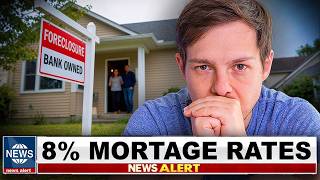
China's housing market has experienced a catastrophic collapse, wiping out 20 years of gains and an estimated $18 trillion in value. The crisis stems from a massive real estate bubble fueled by over-reliance on housing as the primary investment, which burst after government policy changes cut off developer financing. This analysis explores the causes, current state, and potential global implications, particularly for the United States.
China's entire housing market has collapsed, with the last 20 years of gains wiped out, amounting to an estimated $18 trillion loss. Prices have fallen for 35 consecutive months.
In China, housing became the default investment due to limited alternatives, with 70% of household wealth tied up in real estate, twice the concentration in the US. 22% of urban households owned multiple homes.
Real estate and related sectors made up a quarter of China's economy at the peak. Prices increased nearly 700% from 2001 to 2017, with buyers paying up to 23 times annual salary for a home.
Beijing's 'three red lines' policy cut off developer financing overnight, leading to defaults by giants like Evergrande ($300 billion debt) and Country Garden, triggering a chain reaction.
Millions of pre-sold apartments were left unfinished as developers collapsed. Buyers threatened to stop mortgage payments, further eroding confidence and creating a downward spiral.
China's housing market is now at 2006 levels. 70 major cities fell another 3.5% year-over-year in May, with some areas down over 10%. Construction collapsed 22%.
US banks have little direct exposure to Chinese real estate due to capital controls, so a 2008-style crisis is unlikely. However, indirect effects will be felt through portfolios, commodities, trade, and the dollar.
US households hold only 25% wealth in real estate, there is a housing shortage (1.2 million homes), and homeowners have low fixed-rate mortgages and high equity, preventing forced selling.
The US market is split: Northeast and Midwest hit record highs, while pandemic boom towns in Texas, Florida, and Mountain West keep falling. List prices fall but sale prices hit record $440,000.
The core lesson is to avoid concentrating wealth in one asset. Diversification protects against market irrationality on the way down, as seen in China where buyers tried to catch falling prices.
China's housing collapse is a cautionary tale about over-concentration in a single asset class. While the US is not facing a similar crash due to structural differences, the event underscores the importance of diversification and the risk of assuming past performance guarantees future returns.
What percentage of Chinese household wealth was tied up in housing at the peak?
70%
02:55
What policy triggered the collapse of China's housing market?
The 'three red lines' policy, which cut off developer financing.
04:30
How much did Evergrande borrow before defaulting?
$300 billion
04:43
What is the estimated inventory overhang in China's housing market?
Tens of millions of empty or unfinished housing units.
06:05
What percentage of the world's steel did Chinese construction consume at the peak?
Roughly half (50%).
11:10
How does China's housing collapse affect the US dollar?
It strengthens the dollar as global investors seek safe havens like US Treasuries.
12:04
What is the current US housing supply in months?
4.6 months worth of supply.
13:52
What is the key lesson from China's housing collapse according to the video?
Diversify and never sink all wealth into one asset.
16:38
70% Wealth in Housing
Highlights extreme concentration risk in China's household wealth.
02:55Three Red Lines Trigger
Key policy change that burst the bubble, showing government intervention can cause collapse.
04:30No 2008 Repeat for US
Reassures that US banks are insulated, but indirect effects remain.
10:13Diversification Lesson
Core takeaway applicable to all investors, emphasizing risk management.
15:14[00:02] >> Yes. >> Chinese President Xiinping has issued a >> If you slow China down, the world slows >> Such times are very much like the 1930s. We have a breaking down of the monetary
[00:16] >> What's guys? It's Graeme here, and it's official. China's entire housing market has just completely collapsed. Without exaggeration, the last 20 years of gains have now been fully wiped out in the blink of an eye. That's an estimated $18
[00:30] blink of an eye. That's an estimated $18 trillion gone from the one asset that but China's housing collapse isn't slowing down. Prices have fallen now for 35 months in a row. And it's becoming so
[00:43] bad that people are beginning to wonder if the world's second largest economy could lose 20 years of housing growth, seemingly overnight. Could the same thing also happen here in the United States? Because let's be real, by the
[00:55] time everyone agrees that there's a problem, it's usually too late to do talk about exactly what's going on, what this means for your own money here in importantly, whether or not there's a risk to our own housing market doing
[01:09] something similar. Because I got to say, the more I looked into this, the more it feels as though this is something that's about to spill over into the rest of the usual, if you appreciate all the research that goes into a video like
[01:21] this, it would mean the world to me if you hit the like button and subscribed if you haven't done that already. It just helps out the channel. It's dumb. I that, here's a picture of a catfish. So, thanks so much. And also, big thank you
[01:34] more on that later. All right. So, in order to understand exactly how crazy this housing collapse is, it's important to realize that in China, a house is not just a house. Instead, it's what I would like to call the wealth trap. See, for
[01:48] those unfamiliar, up until the late 1990s, most of the housing in China was provided by the government. But as the country started expanding, they realized that housing would need to be privatized as a way to incentivize developers to
[02:01] build faster, banks to lend more, and families to start buying homes of their own to generate extra economic activity. But as soon as that happened, everything changed. All of a sudden, hundreds of millions of people moved from farms to
[02:14] cities. Incomes were rising, debt was cheap, and urban home ownership exploded cheap, and urban home ownership exploded from about 50% in 1996 to roughly 90%. But here's the part that most people miss. The average Chinese family had
[02:28] the stock market was volatile and it wasn't trusted. Bank deposits paid barely anything and strict capital control meant that you couldn't quite freely move your money. So real estate
[02:40] became the default investment for the vast majority of Chinese citizens. Again, this was not an investment. It was the investment. It was your safety net, your social status, your college fund. It was everything wrapped up in a
[02:55] single apartment. In fact, by the peak, 70% of Chinese household wealth was tied up in housing, which for context is twice as concentrated as here in the United States. And 22% of urban households owned multiple homes, which
[03:09] yeah, is a lot. Now, at first, that created a feedback loop, which worked bought homes, developers borrowed money to build more homes, local governments sold them the land, which made up about
[03:22] 40% of the revenue. Banks kept lending, prices kept rising, and as a result, households bought even more. To give you an idea of just how extensive this was, at the very peak, real estate and everything connected to it made up
[03:35] roughly a quarter of China's entire economy, and prices increased nearly economy, and prices increased nearly 700% from 2001 to 2017. It even got so extreme that buyers would pay up to 23 times their annual salary just to buy a
[03:48] house. Several cities used lottery systems to allocate them, and developers pre-sold apartments that didn't even exist yet, with buyers making mortgage payments on nothing other than a rendering and a promise because prices
[04:02] just only kept going up higher, right? Well, as it turns out, that was exactly when everything broke. And in terms of what actually popped the bubble, we got to talk about what I would like to call the housing reset. See, by 2020, even
[04:16] things were getting out of hand. Prices were skyrocketing. Homes were sitting empty. Smaller cities were wildly overbuilt, and developers were carrying an insane amount of debt. So, Beijing stepped in with a policy called the
[04:30] three red lines, which is just a fancy way of saying that the money printer for developers was essentially just shut off overnight. And the moment that happened, everything started to collapse. First, developers like Everrand, who had
[04:43] borrowed $300 billion, suddenly couldn't roll over their debt. Eventually, they Country Garden, who's one of the largest home builders in the country, defaulting on its dollar bonds very shortly afterwards. This sent shock waves
[04:57] throughout the entire housing market because when the two giants failed, smaller developers all of a sudden couldn't finish the millions of apartments that were already pre-sold, which meant that regular families were
[05:09] now paying mortgages on properties that didn't even exist and may not ever exist because the developer was out of business. In fact, in 2022, this got so bad that buyers across hundreds of stalled projects threatened to just stop
[05:24] paying their mortgages entirely. That, of course, leads to the final domino beginning to fall, which would be confidence. Because when one person sees their neighbor paying into a mortgage on a property that doesn't even exist yet,
[05:37] they stop buying. And when they stop buying, developers lose their pre-sale money needed to finish the construction, which stalls projects even more, which scares away even more buyers. Basically, the same feedback loop that caused
[05:50] prices to rise for 20 years is now working in reverse, and there's nothing anyone could do to stop it. On top of that, add in an aging population, fewer marriages, slowing urbanization, and an estimated inventory overhang in the tens
[06:05] of millions of empty or unfinished housing units, and you have the perfect storm that's leading to the biggest housing crash ever in history purely because China's just so massive. So, in terms of what's happening today, how
[06:18] this means for all of us in the United States, here's what you came for. collapse isn't just that real estate could fall. It's what happens when an entire country has too much of its wealth tied up in one asset without any
[06:34] before we go into that, when it comes to the markets, it's also incredibly important that we talk about the basics. The reality is for most people, one of with cryptocurrency is that it could feel complicated. There are so many
[06:49] different apps, different platforms, and legal jargon that it could be hard to comes to buying or holding cryptocurrency, most people don't want to feel like they're sending money off to a random app they barely understand.
[07:01] Instead, they want a trusted bank. And that is where our sponsor, SoFi, is Bank is the first nationally chartered bank where you could buy, sell, and hold cryptocurrency all from one simple app. In fact, with SoFi, you could access
[07:16] over 25 cryptocurrencies on a federally regulated platform with all the part is that you could buy, sell, and hold cryptocurrency from within the same SoFi app as the rest of your finances.
[07:28] cryptocurrency right alongside with your SoFi checking, savings, and investments without jumping between a whole bunch of different platforms. On top of that, if you're just getting started, SoFi offers in-app guidance to help you learn as you
[07:41] go, so you could better understand what you're doing before making any inherently risky and you need to make sure it fits your financial situation before trading. But if you're ready to explore crypto with SoFi Bank, go to
[07:54] sofi.com/gram and start your crypto journey today. Plus, right now, SoFi is giving away $100,000 worth of Bitcoin each week through July 19th, 2026. Terms apply. You can open an account using the link
[08:06] below to claim your share. I'll also have the link at the top of the video description so it's easy to find. Thanks to SoFi for sponsoring this segment. And right, so in terms of what's happening today, how quickly their housing market
[08:19] is falling, and the impact to all of us in the United States, there are two more topics worth discussing with the first being major losses. As of now, China's entire housing market is trading at the same level as it was in 2006. We're
[08:34] talking 20 years of housing growth completely evaporated. And what's scary is that it's not stopping. It's getting worse. Like 70 of their major cities fell another 3.5% year-over-year in May. And other areas are down more than 10%
[08:50] while construction has collapsed a whopping 22%. That's the equivalent of basically losing their entire GDP in a matter of a year. And now, even though it seems helpless, Beijing is trying to
[09:02] stop the collapse, and they've approved a 7 trillion1 whitelist program to finish stalled projects. They've cut mortgage rates, and they've lowered down payments. But a Reuters poll of analysts expects prices to fall another 4% this
[09:16] year before maybe stabilizing in 2027. On top of that, this doesn't just affect when most Chinese citizens have their wealth tied up in property, a loss here often results in a decline in spending, a loss of confidence, and that results
[09:33] in a deflationary spiral of their currency. is people hoard onto cash for fear of spending anything. This means that when real estate is tied to roughly 15% of all employment in China and land sales make up 40% of all local
[09:46] government revenue, you not only get a housing shock, but you also get a wealth shock, a spending shock, a job shock, and even a local government revenue shock allinone. So, in terms of what this means for the future, if our own
[10:00] housing market could ever see something similar and whether or not this is going to impact all of us in the United States, we got to talk about the domino effect. To start, let's just get the good news out of the way first. No,
[10:13] China's housing collapse is not going to be the beginning of our 2008. American banks have very little direct exposure to the Chinese real estate market, and strict capital controls mean that our banking system is almost entirely
[10:27] separate. This means that your money is not directly tied to some unfinished world. However, just because you don't have direct exposure doesn't mean you won't feel it, and it'll show up in places that you might not expect, like
[10:40] first your portfolio. The reality is if you own an S&P 500 index fund, a lot of those companies sell internationally to China. We're talking luxury brands, automakers, semiconductor companies, industrial equipment. And when Chinese
[10:56] customers feel $18 trillion poorer, they stop spending money. And that could be seen throughout weaker earnings, more volatility, and some bumps along the way in companies you might own without even realizing it. That also brings us to
[11:10] number two, commodities. Like, here's a wild stat. At the peak, Chinese construction consumed roughly half of the world's steel and 60% of its cement. So when China stops building, global demand for steel, copper, iron, ore, and
[11:24] energy fall right alongside with it, which might be good news if you're currently building a house because there's less demand for it and prices invested in some of these mining companies or own the commodity itself.
[11:38] Third, we have the trade war effect. And this is the one to watch because when China can't sell to its own consumers, it exports its way out, flooding the market with a lot of cheap goods. Now, on the surface, cheaper stuff seems
[11:51] great, but it also forces American manufacturing to lower their prices to be more competitive. So whether this winds up lowering prices or raising them really just depends on how Washington responds to it all. Leading to number
[12:04] four, the dollar. Believe it or not, a Chinese property crisis is actually good for the US dollar because when the world gets nervous, more money flows into US treasuries and a weaker yuan actually makes the dollar look better in
[12:16] whether or not the dollar is going to get dethroned, this is pretty much the it's actually a really good time to take an international vacation. Like for example, I'm just saying Japan because their yen is near a record low. But even
[12:31] with all of that said, I'm sure a lot of people want to know, is our housing market here in the United States at risk of a collapse? And could we see our housing prices drop just as suddenly? And to answer that, we have to talk
[12:43] about the housing cycle. Look, on the surface, some of the headlines do seem eerily similar, like here in the United States, the median asking price just fell 2.5% year-over-year in June, which is the steepest annual decline since
[12:57] Realtor.com started tracking in 2017. This happens to mark the eighth straight month of falling listing prices. On top of that, there were nearly 47% more home sellers than buyers in May. And in prior boomtowns like Austin, Texas, prices are
[13:12] down a full 27% from their 2022 peak. But beneath the surface, the two markets between the United States and China could not be more fundamentally different from each other because first
[13:24] we have concentration. When it comes to this, China's households hold about 70% of their wealth in real estate. But here in the United States, that's about 25%. So even a real correction doesn't completely wipe out the country's
[13:38] wealth. That leads us to number two, supply. In this case, China just built way too much. They have entire ghost cities, millions of units with nobody living in them. But America has almost the exact opposite problem. We're
[13:52] actually short an estimated 1.2 2 million homes with only 4.6 months worth of supply on the market. And you can't have a China style collapse without even begin with. And that leaves us with finally three, the debt structure. Now,
[14:07] China's buyers paid upfront for homes that didn't exist to developers who were leveraged out the wazoo. Meanwhile, American homeowners are sitting on 30-year fixed rate mortgages, most of them locked in under 4% with record home
[14:22] equity, which is just a fancy way of saying that nobody is forced to sell. And that's why prices are just grinding sideways. Now, that said, what is happening in the United States is what economists are calling the two Americas.
[14:35] With this, the Northeast and Midwest are still hitting record highs, including Hartford, Connecticut, which is up 25% from its 2022 peak. While the pandemic boom towns across Texas, Florida, and the Mountain West keep falling. Even the
[14:49] national numbers are split because list prices are falling at a record pace while the actual sale prices just hit a record high of 440,000 because the homes that do sell are more increasingly just the expensive ones.
[15:02] That's why no, we're not facing anywhere near what China is going through, but we're also not seeing the same type of market in 2021 where prices just kept going higher. So, in terms of my own thoughts and what I think is going to
[15:14] know. From my perspective, China's real estate collapse was never just about real estate. It was all about concentration. Remember, China put 70% of its wealth into one asset because everyone believed that prices couldn't
[15:27] go down. And I hate to say it, but I'm seeing a lot of that same mentality here, right now in the United States as well. Like I'm seeing people every day putting all of their wealth in one house or one stock, not because they
[15:42] just worked out really well over the last 10 years and they think, "Oh, it's done well in the past. It must continue to go well." But that's not guaranteed. To me, that is the lesson. It's not that like real estate or stocks are
[15:55] dangerous. It's that something becomes inherently risky when all of your wealth is tied to one single thing. Second, it's also important to keep in mind that markets can remain irrational on the way down as well. Plenty of Chinese buyers
[16:08] tried to catch the bottom in 2023, 4, and 5, and then the markets kept falling further because once confidence breaks, the pendulum swings just as far in the other direction. That's exactly why I never try to time the markets. Not on
[16:23] the way up, not on the way down. Because let's be real, if an entire government problem can't call the bottom themselves, neither could you or I. So, about this, I know people hate the answer and they start joking about this
[16:38] comments. I know what people are saying, but my answer is going to be the same. It's just diversify. Never sink everything into one asset, one sector, one stock, one company, one piece of real estate. You have to spread out your
[16:53] past, that doesn't mean it will always continue doing so. And if you spread out you'll always have something to fall back on. That's why I think the best thing that you could do is make sure your financial life never depends on a
[17:08] single number going up. And no matter what, hitting the like button and already. So, with that said, thank you so much. And also, if you want early access to videos just like this, as well as a bonus video every single week that
[17:21] I don't post publicly, feel free to join as a channel member. And in addition to that, you also get priority responses to all of your comments. And I'm also doing member financial audits where you could send me your finances and I will roast
[17:35] community. So, if that sounds good, feel free to join. Thank you so much and free to join. Thank you so much and until next



⚡ Saved you 0h 17m reading this? Transcribe any YouTube video for free — no signup needed.