

Stop Doing More Work, Get Less Results
40sHigh relatability as creators feel overwhelmed, with a clear promise of a system solution.
▶ Play Clip"The title promises a full course on building an affiliate AI content system, and the video delivers a detailed, step-by-step system with prompts and workflows."
This video presents a comprehensive system for building a profitable affiliate blog in 2026 using AI. The creator argues that most bloggers fail because they lack a structured approach, and instead outlines a step-by-step method covering niche selection, keyword architecture, content layering, AI agent workflows, and monetization. The core message is that AI should be used to handle repetitive tasks while the blogger acts as an editor-in-chief, injecting unique perspective and trust.
Many bloggers are doing more work (posts, prompting, publishing) but getting less results (traffic, rankings, money) because they lack a system.
Picking a niche that sounds profitable (e.g., finance, SaaS, broad tech) is a mistake because these are dominated by high-authority sites like NerdWallet or TechRadar. A new site cannot outrank them.
Blogging works best in specific, product-driven niches with real search volume but low competition. Examples include passion hobbies (amateur radio, gardening, knitting) and lifestyle niches (van life, cooking). Niches around expensive product ecosystems (hunting, fishing, home audio) also work well.
Prompt ChatGPT to generate five specific subniches within a broad category, asking for informational search intent, affiliate monetization potential, and lack of big media dominance. Then filter by whether products cost over $50.
Generate 20 target keywords: 15 informational (for traffic) and 5 transactional (for conversions). This split builds topical authority and monetization potential.
The common approach of asking ChatGPT to write a full article results in generic, unrankable content. Google can detect and devalue such AI-generated content.
Use AI for research, outlining, structuring, FAQs, and topic clustering. Handle the parts requiring judgment (unique opinions, stories, specific product limitations) yourself.
Create a custom GPT for outlining. Feed it your experience, site info, and keywords. It generates a detailed outline with H2/H3 headings, FAQ section, and internal link suggestions.
Two paths: (1) Expand each H2 section using ChatGPT with instructions to keep paragraphs short and avoid filler words, adding your own elements. (2) Feed the outline into a Claude project to write the whole thing, then edit heavily.
Inject real stories, opinions, specific product limitations, and unique framing. One unique observation per section separates your content from generic AI affiliate sites.
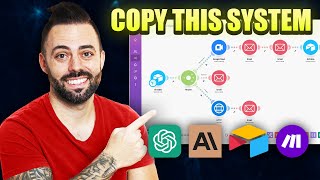
Level 1 automation: Use Make.com to connect a Google Sheet of keywords to OpenAI API, which structures the article and outputs to Google Docs. This reduces article production from 2-3 hours to 15 minutes of editing.
AI agents are multi-step systems that make decisions and take actions. A real agent workflow: receives keyword, searches top articles, identifies gaps, builds outline, drafts sections, generates internal links, writes meta, and flags sections needing human input.
Google targets unhelpful content, not AI content per se. The key is whether the content serves the audience. User signals (e.g., did the user end their search journey?) determine ranking.
Rewrite intros manually (short, identify problem, promise outcome). Inject editorial perspective in each H2 section. Eliminate AI phrasing (e.g., 'in today's changing landscape'). Build comparison tables for buyer intent articles. Fact-check product data.
Experience, Expertise, Authoritativeness, Trustworthiness. At article level: firsthand experience, honest opinions. At site level: author bio, about page, topic clusters, internal linking.
Informational content builds topical authority; transactional content (best-of lists, comparisons) converts. The best product category posts make the most money. Affiliate marketing works best on blogs because of search intent.
Monday: 30 min keyword research. Tuesday: outlines generated. Wednesday: expand sections, edit. Thursday: fact-check transactional articles. Friday: publish 3 posts (2 informational, 1 transactional). Consistent output of 2-3 articles per week is key.
Pick a niche with product ecosystem and room to rank. Use AI for keyword base (15 info, 5 trans). Set up outline-first workflow. Automate repetitive production. Humanize every article. Monetize with intent. The system is a compounding content business built on trust.
The video concludes that building a successful affiliate blog in 2026 requires a systematic approach where AI handles repetitive tasks and the blogger acts as an editor-in-chief, injecting unique perspective and trust. Consistent, helpful content published over time builds authority and leads to compounding income.
What is the recommended split between informational and transactional keywords for a new blog?
15 informational and 5 transactional keywords.
02:56
What is the minimum product price recommended for a niche to be viable for affiliate marketing?
Over $50.
02:26
What are the three steps of the content creation workflow described?
1. Outline first, 2. Expand section by section (or use Claude), 3. Add what AI can't (unique perspective).
05:07
What is the main reason most bloggers hit a ceiling of 2-3 posts per week with AI help?
Manual workflows don't scale; they need automation systems like Make.com or AI agents.
07:49
What does E-A-T stand for in SEO context?
Experience, Expertise, Authoritativeness, and Trustworthiness.
15:22
What is the key difference between level 1 automation (Make.com) and level 2 (AI agents)?
Level 1 is a single-trigger automation; level 2 is a multi-step system where AI makes decisions and passes outputs to the next step without manual triggering.
09:24
What should you do to humanize AI-generated content according to the video?
Rewrite intros manually, inject editorial perspective in each H2 section, eliminate AI phrasing, and build comparison tables.
12:51
Why does affiliate marketing work better on blogs than on Instagram?
On blogs, users search with intent (e.g., 'best laptops under $500') and can click directly to buy, whereas Instagram requires multiple steps (scroll, click bio, click link, etc.).
17:36
What is the recommended weekly publishing cadence for a new blog?
2-3 articles per week (e.g., 2 informational, 1 transactional).
20:15
What is the role of the blogger in the AI content system described?
The blogger acts as the editor-in-chief and strategist, not the low-level writer. AI handles repetitive tasks; the blogger provides judgment, trust, and unique perspective.
21:07
Niche Selection Mistake
Identifies a common error: picking niches dominated by high-authority sites, which makes ranking impossible for new blogs.
00:4015/5 Keyword Split
Provides a specific, actionable ratio for balancing traffic generation and monetization.
02:56AI for Repetitive, Human for Judgment
Clarifies the correct division of labor between AI and human, countering the common mistake of using AI to write entire articles.
04:53AI Agent Workflow
Describes an advanced, multi-step agent system that can produce 15+ posts per day, illustrating the future of content production.
09:24E-A-T Signals
Explains how to build trust and authority at both article and site level, a critical factor for ranking in 2026.
15:22[00:01] now are actually doing more work and getting less results. So more posts, more prompting, more publishing with less traffic, less rankings, less money. It's because they don't have a system. So that's why in this video, I'm going
[00:14] to show you the actual system and in the right order. So that is niche positioning, keyword architecture, content layering, AI agent workflows, and affiliate monetization mapped before you publish a single post. I'll even
[00:27] show you the exact prompts I use, how to get things done. If you want my favorite in the description below and sign up for those and I'll send them to you. And about scaling a blog. So, the first mistake here is picking a niche that
[00:40] sounds profitable instead of what actually works for a rankable brand new site. So, like finance, SAS, broad tech reviews, these are categories dominated by publications with domain authority. They could work on YouTube, but they're
[00:55] you're not going to outrank Nerd Wallet or Tech Radar or Healthline or WebMD, right? So, that's just not how search authority works anymore. So, blogging in 2026 works best in niches that are specific product driven and have real
[01:09] search volume without massive competition. So, passion hobbies are strong things like amateur radio, gardening, knitting, right? Things that you actually enjoy doing. Lifestyle niches work too like van life, cooking,
[01:23] minimalist living, things that don't have a ton of super expensive financial products or equipment. Now, niches built around expensive product ecosystems, things that things that can work well that are still expensive could be like
[01:36] just more hobby related like hunting, fishing, home audio recording or like music recording, right? Those don't have like Forbes writing every single article on it. So, the common thread is basically this. People in these niches
[01:48] search for things constantly. they spend money. Uh the top search results aren't billiondollar media companies. Those are the ones that's where there's room to run to find a subniche. So, you open chat GBT and type this. I want to start
[02:01] a niche blog in broad category. Give me five specific subniches within that category that have small strong informational search intent, clear affiliate monetization potential, and aren't dominated by big major media
[02:14] product categories I could promote and what the typical price range looks like. Now, you run that for two or three broad Then, you evaluate each result against
[02:26] one hard filter. Does this niche have products priced over $50? That's the to become better. Like, you can't just be promoting cheap stuff. A $10 commission, right, requires a hundred sales to make $1,000. A $100 commission
[02:42] shape your whole strategy when it comes to blogging. If you want to scale this thing, you have to actually make more money with less clicks. Now once you've the keywords a bit. So now you can prompt, I'm building a blog in this
[02:56] subniche. Generate 20 target keywords for me. Give me 15formational. So this is searches where someone wants to learn something and then five transactional. So keywords uh and searches where someone is close to buying something.
[03:08] and estimated search intent level. So those 15 informational articles become the top offunnel traffic engine that gets you traffic and the five that can make you money. So you keep this table. It can become the backbone
[03:22] of a content calendar for the first month or so. You kind of re re-evaluate it every month. One other thing to think about is that your interest in the topic Not because passion makes money. I've said that way before. Money drives
[03:35] passion more than passion drives money. But because niches you don't care about, end up covering surface level stuff you don't really understand or know about it. You can't go deep on the topic and then it shows up in the content. Do you
[03:47] don't like for 5 years, right? This isn't a short-term strategy. So, you got interested in learning if you don't know about it, you're not an expert or you want, you can get the advanced version of these prompts, very long
[04:01] prompts for niche selection and actually for the entire content strategy, too, by below. All right, so you have your niche figured out. you think there's some good 50 affiliate articles you could write over the course of time. You picked the
[04:15] Now, here's what most people get wrong next. I want to be specific about this one because it's it can waste a lot of time if you don't do this right. So, the common approach is you open chat GPT, you type in a thing, write me a
[04:27] 2,000word article about the best running shoes. You copy it, you paste it, you swap some words, you said, I like this one, not that one. Now, this will content is generic. It has no real perspective. It has no human elements.
[04:41] It's structured identical to thousands of other AI generated articles targeting the same keyword. So, Google has kind of characterized this type of content and it does not rank well. So, what actually works is using AI for the parts of the
[04:53] content production that are repetitive and slow. So, this is research, outline, structuring, FAQs, and this topic clustering. And then you're going to be handling the parts that require judgment yourself. So the three steps of this are
[05:07] number one, outline first and always. So you can use chat GPT. You can create a custom GPT and just have this be your outline generator. You put in your experience, your background, what the site's about, all the information that
[05:20] you can. You save that and then you feed in the ideas and the keywords into this. It gives you then say a an outline for this article of say 500 words. You could also prompt like I'm writing an article targeting this keyword. Build a detailed
[05:35] content outline with H2 and H3 headings organized around search intent. Include an FAQ section with uh based on the most commonly asked questions around this topic. Suggest two internal link opportunities for related content on my
[05:48] niche blog. So chatd should build this skeleton prep like content briefs. People used to pay money for content briefs. I know of an agency buddy of mine runs it and sell content briefs for like $100. These are things that CAD GBT
[06:02] creating this outline with catchupt, not the whole article. Now there's two paths you can take here for step two. One path is you expand section by section. So you prompt. You take each H2 section from your outline, you expand it
[06:17] from my outline. So you paste the heading and you say, "Write it into Right? That's in the prompts as well below. Keep paragraphs to two sentences or fewer. Don't use filler words. Don't write like AI. All of these things that
[06:31] section by section. You're adding in your own elements as you go and you refine it and you add your own take. Another version of step two is you feed Another version of step two is you feed this chat GPT outline into a claude
[06:44] project and that clawed project then takes it and writes the whole thing. Now creates longer outputs. So you could have the entire thing written by AI. You just have to do a lot more editing on that. Add a lot more human elements to
[06:57] it. And in either way, step three is you add what AI can't. So after you have that working draft, you go back in and you inject a real story into it. Your actual opinions on stuff, specific limitations about products from your
[07:10] research framing that's different from everything out there. Basically, if conversation online, you'll never rank for anything. So think of yourself kind of like a journalist, like a marketing journalist type of person when you're
[07:22] writing that you're actually looking into this topic. you're actually adding your own elements into it, not just basically creating what already exists. Like even one genuinely unique observation per section separates your
[07:36] content from all the other generic AI affiliate sites out there. So again, what I would say is you build a custom GPT and chat GPT for the outline and then you create a custom claude project and claude for expanding and writing it
[07:49] if you want. So this is the section most tutorials skip. the reason most people hit a ceiling around, you know, two or three posts per week with AI help, right? So manual workflows don't necessarily scale. You need systems that
[08:02] run without your direct involvement at every step. So ultimately, let me walk there's basic automation. There's things like make.com or nadn. And then there's more advanced approach using AI agents. So level one, you use make.com as a
[08:17] something like this. You maintain a Google sheet with your target keywords. When you add keyword into the sheet, it triggers the automation with a web hook. It sends the keyword to open AI via an API. It structures the article with
[08:30] doc. So basically, it's a way to use chat GPT or claude in a workflow so that and then it runs the prompt, does all this and outputs it, right? So that can
[08:43] speed things up. That's one way to do it and you can get it into WordPress. If make.com automations and stuff, you can click the link in the description below. those as well. We have full automations that you can just import into a Make.com
[08:57] all kinds of stuff. So, what you're doing with this approach is you're turning an article, the article production process from like a 2 to production process from like a 2 to three hour process down to 15 minutes of
[09:09] perspective, doing final SEO optimization, the URL, the H2s, and publishing. Now level two is AI agents. Now this is where things get more powerful and in 2026 it's accessible to bloggers, content creators, not just
[09:24] developers. So this isn't just a single prompt that generates content. It's a multi-step system where AI starts making the decisions. It takes actions for you and then it passes outputs to the next step without triggering each one
[09:36] difference between asking someone to to like research the topic, build the outline, write the J draft, hand it off for final edits. So, here's what a real
[09:49] agent workflow looks like for blog content. So, step one, the agent receives a keyword. Step two, it runs a search to pull the top ranking articles for that keyword and summarize what they cover. Step three, it identifies gaps,
[10:01] so questions those articles don't answer, angles they miss, or depths they lack. Step four, it builds the outline designed specifically to cover these gaps in a great good article. Step five, it drafts each section of the article.
[10:13] Step six, it generates all the internal links and suggestions based on a targeted map you provide. Step seven, it writes the metatitle and the description. Step eight, it flags sections where you need your own input,
[10:26] experience, the introduction. Maybe it needs specific images for you here, here, and here. a specific product opinion or a unique data point that would strengthen the content. So ultimately, you get a document that is
[10:39] gaps. It's already internally linked and it's flagged for human input at the right moments. This is kind of what a mid-level content manager would create, job then is editor-inchief. You're not
[10:52] the production worker. So you're thinking of this as a journalist again. workflow right now include claude which could handle the long multi-step reasoning pretty well or open APIs API with function calling and platforms like
[11:06] relevance AI or clay they let you build pipelines without heavy coding. So if you want a more hands-on coding approach cla lets you build these custom agent workflows that uh can connect directly to WordPress. Now the bloggers who are
[11:19] publishing like 15 to 20 posts per month they're not writing 15 to 20 posts per month. They could be doing 15 posts per day running agent pipelines, handling the production work workflow while managing the quality. So this is a shift
[11:32] that's worth worth understanding. You're the editor-inchief. The agent is like says it's an agent, it's doing the work of multiple people. Now if you want to click the link in the description below. We're covering this more in the future.
[11:45] process. Again, in this section, I want to be direct about something. The content right now, they're not struggling because AI content doesn't struggling because they're just publishing the thin generic content,
[11:59] calling it a real strategy. Again, anyone can use AI, but it's people that are actually creating high quality content, setting the bar high, and still doing it quick that are winning. So, Google said publicly they're not
[12:11] not rank it, but they're targeting unhelpful content. So the mechanism that helps identify if it's unhelpful or not doesn't care how it was written or how well it was written. It cares whether the it actually serves the audience
[12:24] based on what they search for like is this genuinely helpful. So the frame isn't just like how can I make this human but it's is this actually really useful to my audience because again with user signals Google know if that person
[12:37] it ended the search journey they didn't have to go back and read another article here is rewrite your intros manually every single time. AI generated intros are not good. People's attention spans are short. So you keep it short, but you
[12:51] add your experience, your eat statements, your authority. AI intros tend to just restate the topic in a boring way. So write your own intros sentences that identify the problem, exactly what the reader is dealing with.
[13:04] Acknowledge why it's frustrating. Promise a specific outcome if they keep YouTube script. In this video, we're going to cover this, this, and this. And if you stick to the end, you'll have a full understanding of what's to come.
[13:17] come. Next, you inject your editorial perspective into each section. So, don't opinion at the very end. At least once per H2 section, include a sentence that is clearly yours, your judgment, call,
[13:30] something that you think a mainstream advice gets wrong. Right? So, counterintuitive stuff is actually really good, too. Here, you also want to eliminate AI phrasing on an editing pass. So before you publish anything, do
[13:42] one pass specifically just to look for AI writing, right? Things like it's understand in today's changing landscape. This is a testament to this. Let's delve into this. These phrases appear. AI is trained on content that
[13:58] just boring and horrible. You know how AI writes, it's not the best. So replace it with direct language that says the same thing in fewer words. AI can just ramble a lot of the times. If you get a 4,000word article from Claude, half of
[14:12] it could be crap if you don't actually reveal it. So, it has to be concise, you're a writer and you're an author, they always say like if it doesn't have The next thing then, build comparison tables for buyer intent articles. So,
[14:26] for this transactional content, best so and so products X versus Y, it's a simple comparison table. one of the most useful things you can produce. Not because it's visually has to be visually perfect because it's just that's how
[14:40] people do they people's attention spans are short. They scan. They're not going just paragraph. So they scan. You could have pro and con table. Simple things that you can create with like hostingers website builder or any type of like
[14:53] do if you're talking about products, you have to check what it said about article that says like this is Squarespace versus Wix and then you look at this. It says Squarespace is $17 a month and it's really not. It's totally
[15:07] data from the internet that might be old. So you have to actually factcheck everything. Another important one, build EAT signals into the site architecture, stands for experience, expertise, authoritiveness, and trustworthiness.
[15:22] It's how Google evaluates whether sites deserve to rank on a given topic. So at the article level, this means firsthand experience, honest opinions. But at the site level, it means an author bio, a real about page that explains why you're
[15:36] covering this niche. Topic clusters that show topical authority in depth across a subject and internal linking that connects related content. The sites that have topical authority will Google trust them for a wide range of keywords in a
[15:49] given niche. This is built by covering a topic comprehensively over time, not by publishing a 100 thin affiliate articles. AI gets you volume, but your editorial standards will determine whether this volume brings real traffic
[16:03] and authority. So everything we've covered so far is really to make money a hobby. So the keyword split from part one, 15 informational, five framework, right? It's intentional to make money. It's a revenue architecture.
[16:17] Informational content builds topical authority, whereas affiliate by itself articles that each cover a different angle within your subniche, Google and you as the real source of trusted information. That recognition can
[16:32] compound. Again, this is the slow methodical approach that works, not the quick fast I just need affiliate income immediately approach. Now more topical depth leads to more indexing which leads to more traffic. More traffic leads to
[16:44] more affiliate link clicks which hopefully lead to more sales. But this takes time. So informational content has to be good. And then transactional these are your best of product categories, best podcast hosting, best
[16:57] webinar software, best camping tents, best electric guitars, right? These are the ones that make the most money through affiliate links. There are also product A versus product B. You know this versus that. Those don't have as
[17:10] much search volume as the best product category ones do. So although they might be lower in the funnel, the ones that make the most money in my experience are the ones that are the best product category post. Very easy to create
[17:22] and be done with it. Because again, affiliate marketing comes from search typed in that they actually want to read about these products. That is the key all of affiliate marketing. Search intent for people searching, they
[17:36] affiliate marketing works so much better in blogging and on YouTube where people can actually search for stuff than it does on just like Instagram. Most people people are scrolling and then they see a product and they're going to buy it
[17:49] somehow. That works for e-commerce and retargeting, but it doesn't work as well for affiliate products. One, on Instagram, you have to like scroll, see Instagrammer creates a ton of lifestyle content and then you see a product, then
[18:01] go click their bio, click the link in their bio, click another link to get to the page, add the product. There's like seven steps. Whereas with a blog, someone's searching best laptops under $500. Boom, they land on your article,
[18:14] site buying it. These articles are also great because it's not like a YouTube every single feature. Like if I was reviewing this laptop, I'd have to like show it, shoot it, talk about every feature. And if you're if I was
[18:27] reviewing this laptop on a blog, all I would need is a paragraph about it, some of the things I like, pros, cons, and a button, right? So, it's a lot easier. create scale. Again, I just covered it in a recent video on what not to do with
[18:41] affiliate marketing. Don't focus all on income at the very beginning. For the almost nothing, right? Then something maybe starts to rank, clicks start affiliate programs and the commissions can follow. But the curve here of income
[18:56] gets steeper the more authority that you build. So take it slow. Build a real personal brand through your blog. Use AI as a speed tool that use your own trust, opinions, and yourself as the core of your content. So I kind of want to bring
[19:09] this all together and show you what a real functioning AI content system can look like in practice. So on Monday, you might spend 30 minutes doing your your Google sheet from keyword list you generated. Then maybe your Make.com
[19:23] automation runs throughout Monday. It deposits all these article outlines into a spreadsheet for you with Google Docs by Tuesday morning, so Tuesday, the outlines. You pick the three highest priority ones. You expand sections using
[19:37] chat GPT. You do your editing path. You rewrite the intro yourself. You add your experience. Then you have free articles drafted in like 2 days. Thursday, maybe the transactional articles have accurate product information. and the comparison
[19:51] tables are correct, the pricing is right, all that. And then Friday, you publish three posts. Could be two informational, one transactional, and Now, while you could do this all in one day, it's very simple. You could also
[20:03] just spread it out, right? It's there's no rules for how often you do this. We all have very busy lives. We might be having a full-time job, so we need to make as much progress as possible in a given week. Basically, just create a
[20:15] content plan of two to three articles a week and stick to it. And you can't not publish those. They have to publish. So whatever time that is during the day, if it's the morning, if it's night, if it's afternoon, just find time that works for
[20:27] you. Find at least 5 hours a week you can work on this. You can also then seeing impressions, see which topics you should double down on. That's about it. And then over time, you're going to add affiliate links in. It's not glamorous,
[20:40] right? It's just consistent output and helpful content. And think about it. Any person, any audience member that lands on a video of yours or a blog post should, you know, imagine they're actually seeing it. And imagine it's you
[20:54] like years ago in the niche and you're helping, right? That's kind of how I right here. Like what would be helpful for somebody that was in my shoes 5 the goal with AI is that you are the strategist, the editor-inchief of your
[21:07] strategist, the editor-inchief of your website, not just the low-level writer, right? So AI can speed things up, but it is you and your trust that will uh lead to success. So a quick recap. Pick a niche with a real product ecosystem,
[21:19] search volume, and room to rank without huge affiliate sites and not broad categories dominated by these media publishers. And use AI to build your uh keyword base, 15formational, five transactional. You set up a content
[21:31] workflow built around these outline first, either section by section or clawed and then an edit. You can automate the repetitive production with advanced, you can use AI agents as well, but you don't have to do that at the
[21:43] beginning. You then humanize every article by rewriting intros, adding your editorial perspective, and eliminating the hollow AI phrasing, and then you monetize it with intent. So, building topical authority withformational
[21:55] content and converting it with transactional affiliate content. That is the system. It's not a hack. It's just a compounding content business built with yourself as the trust and judgment layer. Now, if you need help, especially
[22:09] most people get stuck, you can get my free affiliate launch kit. It walks you AI master class. You'll get a content plan. The link is in the description below. Uh I hope you found this video useful. Please like it. It helps a lot.
[22:22] Uh subscribe to the channel if you haven't. Ask me any questions below. I haven't. Ask me any questions below. I will see you in the next


⚡ Saved you 0h 22m reading this? Transcribe any YouTube video for free — no signup needed.