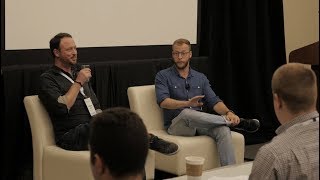

The Secret to a Thriving Startup Ecosystem
60sReveals the key ingredient of founder-led ecosystems and the power of collisions, a concept that sparks curiosity and debate among entrepreneurs.
▶ Play Clip"Title accurately reflects the discussion on building startup ecosystems with practical advice."
Jay Klaus and Matt Healt discuss the key ingredients for building a thriving startup ecosystem, emphasizing grassroots community organizing, founder-led initiatives, and the importance of collaboration over competition. They share insights from their experiences with TechStars Startup Week and the Columbus, Ohio ecosystem.
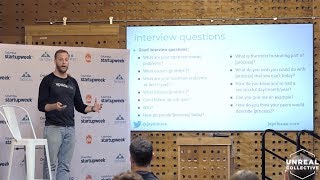
Jay Klaus introduces himself as a community organizer from Columbus, Ohio, running a virtual accelerator. Matt Healt is the global director of TechStars Startup Week, which operates in 65 cities across 20 countries.
Startup Week is designed for any size community, from nascent to active. It involves 25 events over a week, with tracks like design, development, legal, finance, and startup 101. The program emphasizes local experts and celebration of ecosystem participants.
Increasing collisions between founders is crucial. Founder-led ecosystems are powerful but hard to maintain because founders are busy. Creating infrastructure for founder aggregation is key.
Successes include founder-led initiatives and public-private partnerships. Failures stem from burnout, lack of institutional knowledge transfer, and territorialism. It's important to groom next-wave leaders to avoid burnout.
Based on a white paper with Google: talent, density, culture, capital, and regulations. Each ingredient requires assessment and intentional development.
Culture varies by region; some areas stigmatize failure. Changing the narrative to accept failure as part of the process is important for encouraging entrepreneurship.
Capital is often perceived as insufficient, but building successful companies attracts outside investment. Regulations can hinder startups; government support in creating hubs and reducing red tape is beneficial.
1) Network over hierarchy: empower the community. 2) Grassroots support is key. 3) Connect the nodes: foster collaboration. 4) Collaborate over competition: work with other communities.
Grassroots linchpins act as mediators. Brad Feld's book 'Startup Communities' is recommended. Universities like Ohio State provide talent but face challenges in commercialization due to tenure incentives.
Building a startup ecosystem requires intentional community building, collaboration among stakeholders, and a focus on the five key ingredients: talent, density, culture, capital, and regulations. Grassroots organizers play a critical role in fostering a founder-led, collaborative environment.
What are the five key ingredients of a thriving startup ecosystem according to the white paper?
Talent, density, culture, capital, and regulations.
15:00
What is the average number of events and attendees for a typical Startup Week?
25 events with 500 attendees.
05:00
Why is it important to have a founder-led ecosystem?
Founder-led ecosystems are powerful because founders can drive growth and attract investment, but they are hard to maintain due to founders' busy schedules.
07:00
What is the 'velocity of collisions' concept?
It refers to increasing the frequency of interactions between founders, which is crucial for ecosystem growth.
07:00
What is a common failure in grassroots community organizing?
Burnout and lack of institutional knowledge transfer when organizers leave.
10:00
How can government support startup ecosystems?
By creating central hubs, reducing regulatory obstacles, and providing open data.
25:00
What is the 'network over hierarchy' principle?
Empowering the community to self-organize rather than seeking permission from a central authority.
30:00
Why is collaboration over competition important for ecosystems?
Competing for dollars creates division; collaboration leads to a more sustainable and thriving ecosystem.
30:00
Velocity of Collisions
Highlights the importance of frequent founder interactions for ecosystem growth.
07:00Five Key Ingredients
Provides a practical framework for assessing and building startup ecosystems.
15:00Network over Hierarchy
Emphasizes empowering the community rather than top-down control.
30:00Role of Universities
Discusses the challenge of commercializing university research due to tenure incentives.
35:00[00:00] all right thank you thank you welcome everybody glad you guys are here and joining us this is my first time in Calgary you ready - yep so we're excited to be here lots of nice people so far which you know you guys Canada living up to your reputation love it my name is Jay Klaus I'm from Columbus Ohio yeah in the United States obviously day to day I run a virtual accelerator called unreal collective but the
[00:29] reason that I'm here is I've been a community organizer in Columbus Ohio for our startup ecosystem for going on eight years now and the ecosystems changed quite a bit over the last eight years and TechStars startup weekend startup week have been a big part of that so joined here by Matt and I'll let Matt introduce himself all right thank you so yeah I'm Matt healt I'm the global director of techstars startup week I'm based in Omaha
[00:57] Nebraska so I'm the only techstars employee in the state of Nebraska I am in Boulder a lot that's typically where people think of tech stars is being located is in Boulder but we're actually truly global right now the program that I run tech stars startup week is in 65 cities around the world in 20 different countries so my primary role is to help organizers like Jay build their entrepreneurial ecosystem primarily through grassroots event based programming so
[01:26] a lot of what that entails is calls with them coaching them through best practices taking the learnings that we have from people like Brad Feld who wrote the book on developing startup communities if you haven't read that book I highly recommend you pick it up he's currently working on his second book so startup communities 2.0 should be coming out I believe sometime next year and so yeah what we do is we look at it from the
[01:54] approach that community is the most important driver in startup success without a thriving community to support entrepreneurs a lot of times they're operating in silos there they feel that you know who can they learn from who they can they connect with and that's really what startup programs like startup week is about making those connections fostering the development of startups in your local ecosystem I'm curious like I kind of wanna get a feel for the room who
[02:23] here is a entrepreneur cuz there's a self an entrepreneur okay also how about a community organizer okay how many people here from a corporate or a larger business background any investors in their room okay cool I missing any large how about government anyone here representing government great okay yep awesome so like we said we really want this to be an open discussion I know that with J and i's background we could probably talk all day about
[02:52] this particular topic but I really I think we want at any time questions from you we want to make this relevant to your community the situation you're facing and hopefully we can answer some of those questions so it helps you out I want you I mean I think when we talked on Saturday about what are we going to do we want you leaving this room feeling like you've learned something you can take back to your community
[03:20] and immediately implement so Matt I'll start with a question for you okay Columbus was one of the first startup weeks that startup week the organization ran now that you guys are at 65 cities what do you guys look at to know if a city is a good fit or ready for startup week yeah great question so for startup week it's actually built the program is built to operate in pretty much any size community all the way
[03:49] from extremely nascent where there's just a few entrepreneurs hanging out trying to figure out what they should do to grow their community all the way up to the really like super active you know lots of activity lots of money being injected into the ecosystem so it really is tailored for you know any of those situations and what I do when I talked to organizers is figure out where they are where they're at in the other of
[04:18] their ecosystem and then coaching them through that process like these these are the fundamental things so if you're a really nice and eco system we do everything on tracks so that the content that's being delivered is by local experts will have an organizing team who goes out and finds domain experts in the tracks they want to cover so tracks are verticals and that you know usually in a year one situation you're covering design development legal finance
[04:46] in startup 101 the whole week can take about 25 events five to five events a day and also not only content but we drive a lot of celebration into it celebrating the people who are part of that ecosystem making sure that they're called out for what they're doing and you know really a lot of emphasis on networking meeting of like-minded people when you do that initial assessment see where the organizers ecosystems are what type of questions
[05:15] are you asking those individuals so you can get a gauge for that ecosystem yeah so usually when someone approaches us to lead a startup week you know typically there's someone who is seen as a leader in the ecosystem so I'll just ask like what's the activity look like how many startups are you connected with is there any money in every single community no matter where you are from Seattle to Boston we'll say there's not enough money
[05:43] so if you don't think there's enough money in your community you're in the same boat as everyone else the only place that can't say that is San Francisco yeah so I'll just ask them all those kinds of questions and then see what they what are their needs what are they trying to accomplish by establishing this event and then you know we just drive towards making it the most relevant event for their ecosystem at that stage I
[06:12] don't want anybody coming to me and saying we want to be like Denver startup week because that's impossible Denver startup week is 280 events with I think this year they'll probably hit 20,000 attendees that's not the average event for us average is 25 events with 500 attendees so that's crazy so what does Denver do that allows them to have that type of size and scale they just done a great job of growing it over the last
[06:41] I think their first event was 2012 their first event and it's it's also different in that it's professionally run so the downtown Denver development group runs the event that's not really our model our model is grassroots who are the people on the ground those local entrepreneurs who want to give back who are the government officials that want to be supportive of the startup ecosystem making sure we make those connections anyone who's a stakeholder in the development
[07:09] of that community is welcome at the table one of the things that we're very intentional about is making sure that it's not run by one individual one company or one group it really takes an entire community to come together and build this this event yeah yeah so let me ask you a question yes sir so you've been involved with building Columbus yeah on a local level what's the most successful youth things that you've seen in your
[07:38] experience to build that ecosystem so this is both the most successful things that I see and also the hardest to keep consistent I think an ecosystem really grows quickly as Matt saying with velocity of collisions collisions is a Tony Hsieh phrase that he used a lot when he was talking about the downtown Las Vegas project but increasing collisions and particularly collisions between the founders it's very difficult to get the founders leading the organization of an ecosystem
[08:07] because those are really in my experience really busy people who are running their teams running their companies they're growing that but if you can as a community organizer create the infrastructure or the place where you can aggregate those founders it becomes really really powerful having a founder led ecosystem is one of the biggest keys I think to continued growth and success of an ecosystem because there are a lot of factors and matt has this this one
[08:35] pager here that has five contributing factors to an ecosystem growing and a lot of it you know I think of in sales they say that on average you have to have seven touch points with somebody to to make a sale and I think for ecosystems that are kind of up-and-coming you got to think of it a little bit like that you've got to have seven touch points with somebody talking about your ecosystem think of it from
[09:04] an investor's standpoint from the outside or somebody who may want to move their company to your ecosystem you've got to get in front of them multiple multiple times they've got to be hearing about your city before they even consider exploring what's going on there so in Columbus we've created this velocity of collisions and also a lot more noise I guess I'll say in Ohio there are several ecosystems that are trying to grow at the same time
[09:32] you have Columbus in the center of the state you have Cincinnati and the sort that's southwest corner and Cleveland in the southeast corner and each of those ecosystems have something that's unique to them that they're doing really really well and the the momentum that I'm seeing in Columbus Ohio is crazy relative those other cities given all the things that they're doing really well but in the last two years Columbus had almost a one and a half
[10:01] billion dollar exit in the last couple of weeks we've had major major announcements of companies that have gotten funding from outside of Columbus in San Francisco beam dental is a dental insurance company and they just raised twenty two and a half million from kleiner perkins root insurance just raised a 51 million dollar Series C from some valley firms as well and we're just seeing this velocity pick up and I think it's from being founder LED and
[10:30] contributing to one another which a lot of ways I would also attribute to a very large venture capital firm that started in Columbus about three or four years ago and in the last last four years or maybe it's five years they've cumulative Li created two funds of 550 million dollars total first was 250 million dollars the second was 300 million dollars and they've moved companies to Columbus they've built companies around ideas route insurance was kind of
[10:58] built around an idea that they had and that in that company and that's been really really instrumental in growing that ecosystem so what are some from the community grassroots level what are some of the successes and some of the failures you've seen over the years the hardest it's really hard to continue institutional knowledge at a community grassroots level because at a community grassroots level you're talking about a lot of volunteers and you're talking about very talented
[11:27] smart opportunity seeking volunteers who are just naturally going to come into new opportunity themselves and often that opportunity pays so you know as someone who's volunteered a ton of time just in our ecosystem it can be at times you feel like it's thankless it's not at times you can feel that way and you can get burned out on that there's always some territorialism between either meetup groups who are doing sort of similar things but not really
[11:55] different organizations in town that are trying to put their finger prints on the ecosystem because they see something coming up and thriving and they want to say like I did this and so as a community organizer the failures come from if those organizers get burned out and they stop organizing things really slow down and if they don't pass on what they know and the people that they're connected to your ecosystem can really slow down because the
[12:24] magic happens when you have someone that's just in place or a team that's in place of volunteers who know the right people in town they just make things happen and they make them happen continuously and they're pulling in all the different stakeholders as you're talking about the founders the investors government all these stakeholders getting together at the same time and it's really hard to keep that continuity yeah without being intentional about it yeah I think that's
[12:53] one of the things that we that we do with our best practices is someone who wants to lead a startup week for us we make sure that they don't do it more than two or three years if you're it's you know it is a volunteer effort and you're putting a lot of your personal time you're neglecting your family to do this it is very worthwhile but you can get burned out so we'll teach these these leaders
[13:21] to actually groom the next wave of community leaders so there always has to be this new wave coming through you can't own it so we'll stress you can't own the community but foster it by developing the next wave of leaders one of the things that we do with Startup Weekend which is another TechStars program is called past the beaker so the beaker is actually part of our logo and that means being intentional who who can you
[13:50] identify from your group of volunteers that are helping you with a Startup Weekend that could be that next leader because we don't want that fatigue we don't want people burned out that that ownership point of you can't own the community is I've seen it be a threat in ecosystems because a lot of times as ecosystems are coming up from the bottom the idea to create and cultivate an ecosystem is usually made with good intentions but can
[14:19] be driven from one investment group let's say and that group has their own agenda as many good intentions they have they do have the agenda of we're trying to invest in some companies and if they don't invest in a certain startup founders company that founder is not going to want to be involved with the event that they perceive as being owned by this by this firm so it's really important to keep that autonomy and have those
[14:47] community linchpins that are putting these things together because it creates this neutral ground that raises the tide for all ships yep yep you know in my home town we have a perfect example of where one group owned the community and everyone just said well they'll do it they'll take care of it well about four years into doing this they disappeared and there was a vacuum and it really has never recovered you know so that's that's a
[15:16] lot why that we teach these other communities to do this if you read Brad Feld book startup communities that's a point that he really drives home is that just make sure that all the stakeholders are together that's why I mean I'm not here to sell you on startup even though it's you know it's my program but it really is that thing that catalyzes the entire community brings everybody together and shows that it's these volunteers these grassroots
[15:44] organizers that are putting together the event if you're an organism if you're you know an economic development group if you're a government entity you play a role in it you are there to support and help in any way you can also if you're from a university there's the role for the university as well so and I come from a university town Columbus Ohio has a pretty major American University called Ohio State University known mostly for our
[16:13] football but it's huge and we have a ton of great talent of all kinds that come out of that and we put a ton of money into research in the Midwest ton of money into research point I was gonna make you're talking about startup week driving some of this collaboration it's whether it's startup week or whatever it's super necessary just to do that all the time and there's this sort of playbook I found on start communities
[16:42] that I really buy into that has a few core components one being what they call a flag and this is like a hashtag for us it's startup columbus we also use startups eave us in Cincinnati it's startups in see that flag can be used at all the meetups that are happening organically around tech around design if it touches the startup ecosystem at all and they use that hashtag then you know you're starting to create this timeline
[17:10] and documentation of events that are happening and who's involved and what's happening at those events so that's really valuable to second ingredient of this being sort of a hub a community hub a place where these meetups can happen a place where people can also just go in cowork a place where there's a cafe and you can just be there working on your own and serendipity happens it's really great to have that community hub a third being
[17:39] a regular event usually at that community hub and the fourth which you may you may ever not believe the roll was called documentarian this idea that there's somebody who goes to all of these things and is taking a lot of notes and helping push the flag forward and helping you know write about what's happening sometimes it's journalists in the local system but I think about community organizers a lot as like this distributed team of documentarians who
[18:08] really help move things forward and document what they're going and seeing and how you can get involved yeah can you can you talk to these different pieces yeah that we have on this paper so this is a white paper that at the time we were up global and so up global about four years or three years ago merged with TechStars but up global I had Startup Weekend start if we start up digest which is a locally
[18:36] curated blog or to all the events that are happening in your ecosystem and then a pre accelerator called startup next but at the time we did a white paper with Google about the what are the five key ingredients of a fry thriving startup ecosystem and this is if you go to TechStars calm and just search for our white paper you'll be able to find it but the first one is talent and one of the reasons that
[19:05] I brought this to talk about it so is so that you can go back to your community and do an assessment of sorts look at these five ingredients and say where do we stand on each one of these it's best if you can convene a group of stakeholders so that they all have input on where where you're thriving and where you might be lacking and what you should put be putting towards development talent is key so
[19:33] how are you fostering the talent the next wave of founders developers service providers that that system that's going to come in and actually be the people that do the startups the next is density density we found is extremely important in a thriving ecosystem where those like you said where are those central hubs where are the people where are the places that entrepreneurs like to go hang out where is it within walking distance is there good transportation
[20:02] if you don't have those types of things how do you get them going how do you inspire co-working yeah think think of let's say I don't know where all your cities are represented but let's say you you're trying to attract outside town or outside investment or even founders to come to your city if they got on a plane right now and we're lucky enough to get a direct flight or if they were if they took the
[20:31] connecting flights to get to your city where are they gonna go to meet the people they need to meet do they have any idea do you have like a single access point you can kind of point them to and say this is the coffee shop the entrepreneurs hangout in this is a co-working space that work out of this is where the meetups are if you don't have that it's just you're creating more friction for these conversations
[20:59] to happen and for growth to happen third piece is culture what is the the local culture you'll see that it's kind of a range where if you start on the west coast you know in the Bay Area specifically the culture supports risk they you know if you have three startups that fail you'll be embraced people won't think anything of it they're like okay fail fast what's your next thing you're gonna work on as you work east
[21:28] or even towards you know Asia and Asia Southeast Asia there's a culture in a lot of those communities where risk is not allowed at all if you fail once you're done so they don't want to fail we have to actually change those that that narrative where failure is okay when it comes to this so you know assessing how are willing there are people in our community willing to take those risks are they willing to take their
[21:56] idea that they've scratched down on a piece of paper and actually turn it into a business and what you'll find is when you start to put these support mechanisms into place they're more likely to take that risk they're more they're gonna jump off and start something so you have to you got to create that kind of landing pad so that if they do fail you're gonna say okay we're here to support you we'll help you get
[22:25] through this when you say when you talk about that culture of failure not being accepted in some places do you see that coming from people's families their peers I'm guessing investors for sure yep it's it's culture wide it a lot of it is through family they're just not willing to take the risk because there it could shame the family so there's a lot of work to be done but you know there a lot of those communities
[22:54] are working with tech stars and we're going in and showing them that you know being a founder is a viable option and there is this support network failure doesn't mean your failure as a person it just means the idea the business idea didn't work so fourth piece is capital like I mentioned at the beginning everyone thinks that there's not enough capital but what you need to do in most situations is just if you build it they
[23:22] will come if you build startups that are successful the money will come and especially if you can attach your ecosystem to a broader network whether that you know tech stars we are the world wide network that helps entrepreneurs succeed that means that we have people in places all around the world if there's something that you need and you're part of our network we have one degree of separation will connect you so if you can get your
[23:51] your community and it doesn't have to be textures it can be any number of networks it was something I can touch on unlaid eraz well this is this is a point that this is a conversation it just happens in all we'll call Midwestern cities because that's what I'm used to I'm currently working on a podcast then we talk to entrepreneurs outside of Silicon Valley and after we stopped recording we asked every founder we say what are
[24:20] the realities of raising capital in the Midwest and they all speak to conservatism and that's true and that's a culture of still being kind of downplaying the risk most Midwest investors haven't taken you know a big shot at a b2c company like Facebook where you just don't know initially what the model is but you're saying there's crazy engagement there's crazy growth potential here we'll just have to figure out how to monetize it later Midwest investors aren't
[24:48] used to doing that I can name one of those companies in Columbus Ohio right now but what bothers me and what some founders will say about this as well is the key to getting capital even if your ecosystem doesn't have a ton of capital is to build an incredible company and I know that can be hard when at the beginning you think it's an incredible idea and you need traction but to get traction you feel like
[25:17] you need the initial capital to build an MVP or do something there are always ways to get scrappier whether it's bootstrapping by working directly with a first customer to help fund their creation whether it's prototyping with Photoshop to get initial POS from customers you know the capital problem is not going to go away so I think it's important for entrepreneurs in your ecosystem to think in terms of how do I build a business that's worthy of
[25:45] capital so that if I don't get it here I can get investment from outside investors which we're seeing in Midwestern cities all the time now is money is coming in from places where it is a little bit more capital rich like the valley like New York yep and then the last piece is regulations so what's the regulatory environment like in your community so that you know a lot of communities that we've seen outside of the states
[26:14] it's next to impossible to start up the business it just it takes so much cat upfront cash to get a license so how do you remove those obstacles how can you make it more startup friendly more entrepreneurial friendly the government can support a lot of different things not just regulations but creating those central hubs one of the really cool things that I've seen throughout my travels is in Amman Jordan they have the government actually built this
[26:43] entire facility and it's surrounded on the outside by these multinationals I think Microsoft was there X no not a several of those big like fortune 500s and then bright smack dab in the middle was one building dedicated to startups very low rent didn't if you have an idea you could just go in and create your startup so we need to see more of that happening in communities what communities do you see besides Jordan that do a
[27:11] good job of being entrepreneurial friendly from a regulatory praveen definitely Tel Aviv is like thriving right now Stockholm where else banged well yeah I think Vancouver didn't even hear from Vancouver okay Vancouver seems to get a lot of and I asked because Columbus Ohio won a grant from the US Department of Transportation to build a smart city they want it to be a model for smart cities in the United States and for the world and we
[27:40] want to engage entrepreneurs and what we're seeing in smart cities across the world is that the regulatory environment is very difficult it's very difficult to create they just don't have in place right now a lot of the regulation that will allow startups to come in and move as quickly as they need to move because just from a pure time standpoint oftentimes government procurement takes months if not over a year to figure out how and when to
[28:09] slot something into the budget someone that I work with at the city will explain his his handcuffs as if he wants to use city funding to buy an HDMI cable he has to put it out for RFP that's that's how restrictive some of these regulations can be so as a start-up you just don't even have the runway to wait that long of a period of time so I think this is going to become more and more
[28:37] at the forefront of what do we do as cities to foster entrepreneurship because if we want entrepreneurs to help us figure out some of the problems that we have by enabling them with open data which is a lot of what these cities are doing they're saying we're not technologists at our core but we can give you open data to let you build smart applications to improve our city but if you if you aren't fostering entrepreneurship with
[29:06] your regulation it just won't happen so I think this is going to come up more and more in cities because the places that we see doing it well are places like Dubai where like the regulation is just kind of someone says you can do that yeah yeah which is good and bad but yeah yep okay I we're at about a half hour here and I want to leave plenty of time for questions there's just four things
[29:34] I want to cover really quickly and then we can open it up first of all is network over hierarchy so really what that means is have how is the the network how can you empower your community to do the things it needs to do rather than get seek permission so a lot of times if it is a an organization that runs it that will slow things down instead create the conditions that empower the community to do
[30:03] what they need to do to self run everything and be a really strong network and not have to ask permission yeah yeah second is the you know it's really in the hands of your grassroots supporters obviously you know it's you have a role to play if you're that if you're that ecosystem builder you know reach out across to all the other stakeholders get them involved you know hopefully you have a lot of passion about this and
[30:32] you can get others hooked but it starts with that grassroots support mm-hmm because as you're saying if it's if it's not grassroots and you have an organization that's taking things on and doing it on their own when you run the risk of that ownership conflict that I was mentioning earlier but this void that you're speaking to is a serious problem that can happen in ecosystems you lose institutional knowledge and you lose just anybody moving things forward
[31:00] if it's one organization pushing it forward and they decide to stop that initiative for whatever reason third thing connect the nodes so one of the things that you'll see is when you let the network take care of itself when you have it supported by grassroots organizers you'll start to see all these nodes connect each other because if you you kind of take away this agenda so this group over here that's running something isn't mad at this
[31:29] group over here instead it really is the entire community coming together to build something so we've seen a lot of a lot of success with that I don't know if in Columbus if yeah I mean we see a lot of collaboration Columbus's mantra is smart and open is what we say all the time and from something that we do as a community that's really really strong has helped us a lot is we are really strong with
[31:58] public-private partnerships there's a lot that the city themselves will partner with private industry to do which is why we won that smart city grant we there were 78 cities that applied it was a 50 million dollar stake for the smart city grant what Columbus did that pushes over the edge was we raised ninety million dollars in commits committed capital and initiatives from the private sector that said if we win this grant it also unlocks this ninety
[32:26] million dollars and so now that 50 million dollars isn't just coming from USC ot now we have this matching commitment where AEP the American Electric Power is updating their grid system to allow for more smart infrastructure in the city and there's actually a coalition in Columbus called the Columbus partnership that is the chief executive officers of the largest companies in town large corporations in town and something like eight years ago they put together this initiative called
[32:55] Columbus 2020 where they laid out all of these goals for the City of Columbus in the year 2020 and they said we're putting this on our back as a coalition of private companies to get Columbus these goals its job growth goals its population goals it's it was a lot of economic development and we're seeing now eight years in that those things are starting to topple over and it's because the partnership works so closely with the city
[33:23] the last thing that I'll talk about is collaborate versus competition so like you mentioned a lot of those groups collaborating within Columbus but also look at collaborating with other communities you know I've seen and correct me if I'm wrong but some of the things that I've seen in the ecosystems in Canada is that a lot of groups are competing for dollars and what that does is it creates a we're better than this community type of atmosphere
[33:52] instead change that narrative if you have to I know it's really hard to turn down those dollars but if you can turn them down and said say how can we work together let's link our different cities share resources you're gonna you're gonna find in three four years a much more like thriving sustainable ecosystem and then instead of hitting each you know each of your communities against each other I see a similar situation with the cities I
[34:21] work with in Australia so that's just a dynamic that I think you know actually now that now you mentioned that I know we talked about this on Saturday we had a similar problem in Ohio because there is a state funding initiative called Third Frontier program and they would give certain state funded dollars to different organizations in different cities across Ohio and that was really over some period of time and so we had some of that in
[34:49] fighting as well because they were all competing for the same dollars and that becomes really hard because all of those organizations that are competing for this dollar they are still people and so it's hard to keep like personal feelings out of some of this and if you you know you as an individual representing this organization feel like you've been kind of burned by some other organization or some other organization of individuals that creates a chasm between
[35:18] those two communities because between two people that doesn't need to be there shouldn't be there yep okay all right we'll open it up to any questions yeah I'd love to hear about some of your ecosystems I know I hear your perspectives on what things besides a social aspect on a framework or model stent whether the things that can align an ecosystem better so that people have a better understanding of a part of a play and the
[35:46] complementarity that's interesting you don't take a swing at that I I can say from my standpoint I think that's where these grassroots linchpins of the community play a huge huge role because you basically and I say you but I'm talking about me I spend a lot of time communicating with different key stakeholders of different organizations whether as corporations or community meetup groups and I play the role of mediator a lot I find myself just being Switzerland
[36:15] in these in these ecosystems a lot and and putting in very blunt terms like the way that I see their roles and saying you know you don't have to be competing with this you guys want the same things and being that third party voice really helps as far as a framework goes I'm not sure do you have anything well what I would say and I know I've said that several times already get Brad Feld's book startup
[36:44] communities buy 20 copies and you can actually just email me and I can get them for you at cost and give them to all the stakeholders and say please read this this this outlines what your role is take it seriously and if we all do this we can build a really successful ecosystem is it especially in early on an ecosystem its growth I think it comes very much down to at the individual level until you start
[37:12] having the snowballing effect of this company was started it got some funding it had an exit and it threw off people who are now angels who have left that scarcity mindset or in more of an abundant mindset until that cycle starts happening you have to convince these people that success in that community is not a zero-sum game and that they can all help each other do that I think people logically will understand that but they have
[37:41] to trust the person speaking to them and then you know dip their toes in that water and see that the world doesn't blow up for them I'm gonna start up CEO and West what do you think we feel wrong when we because on the one hand you said they'll tolerate failure and in the Midwest we really last yes but they also so you you know if you have a lot of runway and you you know you're
[38:10] gonna fight till the end to try to make your business work sometimes that isn't the smartest thing to do you know they we talk a lot about fail fast so if your if your idea isn't working figure that out as fast as possible if you need to pivot great if it's just not ever in the cards that it's going to be successful shut it down and I think that's probably the mentality of a lot of VCS
[38:38] on the coast who will say yes well you know will fund your seed round this should be enough to get you through a year burn through it spend it try to get traction but if you can't you know I think I think a couple things one I think there's still just an inclination by most coastal investors to not invest outside the coasts they're saying there's enough here it's close by I believe in the value of the
[39:07] collisions that happen in a small ecosystem if you've ever read angel by Jason calcaneus which is an amazing book there's a chapter called can you be an angel investor outside of Silicon Valley and the chapter is one word it just says no no so I think that attitude exists out there and the other answer would be possibly just pure fun mechanics you know the the the largest venture capital firm we have in Ohio drive capital because
[39:35] their funds are 250 to 300 million dollars for the fun mechanics to work out your company has to be worth over a billion dollars upon liquidation whatever whatever that event is whether it's IPO or whether it's an exit and so if your company just doesn't have that type of ceiling because the market that it's in for their massive fund to have the mechanics that work they're not going to invest yeah and which is really shame cuz
[40:04] like there's so many amazing startups that are out there that are maybe fifty to a hundred million dollar a year companies right that's the kind of revenue they're generating but you won't see somebody invest because they want that they want the unicorns but angels could be angels you know just how big that fund is well it certainly had nothing to do with me but you know I think at the time one of the largest proponents of
[40:33] that organization his name is les Wexner and he he was the founder of El brands which has Victoria's Secret huge retail company they they have a lot of net worth and a lot of sway in Columbus and they were basically saying I think why should we not have more of a say with how our city is being built why isn't Columbus on the level of some of these other larger US cities and what can we do
[41:01] to help push the pedal forward and it's a model that we see not just through the partnership there's an organization called the Columbus collaboratory now and that is a coalition of mostly the CTOs of the similar companies who are non competing but all realize they're facing some of the same cybersecurity risks IT challenges and they're saying let's co-fund basically R&D for these these solutions and I think it's really just a culture in Columbus of collaboration smart
[41:30] and open is just our mantra and will often say the Columbus way is the this way of communicating with each other and collaborating in that way I really think it was just a group people saying you know we we can have a bigger voice and a larger seat at the table and really help move the city forward if we work together well how stays huge because Ohio State makes Columbus more of a destination city than probably
[41:59] anything else in Columbus we still I think our biggest threat comes from talent loss you've got 60,000 almost 65,000 students at Ohio State and I know an annual basis now and a lot of the students will go elsewhere after graduation so I think it plays a huge huge role in attraction to the region of talent I mentioned that we do it we put a ton of money into research there's a ton of patented amazing technology at
[42:27] the United State University that could go towards commercialization I saw a stat today as a doing some research that university research technology is a hundred times more likely to I P o than just to start up without that the challenge is at a university that large we've been almost bottom of the nation in commercialization of our technology like near bottom and the challenge is at those universities tenure is such a driving factor for how faculty makes
[42:56] decisions and there is no respect in the tenure guidelines for commercializing of technology you are incentivized to publish and once you publish you can't protect it to the same degree and even if they did want to commercialize it often those professors don't want to be the CEO so now you have to find someone else to come in and actually commercialize it but work closely with that person so they have to get along well it's a really
[43:24] hairy organizational design issue was there anything else in your question I didn't answer I'm sorry great all right we're getting the notice for one minute so I think we probably do one more quick question one of the challenges we have got some fuzz but yeah real quick I think it's I mean you just have to really hustle to show them the opportunity I just think it's one of those things they don't even know they don't understand
[43:53] the language so you've done you know some work into the language they don't they might be in the mindset that I can only work for a big company so a lot of it is how do you create those engagement and it might not be through startup week maybe it's one of those startup week is the thing that that drives a lot of the momentum what are those events that you can have that are specifically for people
[44:22] who work for corporates or big companies that they feel welcome that they can kind of get a taste of what what entrepreneurship is like but it's hard it is hard to tease that out I think a couple keys your location can probably play a part in that if you are co-located near some of these companies that can help if those companies are sponsors of the event and you're probably doing all these things already but if they're
[44:50] sponsors of the event they will probably be incentivized to tell their employees about it you can mark it as to them as helping to turn on the innovation engine within their employees and activate that and to Matt's point we just finished our fourth year in Columbus of startup week and our tracks now are things like e-commerce and retail marketing and advertising you know they sound less specifically startup focused and I think it makes it a little
[45:19] bit more inviting to that crowd

⚡ Saved you 0h 45m reading this? Transcribe any YouTube video for free — no signup needed.