[00:02]
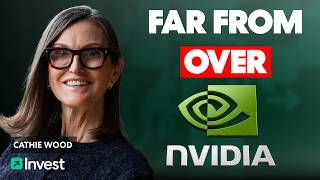
investor and Ark Invest CEO Cathie Wood. It was this morning before we got the news of Nvidia CEO Jensen Huang stepping down. Right before that actually, she joined Yahoo Finance Invest to discuss the future of Nvidia and what this news
[00:16]
means for the AI trade. >> Well, he obviously is a force and a power behind Nvidia. I've been watching him since he's gone public, since Nvidia went public.
[00:30]
And he had this vision way back then in the late '90s. He understood well before most people how profound this AI revolution was going to be and how many sectors it was going to touch and
[00:45]
transform. So there's no question he's a force. But I would say we have another very big force in the industry. First of all, before I go there, I'll say that Elon
[00:58]
Musk said he would consider it an honor to hire Nvidia. And you remember Tesla in effect has started a TerraFab project for computing power in space. And that
[01:14]
is where we're going given all the difficulties here on Earth. difficulties here on Earth. But so so I don't think the movement is going to stop. You've got powerful forces like Elon Musk who is also a
[01:29]
visionary and understands where AI is going. And you have companies like OpenAI and Anthropic who are pushing this movement forward with such great force that those of us turn around and last year at this time
[01:45]
Anthropic's at 9 billion annualized run rate. 100 billion. So these companies doing Now I'll tell you one other thing just to to become a little more sober I I say, about it
[02:00]
a little more sober I I say, about it from a an analytical point of view. We had been assuming that NVIDIA would lose share. It has about 83% share in GPUs right now. We had been assuming that it would lose share to companies
[02:14]
like Tesla with Terrafab and Broadcom and and others, Cerebras, a new company that doesn't need high bandwidth memory. So we assumed that share would drop to 49%
[02:30]
and so we had a very, very strong compound annual rate of return expectation for the next five years. If we drop that to 38%
[02:43]
our compound annual rate of return would drop from in the 50s somewhere to 25% over the next five years. So we have to get over this shock. We have to see
[02:55]
who the new leader is. The new leader is not going to be alone in driving NVIDIA. It is going to be competition like Tesla, Terrafab, but it is also going to be these companies who have become very reliant on NVIDIA pushing
[03:11]
become very reliant on NVIDIA pushing the envelope like Anthropic and OpenAI. And I think share losses will be more a function of anyway. And in fact, we tweaked up our market
[03:27]
share assumptions recently to something like 53% in five years to something like 53% in five years because Elon Musk said he was committing because Elon Musk said he was committing to NVIDIA for SpaceX's orbital compute.
[03:43]
>> And are you saying that changes now? You're bringing that forecast down? >> We're just doing our scenario testing and saying, okay, you know, NVIDIA has a road map already planned out probably for the next five years.
[03:59]
for the next five years. And so we think it's a conservative to say conser- highly conservative assumption to say okay the share drops from 83% to 38% and we still have a 25% compound annual
[04:14]
terms of sizing positions in our portfolios we do have a scoring system and the first variable is people management and culture So
[04:26]
let's see who they bring in Clearly there might be something about the culture we did not know before and now Nvidia will have to be holier than thou under the new leader >> We're certainly finding out news you
[04:40]
know feels like every hour Do you think that there is someone that could take about some of the other companies that are growing at extraordinary rates in the system SpaceX Anthropic OpenAI Yes this is the AI trade but
[04:55]
this is the AI trade but Nvidia plays a very unique spot in it I don't know that you can just replace it right I mean it's going to take time it right I mean it's going to take time even on the custom AI chip front So what
[05:08]
does this do in the shorter term to the AI trade as a whole >> You know I I've watched Jensen over the years and over the years Jensen over the years and over the years the way his presentations have gone
[05:23]
would have his pictures and his you know so it was really a lot about him >> The Jensen show >> The Jensen show Jensen's face on all the robots and and so forth I guarantee you there is a group of
[05:38]
people within Nvidia that he relied on strongly and that there is a leader Will that leader be the the force probably not because those people left Nvidia if they wanted to be the
[05:55]
force and the power But my sense is there is a very strong group of talent otherwise Nvidia would not be where it is today reports, right? That is just a huge number, but people I've asked are kind
[06:09]
of skeptical also. He's just mean, you you know him, Kathy. He's a workhorse. He has his eye on everything. He's a marketer. He's extremely technical. Um he is the face of the company. What are you doing? What do your NVIDIA holdings
[06:23]
with them? >> You know, it's interesting. We don't pay attention to benchmarks to be honest. And we just size our positions where we think they should be given our outlook for the future. So I believe our
[06:38]
for the future. So I believe our flagship, ARKK, has something like a 3.4% position, something around there. I I position, something around there. I I was out of town yesterday. So 3.4.
[06:50]
was out of town yesterday. So 3.4. If you look at the S&P 500 and the Q's, they're closer to 7 8 and I think in one benchmark 12 %. only time I've looked at a benchmark. Okay, what what are other people going
[07:05]
to be feeling today? Those who really manage their portfolios toward a benchmark like that probably have a lot more NVIDIA than they really want, but they manage to a benchmark.
[07:19]
>> So are you So you've been underweight NVIDIA. Is this a buying opportunity for NVIDIA. Is this a buying opportunity for you or do you sell a little more? >> Well, we've been buying recently because of the SpaceX deal.
[07:32]
In fact, it it has You know, because of people management and culture as one of our scores, I've always had this little bug in my brain saying, wait a minute, this cannot be just the Jensen show every time he got on stage.
[07:45]
He needed to He needed to present other people, but I guarantee you in order to do what NVIDIA has done, he has a very strong group of engineers behind him. Are they great marketers? Probably not. That's why they're happy where they are.
[08:01]
He does all of that for them. But I I believe very strongly he has But I I believe very strongly he has incredible talent. It was a coveted job. >> Very interesting. Let's talk a little bit about the rest of the AI trade. It's
[08:14]
been volatile in recent weeks and a lot of that has centered around, you know, concerns. Of course, we got CoreWeave earlier this week. Um, you know, allayed feeling about the Neo Cloud space right now?
[08:29]
>> You know, we um we were able to speak to the top management team at CoreWeave the top management team at CoreWeave yesterday after after its report. And yesterday after after its report. And this is a top notch management that has,
[08:42]
because of all of the risks out there, you know, insisted on prepayments. Now, one of the key questions we asked about prepayments is, you know,
[08:54]
historically, if a company's willing to prepay, then uh then it's going to get a discount. Guess what? There is no discount. It's gone from discount a few years ago to no discount. Why? Because
[09:11]
the demand out there is so voracious. And CoreWeave is that good. So just And CoreWeave is that good. So just hearing that one fact um gives us a lot of reassurance that, you know, if data centers aren't going to be built in
[09:26]
Arizona or Texas, uh they will be built somewhere else. And the other thing CoreWeave pointed us to was how global its strategy is. I am sure that the election year rhetoric, they've had a year to prepare for this,
[09:41]
has pushed them faster into other markets. So here, you know, we have to be careful. We do not want to lose our innovation edge. Kathy, if they can't build here in the US?
[09:57]
>> Um, you know, I probably should have tuned in a little bit more on that they made the point though and how many times they uh repeated it. Uh I asked is this an acceleration in your cloud strategy? They said no. They they didn't
[10:13]
say yes or no on that one, but they they want to be a global cloud effectively. Uh and and really give our existing global clouds uh a little bit more of a
[10:25]
a run for their money. Uh but we need all that capacity. question, right? Because he had a lot of soft power as well and had a hand in building up these neo clouds, right? He gets to allocate who gets the GPUs that
[10:41]
will fulfill compute that everyone is looking for. Um do you worry that if he's not there, maybe there's a different leadership that allocates differently and you know, there's the potential for the neo clouds to not get
[10:54]
the GPUs they need? >> There's no question relationships uh are important in any business. Uh but CoreWeave from a neo cloud view, there there are only two neo clouds that have uh platinum level uh um rating. I think
[11:13]
it's artificial intelligence. I could be wrong on that. Um and so those would be CoreWeave and Nebius. So whatever happens here, you know, the demand's so strong. I just gave you a very important signal. These huge companies who with
[11:27]
voracious demand do not have to pay a discount and as they prepay for the next >> Right. And and certainly those prepayments help sort of settle some of
[11:39]
think we talked about this a few weeks ago, this cone of uncertainty, right? the market, especially the credit markets over the last few weeks. Um demand can be enormous and financing can still go wrong. So
[11:53]
essentially these companies are spending today huge amounts of money for revenue um years from now. How much of a delay or technological change do you think that they can withstand? I know that you look over the longer term.
[12:06]
>> Yeah, I would say and I do believe we discussed this the last time. Um the the bigger risk near term has been the the credit markets. Now, I have always said that um, you know, traditional equity investors
[12:23]
who who who are very uh well, they're very closely or highly correlated with their benchmarks. correlated with their benchmarks. Um, so they'll be looking to the future,
[12:38]
um, but they are spending a lot more time with you know, present day companies not looking at the investments as as in such a long term as we are. The bond markets are even worse.
[12:50]
markets are even worse. Technology typically has not relied on bond marks bond markets. Why? Because it's been software driven >> Mhm. >> viral apps
[13:03]
They go viral. >> And and there's been a huge huge cash flow huge cash flow. So does that worry you that we're seeing you that we're seeing >> So so we are relying on debt markets who
[13:17]
probably do not have technology analysts, certainly not forward thinking That has to change and and I think it will. This is too
[13:29]
important in terms of our competitive standing. So I think there's going to be a lot of pressure by companies who pay these agencies to to rate their debt. These companies pay for it. So my goodness.
[13:43]
talking some of the biggest companies in the Does your concern extend to the hyper scalers and Big Tech that have you know, been tapping debt markets or are these smaller ones that
[13:56]
have higher risk in tapping the debt market and less cash flow? >> Yeah, I think the debt markets understand the hyper scalers, although they have been through a shock in that they've gone from massive free
[14:09]
cash flow not needing the debt markets to uh to uh you know, negative free flows. So the bond market analytics have to have to get a lot better. And I think we learned
[14:22]
>> change your outlook? >> No, I think we learned from CoreWeave actually. I think the what happened in the bond market to CoreWeave given everything we've found out since then um suggests or confirms that the bond
[14:37]
market uh didn't know what it was doing. It has a little bit of egg on his face. By the way, we as equity analysts and and portfolio managers understood about prepayments, understood everything. We
[14:50]
actually were saying, wait a minute, uh maybe we shouldn't be ignoring this credit default swap or this yield that's going way up even though the bond market's improving a bit. Uh but but we so we took a little bit of
[15:07]
not a lot and I'm happy to say not a lot, a little bit of risk out of our CoreWeave position. Uh but it it it changed it marginally because of what the bond market was signaling. And now we're not going to trust the bond market
[15:21]
signal the way we have in the past. >> Okay. Um Kathy, finally it's going to be a busy week next week um looking at the Anthropic IPO. How are you thinking about you know this massive private company? I know you're you have holdings
[15:34]
um both private and public. How are you thinking about it coming to market and >> Yes, so Anthropic we own in our venture uh venture fund ARK VX uh and it's been the best ride the fund
[15:49]
has had. We got in in early 23 right after we launched the fund. So we've been paying very close attention to it. Uh we were even though we've done a lot of research and had information rights to see their
[16:04]
and had information rights to see their gross margin in the S1 up to 85% and to learn that 75% of Anthropic spending is for training in AI which does not generate revenues. Inference generates the revenue. 75%
[16:21]
we are our confidence shot up dramatically with the with the S1. And you know, we actually thought they they would come to the market at a $2 trillion valuation. It looks like 1.4 is
[16:34]
trillion valuation. It looks like 1.4 is closer to the mark. And and so we're believe it or not, we are thinking it's it's a very reasonable valuation. >> You right, what do you think it's valued at maybe a year from now? What are you
[16:48]
guys modeling? >> Well, we thought we thought that >> Well, we thought we thought that we could justify almost $2 trillion. So I'll just leave it there. You know, it's been such a force. We do think
[17:02]
OpenAI is gathering some momentum here, so we're watching that very carefully as well. But the demand for both of them both of their their models is enormous.
[17:14]
Kathy, thanks so much for making the time and it's great to see you. >> Congratulations on Yahoo Finance, your new show. >> Thank you so much. Thank you, Kathy.