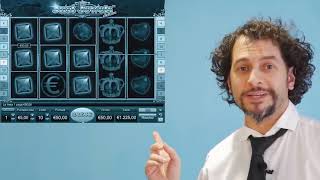

Why Slot Machines Are Designed to Be Addictive
45sReveals the shocking truth that slot machines are intentionally engineered for addiction, sparking curiosity and debate.
▶ Play Clip"The title accurately reflects the content, which explains how slot machines work and why they are addictive."
This video explores the psychology and mechanics behind slot machines, explaining why they are designed to be addictive. It discusses how random number generators determine outcomes, the brain's tendency to see patterns, and the addictive features like continuous play and loss of time perception.
A 2012 study by Natasha de Scholl at NYU revealed how slot machines are designed to be addictive, sparking debates on regulation.
The spinning wheels are just for show; a computer generates random numbers continuously, and pressing the button selects a sequence that determines the outcome.
Humans tend to look for patterns, believing that playing the same machine increases chances of winning, but each game is independent.
Machines pay out 87-90% of revenue over their lifetime, but this does not mean you get back 90% of your money; it's a long-term average.
Slot machines are solitary, continuous, and allow up to 1200 games per hour, leading to high concentration, loss of time, and diminished value of money.
Slot machines exploit brain biases and addictive design, making them more dangerous than other games. The video calls for regulation or banning of these machines.
What did Natasha de Scholl's 2012 study reveal?
How slot machines are designed to be addictive.
00:17
How does a slot machine determine the outcome?
A computer generates random numbers continuously; pressing the button selects a sequence that stops the wheels.
01:00
What percentage of revenue do slot machines typically pay out?
87% to 90% over their lifetime.
02:13
Why do players believe playing the same machine increases chances of winning?
The brain seeks patterns, but each game is independent.
01:29
How many games per hour can be played on a slot machine?
Up to 1200 games per hour.
03:20
Addictive Design Study
Reveals the intentional design behind slot machine addiction.
00:17Random Number Generator
Explains the core mechanism that determines outcomes.
01:00Payout Misconception
Clarifies a common misunderstanding about slot machine payouts.
02:13High-Speed Play
Highlights the rapid pace that fuels addiction.
03:20[00:02] we see on television or the internet today are for gambling? What does this tell us? It tells us that these games are a lucrative business with millions of players worldwide. But what makes us get hooked on them? The answer
[00:17] us get hooked on them? The answer lies in our brains. Let's take a look. In 2012, Natasha de Scholl, an anthropology professor at New York University, conducted a study on how slot machines were actually
[00:31] designed to be addictive. This sparked a wide-ranging debate about regulating playing time and access to this type of entertainment. But why do casino machines need to be regulated individually, while
[00:46] poker, for example, doesn't? To answer this question, we must first understand how one of these machines works. To begin with, the spinning wheels that display certain images serve only to create the perception that
[01:00] something is happening, but in reality, the game is already decided beforehand. Inside the machine, there is a computer that, even when no one is playing, continuously generates sequences of random numbers
[01:13] until you press the button and choose. Knowing this is one of the sequences that will make the wheels stop in a certain position. Because of this, any myth slot machines is just that—a tall tale. The way we manage our perceptions is largely to blame for the spread of these
[01:29] myths as empirical facts. Let me tends to look for patterns in everything. That's why it believes, for example, that if you play the same machine a lot, it will get hot and eventually pay out the
[01:45] Abel prize. In reality, no. The reality is that every time you press the button, you're starting a new game, but your brain is incapable of not seeing these games as a whole. The logic of your brain doesn't necessarily hold
[01:59] true in real life. The same thing happens with the feeling of winning when you keep receiving small prizes that you then reinvest. It's unrealistic. To win, you should be receiving more money than you invest. And although it's true that
[02:13] invest. And although it's true that these machines pay out 87% to 90% of their revenue, this doesn't mean that out of every 100 euros, you'll get back 90. What it means is that in the total lifetime of the machine, the return of 90% of the total amount won is less than what you've invested. This
[02:26] proportion occurs with slot machines, and so if we already know we're not going to win, why do we keep playing? Well, because once again, our brain approaches slot machines with all the parameters of an addiction. They are
[02:40] solitary games. High levels of attention spans have been observed for very prolonged periods among slot machine players, and it has been accidentally discovered that our brain is capable of concentrating so much on the game
[02:53] that narcolepsy patients managed to stay awake while playing. This concentration allows you to forget your problems, lose your sense of time and space, and even of yourself. You don't have to
[03:06] wait, unlike roulette or card games. Slot machines are in continuous activity, and your brain has the illusion of actively participating in the game. Moreover, it's not only continuous, but you
[03:20] can play recklessly. Up to 1200 games have been recorded in an hour. Imagine the adrenaline rush that is for your brain and the false sense of euphoria that is maintained while you play this way. It's easy to
[03:34] we are only happy if we play, and finally, the sense of the value of money disappears. Our brains are terrible at perceiving the value of money, and when we're immersed in the world of slot machines, it's even worse. We're unable to
[03:48] value losses over gains, even if they're minimal. As you can common sense when it comes to these kinds of games of chance. Many people are already asking for regulation of access to these machines. Do you think it should be
[04:03] left as it is, or should access be regulated, or even banned altogether?
⚡ Saved you 0h 04m reading this? Transcribe any YouTube video for free — no signup needed.