
Introvert Superpowers for Video
53sReframes introversion as a strength, offering a fresh perspective that resonates with many creators.
▶ Play Clip"Title accurately reflects the webinar's focus on content creation for introverts, delivering actionable advice."
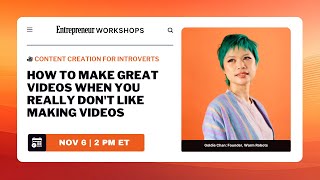
Goldie Chan, founder of Warm Robots and author of 'Personal Branding for Introverts,' shares strategies for introverts to create compelling video content without burnout. She emphasizes leveraging introvert superpowers like deep listening and analytical thinking, and introduces her 'Five C's of Personal Branding' framework.
Introverts have traits like deep listening, analytical thinking, and excelling in one-on-one conversations that are valuable in the workplace.
Acknowledge enthusiasm, then offer additional time after the meeting to discuss off-topic points, keeping the meeting focused without shutting down team members.
Clarity (who you are), Consistency (what you show), Competency (what you can do), Confidence (how you deliver), Community (who you're with).
Begin with one piece of content per month for three months, then increase frequency gradually to avoid burnout and build sustainable consistency.
Create videos yourself first to understand your message; AI tools work better when you know what to ask. Imperfect, human-made content is attractive.
Start with competency: share case studies, before-and-after scenarios, testimonials, and behind-the-scenes content. Visual storytelling can reduce camera discomfort.
Consistency over time builds success; viral moments are not sustainable. Focus on building a loyal audience through regular, valuable content.
Identify your audience segment (peers, bosses, general) and go where they live. LinkedIn is powerful for professionals; other platforms suit different niches.
Visualize a supportive friend or colleague on the other side of the camera. Speak to one person, not a massive audience.
Don't jump on every trend; create evergreen content that remains relevant for months. Avoid overwhelming yourself with too many videos at once.
Bullet points help maintain natural delivery. Pause thoughtfully and expand on points to avoid sounding flat.
Use a ratio of one hard sales video to three lifestyle/behind-the-scenes videos. Keep content appropriate for the platform.
Avoid crossed arms and hands in pockets. Sit straight (imagine a thread pulling you up). If eye contact is hard, look at the eyebrows.
Start with a ring light, a simple microphone (lav or headset), and a tripod. Mobile devices are powerful enough for most content.
Introverts can thrive in video content creation by leveraging their natural strengths, starting small, and being consistent. The key is to focus on one person, use bullet points, and invest in basic equipment to enhance quality without overwhelming yourself.
What are the five C's of personal branding according to Goldie Chan?
Clarity, Consistency, Competency, Confidence, Community.
04:00
What is the recommended starting frequency for video content for introverts?
One video or big piece of content per month for the first three months.
07:00
How should leaders handle off-topic comments from junior team members during meetings?
Acknowledge the enthusiasm and offer additional time after the meeting to discuss further.
02:00
What is the 'brand anchor' in personal branding?
A few words that describe your brand, such as 'amazing product manager' or 'insightful writer.'
04:00
What ratio of hard sales videos to lifestyle videos does Goldie recommend?
One hard sales video for every three lifestyle or behind-the-scenes videos.
27:00
What technique can help reduce camera fear?
Visualize a supportive friend or colleague on the other side of the camera and speak to one person.
20:00
What is the 'shrimp curl' and why should it be avoided?
The shrimp curl is a hunched posture that makes you look closed off; sitting straight with a thread pulling you up improves presence.
29:00
What three pieces of basic equipment does Goldie recommend for video creation?
A ring light, a simple microphone (lav or headset), and a tripod.
31:00
Why does Goldie advise against relying solely on AI for video creation?
Creating videos yourself first helps you understand your message and makes you better at using AI tools later.
10:00
What is the key to building a loyal audience according to Goldie?
Consistency over time with regular, valuable content rather than relying on viral moments.
15:00
Introvert Superpowers
Reframes introversion as an asset with traits like deep listening and analytical thinking.
Five C's Framework
Provides a memorable structure for building a personal brand.
04:00Start with One Video a Month
Offers a realistic, low-burnout starting point for content creation.
07:00Human-First Content
Encourages using your own creativity before turning to AI.
10:00Visualize a Friend
Simple psychological trick to reduce camera anxiety.
20:00[00:00] Hey everyone. I'm Dan Boba from entrepreneur.com and thanks so much for joining us for today's webinar content creation for introverts. Uh, I see we've got some not so introverted people already popping in the chat. That's awesome. So great to see you. So look, you want to make great videos, but maybe you don't really like making videos or you don't like being in front of the camera. It can be tough. But you do not have to be
[00:31] a big TikTok influencer to make videos that move the needle for your brand. And Goldie Chan, founder of Warm Robots and author of Personal Branding for Introverts, which is out now, I highly suggest you pick it up, is here to teach us how to create content that fits your energy, highlights your strengths, and builds an audience without burning you out, which sounds pretty awesome to me. So let's welcome Goldie. Goldie, how are you? Hi, I'm doing
[01:02] so well. Thank you for so much for having me here on entrepreneur.com. I am so excited to talk about video creation and also the introvert journey and maybe even a little bit about hair care, which I know we were talking about in the green room earlier, Dan. As you can all tell, we have very similar hairstyles. Very similar. We will shortly dive into that. Well, as I said, I see people are already jumping in the chat,
[01:33] so that is fantastic. We're going to get to as many questions as we go along, but But Goldie, why don't we start off with just this word introvert? You know, it it it always is presented as something that we have to overcome. It's a problem, but you don't really see it that way. Can you can you explain your your theory of using it as a superpower? Absolutely. So I believe that introverts are not a category of
[02:04] people that you have to change into a different category, namely extroverts. So I think it's so helpful to think that introverts do have, as you said, superpowers. Introverts have traits that are going to be really wonderful and helpful in the workplace. everything from deep listening to thinking analytically to being great in one-on-one conversations. There's so many ways in which introverts really thrive at work, especially when given the right, say, atmosphere, the right environment by their leaders.
[02:35] Or if you're an introvert leader yourself, how you can support your team below you. Well, I'm glad you brought up leadership because I want to jump right into it. There's a question in the chat that deals directly with that. This is from, sorry if I'm going to not say this right, but Surya Tabara. So sorry if I just butchered that, which I'm sure I did. But the question is, as an HR leader, I find it sometimes
[03:06] delicate to rechannel the discussion during a meeting when a junior's comments are kind of off track. And but I don't want and I want to get back to the topic, but I don't want to shut them down and make them feel turned off. Like, what are your thoughts on that? Absolutely. So this is such a good question because we don't want to dampen the enthusiasm of people that we love. organize and people that we lead on
[03:37] our team. So one way that's very helpful is offering additional time. So one thing that we can do is say, okay, I love the enthusiasm here, or just acknowledging, first of all, the enthusiasm and the energy that's being presented by your team members. And the second thing is to say, would love to discuss this more, would like to discuss this more. See me in my office. I'll be around for an extra minute. five, 15 minutes where
[04:08] we can talk about this a little bit more in depth. So you take that positive energy, you acknowledge it, and then you offer additional space where they can address additional questions that are maybe not quite on topic with your current meeting. That's great. I love that. So let's get back to the important thing. Us. Forget about them. So for people who are on here who maybe don't like being in front of the camera or feel uncomfortable
[04:39] in that, And maybe, you know, a lot of us feel like there's this particular role that always has to be like super energetic and hey guys, all this kind of stuff. But you talk a lot about like being core to who you are and finding a niche and that will help you resonate with an audience. Can you talk a little bit about identifying those topics? Yes, so I have what I call the five C's of personal
[05:10] branding. And the first C is clarity. It's who you are. It's deciding what that core is so that your content will flow through the idea of that core. So when we start with clarity, we want to know, we want to define our, for example, our brand anchor. what are the few words that we use to describe our brand? Perhaps you want to be known as an amazing product manager, or maybe you want to be known as
[05:41] an insightful writer, right? I think helping to simplify down what your brand anchor is, that definitely helps you to clarify what your brand is. And then when you're talking across videos, it becomes less disjointed. I'm sure you've seen people who say release 50 videos and all the videos are completely different. - Completely different. But imagine it through the perspective of someone who has a strong personal brand. You know their identity. Say they do everything with a
[06:12] lot of joy and a lot of color, then every single one of their videos that they say put out will be through that lens and it will still be connected. Now, say you have the same 50 videos by someone else who doesn't have that same thorough line, through their personal brand. And you'll notice that it now does seem like 50 videos that are incredibly confusing. And it is hard to say or understand why these 50 videos
[06:43] connect. So that's the power of personal branding. It is so you could even do a video on cooking, a video on your work, whether that's being a product manager at a startup or that's being an entrepreneur and running your own business. Whatever that is, it's helpful to have clarity over the core ideas of your brand first so that you can funnel your content, aka your videos, through that. Awesome. So wait, how many C's was that? That
[07:14] was all five? That was one C. So the other five, and I'm going to go slowly because I was just doing, I think I just told you, I just did a LinkedIn live stream for LinkedIn yesterday and I started going through them. And the amazing host, Jesse Humple, stopped me and said, you're going too fast. I've learned my lesson and now I'm going to go really slowly. So the first one is clarity, which we just created.
[07:45] The next one is consistency. It's what you show. The next one is competency, which is what you can do. The fourth one is confidence. It's how you deliver that message. The fifth one is community. It's who you're with. That's awesome. That's excellent. And for anyone, if you have any follow-up questions, please pop them in the chat and we'll get to them as we go. I want to talk a little bit about consistency because I think a
[08:16] lot of people, you know, we have these starts and stops. We're like, all right, I'm going to start posting, you know, like crazy and I'm gonna put up videos and I'm gonna put up comments in this and we kind of like Peter out because it takes a lot more energy than you think can you help us to to get on a track that you know is we'll get results but also when it's not going to burn
[08:48] us out Right. So I think it is so helpful to think through what is a another C word I really love is cadence. What is a regular stream of content that you can stick with? And I will start with the easiest absolute number that almost everyone can do who's listening in on this. And that is one video or one big piece of content a month. Now, this seems too infrequent to build a personal brand. But the
[09:19] reason why I say that is because, Dan, absolutely what you were just describing, I have met so many people who say, Listen, I dumped 20 pieces of content over the course of two days. Now I have personal brand. Now I never need to do anything ever again. And that, unfortunately, as you know, unfortunately, is not how it works. So we need consistency over time. You need to show a bunch of different data points that then can
[09:50] connect together and people can say, oh, great, Dan is a wonderful entrepreneur who specifically works in the automobile industry, right? And if, Dan, you put out those different pieces of content that really nail that message home, that's the consistency that is helpful, that's, once again, built on top of clarity, understanding what your brand is at the end of the day. So I always say start with once a month. I know it feels too infrequent, but the
[10:21] goal is to do this for three months. And then after three months, try once every other week, and then after another three months, then trying weekly. And we're eventually going to get to the point, hopefully, where we can post two times a week at least. That's fantastic. and such good advice for anything. You know, we have an entrepreneur leadership network. Maybe people listening to this are a part of it. And, uh, you know, I think people
[10:52] come out hot. They want to write four stories a week and then, um, you burn yourself out and then you don't want to do it. Then it feels like homework. And then it's just something you're dreading rather than really enjoying doing. So I know that this stream is about, of course videos and I've created over on LinkedIn, I created over 800 daily consecutive videos, which is quite a few. But I've also written probably at this point,
[11:23] hundreds of articles for various publications. And writing is very similar to videos in that if you have a good cadence that you can stick to a good consistency of articles, that also is super helpful. And what I noticed is not helpful is I've had other contributors that I know who they get very excited about writing for a publication and then three months later they stop completely. And I'm sure you've seen this too, Dan, where people get
[11:54] so excited, they're like, they drop those 50 articles or whatever that number is. And then after three months, it's a year before they start writing again. Yeah, yeah, yeah, exactly. So I want to go back a little bit to when you kind of first started doing things, do you feel like... You came out of the gate fully formed. This is me. This is what I talk about. I have it all clear. Or is it a process
[12:25] that you kind of find as you go along? Because I think some people are like, I don't know what my brand is. Right. So I think about. a chick in a chick emerging from an egg right it is technically fully formed but it's not quite a chicken and that's the same that was true with my own personal brand when i started creating videos for the first time i didn't necessarily know what my clearest and most concise
[12:56] message was so it was a little bit of an exploration figuring that out and that's why i think it is So important. This is my hot take for this webinars. Are you ready for this? Listen up, everyone. Listen up, everyone. I think it's so important to number one, do some of this video creation yourself. And number two, don't rely solely on AI. So that's my... Hot take, which is sometimes it is helpful to use your brain.
[13:27] That's what it's there for. That's what's going to make your content really unique. And same is true of writing, of course, right? I think if you are able to try making videos on your own first before doing a lot of prompts and AI, I think that's going to give you a much better idea of what you're so if you do eventually use some ai products you'll also know better what to ask of it because ai only
[13:58] knows what ai has been given um and so my my hot take is please use your brain you're human you have a brain for reason and i also love love love seeing videos that are a little imperfect i think that's that delightful human aspect very attractive so you know, mess up a little bit is my hot take too. Wow. The bots are going to come after you. They're not going to like that. I know. I said
[14:29] it too many times. Well, speaking of AI, let's talk a little bit about formats. So let's start with, you know, I'm a person who's a little uncomfortable in front of the camera. Yes. What are some ways to like sort of ease into this thing besides, you know, going full influencer mode? Yeah, so I think always start with your I'm going to go to my third C competency, start with your area of expertize. So not everyone wants
[15:00] to name themselves expert. However, I find I meet so many people, especially on the conference circuit, who are genuinely experts in their field field of knowledge because they'll say, well, I've been working in the field for 20 years, but I'm not an expert. I'm going to say you probably are an expert, even if you don't feel that way. Right. I think a lot of it is around your competency. It's a lot around what were you able
[15:31] and what are you able to accomplish in your career, in your day to day job, in your entrepreneurial journey? I think having case studies of your competency and then sharing those, that's a great starting point also for video content. So if you can think about a before and after scenario, so maybe as an entrepreneur, you provide a product that improves people's lives for their homes. So you maybe have a before and after case study that shows
[16:02] before they used my product and then after they use my product, I think. That's really helpful. Also, once again, if you run your own business, I think testimonials and recommendations are deeply underrated. So getting testimonials from your clients and then getting recommendations also from your clients for new clients and then cataloging those or even doing little videos on them. And of course, not everyone feels, this is why we're talking right now, not everyone feels comfortable on
[16:33] camera, but what you can also do is show visually. I'm such a visual storyteller. So show visually the before and after. and the after, before they use your service and then after they use your product and the service. And then maybe what that testimonial ends up being is the text of that video. But maybe isn't even someone literally talking to video, but just visually showing, hey, here was the great before and the great after. - That's
[17:04] awesome, I love that. And, you know, one thing that you talked about where people don't recognize that they're they're an actually an expert in something. I think the other thing that people don't realize is when you do something day in and day out, you think it's boring or it's just yada, yada, yada. But a lot of people don't know how things are done, how things are made, how you made that thing. So I would I would
[17:35] suggest people show take people behind the scenes. So show how the sausage is made. Yeah, I think behind the scenes videos are popular for a reason, right? And I think the most mundane jobs or the most mundane products, et cetera, services are actually very exciting. Like I want to know how literal bolts are made. That's so cool. The things that keep our homes and our businesses together, physical products are always fun to see, services are fun
[18:06] to see. I think showing how the sauce is made is so helpful and so interesting because so many people forget that when you're in a Of course, when you're in a bubble that's you're surrounded by your industry peers, you think everyone in my industry knows about this. And that might be true. But people who are your industry may not be your potential clients. So it's, of course, also about what do you think your potential clients might
[18:37] find interesting? What do they maybe not know? And those behind the scenes videos are so powerful for that reason. Yeah, absolutely. So here's another big issue that whether or not you're an introvert, I think is a problem is so you start making videos, you start making content and you feel like, wow, nobody cares. You know, you get like a like or two, maybe. Right. and you feel like you just wasted all your time. What do you
[19:08] have to say about that whole, I just wasted all my time? Okay, so I would say, I'll give an example. So when I was about 300 videos into my journey, a lot of things had happened, and I started also having people reach out to me saying, well, I want the same level of success that you have with your videos, could you just come and talk to me? And at the time, I would say I talked to
[19:39] almost every single person that asked, which was maybe not the best use of my time, but I wanted to be very open and accessible. And I remember I talked to someone and she said that she had made three videos. So once again, at the time I made 300 videos. So she had made three videos and she said, why am I not getting press? And she said, I'm not getting any press. And she's like, I'm going to
[20:10] release two more videos. And she's like, that should be good enough for them. And I'm like, who is that person? Who is this invisible them that you're talking about? And then she said, well, you know, it's all the big press that you've gotten. I should get the same. um because she's and she's like i haven't gotten a lot of views on my video but we should be getting the same thing and i had to tell her
[20:41] well a lot of that press was when i once i hit 100 videos or 200 videos or I had really just had that consistency of my message over time. Then I started getting some of those other, I would say markers of success, which includes press, which includes opportunities, which includes doors opening. And I think a lot of times we look at our videos though to flip it on its head when they don't do well and we
[21:12] immediately give up. So it's helpful to think, okay, quite honestly, unless you have one of those five videos go viral, which can happen on some platforms, that is not a sustainable business tactic. Also, I will say a great example is one person that I know, she runs a delightful tea shop out of Seattle, Washington, and she has gone viral multiple times. However, after that dip of virality, those same people who were excited about her brand and
[21:43] her business post that viral video, they would drop off very quickly. So she'd have a big push for a month. She'd see a lot of sales and then that would drop off pretty drastically. So she learned over time that was less important to do a ton of viral videos and more important to do really consistent video that constantly said, okay, this is what our tea shop is known for. Here's the kind of products we're doing. Here
[22:14] is the experience you will get when you enter into our store. And those videos over time are what really brought the people who are her consistent customers. And that's what we want. We want repeat purchases over time if we can. All right. The chat is lighting up. So we've got a lot of good questions. We're going to get through a lot of them. I think one just to jump off from Charlotte. We're talking about videos. What
[22:45] platforms do you recommend? How do you judge which platform is best for you and for your business? Absolutely. So I will say I'm a bit of an odd case because I... for lack of a better word blew up on linkedin so i'm a linkedin first video creator so when i think about my videos i think about that platform over other platforms now it really depends on what your product is if you are someone that has for
[23:16] example a and I shouldn't always say product, but service too. But if you're an entrepreneur, if you're a business owner, if you work at a company that focuses on say fashion or focuses on decor or designing, maybe a platform more like Pinterest or Instagram would be better for you. It's all about where do your potential clients, where does your audience live? I'm going to help you segment out who your audience is right now. Okay, so this
[23:47] is how we think about audience segments. Super fast, this is the fastest way to do it. One is, am I talking to the middle tier? Am I talking to my peers? This is people who share my same role or people who are say in my industry vertical. Or am I talking to the big bosses? Am I talking to clients, investors? Am I talking to, who am I talking to? Am I talking to this level? Or we're
[24:18] going to go down to the third level, or am I talking to a general audience? So a general audience would be like the delightful folks who are watching in on this or your sub stack readers or people who are just, I would say not necessarily your target audience, but maybe they're just a general person in your sphere. So that's one way to start to think about who your audience is, is first of all, pick one of
[24:49] those general buckets. And then from there, understand what industry are you in? Where does that audience demographic live? Because you should go to where they live. So if they live on Facebook, which Facebook is still a very robust platform, despite people saying it's uncool. And I will give you a nickname that I've gotten in the press, too, and that's the queen of uncool. So I love a little bit of uncool. Facebook is still such a massive
[25:20] platform for Facebook groups. Another platform that I find personally very fascinating because I'm a writer is Threads. Because that's a place where you can actually still write. Very excited about. I, of course, like LinkedIn video and I also create videos on Instagram Reels. But every single platform is different. So I do not post exactly the same copy on threads that I do on LinkedIn. And I might post similar videos and usually for videos, I'm too tired
[25:52] to re-edit. But in an ideal world, I would actually do custom edits for every single platform. But once again, understanding which platform to start with, you need to know where your audience is and who you're trying to target first. And for, I would assume for most people who are listening and watching this, LinkedIn is going to be an incredibly powerful platform for you regardless. Great. Okay, so here we go. It feels very embarrassing to be in
[26:23] front of the camera exclamation point. Tracy Johnson replies horrifying comes to mind. Can you can you help people who are really really this doesn't feel like their thing but they know they got to try. Yeah. So I will give you something mechanical that you can do. So one thing that I try to do whenever I literally look into the camera, so, and I shoot a lot of mine on my mobile device, when I'm looking at that
[26:54] camera or I'm, you know, maybe this way, when I'm looking at that camera, what I try to do is I try to do a little visual exercise. I try to think that it is a good friend or good colleague on the other side of that camera. So even as I'm literally looking into this camera right now, that is what I'm imagining. It's a good friend or good colleague who's very supportive And you have to have that
[27:25] person in mind. So that's my homework, not to assign homework on an entrepreneur webinar, but your homework is to think about what is that one person that you can visualize who's a friend or a colleague, someone who is going to be non-critical of you. And that's the person that your video is tonally for. That's who you're speaking to. too and that to me honestly takes a little bit of the nerves out and always as an introvert
[27:56] you are not doing a video to 50 000 people to 100 000 people you are doing a video to one person And I hope that makes it a little bit less scary. So whenever you're creating videos, you're not making it for a massive internet audience or offline audience. You're really making it for that one person. So identify that one person. And that's who you should be thinking of when you are creating your videos. And hopefully that
[28:27] makes it a little bit less scary, but that's your homework. Great. All right. So we're doing one post a month. And we are becoming best friends with our camera. So those are two things that everyone can take from this. That's great. I wonder too, so you said earlier how on a different webinar, someone said, hey, can you slow down a little bit? So I'm wondering, is there any other things that you see you make a lot
[28:58] of videos? I'm sure you watch a lot of videos. Are there things that you see that happen a lot that you just want to tell the person, oh, this would be so much better if you just do this or that? Are there any common missteps that you see people make? So I think with videos, it's so often. First of all, we already talked about the number one mistake. You know misstep that I think people make which
[29:29] is they say I'm going to do 12 million videos And then they get overwhelmed and then they do three and then they stop So that's the number one thing that I always see people do and I don't even want to say wrong with videos But just in a way that is overwhelming for people I think the other thing that I so commonly see with videos is is when people do a video and then they do the
[30:00] exact same style of video over and over again because that is the trending video type. Right. Doesn't suit them or their audience at all. But they saw it go viral you know, on TikTok a month ago, and then now they're jumping in on that trend and now they're trying to do that. And I think the easiest way to get exhausted by video content is to jump onto every single viral trend on a platform that also moves
[30:31] quickly for a platform that moves more slowly like LinkedIn. So when I see folks trying to do TikTok trends two months, three months after they've already been unpopular on their original platform. It's really, it's hard to see because I know it just also won't have the same impact. Right. Honestly, virality in general, I think it's always better to have evergreen knowledge based videos or interest based videos, things that if somebody pulled up that video, this is
[31:02] a great check. If somebody pulls up that video three months from now, is that still a valid video? And three months is not. that long of a period of time, but in the internet world, three months is a lifetime. Yeah. Yeah. Yeah. Is this video still going to be valid one month from now, three months from now, extra bonus points if your video is still valid even six months from now, right? Absolutely. I've seen some good
[31:33] advice in here. Amy says it can be helpful to practice over Zoom. Her brother and I have done that. Nathan is talking about it. Time cures all. Just keep doing it. Keep doing it and you'll get better and better and better. Now, Sierra is asking, any credible short course available online that makes you certified in making AI videos close to reality? Well, that's a very interesting question that I have no good answer to. As somebody that
[32:04] really not to be a human first, human made person, and I think that AI tools are very powerful and I think that they are only going to get more powerful. I think that there are quite a bit of great resources, for example, on LinkedIn Learning that actually talk about AI video creation. So I definitely check there first. I think that there are so many other great courses, of course, also on YouTube that people are doing really
[32:35] fascinating tutorials on short form video. But as a human first person, I have to say once again, try making those yourself first before immediately jumping in and having AI do it because it actually makes you better with the AI tools if you eventually do that. Yeah. I love humans, so I'm going to co-sign that. Thank you, Dan. Tracy says, you're a great orator. I assume she's talking about you and not me, but all right, whatever, Tracy.
[33:06] We'll take it. All right. So she asks, how do you avoid mistakes and rambling without just reading off a script, but then you're flattening your delivery? How do you deal with that? Yeah. So I'll say this. I actually did take, I think this is maybe one of the most uncool courses you take. I took a teleprompter course years ago to learn how to read off a teleprompter and make it look very natural. And one of the
[33:37] things that they told us in this teleprompter course is you always pull a little snippet. you pull a little snippet and also you want to be thoughtful about your pauses. I think the most unintelligible ways to, if you're going to read a script, to read a script is when you're just like this. And I actually have notes here, so I'll literally read it. One, clarity, who you are, define your brand anchor. Okay. Then choose three adjectives
[34:08] that you want to be known for. Eliminate jargon. So like that is the The easiest way to lose your audience is by not pausing and not being thoughtful about the words that are coming out of your mouth. One way that I personally keep myself from reading a script is I try not to actually script unless I have to. I do bullet points. because that forces me to naturally expand. And I do post-it notes. I love good
[34:39] post-it. But I try to naturally expand on those bullet points. And that tends to also not flatten my delivery because once again, I use this amazing thing. It's inside my head is called my brain and it connects those neurons and those, sorry, those neurons start to fire and they say, okay, I'm going to expand on those bullet points. So that's, really helpful for me is I don't do scripts a lot. I do bullet points. And when
[35:10] I do do scripts, I pause. I will read a paragraph and then I will do a thoughtful pause. And I will be really thoughtful about the words that are coming out of my mouth, even if it is scripted. That's great. Yeah, Dan. Let's just assume that this question is for both of us. What's your answer to this? my secrets of being a great orator? Yeah. Well, I would say one thing, one thing that actually helped me
[35:41] early was like watch, watching people read the news on TV. Yes. And you notice that they kind of hit, words and then they do that but and it's exaggerated and i wouldn't do that uh but but it it it lets you understand that that it's not that flat thing you're talking about and also the bullet points a hundred percent it is so hard to read something and sound like you're saying it um except if you're a
[36:12] soap opera actor reading, uh, you know, the, the thing, but I am a big fan of the bullet points cause it just helps you speak naturally. Um, Oh, we got a, we got a question that I wanted to get to, uh, Where did it go? Oh, right. I think this is a good one from Charlotte. My main platform is LinkedIn, but it's not ideal for casual or behind the scenes videos, but too much educational content feels
[36:43] dry. How do you recommend finding the right balance? Well, I will definitely say as a healthcare professional, always be careful and use your common sense. So that's my first thing that I will always say because we want to be HIPAA compliant. But outside of that, I think it's helpful to think about it. as especially side of things. I think so many people, what they do is every single video is a hard sales video. And that also
[37:14] is hard and dry to watch. So instead of making every single video, your dry and very salesy video, I think it's helpful to have a certain ratio in place. So that ratio might be one really big, dry and very much your hard sales video for every three interesting and more lifestyle oriented videos. What is interesting for LinkedIn is that it is migrating. And I have to say this because I was literally in the LinkedIn video in
[37:45] 2017. You you can definitely create more of the lifestyle type videos on LinkedIn Just be of course careful that your potential bosses or your potential clients are on this platform So you try right and I think it's helpful to always keep that in mind but there's nothing wrong with putting in a little bit more lifestyle and a little bit more thoughtful videos and I think that, of course, if you're doing just really just fun comedy video,
[38:16] I actually started following two nurses that do really fun comedic videos on Instagram and they're great. But that content would be really inappropriate for LinkedIn. And I think it's thought it's helpful to be. about what is appropriate. Wrinkle in fun videos every once in a while, but just know that LinkedIn is still definitely the platform for, I wouldn't even say more serious content, but it's more common sense based content. Right, right. Exactly. And that goes back
[38:47] to, yeah, what platform you're on. We are we're running out of time, but I want to get to everything here. And I think Brian just brought up a really great point. I want to get your thoughts on this. Understanding how body language. can unconsciously be broadcasting, even if you're speaking well, but you look like you're terrified or you don't look confident. Can you talk a little bit about how important body language is? Absolutely. I love this.
[39:18] I did a little section of my book about it. But I do have to say I was just running at a conference, an introvert mentor group. So it was 30 people, all strangers signed up for this mentor group. And there was a couple other mentor sessions happening. And I have never seen a more quiet line in my life. Nobody talked to each other. And I have to say, as an introvert, I 100% understand that. And when
[39:49] they got into the room, I made them do, first of all, I made them do a small talk exercise. But beyond that small talk exercise, the next exercise I made them do, which every person in the room, very much self-conscious. that and I find myself having to do this is, okay, so I'm just going to do this maybe right above this. So I will cross my arms or I will put my hands in my pocket or
[40:20] I will do something nervous with my hands, right? I think a lot of that is body posture and how we present ourselves that we can be really conscious and careful of. So if you find yourself talking to someone, your hands are in the pocket, just try taking them out. That's all you have to do. Just try taking them out. Just try like sitting a little bit straighter. One of the best examples I've heard is you imagine
[40:51] that there is literally a thread going from your core all the way through the top of your head, pulling you straight like a little, you know, doll. So that kind of gives you that straighter posture because what we don't want is internet shrimp posture where we're like, we're curled up. And we have that shrimp curl in our back. We don't want that shrimp curl. The other thing is, and this is so common, right? The crossed arms.
[41:22] I find myself doing this all the time. It's a it's a natural human defense maneuver that so many of us do. So when I find myself doing this with somebody, I actually just, you know, I always try to open it up. Yeah. So that's another thing to try to do. And if eye contact, if eye contact scares you, which it scares so many of us. One tip that I heard from someone, which sometimes works and sometimes
[41:53] doesn't work, is you want to look at the eyebrows. Right. Right? So look them in the eyebrows. You don't look them directly in the eyes. You look them in the eyebrows. So that way your eye line is close to where their eyes are, but you're not looking directly. down, right? Because I think when you're talking to somebody in the whole time you're, if I did this entire webinar looking like this, it would not look like I'm
[42:24] very interested in what you're saying or what anyone else is saying. And so I'm trying to keep direct eye line to the camera, but in real life, we have to try to keep eye line directly to the person. And if it makes you feel nervous to do that, it is okay to look at the person then do our nervous look away, but try to look back, right? - Yeah. - So that's, I think there's so many
[42:56] ways body posture can impact the way that we present ourselves. And same with crossed arms, crossed legs can mean the same thing too, right? Well, that eyebrow trick, I mean, if you're talking to me, you got a huge target. I know, Dan. I'm looking at your eyebrows. All right. I think we'll wrap this up in a minute. But one more question, which I think probably is on a lot of people's minds. We want to, you know,
[43:27] up the look of things. We know we don't have to have a professional studio, but we want it to look good. Is there any like sort of base level of equipment that you use or that you recommend, or do you think you don't need anything? - Yeah, so I don't wanna name brands here because we don't want to do this on the stream, but I'll name some ideas. So one thing that's very helpful is a ring
[43:58] light. The reason why people, and you'll see a lot of influencers always talk about ring lights, is because it causes a beautiful halo glow. to happen in the eyes themselves. And so it's helpful. And right now I am in a hotel room, so I don't have my, unfortunately my light set up with me, but I usually have, I usually have one light coming from this direction, usually a soft kind of warmer light. And then another light
[44:29] coming from this direction. And every once in a while, I will have a third that's kind of bouncing this way. And it just makes the light really nice on your face. And these don't have to once again be expensive lights. It's fine to do an LED light that you can set up. The other thing that I find is really helpful. And it's so funny because Dan, I had a little bit of issues with our headsets is
[45:00] normally I will use one of my headsets. And I will say that this one, I, I, I will name a brand Logitech. So this one is a Logitech headset and I do have my Logitech mic at home. And that is usually very helpful for getting a little bit clearer sound because then you can isolate that, especially if you're in a noisy environment. So sometimes headsets help sometimes also just having a little microphone. I use actually two
[45:31] different types. I use microphone and I also have a DJI one. So I use both of them depending on what I need them for. And that's great for when I'm doing on the go content. And then of course there's a million different tripods and and handheld gimbals that you can use. I use a very simple collapsible one that also stands on its own, but expands to about, I would say three to four feet tall. So that
[46:02] way I can also shoot additional content on the go, but I will say I do so much of it just using my mobile device these days because they're so powerful now. You can do so much with them. - Absolutely. - And there's amazing ways to clear up sound. So for those of you that don't know, Adobe Audition, which is a lesser known product, actually is able to clear up a lot of background noise in your recordings.
[46:33] And it's a great way to kind of eliminate that humming or that you're in a busy place. It can eliminate that so you have really clear sound in case you don't have a microphone or your microphone isn't working. So there are so many tools out there I could go on and on. But I think to me, having portable lights, having simple microphone or lav microphone, having a simple tripod, those three are really your base starter. I
[47:04] have to say this word, Pokemon. Awesome. Awesome. Well, Goldie, this has been so great, so informative, so inspiring. Everyone on this call, one piece of content a month. I think we all can do that. I think we all can do that. So I think that's such a great starting point for anyone who wants to stay in contact with you, stay up with what you're doing. What's the best way for them to reach out? So two places
[47:35] you can always find me. You can always find me on my website, goldiechan.com. You can also find me on LinkedIn, linkedin.com slash in slash Goldie. You can also Google me. I'm the first three pages of the search results. All right. Fantastic. And, uh, and of course you have this new book, personal branding for introverts. I think if you like this chat, you're going to love that book. Sorry, we didn't have time to get into the haircare
[48:06] portion of the discussion, but, uh, maybe we'll do that next time. I think that'll be the next three hour webinar. We'll do how to have an amazing brand with your amazing hair. Exactly. All right, great. Well, Goldie, sincerely, thank you so much. And also thank you to everyone who sent such great questions, thoughtful questions and joined us here. We do webinars all the time here at entrepreneur.com. So we love having you and we will see you
[48:37] next time. Bye.


⚡ Saved you 0h 48m reading this? Transcribe any YouTube video for free — no signup needed.