
Why 99% of Products Fail (It's Not Quality)
43sThe classic 'same product, different outcome' hook triggers curiosity and immediately reframes marketing as the real differentiator.
▶ Play Clip"Delivers a solid, structured roadmap as promised, but the '2027' in the title is a gimmick—the content is timeless basics, not future-specific."
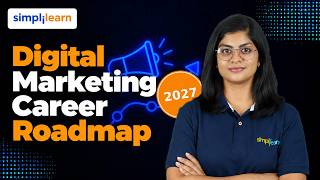
This video provides a structured roadmap for starting a career in digital marketing, emphasizing that success comes from understanding customer behavior and using data-driven strategies, not just running ads. It outlines a step-by-step learning path covering fundamentals, paid advertising, SEO, automation, and specialization, with a timeline of 6-9 months to become job-ready.
Two companies with identical products, features, pricing, and audience can have vastly different outcomes; the difference is often superior marketing, not a better product.
Digital marketing involves understanding customer behavior and psychology, using data and creativity to turn attention into growth. It's not just running ads or posting on social media.
Learn customer journeys, marketing funnels, audience segmentation, positioning, and buyer psychology. Understand the difference between vanity metrics (likes, impressions) and business metrics (revenue, conversions, CAC, ROI). Goal: perform a marketing audit and build a basic analytics dashboard. Time: 1-2 months.
Start with Google Ads (keywords, search campaigns, copy, conversion tracking) and Meta advertising (audience targeting, creatives, retargeting, pixel implementation). Learn optimization metrics like CTR, CPA, and ROAS. Goal: launch Google and Meta campaigns with multiple ad variations. Time: 1-2 months.
Learn how search engines crawl, index, and rank websites. Explore on-page SEO, technical SEO, keyword research, and content optimization. Focus on long-term growth using content strategies and topic clusters. Goal: perform an SEO audit and create a content strategy around search intent.
Learn email marketing, audience segmentation, personalization, and customer journeys. Work with CRM platforms like HubSpot. Create automated workflows triggered by customer behavior to convert and retain customers.
Choose a specialization: performance marketing/paid media, marketing analytics/business intelligence, or growth marketing/CRO. Specialists stand out more than generalists. Becoming job-ready takes 6-9 months of consistent learning and project building.
Marketing is the differentiator
Highlights that product quality alone doesn't guarantee success; marketing strategy is often the deciding factor.
00:07Vanity vs. business metrics
Crucial distinction for marketers to focus on metrics that matter to business outcomes, not just engagement.
01:15Organic growth via SEO
Emphasizes that not all growth is paid; SEO and content marketing provide valuable earned traffic.
02:46Specialization beats generalization
Advises learners to specialize to stand out, a key career strategy in a competitive field.
03:58Realistic career timeline
Provides a concrete 6-9 month timeframe for becoming job-ready, setting realistic expectations.
04:13[00:07] same product, same features, same pricing, and targeting the exact same audience. Yet, one becomes a billion-dollar brand while the other quietly disappeared. Why? Usually, it's not because of the product is better.
[00:21] It's because one company understood marketing better. Why do certain ads seem to follow you across the internet? Why do some brands appear exactly when you're ready to buy? How do businesses know what campaigns generates revenue
[00:35] and which one is waste of money? That's digital marketing. Digital marketers don't just run ads or even post on social media. They understand customers behavior and psychology. And they use data and creativity to turn attention
[00:49] into growth. Because in today's world, having a great product isn't enough. If nobody discovers it, it might as well not exist. So, if you're wondering where to start and what skills matters most, this roadmap is for you. Let's begin
[01:02] with step number one, which is to learn marketing fundamentals. Every digital marketer starts with the same question. How do customers actually make decision? Before learning platforms and tools, you first need to understand marketing
[01:15] itself. You'll learn customer journeys, marketing funnels, audience segmentation, positioning, and also buyer psychology. You'll also learn difference between vanity metrics and also business metrics. Because likes and
[01:28] impressions look great in reports, but businesses care about revenue, conversations, and also customer acquisition cost and return on investment. Analytics is also another critical skill. You will learn Google
[01:41] Analytics, event tracking, conversation tracking, and also reporting fundamentals. By the end of this stage, you will Repeat. By the end of this stage, your goal should be to perform a marketing audit and build a basic
[01:53] analytics dashboard. Spend around one or two months here. Once the foundations are in place, it's time to learn the channels responsible for immediate growth, which is to learn paid advertising. You'll start with Google
[02:06] Ads learning keywords, search campaigns, and copy, and also conversational tracking because users searching for products often have a strong purchase intent. You'll then move into meta advertising learning audience targeting,
[02:19] creatives, retargeting, and also pixel implementation. But, launching campaigns is only the half of the job. You'll also learn optimization metrics such as click-through rates, cost per acquisition, and also return on ad
[02:32] spend. By the end of this stage, your goal should be launch both Google and meta campaigns with multiple ad variations. Expect to spend around 1 to 2 months here. Not all growth comes from paid advertisements. Repeat. Not all
[02:46] growth comes from paid advertising. Some of the most valuable traffic is earned organically. So, the next step is to master SEO and content marketing. You'll learn how search engine crawl, index, and rank websites. You'll explore
[03:00] on-page SEO, technical SEO, keyword research, and also content optimization. long-term growth using content strategies and topic clusters. By the to perform an SEO audit and create a content strategy around the search
[03:16] intent. Attracting customers is only half the challenge. Now, you need to Repeat. Now, you need to convert and retain them. So, the next step is to learn automation and CRM. You'll learn email marketing, audience segmentation,
[03:31] personalization, and customer journeys. You'll also work with CRM platforms such as HubSpot and understand how businesses manage leads and also customer relationships. Modern marketers don't manually send every email. Instead, they
[03:45] create automated workflows triggered by customer behavior. This is often where marketers begin thinking more like growth strategist. At this stage, it's time to specialize, so choose your specialization. Some marketers move into
[03:58] performance marketing and paid media. Others specialize in marketing analytics and business intelligence. Growth marketing and conversational rate optimization have also become extremely valuable fields. Because specialist also
[04:13] repeat because specialist almost always stand out more than generalist. For most learners becoming job ready takes about 6 to 9 months of consistent learning and project building. Digital marketing isn't about posting on social media or
[04:27] launching advertisements. It's about connecting products with people and you're looking for structured learning path, we have created a complete digital marketing road map covering analytics, paid advertising, SEO, automation, and
[04:42] advanced specialization. Check out the link in the description box below to find that road map and start building your digital marketing career today. industry insights. Thank you for watching and we'll see you in the next
[04:55] watching and we'll see you in the next one.




⚡ Saved you 0h 05m reading this? Transcribe any YouTube video for free — no signup needed.