FDA Allows Sale of Untested Peptides
43sThe FDA's surprising decision to allow the sale of experimental peptides with no evidence of safety or efficacy is a shocking and controversial topic that sparks immediate curiosity.
▶ Play Clip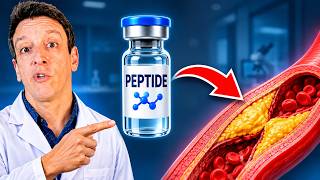
"Delivers a thorough, evidence-based fact-check of popular peptides, matching the title's promise with high information density."
The video provides a critical analysis of popular peptides, distinguishing between those with strong clinical evidence, like semaglutide, and those with minimal human data, such as BPC-157 and TB-500. It highlights the FDA's recent decision to facilitate the sale of experimental peptides, raising concerns about safety and regulatory integrity.
Some peptides are validated medical therapies, while others are sold with no real evidence. The video aims to clarify the confusion.
Peptides are small pieces of protein that can act as messengers in the bloodstream, like insulin, binding to receptors to regulate metabolism.
Semaglutide binds GLP-1 receptor, reducing appetite. Tirzepatide binds two receptors, retatrutide binds three, showing increasing weight loss: 15%, 21%, and 24% respectively.
These peptides reduce heart attacks, strokes, and heart disease deaths by 20%, all-cause mortality by 19%, and help with diabetes, kidney, fatty liver, arthritis, sleep apnea, and alcohol use.
Weight loss includes lean mass (25-33%), which can be mitigated with resistance training and protein. Side effects include nausea, vomiting, and digestive issues. Effects are not permanent.
Marketed for tissue healing, BPC-157 has only three published human studies with 30 patients total, lacking control groups. A systematic review concluded it should not be used clinically outside trials.
A family physician on Andrew Huberman's podcast admits giving BPC-157 to almost all patients, based on animal data, and even intravenously, despite only one study with two participants on IV use.
TB-500, another tissue repair peptide, has zero human studies. It's a fragment of thymosin beta-4, which has some data, but the fragment itself is untested.
Both BPC-157 and TB-500 can induce new blood vessel growth (angiogenesis) in animals, which is also a key step in cancer growth, raising safety concerns.
GHK-Cu, a copper-binding peptide, has randomized trials for skin and hair, but results are mixed. Claims for scalp hair growth are not supported by human studies.
Epitalon shows telomere protection in cells and lifespan extension in fruit flies, but no evidence for human aging. Most research comes from one Russian group.
These peptides increase growth hormone and IGF-1 in humans, but muscle growth hasn't been shown. They may also promote tumor growth, needing more study.
The FDA committee, stacked with RFK Jr.'s nominees (peptide sellers), voted to reduce restrictions on six experimental peptides. RFK Jr. is pushing through a policy to allow sales without FDA approval.
Allowing sales without evidence disincentivizes research. The video urges asking if a peptide has been tested in controlled human trials before using it.
GLP-1 peptides reduce mortality by 19%
This is a significant, evidence-based health benefit beyond weight loss, highlighting the value of these peptides.
03:07BPC-157 has only 30 human patients studied
This starkly contrasts with the marketing hype, showing the lack of evidence for a widely sold peptide.
06:39Angiogenesis concern for cancer
This raises a serious safety question that is often ignored by sellers, emphasizing the need for proper studies.
15:45FDA committee stacked with peptide sellers
This reveals a potential conflict of interest in regulatory decisions, undermining trust in the approval process.
20:57Ask if a peptide has been tested in controlled human trials
This provides a simple, actionable question for consumers to evaluate any peptide offer, empowering them to make informed decisions.
26:19[00:02] strokes, and deaths from heart disease by 20% while another is being injected into thousands of people with no real evidence that it does anything or even that it's safe. And the FDA just announced it will allow it to be sold.
[00:16] If you keep hearing about peptides and you find all of this really confusing, you're not alone. Some peptides are real medical breakthroughs while others are being sold to you as miracles with no real science to back it up. I'm
[00:29] an MD PhD research scientist. I investigate medical and biological questions for a living. So I looked into the most popular peptides out there. Honestly, I was shocked by what I found, more so than
[00:43] almost any other video we've made. I'll show you which peptides are powerful validated therapies and which ones have only been tested in mice. And by the sell supplements. I don't sell prescription drugs either.
[00:58] There are no sales in this video. We'll also hear a doctor on one of the largest health podcasts in the world admit to giving an experimental peptide to almost every one of his patients. And we'll wrap up with the shocking FDA decision
[01:13] this week, which is the most worrying part of the whole story. And if you're especially interested in weight loss, but you want to do it without Ozempic, I have a whole video on the best foods to achieve that effect without the shot,
[01:26] and I'll link that in the end. So what is a peptide after all? Well, peptide is a little piece of a protein. Every time you eat protein, it gets chopped up in your gut into peptides, and those can then be chopped up some more into
[01:40] individual amino acids. But some peptides can actually work as messengers in your bloodstream. Insulin is a great example. It's a hormone, but it's also a peptide. It travels around in your blood and it binds a specific receptor
[01:56] like a lock and a key and it can regulate your metabolism. Several peptides out there in the market can work the same way. The most famous example is Ozempic, which has become popular mainly as a weight loss drug,
[02:11] called semaglutide. You inject it with a tiny needle and it binds a specific receptor in your body called the GLP-1 receptor in a number of tissues in your gut, in your brain, and ultimately it reduces appetite and it tones down food
[02:27] cravings. And now there are two more recent generations similar to semaglutide, like cousins. There is a peptide called terzepatide, which binds two receptors, so it activates two pathways. And the most recent one is
[02:41] called retatrutide. That isn't approved yet. It's still being investigated, and that binds three receptors, three pathways. And what we've seen is each generation has surpassed the last one for appetite suppression and for weight
[02:55] loss. So we see about a 15% body weight loss on semaglutide, Ozempic, about 21% on terzepatide, and about 24% on retatrutide. Now one of the most
[03:07] fascinating things about these peptides is that in addition to weight loss, we now know they also have a host of other health effects. So they can prevent the development of type two diabetes, they can cut heart attacks, strokes, and
[03:21] deaths from heart disease by 20%. They can reduce all cause mortality, so that's deaths from any cause by 19%. They can also protect the kidney, they can reduce fatty liver, they can reduce knee arthritis pain, they can help with
[03:36] sleep apnea, and in people struggling with alcoholism, they even seem to help cut back on heavy drinking days. All of these effects are from randomized trials in human beings with the controls usually getting a placebo and they're
[03:50] double blinded, and thousands of participants have been studied with these peptides. So bear in mind this standard of evidence as we go forward. Like any drug or any treatment, there are some downsides or caveats.
[04:04] Some of the weight loss is going to be lean mass, somewhere between 25% and a third of the weight lost is lean mass. Not all of that is muscle, but some is. weight loss if the person isn't exercising their muscles. So the way to
[04:19] minimize muscle loss when you're losing weight is to challenge your muscles to do resistance training and also to make sure you're getting enough protein. Another fascinating thing about this class of peptides is in these trials all
[04:31] the participants are overweight or obese, but there's a growing body of effects are not explained by weight loss. They seem to be independent from weight loss.
[04:44] So that's an area of an ongoing investigation. As with any drug, some effects, adverse effects. The most common ones are nausea, vomiting, and digestive changes like diarrhea or constipation. And also Ozempic isn't a
[04:59] cure. The effect isn't permanent. Ozempic lasts for about a week in your blood. So if you stop taking the treatment, if you stop injecting, the weight back on. That's been shown. In addition to this class of peptides,
[05:14] there are other peptides that are well established and used routinely in clinical practice. Insulin obviously has been used for decades in people with diabetes. There's also a peptide that's an established treatment for
[05:27] osteoporosis called teriparatide. And tesamorelin is another peptide with clinical practice for a specific condition, HIV associated lipodystrophy.
[05:40] peptides with the weird names that you keep seeing advertised on social media for skin health and for anti-aging and for muscle growth? What is the deal with all of those peptides and how do they compare to the standard of evidence we
[05:55] just looked at? The most popular one is probably BPC 157. You see that everywhere. They all kind of sound like Wi-Fi passwords, these mixes of letters Wi-Fi passwords, these mixes of letters and numbers. And BPC 157 is marketed as
[06:09] a tissue healing therapy. Sometimes it's called the Wolverine peptide after the Marvel superhero that heals really fast. And BPC stands for body protection compound. It's a peptide with 15 amino acids. And it's a chunk of a natural
[06:24] protein that's found in your gut. This small chunk is produced synthetically. It's sold out there. Now, in lab animals, there's very promising data. It promotes healing of a number of tissues from tendons and ligaments to muscle,
[06:39] bone, and even the gut lining. In humans, though, the evidence is much thinner. There's a total of three published studies ever published studies ever with a combined 30 patients in total.
[06:51] control group. For example, there's one study where 16 people who had knee pain, they had BPC 157 injected into their knee. And some months later, the
[07:03] majority said that they did feel much better. Although again, there's no control group not getting the injection. So we have no idea if time alone would have the same effect or if the peptide is speeding up their recovery or slowing
[07:16] down their recovery, if they would have recovered even faster without the peptide. No way to know. This does suggest that there's no severe side effect in most patients, otherwise that would probably be reported. But it
[07:28] doesn't rule out issues that may show up later or things that happen in a smaller percentage of people that might not be captured by 16 patients. Another study have pain in their bladder and they got BPC 157 injected directly
[07:43] into the bladder. And again, later the researchers called them and asked them if they had improved. And they reported significant improvement. In fact, the majority said the pain was completely gone. Very interesting finding, but
[07:56] again, no control group without the injection. And also this study has never been repeated. There are records of a randomized trial that was conducted 20 was in a conference abstract in 2005. They
[08:10] say the peptide improved inflammatory bowel symptoms, but the study itself was never published in a medical journal. And by the way, in that trial, it seems they gave the peptide rectally. It was an enema. I've never seen a wellness
[08:22] influencer mention that route of administration for the peptides they sell, and I'm not surprised. So there's a systematic review that just got published looking at all of the evidence on BPC 157 including all the human
[08:35] evidence, and they concluded that BPC 157 should not be used clinically in humans outside of clinical trials. We don't have convincing evidence even of safety, let alone that it's doing anything. If you compare the studies we
[08:49] just looked at to the standard of evidence for semaglutide and that family of peptides, tons of randomized trials with placebo controls, double-blinded in thousands of people compared to three studies without
[09:02] controls in 30 people total. I mean, it's night and day. Of course, the lack of evidence hasn't stopped wellness influencers from selling this peptide directly to the public. You've probably seen the social media posts out there.
[09:15] They're everywhere. They make all these promises. BPC reduces inflammation and it heals your tissues. None of that has been demonstrated in humans, and every one of these posts has an affiliate link or a discount code. These are ads.
[09:29] They're ads for profit. And needless to say, Joe Rogan has jumped on this trend as well, of course. >> And then BPC 157 which is really good for recovering from soft tissue injuries and that stuff is amazing.
[09:41] not these random influencers with no scientific training. It's what some health professionals are doing and saying on social media. Andrew Huberman had on a family physician who says he gives BPC 157 to almost all of his
[09:57] >> I mean, so I think with BPC for me, kind of the most utilized peptide that we've used. So we'd like to use BPC almost with every patient. >> Again, we don't have a single well-designed study in humans, a
[10:10] controlled study. So, how did he decide what dose to give to his patients at first? Well, he said he based it on the animal >> We start with the dose, you know, based upon these like you said, animal
[10:22] >> He says he even injects this into the bloodstream of his patients. >> Yeah, and we were using BPC intravenously as well. You know, patients would come in and you know, oh, tweaked my knee, tore my ACL, tore my,
[10:36] you know, meniscus, whatever. Um you can give them BPC essentially as a bolus intravenously. >> So, what evidence do we have injecting this peptide into human blood? There's one study, effort
[10:50] with two participants. You heard that right, two patients got injections of BPC 157 into their veins and they were followed for a total of 72 hours. They didn't report any side
[11:02] effects and their blood work didn't change over those three days. That's it. That's the entirety of the scientific evidence on injecting this peptide into the human blood. But evidently that's enough for this
[11:16] doctor. To tell you the truth, I found this interview quite shocking. He's not saying that he had a problem case, someone with pain that didn't respond to experimental thing. No, he's saying almost everyone who walks through the
[11:30] door of his clinic, regardless of age, regardless of what problems you have or don't have, almost everyone is getting this I don't know how you justify that. I find that
[11:42] scientifically and medically indefensible. Now, we've taken a look at previous video. If you're interested in that, I'll link that in the description. followed up on this. There's a weightlifter who watched that episode,
[11:57] thought it all sounded great, went out, got the peptide and started taking it and after a couple days he started feeling side effects, so he stopped the treatment, but the issues persisted for months, including fatigue, anxiety, and
[12:10] twitching. Of course, this is an anecdote, right? We know how unreliable those are, and that's kind of the point. Most of what we're hearing about these peptides are anecdotes, including most of what
[12:23] had to share on the podcast. The internet forums are packed with stories injected. By the way, they come in little vials for research purposes only, not for human consumption. But of course, people
[12:38] experimentally. And there's lots of stories of people reporting positive great. But also stories of people reporting all kinds of side effects, panic attacks, altered vision, brain fog. The FDA has a
[12:54] database where you can self-report some of the adverse events after taking a peptides. And there are some reports of serious issues. A 36-year-old woman hospitalized after taking BPC 157 and a 48-year-old
[13:08] man also hospitalized with a quote-unquote life-threatening condition after getting BPC 157. We have to take all anecdotes with a huge grain of salt. There are things like placebo effect. When you expect something to work, you
[13:23] incredibly powerful. Also, these peptides may come with especially because a lot of them are being sold in the gray market. to the contaminants, not the peptide itself. It could also just be something
[13:37] else that happened in the person's life, right? That's completely unrelated bad anecdotes. That's exactly the problem. Anecdotes have more holes than Swiss cheese. We need actual studies looking at these things before we start
[13:51] injecting thousands of people with a random treatment. But the next peptide more clear-cut. TB 500. Another inspired name, kind of sounds like those robots from the Terminator
[14:06] but it's another very popular peptide out there. It's also a chunk of a larger natural protein we have in our bodies, and this one is also marketed for tissue repair. In fact, they sometimes call these two combined, BPC
[14:21] and TB 500, they call it the Wolverine Stack. And there are no studies looking at TB 500 in human beings. None. There 43 amino acid protein that's naturally found in our
[14:34] bodies. There's some interesting results in people with dry eye. They use that protein in eye drops and it seems to help. There's also some promising preliminary data on wound healing, like skin ulcers, and also in people who had
[14:50] heart attacks for recovery of heart muscle. All of that is for the full protein. It's called thymosin beta 4. But we can't assume that a small chunk that's synthetically produced and injected by itself is going to have the
[15:04] same biological effect. TB 500, that little chunk is sold out there by itself and it's never been tested in humans. Of course, influencers. >> TB 500, otherwise known as the Wolverine
[15:19] peptide, which is incredible for sports injuries, [music] tissue damage, ligament damage, >> And here is one of the main lingering
[15:31] questions with these peptides that no one selling them can answer. In studies one selling them can answer. In studies in lab animals, both BPC 157 and TB 500 can induce the growth of new blood vessels. So this is called angiogenesis.
[15:45] This could be a good thing in some contexts. This could be why in lab animals we see this effect of improving tissue repair, healing. improves the healing process. That's a possibility. But angiogenesis is also a
[16:00] key step in cancer growth. Tumors have their own mechanisms to trigger the body tumor can get fuel and blood and keep growing. And in fact, one of the ways that you fight cancer is by shutting down that
[16:15] process. You cut off the blood supply and the tumor shrinks. So, this is an obvious concern when you're messing around with angiogenesis in a human I'm not saying these peptides cause cancer. We don't know that. I'm
[16:28] saying we have to study this properly. We need safety data before we start injecting thousands of people randomly. I don't think this is a controversial statement. If you're getting something injected in into your body that hasn't
[16:40] been properly tested and experimented on, you're it. You're the experiment. But out of all these experimental peptides, out of all these experimental peptides, the most promising one is probably GHK
[16:52] Cu. Another inspired name, GHK is the abbreviation for the peptide is just three amino acids and Cu means it's bound to copper. GHK Cu is supposed to be good for your skin and your hair. And I say it's the most
[17:06] promising because here we actually have some human evidence including a couple of randomized trials and there are some promising preliminary results, although the data is a bit mixed. And these studies are usually not
[17:18] in a cream or in a serum, so it's applied topically. So, we have two trials looking at ulcers of the leg or the foot like diabetic ulcers. didn't. There are a couple trials looking at facial skin with some
[17:33] all studies agree, but there might be an effect there. And finally, there is one hair and they did find an increase in both and the thickness of the hairs of the eyebrow
[17:47] there's some interesting preliminary data there for this peptide. Now, the promises on the internet go way beyond the evidence, of course. Typical ads are for scalp hair, which has never been tested in humans. Just be aware if
[18:01] you're paying for GHK Cu for your hairline, that's never been shown in humans. But the next peptide we're going to be looking at makes the biggest promise with almost nothing to back it up. Epitalon or epithalon, sometimes
[18:15] spelled with an H, sometimes without, is marketed as an anti-aging peptide. And there's some interesting lab data in isolated cells in a Petri dish. This peptide can help protect the tips of your chromosomes, what's called the
[18:29] from shortening, which is something that's seen with age. How does that cellular effect pan out in a whole animal? They've tested this peptide in lab animals like fruit flies. You can get a modest lifespan extension,
[18:43] 10%, 15%. They live a little longer of these experiments during my PhD, these lifespan experiments with fruit flies and other animals like that. You can extend their lifespan by 10%,
[18:57] with a lot of different interventions. It's interesting, but a lot of these things don't pan out in humans. In humans, we do have some studies with melatonin, the sleep hormone
[19:11] that often goes down with age. And they've shown that epitalon can raise melatonin levels in elderly people. And there's a study from 2002 looking at a genetic eye disease called retinitis
[19:24] where this peptide seemed to help. That's a really interesting result, controlled. And another limitation is almost all of the research on this peptide comes from the same research group in Russia. Almost none of it has
[19:39] been independently validated. As far as human aging, there's no evidence that epitalon's going to extend your lifespan or reverse aging in any meaningful way. So calling it an anti-aging peptide and
[19:51] selling to people is basically marketing. The last category of peptides we're going to be looking at are marketed for muscle growth and recovery, and these are really popular with biohackers and bodybuilders. So this
[20:03] includes peptides like ipamorelin and CJC 1295, another really can trigger the release of growth hormone in humans. That's been shown.
[20:15] hormone in humans. That's been shown. And CJC 1295 can also increase levels of which is a growth factor. So the idea here is that this could lead to bigger growth of muscles, although that hasn't been shown in human beings,
[20:28] that. And this is also a potential concern for cancer because both growth hormone and IGF-1 play a role in tumor growth. So this needs to be studied. We need to know if injecting these peptides has any effect on cancer growth or not.
[20:44] so far, buckle up cuz it's about to get worse. You may have heard that the FDA approved these experimental peptides. That's not true, but they did take a
[20:57] major step towards facilitating their sale. So here's the low down on all that backstory. First, a group of scientists at the FDA went over all of the evidence concluded that we don't have enough evidence that they improve any condition
[21:12] in humans, and they also pointed out potential concerns, including liver damage and allergic reactions among other things. So after that initial statement by the FDA scientists,
[21:24] a committee was supposed to meet at the FDA and vote on what to do about all this. And as you probably know, RFK Jr. is the director of Health and Human Services. He sits atop all of these health agencies, and he loves peptides.
[21:39] used them myself. >> And he has long vowed to fight what he calls the aggressive suppression of peptides together with other things that he likes, like psychedelics, raw milk, and ivermectin. Oh, and sunshine and
[21:55] exercise, which apparently is also being suppressed by the system. I didn't know that. So in the weeks leading up to that vote at the FDA, RFK Jr. nominated
[22:07] eight new members to that committee, six peptide sellers, a compounding pharmacist. So compounding pharmacies are precisely the pharmacies that stand to gain that will sell these peptides, and a pharmacy business
[22:20] executive. So these are the eight people that he thought should be deliberating on whether the peptides are safe or not. RFK always does this. He complains that the health agencies are captured by industry, but then he brings in these
[22:32] people with the industry ties. He did the exact same thing with the dietary guidelines. He complained the committee had too many industry ties, so he disbanded it. He assembled his own committee with more ties
[22:44] to the food industry except foods that he himself happens to like. In that case, it was big beef and big dairy. So why did he bring in eight new members? Well, cuz the committee already had seven members. So this gives you a
[22:57] majority vote. So these new eight members that he brought in voted to reduce restrictions on six experimental peptides, including some that have no human evidence like TB 500. People with obvious ties to industry should just not
[23:12] whatever the industry, right? Unbiased, same rule for everyone. Otherwise, you have people shamelessly gaming the system in a direction that they personally prefer. It's crazy. One of the panelists
[23:26] who was not nominated by RFK who voted against removing the restriction on these peptides, he's a liver specialist and he said problems like liver damage and cancer can take years to show up. So he couldn't in good conscience vote yes.
[23:42] Now that committee vote took place in July and that does not constitute FDA approval. That committee is still just advisory. So the FDA has not officially on these peptides. And actually that process can take years. But RFK Jr. just
[23:59] announced this week he's not waiting for that decision. He's pushing through a policy that allows these experimental peptides to be sold even though they're not FDA approved yet. So basically the FDA hasn't decided if they're safe or
[24:14] them. If this all sounds really confusing and kind of exhausting, yeah, the average citizen can't keep up with this bureaucratic nightmare and all these DC games. And if all kinds of clinics out there are offering these
[24:29] injections, people assume that this has been somewhat tested and is safe. The clinics profit, the pharmacies that sell the peptides profit, and the patient just got an experimental injection. This is the same RFK who constantly complains
[24:43] that vaccines haven't been tested enough. Decades of randomized trials in millions standards. But these peptides with barely any human
[24:57] evidence, he thinks they're ready to go. Regardless of our political preferences or how we feel about peptides specifically, we should want the health agencies to make decisions based on scientific evidence,
[25:11] Ironically, this whole thing might actually disincentivize research on these peptides. We may never learn what they do or don't do because if you can already sell them without evidence,
[25:24] why would these companies now invest millions of dollars to run trials? I'm completely in favor of personal freedom. People can do whatever they want to their own bodies. And there's even an argument here that
[25:38] peptides in the gray market, should we just provide a cleaner source? I think that's debatable. What I'm completely against is some of these clinics injecting thousands of people indiscriminately
[25:51] profit. That's not okay in any universe. When we spray the public with sciency-sounding words and big promises, a lot of people assume these things are safe and have been tested. A former FDA official put
[26:05] pseudoscience sounds really impressive. Inflammation this and telomere that, but at the end of the day, none of that really matters. You got to show clinical benefit in humans. Does it actually
[26:19] work? If someone offers you a peptide, just ask one simple question. Has this ever been tested in a controlled human trial? Not rats, not cells in a petri dish, not my patients love it, actual evidence. If the person doesn't
[26:35] they're also selling it to you, but you don't want to use Ozempic, what are the best foods to achieve that? We question. Check it out right here and I'll meet you in there.
The hook immediately presents a stark contrast between a proven treatment (reducing heart disease by 20%) and an unproven one being injected into thousands, creating urgency and concern. It then agitates by mentioning the FDA's decision, making the viewer feel the problem is current and serious, and promises a solution by offering a fact-check.
While [PROVEN TREATMENT] shows [BENEFIT], [UNPROVEN TREATMENT] is being [ACTION] with no evidence. The [REGULATORY BODY] just [DECISION]. Here's what you need to know.
AI-generated clip ideas for Shorts based on the transcript
The FDA's surprising decision to allow the sale of experimental peptides with no evidence of safety or efficacy is a shocking and controversial topic that sparks immediate curiosity.
▶ Play ClipA doctor's admission on a major podcast that he injects BPC-157 into almost every patient despite having no human trials is a shocking ethical breach that is highly shareable.
▶ Play ClipThe 'Wolverine peptide' BPC-157 is wildly popular on social media, but the revelation that it has only been tested in 30 people with no controls exposes a dangerous trend that viewers will want to learn about.
▶ Play ClipThe revelation that RFK Jr. stacked an FDA advisory committee with peptide sellers and industry insiders to push through deregulation is a politically charged and highly engaging controversy.
▶ Play ClipThis practical advice empowers viewers with a simple, actionable question to protect themselves from unproven treatments, making it highly educational and shareable.
▶ Play ClipSnapshot 2026-11-17
Every observation TubeSum recorded, plotted as measured.
Based on 4 observations · last observed Nov 17, 2026 · solid lines connect consecutive measurements (≤2 days apart); dashed lines span days TubeSum did not measure. · vertical axis from zero
Exact daily observations; gaps mean no observation was taken that day.
| Date | Views | Avg views / hour | Channel median |
|---|---|---|---|
| 2026-11-17 | 47,021 | 746.4 | 94,237 |
| 2026-11-16 | 43,220 | 800.4 | 94,237 |
| 2026-11-15 | 29,850 | 1,243.8 | 94,038 |
| 2026-11-14 | 1,094 | 1,094.0 | — |
Audience reaction — separate from the performance metrics above.