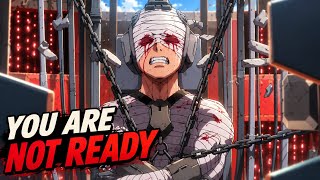

Top 10 Darkest Anime Ever
45sImmediately hooks viewers with a provocative list and promises of disturbing content, encouraging them to watch to see if their favorite dark anime made the cut.
▶ Play Clip"Delivers on the promise of dark anime, but the list is subjective and lacks depth; it's more of a surface-level overview than a deep analysis."
This video presents a curated list of ten dark anime series that explore themes of psychological trauma, body horror, revenge, and societal cruelty. Each entry is described with its core premise and the disturbing elements that make it unsettling, emphasizing the psychological cost on the characters rather than just graphic violence.
The video introduces a list of ten anime that are psychologically disturbing, featuring innocent people pushed beyond breaking points, horrific experiments, and situations where survival feels worse than dying.
Shuichi can transform into a mascot-like creature but discovers another person can climb inside and control his body. The story involves a violent mystery, trust issues, and manipulation.
Adonis, an apprentice witch, seeks revenge after his teacher Khloe is killed by humans who now persecute witches. His retaliation is ruthless, but revenge doesn't erase the loss.
Rachel wakes in a strange building with no memory. She partners with a killer named Zach to escape, but her unsettling emptiness and the building's design exploit the worst in everyone.
Shinichi's hand is taken over by an alien parasite named Migi. He must survive parasites that can disguise themselves, but the psychological cost is the gradual change in his own identity and emotions.
Lucy, a Diclonius with invisible arms, escapes captivity after a childhood of persecution and experimentation. The series shows the gap between who she might have been and who the world made her.
Takopi, a cute alien, tries to make a lonely girl smile but fails to understand the severity of her bullying and neglect. His innocent attempts make things worse, highlighting the horror of child suffering.
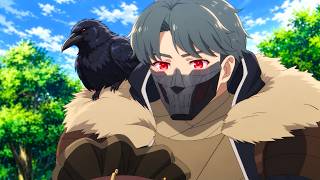
Keyaru, a healing hero, is abused and exploited. He uses future knowledge to exact a cruel revenge, becoming as disturbing as the trauma that drove him, offering no moral distance.
Rico descends into the Abyss to find her mother, but the deeper she goes, the more severe the physical and psychological consequences. The beauty contrasts with the brutal cost of curiosity.
Subaru can return from death but remembers everything, including the pain and the deaths of those he cares about. He must carry these memories alone, facing repeated failure and despair.
A young priestess's first quest turns into a massacre because goblins are underestimated. Goblin Slayer dedicates his life to exterminating them, showing that even 'weak' enemies can be deadly.
The video concludes that these anime are dark because they focus on psychological suffering and the moral complexities of trauma, revenge, and survival, often leaving characters permanently scarred.
Body as a Weapon
Introduces a unique horror concept where the protagonist's own body is used as a weapon by another entity, raising questions about identity and control.
00:54Societal Persecution
Explores the horror of an entire society deciding a group deserves persecution, a chillingly realistic theme.
02:20Identity Erosion
Highlights the psychological cost of gradual change, where the protagonist questions his own humanity.
05:01Innocence vs. Horror
Contrasts cute art with horrific child suffering, making the emotional impact more disturbing.
07:43Trauma of Repetition
Shows how the ability to redo events can be a curse, as the protagonist carries the memory of every death and failure.
12:23[00:01] dying doesn't guarantee you'll escape your suffering, where the monsters are terrifying, the people are even worse, and sometimes the most disturbing thing you can witness is what a human being is capable of doing to another. These 10
[00:15] whole different level. We're talking about innocent people pushed beyond their breaking points, horrific experiments, merciless revenge, and situations so twisted that survival can feel worse than dying. And the
[00:29] terrifying part, well, some of these characters never get the chance to even recover from what they've been through. And trust me, the last anime on this list will prove exactly what I'm talking about.
[00:54] most people question their sanity. He can transform into a giant mascot-like creature with superhuman strength. But this isn't some cheerful superhero warriors in the story because his ability drags him into a violent mystery
[01:07] where trust is dangerous, secrets can get people killed, and his own body becomes a weapon in someone else's hand. Things get even, you know, more disturbing when he realizes or discovers that another person can climb inside his
[01:22] transformed body and control it from within. His partnership with Clare becomes a desperate attempt to uncover the truth behind these strange powers. But every answer pulls them deeper into a world of manipulation and brutality.
[01:36] But what makes Glebner unsettling isn't the way the characters become entangled in situations where their own identities, morality, and survival are constantly put at risk. Shuichi doesn't
[01:50] simply have to fight monsters, but he has to figure out what he's willing to being trapped in your own body sounds bad, wait until you see what happens when the people experimenting on you don't consider you human.
[02:20] helped humanity at some point, technological progress has turned them into targets. Adonis is a young apprentice witch who who, you know, watches his beloved teacher Khloe become a victim of humanity's cruelty. Her
[02:33] death doesn't just destroy his world. It actually sets him on a path fueled by hatred and revenge. Adonis is then captured and imprisoned, but the people captured and imprisoned, but the people holding him have badly underestimated
[02:46] what they've unleashed within him. When he finally gets a chance to strike back and be free, his retaliation is every bit as ruthless as the world that created him. Yet, revenge doesn't erase what has happened to poor Khloe. It only
[03:00] gives his suffering somewhere to go. The Kingdoms of Ruin explores a particularly ugly kind of cruelty. What happens when an entire society decides that a group of people deserves to be persecuted? But Adonis is undeniably so dangerous. But
[03:17] the horrors that shaped him in the first place. Unfortunately, in the next anime, need an entire society behind them. Sometimes one person is enough to turn
[03:29] Sometimes one person is enough to turn someone else's life into a nightmare.
[03:42] strange building with no memory of how she even got inside. But each floor in this anime contains a different threat. And escaping means navigating a place where the people she encounters are anything but ordinary. Her most
[03:55] immediate danger was Zach, who was a violent killer who initially seems like the last person she should trust. Yet, the relationship between them develops into something far more complicated as they attempt to escape the building
[04:08] together. What makes Angels of Death work is just the constant uncertainty surrounding Rachel. She doesn't behave like someone who's simply terrified and desperately trying to get home. There's an unsettling emptiness to her. And as
[04:23] the story reveals more about her past, the reason for that emptiness actually the reason for that emptiness actually becomes increasingly um disturbing. Let's just say that. But the building itself feels like a prison designed to
[04:35] exploit the worst parts of everyone who is trapped inside. Every encounter forces Rachel to confront another threat, while the truth about her own life becomes way harder to ignore. >> What the hell? You've got to be kidding
[04:49] >> What the hell? You've got to be kidding me. This cannot be happening.
[05:01] discover that something has entered your body and is trying to control take control of it. But now imagine that the creature responsible can disguise themselves as ordinary people, walk among your family and probably kill
[05:13] without hesitation. Well, that's nightmare here for Shinichi, the protagonist of Parasite the Maxim, who faces when, you know, an alien parasite attempts to take over his brain. It fails to reach his target and instead
[05:26] occupies his hand, forcing Shinichi and the creature he calls Migi into an uneasy partnership. At first, the biggest problem is just survival. These parasites are so strong, faster, and capable of disguising themselves
[05:40] perfectly. But as Shinichi is pulled into their world, the danger becomes more personal. His body changes. His emotions begin to shift. People he cared about are placed in danger and probably even die. And he starts to question what
[05:55] separates humans from the creatures hunting them. The body horror is grotesque. It's bloody gory. But the psychological cost is truly what makes the series hit so hard. He has to survive a threat that doesn't want to
[06:09] kill him. It threatens to change who he is piece by piece. >> Your target killed 23 people in 5 minutes. She's vicious.
[06:26] invisible arms and a childhood marked by persecution, isolation, and brutal experimentation. But after escaping captivity, she suffers a head injury that leaves her with a radically different personality. and she ends up
[06:40] in the care of two young people who know absolutely nothing about her violent past. But Elf and Lied never lets you forget what Lucy is actually capable of. Its opening is infamous for its graphical violence, and the story
[06:54] repeatedly returns to the devastating consequences of treating someone as a monster from the moment they're born. The series, however, doesn't just excuse Lucy's actions, but it does force you to confront the cruelty that helped shape
[07:07] her. Her story is tangled up with so much abuse, loneliness, and the damage inflicted by people who believe they have the right to decide who deserves compassion. What makes it so tragic is just the gap between uh the person Lucy
[07:22] might have been and the person the world helped create. But every attempt at finding something resembling a normal life is shadowed by memories she cannot life is shadowed by memories she cannot simply leave behind.
[07:43] first glance, you might think Takopi looks like a cheerful little alien creature who has arrived on Earth to spread his happiness. Armed with a strange gadget and an almost childlike understanding of the world, he wants
[07:56] nothing more than to make a lonely girl named Shizuka smile. But the problem is Shizuka's life is nothing like the simple problems Takopi thinks he can solve. Nah, it's nothing like that. She faces bullying, neglect, and an
[08:11] environment where the adults who should protect their children are either absent or just they're failing them. Takopi tries to fix things using the logic of his own world, but his lack of understanding makes an already fragile
[08:26] situation much more worse. But the contrast is what makes the story so upsetting. The art can look really cute, and Topi's intentions are genuinely innocent, yet the events unfolding around him become increasingly
[08:39] horrifying. This isn't a story about defeating a powerful villain or escaping a dungeon or anything like that. Nah, it's about children trapped in circumstances that don't have the emotional tools to understand, let alone
[08:52] overcome. And as Takopi desperately searches for a way to make things right, the consequences of every mistake becomes well harder to undo.
[09:18] This anime is one of the most controversial fantasy anime. Well, for a reason. You know, Kayaru is a healing hero whose extraordinary ability should make him invaluable to his allies. But instead, the people around him exploit
[09:33] his powers and subject him to repeated abuse. Well, I I won't talk about the abuse, but if you watch, you'll you'll get it. But when he gains the opportunity to start his life over, he decides that he will never be powerless
[09:46] ever again. He uses his knowledge of the future to pursue revenge against the people who mistreated him. And his methods become as disturbing as the methods become as disturbing as the trauma that drived him. This is not a
[09:59] con conventional story about a hero overcoming adversity and becoming a better person. Cayaru's pain becomes the foundation of a revenge fantasy built around cruelty, manipulation, and extreme mature content. But the series
[10:14] is so difficult to watch precisely because it doesn't offer a comfortable moral distance from what happens. It's center it's it's central character is both a victim of horrific abuse and someone who inflicts suffering on
[10:27] others. >> That thing you grabbed is the organ it uses to sense the force field. >> That's its lifeline. And without conscious mind, you'd never even be able to touch it.
[10:43] The abyss is absolutely enormous. It's It's filled with mysterious chasm with strange creatures, ancient relics, and secrets that, you know, could change the world. But to young Rico, it's a place of wonder and the key to finding her
[10:58] missing mother. But alongside a mysterious robot boy named Regg, she begins a journey into the depths. The deeper they travel, the more dangerous deeper they travel, the more dangerous and wonders that they will find. Yeah,
[11:13] but the abyss operates by cruel rules. Descending can be relatively return to the surface causes increasingly severe physical consequences. Add in the creatures that can tear apart unprepared explorers and
[11:27] reveal how little the children understand about this place, and the expedition becomes a fight to stay alive. What makes Maiden Abyss so effective is the contrast and the horror. The world is breathtakingly
[11:41] beautiful. The music can feel magical and its characters are driven by genuine curiosity. And then the story shows you what that curiosity can cost. The suffering isn't just there to shock you. It just changes the characters, tests
[11:55] their relationship, and forces them to make decisions no child should have to make decisions no child should have to face.
[12:23] world and initially believes he stumbled into the kind of adventure people dream about. He meets new people, magic, and begins trying to find his place in an unfamiliar land. and then he dies. But instead of being allowed to move on to
[12:38] the next life, which he doesn't, Subaru actually discovers that he can return to an earlier point in time after death. Sounds like an incredible advantage until he realizes what it actually means. He remembers everything that
[12:51] happened, including every terrifying moment leading up to his death. The people around him, however, don't even remember the timeline. They don't they can't understand the thing that he's seen. And he's often he he has no way to
[13:05] explain why he's frightened or desperate. He has to carry the memories prevent the same tragedies from happening again. And the deaths aren't always quick or painless because Subaru is forced to experience failure failure
[13:19] repeatedly. Watch people he cares about suffer and confront situations where every possible choice seems to lead to another disaster.
[13:49] They're the creatures inexperienced adventurers go and hunt while preparing for bigger challenges. Goblin Slayer asks, "What happens when people underestimate them?" Well, here we have a young priestess who joins her first
[14:03] adventuring party, expecting a routine quest. Instead, the group walks straight into a massacre. The goblins they encounter are so vicious and coordinated and far more dangerous than the party expected. The experience leaves her so
[14:16] traumatized, and she learns how brutally and apparently simple missions can go and apparently simple missions can go wrong. But she's eventually rescued by good old Goblin Slayer, an adventurer who's dedicated his entire life to
[14:30] exterminating those vermins. He doesn't chase fame, treasures, or glory. His methods are practically ruthless and built around one obsession, making sure these creatures never get the chance to hurt anyone else. But the series doesn't
[14:44] just treat goblins as harmless cannon fodder. They're predators who exploit inexperience and overwhelm anyone who assumes they're an easy opponent. And yeah, that's why you should never underestimate goblins.
[14:59] underestimate goblins. Man, this series is crazy, I tell you.



⚡ Saved you 0h 15m reading this? Transcribe any YouTube video for free — no signup needed.