
The Real Money in YouTube: Ads vs Affiliates
45sReveals the surprising truth that AdSense is just a fraction of YouTube income, sparking curiosity about the real monetization strategy.
▶ Play Clip"Delivers on the promise of comparing the three models with real numbers, but the constant sponsor plugs and repetitive hierarchy explanation dilute the value."
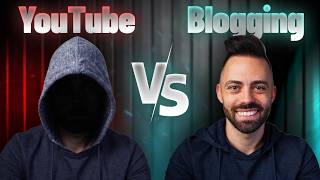
The video compares three popular online business models for 2026: faceless YouTube channels, AI blogging, and online courses. The creator, who has experience with all three, breaks down the real revenue potential, startup difficulty, and long-term upside of each, ultimately arguing that online courses have the highest monetization ceiling but only when built on a foundation of trust established through teaching on camera.
The video introduces three common online business ideas for 2026: starting a YouTube channel, creating an AI content site, or selling an online course. All are marketed as passive income opportunities that use AI and are scalable.
A YouTube channel with 100,000 views/month at a $10 RPM earns $1,000 from AdSense. Adding affiliate marketing (3 conversions/day at $100 commission) brings it to $10,000/month. A blog with 50,000 sessions/month at a $20 RPM earns $1,000 from display ads, but with 20 affiliate sales at $500 each, it reaches $11,000/month.
Unlike ads and affiliate marketing, where you earn a percentage of someone else's product, a course allows you to own the product and keep the entire profit margin. Selling a $500 course to 30 students generates $15,000/month, with full control over pricing, upsells, and customer relationships.
Success across all three models depends on a four-level structure: 1) Trust, 2) Solving real problems, 3) 12-month commitment, and 4) Choosing a monetizable niche. Trust is the foundation; faceless content has a structural ceiling on how much people will spend.
Content that solves a real problem (e.g., 'how to start a pressure-washing business') can be packaged into a paid course. Entertainment content has nothing to package. The key question: 'What specific problem does it solve, and what would someone pay to have it solved?'
Most creators quit in months 2-3. YouTube needs volume and typically takes 6+ months to hit its stride. Google takes 4-6 months to trust new blogs. Courses require an audience first. A 12-month commitment is essential to build a compounding asset.
Niches with strong affiliate programs and audiences willing to spend money (software, finance, health, relationships, hobbies) are fundamentally different from those without. If there are no affiliate programs and the audience doesn't spend, skip it.
The best model is a face-on-camera (or real voice) YouTube channel teaching a skill, combined with affiliate marketing and a course. YouTube videos act as free samples, affiliate links monetize from day one, and the course captures the full value of trust built over time.
1) Pick a teachable niche with monetization potential. 2) Start a YouTube channel teaching it (face or real voice). 3) Monetize with affiliate links immediately. 4) Build a course around month 4-6 using Thinkific. 5) Add an email list link to all videos and nurture subscribers.
The video concludes that online courses have the highest revenue ceiling, but only when built on a trust-based YouTube channel. The platform matters less than the hierarchy of trust, problem-solving, commitment, and niche selection. The creator recommends a 12-month plan combining teaching, affiliate marketing, and a course for the strongest compounding growth.
AdSense is just a signal
This reframes ad revenue as a byproduct of attention, not the main income source, which is a key insight for creators.
01:07Owning the product vs. being the middleman
The distinction between earning a percentage of someone else's product and owning your own product is a fundamental business principle.
02:37The four-level hierarchy
This provides a clear, actionable framework for success that applies across all content models.
04:44Problem-solving content is the only path to a product
This clarifies why entertainment content rarely builds a business, while problem-solving content can be packaged into a course.
06:41The winning combination: YouTube + affiliate + course
This is the core actionable recommendation of the video, synthesizing all the analysis into a single strategy.
11:34[00:00] If you're starting an online business in 2026, you've probably heard like one of three things. Start a Facebook YouTube channel, start an AI content site, or sell an online course, right? All three of these are promising passive income. All three use AI and all three sound scalable.
[00:15] But which one actually makes money? So in this video, I'm going to break down the real numbers, having done all three, the revenue potential, startup difficulty, time to income, monetization models, and the long-term upside, so you can decide which one is best.
[00:27] And I'll tell you right now, one of these three has a much higher monetization ceiling than the others, and most people pick the wrong one because they're optimizing for the wrong thing. So I'll demystify it in this video. Let's get into it. Before we do, make sure to click the link in the description below, get my AI Masterclass,
[00:42] give you all the prompts to create your entire content plan so you can get started once and for all. So first, when people compare these three different models, they usually look at the wrong numbers. So they compare AdSense, RPMs, display ads.
[00:54] They see that one pays a little bit higher. They call that the best one. So that's not really how a lot of this works. So let me show you the real math. Let's say you have a YouTube channel getting 100,000 views a month at a $10 RPM, which is reasonable average.
[01:07] So that would be $1,000 from AdSense per month. That's decent for passive income, but it's not life-changing, 1,000 a month. And the truth is, channels making real money for YouTube aren't primarily making it from ads, unless they're like huge million-view channels.
[01:20] So here's where it shifts. You add affiliate marketing to the back end. So if you're in the niche with strong affiliate programs, things like software, business tools, finance, online platforms, and even if you're driving like three affiliate conversions a day, $100 a commission,
[01:33] that's an extra $9,000 on top of that $1,000 in AdSense. Now you're looking at $10,000 a month from the same 100,000 views. So YouTube wins on back-end monetization. Ad revenue is just a signal, a byproduct of getting attention.
[01:45] The real money comes from what you actually do, what you sell, what you implement behind that attention. So that will matter soon. Now let's look at blogging. so same kind of math, a little bit different. Say you have a blog getting 50,000 sessions a month.
[01:57] Display ads to something like Mediavine might net you around $1,000 at a $20 RPM. Again, not that much money requires a lot of traffic. But blogging traffic's different from YouTube traffic in one way.
[02:09] There is more search intent. So when someone Googles, that's AI video editing software, they'll land on an article. They're already in buying modes. They're not passively watching a video. They're actively researching their purchase decision.
[02:21] that traffic can be more valuable than just ads. So that traffic converts differently. If you're doing 20 affiliate sales a month at $500 each, that's $10,000. You stack that with the display ads, and that's $11,000 from a 50,000 session blog.
[02:37] Now here's where the math changes quite a bit. So with ads and affiliate marketing, you're earning a percentage of someone else's product. So AdSense pays you a tiny fraction of what advertisers spend, pennies basically. Affiliate programs pay you a commission on someone else's price, like 2% to 5% for electronics,
[02:54] 30% recurring maybe for software. Useful, but you're always the middleman. Now, with a course, you actually own the product. You keep the entire profit margin. So, for example, if you're selling a $500 course to 30 students, that's $15,000 a month, right, all to you.
[03:10] So there's a completely different structure underneath it. You control the price, the offer, any upsells, the customer relationship. You can raise the price. you can add a higher tier. None of that's possible when you're promoting someone else's product.
[03:23] And it doesn't require as much traffic and you get more control. So the mechanics of actually selling a course are simpler than a lot of people think. You have platforms like Syncific that handle the hosting, curriculum, videos, checkout, the website, all of it. If you're interested in
[03:37] Syncific, you can get started with a 30-day free trial in the link in the description below. I really recommend them. It's a great tool I use. So it's almost kind of like three stages of revenue. You create content, whether it's YouTube videos, blog posts. You want ad revenue first
[03:49] because you don't have to do anything. You add a banner ad to it or you just join a YouTube partner program. Number two, you drop affiliate links into the YouTube description for products you're talking about in the video or inside the blog post. But third, to get the most leverage, you
[04:02] build your email list from your YouTube videos, linking to your email list, to your website, and then getting people into your email list to your blog And then they actually paying you for your own products So that one requires kind of the most work on the back end but you control the actual income that you making Because courses alone they not going to come with like built traffic
[04:20] A blog gets found on Google or AI. A YouTube video gets recommended in the algorithm. But a course sitting on Thinkific or something doesn't get found. You need that audience first. More specifically, you need an audience that actually trusts you.
[04:32] And that word trust is where this whole thing gets basically decided on. because on paper, all these models, they give you similar monthly numbers, but the thing that determines which one to actually choose has almost nothing to do with the platform
[04:44] and everything to do with this hierarchy that determines the success. So if I'm comparing Facebook content, blogging, online courses, it's not really about the model so much. It's about whether you can follow this hierarchy. So the creators who make the most serious money on YouTube,
[04:59] with blogs, with selling courses, they'll all three at the same time follow a simple four-level structure. So let's walk through it real quick. Level one is trust. So everything starts there. Faceless YouTube channels are genuinely trending. Everyone's doing it. AI voiceover, stock footage, minimal editing.
[05:15] It's an accessible model with a very low barrier to entry. But it skips over trust because trust is what actually converts viewers into buyers. People are going to buy something. When there's a real person that's actually behind the content, someone you've watched for months, whose opinion you value, who knows what they're talking about,
[05:32] the conversion rates on everything go way up. Affiliate links get clicked on more, community memberships, course sales most of all. Just think of it this way. Nobody spends $300 on a text-to-speech voice-over stock footage video.
[05:44] It just doesn't happen. Now, I know you might be thinking, I don't want to show my face. I'm introverted. But if you look at some of the biggest teaching channels, like tech and software tutorials, finance and crypto, or even drawing, painting, graphic design instructions,
[05:57] some are fully face-on-camera. Some barely show their face at all. It could be a screen recording with a real voice or hands drawing something or you're just in the corner of a tutorial, right? There's nothing to fear on that. What they all have in common, though, they can tell you there's a real actual competent human teaching, and that's the bar.
[06:14] So faceless is AI, mini documentary content. It can get views, but it has a structural ceiling on how much people will spend if they don't feel connected to the actual person creating it. So that's why when you look at the highest earning creators in any niche, the vast majority have a face, a voice, and a name attached to their brand.
[06:29] So number one, you have to become a teacher and you have to build trust. That opens up the door not just for ad revenue but also for affiliate revenue and eventually your own product sales. So this is where most creators fail.
[06:41] It applies equally to all three models. So the Internet is full of content that exists to fill a niche without solving an actual problem, like luxury watch lists, motivational quotes, best speeches in the world, videos with no actual useful information,
[06:55] content that can get views but it rarely makes any money. So problem-solving content is different, like how to start a pressure-washing business, or the best accounting software, or how to pass the AWS certification exam,
[07:08] are solving a real problem, people actively searching for a real answer, willing to follow a recommendation, or buy a program from someone who helps get them there. So if your videos teach people how to do something, packaging the complete system, a longer system, into a paid course is the natural next step.
[07:25] If your content only entertains, there's nothing to package into a product. It's that simple. So the question I ask about any piece of content, what specific problem does it solve? And what would someone pay to have that problem solved?
[07:37] If you can't answer that, the content probably won't build a real business behind it. A course is truly a transformation for the customer. Now, level three is a little uncomfortable, but it's important. So most people who start a YouTube channel, blog, course, they quit somewhere around the second or third month, right?
[07:53] The views aren't there. It's just not working. Nothing feels like it's working. The reality of all three models is you need content to get eyeballs on your stuff. YouTube needs volume. You need enough videos and the algorithm and data to actually get people to watch your stuff.
[08:07] Most channels don't hit their stride until they're like six months in at least with dozens of videos published. Blogging needs time for different reasons. So Google doesn't trust new websites. It takes four to six months for a new blog to find meaningful traffic.
[08:19] That just how the channel works and courses need an audience first which means the course timeline sits on top of the audience timeline so you can shortcut any of this stuff by building some tiny little thing that you not really trying with
[08:32] The great part about the timeline, though, is that as you start creating content, more videos, more articles, whatever kind of content you're creating, you start to learn the problems that your audience is facing. You start to spend time with your audience.
[08:44] You understand what they're struggling with, and it tells you and it gives you the time, as you're getting better at creating the content to create your actual product behind it. So you learn as you go. You see a ton of channels out there saying, like, the new farmer, the new baker,
[08:56] I did this new thing, I moved to the woods and I built this house. It's all about going from a beginner to an expert, right? Taking people through an experience and teaching as you go. So you learn as you go, which is great. And if you go in with a 12-month commitment,
[09:09] you understand that the early months are just an investment in building a compounding asset, you have a real shot. So now this is where the actual money is made or lost. before publishing any content. So not all niches are created equal.
[09:22] A niche with strong affiliate programs, products, and an audience willing to spend money is a fundamentally different opportunity than a niche without those things. So think about like software, marketing, career transitions, finance, credit cards,
[09:36] professional certifications, whatever it is. Every single one has affiliate programs that pay real commissions. Every single one has an audience that pays for outcomes. And the key filter here is every single one can support a course, a community, a product, because every single one is teachable. Even
[09:51] things like camping or playing a musical instrument, hobbies, are teachable. So you have to ask this though first. Are there affiliate programs in this space? And is the audience one that actually spends money? And could I eventually teach this as a structured program? If the
[10:05] answer to most of those is no, then you should skip that one. You've already made the hardest mistake and you're wasting your time. So overall, it's either health, wealth, and relationships where people spend the most money, or it's a hobby. So, for example, someone will spend a lot of money
[10:18] to lose weight, get in shape, their health, or to make money, whether it's crypto, investing, starting an AI business, starting a website, or relationships, that's another big one. And then it could be a hobby.
[10:30] Anything from gardening to fishing to kayaking to playing a piano, music, or instrument, people will spend money on a hobby. It's not quite as much as health, wealth, and relationships, but many niches work in this scenario.
[10:42] So really, those are the four levels. Trust first, solve real problems, do it for 12 months, do it in a monetizable niche. Now let's actually answer the question, which one is best? Let me give you the honest answer and then a specific playbook for this.
[10:56] So faceless YouTube can move fast in the short term. The algorithm can give you a spike of views on shorts and long-form views you can't get from YouTube. It's volatile month-to-month. The ceiling caps your back end.
[11:08] It adds and maybe some affiliate clicks. It's the model with the lowest ceiling. AI blogging can compound. Search traffic is stable. High-end time converts well for affiliate offers. But you're waiting six-plus months for traction.
[11:21] You're still monetizing mostly through other people's products. Affiliate marketing and AI is making it harder. And more people are consuming video than text. Now, online courses have the highest revenue ceiling of all three. You own the product, the price, the margin.
[11:34] But a course with no audience makes no money, which actually leads to the correct answer. The number one model is YouTube plus affiliate and courses. Not faceless, face on camera, or if you're not ready for that, the subtler version, screen sharing tutorial with your real voice, hands-on demonstration, or something like that.
[11:51] The teaching format where the viewer can tell a real person is showing them a real thing. And here's why this specific combination wins. Your YouTube videos are free samples of your teaching. Every tutorial proves you can get someone a result.
[12:05] That's trust being built at scale 24 hours a day. your affiliate link monetize the audience from day one. You just drop them into the YouTube description. You don't need a product to start earning. Tools you generally use in tutorials become natural recommendations.
[12:18] For example, in any niche, if you're teaching, people need products to do things. You can't golf without golf clubs. You can't build a shed without power tools. You can record a guitar without a digital audio workstation a laptop a guitar You get the point So think of your affiliate angle as what Amazon product category do you fall into And are there hundreds of products to promote not just one or two So an amazing niche could be backpacking tents hiking poles gear everything you can learn
[12:44] put in the backpack, how to hike trails, what are the best trails, all of that, lots of stuff. And a bad niche would be journaling. There's just a journal and a pen. So take that affiliate marketing potential into consideration. And then your course, your program captures the full value
[12:59] of that trust. The viewer who watched 10 of your free tutorials on YouTube and got results is exactly the person who will buy the complete system. So you're not selling to strangers, you're selling to people that actually know who you are. And remember what I said in part one, the real money is what you do with the attention. This is what you do. So ads pay you cents per
[13:15] viewer, affiliate pays you commissions per click, and of course pays you the full price of your own product sold to people who you build trust with by teaching them for free. So that's the latter. Core sales, affiliate income, and revenue as a bonus.
[13:28] So three income streams from one body of work. And to be clear on timelines, this is a 12-month commitment, not a 60-day one. The people who make this work put in audience building for months first. So here's what I do. I pick a teachable niche with real monetization potential.
[13:43] Software, business, finance, a hobby that you really enjoy. Something with affiliate programs and products. Something that people would pay to learn properly. Second, I start a YouTube channel where I would teach it. based on camera as possible because I know what it does for conversion rates.
[13:58] If not, screen recording and hands-on tutorials with your real voice. I'd use AI to handle the heavy lifting, research outline scripts so you can publish things faster, but use your own voice. Third, I would monetize with affiliate links immediately. So the tools you're demonstrating in the videos right away, you can join the programs and
[14:13] admin them. So that's income while the audience compounds. And then fourth, and the big one, somewhere around month four to six, once you have some comments and analytics to understand your audience, you build the course. And I build it on ThinkCureFix,
[14:27] the platform I mentioned earlier, and what I recommend the most. It builds your entire website. You just put the videos in, give students access to all kinds of resources, and it's just really simple. You can link to it right from your YouTube description. So you link to an email list, you
[14:40] build the email list, you sell your course. Very simple. You just host the video, take payments, launch. There's no coding. You can get started again with a 30-day free trial through my link below. So the platform costs really nothing much while you build it. And then again, the fifth thing,
[14:54] you add a link to join the email list and all of your YouTube videos. You can go back to all the old ones, update the description with the link at the top, and then you send emails. Email one, automated lead magnet. Email two is a little bit about your story. Email three through five is how
[15:07] you can get more support if you join the paid product. And AI is the acceleration layer through all of it. So like the research, script writing, course outlines, the stuff that can be done so much quicker than ever. But it doesn't change the strategy. You have to dictate the actual
[15:21] marketing strategy and the business behind it. So to bring it back to the original question, faceless YouTube versus AI blogging versus online courses, which makes more money? The honest answer, online courses have the highest ceiling, but only when they sit on top of a trust-building
[15:35] YouTube channel where you actually teach with your face, or at least your voice, doing some hands-on work. Faceless content and blogging can make money, of course, But teaching on camera plus selling your own course plus a affiliate on the back end is the faster path where you actually own the product, you own the audience, and it compounds the hardest.
[15:54] So the platform matters less than really the hierarchy that we talked about. Trust, solving real problems, a 12-month commitment, and a niche that people pay to learn. So if you get those four right, the model gives you the strongest foundation of all of it by a wide margin.
[16:07] So become platform agnostic. If a new platform comes along, you learn and you teach on that one. Build a real brand. So again, action plan number one, start your course platform for free. Grab the 30-day free trial of Thinkific with my link in the description below.
[16:20] Even if your course is months away, set up your account. You can start sketching your curriculum now, figure it out, create a website in that platform as a website builder too. Number two, get my AI masterclass. That's linked below too. It's got the exact prompts, the workflow I use to build the actual content engine.
[16:36] If you want help choosing your niche, building your first content plan with AI, it will help you with that. So I hope you liked the video. Please like it, it really helps a lot. Comment below with any questions, and I'll see you in the next video.


⚡ Saved you 0h 16m reading this? Transcribe any YouTube video for free — no signup needed.