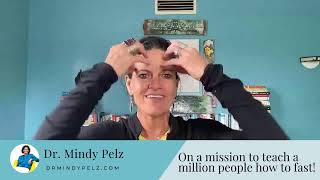

Why You Only Retain 10% of Health Info
60sReveals a surprising statistic about information retention, making viewers question their own learning and prompting them to engage for actionable advice.
▶ Play Clip"Delivers on the Q&A promise with practical tips, though some promotional filler for books and academy."
In this live Q&A session, the host explains how to incorporate 10 different vegetables into meals to support hormone balance through fasting. She emphasizes that fasting helps produce hormones, but feeding the gut microbiome is essential for metabolizing them. The video also covers fasting protocols for menopausal women and promotes her upcoming book.
Fast Training Week is designed to expand fasting knowledge and provide hands-on experience with different fasting principles.
People retain only about 10% of information they hear, which is why practical application is emphasized.
Fasting helps organs produce estrogen and testosterone efficiently, keeping levels age-appropriate.
Fasting alone isn't enough; hormones must be broken down for cellular use, requiring a healthy microbiome and liver support.
Plant-based foods feed gut bacteria that break down estrogen and other hormones.
The key is diversifying plant intake to feed different gut bacteria; the challenge is to include 10 different vegetables in meals.
Salads are a great way to incorporate many plants, but variety is crucial—don't stick to the same lettuce.
Using heritage and unique lettuces from farmer's markets can introduce new bacteria-feeding plants.
Including herbs like parsley, mint, basil, and edible flowers like nasturtiums feeds different bacteria.
The host has achieved up to 20 different plants in one salad by including various parts of plants, like sage flowers.
Choosing different colored vegetables (red, yellow, orange peppers) ensures a range of nutrients for different bacteria.
Mushrooms like lion's mane and artichokes are excellent prebiotics for gut health.
Adding spices, flaxseed, hemp hearts, chia seeds, and pumpkin seeds boosts polyphenols and supports hormone metabolism.
Sauerkraut adds probiotics; using various salts like Redmond sea salt is fine when insulin is low.
Using oils like flaxseed oil and chia seed oil can help build estrogen, especially for menopausal women.
Making a diverse salad takes about 20 minutes; prepping ahead can make it easier.
After a longer fast, it's crucial to feed the gut with green juices and prebiotics to support hormone metabolism.
The host mentions her upcoming book 'Fasting Like a Girl' and the 'Menopause Reset' book for more detailed protocols.
Women with cycles should time fasting to their menstrual cycle to support hormone balance.
Post-menopausal women can do 5 days of intermittent fasting (13-15 hours), 1 day of 24-hour fast, and 1 day of not fasting to raise glucose.
Progesterone production requires glucose; going keto all the time can disrupt cycles.
Fasting is only half the equation; feeding the gut microbiome with diverse plants is essential to metabolize hormones. Tailoring fasting protocols to your hormonal stage (cycle, menopause) is key for optimal health.
What percentage of information do people retain when they hear it?
About 10%.
01:14
Why is feeding the microbiome important after fasting?
To break down hormones for cellular use.
03:37
What is the recommended number of different vegetables to include in a meal?
10 different vegetables.
05:42
What is the 5-1-1 fasting protocol for post-menopausal women?
5 days of intermittent fasting (13-15 hours), 1 day of 24-hour fast, and 1 day of not fasting to raise glucose.
24:36
Why is glucose needed for progesterone production?
Because you cannot make progesterone while in ketosis.
26:01
What are two examples of prebiotic foods mentioned?
Artichokes and mushrooms.
13:43
What is the role of flaxseed for women?
It helps with estrogen production and breakdown.
14:57
Fasting vs. Metabolizing Hormones
Clarifies that fasting alone isn't enough; you must feed the microbiome to break down hormones.
03:37Diversification is Key
Emphasizes that variety in plants is crucial for feeding different gut bacteria.
05:2820 Plants in One Salad
Demonstrates that achieving high plant diversity is possible with creativity.
11:395-1-1 Protocol for Menopause
Provides a concrete, actionable fasting plan for post-menopausal women.
24:36Progesterone Needs Glucose
Highlights a common mistake: going keto all the time can disrupt cycles.
26:01[00:02] really excited to talk about it and i have a show and tell today so stay tuned we've ever done okay youtube facebook okay youtube facebook i am waiting for you to get on
[00:17] um let me know if you are on youtube right now or on facebook let me know if you can see me so that i know you're there
[00:29] okay we're gonna jump right into it while everybody's getting on vision with fast training week the purpose of fast training week is to play with the different principles of fasting and what
[00:44] i think is so interesting is that awesome thank you belinda on facebook i appreciate you guys saying on facebook and uh youtube thank you for letting me the purpose of fast training week is is literally to to expand your fasting
[00:59] knowledge and to have an experience so i'm not sure if you are aware of this statistic but when we hear information we only retain about 10 of it which is not very much and if you follow me i put out so much content if
[01:14] you're only getting 10 of it how is that going to move the needle forward with your health and the whole reason that i do everything i do on social media is to teach you all how to fast and how to find your rhythm with
[01:29] fasting so there are a lot of nuances to fasting and especially if you're a woman there are even more little tricks that we've got to put into action with fasting so fast training weeks are
[01:43] principles and this fast training week i'm focused on fasting and hormones my literally my so what i wanted to do today in this live is answer two questions that that
[01:58] were really common across all our platforms from a post that we made last um the first was how do i get 10 vegetables in in a meal because i've tasked you all with increasing your vegetables so i
[02:14] literally just got out of my refrigerator and i have a whole bunch of vegetables to show you like i literally just pulled out of my refrigerator all the things that i use
[02:27] to be able to incorporate more vegetables into my my diet and really when we say vegetables it really should be plants because you're gonna see that it's not all veggies some of it is are just plants that uh spices
[02:42] and salts and some oils and stuff that i'll see i'll show you but here's why that is so important for hormones and let me give information when we fast we are doing two things
[02:57] when it comes to hormones when it's estrogen and testosterone when when it's estrogen and testosterone when we are fasting we are in helping make it so that the organs that help with the production of estrogen and
[03:11] testosterone are working efficiently that your estrogen levels are age-appropriate that your testosterone levels are as high as they can be again age-appropriate um so
[03:24] that you can feel hormonally balanced but here's here's the problem is that fasting can help you with the production of hormones but you still have to metabolize the hormones you still have to break those
[03:37] so if we are fasting all the time and we're not feeding our microbiome we're not supporting our liver then you'll just make hormones but they'll never get broken down for cellular use
[03:51] so when we go to break a fast what i like to do when we're focused on like to do when we're focused on hormones is i like to focus on the plant world because the plant world is going to feed the microbiome in our gut that
[04:04] hormones so you have a set of bacteria in your gut specifically that break estrogen gut specifically that break estrogen down so we want to feed these bacteria
[04:16] we've used fasting as a tool to get the production of the hormones up but then we use food as a tool to help the breakdown of those hormones so i just really want to point out that both those principles need to come into
[04:31] action so what i'm going to do is show you how do we open up the diversity of the plant world so that we can feed the different parts of our microbiome that will metabolize hormones
[04:46] now the trick on this and and i just want to point out like men if you've hopefully you haven't clicked off of this live because you need to know how to break estrogen down you need to know how to break testosterone down this is
[05:00] not a woman hormones are not a woman only discussion go listen to the podcast interview i just did on the resetter podcast with john gray i mean he he gives a real interesting male perspective on testosterone so so go
[05:13] listen to that but when when we look at feeding the microbiome to break hormones down we've got to take into consideration that what your gut bacteria want is that they it wants a diversification
[05:28] and this is the hardest because we all get in our groove of eating the same thing over and over and over again so i tasked you all this week this fast training week with how do we
[05:42] improve diversification and we do that by choosing a variety of plants and i test you specifically with 10 different vegetables and the most common question was how do i get 10 different vegetables so i'm going to show you
[05:56] so the first thing i want to say on the this topic is that one of my superpowers and love languages to the people in my life is making salads i love salads for a variety of reasons
[06:10] um and when i when my kids were at home it was a great way to get i'll show you i put sauerkraut my salads i put seeds in my i put as many variety of things in there so it became like a full meal and it was
[06:26] a great way for them to get a meal plus vegetables so that's one of the reasons i love salads is as a mother it became a really cool tool that i could use to get all all the right things in my kids diet but i also like it because it's a great
[06:43] way to feed your your gut bacteria but this is the key you can't do romaine over and over and over again you can't keep doing the same salad mix iceberg lettuce because you have trillions of gut bacteria in that are
[06:58] ready to work for you they're ready to break estrogen down they're ready to make serotonin they're ready to make gaba for you they just need to be fed so when we're fasting what we do is we create this terrain in our gut
[07:13] that makes it so that when we add food in we can grow these bacteria that serve well so we do not want to miss out on this but we can't keep giving them the same foods over and over again
[07:27] so let's start with lettuces here is now i shop at a farmer's market but here's an example of the different types of lettuces that i use so this is a heritage lettuce that that spaden
[07:41] plows the if you live near me i don't think they they they um i don't think they ship outside of northern california but literally that you will find in my in my refrigerator all different kinds of unique lettuces
[07:55] so this one it came uh just as a heritage grain from a local farmer's um the other one that i've been using a lot is um and you guys have on instagram have probably been seeing me do this
[08:10] um this is a cabbage but it's a heritage cabbage i don't know if you can see it but it's got like a different color to it so i'll use this as a wrap like i i just did a post on instagram facebook probably went on all the community pages
[08:24] and i'll wrap like a wrap meat around this vegetables around it but it works really well as a substitute for lettuce but i i loved it at the market because
[08:37] it's heritage meaning that my gut microbiome probably hasn't seen this cabbage before so i'm always trying to pick unique versions of different lettuces um let's see if i have the i i i didn't
[08:51] have any of our lettuce in my in my refrigerator but i've got kale i do i'm refrigerator but i've got kale i do i'm not anti-kale um i add a purple kale and not anti-kale um i add a purple kale and a green kale i do parsley i do mint i do
[09:03] basil all in the same salad and i put it all all in the same salad and i put it all in there as opposed to just being um about 10 different vegetables at one meal you can
[09:17] one just by the lettuces of your salad but you have to think outside the box so when you pull out like a like a a spring mix how many are in that spring mix maybe
[09:31] four or five different lettuces okay now let's add some micro greens in it and these are all easy to add in you can in your i don't know i know we're a worldwide audience but you can add them in just easily bites in they come in
[09:45] like containers that you can just put in your salad so i start by looking at diversification of greens then what i do is i look at things like any
[09:58] kind like i'll put onions in there i um lately my local farmer's market has had these really interesting um garlic and i like it not only does it smell good but it's so thin that i can just cut it up and open it up and put it
[10:14] into my salad just as little pieces of garlic garlic i also in my salad don't don't fear putting flowers in your salad so this is going
[10:27] to feed a whole different set of bacteria so these are nasturtiums from my yard and then i don't know if you can see this but this is this was my flower bowl so these little purple flowers i also got from spade plow huge shout out
[10:41] to them we love them um and i'll put these in their edible flowers did this on easter not only do they look pretty but they're going to feed a different set of bacteria so it's the
[10:55] that matters now the other thing that i'll do is if you have a garden this is this actually came out of my yard this is sage so most people would just pick the le
[11:09] the sage lettuce or the piece and and get the sage smell but what i'll do is i'll take the flowers and i'll take these and just crumble them so they look like this they're like little
[11:23] pieces and i'll put that in the salad so now i'm getting multiple parts of the sage plant straight from my yard so every part of a plant is usable because different now i don't stop there like literally if
[11:39] i could get i think the most i've gotten in a salad is about 20 different types of plants but um i also let's see i'm a huge red but um i also let's see i'm a huge red pepper fan so but when i buy red peppers
[11:53] i don't just buy the red i don't like green so if i liked green i would buy green so if i liked green i would buy them i buy yellow i buy orange so i i try to keep making sure that each color
[12:05] of the different plant of the different vegetables is going to serve a different set of bacteria so making sure you're not getting in the rut of your favorite i mean i the carrots were like that forever i was just eating carrots all
[12:17] the time and then i realized i got a i got i need another go-to for that quick so a lot of times this is not a set up i'll put these in my salad but i also will cut these and wrap and mix them together with some raw
[12:32] cheese and put some salt on top of that and that is often times my go-to snack okay what else do i have for you the other thing this is one of my favorite
[12:44] is these snap peas so these actually sit out on my my kids were at home now there were empty nesters i still leave it out there as a reminder to eat the vegetables and get as many different greens in so
[12:59] you that can really help i'm also recently obsessed with mushrooms so we go to the farmer's market and we buy as many different types of mushrooms
[13:13] lion's mane right now is one of my favorite because of its ability to get the nutrients needed to your brain so i'll do lion's mane sometimes uh but also it's always about you know if i've been doing lines lion's mane too
[13:28] much then i actually will go and do a different mushroom so i'm always thinking about plants and how they're going to affect the microbiome okay not one of the best things for your gut bacteria are artichokes
[13:43] we've got them all over the place we grow them in our yard uh we've got about 20 of them right now so i need to have an artichoke party but really good for an artichoke party but really good for it's a great prebiotic um for your gut
[13:57] okay not done i'll show you what else i i do um so the other thing that you can do is spices count make uh adding spices to anything now when you cook spices you're probably
[14:12] going to kill them kill some of the polyphenol count in them but um i'll do spices a lot uh sprinkle them um on everything that i possibly can like red pepper i'll put some salt i'll put some spices uh i'll do some some grass-fed
[14:27] dairy now i'm coming at this from as many different angles as i possibly can okay not done this is the you want to know how to make a salad i'll take a picture when i get done with this live i'm gonna make a salad today for lunch
[14:40] it on uh the stories section of each platform um flaxseed okay women who are trying to get estrogen flaxseed i'll pour this on a salad um it's really good for breaking
[14:57] us for helping with estrogen production and breaking it down i do hemp hearts these i really like because they have some protein in them and i like the taste of them they're they're kind of they're a little sweet
[15:10] so i'll pour hemp seeds i'll pour chia seeds over the top um i even will put uh like pumpkin seeds sunflower seeds over literally it's like it's like a it's like i look at my salad kind of like
[15:25] some of you look at a smoothie where you want to put as many of the good things in the smoothie and blend it all up so when you drink it it you've got that nutrition i look at a salad as the same way but i look at it i mean specifically
[15:38] a salad is not only to in for my taste buds but it's to feed the microbiome so that the microbiome can do what it was built to do my other trick is sauerkraut so i'll put
[15:51] my other trick is sauerkraut so i'll put a sour i'll just open it up and i'll um put it out through the whole salads if you are not a sauerkraut lover and you try it and the salad it's not clumped together it won't taste as sour
[16:05] which is a really cool thing we also if you walk into our house right we also if you walk into our house right now we have like 15 different salts so we're a huge fan of redmond sea salts so definitely use them we use them in
[16:21] our house a lot i am not afraid of salt by the way and if you are i would ask you to revisit salt just so we're clear that the only time sodium really can start to cause challenges for
[16:35] blood pressure and cardiovascular situations is in the presence of high insulin so when insulin goes up uh and and your or your insulin resistant that's when sodium is going to be more of a problem
[16:48] with a fasting lifestyle is make ourselves insulin sensitive again also we found some artisan salts so this is like a salt with like an activated
[17:00] charcoal so we'll put that oftentimes just sprinkle that over our food put it on salads as well not done yet this is again the degree um the other one that i've been leaning
[17:15] into a lot on my salads is i don't just do over again i've been using some of the therapeutic oils from andrea's seed oils so the way that i do that
[17:29] is that i'll maybe put a little bit of olive oil and then i'll put it some of the five seed oils really good if i'm trying to build estrogen up um as a menopausal woman i'm always trying to build estrogen uh and get her at her in
[17:44] her glory as as much as a 52 year old woman can get estrogen mobilizing but this one's flaxseed oil so i'll mix it in with the regular olive oil uh i like their new chia seed oil is another one
[17:59] that i like so i tell you all this to say it takes intention and it takes understanding that when we fast we can balance estrogen we can balance testosterone we can get those
[18:13] surging at the age appropriate levels but that's only a part of the story so but that's only a part of the story so if you want to you then be able to feed the microbiome so you can use those hormones that you created or you
[18:27] hormones that you created or you magnified through fasting now let's feed so that we have this good diversification of gut bacteria so those can be broken down it does take time i mean i'll be fully
[18:40] transparent taking it making a salad is about a 20-minute experience for me just putting it all together sometimes what i'll do is i'll mix it all together and not put dressing on it and just put it in a container so that it's ready to go
[18:55] for another meal once you pull it all out and you do the work that you need but it once you've clued in getting these vegetable these plants into your diet is not that hard to do now what do we do
[19:10] on the longer fasting days so there's a couple of hacks is if like i just did this because uh if you've been following me we uh my academy and and i just went through a
[19:22] three-day water fast so the purpose of that three-day water fast was to balance my my gut out one of the purposes get a repair leaky gut get some stem cells reboot dopamine pathways like there were
[19:37] so many reasons i wanted to go on this three-day fast but then i was very intentional once i came off my fast to make sure that i was feeding the make sure that i was feeding the bacteria so that they grow and those
[19:49] hormones they're going to give me gaba they're going to give me dopamine really have a fighting chance to to survive and grow in my gut so i've been on friday i broke my fast
[20:03] thursday night on friday i was adding in a lot of green juice from organifi so i often will do green juice mixed with glow from organifi and put those together in water and make sure that i drink
[20:17] those at least one glass a day and if you look at the ingredients you'll see that they've done an amazing job of putting a lot of prebiotics in it a lot of different vegetables that your
[20:29] get so that was the number one question that you all had was how do i get 10 um in this this experiment that we're doing
[20:42] in fast training week so let me know if that expanded your view put it in the comments um so that i can know if that was useful i'm only here to be useful so i want to make sure you guys are getting the
[20:55] um i want to talk about menopausal women here in a moment if you're needing more work this if you're i love all the comments on facts and hormones again this is my jam
[21:08] uh the menopause reset book has some great information for women over 40. i've got facts like a girl will come out at the end of this month um and it's got a whole bunch of fasting protocols in it i've got a whole section on breaking a
[21:23] fast so i'm really excited for that book to come out so that you guys have more resources to tap into but i also have you can also come now into the academy on wednesday i'll be doing a q a in my academy specifically
[21:39] on my academy members questions from fast training week so if you're needing more more work with this material and you're and you're feeling like you want frustrated come come join me over there it's a great resource and we do a bunch
[21:53] together okay last thing um and thank you guys for your nice comments i i'm i'm looking at the ones i i just i appreciate it i you know what i
[22:09] i just i appreciate it i you know what i i'm here to help you empower yourself i'm here to help you empower yourself and uh i really strongly believe that we anybody that we should take control back ourselves and when we make that decision
[22:23] to do that there's a big learning curve and understanding how to do health um there's a lot to it go go listen to the live i did with leanne rimes on
[22:35] hear all the things that she did go listen to the live i did with dr sonja jensen on tuesday we talked a lot about how intricate hormones are so if you love this information stay
[22:50] and let's keep talking about it let's keep working it because really the goal of healthcare right now we've all been through a period where we've been in fear and frustration and
[23:02] not knowing where to turn and if there's one thing that emerged out of that is this idea that we got to control our own health i i don't know about you but
[23:14] i want to know as much about my health as possible so i never fall prey to the fear of a pandemic and to the people around me so um i throw that out there as a consideration
[23:26] okay so women in general if you have a cycle i really want to encourage you to use the with fast training week and time them to your cycle
[23:40] so it's officially we are calling it fasting like a girl again the book will be out in december um we have a whole course called the fasting circle in my academy you can come learn it right now
[23:53] but menopausal women i already have a program for you i already put it in a book it's a 28-day program in the menopause reset and i just mapped it out as simplistically as possible and what i would do is just start on day one
[24:07] and go down to day 28 if you want to do a 28-day a 28-day period of fasting um to rebalance all three of these hormones estrogen testosterone and progesterone
[24:22] if that doesn't is it you're not looking for a 28-day period then what post post-menopausal women can do meaning you don't have a cycle it's okay you don't have a cycle you're not supposed to have a cycle anymore this is where a weekly
[24:36] variation would work and i'm going to give you the simple way to look at this i've talked a lot about what we call a 5-1-1 days a week we're intermittent fasting to me that's a variation of somewhere
[24:50] between 13 to 15 hours one day a week you're stretching your fast you're going a little bit longer so this would think of those five days as those are estrogen building like the good estrogen they're helping raise good
[25:04] good estrogen they're helping raise good estrogen um in your body so um you can you can use those five days for estrogen and i would probably do a ketobiotic plan with that so that we keep insulin low
[25:16] one day a week you're going to try to raise testosterone and we can raise testosterone by fasting longer going into more of a 24 hour fast if you can do one day a week of a 24 24-hour fast not only are you bringing your your
[25:29] testosterone levels up but you're also creating stem cells in your gut so that you can break that testosterone and estrogen down and then one day a week you're not fasting and you're actually purposely
[25:45] bringing your glucose levels up and the reason you want to bring your glucose levels up and you'll see it as i talk about progesterone later in the week is that you cannot go keto and make progesterone
[26:01] post-menopausal women right now but i just want to stop and say that if you are a or have a regular cycle you've gone keto you've done fasting and you've lost your cycle it's because you didn't mind progesterone and
[26:16] you need to either go back to fasting with your cycle or you need to spend one day a week bring stepping out of ketosis bringing glucose up because that's you need glucose to make progesterone so with menopausal women yeah i mean we
[26:32] progesterone and estrogen that we did years ago but we can still mimic the the same principles so make sure one day a week you're not fasting and you're bringing your your nature's carbs up
[26:47] you're bringing your glucose up so that you have enough fuel to be able to make so you can do the 5-1-1 the way i just explained it you could do the 28-day reset that i lay out in the menopause
[27:00] reset that i lay out in the menopause reset if you are menopausal have a cycle these principles still apply we just need to do map it to your fasting to your menstrual
[27:13] that and um i cannot wait for this book to come out it it's it's literally everything i can tell you about women and fasting has been put in this book um and it will be the go-to manual for
[27:28] fasts in it i teach you how to break a protocols for like thyroid and autoimmune and i i'm just excited to have it in your hands so there you go
[27:42] that is to answer the two most common questions let me know if you like the show and tell i'll be back with more show and tell and on wednesday i will be show and tell and on wednesday i will be in my reset academy doing a q a
[27:55] so if you're wanting more questions answered come join us in the deeper that's what we're doing over in the academy is helping you take all the information from the free platform and figure out how to customize it for you
[28:11] so and thank you again appreciate all your kind words thank you for everybody who sends this out and just remember that you're i'm just delivering the information you're putting it into action so you get
[28:23] the credit you're the one doing the healing i'm just presenting the information to you so um keep don't give up on yourself keep um keep don't give up on yourself keep applying fail forward um and
[28:36] you got this i know that you got it and those of you in my academy i'll see you on zoom uh on wednesday and keep your comments on everybody on all the fast training week keep your comments going i i read them they inspire me and they
[28:50] know help me know what information you need next so mwah as always have an need next so mwah as always have an amazing day

⚡ Saved you 0h 29m reading this? Transcribe any YouTube video for free — no signup needed.