

Automate Everything with One Prompt
40sShows the core value proposition of dropping one prompt to orchestrate all subtasks, promising extreme simplicity and power.
▶ Play Clip"Lives up to the promise of showing the new Kanban update but includes community Q&A and self-promotion padding."
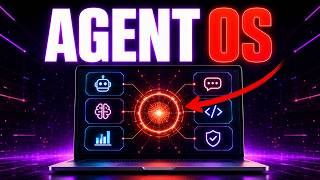
The video demonstrates the new Kanban automation upgrade in Hermes Agent, which allows users to drop a single prompt into a triage column, and the orchestrator agent automatically breaks it into subtasks, assigns them to specialized agent profiles, and manages parallel execution. The presenter shows how to set up the agent operating system (Agent OS) with a mission control dashboard, Kanban board, and memory layer, enabling seamless delegation of SEO content creation, keyword research, and website building.
Run 'hermes update' in terminal to fetch the latest version and skills.
In the Kanban board's triage column, enter a single prompt like 'Write a blog about AI SEO automation' to start orchestration.
The task appears in both the standalone Kanban and the Agent OS dashboard, which serves as mission control.
Kanban enables human-in-the-loop, parallel researchers, scheduled ops, persistent assistants, and engineering pipelines.
The orchestrator agent reads your goal and team profiles, breaks it into a project plan, assigns subtasks to specialists, and manages dependencies.
The Agent OS memory stores user context, so it creates highly tailored content, e.g., writing about OpenClaw because it knows your interests.
Multiple agents work simultaneously: researchers dig into different angles, SEO analyst runs audits, writer drafts content.
The orchestrator eliminates the need to manage each AI task individually; set one goal and the system handles the rest.
If a task fails, the system logs errors and blocks the task; agents pick it up on the next tick automatically.
The new Hermes Agent Kanban transforms a single idea into a fully managed multi-agent project, making AI SEO automation highly efficient with orchestration, memory, and parallel execution.
How do you update Hermes Agent to the latest version?
Run 'hermes update' in terminal.
01:18
What command opens the Hermes dashboard?
Run 'hermes dashboard'.
01:49
What is the role of the orchestrator agent in Kanban?
It decomposes a goal into subtasks, assigns them to specialist profiles, and manages dependencies.
26:33
Name two advantages of using Kanban over standard Hermes agent usage.
Human-in-the-loop and ability to have parallel researchers and scheduled operations.
08:42
How does the Agent OS memory layer improve content creation?
It stores context about the user's past work, enabling highly tailored content.
15:05
Memory Layer Creates Relevant Content
Shows how the system uses stored context to generate personalized SEO content without explicit instructions.
15:05Orchestrator Splits Tasks
Demonstrates the core automation: a single prompt becomes a full project plan with parallel subtasks.
26:33Debunks Manual Management Myth
Addresses a common pain point, showing that the orchestrator eliminates the need to micromanage AI agents.
31:58Self-Healing Feature
Highlights error recovery as a key reliability feature for production use.
34:29[00:03] Hermes Agent Kanban, which makes it super powerful for AI SEO. I'm going to automate anything, including AI SEO, using the new Hermes Agent Kanban. So, co-founder of Hermes Agent, who says that Hermes Agent Kanban just got a big
[00:20] automation upgrade. So, you can basically drop one prompt into the triage, and the orchestrator agent can take it from there, right? And basically what it does is all the subtasks necessary, and automatically assigns
[00:35] this. What that essentially means in English is that with the dashboard inside Hermes, you can basically drop in a task, and it'll create loads of subtasks using the orchestration agent to build and
[00:50] going to be testing out today and seeing how it performs. over to terminal here, and then from here we're going to make sure that we
[01:03] have updated to the latest version, so we can fetch the latest update from Hermes, as you can see, and then it can pull in the latest skills, so it can this just means that we update to all the latest skills inside Hermes, right?
[01:18] So, to do that, you do Hermes update inside your terminal, and that will update and download the latest updates for using Hermes Agent. Now, in terms of here, basically it's a multi-agent profile
[01:34] work together when we're doing this. So, let's try this out now. If we go to Hermes here, we can run this inside terminal, as you can see, and then we can open this up in a new chat, and we can say, "Okay, Hermes
[01:49] dashboard." Right? That opens up the dashboard for Hermes Agent. And then what we can do from here now is we can scroll down to Kanban. And with Kanban, we can create a new task inside the triage section, and
[02:06] that should start orchestrating this. Let's test this out. So, I'm going to put in a new idea here. So, let's say for example, I don't know, simple to begin with. So, I'm going to say, "Write a blog about AI SEO
[02:23] say, "Write a blog about AI SEO automation." with OpenClaw, right? And then we're going to try that.
[02:45] Right, we can also add that as part of another task or setup here, as you can see. And we can start working from there.
[02:57] as you can see, and this is even better, is you can actually build this into your agent OS, right? And so, this is an operating system, basically a mission control for managing all of your agents. You can see for example, I have
[03:11] like Claude here, I have Hermes agent, and we have a Kanban section. And so, orchestration features with Kanban and start plugging in the tasks and asking our agents to create them. Right? Pretty powerful stuff.
[03:27] So, for example here, you can see the the task we just created inside the dashboard shows up inside the Kanban, right? So, when we go to the Kanban section now, this is synced with everything else.
[03:41] because when I actually look at the setup, I can see that the Uh actually, this is working pretty nicely. So, now it it's there but it is working nicely. So you can see here that it has started to work
[03:57] on that task, right? So it says needs an assignee. here. So it's moved it to the ready section, right? And so basically
[04:10] this will automatically triage the task using the orchestrator agent and then is pretty cool. And you can see inside our agent OS over here. This is fully synced up to our board. So this is just like an operating system for managing
[04:24] every part of our SEO agents. So for example, we've got a section here where we can create SEO content. We can see the content we've created over here. And we've got the Kanban section, too. And so we can use this to start
[04:37] delegating and creating tasks using our AI agents. So let's say for example, I've got a new task here. I'm like, "All right, okay. Well, I want to create a new website built locally
[04:50] new website built locally in HTML AI automation. And just as a little test, let's say for example, it can just be a basic
[05:03] HTML website website that looks nice, right? Plus sends ordering community. Let's say for example, you were trying to create a
[05:18] we'll add that in now. We'll click add here. And that's synced into our triage section. So now the agents are going to start working on that task. Now it inside our Kanban board here. We've got
[05:34] this nice operating system. We can wait and then switch over to SEO and start go back to our Kanban task here. And you can see how it's beginning to be worked Now what I want to do inside Claude, Claude
[05:48] And you can build an agent operating system with whatever agent you want to use. So, I got Claude over here and the way that I set this agent OS up is I literally gave it the documentation and then it built that in, right? It said,
[06:02] I I gave it the documentation in terms of like what the Kanban automation involves, what it does, etc. How it works, etc. And then you can see inside the chat here is built out. And then we've got two tasks ready to work.
[06:17] So, number one, I'm going to ask Claude here, is the Kanban working? E.g., is it being delegated to Homie's agent plus being worked on?
[06:32] It seems stuck in ready. How do I see the progress? in ready. How do I see the progress? So, let's check on that.
[07:25] a great idea. But sometimes it can be a little bit buggy. I'm just being 100% honest with you. So, if you find that problem, you can always go into Claude or into Homie's agent and just say, "Listen, I've set up this task. Why is
[07:38] it not working?" Official says, "Hello, bro. Good to see Official says, "Hello, bro. Good to see you. Thanks for joining here."
[08:02] As you can see, it's fixing that over there. do with this stuff, right? So, you've got two different ways that you different ways now cuz you got the agent OS.
[08:15] So, the agents can drive the board through a dedicated Kanban tool set if you're using and speaking to Hermes agent likely. Or, you can use the board directly, which is
[08:28] what we did with the agent OS, right? And so, it can work through through terminal with Hermes agent or it can work directly through Kanban, too. can work directly through Kanban, too. Now,
[08:42] of delegate tasks wouldn't. So, if you're using Hermes agent normally, Kanban that you wouldn't do with, for example, something like uh the normal sort of way of using Hermes agent. So, for example, you can research
[08:57] triage, right? You have parallel researchers, one analyst, one writer example of an agent team. You could also, for example, have scheduled operations. You could have recurring daily briefs that build a journal over
[09:09] weeks, right? You could have, for example, persistent named assistants reviews that accumulates memory over time. You could have engineering pipelines. So, you know, you could have multiple agents working in parallel
[09:23] together, or you could have, for example, one specialist managing like multiple different accounts or websites and that sort of thing. So, you might be saying, "Well, why would you use the Kanban instead of just
[09:35] Hermes agent?" Well, it's quite different. So, process. And also, you have this human in the loop system with Kanban that you
[09:47] don't have with Hermes' agent normally, which is pretty cool.
[10:15] now into the agent operating system. So, we can also assign this to different here. And if we want to give this to an agent, we can just select it from the assigned section here. So, let's try this out now.
[10:38] which is my Hermes' agent for writing content.
[10:56] So, the task is actually running, which is great. see here, is it moved from ready over to running, because we assigned that task
[11:08] to our AI agent, which is this one over here, right? And it's already working now, which is pretty cool as well. If we want to get the other task running, so for example, this one, we can just switch this over, and we can
[11:21] assign this to to say Julian as well, right? And so, what that will do is it will move from ready to running once it syncs over, right? Which is pretty cool. So, you can see it now has moved over to running here, right? Now,
[11:37] one thing that you can do as well is you can see the status here. So, you can see the events used, etc.
[12:04] see the run history of the tasks as well, which is great. You can block it. You can mark it as completed, etc. And you can also see what it's done, right? So, it says latest handoff summary produced a
[12:17] complete original 1,350-word blog post called AI SEO automation with blog post called AI SEO automation with OpenClaw covering all requested stuff. File saved to workspace here. Right. Now, if we put a comment on that
[12:31] and we say, "Where is the content?" It should reply to us in a minute as well.
[12:56] been moved automatically to done. So, basically the agents Wow, that was so fast. The agents go through the task, create it as you can see. We give it the details, and then it works from there. And we can see the log. We can see
[13:10] One thing that would be super useful on this is like if you can actually see the outputs, which is what I'm going to do in a second.
[13:22] is to use than if you were to use this inside terminal without using OS. If we went into a new terminal here and we put this in we like that is if you're just using the terminal to
[13:36] manage your Kanban. Whereas with this process, you can see it's nicely organized. It's a nice UI, it's easier to organize and
[13:48] between everything. Right, and we can see all the tasks have been completed inside the chat right here, which is pretty awesome.
[15:05] there. The really crazy thing about this is I didn't ask it to create content around Open Claw, but because it has a memory layer built into the memory layer built into the uh agent OS, it knows okay, right,
[15:18] that'd be a great blog to create for people watching. Um let's create that, right? And so like it creates this whole blog Kanban board. And it did it directly
[15:33] because it understands and has context about us, which is pretty amazing. Agent OS, which is what I'm doing this over here, is we are creating a
[15:46] workspace file viewer. So any sort of files or blogs or, you know, websites files or blogs or, you know, websites that I create inside the Kanban board those created, right? Which is pretty amazing. Let's see what we got inside
[15:59] the questions. Best laptops for running local models. I people praising recently is like a DGX Spark. great. You can also use like a Mac Studio, but again, like local models are
[16:14] not that great. I don't like them that much, right?
[16:28] you remember or not, but if you type in Hermes course here, you can find like a full course on Hermes inside this section. So you can just use the search bar here, type in Hermes course,
[16:42] there. So you can see the full course here. course. But if you want like new advanced daily updates, then you would go to this section over here. All right, that should be set up right
[16:55] here as well for the Kanban board. So let's try that out.
[18:30] is like you can really build an the AI assistant team using this process, right? So, with this operating system, what you've a powerful way to build an infrastructure
[18:43] that runs everything for you, right? And you just become a machine that's running 24/7, right? So, you set the direction and the machine implements everything. And that's what this operating system looks like, right? So,
[18:56] you might be wondering, okay, what is an agent operating system? So, if you're using, for example, the terminal here,
[19:12] right? And it's the same way as using like chat GPT or something like that. you know, Hermes in another, etc., right? And orchestrate all your agents when you're doing that, right? Nothing really links
[19:26] saved. You can't really see the chat history. You definitely can't see the So, when you're using this process instead,
[19:39] setup with all of your agents in one place. You got Claude, you got Open Claude, you got Hermes, everything working together nicely. one place, right? I can even, for example, go to my studio, I can go to
[19:53] section as well, and everything's saved in my history as well, which is really here. Mamit says, "Very nice." Appreciate it. Mamit says, "Very nice." Appreciate it. Happy to help.
[20:18] an agent operating system?" Well, your computer has an operating system, right? programs. It runs everything in the background without you telling it to An sort of thing, but for your business work, right? So,
[20:31] it has the mission control dashboard. It has all of your agent profiles. It has a Kanban board, which you've seen, the task delegation orchestration engine, have the self layer, which is the memory system that makes your agents smarter
[20:44] over time. So, for example, when we were creating SEO content, the reason that it knew to create content around Open Claude is because it has this map of me everything that I do, and you know, all the people in my life, and what I do
[20:57] day-to-day, etc. Nice context, really awesome machine with all my memories. And so, it can pull that data, look at what I've worked on recently, and then use that to create AI SEO content that's really tailored to
[21:11] me, right? Which is super useful. So, let me show you an example of that. Like, if we look at these four websites, Hermes, Claude, etc., they can all deploy to Netlify for me. And so, when I'm creating SEO content,
[21:26] we can deploy directly to our websites. It's pretty simple and easy to do. And you can see the trajectory of these websites as well, right? Like, this one has gone from one click a day all the way up to uh 95 clicks per day
[21:39] with AI SEO, right? It's ranking for some nice keywords. This one, too, you know, similar sort of trajectory. It was at zero clicks a day. Now, it's at 71 clicks per day, right? And this one, too. This was uh basically 15 clicks a
[21:54] day, and it's it's grown all the way up to a peak of 1,134 clicks per day, right? And so, these websites are using this process I'm showing you to create to make it as good as it possibly can be, and also to make it as useful as it
[22:09] can be, as well. >> [snorts]
[22:31] create content, it's really easy to assign the task to our agents. Our agents can publish our websites. We can give them new websites to create. We can create new content, new ideas of clusters of content to
[22:44] navigate. The really cool thing with this Agent OS system is that we can actually use it to generate SEO content directly with this section, right? And so, what this section actually does is we just
[23:00] plug in our keyword. We pick the case study that you want to use, and then it goes off and deploys it, which is pretty nice as well.
[23:34] So, you want to. You can manage them from the dashboard You can do these quick start commands inside the
[23:48] CLI, as you can see. And you can say, "Okay, Hermes Kanban it'll go off and create it. And you can assign it to, for example, your researcher or whatever you want. If you want updates, you can launch Hermes
[24:01] watch the Kanban list. And you can also see the boards, right? So, you can do Hermes Kanban list or Hermes Kanban stats and get the latest information on stats and get the latest information on it there directly, too.
[24:52] even have a studio inside the Agent Auth system that we can create images, videos, text to speech, etc. We can manage a Kanban board. We can go over here, plug in keywords, and see our history of deployed content as well.
[25:07] It's just really easy to organize everything right in one place. So, essentially, you open the mission control, you go to the Kanban triage
[25:24] column as you can see right here. You type one sentence, one idea, one goal, job in this entire operating system, right? You are the owner giving the handles the implementation from there, right? So, let's say for example here,
[25:39] I'm like, okay, I'm going to assign this task to Julian, Hermes agent. Um we're going to say, okay, create
[26:00] a keyword research plan for my AI automation blog. related to Open Core and Hermes agent topics. Right? We add that in. That's going to add it inside the triage
[26:15] automatically going to do is triage the task and move it over to ready and task and move it over to ready and running once it's ready to go.
[26:33] phase two is really like the split. So, the orchestrator agent looks at your goal, reads the sentence you gave it, looks at every agent profile you've built and their descriptions, and thinks, okay,
[26:45] task? It breaks your idea into a full project plan. It creates little tasks It decides what runs in parallel and what runs in sequence as well. So, it specialist profile as well. It links the dependencies as well, so nothing starts
[27:01] before it should. And your one sentence becomes a fully structured project, as you can see, right? So, you see how we said, "Create a keyword research plan for my AI automation blog here."
[27:14] You see how it's assigned these tasks to other AI agents, and we've now got a other AI agents, and we've now got a running section, right? And so, it split the task of keyword research into three tasks, which is map the core topics
[27:28] Home as agent, generate keywords and long-tail variations, and then define evaluation criteria and data sources. And so, these are running in the background to complete this task over here. So, this will still be in the
[27:41] to-do list until it's completed, and then it'll be moved to done once it's system for just having a team of AI multiple profiles with multiple specialties inside your Kanban board,
[27:54] this is how you can operate them. And so, we've talked about step one, which is the push, right? So, you give it a task inside the Kanban. Phase two is the split, so the orchestrator agent
[28:07] decomposes the goal, and then splits out tasks, right? And you can see which is awesome. And there's just one more task that's running. you've got the roots, right? So, tasks go to the right specialist. So, each
[28:23] for it. So, your research profile gets the research tasks, your writer profile gets the writing tasks, your SEO analyst profile gets the SEO tasks, your ops right? And so, the routing happens based on the profile descriptions you write
[28:37] how to set up profiles for your AI agents,
[28:50] that right here, right? In terms of how to create different profiles for your AI So, basically, all you do is type in Hermes profile create inside your terminal, and then you name the agent, right? And then to set up, you run this
[29:03] command. But, we've got a full setup guide and video tutorial on that right So, that is completing the task, as you can see. And then your agent implements in parallel, right? So, you saw before we
[29:15] had three running tasks, two have been completed. This one is running right now all running in the background, pretty simple and easy, right? And so, multiple agents work simultaneously. The researcher digs into angle A. The second
[29:28] researcher digs into angle B, right? The SEO analyst runs an audit. The writer is task you give it. And so, all of this happens at the same time on the same the researchers finish, the outputs get passed to the writer automatically. The
[29:44] handoff and implement. And so, the board tracks every heartbeat, every update, whole thing in mission control without touching a task, which is literally what touching a task, which is literally what we're doing right now.
[29:59] if we click into this task, for example, we can see the completed run history of the completed task, right? So, you can see that right here. We'll open up It's written in markdown, so I'm going to open up in a previewer.
[30:14] You can see that it's come up with the core topics for our keyword research, core topics for our keyword research, right? And so, pretty amazing. So, every agent closes with a structured
[30:30] handoff. What changed? to know next, etc. Um, and you can just see everything is absolutely amazing, right? Same for this section. You can see the document
[30:47] over here. You can save it, copy it. You can plug that into Markdown Live You can plug that into Markdown Live Preview if you want to check out. long-tail variations for AI automation, open core Hermes, the full structure,
[31:01] clusters, right? So, for example, you got Hermes agent architecture and then Building and maintaining custom skills underneath that, right? So, it's planned out the website step by step in terms of
[31:15] keyword research, and we can just preview and manage that inside our our Kanban board. So, it's a really powerful stack. better and all that. It's about building an operating system that implements 24/7
[31:29] even whilst you're not there, right? And so, it's kind of like a, you know, the agent OS is kind of like a company and you are the CEO. You set goals, you review results, you give direction, and the
[31:42] mission control dashboard is your boardroom, right? So, you see everything across your agent teams, tasks in triage, tasks in progress, tasks blocked waiting on your input, etc. So, that's basically it.
[31:58] people say, "Well, you know, I need to manage every AI task myself to get quality output." As you've seen, you know, this all works in the background with a team of AI agents. The keyword research was amazing. And so,
[32:11] orchestrator agent manages your entire team. You just set the goal, right? So, to AI agents one by one, you're operating the old way, right? The orchestrator profile exists specifically so you never have to do that. You write
[32:24] one goal, and the orchestrator reads your team profiles, builds the task job is just to set the direction, not Right? And you can see the tasks has been completed. It's inside the ready
[32:37] off here. These were the the subtasks that were built on the side the Kanban board. And we've got everything ready to go. Pretty amazing.
[32:52] complex to set up. Honestly, like I mean, I can understand that. itself, right? So, every time a new update comes out like this, I can just
[33:06] into my system, right? I can set up a new section of SEO. I can If Grok 4.3 comes out with images, video, speech, I can stack them right here, right? If you want just my system, you know, if you want files that I've used to create
[33:19] that inside the Air Profit bottom here as you can see. And literally, you can get all the prompts that I used to create it. Plus, you can get the zip file with all the documents for for actually creating it,
[33:34] file and then just give it to your agents and be like, "Hey, create this, right? Based on these screenshots." So, it's pretty cool.
[33:47] unreliable. You know, they break and I have to fix everything manually." The Agent operating system has a self-healing fixer and improver, right? So, if a task fails repeatedly, it also blocks with
[34:01] the errors and clearly logged. You see what failed when and why. And that'll be inside the block section here as you can see, right? And so, you can add a block and the operating system just picks it up on the next tick. That's
[34:14] picks it up on the next tick. That's basically it.
[34:29] way to delegate tasks and orchestrate them across all of your AI agents using memory as well, it's going to be 10 times better simply because it work on, and it's going to have way more context. When you give it tasks, it
[34:42] it goes off and organizes it on the Kanban board, as you can see, right? If you want the full system from me, all the prompts, etc., you've got that I'm actually going to add a new section inside the AI SEO automation part here.
[35:39] If you want the actual prompt that I used to create this,
[35:53] You can ask questions inside there. You can connect with me personally. Um we we do four weekly coaching courses as well. You can jump in the classroom, get all my best trainings. Um that's all inside the here. Also, if you want a
[36:05] free one-to-one SEO strategy session that shows you how to get more leads, traffic, um from Google rank number one inside AI and search engines, then session. That's available at goldie.agency. You'll get a free SEO
[36:19] custom-tailored link building plan to generate more leads um and sales from secrets of SEO link building. You'll be able to ask any questions on the call link building strategies for your website. Link in the comments and
[36:32] description will go to goldie.agency. So, let's answer some of the questions So, let's answer some of the questions from the community as well.
[36:46] So, Jean says, "Uh where are the NA10 templates?"
[37:09] "Julian is going viral. Let's take this Let's have a look at this." Oh, look at that. Wow, that's pretty cool.
[37:47] Thanks for sharing, Jose. Let's see what else we got here. are sharing, you know, all sorts of interesting stuff inside here as well.
[38:00] people are sharing like the MCPs and the the GitHub open source projects they're working on. It's pretty amazing.
[38:56] working. So, I use Manas every day. Hermes is not as good. Hermes is not as good. This is interesting. I would say the outputs here that I see probably depend on the
[39:16] quality of the API you use, right? So, for example, if you're using Manas, and you've got probably Claude inside there creating content, inside Hermes, the content is not going to be as good. But, one thing that I'd
[39:31] to be as good. But, one thing that I'd recommend is that you creating content so that it understands exactly how you want your content exactly how you want your content created.
[39:46] So, for example, if we go back to like the section, brand history, and we'll see created. This content is written exactly how I
[39:59] studies I give it because I've trained it up on the skill.
[40:12] Hermes agents to create better content, I'll give it the exact prompts and the then I'll just keep tweaking and improving over time. But yeah, it takes improving over time. But yeah, it takes a little bit of time to do that.
[40:40] whether you use Mana or whether you use Hermes, it's all about finding what's prefer Mana, there's nothing wrong with that and you can just keep going with that and you can just keep going with that.
[41:34] answer your questions, just like we've done today with a video tutorial and you know, a summary if you don't have time to to actually watch the video tutorial, down into a quick answer as well for you, then you can post your questions
[41:49] inside the community and always happy to help. So, Oflo says, "I'm from Paris. How are you?" I'm doing great. Thanks for you?" I'm doing great. Thanks for joining. Bonjour.
[42:05] and rolling." Just get it done today, man. That sounds good. you know, with all the difficulty of setting up open If you find it's
[42:20] difficult to set up open claw or Hermes, I would just go into something like I would just go into something like you know, Max Hermes or Max claw well, like one click. So, if you find this stuff difficult to set up, you can
[42:34] always go over to something where it's cloud hosted and they just do all the hard stuff for you. That might be a good option. And Brian says Kanban. Yeah, absolutely. So, we've just covered a full session on
[42:47] how to use Kanban to automate basically anything using these teams. And once you give it a load of tasks, and they're all marked as completed here, right? So, you can see all the tasks right here. We can view the history inside this Agent OS
[43:00] system, and it's super easy and simple to set up. So, that's basically it for the training today. Thanks for watching. I'll see you on the next one. Cheers. I'll see you on the next one. Cheers. Bye-bye.



⚡ Saved you 0h 43m reading this? Transcribe any YouTube video for free — no signup needed.