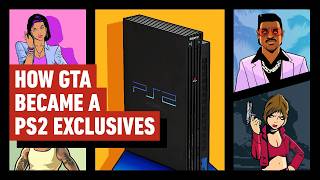

The Secret Deal That Made PS2 a Legend
60sReveals a little-known backstory of the PS2's success, appealing to nostalgia and gaming history buffs.
▶ Play Clip"Delivers a detailed, insider account of the GTA-PS2 exclusivity deal, matching the title's promise with substantive interviews and new details."
This video details the behind-the-scenes story of how Sony secured timed exclusivity for Grand Theft Auto III, Vice City, and San Andreas on the PlayStation 2, a deal that significantly boosted PS2 sales and solidified its legacy. Through interviews with key executives from both Sony and Take-Two, the video reveals the negotiations, financial terms, and personal relationships that made the deal possible, as well as the near-miss with Microsoft and the eventual global expansion of the agreement.
The deal was sparked by a chance conversation at a London pub between Chris Deering and Sarah Thompson, who flagged GTA 3 as 'really cool', putting it on Sony's radar for potential exclusivity.
Chris Deering was motivated by the upcoming Xbox launch and the desire to win a second console generation in a row, a feat never before achieved. He saw exclusives as crucial to staying ahead of Microsoft.
At a meeting at the Sunset Marquee Hotel in West Hollywood, Sony and Take-Two discussed a potential exclusivity deal. Sony's Zeno Colasso claims the deal was offered as a 'bone' to smooth over a content dispute, while Take-Two's Kelly Sumner disputes this, saying Sony needed the deal more.
The starting point was a $1 million co-marketing budget for GTA 3, later expanded to include cash upfront and a reduction in production costs of around $3 per disc, potentially saving Take-Two over $25 million on GTA 3's 8.5 million PS2 sales.
The deal was not purely financial. Both sides shared a vision for mature games and a mutual understanding. Take-Two felt Sony understood their edgy content and wouldn't meddle, while Sony saw Rockstar as fitting their goal of making gaming relevant for adults.
The deal for GTA 3's two-year console exclusivity was finalized over an evening phone call outside a Chinese restaurant in Windsor, England, with David Reeves.
Initially, the deal was only for Europe. Sony Computer Entertainment America was ambivalent until they saw GTA's sales impact, then joined the deal at the last minute, expanding it to a global agreement.
Microsoft had previously rejected a pitch to put GTA 3 on Xbox in 2001. Kelly Sumner believes a deal with Microsoft was never going to happen, as they didn't understand Rockstar's vision and the relationship with Sony felt more comfortable.
Sony provided extensive support, including sending 20 rare PS2 dev kits to help Rockstar transition from Dreamcast development, and offering a testing facility at their London HQ. This hands-on support made developers feel like part of a family.
The exclusivity periods for Vice City and San Andreas were shorter than GTA 3's two years: one year for Vice City and seven months for San Andreas. The financial terms for these later deals were significantly larger, reflecting GTA's growing popularity.
Take-Two deliberately kept the product supply tight, shipping only 600,000 units when demand was 1 million, to create scarcity and drive sales. This, combined with the controversy, fueled GTA 3's cultural phenomenon.
Chris Deering estimates the GTA exclusivity boosted PS2 sales by about 20% in Europe. The video concludes that while the PS2 would have been successful without GTA, it likely wouldn't have been as successful, as GTA was fundamental to the console's cultural appeal.
The GTA exclusivity deal was a pivotal moment for both Sony and Take-Two, driven by a combination of financial incentives, strategic alignment, and strong personal relationships. It not only boosted PS2 sales significantly but also cemented GTA's legacy as a cultural phenomenon, demonstrating the power of platform-exclusive content.
Sony's Hidden Motivation
Reveals that the fear of Microsoft's Xbox was a key driver for Sony's aggressive pursuit of exclusives, a strategic insight into console war dynamics.
02:47The $1 Million Starting Point
Provides a concrete financial figure that anchors the negotiation, showing the scale of the deal from its inception.
05:13Relationships Over Money
Highlights that the deal's success was rooted in mutual trust and shared vision, not just financial terms, a lesson in business partnerships.
06:35Scarcity Marketing Strategy
Take-Two's deliberate under-shipping of units to create demand is a classic marketing tactic, demonstrating how perceived scarcity can drive sales.
14:57The PS2's Dependency on GTA
The quote 'it's a piece of plastic unless you have something like Grand Theft Auto on it' encapsulates the critical role of software in hardware success.
16:48[00:02] it's a piece of plastic unless you have something like Grand Theft Auto on it. something like Grand Theft Auto on it. >> Take a seat, kid. Take a goddamn seat. >> 15 years. Seems like only yesterday. >> A [ __ ] Here we go again.
[00:15] >> Pints of beer after work in a cozy London pub. A glass of wine in the evening at a villa in the Sunset Marquee Hotel, West Hollywood. A phone call in the dark outside a Chinese restaurant in Windsor, England. These three desperate
[00:28] scenes, all more than 5,000 mi away from Sony's headquarters in Tokyo, were backdrops for a decision that helped define the PlayStation 2. >> We were keen to to get into bed, so so to speak, with and work alongside Sony.
[00:41] Whenever we asked for something, they would give it to us. Auto. >> The PS2 is the bestselling console of all time for welldocumented reasons. its massive library, its head start on
[00:53] Microsoft's Xbox, its midlife price cut, and its affordability as a DVD player. But the deal that bought a trio of Grand Theft Auto games, GTA 3, Vice City, and San Andreas to the PS2 before any other platform was also vital. They
[01:07] collectively make up three of the conso's top six sellers. Some people bought the PS2 just to play GTA, and if you didn't have one, you were begging a friend who did to let you play. >> Hey yo, just drop in. We all hanging
[01:20] out. Chris Daring, the then president of Sony Computer Entertainment Europe, estimates the deal boosted console sales in Europe by a fifth, a huge margin. the key meeting at the Sunset Marquee Hotel before, but IGN has now spoken to
[01:35] can tell the story in more detail than ever. They reveal previously unknown How Sony nearly missed out on Take 2 got a discount on production costs from Sony. And how Microsoft could
[01:49] have derailed the whole thing. This is the story of how Sony secured PS2 the story of how Sony secured PS2 exclusivity for Grand Theft Auto.
[02:07] decently, but scored middling reviews. And so Sony's interest in GTA 3 was only sparked by a chance conversation when Chris Daring met with Sarah Thompson, a colleague who oversaw PlayStation's third-party game evaluation. We used to
[02:20] have these company pub nights. It gave me a chance to deal with people I would never talk to and asked them some dumb questions. I said, "You seen anything?" She said, "Yeah, GTA is looking really cool." It put it at the back of my mind.
[02:33] ones who saw potential in Rockstar's new game. According to Zeno Colasso, the then vice president of Sony's publisher and developer relations, it was actually a contractor called Andy McCoy, who had first flagged an early GTA test build as
[02:47] impressive. From then on, it sat on a short list of games that Sony might want to secure as an exclusive at E3 2000. Daring went to LA that June knowing he needed exclusives in order to win a second console generation in a row,
[03:01] something nobody had ever done before. Microsoft's Xbox was on the horizon and Bill Gates had shown off an impressive prototype back in March. Xbox. >> They get a billion dollars a year from
[03:14] Windows licenses. They can do anything they want. They just have to want. How do we get ahead of this? That was in the back of my mind. I didn't want them to come in and take away the chances of getting two console generations in a
[03:26] row. It was almost like a personal, I don't want to say vendetta, but it could have rained on my parade. So that was a hidden motivation. Daring and David Reeves, then head of marketing at Sony Computer Entertainment Europe and later
[03:38] Daring's replacement as president, met various publishers at the Sunset Marquee Hotel. Take Two, the owner of Rockstar Games, was on the list. Every person at version of what happened, but we know at least six people attended. From Take
[03:53] Two, it was Kelly Sner, who led the company outside the USA and would later become CEO, and Gary Lewis, president of International. From Sony, it was Daring Reeves, Kalaso, John Bruning from the legal team, and possibly also Jim Ryan,
[04:07] who later led Sony's gaming division. Kalaso's account is the most detailed. complain that another one of Take 2's games was getting a knockback from Sony's content group, the very same group that saw so much promise in GTA 3.
[04:21] He thinks that game may have been State of Emergency, which Sony thought was gratuitously violent. We listened to their complaints. I explained our position and thoughts of what adjustments might be an acceptable
[04:33] compromise. To smooth the meeting over and throw them a bone, we asked them whether we could do an exclusivity deal on GTA and another game with the background knowledge that GTA was doing something original. A hell of a bone to
[04:45] throw, even if Sony had always intended to bring up exclusivity in this meeting. But Take 2's side of the room remembers it differently. Sumner recalls that the approval process, but that discussion was not linked to the GTA deal.
[04:59] Exclusivity would never have been used as a sweetener simply because, in his opinion, Sony needed it more than Ted 2 did. Regardless of where the truth lies, the starting point of the deal, Colasso recalls, was an offer of $1 million of
[05:13] co-arketing budget for GTA 3. Basically, Sony would match $1 million of Tape 2's >> We're talking real biblical here. Nothing low budget. It offered the same deal for another Rockstar game, too. Later, as the negotiations continued
[05:27] after that E3 meeting, at least two other elements were added to the deal. First, cash upfront, and second, a reduction on production costs. >> In those days, production costs were really, really expensive per I think we
[05:40] were paying something like $11 per disc. And when you're selling millions and millions of discs, which thankfully we were, any reduction on that is very nice. Thank you very much. Daring says Sony's price reduction was around $3 per
[05:53] Sony's price reduction was around $3 per unit. GTA 3 sold 8.5 million copies on PS2, which at $3 a unit would represent potentially more than 25 million in savings for Take 2 and Rockstar. Take 2 also negotiated incentives in exchange
[06:07] for, among other things, Sony getting the rights to exclusive GTA software bundles. Sumner recalls Sony agreeing to pay a significant amount of money upfront. Back then, Take 2 was not the mega multi-billion dollar company that
[06:19] gratefully received. >> Get them to the bank before 5:00, not a >> Despite the incredibly lucrative final results of these discussions, neither tough, and it would be a mistake to think that this deal was purely about
[06:35] money. From speaking to all sides, it's clear that these men got on well, common outlook on gaming's future. Daring wanted more mature games on PS2 to make gaming more relevant for adults. Rockstar fit the mold. Take 2, for its
[06:49] part, knew the PS2's power could match Rockstar's creative ambitions. It also knew Rockstar's games were edgy and at times controversial. So, it needed a company that understood its vision and wouldn't meddle. Sony, which had
[07:02] experience managing stars like Mariah Carey, were ideal, says Tape 2's Gary Lewis. We were keen to to get into bed so so to speak with and work alongside Sony but interesting enough they felt the same. You sit down sometimes if
[07:17] certain people in a room and you realize okay we we comfortable with this deal it. They have been massively supportive. You know we just absolutely believed in >> Sner couldn't sign the deal off alone. He needed his CEO and crucially
[07:34] Rockstar's leaders Sam and Dan Hower to agree. It felt like a massive bet to cut platform. >> It had to be a team decision. Sam and the guys were like, "Well, if you if we want to deliver what we really want to
[07:48] deliver, we can't keep on on PlayStation one. It has to be PlayStation 2." The original game was based on watching too many American movies and uh watching all that overhead helicopter chase footage and which was the only camera we could
[08:01] hardware. But we always wanted to make an action movie when you actually felt this time. >> The deal for GTA 3 to have 2 years of console exclusivity with PlayStation was finalized with an evening phone call. I
[08:15] was standing outside a Chinese restaurant in Windsor and doing the final negotiation that and and that's when you know the kind of the deal was done at kind of 8 or 9:00 at night out in in the dark in in Windsor.
[08:29] looking back? In a 2013 interview with Eurogamer, David Reeves described it as the notion. >> No, that was I think that's a hindsight because I mean either that he's the best poker player in the world. He uh he
[08:44] certainly squeaked a bit when uh when we did the deal and put it I mean we were very happy. We were very happy and I think Sony were very happy as well. Yes, it was cheap knowing what we now know. I wish I could go back in time and
[08:57] renegotiate it and get a few more quid and also it was more beneficial for Tattoo Stroke Rockstar than we thought it was going to be. So, you know, >> But that wasn't the end of the saga. This deal only secured timed exclusivity
[09:10] in Europe. Over in the US, Sony was not as supportive of it. In fact, Sony came very, very close to launching GTA as a PS2 exclusive in Europe only. opportunity. >> Had the deal not expanded, it would have
[09:25] allowed GTA 3 to release on Xbox in the US, far earlier than its eventual November 2003 arrival. The US team were ambivalent at first. I don't think they were focusing on the franchise and hadn't had the same tip from their third
[09:37] game. Then word got around the industry that this is going to be a good game. And finally, I think at the very last minute, the US came in and joined on. Can we hitchhike on this deal? >> Colasso confirms that and says that it
[09:50] release. >> Sony Computer Entertainment America only really got on board when they saw GTA's sales impact and the relationship we had established with T2 flourishing. It was at this point that the deal took on a
[10:04] global redirection. As the Xbox's November 15th, 2001 release approached, again. >> You got the money? Is it all here? >> Microsoft has previously revealed that in 2001, it rejected Rockstar's pitch to
[10:19] put GTA 3 on the console. It's not clear how that would have jived with Sony's exclusivity deal, but Sumner believes that ultimately a deal with Microsoft was never going to happen, even if it was ridiculously large. There were
[10:31] conversations about doing something with them, but that just didn't in my mind, right. They weren't heavy and they weren't aggressive about at Microsoft, but it just didn't it it didn't seem right. We we were we were happy with the
[10:45] bed that we were were relying in and there was no reason to change. And also, you know, PlayStation were doing better than Microsoft. This just felt made you feel warm and it's like, yeah, you know, and and that just didn't happen in my
[10:58] memory. didn't that it's not what we got with Microsoft. You know, they were I with Microsoft. You know, they were I say they're aloof, but they just really really understood the market. They didn't understand what made us tick and
[11:12] arms around us. You do business with people you you like or you you trust and them. >> But again, what glued Take 2 and Sony together was not just the money. It was the relationships. You could ring any of
[11:28] the senior management there and they they would answer your call and they because those concern happened, you know, whether it be getting approval for the game, whether it be production and or marketing, whatever it is. I was
[11:42] daily. >> Sony also helped on the development side. GTA 3 famously began development on the Dreamcast and Sony made the platform switch easy by sending 20 PS2 dev kits, which at the time were rare.
[11:56] engineers, it did have a room full of electronics at its London HQ where third-party developers could test their games. It's something Oba May, former remembers well >> be able to find the bottlenecks and tell
[12:10] you, okay, this at a very detailed level like Sony were just like super something they would give it to us. they were really went out there to support the publishers. And I hate to say, you know, in my opinion, unlike Nintendo,
[12:25] unlike Xbox, and unlike Sega and the day, they just they really want they they wanted you to feel part of a family. I mean, it's it sounds like a, you know, kind of I'm the Sony fan club, and I'm not saying that just because I'm
[12:40] actually truly believe it. >> That trust lasted far beyond GTA 3. Tommy, my friend, you are not in liberty now. Here, we do things differently. >> It's not clear when timed exclusivity discussions began for GTA Vice City and
[12:55] San Andreas. Daring remembers the initial agreement as a three-game deal. Sner says that each of the games were negotiated separately. Colasso says it was when Sony Computer Entertainment America joined the GTA 3 exclusivity
[13:07] deal. There was at the very least a renegotiation of terms following GTA 3's release. Once the game came out and was a success, much bigger than anyone expected, then to maintain the arrangement, the financial numbers went
[13:20] >> Take Two, Colasso says, made the argument that losing out on sales on other platforms was becoming more and more costly as GTA's popularity surged. But while he agrees that was partially true, he believes that Take 2 also
[13:33] enjoyed being a close partner with Sony. >> So, the conversation became much more about becoming strategic partners than transactional ones. That included, he says, discussions about exclusivity for future GTA games.
[13:45] >> Sorry, Tommy. This is Vice City. This is business. Vice City or San Andreas deals, it's safe to say they were far bigger than GTA 3. And as we know, the exclusivity period shrunk with each new game. Sony
[13:59] secured a full year for Vice City, but just 7 months for San Andreas, both down from GTA 3's 2 years. As time went on, Colasso recalls that the people discussions became more global and the financial numbers dwarfed the original
[14:13] deal. The impact of GTA 3 on wider gaming culture and on the PS2 sales was not immediate, nor guaranteed. Before release, Rockstar was worried that GTA 3 wouldn't cut through. >> The last um E3 show before, maybe 6 or 8
[14:28] a really poor showing. people weren't really that interested and um you know past it. But I remember the guys in New York some houseser and stuff they were it's not doing well but of course we did know that Sony was were into it and they
[14:43] they totally delivered on that. Typically a game would go to sell well would just die out. And with GTA 3 it wasn't like that. It sold okay but then going because people told their friends and you know it was just picked up um
[14:57] organically. Sumar and Lewis both say Take 2 played into that by keeping the product tight. If demand was 1 million units, they'd ship 600,000. banned. It was never ever going to be banned. That was just never going to
[15:11] happen. But people believed that. And so what we did is we we kept the product really really tight. So when you saw it in Electronics Boutique or or wherever you may have been shopping in America at the time, you had to buy it cuz if you
[15:24] tomorrow. Grand Theft Auto was soon a phenomenon with cultural cache. Sner, who had moved to New York, was called onto prime time TV shows to defend GTA 3's violence. >> Grand Theft Auto 3, one of the most
[15:38] popular, technically sophisticated, and graphic video games ever designed, may something new to worry about. >> He also recalls putting a music budget together of $600,000, only for Tommy Matollah, the head of Sony Music
[15:52] Entertainment, to say he'd do it for free. And the guy got in the car from Midtown, drove down to us. We're in uh Soho at the stage and literally did the kind of deal on the spot and said, "You don't have to pay us anything. I will
[16:07] get you the tracks. I just want to release the CD." Auto. >> I tried for 30 years to cross over, but an icon, man. >> Lewis recalls the euphoria of success
[16:21] following GTA 3's release. You get a sigh of relief, I think it's fair to say, initially, and then this euphoria because it keeps it keeps happening. And then we really had arrived when it when these products continued day in day out
[16:34] to sell. Every 100,000 new PlayStation 2s, we could pretty much say, well, we GTA 3s. >> It's impossible to say exactly how much GTA exclusivity contributed to the PS2's success, but everyone agrees that it
[16:48] course they would have been successful. Would they have been as successful Would they have been as successful without Grand Theft Auto? Probably not. Sony delivered a great platform, but it's a piece of plastic unless you have
[17:00] something like Grand Theft Auto on it. That was fundamental to people's cultural opportunities that the PlayStation could deliver. >> All things considered, recognizing and trying to be self-critical and not
[17:12] inflating everything, we probably did 20% more than we would have without it, at least through PS2 and 3. >> They came to the sunset to complain. They went out with $2 million that they weren't expecting, and we did the best
[17:24] exclusivity deal of all time. Three out of the PlayStation 2's six bestselling games are Grand Theft Auto installments. They were available on the console months, even years ahead of their PC and Xbox launches. It's safe to say that
[17:37] Grand Theft Auto owes no small part of its legacy to the PS2, and that the PS2 owes no small part of its own legacy to Grand Theft Auto. Not a bad result for what started as evening drinks at a Los Angeles hotel.
[17:50] >> You know, Ken, I think this could be the beginning of a beautiful business >> If you want even more PlayStation 2 to celebrate its 25th anniversary, check out the 25 best PS2 games. And for everything else, stick with IGN.
⚡ Saved you 0h 18m reading this? Transcribe any YouTube video for free — no signup needed.