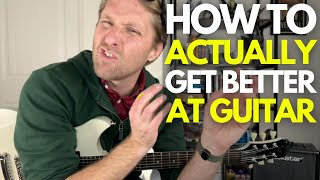
Memorize Everything to Get Better at Guitar
50sThe dramatic delivery of 'memorize everything' is a surprising and counterintuitive tip that challenges viewers' expectations.
▶ Play ClipThe video presents a humorous yet insightful argument that the single most important practice for guitarists of all levels is to memorize everything they learn—songs, scales, chords, and progressions. The creator, Uncle Stewart, breaks down five key reasons why this approach leads to real improvement, from expanding repertoire to building intuitive music theory knowledge.
Memorizing songs increases the number of pieces you can play anytime, anywhere, and makes learning new material easier over time.
Playing from memory makes you feel more competent and look more professional, as you're not relying on tabs or lyrics.
Forcing yourself to memorize every part of a song ensures you face and work through difficult transitions instead of skipping them.
When you play from memory, you listen more closely to the sounds you produce, which trains your ear to anticipate notes and recognize intervals.
Memorizing many songs helps you naturally recognize chord progressions, note relationships, and common patterns without needing formal theory.
The core takeaway is that memorization is the foundational habit that accelerates every other aspect of guitar playing, from confidence to ear training and music theory. By committing songs and patterns to memory, you transform passive knowledge into an active, usable skill set.
"The title accurately reflects the video's content—it delivers a clear, actionable method for improving guitar skills, though the delivery is intentionally casual and humorous."
What is the single most important practice for getting better at guitar according to the video?
Memorize everything you learn—songs, scales, chords, and progressions.
4:23
List the five reasons why memorizing everything helps improve guitar playing.
1. Expands repertoire, 2. Builds confidence, 3. Forces actual learning, 4. Trains the ear, 5. Teaches music theory intuitively.
5:08
How does memorizing songs improve ear training?
When playing from memory, you have no visual reference, so you listen more closely to the sounds, which trains your ear to anticipate notes and recognize intervals.
9:51
What does the video say about reading tabs or lyrics while playing?
It can make you look less confident and prevents you from truly learning the song, as you may skip difficult parts.
8:18
How does memorizing many songs help with learning music theory without formal study?
You naturally recognize common chord progressions, note relationships, and patterns across songs, building an intuitive understanding of theory.
13:00
Memorize Everything
This is the central principle of the video, presented as the universal tip for all guitarists.
4:23Ear Training Through Memorization
Explains a practical, passive way to develop a crucial musical skill without dedicated exercises.
9:51Intuitive Music Theory
Shows how memorization leads to understanding theory naturally, making it accessible to non-theory nerds.
13:00Confidence from Memory
Highlights the psychological benefit of playing without aids, which directly impacts performance quality.
7:16Repertoire Expansion
Establishes the foundational benefit that makes memorization a gateway to more advanced skills.
5:08[00:00] I just don't know how to start these
[00:01] videos If I'm doing a song tutorial then
[00:04] I just play the song and then I yell the
[00:06] name of the song and I say featuring and
[00:09] then I say something stupid but if I'm
[00:11] doing one of these like seven tips for
[00:13] how to solo for non- guitarists or
[00:15] whatever I I just don't once I get the
[00:18] balls rolling we'll be fine but at the
[00:20] current moment in time zero balls are
[00:24] rolling and I find myself at a loss
[00:26] people of the world friends and
[00:28] relatives welcome I do kind of need to
[00:29] blow my nose should we do an on camera
[00:32] nose
[00:35] blow so here's what's really
[00:37] embarrassing uh well one I just tucked
[00:40] the used Kleenex into my sock so that
[00:41] was a strange choice but uh embarrassing
[00:44] thing number two is that if you notice I
[00:47] just had the Kleenex right here ready to
[00:49] go
[00:51] and okay guys I'm going to make
[00:55] a very strange
[00:57] confession I planned that beforehand
[01:01] before I hit record I was like do you
[01:03] know what I should do I should blow my
[01:04] nose on camera that was actually a thing
[01:07] that I decided was a good idea and then
[01:09] we'll call the video how to actually get
[01:12] better at
[01:15] Guitar whoa that was new is that going
[01:18] to be a regular thing or what where'd
[01:19] that come from people of the world
[01:22] French and relatives my name is St
[01:24] Alexander lay brown you are here for one
[01:26] of a few reasons one of those reasons is
[01:29] probably you've been playing guitar for
[01:32] a while but you're you're just like but
[01:34] what do I I don't know what to practice
[01:36] how do I actually get better I listen to
[01:38] bands I love and the guitarists are
[01:40] incredible and they write these great
[01:42] songs they play these Wicked fire
[01:45] solos uh I look online and there are
[01:48] people
[01:50] going and it sounds so good Midwest emo
[01:53] that's a term that I learned um there's
[01:57] a yellow
[01:58] pad h ah I don't want to do this anymore
[02:01] I was so excited I was feeling good and
[02:03] then you bummed me out cuz you kept
[02:06] watching me basically you are motivated
[02:09] you are disciplined all of the right
[02:11] things that a successful guitarist and
[02:14] musician needs yet you find yourself
[02:17] plateauing you find yourself not
[02:19] progressing the way you want because
[02:22] what am I supposed to do am I supposed
[02:23] to practice scales people say to
[02:25] practice
[02:27] scales but so I practiced a couple
[02:29] scales and it just was boring and it
[02:31] kind of felt like a waste of my time I
[02:32] don't understand what's happening also
[02:36] like I just Uncle Stewart I just don't
[02:39] know what to do like I can play the
[02:41] basic chords I'm even I can even do bar
[02:44] chords and it's okay like I'm I'm not
[02:46] great at them but I'm okay at them like
[02:48] I understand but like what do I do when
[02:52] I want I actually want to like play with
[02:54] other people or I want to write my own
[02:56] songs or I I want to like be a guitarist
[02:59] and I don't I don't feel like that's
[03:02] happening what do I do so hang on okay
[03:04] wait so obviously there there are a
[03:08] bajillion different things you could
[03:09] practice like if you want to be a jazz
[03:11] guitarist you do probably want to
[03:14] practice a bunch of scales and licks and
[03:17] stuff like that if you want to play
[03:19] metal then you you have to like be able
[03:21] to play fast and do all of that stuff
[03:24] that I've never really cared about there
[03:26] are a plethora of different directions
[03:28] you could go and probably each
[03:31] individual one of you has different like
[03:33] specific things it would be great for
[03:35] you to practice what I'm going to share
[03:37] with you today is what I believe is the
[03:41] most important thing that all of you
[03:46] should be working on I put should in
[03:48] quotes because I think should is a
[03:51] terrible
[03:54] word that was the worst thing I've ever
[03:56] done on this channel so in my opinion
[03:59] this is the
[04:00] only tip that applies to everyone that
[04:05] whether you're a beginner or
[04:06] intermediate or Advanced this is a
[04:09] helpful thing that you would benefit
[04:13] from if you made it a regular part of
[04:15] your whole guitar playing routine and
[04:19] this is what it
[04:20] is
[04:23] memorize
[04:25] everything memorize songs memorize
[04:28] scales memorize whatever stuff you're
[04:31] working
[04:32] on memorize it and you're like Uncle
[04:36] Stewart I was really hoping you were
[04:38] going to say something that I was going
[04:39] to make me go like that's such a good
[04:41] idea but you said memorize everything
[04:43] and I'm like I already kind of memorize
[04:45] everything that's what do you mean
[04:46] that's not really
[04:47] helpful yes I understand I have
[04:50] comprised a list I've curated a list of
[04:54] five reasons why memorizing everything
[04:58] is helpful and beneficial and also what
[05:01] I mean by memorize everything so let's
[05:04] just dive right into the list reason
[05:08] number one why it is helpful to memorize
[05:12] everything is the most obvious one
[05:14] because it is going to expand your
[05:18] repertoire the more songs you memorize
[05:21] the more songs you'll be able to play
[05:23] the more scales you memorize the more
[05:25] scales you'll be able to play for
[05:27] whatever reason you might want to do
[05:29] that the more chords you memorize the
[05:31] more chord progressions you
[05:33] memorize if you have it
[05:36] memorized then that means you know it
[05:39] and you can play it in any situation so
[05:42] that's very broad very general but
[05:45] that's just the basic thing if you
[05:47] memorize a bunch of songs you can play a
[05:49] bunch of songs that is helpful now hang
[05:52] on because I wrote something else
[05:54] down oh this is very important along
[05:58] with EXP exping your repertoire of what
[06:01] you know if you memorize everything that
[06:05] you learn it also makes it so much
[06:08] easier to learn new things so if you
[06:13] here's what I mean if you play a bunch
[06:15] of songs but you're just reading the
[06:17] chords and lyrics off of your phone
[06:19] that's great I hope you're having a good
[06:21] time doing it but you're not really
[06:23] learning that song and you're not really
[06:27] getting better at learning new songs
[06:30] instead when you learn a new song if you
[06:34] maybe look at the chords or the tab for
[06:36] a little bit and then you put that away
[06:38] and force yourself to play it all from
[06:41] memory not only will you keep that song
[06:44] with you all through the year you will
[06:48] also get better at learning songs
[06:52] learning scales learning cords as time
[06:56] flies and you can tell if I'm not
[06:59] confident in what I'm saying I do bigger
[07:03] hand gestures to summarize tip number
[07:06] one the more songs you memorize the more
[07:09] songs you know and the better you get at
[07:13] learning new songs in the future tip
[07:16] number
[07:18] two memorizing things gives you more
[07:21] confidence in your ability to play it if
[07:24] you read things off the page read things
[07:26] off your phone whatever you are not
[07:30] going to feel like it's actually a part
[07:32] of your skill set you're going to feel
[07:34] like it's just something that you're
[07:36] playing in the moment but if you
[07:38] memorize everything and you know that
[07:40] you can play it at any time any
[07:44] place it's it is going to make you a
[07:48] more confident guitar player which makes
[07:51] you more competent that's what I always
[07:53] say more compet more uh more confidence
[07:58] more compet
[08:00] impotence con the more that you memorize
[08:03] the
[08:05] more to piggyback onto that if you have
[08:09] to read stuff off of the your phone or
[08:12] whatever when you're
[08:18] playing you C you kind of look like a
[08:21] dork when you're doing that it kind of
[08:23] makes it seem like you don't know what
[08:24] you're doing and I don't mean that like
[08:25] I'm not trying to judge you for doing it
[08:28] I just think you're going to look and
[08:30] feel a lot cooler if you're able to do
[08:32] it all from memory tip number
[08:36] three when you memorize
[08:40] everything you're actually learning it
[08:44] and not faking it again if you have the
[08:47] chords or the tab in front of you and
[08:49] you're sitting there reading playing it
[08:50] you can kind of like skim through the
[08:53] parts that you don't know that well the
[08:55] transition from the verse into the
[08:57] precour or or the bridge back into the
[09:00] chorus you kind of go like um I'm not
[09:02] sure let me jump ahead to this part and
[09:04] you start playing somewhere else if you
[09:06] really force yourself to memorize every
[09:09] song you play it forces you to learn
[09:13] every part of the song now you still
[09:15] might not be able to play every single
[09:18] part of the song
[09:19] Perfectly but you at the bare minimum
[09:23] have to face each part of the song and
[09:26] know how to get through it one way or
[09:28] another and
[09:30] by you yeah okay I don't need to keep
[09:33] and then by doing that you do this and
[09:34] then by doing that you do this and you
[09:36] don't need to do this but if you do that
[09:37] then you'll always do this memorize
[09:40] everything moving on tip number four now
[09:43] we're getting to the good ones the first
[09:44] three were stupid those were just to
[09:46] take up space in this video tip number
[09:48] four and five are the good ones tip
[09:50] number
[09:51] four ear training when you play from
[09:54] memory so you're not staring at the page
[09:57] or staring at your phone while you play
[10:00] you're listening more when you force
[10:02] yourself to play everything again songs
[10:06] scales licks cords everything from
[10:10] memory you cannot help but listen to
[10:15] what you're playing and you're I know I
[10:17] know every single person out there is
[10:18] going what kind of idiot is this of
[10:20] course I listen when I'm playing
[10:23] yeah but the truth is you might not be
[10:25] listening all that closely have you ever
[10:27] been playing a song you're reading the
[10:28] tab off the page and you're like like
[10:29] all right is this
[10:32] two okay and then you move on with the
[10:35] song cuz you're like I don't know it
[10:37] sounded terrible sounded nothing like
[10:38] the song but I don't know I just I'm
[10:40] just reading the tab what am I supposed
[10:41] to do and you just move on with the rest
[10:42] of the song we've all we've all done
[10:45] that you play some chord doesn't sound
[10:47] right but you're like that's what it
[10:48] says so you just keep going when you're
[10:50] playing things from memory it's going to
[10:52] be way harder to do that because you you
[10:54] have nothing else to look at you have
[10:56] nothing else to do other than pay
[10:58] attention to your fingers and the sounds
[11:01] so you will end up listening more and
[11:04] more closely to what you're playing you
[11:07] will then start to anticipate what the
[11:10] notes and chords are going to sound like
[11:12] before you play them once you start
[11:15] anticipating what it's going to sound
[11:16] like before you play it you're going to
[11:18] start knowing what notes sound like that
[11:22] are like way you're just going to start
[11:23] getting a feel for like oh well yeah if
[11:25] I play the first fret and then the third
[11:26] fret it sounds like this and if I play
[11:28] this note and this note at the same time
[11:29] it sounds like this without putting in
[11:33] like hours consciously studying ear
[11:37] training if you memorize everything you
[11:40] are automatically going to train your
[11:42] ears to hear how the different notes
[11:45] interact how the different chords
[11:46] interact you're going to start to be
[11:48] able to figure out songs just by ear
[11:52] you're going to hear a song and then go
[11:54] well that sounds like it goes like from
[11:55] this and then maybe like yeah then to
[11:58] this and it sounds to me like it goes
[12:00] right back to this because I was playing
[12:02] that other song that did something
[12:03] similar oh and then the next part it
[12:05] does this then it goes to this cuz I
[12:08] recognize that a minor 7 sound and then
[12:10] it sounds like it goes back to G but I
[12:12] sound like it feels like there's
[12:13] something different it goes to oh it
[12:15] feels like it goes to a goes to a g sus
[12:18] chord you you will start to hear all
[12:20] those little changes just because
[12:22] instead of focusing on following
[12:25] instructions as you play you're going to
[12:27] focus on what it actually sounds like
[12:30] and what your fingers are actually doing
[12:33] actually is the word of the day
[12:35] apparently because I've said it so many
[12:38] times there's one more
[12:42] tip do you think it's going to meet your
[12:44] expectations or do you think it's going
[12:46] to be a
[12:48] disappointment I think it's barely going
[12:51] to meet your
[12:52] expectations reason number five why you
[12:56] should memorize everything if you want
[12:59] to get better at
[13:00] Guitar is because if you memorize
[13:04] everything you will start to
[13:06] automatically learn music theory music
[13:10] theory is one of those things that's on
[13:12] everybody's list man I really should
[13:14] learn some music theory well no some
[13:16] people are like music theories for nerds
[13:18] and I'm not that kind of nerd I'm the
[13:20] Elden ring kind of nerd not the like
[13:22] music theory kind of nerd and that's
[13:24] fair I understand but here's the thing
[13:27] you don't need to know like well well
[13:29] the G Major scale is I mean you could
[13:31] think of it as a G Major scale but
[13:33] because it has a sharp 11 it's actually
[13:34] the fourth mode of the D major scale
[13:36] like you don't need to think about that
[13:39] sort of thing to use music theory to
[13:42] your advantage here's what I'm talking I
[13:43] know I'm just rambling we're at the end
[13:45] of the video the only people who are
[13:46] still watching are the people who are
[13:48] just like I like this guy he seems kind
[13:49] of dumb if you memorize a bunch of songs
[13:52] you will start to recognize different
[13:55] chord progressions and then you'll
[13:57] you'll start to recognize how those
[13:59] different chord progressions fit
[14:00] together and you'll notice What notes go
[14:03] along with certain chords and you'll
[14:05] notice oh well this songwriter really
[14:08] likes to sing an a note when he's
[14:11] playing a B minor chord I wonder if
[14:13] those go together and you don't even
[14:15] necessarily think a note and B minor you
[14:17] think when he's playing this chord he
[14:19] sings that note I'm getting used to that
[14:21] so that must be a note that fits with
[14:22] that chord and and then you start to go
[14:24] oh actually this whole scale fits with
[14:26] these chords oh and and all these bands
[14:29] really like using these notes and
[14:31] they're all kind of like right next to
[14:32] each other here you start to just pick
[14:35] up on all these little musical Theory
[14:38] musical Theory no one's ever said that
[14:39] ever in the history of time all these
[14:42] little music theory tidbits and you
[14:46] won't have names for them because you
[14:49] will just be discovering them on your
[14:51] own but music theory is just as useful
[14:56] when you don't know all the terms and
[14:58] all the formulas I don't know are there
[15:01] formulas in music theory kind of yeah
[15:03] there
[15:05] are by memorizing
[15:07] songs I personally believe you learn the
[15:11] most crucial elements of Music Theory
[15:15] the
[15:18] intuitive things that like sound good to
[15:21] you will start to make more and more
[15:23] sense and then down the line if you
[15:25] decide to learn the terminology and
[15:27] stuff that's great it will be easier
[15:29] because you already will have the
[15:31] familiarity with how it
[15:34] sounds and then you can write songs and
[15:36] you can become the world's greatest
[15:38] magician musician in the planet of the
[15:40] Earth would you please be a pal and
[15:43] forgive me for I don't know the sins of
[15:46] the past or whatever this video is
[15:48] really fun I'm really glad we did it
[15:50] thanks
⚡ Saved you 0h 15m reading this? Transcribe any YouTube video for free — no signup needed.