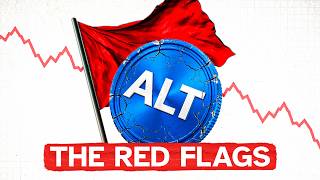

99% of New Tokens Are Scams
45sShocking statistics about token launches and the prevalence of scams immediately grab attention.
▶ Play Clip"Delivers a solid, actionable guide that matches the title, with a few promotional segments but high information density."
This video from The Coin Bureau provides a comprehensive guide to identifying and avoiding scam tokens ('rug pulls') in the cryptocurrency market. It outlines red flags such as anonymous teams, fake partnerships, low float/high FDV tokenomics, and on-chain warning signs, while also highlighting green flags like real revenue and sustainable emissions. The presenter offers a practical five-step due diligence ritual to protect investors.
Roughly 5,000 new tokens launch daily; 99% on pump.fun are built to extract value. 85% of 2025 tokens were below launch price by February. Rug pulls stole $2.8B-$6B in 2025.
A good risk is a solid team with a real product that may fail. A rug is built specifically to take your money. Engineered extraction leaves fingerprints.
Anonymous teams, fresh personas, AI-generated profile pictures, fabricated LinkedIn careers. Check if claimed partnerships are announced by the reputable partner.
Skepman token used a compromised SpaceX-linked account to fake legitimacy, draining $135,000. Forensic firm Bubble Maps traced wallet clusters across multiple failed projects.
No working product, dead GitHub, buzzword-filled whitepaper, roadmap promising everything but shipping nothing. Real builders leave evidence: code, users, revenue.
Low float creates illusion of scarcity; FDV implies unsupportable value. Circulating supply under 10-15% of total is a dilution risk. Vesting cliffs (6-12 months) lead to massive unlocks.
Launched Dec 2024, hit $500M market cap, collapsed 89%. 96% supply controlled at launch, 285 pre-sale insiders dumped into a 3% liquidity pool.
Top 10 wallets holding >20% is a serious warning. In rugs, concentration hit 80-96%. Mantra's OM token fell 90% in a day; 90% supply held by team/early investors.
Check for partially locked liquidity, live mint functions, blacklist functions (honeypot), and fake renounced ownership. Tools like Rug Check, Token Sniffer, GoPlus help.
75% of fraudulent projects have unaudited contracts. No-name audits mean nothing. Click through to the auditor's domain; check if contract was redeployed after audit.
70% of rug pulls use coordinated influencer campaigns. A wall of identical bullish posts is a paid operation. Legit projects welcome scrutiny; rugs ban questioners.
Real revenue (GMX, Hyperliquid), sane valuation (FDV <15x annual revenue), revenue-funded buybacks (Hyperliquid), verifiable users, sustainable emissions (2.5-4% staking).
1) Fundamentals via DeFi Llama/Token Terminal. 2) Supply shock via Token Unlocks (check 30-90 days). 3) Contract scan via Rug Check/GoPlus. 4) Liquidity verification on Dexscreener. 5) Holder concentration via Bubble Maps.
If a project trips three or more red flags (no audit, anonymous team, dodgy liquidity), walk away. Under 5% of rug pull losses are ever recovered.
The video emphasizes that while all crypto trades carry risk, engineered rug pulls broadcast their intent through red flags that can be spotted with due diligence. By following a systematic checklist and the three-flag rule, investors can avoid the worst scams and focus on projects with real fundamentals.
What percentage of new tokens on pump.fun are estimated to be built to extract value?
99%
00:18
What is the estimated range of rug pull losses in 2025?
$2.8 billion to nearly $6 billion
01:13
What is the difference between a good risk and a rug in crypto?
A good risk is a solid team with a real product that may fail; a rug is a product built specifically to take your money.
01:53
What percentage of new liquidity pools on PancakeSwap end in a rug?
95%
02:19
What is the 'low float, high FDV' model?
A project launches with a tiny circulating supply, creating an illusion of scarcity, while the fully diluted valuation (FDV) implies a total value the token could never support.
05:05
What happened to the HOKK token?
It launched in December 2024, hit $500 million market cap, then collapsed 89% because 96% of supply was controlled at launch with 285 pre-sale insiders dumping into a 3% liquidity pool.
06:04
What is the warning sign for holder concentration?
If the top 10 wallets hold more than 20% of the token supply, it's a serious warning sign.
06:47
What are three contract red flags mentioned?
Partially locked liquidity, live mint functions, and blacklist functions (honeypot).
07:56
What percentage of fraudulent projects have unaudited smart contracts?
75%
08:51
What is the 'three flag rule'?
If a project trips three or more red flags (no audit, anonymous team, dodgy liquidity), you walk away regardless of the narrative.
13:30
Good Risk vs. Rug Distinction
Clarifies the fundamental difference between investing and being scammed, setting the framework for the entire video.
01:53Skepman Fake Partnership Example
Concrete example of how scammers use compromised accounts to fake legitimacy, illustrating the depth of deception.
03:29HOKK Token Collapse
A textbook case of low float/high FDV and insider dumping, showing how tokenomics can be engineered to extract value.
06:04Green Flags for Legitimate Projects
Provides a positive checklist (real revenue, sane valuation, buybacks) to counterbalance the fear of scams.
10:21Three Flag Rule
A simple, memorable heuristic that can save investors from catastrophic losses by setting a clear exit threshold.
13:30[00:02] start, [music] but in many cases, believe it or not, this was entirely predictable. Consider this, roughly 5,000 new tokens launch every single day across the major chains. On pump.fun, an estimated 99% of them are simply built
[00:18] to extract value, not to build [music] anything. And 85% of every token launched in 2025 was already trading below its launch price by February of this year. So, then, is the coin you're buying a genuine opportunity with good
[00:32] risk reward, or is it a token engineered from day one to turn you into exit liquidity? That's exactly what we're going to look at today. So, whether bull exactly how to separate good risk from
[00:45] red flags that broadcast a rug before it happens, and hand you a quick process you should run on every single coin My name is DC, and this is The Coin Bureau.
[00:58] crypto's drawdown since right around the time the US president decided to launch a meme coin. So, I won't go into much detail here. But, what's important to bleeding, opportunists in crypto continue to look for ways to extract
[01:13] maximum money wherever they can. Estimates of what rug pulls stole in 2025 alone range from $2.8 billion to nearly $6 billion, depending on whose methodology you trust. And sadly, the watchdogs that
[01:27] used to keep us safe are struggling. That Raider, one of the trackers that used to count this stuff, shut down in November 2025 because the business simply wasn't sustainable. So, the scams are scaling up while we have fewer
[01:39] entities exposing them. And that means the only person reliably protecting your is you. Let's start with a distinction that changes how you should look at every single coin. A good risk in crypto is a
[01:53] solid team with a real product that may or may not work out. That's investing. You can lose money there and nobody did anything wrong. But a rug is different. A rug is a product built specifically to take your money. And this entire video
[02:07] is about the second kind because the second kind is the one you can and should avoid. And the reason it's avoidable is that engineered extraction leaves fingerprints. Real projects can't hide bad luck, but rugs have to hide
[02:19] intent, and that very often leaves a trail. On PancakeSwap, an estimated 95% of new liquidity pools end in a rug. We're looking at a market full of nefarious actors with only a handful of real projects scattered between them.
[02:34] So, our job is to tell those apart. And the first place to look is the team. Anonymous teams with no accountability are typically a huge warning sign. So, watch out for fresh personas specifically designed to cut the links
[02:48] to previous exit histories, rather than an established dev who's built up a 5-year public track record. AI-generated profile pictures, clone biographies, fabricated LinkedIn careers at companies that nobody has ever heard of. And then,
[03:01] now the partnerships. Displaying a company's logo doesn't necessarily mean that that company is involved. So, if a project claims it's in talks with some major name, go and check that name company's own official channels. If the
[03:15] bigger, more reputable partner hasn't announced it, assume it's fabricated marketing. For example, we saw exactly how far this goes in July of this year with a token called Skepman, where scammers used a compromised fake
[03:29] SpaceX-linked account to fake legitimacy before draining around $135,000. And the craziest part is that forensic firm Bubble Maps has traced the same wallet clusters across multiple failed projects. The Hogwarts token, Libra, and
[03:44] several others reportedly link back to overlapping operators. These are professionals that continue to run sophisticated operations designed to extract as much capital as they possibly can. So, it's absolutely crucial to
[03:57] you're considering investing in. And what they've actually built. There are several easy tells in this regard. No working product, a dead GitHub with no comments, a white paper stuffed with
[04:11] buzzwords that describe nothing that you could in theory potentially one day ever use, or a roadmap that promises absolutely everything and ships precisely nothing. In contrast, real builders leave evidence of their work,
[04:25] code, users, revenue, activity, and keeping on top of all of this, the wallet forensics, the unlock schedules, the contract scans. This is a full-time job. So, if you don't have 16 hours a day to track it, we've made it a lot
[04:38] easier. Right here on YouTube, you can now access the new CoinBureau Club Light get daily market updates across both crypto and TradFi, our team's read on the best opportunities, and curated updates with only the most important
[04:52] details. Just tap the join button below this video to get started. Okay, back to avoiding those rugs. The boldest lies are mostly found in the tokenomics. And when it comes to the tokenomics, you always have to be wary of the low float
[05:05] high fully diluted valuation model. So, a project launches with a tiny circulating supply, creating an illusion of scarcity, while the fully diluted valuation, or FDV, implies a total value the token could never actually support.
[05:19] For those unfamiliar, FDV is simply what the market cap would be if every single token were in circulation. So, when circulating supply is under 10 to 15% of the total, that token is sitting duck for massive dilution. But that's not
[05:34] all. Then comes the cliff. A vesting cliff is typically a 6-to-12-month lockup followed by one enormous release of tokens all at once. And the insiders holding those tokens, they bought in at a fraction of your price, and their cost
[05:47] basis is practically near zero. So, the moment that cliff hits, every rational incentive tells them to dump on you. Across 2025, an estimated $74 billion in according to vesting trackers like Tokenomist. That is a massive supply
[06:04] event, and HOKK token is the textbook case. It launched in December 2024, hit around $500 million in market cap within hours, then collapsed 89%. Why? Well, because 96% of the supply was controlled at launch with 285 pre-sale
[06:21] insiders dumping into a liquidity pool that was just 3% of the token. 285 barely wide enough for one person. Regular people never stand a chance in
[06:34] such an environment. And that brings us to the on-chain checks everyone should be carrying out on a regular basis, religiously. As a ballpark figure, if the top 10 wallets are holding more than 20% of the token supply, that's a
[06:47] serious, serious warning sign. In the rugs we just discussed, that rugs we just discussed, that concentration hit 80, 90, even 96%. If we take a look at one particular example, Mantra. In April 2025, its OM
[07:00] token fell around 90% in a single day, erasing over $5 billion in market cap. But, if you followed the steps, checked the on-chain data, and looked at the clear warning signals, signs were there for months. Roughly 90% of supply was
[07:14] held by the team and early investors. And the valuation was pure fantasy, a $6 billion market cap sitting on just $4.2 million in actual DeFi value locked. Now, to be fair, there's some dispute about who pulled the trigger on OM. The
[07:28] team blamed forced liquidations by an exchange, the exchange blamed colluding accounts. Investigators and on-chain analysts haven't conclusively linked team wallets to the sell-off, though the debate over who triggered it continues.
[07:41] But, here's what's important. The red flag was predicted regardless of who was to blame. So, top-heavy concentration plus evaluation that dwarfs real usage, stay away. Now, beyond concentration, you should be checking three more things
[07:56] partially locked or locked for a laughable 5 to 10 days rather than months, [clears throat] live mint functions that let developers print unlimited new supply and dilute you at will,
[08:09] block your specific wallet from ever selling. That last one is otherwise known as honeypot. You can buy, but you can never get out. Those are the worst. There's also the fake renounced ownership trick, where a project claims
[08:23] it gave up control but retains hidden admin powers. Now, if the idea of checking all of this sounds intimidating, fear not. You don't have even need to be able to read code. Tools like rug check, Token Sniffer, GoPlus,
[08:37] seconds. When it comes to code itself, the red flags don't actually stop at the contract. An estimated 75% of fraudulent projects have unaudited smart contracts. But the sneaky ones, they do have an
[08:51] audit from a no-name firm that either doesn't exist or couldn't spot a backdoor if it fell on them. So, here's the rule: a random audit or trail of Bits logo on a project's own website means absolutely nothing. Click through
[09:03] to the actual report hosted on the auditor's own domain, because a PDF sitting on the project site can be forged easily. And then, check the date. If the contract was redeployed after the audit, that audit is completely
[09:16] worthless. So, honestly, this is the extra step worth taking when doing your own research. Now, there's another interesting sign a project is up to no good, and that's when you find nothing but praise for it on social media. An
[09:29] estimated 70% of rug pulls use coordinated influencer campaigns. So, that wall of identical bullish posts hitting your feed on the same afternoon, that's not a coincidence. That is a paid operation. In that same vein, another
[09:43] big warning sign can come from how the community handles a simple question. A legitimate project welcomes scrutiny of its vesting schedule and its audit. A rug treats standard questions as an attack and calls you a fudster for
[09:56] asking. If basic due diligence gets you banned from the Telegram, you already have your answer. And one more tip when it comes to DeFi projects in particular, if you don't know where the yield comes from, and nobody's willing to tell you,
[10:08] then you are the yield. And if the answer is new buyers or freshly printed answer is new buyers or freshly printed tokens, that's just token dilution. Now, would be easy to walk away thinking every single altcoin is a scam. But,
[10:21] things up here for a second and consider all the green flags you should be changed when it comes to crypto capital flows in 2026. Serious money now values
[10:33] protocols like businesses on cash flow, revenue, and real users. So, with that in mind, green flag number one is real revenue. Look for actual fees generated from actual activity. Projects like GMX pay rewards from real trading fees.
[10:47] Well, sector leader Hyperliquid has crossed $1 billion in cumulative protocol revenue. Green flag number two is sane valuation. As a rough rule of thumb, an FDV below around 15 times annual revenue is considered
[11:01] getting expensive. Green flag number three is how they handle unlocks. Take Hyperliquid. team built an ongoing revenue-funded buyback engine, routing the vast
[11:14] majority of protocol fees into hype buybacks rather than letting unlocked tokens hit the market unchecked. That's pretty much the opposite of a rug. Green flag number four is verifiable users. Real daily active addresses rather than
[11:28] ghost chains with crazy multi-billion dollar valuations. And green flag number five is sustainable emissions. Base staking yields on something like Ethereum sit around 2.5 to 4%. Anything
[11:41] promising you 400% with no clear source of income is telling you exactly what it is. So, if we sum it all up and bring everything together, every single trade in crypto carries risk and there is no removing that. But, the very worst
[11:54] coins, the engineered ones, broadcast their intent before they collapse, before they rug you. And the people who lost everything this cycle were mostly the ones who never checked for any of the red flags we just discussed. They
[12:07] missing out, and skipped the due diligence that would have saved them. So, please, for your own good, use this quick ritual every single time before you buy anything. First, the fundamentals. Open DeFi Llama or Token
[12:20] Terminal and ask yourself, does this protocol make money from users or is its revenue just tokens it prints? If it generates nothing verifiable, ask yourself why you're buying it to begin with. Second, the supply shock. Check
[12:34] the unlock schedule on a tool like Token Unlocks for the next 30 to 90 days. A cliff release is dangerous, while a slow linear drip is safer. Practically, you 30 days before a major cliff and
[12:47] reassess 14 days after once the dust has settled. Third, the contract scan. Run it through Rug Check or GoPlus or simulate a sell on something like functions, blacklist functions, and hidden sell taxes. Fourth, liquidity. On
[13:02] Dexscreener, don't just trust a locked badge. Verify the actual locker on chain. And if you see something like a 7-day lock, that's a flashing red light. You want liquidity locked or burned for 6 to 12 months or more. Fifth, holder
[13:16] concentration. Plug the token into Bubble Maps. It draws lines between wallets controlled by the same entity, exposing decentralized holder accounts that are secretly one person pretending to be 40 people. And layered over all of
[13:30] it, there's one final safety net, the three flag rule. If a project trips three or more of these, no audit, anonymous team, dodgy liquidity, whatever the combination, you walk away no matter how good the narrative sounds.
[13:42] Because remember, under 5% of rug pull losses are ever recovered. Once it's gone, it's gone. Prevention is the only strategy that actually works. Don't be campaign and finds out the blacklist function does the hard way. Be the
[13:56] person who spends time doing their due diligence and avoids the rugs that take out a lot of people. Please let me know in the comments, honestly, if you researched like this before watching this video, and if you think I missed
[14:09] any of the major red flags, please help us out and spread the word. And if you altcoin market really looks like in 2026, then you should definitely check out our deep dive right over here. As always, thanks so much for watching,
[14:24] and I'll see you again very soon. This is DC signing off.



⚡ Saved you 0h 14m reading this? Transcribe any YouTube video for free — no signup needed.