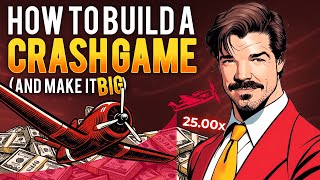

Crash Game: The Dopamine Dispenser
39sHigh-energy intro with bold claims about the game's addictive nature and cultural relevance.
▶ Play Clip"Title accurately reflects the comprehensive guide to building a Crash game from concept to business."
This video provides a comprehensive guide to building a Crash game, covering concept, math, development stack, fairness, player psychology, and business strategy. It emphasizes creating a fast, fair, and profitable multiplayer experience that keeps players engaged through tension and community.
Crash games are high-speed multiplayer gambling games where a multiplier climbs until it crashes. Players cash out before the crash to win their bet times the multiplier.
Choose a readable theme like a rocket or balloon. Use visual and audio feedback to build anticipation: alarms, rising pitch, motion blur, and a catastrophic explosion on crash.
RTP (Return to Player) is typically 95-99%, giving a house edge of 1-5%. The crash multiplier follows a right-skewed distribution (inverse exponential). For 99% RTP, chance of surviving past 2x is 49.5%, and hitting 10x is about 9.9%.
Use cryptographic seeds and hash verification for provably fair systems. In regulated markets, use certified RNGs from labs like GLI or eCOGRA. Never trust the client; keep RNG on the server.
Use HTML5 + PhaserJS for cross-platform compatibility. Structure game states: Betting, Playing, Crashed. Use WebSockets (Socket.IO) for multiplayer. Animate multiplier with easing functions.
Essential features: auto cash-out, curve customization, dual bets, leaderboards, live chat, mobile-first UI, partial cash-out, and jackpots. Keep simplicity; don't overload with gimmicks.
Players want control, emotion, and community. Key emotional hooks: greed, fear, FOMO, regret. Player archetypes: cautious casher, high roller, analyst, socializer.
Primary audience: Gen Z and millennials (20s-30s), mobile-first, crypto-savvy. Key markets: India, Brazil, Eastern Europe, Africa, USA (emerging), Canada. Mobile is king; localization is queen.
Aviator (Spribe) is the market leader with $14B monthly bets. Other notable games: Bustabit (crypto OG), JetX (spectacle), Spaceman (partial cash-out), Cash or Crash (live dealer).
Crash games are a fast-growing vertical. Monetization: house edge, jackpots, tournaments, skins, referrals. Example: 100 players betting $5/round at 2% house edge yields $2,400/hour.
Make it fun, be fair and transparent, start small and iterate fast. Trust is currency; build for players, not just profit.
Building a successful Crash game requires a balance of solid math, fair RNG, engaging design, and understanding player psychology. Focus on fun, fairness, and community to create a sticky, profitable product.
What is the typical RTP range for Crash games?
95% to 99%
02:42
What is the chance of surviving past 2x in a game with 99% RTP?
49.5%
03:26
What is the chance of hitting 10x in a game with 99% RTP?
Around 9.9%
03:26
What two methods ensure fairness in Crash games?
Provably fair systems with cryptographic seeds and hash verification, or certified RNGs from labs like GLI or eCOGRA.
04:09
Why should RNG never be on the client?
Because it can be manipulated; it's like hiding the casino vault behind a shower curtain.
04:34
What tech stack is recommended for building a Crash game?
HTML5 + PhaserJS for the frontend, and WebSockets (Socket.IO) for multiplayer.
05:14
What are the three main game states in a Crash game?
Betting, Playing, and Crashed.
06:03
What is the purpose of a debug mode in development?
To force crash points and test edge cases.
08:23
Name four player archetypes in Crash games.
Cautious casher, high roller, analyst, and socializer.
14:11
Which Crash game is considered the market leader with $14 billion monthly bets?
Aviator by Spribe.
18:42
What is the recommended approach to launching a Crash game?
Start lean with rock-solid gameplay, clean math, and one killer feature; then iterate based on player behavior.
24:55
RTP and House Edge
Explains the critical math behind profitability: a small house edge (1-5%) becomes significant at scale.
02:42Provably Fair Systems
Emphasizes the importance of trust through cryptographic verification, a key differentiator in crypto casinos.
04:09Player Psychology
Highlights the emotional hooks (greed, fear, FOMO, regret) that make Crash games addictive and sticky.
12:52Aviator's Success
Demonstrates how simplicity, social features, and brand deals created a $14B monthly betting phenomenon.
18:42Revenue Potential
Provides a concrete example: 100 players at $5/round with 2% house edge yields $2,400/hour, showing scalability.
21:21[00:00] of experience in the video game industry and proud survivor of more late night crash tests than I care to admit. Today we are diving head first into Crash
[00:12] games. Those wild little rockets that turn the gambling industry upside down. We're talking about concept and math, devstack, and fairness, features players actually care about, and the business behind the boom. This isn't a slot skin
[00:25] with wings. It's a high-speed, high stakes multiplayer dopamine dispenser. And if you build it right, it can also be a revenue rocket. So, buckle up because today we are building a Crash game from scratch and avoid having it
[00:39] crash in your face. Let's crash strategically. All right, let's start with the rocket fuel behind the entire genre. The concept, a crash game is beautifully simple. You bet a multiplier starts climbing from 1x and you cash out
[00:52] before it crashes. If you do, you win your bet times that multiplier. If you wait too long and it explodes, boom, your money vanishes faster than your and fear. And that's exactly why players love it. Why does this format hit so
[01:07] hard? Because it's the perfect balance of simplicity and chaos. No rules to memorize, no symbols to decode, just a line that goes up and a button that screams, "Trust issues go here." It's instant action with a hint of strategy
[01:21] all wrapped in a few seconds of adrenaline. Millennials and Gen Z eat it up. Fast, flashy, social, and slightly self-destructive. Basically, Tik Tok, but for betting. Now, if you're designing one of these dopamine bombs,
[01:33] anticipation. That means to pick a theme that's instantly readable. A rocket taking off, a balloon inflating, a spaceship racing toward a black hole,
[01:45] anything that sells the drama of how high can it go before disaster. Visual and audio feedback should be tuned like a thriller soundtrack. Alarms, a rising pitch, motion blur, and when the crash happens, make it feel catastrophic.
[01:57] Don't just fade out, explode. Add social elements, live bets, chat boxes, emotes. Let players celebrate, shame, and scream together. Misery and glory love company. And most importantly, nail the loop. After every crash, show results fast and
[02:12] jump right into the next countdown. The player should barely have time to breathe or question life choices before the next round begins. A great crash game doesn't just run on math. It runs on emotion, suspense, regret, greed,
[02:26] relief, and a deeply irrational belief that this time they'll click at the perfect second. That's your foundation. Keep it clean, fast, and evil in just that separates the real devs from the slot risking factory. The math. This is
[02:42] where your crush game either becomes a trusted hit or a Reddit scandal with a graph proving it's rigged. Let's start with the basics. RTP, return to player. long run. Most Crash games leave between 95% and 99% RTP. That means your house
[03:01] edge is 1 to 5%. Seems small. Not when players are placing bets every six seconds. At scale, that tiny edge becomes a river of revenue. Just ask a beter. They printed over 14 billion in wages in a single month. You do the
[03:14] math. Actually, I already did, but go ahead and pretend. So, how does the crash actually happen? Mathematically, most games use a right skewed distribution, usually an inverse exponential model translated to human.
[03:26] Lots of low multipliers, some juicy mids, and a tiny chance of hitting the moon. For a game with 99% RTP, your chance of surviving past two times is 49.5%. Want to hit the 10x? That's around 9.9%. Still feeling lucky. But
[03:41] this isn't just math class. It's about player psychology. You're tuning the emotional thermostat here. Too many low crashes, players rage, quit, and blame lag. Too many big wins, you're bleeding money. Mix of the two. That's the sweet
[03:53] spot. They keep chasing the dragon, remembering the one time they hit 72x on a Tuesday at 3:00 a.m. Now, let's talk RNG, a random number generator. If That means cryptographic seats, hash verification, and assistant players can
[04:09] audit post round to make sure you didn't pull a fast one. Use a server seed, client seed, hash it, reveal it. Boom, trust built. If you're in regulated markets instead, you'll need certified RNGs from labs like J or itch. Either
[04:22] way, if your randomness isn't bulletproof, you're building a bomb. Security tip: never trust the client. Don't let the front end hold the outcome or figure out the crash point. That's like hiding the casino vault behind a
[04:34] shower curtain. Keep RNG on the server. Encrypt everything and double check that no one can, not even your QA guy, can peek ahead. And one more thing, latency fairness. In multiplayer crash, players from around the world are all betting at
[04:48] requests, you've got a rich ticket and a chargeback waiting in support. Always pat that final cash out window. 15 can save your ass and your reputation.
[05:01] Bottom line, your crash game's math and fairness system are its brain and spine. If the math is off, it won't make money. If the fairness is shady, it won't keep players. Get both wrong and your game's not crashing, it's burning. All right,
[05:14] devs. Time to roll up the sleeves, ignore your backlog, and build something crash fantasy into browser based reality. Step one, tech stack. Use HTML
[05:26] 5 plus PhaserJS. Period. Why? Because it runs everywhere. Phones, tablets, smart lightweight, crossplatform, open source, and fast. Phaser gives you a game loop,
[05:38] asset loading, animations, and input handling, so you can focus on what really matters. Making that multiplayer climb until it shutters hopes and dreams. If you're thinking of using Unity for a 2D crash game, stop. You
[05:50] don't need a bazooka to butter your toast. This isn't a 3D metaw MMO. It's a number going up. Phaser gets it done without killing performance on grandma's phone. Project structure. Start with three simple game states. Betting.
[06:03] Players place bets while a countdown ticks. playing multiplayer climbs, tension builds, cash out fly, crashed, round ends, payouts, settle, next round loads. Manage these with a state machine or just switchable variables. No need
[06:18] for scene gymnastics. Keep it clean. Your multiplier logic, you'll animate a variable like current multiplier, increasing over time in your update loop. It can be exponential, linear, or tweaked to fit your theme. For example,
[06:31] an easing function to make it feel like acceleration. Slow at first, then whoosh. I'll match this to a visual. Rocket going up, line on a graph, balloon stretching, whatever sells the boom. Incoming tension. Cash out button.
[06:45] This is your player's panic switch. It must be responsive, dramatic, and satisfying. When clicked, instantly resolve the win if not crashed. Disable further input and maybe flash some coins or trigger an animation. Bonus points
[06:58] for a cashed out at 3.27x pop-up that screams validation. Crash detection. Here's where the magic ends. You can either simulate the multiplier and have the server send a crash now event or preload the crash multiplier encrypted
[07:11] and animate toward it. Both work. Just make sure the crash point and the animation sync perfectly. Nothing kills trust faster than crashing at 53x while the screen still shows 5.29x. Round reset. After the dust
[07:24] settles, show results. Reset the state and start the countdown for the next while they ignore their dentist appointment. Multiplayer, now it gets spicy. If you are building for multiple players, use websockets. Socket IO is
[07:40] and broadcast crash plus payouts. Clients simulate visuals locally, but defer logic to the server. Trust no one. Validate everything server side, especially cash outs. Players will try to cash out after the crash. Don't let
[07:55] them or do once. Then enjoy your lawsuit. UI UX. Notes designed for mobile first. Big buttons, no tiny sliders. Nobody wants to miss a cash out because their thumb hit the chat icon instead. Animate everything. Multiplier
[08:10] text should pulse. Rocket should shake. Cash out should feel like a jackpot. Add audio. Ticking sounds, whooes, explosions. Give the player a full sensory roller coaster. Pro tips. Use twinning for multiplier and object
[08:23] animations. Clean up memory between rounds or phaser will eat your RAM. build a debug mode where you can force crash points to test edge cases. And that's the skeleton of your crash game coded in JavaScript, powered by tension,
[08:36] and hopefully optimized to run at 60 fps on a McDonald's touchcreen. Let's talk about important features. All right, you've got a working crash game. It goes up, it explodes, it pays out sometimes. Congrats, you've built a minimum viable
[08:49] dopamine dispenser. But if you want to compete with the big dogs, aviator, jet X, spaceman, you'll need more than a spinning number and a panic button. Let's break down the must-haves and the you better have them too or players will
[09:02] bounce features. Auto cash out. These ones are essential. Players love to set a cash out the target and walk away feeling clever. It's also the only reason they survive when the crash happens 0.2 seconds after their blink.
[09:14] Let them input a multiplier, the G5X, and cash them out instantly when it's hit. Combine this with manual override. If they change their mind and want to bail earlier, give them that control. Bonus tip, let them save presets for
[09:27] favorite cash outs. It's easy UX that feels pro. Curve and speed customization. How fast should the multiplayer climb? Linear, predictable, less intense, accelerating, more drama, more chaos. The visual curve defines the
[09:41] personality of your game. Rocket themed, accelerate that sucker. Balloon, maybe multiplier say 12x while the rockets still halfway up the screen. And that's how trust dies. Dual bets and splits strategies. Let players place two bets
[09:56] at once with different strategies. Maybe one safe bet, auto at work, and one wild strategist, and boosts bet volume. Just don't clutter the UI. On mobile, use a
[10:09] tap system or collapse sections. Keep it clean. Leaderboards and achievements. Gamblers are competitive. Even the introverts want to flex. Round leader board, who cashed out the highest this round? The session leader board, most
[10:21] rounds won, biggest single payout, etc. Badges cashed out at 100x. The five wins in a row. Survive 10 crashes without crying. This ad retention and bragging rights. Easy to implement, big reward. Live chat and social vibes. You want
[10:35] players to feel like they're in a digital sportsbook bar, cheering, swearing, posting memes. Add a live chat panel, even with emojis or sticker packs. moderation. Good luck, but worth it. If full chat is too much, add quick
[10:48] reaction buttons or an animated win feed. Player one 123 cashed at 7.4x. Optional, but brilliant. Let players share wins on social media. Nothing says viral like a tweet that screams, I turn $3 into $200 on jet to
[11:03] hell. Mobile first UI make everything top friendly. Big buttons, high contrast, no tiny sliders. Design vertical layouts by default. Most crash sessions happen on phones one-handed while pretending to listen in meetings.
[11:15] Let players place bets fast. Access chat if you have it. Cash out instantly. Use test devices from 2018 and budget Androids. If it runs smooth there, your gold skins and custom themes B2B mode on. If you're planning to license this
[11:30] game to multiple casinos, build it to be reskinable. Change the background, rocket sprite, sound effects, logo, bonus for players, and lockable teams. Duck mode, retro arcade skin, space cut mode, go nuts, cosmetic tweaks, increase
[11:44] retention without affecting balance. Partial cash out. Want to get fancy? Offer 50% cash out options. Player bets $10 takes $5 out at 2x lets the other $5, right? It adds strategy. It adds tension. And when done right, it keeps
[11:59] control equal more addiction potential. Just make sure your back end handles the math correctly. Jackpots and bonuses. If you really want to stand out, include a
[12:11] progressive jackpot. 1% of every bet goes to the pot and it randomly drops on a win above 20x or whatever you pick. Or add bonus events. Every 100 rounds, launch a golden round where max multiplier doubles. These mechanics
[12:26] spice up gameplay and give players an excuse to keep betting through cold streaks. The golden rule, don't sacrifice simplicity for gimmicks. Crash players want tension, speed, and that sweet moment of glory. Every feature you
[12:39] add should enhance that, not turn it into a tutorial heavy mess. Now that your game is fun and featurerich, let's take a break from code and peek into the minds of the people you're building it for. All right, let's stop talking like
[12:52] you're building for, you're not making a Crash game. You're just making math with colors. What players really want, in one word, control. Crash players want to
[13:04] feel like they're in charge. They're not just clicking, spin, and praying. They are deciding when to cash out. It's that illusion of control that makes the genre so sticky. Even when they lose, they think, "Next time, I'll click earlier or
[13:16] later or both." They also crave emotion, fast rounds, instant rewards, constant suspense, and community. Seeing others play and win makes it feel real, that this is more than a slot machine. It's a digital coliseum, and the crowd matters.
[13:32] Emotional hooks. Crash games are a psychological buffet. Every round triggers something primal. Greed. The number keeps going up. So does the dream. Fear. Crash is coming. You just don't know when. FOMO. Others cashed at
[13:44] 12x. You bailed at 1.8x. You could have been a legend. Regret. You cashed out early. It soared. You held too long. It exploded. Either way, your brain says play again. Some games even show you could have won $78 after a low cash out.
[13:57] A passive aggressive reminder that hurts so good. Use with care unless you are marketing emotional damage. Player archetypes. Know your users. You'll meet all sorts at the crash table. Here are the big four. The cautious casher.
[14:11] Always takes 1.5 to 2x. Grinds small wins. Plays forever. Will survive the apocalypse. The high roller. Allin, no auto cash out. Chasing 100x dreams. Usually busts hard, but when they hit it with screenshots for days. The analyst
[14:26] watches graphs, reads multipliers, has a spreadsheet, loves data, hates surprises, add stats, they'll love you. The socializer, low bets, high chat, just here to vibe, brag, and drop emojis. Keep your chat panel clean and
[14:39] leaderboards for high rollers, stats for analysts, and full chat for your meme lords. Sessions, pick times, and distribution habits. Crash games are fast, and players fall into the just one more round loop. Some drop in for five
[14:54] rounds, others play 200 in a night. Peak hours, evenings, and weekends. Same as sports books that during the halftime, crypto casinos, streamers, Twitch and
[15:06] Tik Tok, and Discord communities, one retention, add social features, one people talk. Responsible gambling features. Crash is intense like energy
[15:19] drink before midnight intense. So don't just feed the fire. Build some guardrails. Session reminders. You've played 50 rounds. Take a breather. Champ loss win limits. Let players set their own stop signs. Reality check timers.
[15:32] Hourly pop-ups to ground the experience. Cool off suggestions, encouraging breaks They're good UX. Players who feel protected are more likely to return and
[15:44] recommend your game. Let's take off our dev hats and put on the business don't know who's playing Crash games, you might as well be launching rockets in the dark. Who's playing? Uh, Crash isn't your grandpa's blackjack. This is
[15:58] a Gen Z millennial playground. Mostly 20s and 30s mobile first cryptosavvy and not interested in slot machines that look like grandma's curtains. These graphs. And guess what? Crash is basically a stock graph that explodes.
[16:14] Perfect fit. They want speed, control, excitement, and something to share on Tik Tok between memes. Crash also attracts sports betterers looking to kill time between matches. Crypto traders who see volatility and think
[16:27] home. Arcade style gamers who want quick high-risk action. Where are they playing? Here's your Crash World Tour. India. Crash is the hottest casino product in India. Aviator went full Bollywood. Massive mobile user base,
[16:41] young population, and fast growing betting culture. Brazil and LATAM. Brazil loves Crash. In 2024, JetX and Aviator topped the charts. Latin America in general is booming with mobile first social casino players. Eastern Europe
[16:54] and CIS. Aviator was born here. Ukraine, Georgia, Romania, all power players in the crash arena. Africa, Nigeria, Kenya, Ghana, mobile betting hotspots with growing demand. HTML 5 Crash games run even on budget phones. Perfect fit. USA
[17:11] emerging regulated casinos are just warming up to crash. It doesn't fit neatly into slots or tables, but states like NJ and MI are starting to open the doors. Aviators UFC, WWE deals, that's them aiming at Uncle Sam's market.
[17:27] Canada already has crash in some provinces like Ontario, it's coming. Southeast Asia growing interest via crypto casinos. Big potential if localized, right? And don't forget the crypto community, not a country, but
[17:40] absolutely a crash nation. They demand provably fair systems and they don't blink at 100x bets. If your game runs on blockchain or plays well in crypto casinos, you're tapping into a global audience of digent warriors. Mobile is
[17:53] king. Localization is queen. If your game isn't mobile first, you're playing yourself. The majority of crash traffic comes from mobile devices. Designed for thumbs to keep the UI vertical. Optimize for bad Wi-Fi. test on budget phones and
[18:06] currencies, right to left support, the theme variations that work in different markets. Want to go global like Aviator? Your game needs to speak every language
[18:18] and vibe in every culture. So your crash game isn't just a product, it's a passport to global revenue. If you design for the right people in the right place with the right the right phone in their hand before you build your crush
[18:30] game thinking I'm the next Illino of gambling take a seat and meet the titans that already did it. These are the crash games that didn't just launch they went orbital. Let's break them down see what made them tick and steal. I mean learn
[18:42] from their genius. Aviator the OG jet that went global the Coca-Cola of crash. If you've heard of one it's this one. Launched in 2019 by Scribe, Aviator turned a red cartoon plane into a $14 billion monthly bet machine. What made
[18:57] it take off? Massive distribution. Over 2,000 casinos. Spribe didn't build a game, they built a network. Provably fair at the crypto crowd loved it. Trust equal loyalty. Simple but social. Live chat, emojis, flex culture. It's a game
[19:11] and a show. Brand deals. UFC and WWE slapped their logos on it. Suddenly, it wasn't just a game. It was a brand. lesson. Keep it simple. Make it viral. And if you can put your logo in a wrestling ring, do it. Bastabit the OG
[19:26] OG. Born in the crypto trenches in 2014, Bastabit was ugly, minimal, and perfect cool. Data lovers paradise. Graphs, stats, even APIs for auto betting bots.
[19:39] Community first. The chat was always alive. It felt like a digital casino pit are bulletproof. Jet X from Smartsoft Gaming. This one took the Crash formula and added fireworks. Think Jet meets Arcade Machine. What they nailed. Mega
[19:54] multiplayer moments. Claimed a legendary 1,000,1x round. Probably myth, but who cares? People love a dream. Jackpots, random, tiered, and sticky. Design: inside a crypto arcade. Lesson: Spectacle Cells. If your game feels like
[20:10] The polished pro. When a slot giant enters the chat, you pay attention. differentiator, partial cash out. Take 50% and let the rest ride. Smart
[20:24] strategic retention. Colorful friendly UI appeals to casuals. It's less crypto regen, more crash for humans. Mass distribution. Pragmatic already had single mechanic if done right can make your game stand out. Let's see other
[20:40] notable ones. F7 fighter only play two bets per round plus military jet plus AFAT NFT based crash game players fly their own tokenized planes too early to
[20:53] judge but if web 3 sticks they're first in line cash or crash per evolution live dealer format is based on the same cash out or bust mechanic TV show vibes 99.6% 6% RTP and Vegas production value. Lesson, there's no single blueprint.
[21:08] Some went viral with simplicity, others with features, others with themes. But all of them understood this. A crash game lives or dies by trust, tension, and community. Nailed those three, and the rest is UI glitter. Okay, you've got
[21:21] your concept, your math, your phaserjs magic. But here's the real question. Is a crash game a good business? Spoiler, hell yes if you play it right. Market demand, not a niche, a gold rush. Crash games aren't a fad. They're one of the
[21:35] fastest growing verticals in online gambling. In some markets, they're already beating traditional slots in daily plays. And why? They're viral. They're watchable. They They're mobile first. And they hit that sweet spot
[21:47] between luck and strategy. Aviator alone hit 14 billion wagered in a single month. If that number didn't make you sit up straight, check your pulse. New game, new audience. Crash doesn't cannibalize your existing slot crowd. It
[22:00] think roulette is boomer stuff, streamers, and their entire Discord armies. Now, that's new revenue, not recycled coin. Why operators love crush games? If you are selling your game to platforms, here's your pitch. Sticky UX
[22:14] leaderboards, better retention, fast on boarding, lower churn, mobile friendly equals larger audience. Also, Crash is perfect for promos, branded events, or
[22:26] Monetization, more than just house edge. Yes, you make money on the spread. The usual 1 to 5% edge baked into the RTP, but that's just the surface. Jackpots
[22:38] slice a percent of each bet to feed a growing prize. Tournaments reward top multipliers or biggest wins. Skins, UI, reskins, sell branded versions to casinos. Referral loops add one-click sharing. Acquire players for free. Inapp
[22:52] purchases for social versions. Sell coins, avatars, emojis, the whole vanity kit. And don't forget the viral multiplier. Every time a player shares a 100x cash out on social, that's free user acquisition. Show me the money per
[23:05] player revenue. Let's get spicy with numbers. Say you've got 100 players betting $5 per round, one round every 15 seconds, and that's 2,000 per minute. At 2% house age, you $40 revenue per minute, $2,400 an hour. Scale that
[23:19] across multiple lobbies and time zones. Welcome to Casino SAS. Scalable 24/7 but you can be the smartest. To compete, build a standout feature, partial cash
[23:31] out, jackpot mode, social reactions, offer localizations, currencies, languages, themes. Make it riskable for brands. Launch on both real money and streamers to show it off. Crash games are not just games, they are engines.
[23:47] You build it once, you scale it everywhere. Bottom line, a great crash game doesn't just entertain, it earns. And if you do it right, it can become the anchor product in a casino's portfolio. You bring in the dopamine.
[23:59] The players bring the money. Everybody wins. Well, except during the actual crash. All right, future Crash Overlords, let's bring this bird in for landing with a few last pointers. The kind that come from shipping 100 plus
[24:12] games and breaking at least a dozen along the way. Tip one, make it fun or don't bother. Yeah, we we've talked math, fairness, markets, but none of it matters if your game is boring. If it doesn't spark adrenaline, curiosity, or
[24:25] just a let's go again, your multiplier might climb, but your retention won't. Before launch, ask yourself, uh, would you play this game 10 times in a row? If the answer isn't, hell yes, go back to the white board. Now, tip two, be fair.
[24:42] station, be transparent with RTP. Show provably fair seeds if you're in crypto and make sure wins feel real and reachable. Trust is currency. And in
[24:55] taking their entire discot with them. Tip three, start small, iterate fast. Your first version doesn't need nine jackpots and a miniame where the rocket turns into a doge NFT. Launch lean. Focus on rockolid gameplay, clean math,
[25:11] and one killer feature. Test it, tweak it, watch players, iterate based on actual human behavior, not what your cousin thinks is cool. There you have it, the full crash course on building a Crash game that's fast, fair, and
[25:23] profitable. Remember, fun first, fairness always. Build for players, not something more helpful than undefined exception. Mr. Py here, founder of and your friendly neighborhood gambling game wizard. If this helped you, like,
[25:41] share, subscribe, or just shoot me a message with your wildest multiplier. And if your game takes off, just remember where you got the blueprint. Until next time, may your rockets fly high and your test builds never crash,
[25:53] unless they're supposed to.
⚡ Saved you 0h 25m reading this? Transcribe any YouTube video for free — no signup needed.