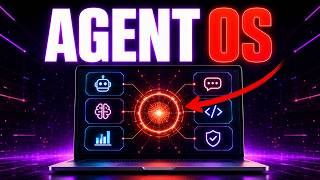

What is an AI Agent OS?
45sOpens with a clear, relatable problem (wasted time on videos) and promises a one-click solution, hooking viewers interested in AI automation.
▶ Play Clip"Title accurately reflects the content: a full course on building an Agent OS with practical steps and examples."
This video provides a comprehensive guide on building a custom Agent Operating System (Agent OS) that centralizes AI agents, custom workflows, and automation into a single dashboard. The creator demonstrates how to set up the system from scratch or using a template, integrate memory systems like Obsidian, and add custom tools such as image generators and lead generation pipelines, all while minimizing token usage and leveraging existing subscriptions.
An Agent OS is a unified dashboard where you can manage all your AI agents, build custom workflows, and automate tasks with one click. Examples include a video agent for content creation and an SEO content pipeline.
Using terminal-based agents or standard desktop apps is limiting. A custom Agent OS provides full control over appearance, functionality, and integration, making automation seamless and powerful.
You can either use a pre-built template (faster, fewer bugs) or build from scratch using chat interfaces like ChatGPT or Claude. The template is recommended for saving time.
Using GPT-5.6 (or similar), you can create a mission control dashboard by providing a description and optionally a style screenshot. The AI will generate the UI and backend.
Obsidian serves as a persistent memory system, storing all interactions as markdown files. This allows different agents (ChatGPT, Claude, Hermes) to share context and provide personalized responses.
OMI is a free open-source tool that records screen, microphone, and activity to automatically generate notes and memories, which can be exported to Obsidian.
You can add custom workflows like an image generator or lead generation tool by starting new parallel conversations in ChatGPT, each building a different feature simultaneously.
To reduce token usage, you can switch to faster/cheaper models, lower effort levels, or use free APIs like OmniRoute and local models via Ollama. A token minimization playbook can save up to 95% of tokens.
After building, test all features. If something breaks (e.g., blank screen), provide a screenshot to the AI and ask it to fix the issue. Iterative testing is crucial.
Add a Paperclip-like orchestration system to have multiple agents collaborate on tasks. A group chat feature allows agents to brainstorm and bounce ideas off each other.
A pipeline system captures ideas from group chats, plans them, gets human approval, and then builds them automatically. A gallery stores all creations for easy access.
You can integrate free APIs like OmniRoute and HY3, as well as local models via Ollama, to reduce costs. These can be added as custom tools within the Agent OS.
The Agent OS can be used for personal projects like music generation, fitness tracking, or any hobby. The system is flexible and customizable.
Stick to one agent when building to avoid conflicts. Keep the system secure by running locally. Join the AI Profit Boardroom community for templates, support, and weekly coaching.
Building your own Agent OS empowers you to automate repetitive tasks, centralize AI tools, and scale productivity. With templates and community support, anyone can create a personalized automation system that evolves with new AI models.
What is an Agent Operating System?
A unified dashboard where you can manage all your AI agents, build custom workflows, and automate tasks with one click.
What are the two approaches to building an Agent OS?
Using a pre-built template or building from scratch using chat interfaces like ChatGPT or Claude.
05:00
Which tool is recommended as a memory system for the Agent OS?
Obsidian, which stores everything as markdown files in an organized system.
12:00
What is OMI and how does it help?
OMI is a free open-source tool that records screen, microphone, and activity to automatically generate notes and memories, which can be exported to Obsidian.
16:00
How can you add multiple custom workflows simultaneously?
By starting new parallel conversations in ChatGPT, each building a different feature at the same time.
20:00
Name three strategies to reduce token usage when building an Agent OS.
Switch to cheaper models, lower effort levels, or integrate free APIs like OmniRoute and local models via Ollama.
25:00
What should you do if a feature in the Agent OS breaks?
Provide a screenshot to the AI and ask it to fix the issue.
30:00
What is the purpose of a pipeline system in the Agent OS?
To capture ideas from group chats, plan them, get human approval, and then build them automatically.
40:00
Why is it recommended to stick to one agent when building the Agent OS?
To avoid conflicts where multiple agents might overwrite or delete each other's work.
50:00
What is the AI Profit Boardroom?
A community offering templates, guides, coaching calls, and support for building Agent OS and AI automation.
55:00
Agent OS Definition
Provides a clear, concise definition of the core concept of the video.
Template vs. Scratch
Highlights a key decision point that affects time investment and success rate.
05:00Obsidian as Memory
Explains how to create a unified memory system across different AI agents.
12:00Token Optimization
Offers practical strategies to reduce costs and extend usage limits.
25:00Idea-to-Implementation Pipeline
Demonstrates a systematic approach to turning ideas into built features automatically.
40:00[00:00] Aentic Operating Systems full 1-hour course of how to build and automate anything. So today I'm going to show you exactly how to build your own agent operating system based on what's working for me. If you're wondering what an agent operating system is, basically it's a way to have all of your agents inside one beautiful dashboard where you also build out custom workflows and you have everything one click away. And the amazing thing about this is that
[00:24] you can basically have everything in one single place that's ready to automate and operate as you want. So let me give you an example. Like for me, I used to spend a lot of time creating videos. And so we created this video agent that basically does that for us in one single click. We have for example an SEO content pipeline where we can research stuff. We can find a keywords. We can generate content and then we
[00:47] just deploy it to our website in one single click. And basically everything that you want to automate, you can automate using these systems. So for example, Hermes agent, not very fun in the terminal. If you're just using the terminal, not that great. Even if you're using, for example, Hermes desktop, you still can't get it exactly how you want. With this system, for example, we have Hermes Jarvis, which is a voice operated AI agent, and it looks
[01:11] and feels exactly how I want it to look. It's got all of my projects over here. And we also have, for example, like Hermes Oracle that pulls in the latest trending news and everything else. And I'm not saying that to boast or to show off mine or anything like that. I just want to show you what's possible with this sort of stuff. So for example, this one, this is Hermes Astros, which again is a custom workflow.
[01:35] And you can rename this. You can change it how you want. You can build whatever you want using these systems. And this, for example, actually takes the latest news from Twitter, gives us the trending topic ideas, looks at different titles we could use for that content, and then also we can just plug that into the video agent. So it can automate the video. We could plug it into Notebook Lim and create for example free infographics and
[01:58] all that sort of thing. And then we can create SEO content for you. And you can build all of this for free using your existing subscriptions as well, which is very important to know. So for example, if you have chat GBT already and you're already subscribed to it, well, you can actually use chat GBT to build all this out. I actually personally used Opus 4.8 inside Claude and I've used Fable 5 to help me a lot
[02:22] along the way. And for example, if you have something that's a problem you want to solve. Let me give you an example. So a lot of people ask me like how do you automate leads and and email outreach using something like Hermes. So with Hermes, we have a tool here that can generate leads. We just type in exactly what type of leads we want to get. Here it generates a list of leads. Then it has all
[02:46] the campaigns. It can write the email campaign itself. Then it can actually send the emails with these campaigns. It pulls in all the lead details. And then from there we can manage the metrics. So we can see how many leads we got, how many we validated, how many ascendable, how many we actually sent, how many replied, and we've got our inbox and sent inbox, fully automated with Hermes agent. It's like one beautiful dashboard. And that just
[03:09] saves so much time. So this is the power of this stuff. This is how amazing it is. And you will learn how to build all this today. Um, and I'm going to show you exactly how you can get started. So, if you're wondering, you know, why why I'm the right person to to show you this, I literally spend about 3 to 4 hours a day coding this out and making it better or better. And there's so
[03:33] many mistakes I learned along the way, so many things I can improve. So, with that, let's get straight into this. So, I'm just going to be using GPT 5.6 as an example. I quite like Soul. I think it's great to build with. And you can see that we've got GPT and chat GPT work over here installed as an app. Now, for example, we set up Hermes agent. That's fully ready to go. We've used GT 5.6 as
[03:57] the brain inside Hermes agent. And now we want to, let's say, create a dashboard with it. So what we can do here is we can actually go inside the chat here and we can say okay now create a mission control dashboard where I can operate chat codeex plus Hermes agent and we can say make it clean, make it beautiful, make it interesting to use, make sure it actually works and then if you have an idea of
[04:20] what you want to create. So let's say for example you have a certain design style with that sort of thing. Well, you could actually use that for inspiration when you're building this out. So if we wanted to build this setup inside chatb, we can just take a screenshot, plug that in and just say I've attached an example of the style that I want to create. And so we can hit enter now and that will begin building
[04:44] this out. So if you want to start from zero and you want to build it exactly how you would like it in a way that's easy to use, you can go from there. Now I'll also show you another way that you can do this. So if you want to use someone else's template, so for example, we have a version of mine inside the air profit boarding that we actually update every time I code out for 3
[05:08] or 4 hours. I will actually save that. So you can see the zip file here. If you're wondering how do you install this? So you would do the same thing. You can use whatever agent you prefer. So that could be chat GBT. It could be for example Claude, whatever you prefer. And we can start a new project. Start from scratch. Save that new project. And then we can add this. So we can add the zip file.
[05:31] So we can grab the zip file over here which is there. and we can say install and configure this agent OS on a local port we don't already have running. So I like to run these things locally as well. And we'll come on to that and why in a second. But now we have two options. So we can use the setup from the air profile boardroom and that's just kind like ready to go and all good
[05:55] to go. Or the other option that we have is if you just want to build this out free from scratch, you can go and build it inside chatbittity as you can see. So now it's going to say okay what should the dashboard be able to do. So it says before implementation I need three decisions that materially affect the architecture. So we have Asian control, we have workspaces, we have application format. Now for me I'm going to
[06:19] say just allow it to run locally for me in Chrome and have one fixed folder and allow it to be fully operational. So this is something important to note. So you see when it's asking you, it's asking you like do you want it full operations so that it can actually like edit files. It can do things autonomously for you or do you want it kind of like a chat? For me, I don't want a chat because
[06:42] if I just want a chat, I'll just go to chat cheapy over here. And that is exactly why I actually created the agent OS because when you're just going back and forth inside the chat here, it's super limited. Like it doesn't feel aic, it doesn't feel powerful. it doesn't really have everything that you want and it's very very limited in terms of what it can do. So that's why I prefer it to be like way more
[07:06] powerful. The whole point of this is to build something absolutely amazing that can basically automate anything. It just runs like magic. So that's why we are setting it up like this instead. So you can see over here this is beginning to install now as well. All right. So you can see that we've got two options here. We have the agent OS being installed locally from the template and we have the Hermes agent OS over here too.
[07:30] So you got two different options. Now both of these will run like you can see. I'm actually going to switch this to fast mode. So I'm going to say switch to fast mode now. Uh just so that we can get faster outputs from both of these. That's already enabled which is great. And now when we're using here you can see that it's beginning to use this local setup. So you'll see a number like this. Now you
[07:53] might be wondering why are you running it locally? Why not just run it on VPS? Here's something to consider and this is something that I saw when I was looking at all the mistakes from openclaw and a lot of the issues that people face is that there were two things with agents that you have to be very careful of. Number one is that you have to be careful because when you're building with this sort of stuff,
[08:17] if you give access to multiple different devices, then someone externally could access your agent OS and if it can edit files, if it can control your computer, if it can do everything like that, it's not that secure. Um, if you if you're giving the world access to it. So, that's why I don't recommend that. Instead, what I recommend instead is that you use a system like this and you run it locally. Now you can run it
[08:40] on a VPS. We have plenty of AR profitable boarding members who do that and then they just limit the tools that they give access to but it's up to you how you want to do it. Now you can see that we already have the agent OS installed over here. So this is fully installed as you can see here. We've got everything set up. It's set up on a separate agent OS local port. So for example, if
[09:04] we go over here, this is my actual agent OS and then we have the template over here. So it's pretty easy. And the thing to note here is like when you're using this, you just need to configure everything, right? So it's now running uh using the template that I gave it. But I'm going to say configure everything. And just to make this simpler for you to understand, we're going to rename this project. I'm going to call
[09:28] that templated setup. And then we're going to use this project here. And we're going to call this starting from scratch. Right? New. We'll just call this new agent OS example. So, we got two different options right there. So, now it's said, okay, before I configure it, just we're just going to go go through step by step setting up each part that doesn't require an API. I'm going to say yes and figure this out, right? Just so
[09:51] that it can start working directly there. Now, we have the other setup here. So this is the other version working locally as you can see. And then I just want to make sure of one thing as well that we don't have overlapping ports. Yeah. So this is starting on this port which is 3,200 and this one is running on that port which is 127. Now you can actually see when you're doing this like it does a
[10:15] very good job of building out locally and also emulating the style that we want. So, we'll see how these go. So, it says core scaffolding is in. I'm wiring this out. Blah blah blah. Now, whilst we're waiting for those two tasks, both the new one and the templated version to be done, something else to consider is the memory setup. Now, there's so many different memory options. Like, for example, if you've never come across it, Hermes agent
[10:39] memory. So many different options right there. You can use loads of different persistent memory. There's lots of different options for this. The reason that you would have a memory is so that you're not starting from scratch and also that you link everything together. So if we have a look for example at this setup over here when you're building this out all of these agents can use the context from our memory system. Why would we want that?
[11:02] We would want that because for example one of the reasons you want to have a agent OS is that you don't go in between different apps and have to configure everything separately. So normally what happens and this is a big problem for most people is like they will go over to chat GBT and then they'll go over to Claude and these two things they don't sync together. They don't work together. So what you want instead is
[11:26] a memory system. How do you build a memory system? You can go into obsidian. Obsidian is my preferred memory system. And Obsidian basically stores everything as markdown files in a beautifully organized system like this. Now, if you're wondering how to get Obsidian, you can just go to Obsidian and it's a free app that you can download. It's actually open source as well. So, you can just get Obsidian and then you configure it like that. It won't
[11:50] look as as beautiful like this, but you can ask the agents to to organize and smarten it up for you and organize it properly so it looks more efficient. So step one is building out the dashboard which we've got chat GPT working on over here. And then step number two is that we are building the memory system inside all of this so that when we're using Claude and when we're using chat GPT and if we're using
[12:13] Hermes, they all sync together. They all work together. So the the reason for that is like then the agents know exactly what you've worked on, which means you'll get better responses. you'll get more personalized responses and it'll be easier to use each one. So if we have a look at our memory system over here and we scroll in, this is our memory galaxy. So every single dot that you can see is a individual memory and this
[12:37] is all linked together inside one beautiful galaxy where we've got all of our files over here that we can preview and we can have a look at really easy to use. And so when we're doing this, it means that we can sync our memories together and we can have every agent basically understanding what the other agents have worked on. And the other thing to note about all of this system is like every single dot inside here
[13:01] is for example like a person or a project or a business or a tool that I've used and it all gets synced inside one place. Now when you're doing this as well, you don't have to create all of this yourself. You should get your agents to do it. So you can say to, for example, Claude, hey Claude, based on everything I've worked on recently, just create a Obsidian file and organize that. And then you can say
[13:24] to GP, okay, based on my local Obsidian vault, can you just improve this? Blah blah blah. Right? And that's how it works step by step. Um, one thing I'm just going to do here is I'm going to say, don't remove the previous system that was set up on the local port. Just create a new one. So, we still need the agent OS on the old port because what it's done is basically taken my old port down
[13:48] and then replaced it. So, make sure the old one on let's find this this local port is back. It's back up ASAP and then you can use a totally different local host. So that's something to note as well is like when you're running this locally, if you're running other projects like other GitHub projects in the background, you don't want to have them conflicting because you can only run one local project on one local URL. So we've
[14:12] talked about memory and we've talked about how to build dashboard. Now also it's important to note with the memory as well something that'll make it a lot easier is you can use something like OMI and OMI can actually record your screen take notes it can listen to your microphone it can understand what you're working on and then it can create a list of memories here so you can see for example 21 minutes ago 1 hour ago
[14:35] 1 hour ago it understands everything that we've been working on recently that's really useful because then I don't have to take the notes myself and actually gets more detail than any other agent that I'm working with. So when we're using OMI, which again is another free open source project, I think they do have a subscription if you're using it a lot. But if you're just using a basic version of it, you can get access right here.
[14:59] It's available on OMI. It's MIT license. It listens to you, understands what you're working on, takes notes, and then you can actually export that to Obsidian. So, we've got OMI that goes to Obsidian and we go from there. So, if we go to home inside OMI and then we go to the settings and we check this out, we can then export this directly to Obsidian as well, which is really, really useful. So, this is building out
[15:23] now. And you'll see here that this is quite a big project for chat GPT to work on. So when it's building out from scratch, you can see here that it's beginning to build out step by step, working on everything, prioritizing the UI and the integrations here, but it might take a few minutes. It's been coding out for like 10 minutes already, just working on this brand new agent OS. Whereas, for example, as you saw before, we've
[15:46] already got the agent OS live with the template. So, it's way faster to use a template than it is to use a brand new setup from scratch. So, if you want to save time, I would just go with the template inside the air profit boardroom. But, if you want to build your own from scratch, this is how you can do it over here. Now, when we're waiting for those to run, one other thing to note here
[16:10] is that whilst we're building this and we're we're creating stuff out, you you only need to add what's relevant. One feature that I built in, and I recommend this for you, too, is that you have an option to hide things because what we're trying to build here is something where we focus on the system, not the model. So for example, openclaw, go back like two months ago. This was probably the biggest AI agent in the world.
[16:34] It's only recently that people stopped using it and that includes me because Hermes took over. So my point here is that you want to focus on the model on the system, not the model. So you can hide open claw and you can add it in. And I would allow that for yourself as well so that you can move things around, you can change it cuz things in AI are crazy. Like GC 5.6 as soon as it
[16:57] came out, absolutely mind-blowing. But GC 5.5, I would never build anything like this with it. So as you go along here, there's going to be things that you swap out that you don't need. I mean, if you look at my setup as well, because I'm testing so many things all the time, I have loads of tools here. But for you personally, you might only use Hermes or you might only use Claude and you just need to
[17:21] build out separate workflows for each one. So that's something important to know is like you don't have to use everything that you see here. It doesn't have to be as complex as this. One thing that I learned along the way was that the simpler you can make this, the better because you won't use every feature. I mean, for example, Kimmy code I personally haven't used for weeks, so I should probably hide that. But I can always
[17:45] reuse it if you know Kimmy K21A comes out and then it's absolutely mind-blowing. So you see how you can swap things in, you can swap things out, etc. But you got the mission control here. You got the daily goals list as well. This is really useful. I'd recommend building this into. And any feature that you see here that you're like, right, I want to add that in. Or for example, let's say you have an idea. You're
[18:08] like, I need to add that in. I need to add this in, etc. Right? Well, when you're building any of this out, you can go back into chat and you can say, "Okay, great. Now build out a daily journal section or now build out a daily habits tracker." Whatever feature you have in your idea, in your mind, you can build in and you can ask chat GBT to build it. And if it's taking ages to reply,
[18:32] you can just say, "Okay, add a journal feature." And if you type forward slash steer inside or if you add the message here, it will actually give you the option to steer it in the right direction if it's in the middle of coding. So that's how it works step by step. Now if you have a look, we've got the mission control template installed. So this is actually the template from the AR profit board. If we have
[18:56] a look at the setup from the agentic OS that chat has built, it looks similar, but this is the version where you're starting from scratch. Now, when you're building this out step by step, actually looks really nice. Uh when you're building this out step by step, you want to test out. So, let's just test are you working? And you'll see things that you want to improve. You'll see things you want to make better. And actually, if
[19:19] you have a look at this, it it totally blanks. So, we said, are you working? And then it just didn't reply. So, when we're fixing stuff like this, and this why it can take quite a few hours per day for me to to test out and improve this. We need to drag that screenshot in and say, "Hey, this isn't working. Can you fix it?" And we'll delete that previous responsive behavior. For example, it's not replying. And
[19:43] also, when I click enter, it actually just had a blank screen. So, just make sure you test and actually make sure it works. So, it's much easier to start from a template. A template will actually work. Whereas, for example, this setup won't. And you see how this is running through each stage of the process. Whereas, for example, with the new version from scratch, it created a nice UI, but it didn't even test it even though we
[20:07] previously asked it to. And that's on GP 5.6 so extra high. So, because it's such a big project and because it was coding for so long, it kind of forgot to do what we asked it to do because we said make sure it works. Make sure it actually um you know, actually works step by step, but it doesn't. It just created the UI. So, we've got the UI, the user interface. That's looking good. We just need
[20:30] to make sure that the rest of it is working too. So, it's going to start improving that as well. So, if we come back to chat, that's beginning to analyze it as well. Now, also the great thing about chat and you can use Claude for this. You could even use Hermes for it. Although, I think if I had a choice out of all these, I'd use chat cheapy or Claude at this point because it's just much
[20:54] more visual when you're building stuff like this. You can actually fork the conversation, right? So you can click on new over here and inside the same folder, you can have agents working in parallel on building out the agent OS. Now this is really really useful. So for example, when I'm coding out the agent OS inside Claude, what you'll see on the left hand side is that I will test and run different implementations side by side at
[21:18] the same time. What I mean, for example, is that when I was building out the video agent, I was also working on the SEO agent and I was having them both being built side by side agent operating system. And so the great thing about chat GPT as well is that you can just start a new chat here and you can say add inside the agent OS an image generator and then we'll say use GPT 5.6 ICS
[21:41] for generating the images with the oorthth / CLI setup and make sure it actually works plus allow me to save anything that I create. And so what you can see here is that we now have two conversations at the same time for our new agent OS that we're building. So every idea that you have that you think, wow, this would be valuable, you can build it at the same time. And this means, for example, you could
[22:05] have like six different conversations inside the same project that'll be encoded out side by side. So we could have, for example, a video agent, an SEO agent being coded out, the lead generation being coded out, and we're just adding new workflows inside the agent OS system as we go along. So you can see here that it's asking a few questions. I'm just going to say, yeah, just figure it out and build out, right? I don't need
[22:29] to give instructions like that to GBC 5.6 because it's smart enough to figure out for me and if it really is bad then okay no problem I can like go back and fix it later. The other cool thing about using this is like whether you're using for example claude or using chat GPT you can plug in your existing subscriptions into this system. So if you use claude a lot, ask it to build claude CLI into the
[22:52] agent OS and that way you don't need to use API which means that you don't blast through loads of tokens which means that it doesn't cost you anything extra to number one build the agent OS and number two use the agent OS because for example if we have a look inside the system we have an agentic OS system with claude with Hermes with anti-gravity with codeex now codeex already subscribed to chat cheapd before I built this
[23:16] and so it didn't cost me anything extra Claude already subscribed to it before I built it. Didn't cost me anything extra. Hermes free open source project. We plugged omni roots of brain into it. Doesn't cost me anything. So you see how you can build these agentic operating systems for free. That's very important to note as well. And now this is beginning to code step by step. It's adding the image generator inside there. It's installing Hermes as
[23:40] well. And by the way, for the actual agent OS system that uses a template, that was all set up and configured here. So it says the new system has separate configuration. And what I would do if you're installing this template from scratch from the profit boarding is just tell it listen test everything out. Anything that doesn't work, tell me and make sure that you authenticate it or if you can't authenticate it that you ask me so
[24:03] that I can set up. So the template setup is is pretty much finished at that point. That's way way easier. Whereas, for example, building out an Asian OS from scratch, you know, you could be here for a few hours or, you know, you might see something that breaks tomorrow and then you have to go and fix it as well. Now, when we were talking about the memory system as well, that Obsidian system, you can go back
[24:27] into the agent OS here and you can say also add the memory system from Obsidian. So, I have Obsidian installed locally. Install that into the agent OS as well, so it's automatically synced. and also make sure that chatub and Hermes are synced to my memory system. So when I use them, you update the obsidian as a new markdown file, but also when I ask you questions, you learn from the Obsidian vault that we have locally and
[24:51] you use that as context. That way everything is personalized inside the HOS. So this is a memory system and how you can install that. And this is pretty cool because now we have the front end plus functionality that's being tested up here. We have the custom workflow that we're building out here. And we have the memory system that's being built over here. So we're adding three different layers as we go along. And we've done that in
[25:14] the space of what 27 minutes. There's going to be some workflows as well that you have ideas for and you're like, there's no way it could do that. I would genuinely just ask because most of the time GP 5.6 can handle anything that you throw at it. I've not seen GT 5.6 be unable to build this stuff out. It It's pretty unbelievable. Everything that you can use here. And so I'm going to say figure this out.
[25:38] If I had more time, if I was here for a few hours or whatever, then what I would actually do is give it more instructions and be more in depth and just take a little bit longer to answer these questions. But I'm trying to save you time and I'm trying to show you in real time how it works without it being boring, honestly. So, if we have a look over here, we've now set up GT 5.6
[26:01] Soul with image generation. We've set up the front-end functionality, and we have the dashboard here. We can also improve it and test it out side by side inside chat GBT. So this is the operating system we've built and this is the dashboard that we've built. So if we go inside Hermes agent here, we're just going to say working and make sure Hermes agent actually replies to us. Boom. And it says yes, I'm working. What do you
[26:25] need? Now this is amazing because now we have Hermes agent. We have GPT 51.6 plugged in which is like one of the best frontier models in the world. We have chatb codeex and that's creating some amazing stuff as well. And so if we go to Hermes agent here, we can use it a genically and we can use it inside our agent OS. Now we've got it inside chat GP codeex and now we have the mission control
[26:49] as well. If we click on any of these, it takes us straight to the conversation. The UI looks nice. It looks clean. It looks simple, which is great as well. And then over here we have the live activity so we can see what's being done. We have the work that moves of recent operations. We have both of the agents that we've built and we have everything else ready to go. It's unbelievable how easy it was to
[27:12] set this up. Now, of course, we do have the image generator that needs to be tested and we'll see how that performs as well. And then we've also got the memory system that's being built out as well. So, what other layers do you need to add to this as well? That might be another question you're asking. So, something that's really, really useful is the conversation history. Now, if I open this up and it just starts from
[27:36] blank every time, not very useful. But if I can start a new chat like you can see here and we can switch between them, that is great cuz then you're kind of using Hermes like chat GBT. So you can go back and forth inside the chat of it, but also you can use it agentically because you've got Hermes agent that can basically have superpowers. It can do comput edit files locally and so it's kind of like
[28:00] you've created your own better version of chat. This is chat GPT but it can't edit my local files. Whereas for example if we go over to Hermes ancient this can work directly here too. So that's great. Now one thing that I'd also add here as well is a system where you can essentially save everything that you've created. Now I'll come on to that in a second but let's have a look at this image generator. And you
[28:23] see how we're basically building out our own SAS tool. Like think about how amazing that is. We're we're at the stage now where you can build your own tools. You don't need any technical knowledge. You don't need to be really uh technical or understand HTML or be a coder to build this stuff out. You can just build your own custom workflows using AI automation in a way that is customized and personalized to you. That is unbelievable.
[28:47] So, if we go inside here and we're like, okay, create a image of a cat eating biscuits and we'll delete this bit here. We'll change that. We'll get rid of that. You see how it's got this aspect ratio as well. So, I didn't even ask it to do that. But, Codeex fought ahead because I asked it to figure it out. That's why I quite often prefer just giving the AI to figure it out because it has
[29:11] better ideas and it has more time to give attention to this than I do. Like, if if I've been coding this out for hours, I'm going to get tired. I'm going to get distracted. It's going to be difficult to focus at times. You might get frustrated sometimes as well. Whereas, if you give the decisions to a Frontier model like GPT 5.6, ics. It can do it all for you and handle everything as you go along. So
[29:34] now we can say, okay, I want to just go with a cinematic image of a cat eating biscuits. We've got the prompt, we've got the aspect ratio, we got cinematic. We'll hit generate image. And that may not work, but so far it's actually looking really good. Really impressive, actually. And so one thing that might happen here is if we click from image studio to Hermes agent. I wonder if it's going to stop. Yeah. So you see
[29:58] how we clicked on that and then it stopped generating. So we needed it to be able to run in the background. That's another great feature. And you'll see the more you test it, the more you'll see ideas to improve it. And the more things that will come up that are kind of like bugs like this. And so what we want to do here is just say okay inside the custom workflow image generator and this is exactly
[30:22] why you want to rename the conversation. So if you rightclick and rename the conversation, you can see exactly what you're working on. It keeps makes it easy to keep track. We can go inside here and say based on the image studio, if I generate an image, can you just make sure it still runs in the background whilst I'm moving around? And also, what we've seen here is that it's actually tested out and it's found some bugs
[30:45] that we didn't even know about. So, it's turned a 500 error uh and it's uncovered a real bug there, which is fantastic as well because it's doing the bug checking for me. But overall, it's looking very, very promising and that's beginning to work. I mean, I bet if we go back to the app here and we're like, okay, create a image of a cat and then we just hit generate image, that should actually work without us
[31:09] switching between them. But let's see. So, we got the mission control, we have the different agents built in, we have the studio with custom workflows as well. Like, this is beginning to look and form something that is actually amazing. And you can see here that we've got the agentic memory vault as well. So this is the system that we've used and I actually want to add that as a tab. So I'm going to say add the
[31:33] memory system as a tab so that I can easily see the memories that have been added and see what's been done and also visualize it inside like a beautiful knowledge graph. And we can hit enter here. Now it's it's beginning to run out of work usage as you can see cuz I've been running on fast mode and we've created so much stuff side by side. I'm going to say figure this out. But the 8020 of building
[31:56] an agentic operating system is being done as you can see. And so all of this is working in the background. You do need to be careful with the token usage as well because you can easily run out of tokens. If you're wondering how to check your token usage, you can go inside the advanced section here and you can switch the effort levels and the speed and everything else. So you can see how many tokens you've used
[32:20] side by side as well here. And you can also click on reset usage as well. That's an option. Now, this is beginning to code out each part as well. Nice. Memory system should be added in. And we've hit the limit. We've So, there we go. We've hit the usage limit already. We can actually click on reset usage. That'll be quite interesting. I don't know if we can or not. Oh, yeah, we can. Oh, so you can
[32:44] do a a weekly reset usage limit as well. I didn't know that. That's pretty good. And then we've got our weekly usage limit that resets on the 18th which is quite a few days ago. But yeah, and also when you're building out with this, if you want to reduce the amount of tokens because this can become of a problem, especially if you're creating so many things in parallel using the Gentic operating system, then you've got a
[33:07] few options. You can switch off fast mode. You can switch off the intelligence. So you can actually dial down the intelligence level. You can also change and click on advanced. And then you can switch between the models. So if it's just something really basic, then you could switch the model to like cheapy 5.5 and that would use less tokens. You can change the effort level to light or medium and you can change the speed to standard.
[33:31] Now when you're building all this out, the more you reduce the amount of tokens you use by dialing down the effort, dialing down the speed, dialing down the model, the worse the outputs will be. So, there's always that balance with token optimization between creating something that you really like, but also using the plan without running out of credits. Also, something else to take into account here is that there are loads of different ways you can reduce
[33:55] the amount of tokens and minimize them even more. We've actually got 10 different strategies inside our token minimization playbook in the air profit volume that can help you save like 95% of your tokens. So, if you want to get like almost two to 3x out of your system and be able to code for more and use more tokens, then you can use this system here and it will actually reduce the amount of tokens you use. And
[34:18] that's also one of the reasons that we recommend a templated setup because, for example, with the templated setup, as you can see right here, that just installed it, configured it in the background, and that was already done in like 10 to 20 minutes. That is way better than having to build this from scratch yourself. So it's your choice but for me personally I would prefer to use like a template and setup just so I can save
[34:42] time because you know time is is really valuable. So we have talked about how to build your own agent operating system how to add custom workflows how to set up the memory inside there how to test everything works how to add new features and you can see for example we have the image of the cat eating biscuits now as well. So that custom workflow uh works really well. One thing that I'd recommend is you audit your
[35:06] time. So you look at where are you spending your time and then how can the agent OS help you. So anything that you have an idea for you can build it as you've seen. So for example the image studio we had that idea and we built it out. Now at this point you might be wondering okay what should you be focusing on? What custom workflow should you add to your agent OS? Well I would look at
[35:29] where you spend your time and then work backwards from there. So, anything that you need to do every single day on a schedule that is repeatable and doesn't require you to be there, which is basically 99% of the stuff, you should be automating and you should be building custom workflows. So, let me show you some examples of what we built here. So, inside my agent list, we have the content pipeline. The reason that we did that
[35:53] is number one, I was wasting loads of time on keyword research and I was using tools that I didn't really like. So, for example, I was using HFS for keyword research. it wouldn't really give me new data and it would give me old suggestions that weren't that helpful. With this system, I can type, for example, Agent OS or whatever I'm trying to focus on when it comes to SEO. It will pull in that data and it's
[36:17] custom made to all of my websites and the niche that I'm in. So, if we keep scrolling down here, you can see all of the different keywords that we've got. And so, this saved me about 30 minutes a week. Then from there we can click on use topic and we can actually create the content and deploy it to our websites in one single click. That is super useful for me. Now if you're watching this you might
[36:40] be like well I don't do any SEO like why do I want that? And that's exactly why you want to go back into GT5.6 based on what you work on dayto-day and tell it exactly what you do based on your time audit and ask it to build that in. So if you're spending a lot of time doing research build that in. If you spend a lot of time doing lead generation, add a lead generation tool inside
[37:04] that. That's how it works. And this just um loops round and around. So like for example, when you start automating all this stuff, I don't think that you're going to find your work less. I think that you going to find your work more productively and you achieve way more. Like I mean, for me, we can we can create way more content. We can reach way more people. We can grow way faster because we have all these
[37:28] systems in place. And so like for me, I don't see it as like a way to um free up my time. I see it as a way to save time so that I can use that to focus on other parts of the business and then just keep cycling through. Okay, what do we work on? What do we work on? What do we need to do next and next and next? Also, there's some other really cool stuff
[37:51] that you can build inside here too. So, one thing that we actually did is we noticed, okay, we have so many different agents here. We got Claude, we got Hermes, we got anti-gravity, we got Codeex. Why don't we add those inside a system that we can orchestrate? And so we actually add a paperclipip inside here as well so that we can have an organization, a team of AI agents working together. They can go off and build
[38:15] stuff 24/7. We can see everything that we've created. That is really really useful. And also a lot of people are asking us to build this in. So for example in the profitable bottom community when people ask stuff we actually build it for them. Like for example, there was um someone was asking this morning about how to use chat GBT and the new app. So what we did is we recorded like a 1hour course for them, showing
[38:39] them exactly how to use chat GBT. And so what I really like to do is get ideas from the community, figure out the problems they have, and then solve those problems with the agent OS. And I think that's really good for you. uh you can speak to your team, you can speak to your audience, you can look at the problems that you have and solve each one of them one by one by building the right systems
[39:02] in the same with the group chat here. So we have a group chat and these are just ideas of workflows you can build in because we have finished building out the example project and so this example we actually created a group chat where you can message a room and then we can say okay Claude Hermes come up with a new game idea to build it read our obsidian vaults in the memory that we talked about earlier
[39:26] and then all our agents just chip in and they speak to each other and they bounce ideas off each other. So like for example, Gemini is like, "Oh, that's a clever twist, Claude. Let's do that." And then Codeex is like, "You know what? This sounds really good to integrate OpenClora. Let's add that to our pipeline." Which brings me to the next setup. So we've got paperclipip for agent orchestration. We have the AI agent group chat. We
[39:50] can also see the history of all our group chats here. Always good to add history inside the agent OS. Otherwise, you won't be able to find stuff and you'll lose stuff and you'll create loads of awesome stuff that you can't find later. And then finally, we have the pipeline. So with the pipeline system, you can drop an idea in here and you can go from getting the idea to going into the human approval section and just
[40:13] implementing it. And this was really good cuz I found like a lot of people including myself would have so many amazing ideas, but it was very difficult to implement everything. So with this system, you can take all your ideas automatically from the group chat because the agents add this into the pipeline and then anything that you're like, right, we need to build this today. Okay, great. Let's just build it. It will come up with a plan.
[40:37] It'll plan it out. Then we can approve it. Then it will build it. And then we can view what was actually built previously. And we actually have a full gallery where we can see all of our ideas. And so we can go from idea to implementation so quickly, which is really, really cool. So if we're like, okay, we need to build out this website. Boom. Shack lacer. We can open up that website later. And again, I
[41:01] think it's so important to have like a gallery and a workspace and stuff you can see and save for later because if you don't, the biggest issue is that you will not be able to find it. It would just get lost in your downloads and that will go with the other 100 projects you're working on and then you won't be able to find it. So that's why having a a a gallery in a pipeline is so
[41:24] so useful. Now what we also have over here is we have for example Claude and any anytime like Claude actually brings something useful out we add that feature in as well as a separate tab. I'd recommend that for you too. So for example if you saw the Ultra Code update this was amazing. You could have a full team of agents working in parallel working together towards one task and you don't have to orchestrate it. Claude is
[41:48] the orchestrator and it builds the sub agents for you. So with this system, we just added that as a separate tab and it's like you create your own custom version of Claude that you can edit, you can change the UI of anytime you want and you can come back to at any point. Then we have Hermes. So Hermes again really really powerful. One of the things I notic is like they bring out new there's always new
[42:12] models that we can plug into Hermes. And this is why you want to focus on the system not the model. So for example, GT 5.6 comes out. No problem. We're going to build that out. doesn't change how I work, doesn't make me have to rebuild anything. It's just like we can add the model inside the system. The same for example, a lot of people asking about how to have a voice activated AI agent that we can
[42:35] talk to. And so we actually build that into this system as you can see. So what it can do is it can listen to me. It can talk to me. It can build stuff out for me. And then again, we've got the full gallery here of everything we've created. Then we have Hermes Oracle. For me, I was just finding way too much time was being taken researching the latest news. And so, I created this. I also
[42:59] think a great tip for you here if you're building out your own agent OS is that you make sure it's super visual and fun to use. So, for example, we just added this little icon here. And I think it just it's those little touches. It's a little UI touches that make it fun and easy to use and very memorable. So when I see this, I'm like, okay, I know exactly what this does because I I associate
[43:22] the image with the workflow here. And if you don't like the UI or something like that, you can always customize here for later, too. So we have a image studio here, too. But we actually have a video and a voice session as well. You can also see your previous sessions of what's been done across all of your AI agents, which is great. We see the status. We can see the skills installed into our Hermes agent, the
[43:46] camurn, the plugins, the doctor, the insights. These are all just really cool ideas. Again, as you make it more complex, more things can break. And also, if you're using APIs in any part of that, just be careful because, you know, number one, you don't want to rinse the tokens if you're using the API cuz it can get expensive. And number two, sometimes the APIs will break or they expire and you have to be careful that too.
[44:10] What I also like to do is I like to separate the outputs by the system depending on the model. And what I mean by that, for example, is we have Hermes here. What I recommend for you is that you build out a workspace where you can track all your creations by the model that's created it. So when we were testing out Grock 4.5 earlier this week, we have all of the creations from Gro 4.5 saved inside
[44:33] the workspace. Really useful. We have the MCP section here. We have the actual Hermes dashboard embedded inside the system. Another really good tip as well is that if you see anything open source that you think, "Wow, that would be great to build in." Right? So, for example, if we have a look through this list, uh we see what we've got here like omni. This is a free uh this is a free way a free API that
[44:57] you can use to build and automate anything with. Now, why is that important for you? Well, let's say for example, you're using the agent OS and you want to reduce the amount of tokens you use. Well, you could take a project like this. So you can grab the GitHub link. You can go back into chat GBT here and you can say okay based on this build this into the Asian OS system so that I can code
[45:21] for free and then that's going to take the details from Omniroot install it into your agent OS and all of a sudden you've not just got chat GPT and Hermes in there you've now got a system with a free coder. And if you're wondering how does that look like in reality, here's an example. So this is a custom tool we made with OmniRoom where we can code out for free. We have the chat over here. We
[45:44] have the preview over here. We have the workspace over here. All right. Really, really powerful stuff. We have, for example, HY3 code. And also some of this stuff will expire. So for example, at HY3, it's only available for free until the 21st. And so no problem. As soon as the 21st hits, we can delete this whole section or we can hide it and we can, you know, do something else. The same for example with Sakana Fugu
[46:08] like Sakana Fugu is an API like it's not that nice to use and it's kind of like you have to find a place to store it and be able to come back to it. So what did we do? We built out our own custom tool with Sakana Fugu where we can see everything that we've created. We can chat with it. We can ask it to do stuff and everything is stored inside one system right here. And
[46:32] then anytime something is trending or interesting that I want to play with for example like loops. loop engineering was something big that was, you know, everyone was talking about about two weeks ago. We plugged in the loop engineering system here. And then the other thing I would say here is like when you're building out agent operating systems, it doesn't just have to be for business stuff. So, for example, you could have a system like this where
[46:55] you can generate music. Uh it could be, for example, your goals. If you were really into Muay Thai, you know, you could have something related to that hit. It could be like a a tracker for training or something like that. Whatever you prefer to do, you can plug it inside the system. So you could, we have a music generator here. If I want to just create some music that I'm interested in for particularly for like ambient
[47:19] music, then I can just plug this inside the system. We can get the files. We can come back to the AI music we've generated later and it's all ready to go inside there as well. So those are all the systems that we get. Another orchestration system as well, and this is with Hermes is the camb board. Now with the camb board, what we have is a system where we can drop in a task. It gets automatically
[47:43] triaged and then all of our agents and we've got many different agent profiles get assigned to that task as well. So yeah, it's unbelievable. It's really changed the way that I work. And the other thing I would say here is it changes the way your team works as well. If you have a team like for me, I have an SEO agency and you know we've we've got a team who needs to be able to use AI
[48:06] and that sort of thing. We can give this to like our team of editors and they can use a video agent. And if we have a look down here as well, these are all reviews and testimonials from the AI powerful boardroom. You can see here for example like so many people are getting awesome wins and awesome results with the agent OS. Like Jacob, he set it up in about 10 minutes and you saw that I set
[48:30] up today as well. And Jacob was spending like 12 hours a day trying to build out the agent OS. Um then he just did it in 10 minutes by using our template. David was saying like Julian is cooking harder on his agent OS than anybody I've seen. Uh so it's a great way to customize it. And you can see for example like Sheena as well. Sheena actually created her own version of our agent OS and used
[48:54] it for lead generation. Now, one thing that I get asked all the time by people is like, you know what? If if you're, for example, thinking about selling AI agent services or AI automation, what's the one thing the clients want to see? What is in demand right now? And for sure, it's the agent operating system. Like, if you can build out custom workflows that solve all the problems your customer has by creating amazing systems like you've
[49:17] seen today. So, if they need help generating images, you create the image studio. If they need help generating videos, you create the video studio. If they need help generating social media content, you create a social media agent. And how do you do it? You just go back into codeex and you test it out for later. So, you can easily build out all this stuff and you just grab their idea. You solve all the problems and you
[49:41] go from there. Now, as well, one thing that I'll say here is like you might be tempted to have Claude and Codeex work on the same thing at the same time. I personally wouldn't recommend that. So, if you are building out with an agent and you're trying to work on the agent OS, you're trying to improve it day by day, trying to make it better as a system. The thing that I'd recommend here is that you
[50:05] just use one agent. So, for me, for example, I'm using Claude right now and I use Fable 5 to help me. You might prefer using chat GBT. You might prefer using Hermes, but stick to one because if you have multiple agents in multiple different apps, number one, that gets really messy when you're building out an agent operating system. And number two, they could like overwrite or delete something that the other agent is building. So if for
[50:28] example, Claude is building out something that's just broken, chat might be like, let's remove that from the code. and then all of a sudden you've got two agents kind of interrupting each other's work and that can get super messy. Wouldn't recommend that. One thing that I haven't tested that I would be very interested in testing though is with codeex is very easy to add plugins. Now what would be very interesting here is if you could add
[50:52] those plugins inside the agent OS as well. So as an example of that like we've got email and Gmail plugged into codeex right into chat chy work. So it can send emails for us it can manage our emails you can draft replies for us and nothing else. Now what would be very interesting is to say to codeex hey build out this schedule task into my agent OS so that we have a email agent inside there. I'm
[51:16] not going to do that right now because I think it's a task that will probably take about 20 or 30 minutes to really perfect, but that would be interesting as well. So to take the plug-in section from codeex and start adding that into your agent OS so that you can automate and build anything as you want right there. Other things I'd recommend number two is you might be tempted to put this on a website for example
[51:39] like like a lot of our websites we we use with Netifi. I wouldn't do that just because again like I think you need to keep it secure and everything else. Also if you want to reduce the amount of tokens you can also use stuff like um free APIs and you can use local models. So if we go to the local section here we can use local models from OAMA or LM studio and this is particularly good
[52:03] for like the tasks that are quite timeconuming but don't need frontier levels of effort. So let's say for example we're looking at all of the models on um Olama and we're like okay ornif looks awesome right actually is a really good tool I've tested out personally we have a local leaderboard on goldie bench with all the local models and you can see what we've created you can see how they perform and everything else and so you
[52:27] might be tempted to build that into your agent OS as well and I I think it's actually pretty interesting to build out a local coder and so what we have over here is we have this local section and we have the preview of everything we've created what the workspace of our previous generations and we can use local models inside the system too and that's another way to use it for free because then you got a combination
[52:50] of like omnirute which is you know a free free way to use like 90 models and it kind of orchestrates across them you have hy which is another free API you can plug into the system and then you have local models which are basically free forever once you've installed them so between those two those three things. You can really reduce the amount of tokens that you use as well. What else can we do here? The other
[53:14] thing that I like to do is when I'm testing out all of the models with the same agent that builds out the agent OS with all the creations, I just put them on Goldiebench so that I can document the process here. It's another good way to generate leads because people are searching for interesting stuff. People want to know what you've built with it. People are interested in your agent OS if you actually share what you're working
[53:38] on and everything else. especially if you're working on like some new unique stuff. And so you can actually give your agent OS access to Netify as well. And then it can like document the whole process, the whole building of the agent OS and what you've done. Kind of like a journal, but it's not you updating it. It's not you writing, it's your agent, which is really cool as well. So that's basically it. That is the whole
[54:01] system. How to build an agent operating system, how to customize it as much as you want, how to add a memory inside there, which agent to use to build it, how to reduce the amount of tokens you want, um, also how to create a system that actually works rather than just breaks and also how to use it in a simplified way using our templates. Now, if you want to get my full agent operating system, you can
[54:25] get that inside the air profitable inside the agent OS system section right here. So, we update this daily. You can get the zip file for it. You can get the last you see the last update date here you can get a full guide on how to use it and then every time we build something useful. So for example like we created a chat sheet 5161 hour course you can get that over here as well and then
[54:49] also if you want more help and support on building out with the agent OS you can post inside the community and we reply to you and create a video tutorial for you every single day. So for example like Matt was asking about OMI and the best ways to use it and what you can use instead. we solve that problem for him and we we reply to everyone and just help each other as much as we can
[55:12] as you know in the best way that we can as well. Inside the classroom you can get access to all of our best trainings. If you're a complete beginner you can go from beginners to expert inside this section and inside the calendar you can jump on weekly coaching calls. Now this is super useful because you can share your screen, you can ask questions, you can get help and support time and you can also meet other community
[55:36] members who are building out this sort of stuff as well inside the map as well. You can meet people locally who are building out with AI agents like you and this is all available inside the AI profit boardroom link in the comments description or just go to the AI profitboard.com. One other thing that has been really useful when we're building out all this stuff is that when a model like for example doesn't work the same way
[56:00] or you can't use it anymore. So for example, Fable 5 was a great example of that because you got a system that improves every single day. It doesn't really matter about that sort of stuff. You don't need to worry about that. So if GT 5.6 comes out, that's great. We can add it in. But if for example Fable 5 got taken down which it did a few weeks ago it doesn't matter because in like 2 minutes
[56:23] you can go back into chat sheep and you can say hey remove the integration with Fable 5 add this in etc. And also one thing that's really useful is because you've named the conversations you can come back in like two weeks and edit that conversation. So, for example, what I like to do inside Claude, if I'm scrolling down, if I need to improve the setup that we have with Ponytail, which is another AI project, I can
[56:47] go back inside the chat here and I can say, "Hey, add this, change that." And because everything is named, it's super easy to organize and it's easy to see everything as well. Some other interesting things that we've set up too in the past is like computer use with the agent OS. So I can go inside Hermes for example and I can say hey Hermes um can you just open up Google for me and that sort of
[57:11] thing and we can actually do that with Apollo which is the voice agent and that actually has access to uh computers as well. So it can like edit local files it can edit um it can open stuff inside your browser and everything else as well which is really really good. And that's pretty much it when it comes to the whole system. I mean it's it's so much fun to build. It's so inspiring to build. It's also
[57:34] great to just build something that feels like your own. It's It's never been more fun to use and I think this has only been possible this year. Like if you went back last year, it was great using AI, but you couldn't build in the same way. The models were just not at this level. Whereas when you're building an agent operating system now, any custom workflow that you have, things that you've never even dreamed of creating before,
[57:58] you can just add inside this, you know, you can plug it in like right, want to add this, want to delete that. No problem at all. So it's it's so much fun. So much fun. Uh some other things that you can do as well is you can get skills and then you can plug them into the system. So for example, like there's a skill for reducing tokens which is called caveman. And with caveman, it basically reduces
[58:22] the amount of output tokens you plug in and you could add that inside the system as well. The final thing that I would say and this just a little feature is that you can delete stuff. Give yourself the ability to delete stuff. So you can go into chat GP and you just say okay make sure that everything that we create inside the agent operating system we can delete so that I can remove anything that doesn't work
[58:45] because like sometimes you might generate something with chill environment 2 but then it actually doesn't work very well. And so how do you get around that? Well, you can just make sure that you have the ability to delete that and just add a delete icon for later. So that is basically it. That is a full 1hour course on how to build agent operating systems, how to automate anything, how to build your own custom workflows. If you
[59:09] want my full setup, you can get that inside the AR profit boardroom. And you can get an amazing community that's all using this sort of stuff. You can connect with me personally. You can direct message me anytime you need anything. And thanks very much for watching. I will see you in the next one. Cheers. Bye-bye.
⚡ Saved you 0h 59m reading this? Transcribe any YouTube video for free — no signup needed.