
4 Steps to Profitable Trading Strategies
44sDirectly addresses a common pain point (creating profitable strategies) with a clear, step-by-step promise, hooking viewers seeking actionable trading advice.
▶ Play Clip"The title promises a simple 4-step method and delivers exactly that, with clear examples and actionable advice."
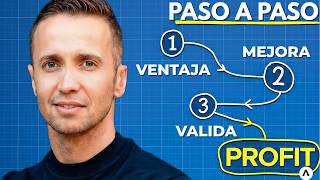
This video presents a 4-step methodology for creating profitable algorithmic trading strategies. The speaker, Rubén Martínez, emphasizes starting with a causal advantage or market inefficiency, then improving it with filters and exits, validating robustness, and finally deploying to live markets.
Rubén introduces his 4-step workflow for creating robust, data-driven algorithmic trading strategies, based on his experience as an algorithmic trader.
The first step is identifying the strategy's advantage or inefficiency, which is the reason for its profitability. This can come from human behavior, asset characteristics, or external sources like books and podcasts.
Strategies must have a causal component, not just data-mined patterns. The advantage should be explainable and persistent, ensuring the strategy remains profitable in real trading.
A valid advantage must have persistence (works over many events), capacity (scalable capital), and simple causality (easily explainable).
Rubén uses the RSI(2) strategy from Larry Williams' book as an example. The advantage is that extreme RSI levels indicate reversals, but it's not yet a tradable system.
Turn the advantage into a tradable system by adding filters (e.g., market regime, volatility), stop-loss/take-profit levels, time-based exits, or exit signals.
Adding a 200-period moving average filter improves the profit factor from 1.5 to 1.84, but the strategy is still not ready for live trading.
Validate the strategy using out-of-sample data, robustness tests (parameter sensitivity), and cross-market testing. This ensures the strategy is not over-optimized.
The RSI(2) strategy performs well on both NASDAQ and S&P 500, indicating robustness across similar markets.
Deploy the strategy to a demo account or incubate it for a period before going live. Rubén recommends not spending too much time in demo and focusing on a few solid strategies.
A refined strategy shows 377 trades, 75% win rate, good profit factor, and only 14% market exposure time.
The key to successful algorithmic trading is starting with a causal advantage, systematically improving it, validating robustness, and deploying with discipline. Application of the methodology is more important than theory.
What is the first step in creating a profitable algorithmic trading strategy according to the video?
Identify a causal advantage or market inefficiency.
01:05
What three characteristics must a valid advantage have?
Persistence, capacity, and simple causality.
05:30
What is the example advantage used in the video?
Larry Williams' RSI(2) strategy: buy when RSI < 20, sell when RSI > 80.
07:31
What filter was added to the RSI(2) strategy to improve it?
A 200-period moving average filter: only buy when price is above the MA.
11:10
What was the profit factor improvement after adding the 200-period MA filter?
From 1.5 to 1.84.
12:04
What is the purpose of robustness tests?
To check if the strategy remains profitable when parameters are slightly changed.
14:06
What is cross-market testing?
Testing the strategy on similar markets (e.g., NASDAQ and S&P 500) to see if it performs well.
15:28
What is the recommended deployment step before going live?
Run the strategy on a demo account or incubate it for a period (e.g., two months).
17:06
What were the final metrics of the refined strategy?
377 trades, 75% win rate, good profit factor, 14% market exposure time.
18:56
Causal Component is Key
Emphasizes that strategies must have a causal reason, not just data-mined patterns, to remain profitable in real trading.
03:39Three Characteristics of a Valid Advantage
Provides a clear checklist for evaluating any trading edge: persistence, capacity, and simple causality.
05:30Improvement Through Filters and Exits
Shows how to turn a raw advantage into a tradable system using practical techniques like filters and stop-losses.
08:39Robustness Testing Over Optimization
Warns against over-optimization and stresses the importance of parameter sensitivity tests.
14:06Deployment Strategy: Demo and Incubation
Recommends a practical deployment process: demo account or incubation before live trading.
16:54[00:01] step how to create profitable and robust strategies, especially how to do it based on data to have that certainty that it is statistically this in a 100% automated way. You're probably wondering,
[00:13] here?" My name is Rubén Martínez, I'm an algorithmic trader, I've been doing made many mistakes, some successes, and this is my current workflow in which everything is optimized to create the best strategies and
[00:27] has brought me the best results, therefore, I'm bringing it here so that you can apply it yourself. Let's get to the methodology. steps and each one is perfectly detailed to fulfill a function
[00:40] within the workflow. You'll see it's very simple, really, if you apply it step by step it's not crazy at all, but it's important to follow an order and have a reason why. Above all, what I'm
[00:52] going to explain is why we do each thing, and because nowadays there is tools, but the most important thing is to ask ourselves why we do each of the steps, and everything has a meaning and is perfectly detailed. As you will see
[01:05] below, we are going to start with the basics, that is, with the foundations of a good strategy. And within these four steps, the first step is the advantage or inefficiency of the strategy itself. The advantage is what makes
[01:18] the strategy profitable, that is, the reason for the strategy's existence, what the system itself is exploiting . Well, we can find this advantage in podcasts, in books, in a lot of materials out there
[01:30] . And well, this advantage can exploit different behaviors, human behavior itself. For example, let me give you a strategy that we gold, which I've mentioned many times. It's about buying gold on
[01:44] Fridays and selling it on Mondays, because on Fridays many funds hedge their positions in stocks, and there's usually a lot of activity going on them, either by selling or going long on Friday. Therefore, there
[01:56] we would have human behavior that makes that strategy make sense, and that is the main advantage. It could also be asset itself, for example, a strategy that is minimizing reversion in an index that
[02:10] works quite well. Because? Due to the trend that the index follows. We can really exploit different advantages. Each one may have a different reason for being, but what is certain is that they have to meet a series of
[02:22] characteristics that we will see below. But this is what it does, or what I'm explaining is the driver or the hypothesis behind the advantage itself. And as I was saying before, this driver or this hypothesis, it may well
[02:34] be that we have made, we have formulated that hypothesis and then we are going to test it. Or it could be that we 've explored it in, well, as I mentioned, podcasts, books, uh, material that's out there, different, for example,
[02:47] uh, colleagues, managers who talk to you and say, "Hey, well, I've been using that strategy and it works quite well. Look at this pattern, whatever, and from there And here's an important tip, because you're probably wondering,
[03:00] how can I find advantages of this type? If you find books that this type? If you find books that have been published for 10, 15 years, well, 5 years can also work, what you can do is really see what would have
[03:12] published. And it's a very simple way to see if that advantage or inefficiency is working or not. And that gives us a lot of clues as to whether it is solid, whether it is robust, and whether it makes sense to apply it again today
[03:26] because we are going to see that the advantages have to have a series of checks when it comes to putting it into practice. But what I do in my case, and what we always do, is start from an advantage. This is important, we don't
[03:39] build haphazardly, we don't choose an artificial intelligence tool, we don't choose any of that and start creating randomly. Because? Because you can . The reality is that yes. Can those kinds of strategies work well
[03:53] may be mere coincidence that you have a curve that seems to make the strategy super profitable, but then you looking for is a causal component, that is, something
[04:08] behind it that causes that strategy to remain profitable, because what we want be profitable in real terms. How can we find all this? Well, as I was saying, either with an external source or with our own generation. You can
[04:21] generate them yourself or we can find our own source. Otherwise, if you already know a the conclusion of what I mentioned earlier about gold. In other words, listen, I'm seeing that almost every Friday there's a bias in favor of gold,
[04:35] favorable for gold. So, you can actually search for or formulate that hypothesis and from there create a strategy based on that. Or what you could also do is, for example, in the case of indices, create a
[04:49] trend because you see that the asset is trending. So, create a strategy that takes advantage of that very trend. You can also do a mix and say, "I have come to this hypothesis and I am going to look for information that
[05:02] refutes this hypothesis and that really supports what I have been observing." But external source, as I mentioned before, whether it's with material that's out there, magazines, books, blogs, whatever, or you can
[05:16] also do it with your own generation if you can reach that conclusion yourself. So, there's a part here where we're going to tie together the foundation of the advantage itself, okay? And we're going to ask for a series of characteristics that
[05:30] this advantage must have in order to be valid. This is very important. This is what any advantage must have to be considered valid. One of the persistence. And what do we mean by that? Because it's not really something
[05:44] we can rely on during one, two, or three events to make a strategy profitable. For example, if we want a strategy that favors a bullish gold price, but it has only really
[05:57] worked well for 3 years and has n't worked as well the rest of the time, or if we see that the weekend seasonal pattern I mentioned earlier has worked well for 3 years but hasn't the rest of the time
[06:09] , we couldn't consider it a strategy with a solid edge, and explore other types of advantages. Another thing that a good advantage needs is capacity, meaning that it does
[06:22] n't really limit you in terms of capital scalability. Can I operate this with 1,000 or 2,000 units? Because otherwise, at least in our case, it to say, "Hey, I have an advantage here that I might be able to
[06:37] scales, this will put a lot of pressure on operations and therefore won't be capacity are also important for applying an advantage. And simple causality, which is what we were discussing earlier, that
[06:51] this causality can be explained quickly or simply. You can explain it very simply to someone in a stock market. Oil usually has a bullish trend on this day of the week, a bearish trend, sorry, on that
[07:04] behind it. SM Reversal strategies can work on indices because of this, because there's a driver or something behind it where that cause and effect allows you to say, "This advantage is working because it's based on this." That
[07:18] gives you a lot of peace of mind, and then when you go to apply it in real trading, knowing that will make you much more confident in your trading strategy; you'll feel It will be much more comfortable, and everything will flow much better. So, we already
[07:31] advantage. That's the structure, that's the foundation of our methodology. And example, as we like to do, because in the end, theory is all well and good, but it's a bit of a windblown thing. And we're going to do it with Larry Williams' typical RSI of 2. I
[07:46] have it here for you. And you'll see that it's a very simple strategy: when the RSI is below 20, we buy, and when it's above 80, we sell. It's in his book, about how to get us out of the short term and how the
[07:58] published many years ago. Therefore, here we have this advantage or this inefficiency, and you might say, "Hey, these you going to trade this, man?" The reality is that an advantage isn't tradable. An
[08:11] advantage is just that, an advantage. We're seeing that there's something here, something that can be extracted, and something that can be filtered out. From there, we can create a trading system. What we want to achieve with this inefficiency is to
[08:25] see that there's actually a tailwind, and therefore, from this point, we can filter and refine our trading system or strategy . You'll see how we'll go through it step by step, but
[08:39] explanation, and you'll see how everything will fit together move on to step two, which is improvement—how to turn that advantage into before. And for this, one of the best things we can do is apply
[08:54] a filter, that is, include a filter. This could be for market regime, filter, for example, if we have a strategy that exploits dips; perhaps we can focus on periods of high volatility. So,
[09:07] volatility, we're much more likely to take advantage of , because otherwise, we'll have many you understand? So it's a bit like the market regime that we
[09:20] can apply, whether it's volatility or trend-based—different filters always entering the market. For example, I mentioned the weekend gold strategy earlier. Well, if we include a filter here, such as
[09:34] only trading when there's a bullish trend in gold, we 're eliminating many situations where gold isn't tradeable, and the much more refined. So, we don't always enter; we only enter when
[09:49] thing we can do, besides including a filter, is stop-loss and take-profit levels, or even exiting based on time. For example, we're in the market, but after three days we exit.
[10:03] Why? Because if after three days there's no favorable movement, and profit haven't been triggered, the best thing for the strategy is to exit based on time. In this way, we're also managing the position, and we're
[10:16] profit level, which we like to adjust based on volatility. This way, we make much better use of our capital. Finally, another thing we can do is apply an exit signal. For
[10:30] I mentioned earlier about gold or RSD2, we can include a quick exit. clear because it was triggered on Monday, but we can include another exit
[10:43] , such as when an oversold condition is reached on a certain timeframe. We exit, or in the case of R62, we exit quickly when, instead of the R6 reaching 80, we look for a
[10:57] better level, perhaps 60. So, we're looking for a better These are the improvements we'll look for within the strategy, whether through filtering, stop-loss, take-profit, or other enhancements. The
[11:10] So, let's continue with the example, and I want to show you that example, and I want to show you that RSID2 with a filter, simply a 200-period moving average filter. That is , if we were only
[11:23] going to buy when there's a confirmed uptrend, meaning the closing price is higher than the 200-period moving average, what we're going to do here is not buy all the time, but simply
[11:35] Therefore, we're going to buy here when there's oversold conditions, but when the price This way, when the price falls below the 200-period moving average, and therefore when there are sharp drops in the stock market and the index, you won't be caught out by that entire
[11:50] drop, and you won't be constantly looking for buy opportunities throughout that decline. a confirmed uptrend. So, for example, here we have a strategy that already had a profit factor of 1.5 in the previous strategy,
[12:04] and here we have... For example, 1.84, and it's already a more refined strategy. Is this actionable? The reality is, no. How could this be significantly improved? Yes, I've included a filter here, which is basically a
[12:16] 200-period moving average filter, but I've included it simply to show you how just using this filter can significantly improve everything. However, there are what we do is rely on technology to find that filter,
[12:30] that stop-loss level, that take- profit level, and improve the strategy. In this way, we provide the criteria, that is, the advantage or the inefficiency, and from technology to find the best stop- loss, the best take-profit, the best
[12:43] filter, and follow the step-by-step process we'll see next. To summarize what we advantage and from there we improve it with software like Strategy One, and from there we look for that improvement to the strategy. We stay
[12:56] there with that improvement, and that's it, right? It has to be done with a A series of steps, or we need to looking for. How are we going to do that validation? We can't just search haphazardly; what we're going to do is search and validate whether those results are
[13:10] profitable, unprofitable, and above all, whether they are robust over time. The first evaluation method we're going to use is to select a portion of the data to create the strategy and another portion of the data to validate whether that
[13:26] strategy has actually been profitable. That's the first and very basic filter to really reach a conclusion and say, "Hey, we've created something that fits this data very well, but when we look at it with other data, this wouldn't have
[13:38] been profitable." Therefore, here we eliminate a portion that isn't necessary to apply in real-world situations because the strategy doesn't support other data. is probably over-optimized, which you 've probably heard before.
[13:52] So, we're going to discard that strategy. Then we're going to do different robustness tests to check if the strategy is truly robust or not. I mean, it's not about finding the best parameters for the strategy to make it
[14:06] want that. What we're going to do here are tests: "Hey, changing the strategy parameters a little, how would it behave?" Right? If we have a the stop loss, does the strategy remain profitable or not? If slightly changing
[14:21] remain profitable or not? Because ultimately, what we want is for the strategy to be as insensitive as possible to these changes, because that will give us a lot of information about the strategy's robustness. And this step is
[14:33] also important to focus on: robustness tests are important because they give us information about the system itself, but it's even more important to start from that initial advantage, so that when creating the entire process, we do
[14:47] n't leave too much room for error. Why? Because we can get lost in come from data mining, and those robustness tests might even pass. But that doesn't mean the strategy is necessarily
[15:01] robust. What makes the strategy robust is starting from that inefficiency and then also running those tests. Robustness testing is a complement to all of that, right? Because even robustness tests can be based on
[15:14] a random strategy, but having that criterion and robustness testing gives us that extra edge to then apply the strategy in real-world scenarios. Furthermore, strategy. For example, if we've applied it or are creating it for the
[15:28] NASDAQ, we'll see how it performs on the S&P 500 or another index to really see if it's something we've identified as specific to one market and how it similar market. For instance, if you tell me, for
[15:41] apply it to one index, but it doesn't work well in fixed income," that's normal; if we apply it to other markets that have a fairly similar component, that gives us some proof, it also gives us a robustness test of the
[15:56] performed? Sensitivity analysis at the end, too, to do raise the [prices] a little..." Commissions, how does this strategy affect it? If we change and alter the market conditions a little , how does
[16:11] is for it to be as insensitive as possible, as robust as possible, right? So, that 's important when applying it. For example, now you're going to see saw earlier, the Nasdaq R62, performs on an S&P 500. So, I'm going
[16:26] to show it to you as well, to continue with the example, so you can see, for example, here, look, it even performs better than on the Nasdaq itself. That gives us some information that this advantage works in different markets; therefore, it's
[16:40] works in different markets . Okay. And now we have a system that starts with an advantage that we've filtered and that has passed all the filters and the system's own validation. Therefore,
[16:54] connect to a live trading environment. So, now let's see what an example of a connect to a live trading environment would look like. But Before connecting to a live account, it's best to connect to a demo account first
[17:06] . Well, here we can do two things: we can run it through a demo account. run it through a demo account, or you can incubate it. incubating it mean? It means you leave it for a period of time, during which you already have strategies in place, and you
[17:18] Then, after those two months have passed, you can review what has happened to that strategy , because ultimately, it's the best filter you can use. A couple of months have passed. Here, you can check if it has actually
[17:32] can also leave it in forward testing, meaning you connect the strategy and observe its behavior, or you can connect it to a demo account. You can also connect it to a demo account if you prefer, or you
[17:46] can take it to a live account if you have enough experience . We are in favor of not spending too much time in a demo account. In a testing, especially with the first portfolio. Once you have your
[17:58] create more strategies, let them incubate, and there they are, ready to be incubate, and there they are, ready to be in the original portfolio in the future. If not,
[18:11] no need to go crazy with 100,000 strategies. Ultimately, it's about simple, working strategies and doing everything in the results. We have a strategy that we applied last year in the WCT
[18:26] strategies that worked well for us in that championship and helped us achieve good profitability. Therefore, I'm going to show you the backtest of the strategy itself and the metrics. So, this is something where
[18:40] filtered strategy—well, one that tradable. We don't recommend trading something like that because you really wouldn't be able because it can be improved so much more. It would be absurd to trade something that you can
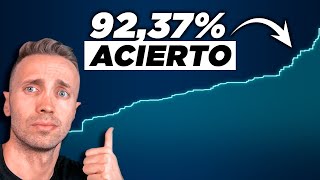
[18:56] improve so much more. And look how this can become something like this. We can even see here the number of trades: 377 trades with a 75% success rate, a good profit factor, good metrics overall, and
[19:12] even a market exposure time of 14%, which doesn't mean we're always in the market, but simply a small part of the the strategy's own metrics , how to go from an advantage to
[19:28] the end result with all that validation process we've seen to reach seeing on the screen is the complete workflow, which, if you want to next few days. And if you don't have the link below in the description or in the
[19:41] besides a class where I explain the results, how to apply all of this. A more extensive example... it's a class of... It's an 11-minute video, but it really shows the reality of all this, and there are some
[19:56] In addition, you'll receive the workflow in the next few days so you have it on hand to refer to, review, apply. Ultimately, the key is application. We always
[20:08] we can discuss whether a step comes before or after, but the important thing, the thing that will make all the difference, is that you apply everything to achieve know we also have a private community for all of this. That's all for now.
[20:21] YouTube notifies you or if you're subscribed to the private playlist. Sure. Bye.
⚡ Saved you 0h 20m reading this? Transcribe any YouTube video for free — no signup needed.