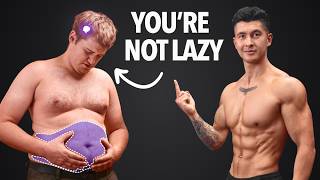

Your Brain Secretly Wants You Fat
40sShocking claim about hypothalamus controlling fat loss triggers curiosity and relatability.
▶ Play Clip"The title promises a method to force your brain to release fat, and the video delivers science-backed strategies to outsmart the hypothalamus."
This video explains how the hypothalamus controls hunger, cravings, and metabolism, and how understanding its three 'weapons' can help you outsmart it for effective fat loss. It provides practical strategies involving protein intake, volume eating, sleep, stress management, walking, and strength training.
The hypothalamus regulates hunger, cravings, and calorie burn. It evolved to protect fat stores, making fat loss difficult.
Hunger, cravings, and metabolic slowdown are the three mechanisms the hypothalamus uses to prevent fat loss.
Increasing protein intake can override hunger signals. A study showed doubling protein led to 440 fewer calories eaten per day and 10 lbs of fat loss.
Consuming at least 30g of protein per meal helps override hypothalamic hunger signals.
The hypothalamus measures stomach stretch, not calories. High-volume, low-calorie foods like popcorn and vegetables increase fullness.
A 1995 study found boiled potatoes are 7 times more filling than croissants per calorie. High water, fiber, and bulk foods rank highest.
Using half rice and adding green peas reduces calorie density while maintaining volume.
A 1 kg dessert (sugar-free Jell-O, Greek yogurt, protein powder, strawberries) can be made for 300 calories.
Visible and accessible foods increase cravings. A study found people ate twice as much candy from a clear bowl on the desk vs. an opaque jar across the room.
Sleep deprivation increases hunger hormones and decreases fullness hormones. Stress triggers the hypothalamus to encourage eating.
The hypothalamus reduces non-exercise activity thermogenesis (NEAT) during fat loss, lowering daily calorie burn.
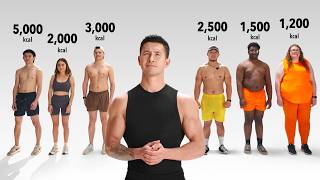
Walking and tracking steps counteract metabolic slowdown. NEAT can vary by up to 2000 calories per day between individuals.
Strength training signals the body to use fat for energy and preserve muscle, preventing regain.
Losing 0.5-1.5 lbs per week (300-700 calorie deficit) prevents the hypothalamus from triggering emergency responses.
Dayton lost 26 lbs of fat and gained 7 lbs of lean mass over 150 days using a structured plan with manageable hunger and metabolic slowdown.
By understanding and outsmarting the hypothalamus through protein, volume eating, sleep, stress management, walking, and strength training, you can achieve sustainable fat loss without triggering the body's defensive mechanisms.
What part of the brain controls hunger, cravings, and calorie burn?
The hypothalamus.
00:02
What are the three weapons the hypothalamus uses to prevent fat loss?
Hunger, cravings, and metabolic slowdown.
00:42
How many fewer calories did participants eat daily when protein intake was doubled?
About 440 fewer calories per day.
01:22
How much weight loss was achieved in the protein study, and what type of weight was lost?
Roughly 10 lbs, almost all from fat.
01:35
What is the recommended protein intake per meal to override hypothalamic hunger signals?
At least 30g per meal.
02:03
What does the hypothalamus measure to gauge fullness, besides calories?
Stomach stretch.
02:31
According to a 1995 study, how many times more filling are boiled potatoes than croissants per calorie?
Seven times more filling.
02:59
What simple environmental change can reduce candy consumption by half?
Keeping candy in an opaque jar across the room instead of a clear bowl on the desk.
04:25
How does sleep deprivation affect hunger and fullness hormones?
It increases hunger hormones and decreases fullness hormones.
05:06
What is NEAT, and how much can it vary between two people of the same size?
Non-exercise activity thermogenesis (calories burned from fidgeting, standing, etc.); it can vary by up to 2000 calories per day.
06:44
What is the recommended rate of fat loss per week to avoid triggering the hypothalamus?
0.5 to 1.5 lbs per week.
09:05
What calorie deficit corresponds to the recommended fat loss rate?
300 to 700 calories below maintenance.
09:05
Hypothalamus Controls Fat Loss
Explains the biological basis for why dieting is hard and why the brain fights fat loss.
00:02Protein Overrides Hunger
Provides a specific, actionable dietary strategy backed by a study showing significant calorie reduction.
01:22Satiety Rankings of Foods
Offers a practical comparison that helps choose more filling foods for fewer calories.
02:59Environment Drives Cravings
Demonstrates how simple environmental changes can drastically reduce consumption without willpower.
04:25NEAT Varies by 2000 Calories
Highlights the often-overlooked impact of non-exercise activity on total daily energy expenditure.
06:44[00:02] you can't control your tiny nut in your brain. It's called the hypothalamus. It controls your hunger, your cravings, and even how many calories you burn every day. Now, when scientists damage one part of this in rats, they ate until
[00:14] they choke to death. When they damage a different part, they starve despite having food right in front of them. This same system is running in your brain right now, and it's designed to keep you fat. Because 500 million years ago, your
[00:28] biggest threat was starving to death. So your hypothalamus evolved to do whatever it takes to protect your fat stores. The problem, that ancient wiring, it still controls you today. Now, you can't delete it. But once you understand the
[00:42] three weapons your hypothalamus uses to stop you from getting lean, you'll know exactly how to outsmart it and make fat loss feel automatic. Let's start with the first one, hunger. So, think of the hypothalamus as your lovely grandmother
[00:56] who's always worried you're not eating enough and constantly pushes you to have just one more bite. Now, the longer you diet and the more fat you try to lose, especially that last layer of stubborn fat, the more pushy grandma gets. This
[01:09] is why dieting often feels manageable at first, but then gets considerably harder. Fortunately, there's two types of foods that can hack your hunger cues. isn't just for muscle. It's one of the
[01:22] few nutrients that can shut your hunger down at the source. In one study, researchers doubled people's protein intake while keeping everything else the same. Over the next 12 weeks, without being told to restrict calories, they
[01:35] naturally ate about 440 fewer calories per day. And that added up to roughly 10 lbs of weight loss. Almost all of it coming from straight fat. Now, here's the crazy part. When you lose fat, your hypothalammus responds by ramping up
[01:49] hunger and lowering fullness. Normally, this leads to increased calorie intake. But in this study, the extra protein completely overrode those signals and kept their appetite under control. But how much protein are we talking about?
[02:03] to aim for at least 30 g per meal to override the signals from your hypothalamus. And this is what that actually looks like. So, simply pick one of these to have with every meal. And I'll tell you about the two exercises
[02:16] you'll want to pair this diet with later on. But first, protein isn't the only hypothalamus. Unlike our built with science app, your hypothalamus, it meal scanner to measure calories. Instead, one of the things it measures
[02:31] is stretch. Compare this handful of chips versus a giant bowl of popcorn. both around 200 calories, but one's going to stretch your stomach and tell though you haven't eaten very much calories. But it's not just the size of
[02:45] the food that's important. In a classic study done back in 1995, researchers fed people equal calories of different foods and then measured how full they were afterwards. Foods high in water, fiber, and bulk like potatoes, oats, and fruit,
[02:59] these ranked way higher than processed foods like croissants or candy bars. In fact, calorie for calorie, boiled potatoes were seven times more filling than croissants. Now, here's some easy swaps you can start making today. And
[03:13] and vegetables that you can start filling your meals with for very little calories. Now, for me, as an Asian rice lover, my favorite volume hack is using half as much rice and adding green peas to make up for it, which are half the
[03:27] transformation clients, used these same tricks, and he's finally been able to was genetically cursed with. But if you're somebody with a big sweet tooth, try this. This is a 1 kg dessert that's going to set you back 300 calories.
[03:42] That's less than this cheesecake. Here's how to make it. Make a giant sugar-free Jell-O base. Add a cup and a half of Greek yogurt, which I like to flavor Science protein powder. Then top with a bunch of strawberries. And shout out to
[03:56] did you really think your grandma would let you get away that easily? Remember, your hypothalamus has three weapons it uses. Hunger is just one. The next is cravings. Have you ever finished dinner,
[04:10] you still find yourself standing in front of the fridge just to look? That's not hunger. That's your hypothalamus tricking you into wanting more. And your environment can make this so much worse. In one study, people ate almost twice as
[04:25] much candy when it was in a clear bowl on their desk compared to when it was in an opaque jar across the room. And I saw this firsthand with my brother-in-law Dayton, who I've been helping transform. Even though we swapped his Chicago mix
[04:38] popcorn for a lower calorie version when I accidentally left a bag of the original at his place, it was gone that same night. If the cues are there, the hypothalamus will respond. So, the simplest fix is just not buy your
[04:51] trigger foods in the first place or at least introduce friction by keeping them making it harder for you to see and reach. But have you ever noticed how in some days your cravings and your hunger are just way worse than others? Well,
[05:06] when you're sleepd deprived, even for just a single night, your hypothalamus hormones and decreasing your fullness hormones, basically turning grandma into the Hulk. Add high stress on top of that
[05:19] you're in danger, nudging you to eat more in case you need energy to flight or flee, even if the stress is from work or life rather than survival. It's why cravings and hunger hit hardest after a long stressful day. Trust me, guys,
[05:34] everyone ignores. But the good news is that even just one extra hour of sleep per night or 10-minute walk when you're feeling stressed, it can go a long way. So don't neglect it. But grandma is ruthless. She's got a secret weapon she
[05:48] saves for last to sabotage you just when things start heading in the right direction. Slowing your metabolism. So when you start losing fat, your hypothalammus, it doesn't just ramp up hunger. It quietly dials down your
[06:01] activity without you even noticing. You sit instead of stand. You skip your evening walk and you choose the lazy route more often. Combine that with the fact that you're lighter now and your daily calorie burn plummets even more.
[06:13] for a few weeks or months and then suddenly progress stops. Exercise is suddenly progress stops. Exercise is your key to fighting back.
[06:27] painful. In fact, the two most effective exercises are ones that anybody can do. And the first is plain old walking. So every day you burn calories from three main buckets. keeping your body alive, structured exercise, and then lastly,
[06:44] something called NEAT. So, this is all the calories you burn without even realizing it. Walking, fidgeting, standing, pacing, and here's the wild part, NEAT often burns far more calories than your workouts. In fact, research
[06:57] shows it can vary by up to 2,000 calories per day between two people of the same size. That's like jogging for 3 hours. And it's why walking and tracking your daily steps is so powerful because these steps, they expose those invisible
[07:13] reductions your brain is hiding from you. And it acts as a constant wakeup signal to your hypothalamus that you're still active and energized. Now, for me personally, I just aim for two 30 minute walks per day. That's around 5 to 6,000
[07:26] steps, plus walking between sets at the gym. So, by the end of the day, I'm consistently hitting 8 to 10,000 steps. And I'll also tack on 10 to 20 minutes of cardio after my workouts just for an extra boost and to cover the health
[07:40] benefits that walking alone doesn't provide. But movement isn't enough. If you don't pair this with the next exercise, the weight you lose is far more likely to come from muscle. And research shows the more muscle you lose,
[07:53] the more fat you regain later. Luckily, strength training, it flips the signal. squats, pull-ups, deadlifts, rows, they tell your brain that you need to keep this muscle so your body responds by making fat the go-to energy source. As
[08:08] enough, we're currently running an experiment comparing three versus six workouts per week, and the results are pretty interesting. So, subscribe to the that. But even just two to three wellprogrammed full body workouts per
[08:23] week should do the trick. And I'll link some free routines for you guys below. prioritizing the right foods, you should be able to make some good progress. But go back to see grandma and she completely freaks out. She thinks you
[08:37] got sick and she forces food down your throat. The hypothalamus, it acts the exact same way. The moment it senses you're losing fat too quickly, it treats this as an emergency. Cravings and hunger ramp up and your metabolism slams
[08:52] into conservation mode. So, think of this as a stealth mission. You're trying to slowly lose fat so that grandma doesn't notice and freak out every time you see her. And the safest way to do this is by aiming for fat loss that's no
[09:05] more than 0.5 to 1.5 lbs per week, which equates to a deficit that's roughly 300 to 700 calories below maintenance. It takes time, but it works. Just look at my brother-in-law Dayton. He wanted to lose fat fast. but instead we set him up
[09:19] which tells him exactly how many calories to eat, what exercises to follow and helps him lose about 1 lb a week. And you can also try out the app for 2 weeks free if you want at the link below. After 150 days, he dropped 26 lb
[09:34] of fat while gaining almost 7 lb of lean mass. Now, he did have some hunger, cravings, and metabolic slowdown, which are actually signs that your diet is working, but it was manageable. And so he didn't just get lean, but he was able
[09:47] to maintain his results afterwards. And for a step-by-step guide that could get for a step-by-step guide that could get you as lean as 12% body fat, but the Thanks so much for watching and see you next

⚡ Saved you 0h 09m reading this? Transcribe any YouTube video for free — no signup needed.