
Spotting YouTube Scams: Red Flags
45sDirectly calls out common scam language, creating immediate trust and engagement from viewers tired of get-rich-quick schemes.
▶ Play Clip"Title promises a blueprint for $10k/month and delivers a detailed, actionable strategy, though results require significant effort."
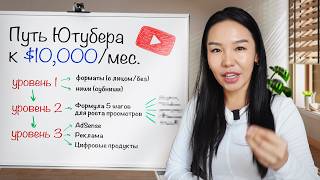
The video presents a comprehensive guide to building a profitable YouTube channel through content monetization. The creator shares a five-step formula for getting views and details three primary monetization methods: AdSense, brand sponsorships, and selling your own products or courses. The emphasis is on choosing profitable niches, analyzing competitors, and creating high-quality content that builds trust and generates sustainable income.
Words like 'automatic', 'passive', 'guaranteed', 'easy', 'risk-free', 'fast' often indicate a scam. Shortcuts usually lead to burnout and wasted time.
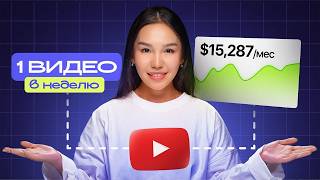
Content monetization is a sustainable business model. The creator earns $10,000/month consistently after 2 years of hard work and building a small team.
Two main formats: personal brand (face) and anonymous content. Face builds trust but leads to burnout; faceless is scalable but harder to build trust for selling.
Don't choose a niche until you've posted at least 10 videos. Test different directions, collect data, and see what resonates.
Money (finance, business), health (fitness, biohacking), and relationships (dating, psychology) are always in demand but highly competitive.
Emerging niches are gold mines: high demand, low competition. Find topics with few creators but high viewership.
Narrow your focus to a sub-niche (e.g., tax advice for freelancers in Europe) to grow faster and build a loyal audience.
Use a separate account to follow only niche creators. Analyze content as an analyst: study views, likes, comments, titles, hooks, and editing.
Find videos that get significantly more views than the channel's average. Analyze what makes them different and replicate those elements.
A tool to find outlier videos. Filter by views, channel size, and keywords to spot trends. Costs $40/month.
Recreate successful content with your own twist. Improve on what works. Copying only works if your version is better.
Publish many videos, test ideas quickly, and don't aim for perfection. 80% of results come from 20% of efforts.
YouTube pays 55% of ad revenue. RPM varies by niche and audience country. US audience has highest RPM (e.g., finance niche $24 RPM).
Brands pay for integrations. CPM model: fixed fee per view. Conversion model: affiliate commissions. Hybrid: fixed + percentage.
Most profitable: courses, communities, services. Examples: Iman Gadzhi ($20-50M from courses), Hamza ($80k/month community).
Building a successful YouTube channel requires patience, consistent effort, and a strategic approach to content creation and monetization. By following the five-step formula and diversifying income streams, you can achieve sustainable growth and financial freedom.
What are the three evergreen niches for YouTube content?
Money (finance, business), health (fitness, biohacking), and relationships (dating, psychology).
06:28
What is the recommended approach to choosing a niche?
Post at least 10 videos in different directions, collect data, and see what resonates before committing.
05:04
What is an 'outlier' video and why is it important?
A video that gets significantly more views than the channel's average. It helps identify emerging trends and what works.
13:16
What is the CPM model for sponsorships?
Brand pays a fixed fee per thousand views of the sponsored segment.
25:50
How much does YouTube pay creators from AdSense?
55% of advertising revenue.
20:23
What is the RPM for a Russian-language channel in the money niche?
$2.75.
21:15
What is the main advantage of faceless channels?
Scalability – not tied to one person, easier to build a system with a team.
04:12
What is the hybrid sponsorship model?
Fixed fee plus a percentage of sales.
28:10
How much did Iman Gadzhi reportedly earn from online courses?
Between $20 and $50 million.
30:18
What is the recommended strategy for beginners to create viral content?
Steal like an artist – take what has worked, refine it, and add your own unique twist.
16:25
Scam Keywords
Provides a quick heuristic to identify scams, saving time and money.
00:02Three Evergreen Niches
Highlights the most profitable and sustainable content areas.
06:28Emerging Niches as Gold Mines
Reveals a strategy for rapid growth by targeting underserved topics.
07:53Outlier Video Analysis
Teaches a data-driven method to spot trends and replicate success.
13:16Own Products: Most Profitable
Shows that selling courses/communities can outperform AdSense and sponsorships.
29:38[00:02] began to notice a pattern. As soon as you hear words like automatic, passive, guaranteed, easy, risk-free, fast, it's most likely a scam. In fact, the so-called shortcut or shortcut often
[00:16] turns out to be the most difficult and exhausting, with a lot of trial and error, burnout and wasted time. So in this video I'm not going to sell you going to share with you a business model that has been generating me $10,000 a month
[00:30] consistently. To achieve this, we had to really work hard and assemble a small team. And it took me almost 2 years to reach this stable 10,000 per month. And it because at one point I simply stopped chasing after some quick
[00:45] business models, after quick money, and started building something real. And the business I'm going to talk about today is content monetization. This is how most of your favorite YouTubers make money. Take Imangaji, Mr
[00:57] Be, Logan Paul and Aptal. This lecture will be very long. I spent many weeks creating it. Let me show you its structure. First, I'll tell you explore formats in detail, whether you want to remain anonymous and develop a faceless channel or
[01:11] create content with a personality, putting your personality at the center. Both strategies work, but they require completely different approaches. Next, we'll talk about niches and, more importantly, how to choose a profitable one. I'll show you three
[01:23] , regardless of the year and YouTube algorithms. And then we'll delve even deeper into the sub-niches, because real growth for beginners is in the sub-niches. Then my five-step formula for getting views. And then we'll move on to
[01:36] monetization. How can you turn views into money? We'll look at the three main authors make money. I will show real numbers and cases. You'll see exactly how much bloggers earn from advertising, community courses, and AdSense. I'll tell you how much they charge for
[01:49] So be sure to watch this video until the end. There's a gift waiting for you at the end. only need two things. This is the first thing, to get views. The second is to turn these views into money. And I can do both
[02:02] channel. Expert content consistently receives 10,000 views. I also made niche expert videos that got between 1,900,000 and is quality traffic that brings real clients. This is how much
[02:16] this channel brings in with monetization. And I earn 20 times more from selling my training. So when it comes to quality views and how to convert them into buyers, I know exactly what I'm talking about. I've been
[02:28] making money on YouTube full-time for 3 years now. And in this video I'll show you what really works and saves time and money. Let's move on to formats. Before to ask yourself one main question: do I want to show my face or not. Because
[02:41] this choice really changes everything. There are actually only two face-based formats on YouTube. It's more like a personal brand, like Alibadal, Imangadzhi or Bez litsa. This is more anonymous content, for example, a channel with
[02:53] sleep stories, animated videos, and voice-over videos. Let's look at the pros and cons of each. Pros. When there is a real person in the video, it becomes easier to grow. People respond better to a face because it inspires trust, builds
[03:05] And when they trust you, selling becomes much easier. People don't just buy a product, they buy from you. When it comes to views, even if you in other videos, the very presence of your face in the frame gives you
[03:19] human factor sometimes works even better than the highest quality impersonal content. But of course, there is a downside here too. Scaling is more difficult So if you're uncomfortable being in front of a camera or showing your face, this
[03:33] format probably won't work for you. And from my own experience, I can say that being the face of your brand, your channel 24/7, is truly exhausting. I don’t know a single creator whose channel, which is linked to him, doesn’t burn out. Yes, all
[03:45] the creators who appear on camera with their faces , who tell something with their faces, every 6 months they experience some kind of crisis, they burn out, because all the information that they broadcast to the world is all tied to them. And this
[03:58] puts a lot of pressure on the choice of topics, on the writing of scripts, on the delivery itself , on charisma, yes. And if you have a faceless channel, you can film about anything at all without getting emotionally involved. But when everything is on the face, it’s,
[04:12] main advantage of faceless channels is scalability. Everything is not tied to one person, and therefore it is easier to build a system. You can hire scriptwriters, editors, animators, and researchers, and create a content machine that works without
[04:25] consistently produce content and helps you grow as a true content factory or have their own difficulties. It's harder to grow because there's no human contact. So you really have to stand out with either a great script, or
[04:40] unique editing, or a powerful idea. But when it comes to selling courses, your services, or your own products, it's really more difficult to build trust, because there's no person behind the scenes, there's no trust, and people are
[04:52] more wary of buying from a brand that doesn't have a face. Therefore, here you need to weigh all the pros and cons and choose the format consciously, based on what is closest to you and what goals you want to achieve in the future. Now that
[05:04] you've chosen a format, let's talk about a niche. The chances of you finding your perfect niche almost immediately are zero. Minus zero. It's just that most YouTube creators, as I see it, first try out a lot of different topics, a
[05:17] lot of different niches, and only then does some topic start to take off, and then they double-down on that content. And that's why my first piece of advice is that you shouldn't choose a niche until you've posted at least 10 videos.
[05:31] Each in slightly different directions. You have to think of your first videos as, collect data, to see what resonates with viewers and what you yourself really enjoy filming. The second piece of advice is very important. There are profitable
[05:46] niches and unprofitable ones. For example, a DIY channel might get a ton of views, but a fewer views might earn 10 times more. And it’s all about monetization methods. Therefore, it is imperative to do a resarch and
[06:01] see what exactly authors are selling in different niches. Yes, I very often click on the links under the videos, read the description, what they sell, study their products, courses, look at how much they cost, whether they run
[06:14] advertising, whether they work with brands, with sponsors. And this is how a clear understanding of their monetization model is developed , so as not to end up in a audience and then cannot monetize it. In general, there are
[06:28] only three such main niches in the world. The first is money, everything related to finance, business, career, investments. The second is health, fitness, longevity, biohacking, like Andrew Huber, yes, one of the biggest
[06:43] YouTubers in the biohacking niche right now. And relationships, this is a date, there is communication, psychology, the psychology of relationships, happiness, self-love and so on. For example, the gift CEO channel. These three niches are evergreen. There
[06:58] will always be demand for them. These are the biggest niches. And if you really solve some problem in this niche, you can really get a lot of views , and views always mean income, yes. But here you also need to
[07:11] understand that in such large niches there is always huge competition. Firstly, there are a lot of creators, and secondly, there are a lot of established cool creators. For example, if you're in biohacking, competing with
[07:24] companies like Dario Vascio, Andrew Hueburn, or Brian Johnson, yes, it's really going to be very difficult to compete with them, because, firstly, they're in the spotlight, and secondly, they're practically some kind of scientific
[07:39] representatives, and behind them is a huge company with huge capital. Therefore, you need to understand that the larger the niche, yes, the more money, but also the greater the competition. That's why I always advise beginners to go not into such
[07:53] large niches, but into emerging niches. Emerging nishes is called in English. These are real gold mines. These are topics that are in such high demand right now, but very few videos have been made on them.
[08:05] Simply put, people are looking for content like this kind of video. Everything that was uploaded to this topic gets hundreds, millions of views. But there, I don’t know, there are very few creators there; 10-20 videos were filmed on this topic. They are really
[08:19] were filmed on this topic. They are really hard to find. In my experience, I have found this there very few times. But if you find something like this, it's a powerful signal. If you find such a niche before others and start creating content before it becomes
[08:31] oversaturated, you can really take off quickly, and the market will bless you as a pioneer. By the way, under this video I will leave my workbook on choosing a niche. There are a lot of questions there, by answering which you can choose a niche that
[08:45] suits you. Link in the description. go ahead and take it. After you post these 10 videos in different niches, you will begin to understand what views, what you really like to shoot, what you are good at. And that's
[09:00] exactly when you need to narrow your focus and start thinking at the sub-niche level. Let's take a large niche, for example, like finance. Yes, it is huge, but within this niche there are dozens of sub-niches, small directions. For example, this includes financial
[09:15] news, personal finance, investments, trading, behavioral finance, psychology, taxes in general, accounting, loans and credits. Again, if you enter a broad niche like finance, you are competing, again, with such
[09:28] large authors, yes, who have teams, budgets, and so on, which we have already discussed earlier. Do you want to say hi?
[09:42] now making faceless channels, by the way, with her. What? Again, going back to the video, if you choose something like tax advice for freelancers in Europe, or financial thinking for immigrant women, or an
[09:55] analysis of crypto memecoins, you'll find yourself in a narrower, less recommended, grow, and build a loyal audience. And secondly, YouTube doesn't promote every channel unless you're already a big creator there,
[10:08] right? But if you consistently produce content on more specific topics, like the algorithm will understand who your audience is and start showing your videos to those people. This is how growth begins, especially for beginners. All
[10:22] great creators started with something so narrow. For example, Ali Abdal started talking about how to get into Cambridge, I think, or about how to prepare for some exams at Cambridge. And only then has it grown to such a
[10:36] topics like how to earn your first million, right? This is a very big topics, he would never have grown. Therefore, we start with something very narrow, specific, detailed, and then, once we have an audience, we can
[10:51] topics. Now that you've chosen a subniche, it's time to do some homework, some market research. And this is where most newbies make a huge mistake. They start filming purely on a
[11:04] whim, based on what I like, and it seems to me that this video will fly, without do everything the other way around. First, understand what really works in your subniche, and
[11:16] only then create content and do analysis. Let's now move on to always use to analyze any subniche and create content that will actually work. The first is the exploration mode. Yes, I call it
[11:29] separate account on Instagram or YouTube, where I subscribe only to authors in my niche. No memes, cats, or distracting content, just videos and posts on topic. And this gives two effects at once. The algorithm starts
[11:44] showing you on this account only what is trending and only what is going viral in your niche. And secondly, you are constantly in analysis mode, and not sliding into, yes, that endless dopamine scrolling. It's,
[11:57] you know, a personalized feed of inspiration, and every time you scroll through it, you don't just get hooked, yes, it's a direct analysis, studying the market. The second In general, I always advise watching content not just as a consumer, but
[12:11] content not just as a consumer, but as an analyst. When I look at content on Instagram or YouTube, I immediately pay attention to the number of views, the number of likes. I go in and read the comments. This is already
[12:23] my automatic reaction. I even noticed that when I watch a video, I automatically look at how many likes it has. If there are too many likes, I I watch it and think: "Why didn't she get pregnant?" It works exactly the same on YouTube
[12:37] pregnant?" It works exactly the same on YouTube . I always advise and do it myself. Pay attention to the previews, the covers, the titles, the comments, what hooks are used in the script, how the video begins, how
[12:49] the narrative is structured, how the editing is structured, yes, what style, what kind of need to pay attention to. All this develops your creative flair. And so, in
[13:01] artificial intelligence. Whatever you load into it, it will play back and spit out, yes, out the window. So, if you're like Mr. Beast, you say, "I was viral content." Now my brain is spitting out the same results as
[13:16] those you study. Step three. We find a video of the exception. They are called Outliers. These are such videos. They are truly gold mines. They are getting above average views on this channel. Especially if the channel is
[13:30] small, let's say he has 5,000 views on his channel, and recently, over the course of 3 months, his video went viral and got, let's say, 300,000 views, right? On average, his videos get 1,000, two,
[13:43] 3,000 views, and this video got, say, 50,000 views. Yes, this video and Outler are the exception. And you really need to pay attention to videos like these and constantly ask yourself : what is different about this video
[13:56] from the others? What's the topic here, huh? or the presentation, or the title, or the editing, what emotions it evokes. Such videos often point to emerging trends or shifts in audience interests. These kinds of outlines really give
[14:10] an understanding of where the market is heading now . And if you find and understand why they flew in, and you can reproduce them, these indicators,
[14:22] reproduce them, these indicators, then you can really quickly grow exactly like this strategy. There are a lot of tools that help you find videos like IQ, but the coolest one
[14:36] , in my opinion, is One of 10. I wasn't sponsored, but the coolest one is TOL. Let me show you how it works. he, his results are more accurate, you know, more data. This is what One of 10 looks like. Let's say
[14:49] we have an English-language channel and we want to make a video about confidence. Looking for a video. So he shows us all the videos, but we want the outlier ones, yes, we want them. Therefore, we go to the filter. I've already
[15:03] put it at two. and it will show those videos that have at least twice as many views as other videos on certain channels. At least 38,000 views in the last 3 months. Long videos, apply changes. And
[15:19] now, you see, he's showing us all the videos that Outperformed has gotten more views than other videos that include the word confidence in their title . And look at this video, yes, on average her channel
[15:32] Le gets 120,000 views, but here it got 3 million, 3 million, that is, this video got 25 times more views . The same thing, this one scored three and four times more, seven times more, five times more, 18 times more. And this is exactly how
[15:46] this tool allows you to analyze a niche and understand where it is heading. Spot the early trends, like quickly finding new trends . And this is how we find outliers. I was not sponsored.
[16:01] One of 10, I think, for $40 each month. A bit pricey. But if you're a full- time YouTuber and have several channels, I highly recommend it for finding channels like these, because you either have to
[16:13] do this work through a separate account, as I already told you, or in this way. But I do both. The next step is to steal like an artist, but do it better. Like they need to improve, yes, improve. Now that
[16:25] you've done your resarch, let's talk about how to recreate, how to create these videos. Yes, I always tell my students: "And in general, there is no need to create, uh, reinvent the wheel, yes,
[16:39] until you are at the level where you can consistently generate highly viral content, like from scratch." The most effective strategy for beginners is to steal like an artist. Yes, take what has already worked, refine it, improve it,
[16:51] add your own unique twist to it and see what works. This does two things. Firstly, it minimises errors, because , it most likely won’t fail. Secondly, it improves your visual
[17:06] acuity. When you actually try to recreate what flew in, you really begin to understand it in detail. The devil really is in the details this cover that it got caught, but in fact it turns out that it was because of
[17:20] some two-minute piece in the script, yes, it got caught. Only then do you begin to realize it, after watching different videos there. So there really is a need to recreate this here. And when you recreate it, you really begin to
[17:34] understand why these videos got posted. And in the future, when you've developed this kind of visual awareness, when you're already like a cool YouTuber, then you can create something of your own, your own ideas, and become like a
[17:47] trend. I also always advise mixing different ideas, even from other niches. If you work in the finance niche, maybe you have some kind of trick that you saw in the entertainment niche, you can combine it and create some kind of, you
[18:00] know, synthesis, yes, and not a copy. And in general, in the long term, you need to understand that copying only works when your version is better than the original. Yeah, if you're just copying the original, why would people even watch it? The original already
[18:15] exists on the market, why should they watch the same thing? Therefore, your task is to improve, enhance, strengthen what already exists, bring in your own, something fresh, add something interesting, your own twist. And the fifth step, I
[18:27] call it testing and failing fast. Once you've completed these four steps, it's time to test and fail very quickly. You can't get attached to your ideas on YouTube. YouTube is a very unpredictable platform. Even
[18:40] top creators can't say for sure what will fly and what won't, because there are too many factors that influence success. The idea, the editing, the visuals, and many other creators are uploading similar videos. Yes.
[18:52] Therefore, it is important to remember that 80% of results come from 20% of efforts. Therefore, at the initial stage, you need to publish more videos, test more ideas, improve quickly, and not strive for perfection, as they say. If
[19:05] you're not ashamed of your first videos, then you posted them too late. If you cringe at your videos, that's a really cool sign. This means that you are taking action, you are not stuck in perfectionism. And in general, success is
[19:17] equal to the number of failures. The more you fail, the faster you learn. It's the same on YouTube. Therefore, you need to try to increase the speed of these mistakes in order to reach your goal faster. And if you continue to analyze
[19:29] the market, test hypotheses, and improve each time, I truly guarantee that you can grow to 100,000 subscribers within a year. This is what happened to me. For 4 years I was just blindly churning out content based on
[19:41] intuition, and nothing worked out for me. But as soon as I started creating content consciously, following this five-step formula, started buying courses there, studying it as a science, and yes, as a business, I started studying
[19:54] really took off. Now that you know how to get views step by step , and now that you have this theory, let's talk about the most important thing. How can you turn these views into money? And that's exactly why I believe
[20:07] that monetizing YouTube, Instagram, and social media content in general is the best business model on the market right now, because there are so many to earn money, they are so diversified, I
[20:23] will show you this with examples today. Let's start with the most basic. Enens. YouTube pays creators through the AdSense system, which is money creators earn by displaying ads on their videos. YouTube gives 55% of advertising revenue to
[20:35] Advertisers there want to show their ads to people, potential clients. keywords, and YouTube selects videos that match those queries. To really earn sense, you need one of two things. It's either high RPM,
[20:50] revenue per 1,000 views, or a high number of views. Or better yet, both. Of course, RPM depends on how much advertisers are willing to pay for impressions on your channel or in your niche. This is influenced by the topic of the video, the
[21:03] company's solvency, and the country of residence of your audience. For example, I have a Russian-language channel in the niche of earning money on the Internet. This is generally considered a very high-arm niche , but since the channel is in Russian,
[21:15] PpM is only $2.75. If I were making the same content but was being watched by people in the US, I would be getting at least $20 RPM because channels in my niche in the US are making eight times more for the same topics.
[21:29] It turns out that the niche also plays a very important role . For example, a DIY channel in the States And let's calculate, in order to earn $3,000 a month, they earn $3,000 a month, they need to get 500,000 views. Just
[21:44] look at the formulas, right? Now let 's compare the real estate niche in the same states where RPM is $30. It turns out that to earn these 3,000 dollars a views. That is, five times less effort for the same monetary results. And
[21:58] here's the conclusion: yes, the niche and country of the audience radically change the effort required for the same money. Monetization from the YouTube partner program in the States is, of course, a completely different topic. Here in the States, ARPM in the States, it’s really several times
[22:12] higher. Even those same Australia. there, I don’t know, Norway, there is also a high RPM, but in the States there are generally some crazy prices. Here's a real example of a financial YouTuber. Grm Stefan, a very big YouTuber. His main
[22:26] audience is from the US, and he makes content specifically for Americans, you know, like Stocks, Donald Trump, Real Estate, and that's exactly what Ars is all about Real Estate, and that's exactly what Ars is all about
[22:40] years ago, he shared analytics from the channel. On average, he was getting 30,000 views at the time, and those views were bringing him $7,000 a day. Yes, more than $7,000 a day. If you recalculate, that's $24 RPM.
[22:53] So, his main channel earned over a million dollars in net worth in 2019. Yes. That 's why the financial niche, coupled with the American audience, is considered one of the most profitable on YouTube. And of course, one of the
[23:06] many people are still asking about faceless channels. By the way, faceless YouTube channels can also very easily make money from their feet. But now YouTube has started to more actively cut off the hands of anyone who uploads compilations.
[23:20] Some kind of repetitive content , you know, with low effort, they say, that something that was made without great effort, without its own twist, without any value, these videos like YouTube will not recommend. They, I've
[23:34] been saying this for a long time, don't have any specific rules, but they don't say that AI content won't be included in recommendations, because there's a lot of high-quality AI content that gets included in recommendations just fine. But
[23:49] here, uh, you need to make quality content. In short, YouTube wants viewers to stay longer, for the platform to be of high quality, for the video looks like it's made half-assedly, the coin may not be included at all.
[24:03] So yes, faceless channels are a viable option, but the key is to avoid copy-pasting, create adhere to the platform's rules, especially now that YouTube has become stricter. In the CIS, the highest RPM, probably, I think, is $5 - these are some
[24:16] super-narrow financial channels, and children's or DIY channels here earn less than 1 cent. So if you want to make money through monetization— not through advertising, not through course sales, not through affiliate marketing, but through
[24:29] monetization—then you need to create content in English specifically for an American audience. And creating content in English doesn't automatically mean you'll be recommended to Americans. The Americans have their own
[24:43] interests. For Americans, there are politics or of interest specifically to Americans. Therefore, thinking that if I Americans will automatically watch it, is wrong. You know that India,
[24:57] Pakistan, and the Philippines all speak English very well, and content can go viral specifically from them. Therefore, this also needs to be understood. I explained how to connect to the ASNS in the CIS in my Telegram channel. Follow the link in
[25:10] the description and listen. The second way to earn money is through advertising integrations and sponsorship integrations. For many YouTube bloggers, this method of earning money brings in much more money, especially in our market, than monetization. This is
[25:24] advertising integration - this is when you hear a blogger say: "This part of the video was sponsored by Alfa-Bank or Golden Apple or Yandex." The idea is super simple: a brand pays a creator to promote their product in a
[25:38] video. And the amounts here can be very impressive, especially if you have a Let's figure out how sponsorship integrations on YouTube work. There are usually two formats. This is a CPM model, which means a brand pays a fixed amount
[25:51] conversion model, essentially an affiliate program, that pays you for clicks or purchases. The CPM model is the most stable and the most popular. The brand simply pays a fixed fee for views of the sponsored segment. Rates vary greatly
[26:04] depending on the niche, audience engagement, and how well the brand fits the channel. By the way, recently our YouTube Academy students suggested doing advertising on the channel. She has about 5,000 subscribers there, a little less. The video is typed
[26:16] differently. And she asked the question: "How do you calculate the cost of advertising?" In general, I answered like this: integration prices are usually calculated based on the average number of views multiplied by the market CPM rate. Then I calculated the CPM, did
[26:31] a little research, and it turned out that channels with a fashionable female lifestyle audience had CPMs in the range of 500 to 1,500 rubles. Here is such a point. If the channels are small, their CPM will even be a little higher than that of larger channels, because the audience
[26:46] is more concentrated, and they are able to, you know, more accurately hit from Lisa's channel, the average number of views for 10 videos was around 15,000 views. If we take premium CPM, for example 1,500 rubles, then it comes out to
[27:02] 21,000 rubles. for integration. We recommended calculating advertising for your channel in this way. In the end, she shared that she sold the ad for 300 euros, and also received a cool bag for free.
[27:16] podcast on my Telegram channel. Go ahead and read too. All links are in the description below this video. The second thing is conversion-based deals, these are partnership contracts. Instead of a fixed fee, companies pay for
[27:31] each sale, for each application, or according to a revenue-sharing model for clicks on a personal link. That is, they give each blogger a personal link and track how many sales came from a link from that
[27:44] blogger using UTM tags. For example, a YouTube blogger, let 's say, is promoting some kind of task management service, some kind of CA product registration. He gets 500 registrations from this blogger at $5 each, which
[27:57] comes to $2,500. Yes, some authors prefer affiliate programs over CPM deals because they can bring in more in the long run , especially if the blogger is a great salesperson and
[28:10] Telegram channel and email list where they can make targeted sales. And the third model is hybrid transactions. This is Fix plus a percentage of sales. This is the format that everyone is striving for. And top creators
[28:24] work on exactly these kinds of deals. For example, Sasha Metroshina, yes, I know she has Prodamus, they buy advertising. And I heard that they sponsor the entire season, 10 episodes, it turns out, they give the show a commission, and plus she also gets a
[28:39] percentage of the clicks on the links under the videos. That is, this is a hybrid and a percentage of sales. On English-language YouTube, the prices for advertising are, of course, very high. Of course,
[28:57] compared with their market. For example, Ala Obdal in 1922, only in this advertisement. And at that time he had about 4 million subscribers. And this happens when you play the long game, when you have
[29:13] some kind of skill, a large company comes and it knows that there are big players and they definitely need to graduate there. They don’t even do this for sales
[29:25] definitely need to get in touch with these bloggers . Alabdal has a great reputation for productivity, so Ntion always buys these companies from him. Thirdly, and this is my
[29:38] favorite, this is the only way to make money where we can compete with English-speaking YouTube. We can even compete with the United States. I was simply shocked when I counted these prices. This is the sale of your own products, your
[29:51] the sale of your own products, your services, your courses, marathons, some CAC products. This is selling something of your own, that is, an infobusiness, yes. This is where the real money is. Especially if you're building a channel that solves specific,
[30:04] For example, how to make money, right? This is a very big pain, a worldwide one. And if you solve this pain for yourself, then talk about it on your YouTube channel, then make a course on this topic, it can
[30:18] simply bring you huge amounts of money, like Imangaji, you probably know him. Different sources say different figures, but it's estimated he earned between $20 and $50 million from his online courses on how to build an agency. Now he
[30:32] sells some other courses. That is, all this money came from YouTube. On YouTube, he creates a wide range of content about thinking, about making money, and various schemes. And all these videos lead to his one video. And such a video is
[30:45] usually called a Sales Letter video. This is a sales webinar, yes, it works. And in this video he directly compares different models, selling the fact that our model is the best. And under this video he has a link to the
[30:59] landing page, and the sale of his course immediately takes place in this way. It was thanks to these courses that he built a multi-million dollar empire. And now, at 24 years old or however old he is, he just drives a Rolls-Royce and
[31:13] has built enormous wealth precisely on courses in the infobusiness. There is also Hamza, a YouTube blogger on self-development. He has a community on the host the community on a Telegram channel. In America, in the English-speaking market, they
[31:26] usually host communities on school or other similar platforms. And the subscription costs $37 per month. He has about 2,000 members there now, He has about 2,000 members there now, right? That's about $80,000 a month
[31:39] or more than $1 million a year. He has almost no team. He simply makes his own videos and says, "Come join my community." You too will become as muscular as I am. You will also become pumped up like me. And now it
[31:53] seems to me that it is precisely the community aspect that sells really well, because we are all stuck online now, we all don’t have any kind of social life, and I think the community trend will continue to grow because people are becoming
[32:07] more lonely. And now, a lot of bloggers are actually starting communities of like-minded people. And these School platforms are now also receiving very good capitalization because of this. I really like this model.
[32:20] earns more than a million dollars a year, it all goes into his pocket, unlike other business models, because here there is no cost of goods, no distribution. He doesn't have to pay for rent, or, I don't know, for
[32:33] logistics. His team is small, and the scalability is incredible because it's online. Any English speaking person can join this community. And the product is such that he created a community once and resells it there to thousands upon thousands of
[32:45] people. Therefore, it is a very cool business model. We also have Misha Timochka at our market , yes. Metroshina. We know they make the same amount of money. This is a very important point. We can't compete with them in terms of monetization.
[32:57] Advertising is also not that expensive for us, but our courses are, well, even more expensive than Ali Abdal’s, for example. The Utimochka course costs $1.50. This is the same price as Iman Gadzhi. And Iman Gadzhi, just for a minute, he is the biggest
[33:11] English-speaking YouTuber in his niche, right? And only 300 million people there speak Russian. It's impossible to compare it with the billions of course, but the earnings are the same . This is because there is
[33:25] very little publicly available information on our market compared to the English market . That is why our people are more willing to pay big money for some knowledge. They have a harder time buying in the English-speaking market because there is a
[33:39] need to buy courses or structured information. They can competition is tougher, yes, and there are more people there. I recently purchased the course and have n't completed it yet, so I don't know what feedback to give. I won't do a review,
[33:53] launch formula, the tenth, I think, stream. Yes, there were 952 people in our chat, in our channel . I bought the course at the cheapest price, when it still cost 134,000 rubles. before the price increase. Yes, that comes out to 142,
[34:07] price increase. Yes, that comes out to 142, well, almost 143 million rubles. That's 1.79.000 in dollars. In principle, he also makes money on courses, like, probably, the Alibdal course. He also began actively managing a YouTube channel, as he
[34:20] probably realized that it had the best audience; the horizontal content itself was very effective at encouraging people to purchase courses and services. Therefore, if you want to make money from courses, you definitely need to run a YouTube channel.
[34:34] I teach how to run an expert YouTube channel at the YouTube Academy. Therefore, if you want to join us, I will also leave the link in the description. Come, we are waiting for you all. Now you probably understand, yes, why I love this
[34:49] content monetization model, the monetization of YouTube content, because the many different sources of income. Aliobdal, again, yes, he makes money from affiliate links, brand integrations, his own money
[35:02] marathons, online courses, the Amazon Associates program, Parttime YouTuber Academy, yes, that is, his income is maximally diversified thanks to the fact that he only has one YouTube channel . That is, even if one stream
[35:15] if people stop buying his courses, he has affiliate programs. And in general, you can sell anything with the help of content . If you have an audience, you can actually sell even physical products and build an entire brand from scratch. Let's take
[35:29] Popfleck, for example. It all started with the founder, who was a TikToker and YouTuber herself, making simple videos where she sketched clothes for TikTok and for Shors. Then she launched her own clothing brand and people just started
[35:43] buying it up. And today the brand has reached such a level that it is even sold in Target stores all over America. Guys, this was a really long video, but I gave you a really concise, complete strategy on how to get views and how to
[35:56] , on how to grow and how to make money from content. Yes, now I think you owe me, it's your turn, just take this Blueprint and act according to this plan. If you stick to it and do everything
[36:10] I've told you about today, growth is guaranteed. I don’t like this word, but it will be guaranteed if you follow this formula directly. Of course, not overnight, not in a month, and not even in two or three, but
[36:22] steadily. It's precisely this kind of slow, steady growth that leads to a sustainable income, to building something that will truly work over the long term, and not like, yes, in one month you made $5,000 there, in the second -200. So in this game
[36:36] I realized that patience is important. Be patient. Do all this regularly. Trust the process. This is what brings real results. That's all. Thank you very much for watching to the end. I wish you all not luck, but rather
[36:50] patience and the realization of all your goals and plans. And we'll see you in the next plans. And we'll see you in the next video.
⚡ Saved you 0h 36m reading this? Transcribe any YouTube video for free — no signup needed.