
The Moment AI Broke the Workforce Equation
53sReveals a CEO admitting the old correlation between headcount and output is broken, sparking debate on AI's impact on employment.
▶ Play Clip"Title promises a 'how to reorg' but delivers a candid interview; still, the insights are real and actionable for leaders."
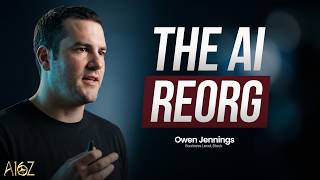
Block's business lead Owen Jennings discusses the company's drastic 40% workforce reduction driven by AI advancements that made engineers 10-100x more productive. He explains how the reorganization, focused on development teams, reflects a fundamental shift where AI tools like Goose and Builder Bot enable smaller squads and agentic workflows, and predicts that companies with deep domain understanding will thrive.
Owen Jennings, business lead at Block (Square, Cash App, Afterpay), explains the rationale behind Block's 40% workforce reduction, which was triggered by a paradigm shift in AI coding capabilities.
In late November/early December, models like Opus 4.6 and Codex 5.3 became incredibly capable with existing complex codebases, breaking the historical correlation between headcount and output.
One or two engineers on the tools can now be 10, 20, or 100 times more productive, leading to the conclusion that fewer engineers, designers, and PMs are needed for a given product roadmap.
The 40%+ workforce reduction was concentrated on development teams, with minimal cuts in sales and operations, reflecting genuine productivity gains from AI rather than financial necessity.
The decision was made from a position of strength, with principles of reliability, customer trust, and continuing the roadmap. The org was rebuilt from scratch, especially on the development side.
Meetings were reduced by 80%, layers cut by 50-60%, and squads now consist of 1-6 people with spans of control increased, fostering faster information flow and more building time.
Developers now manage multiple AI agents simultaneously, shifting from linear PR workflow to overseeing 10-20 agents building PRs in parallel, a change also applicable to growth marketers.
Internally, AI automates deterministic workflows (customer support, risk ops). Externally, products like Money Bot and Manager Bot use generative UI and agentic systems built on Goose.
Goose is Block's internal model-agnostic agent harness used for automations and products. Builder Bot autonomously merges PRs, completing features up to 85-90%.
The biggest defensible advantage is a company's deep understanding of its domain. If a company doesn't know what it uniquely understands, it risks being 'vibe coded away' by AI-driven competitors.
Block's reorganization signals a new era where AI radically changes software development and company structure. The winners will be companies that combine deep domain understanding with rapid, AI-powered iteration, while those without a clear unique insight may struggle to survive.
What event triggered Block's decision to cut 40% of its workforce?
The release of Opus 4.6 and Codex 5.3 in December, which showed AI tools could handle complex codebases at a high level.
03:01
How many people are now in a typical development squad at Block?
One to six people.
14:15
What is Goose?
A model-agnostic agent harness used for automations and building products at Block.
18:59
By what percentage were meetings reduced after the reorganization?
80%.
08:45
According to Owen, what is the biggest long-term moat for a company in the AI era?
Understanding something deeply that is hard for other companies to understand.
26:12
How has the feature development timeline changed since December?
The ability to go from idea to product in the hands of customers has been compressed massively.
15:49
What is 'vibe coding'?
A term for easily creating software using AI tools, often without deep understanding or scalability.
24:00
Correlation between headcount and output broke
This is a fundamental shift in business economics: more employees no longer guarantees more output.
03:45"We're not writing code by hand anymore"
A bold statement indicating a complete change in how software is built.
05:48Generative UI is arriving
Dynamic, personalized interfaces generated on the fly will replace static UIs, changing user experience fundamentally.
20:08Deep understanding as the ultimate moat
In an AI-driven world, proprietary insight and domain expertise become the only sustainable competitive advantage.
26:12[00:01] companies understand something that's super hard for other people to understand. And if your answer to that is, "I don't know." then you maybe could get vibe code in the way. Block was one of the first to make a pretty drastic
[00:13] decision in cutting 40% of the workforce. What led up to that decision? the number of folks at a company and the output from the company for decades and decades. I think that basically broke and what we were seeing is that one or
[00:26] two engineers who is on the tools is able to be 10, 20, 100 X more obvious that these systems are just going to be so much better than like that work. I I do believe that
[00:40] fundamentally for a given product or for a given road map, you're going to need fewer engineers, fewer designers, fewer PMs. I think that's like very, very company's gone. What's the most meaningful difference in how you're
[00:52] meaningful difference in how you're operating? I think the biggest thing is large public company to restructure itself around AI? Owen Jennings is the
[01:04] business lead at Block where he oversees product, operations, and customer support across Square, Cash App, and Afterpay. Before this role, he was the CEO of of Cash App during its critical scaling
[01:16] of Cash App during its critical scaling period. And recently Block executed a roughly 40% reduction in force. And they've been pretty candid about AI decision. Owen has gone through the AI transformation at scale across product
[01:30] lines and business units. And so we're going to dig into the that decision around the riff, how Block has adapted, the current and future state of the So thank you so much, Owen. Welcome to the stage.
[01:51] Um so, you know, Jonathan I think did an amazing job kind of setting the stage, you know, for this conversation, uh you know, talking about how important it is to be founder-led. You know, Block was one of the first to
[02:03] make a pretty drastic decision in cutting 40% of the workforce. Um maybe walk us through kind of what led up to that decision and how you Sure. I think I would probably I probably start two or three years ago. I
[02:17] think one thing about Jack is I find Jack to be generally right and generally Sometimes very early. Um and I think that's flowed through Twitter, Square, Cash App, Bitcoin, etc. And so we're pretty early on the agentic
[02:34] development side. We actually launched Goose, which was the first agent harness, at least that I know of, um in early 2024. And that started to augment how we approached software development, uh how we thought about
[02:48] internal tooling. And I would say that over the over that period, 24 and 25, it was like pretty meaningful progress. Um and then late November, first week of
[03:01] December, it was just there was a binary change. You basically have Opus 4.6, you have uh Codex 5.3, and essentially you get this shift where I think the the the
[03:13] tools and the foundational models were pretty good at writing code, especially space. Um it became clear almost overnight, they're incredibly capable working with existing complex code bases. Um and so
[03:31] there was a massive paradigm shift where, at least there's there's been this correlation between the number of folks at a company and the output from the company uh for, you know, decades and decades. I
[03:45] think that basically broke the first week of December. And what we're seeing is that one or two engineers or a designer and an engineer who was on the tools, quote on quote, as we say, is able to be 10, 20, 100 x more
[03:58] productive. And so that's really what led us to make the the decision a few weeks ago. We spent Q1 discussing like what does this mean? Fundamentally, what going to build products, how we're going to build software for customers, and
[04:11] how we're going to run a company. What is it going to mean to actually run a team working through that. And ultimately, that's what led us to
[04:24] this place where where we we did a reduction in force that was, you know, slightly greater than than 40% and that wasn't even, you know, to the to the The tools are flowing through really meaningfully on the development side and
[04:38] development side. If you think of something as outbound sales or account the cuts were, you know, fairly de minimis. reacting to. Can I push you a bit on this little bit?
[04:52] I mean, Alex, when you kind of introduced the, you know, the conference just, you know, an hour ago, talked about the surf period. how much of the riff was sort of overhang from 2021 kind of over hiring
[05:06] product actual productivity gains going to be in the business? Like if you look at where we were from a from a gross profit per full-time employee basis from like 2019 through 2024, we're basically like right in the middle of the pack
[05:20] with all of the competitors. If you look at last year, I think we quintile or something like that. I think it's basically like Nvidia and Meta that And then when you look at the composition of what we did, if you
[05:34] thought it was like cruft and bloat and so on and so forth, then like this riff would have accrued to the operational teams and that like that sort of stuff. So really, really meaningful cuts on the development side. You don't make really,
[05:48] development side if you're not seeing a technology and a tool that's just mean, we're we're like we're not writing code by hand anymore. That's over. That's done. Um and so so anyway, everyone has
[06:02] Um it's largely not true. tactically, how did you actually execute, you know, this this transition, operationally in the business? So I think so we were um
[06:17] the the the nice part about this riff uh relative to some other, you know, things companies is we're coming from a position of strength on a on a And so sometimes when it's really financially motivated, you know, the CFO
[06:32] or the CEO says, "Okay, we need to do a 16% riff in order to like hit this hit um that wasn't the case at all. We said, "What should the org look like given how these AI tools are flowing through now and what we expect to happen
[06:46] in the in the coming months and quarters?" We had some core principles. Um the first one was reliability. When you do something this size, worst case scenario is you have an outage or you go down. So that's like P00, not acceptable
[06:58] been great over the past several weeks, which is fantastic. Second is building trust with customers and um environment. We all operate in a super complex, nuanced regulatory environment.
[07:12] sure that we're that we're doing we're doing right there. For instance, like we compliance team and our compliance technology team. Even if the tools are there, it's like let's not take any risks. And then third was let's continue
[07:26] things that are on the road map that we already know that we're building. We need to continue to do that. We know that it might be a squad of three people instead of a feature team of 14 who's building that. We're going to make sure
[07:38] and that we're continuing to make longer-term bets. And then we built up the org from scratch and in some areas like the regulatory council team or the SDR BDR team, the org looked pretty similar
[07:51] to how it looked in January. On the development side, it looks completely completely different. And then, you know, from a from an execution perspective, you know, we thought very deliberately.
[08:04] Obviously, I've been in the company 12 years. A number of folks who we parted ways with are friends and colleagues for for you know, more than a decade. to be generous in terms of, you know, the the severance packages that we gave.
[08:18] We didn't cut people's technology access instantly, which can suck. We chose to have an all-hands with everybody at the company. So Jack and the executive team were you know, looking each other in the eyes
[08:32] explaining the the drivers behind it. And Thursday. I think like the Friday, Saturday, Sunday, there's a lot of shock, dealing with ambiguity.
[08:45] And then what we've been doing is uh we massively reduced the number of 80%. So I now have time to like build and work and it's not back-to-back company every week. So we have like a one or two hour all-hands with Jack
[09:00] every every Monday. It just feels like we're we're smaller, we're leaner, we have fewer layers, we have larger spans, and it's it's been back to building. So you show up on Monday 40% of the of the company's gone. Like what how is what's
[09:12] you're operating? I don't know, maybe it's in the EPD org or elsewhere. I think that there's a there's a there's a few different components to this. I it so one concern that I have with like how
[09:25] some of these org changes might flow through the tech industry is that and led point. If you're not founder led and you don't have the going to probably take a more incremental approach. And so, the way
[09:39] a 15% riff and it's like, "Oh, it's fine." And then you do another 15% riff. devastating for your team cuz there's always this like pending riff looming looming over your over your shoulder. Um this was obviously a decision to go in a
[09:53] different direction. I think one of the benefits that we got from this is like we were already seeing a a very meaningful increase in AI tool usage, especially on the development side. This is just a massive forcing function. Like
[10:08] if we're building Okay, we're we're building money bot and there used to be a team of 15 people working on it and now there's a team of four people plus $2,000 on the tokens. That This is like
[10:21] un- unlimited access to tokens and you can use fast mode on Claude code. Um so, now you have four people plus the tools. It's like, "Okay, well, you need to have eight instances of goose up and you need to shift your workflow from sequentially
[10:35] working through a PR, submitting it, getting a review, making the change to I have 14 agents who are building PRs on my behalf right now and I'm going to context switch between all of those. And it's not just uh on the software
[10:49] It's for growth marketers, too. The biggest shift Myself included. I I have now that I have to go I have to go check on. Uh it's it's not um it's less of a
[11:01] linear workflow and it's more of like in the background, there's 10 or 20 agents then I have to check in on the work and nudge it and change it and what have you and then I can commit it to GitHub and I can I can get the markdown file. We can
[11:14] move on. So, we have a lot of, you know, public audience. Do you expect other companies to kind of follow a similar path? And and I guess what conditions need to be in place for
[11:28] don't I don't necessarily want to Like I I talked at the beginning about um um the groundwork that happened in '23, the groundwork that happened in '23, '24, and '25. Like we built this agent
[11:41] substrate goose, and then we built a lot of tooling at the company on top of it. We have a agentic operating system internal only called G2, where anyone can automate any deterministic workflow. So, anyway, there there I think there's
[11:56] expect many companies are doing that work. Some some of them are incredibly work. Some some of them are incredibly um far ahead than than others. Um and so I I I don't know what to expect. What I will say is like to the extent that I I
[12:10] do believe that fundamentally for like a given product or for a given road map, you're going to need fewer engineers, fewer designers, fewer PMs. I think fewer designers, fewer PMs. I think that's like very very clear based after
[12:23] like December. Um that doesn't necessarily mean that there's going to be fewer engineers, designers, and PMs in the world. Um it's like the classic Jevons paradox thing, where I I think that there's probably now just a super
[12:37] set of things that that can be built. Um so, I don't know might be way smaller, but there might be 50 or 100 more tech companies, or you're going to start getting this development working in in sectors and and areas
[12:50] case. Um but I I'm not here to to predict the future. I'm focused on Block. Uh fair. You you talked a bit about kind Maybe you can get go in a bit more depth, uh you know, both in how it's
[13:05] I'm also curious about, you know, how are you using AI in in other parts of support. Yeah. Um so, I got to ask that at a investor conference uh last week, like how is AI like flowing through Block?
[13:19] And then to me that's like asking um how are computers flowing through Block? Uh like I it's it's a uh fundamental inbuilt thing that has changed in like a binary way over the past 18 months and then feels like it changed all over
[13:35] again in the past 4 months. Um so I'll break it down into and then external and how we're thinking about our products, what we're putting in customers' hands. And then I can talk a little bit about the the future and
[13:48] where we think things are going. So on the internal side, I think the biggest difference is the shape of the of the org. So we used to have kind of like a classic hierarchical uh structure. It was functional,
[14:02] fairly standard if you like averaged through a bunch of medium-sized tech Um And so you would have kind of eight server engineers, four client engineers, a PM, a designer, and
[14:15] you would work linearly through your road map. Now we have small squads. So squads of like one to six people. the other teams would be. And we have way more flexibility and and fluidity
[14:29] where a given squad can work a few cycles on this product, get it live, and then a cycle on this other product. Um which is different than how things like, "I'm on the banking team. I'm going to be on the banking team
[14:42] forever." We also have way fewer layers. So on the development side, I think we probably cut our layers by I don't know, 50 or 60%. Like on the product side, I only have I think two layers, maybe three layers in a in a couple of places.
[14:56] And so information is flowing um way more freely. I think that then in terms of how we actually build on the development side, things have changed. I think everyone's probably seen, you know, every every CEO
[15:09] out there is going on Twitter and showing their like green dot on on uh on GitHub. Um but that's real. Like all of our designers are are shipping PRs. All PRs. That's not that interesting anymore. I think more interesting is
[15:22] that we have uh internal tools that are similar to Claude code, but they're like more plugged into our infrastructure. So, we have a tool called Builder Bot. Builder Bot is just autonomously merging PRs and actually like building features
[15:36] to 100%. We've had some fairly complex features that are built to 100%. More often than not, it's building them to like 85 or 90% context understands does like the final the final 10%. So, that feels really
[15:49] really different. The ability to go from um to go from idea to like this is in the hands of 100,000 or a million customers has been compressed massively since since December.
[16:02] Outside of development, I would say most of what we're seeing is like anytime there's a deterministic workflow, we're we're able to automate that. And so, at scale tech company, you have individuals who are working queues. Um
[16:20] automated away. Like from a customer support perspective, this is not new, but you know, our chatbots and and AI phone support and and whatnot are automating a a majority of inquiries that we get. And then it gets into like
[16:33] product operations and risk operations and compliance operations and any sort um generally the the the models and the humans. Right now, I think it's critical that we have a human in the loop. Uh
[16:48] that's like the key kind of buzzword uh when you talk to talk to partners and regulators and and what have you. Um but over time, it's like pretty obvious so much better than like having a thousand humans who are who are doing
[17:01] that work. So, that's on the internal side. Um on the on the product side, I think that kind of the shape of the business. Obviously, you have Square, you have
[17:13] in Afterpay. Sure. What do those businesses look like? And then yeah, how are they kind of changing with that? AI? Sure. So, um so we used to operate in a business unit structure. So, Square used to be kind of its own business unit with
[17:26] its own CEO, Cash App was its own business unit with its own CEO. Um that about 18 months ago, we functionalized the company just meaning that all of engineering rolls up to our head of engineering, all of design to our head
[17:39] of design, all of product to me. So, we have a financial platform team that spans the entirety of Block. We have a business platform team that's doing a lot of this automation that spans the the entirety of of Block. And then
[17:52] increasingly we're building features and products that actually connect the Square side, the Cash App side, and the Afterpay side. And so, naturally you're building infrastructure that is not um brand specific. And that's actually like
[18:07] kind of central to our our overall strategy and and and overall thesis. Um But yeah, I mean Cash Cash App went from when I joined Cash App in 2016, uh we had just just started to to figure out how to monetize and had our first
[18:21] dollars of gross profit. And now I think Cash App's probably like, I don't know, 60-ish percent of like overall gross profit at the at the company. So, overall been been growing at a healthy clip over the past decade. Um but uh
[18:33] been growing um more quickly. But increasingly we're trying to think about things from an ecosystem perspective. And and that's maybe where like Goose as a platform comes in, which
[18:46] is we boot we built Goose internally. The way to think about Goose it's a nod to uh Top Gun or whatever, the co-pilot thing. But way to think about Goose is it's a it's a agent harness and it's model agnostic. So, I
[18:59] can run Goose on an Anthropic model, on a on a on a OpenAI model, on an 120 models that we have. And depending on what I'm trying to do, I'll kind of swap out the swap out the models. And then that was useful for a human to use,
[19:14] but we've built like the agentic layer on top. And so, now a lot of the automations at at Block are actually routing through the Goose agent harness. And um we've been able to leverage this across the products that we're building.
[19:27] So, Money Bot, which we'd like to think of as like a CFO in your pocket, but it's essentially like a proactive um uh uh a proactive uh chatbot that can take actions on your behalf within Cash App. That is built on top of Goose. Manager
[19:41] Bot, which is roughly a similar thing on the Square side. That's built on top of Goose. So, it's a lot of this foundational work on agentic systems and then like the the triggers and the underlying data and events that you need
[19:53] to power them. That's working across the uh the entirety of the of the company. So, on the on the product side, um I think that the the biggest shift has really been like we're going from a world where uh for the past 10 or 15
[20:08] years, everyone's used to a static UI, a rigid UI. You tap through the UI. Lyft or Cash App or whatever it looks the same. That's going to fundamentally change in the next like 6 months.
[20:21] Um generated generative UI is is is here. We're seeing it with Money Bot. models get better, >> What it What is that going to look like think I mean, in the simplest terms, it's like your Cash App should look
[20:34] reason why it's like, "Okay, well, I get super into Bitcoin. Let's say like you don't and you use Afterpay all the that should be totally different. That you could probably achieve that just
[20:48] through personalization. That's not that interesting. What we're actually seeing week that are that are incredible. What we're actually seeing is like I can go into Money Bot and say, "How have I been spending my money?" And it'll show me a
[21:00] bunch of charts and uh and visua- visualizations where it is actually like on the fly generati- generating that visualization. It's not actually in the It's also potentially a nightmare from like a QA
[21:13] out how you're going to QA all of these like non-deterministic outputs for for tens of millions of customers. But, um a great example on the on the Square side is with Manager Bot, maybe charts aren't that impressive to you. But, with
[21:26] Manager Bot, let's say you're a you're a uh you own a a multi-location "Hey, can you build me an app where I can uh manage scheduling for these two locations and like automatically fire off texts via, you know, WhatsApp or or
[21:41] Signal or whatever to my um to my employees. It's actually going to like create that app for you. And the the way that that app looks and feels is application that we push to the to the
[21:54] gives folks way more control. It's way more personalized. And uh and ultimately, I think it'll lead to higher engagement. Um I think it'll lead to uh better product discovery. And and really, I think the key thing I I I
[22:09] don't think that if we ask customers to to like prompt these tools themselves, right prompts and come up with the right answers. So, we've invested massively on what we've found, especially as it relates to money, is like we need to be
[22:25] prompting our customers with things that we think make sense for them. And that's where we're creating a lot of the the value. So, I I mean, I think we're all incredibly bullish on on kind of the impact of AI, you know, in the kind of
[22:37] and the products you can create. How does that flow back to your stock You know, the the business is the stock has been roughly flat for, I >> Thanks for reminding me. But, the
[22:52] to your point. The gross profit per employee has grown, you know, massively. Like, how do you sort of reconcile the that that dimension? Yeah, I think um so sorts of things that are happening. I remember
[23:06] uh in 2021 when our stock price was like, I don't know, 260 bucks. And I was like, that was a little bit irrational. Um you can take a a kind of longer-term mature view and say, you know, markets are voting machines in the near term,
[23:20] long term. Just like focus on building. I you know, David and Jonathan earlier defensibility. How do you think about your own moats at you know, you talked a bit about the ecosystem. You guys obviously have, you
[23:34] Um you know, how do you think about, you know, that the business overall in that context? Yeah, I think in the I think in the near term and the medium term, there's a bunch of moats that exist for for Block and and we can talk about the
[23:48] industry more broadly. I think I think distribution and network effects are are one of them. I I agree on the the Citrine piece and and DoorDash. I don't think anyone's vibe coding DoorDash in the next uh couple of weeks here. Uh I
[24:00] like to say like any of us can can create a peer-to-peer app in probably a Uh no one's going to vibe code, you know, 50 or 60 million monthly actives who are actually using that. So, I think that that's true. Uh I think um
[24:13] you know, licenses and and regulatory posture um definitely exist. I think hardware right now it's like harder to imagine how some of the AI tools flow through to the to the hardware side. Like you can't vibe
[24:26] code a piece of Square hardware. Um but I I think longer term, if we continue like if we look at the rate of the change and and the change in the change, I think longer term, the key thing
[24:40] defensible is um the extent to which the company understands something that is pretty hard for other companies to understand. And so, we're increasingly building
[24:55] toward a world and talking about block as an intelligent system itself. So basic like the the the the the way that I see this going
[25:07] if we can if you extrapolate forward the past several months is that ultimately a company is sitting on top of some sort of signal, some sort of like rich data and and and deep insight. Um for us it's
[25:20] like how sellers and buyers participate in the economy. Um and and most companies I think have this thing that they understand deeply. And then the question is going to be how quickly can you iterate to improve that
[25:32] understanding over time. And so we're building world models internally and externally of like understanding who our customers are but then also understanding how Block operates. Like you can imagine
[25:47] you can imagine for any company just like a markdown file of like who you are. And then you need the feedback loop with two things. You need the feedback loop with the signal which is like what do you what do you deeply understand
[25:59] And then you need a tool like Builder Bot or Claude Coder or what have you. that loop over and over and again. It's like this is this is what I'm seeing, this is what's happening. Great, this is our markdown file for for Block. These
[26:12] are our values, this is the metrics we're trying to optimize for. what we don't care about. And then you have agentic systems you can just build stuff. And right now you basically you've taken that humans used to do that
[26:25] and it used to take a couple months to build a feature. Um now it takes maybe a week or two and there's still humans involved. Pretty clear that in the like I don't know, hundreds, thousands of times a day and maybe there's some
[26:39] humans involved, maybe not, maybe the humans are more like editors. And so I think the the biggest moat is going to be like which companies understand people to understand. And if your answer to that is is um
[26:53] I don't know, then uh then you maybe could get vibe coded away. This has been an amazing conversation. Thank you uh thank you so much for for joining us. thank you so much for for joining us. Appreciate it. Thanks so much. Awesome.
⚡ Saved you 0h 27m reading this? Transcribe any YouTube video for free — no signup needed.