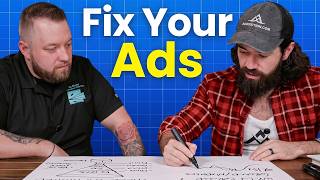

HVAC Business Doubled in 1 Year?
45sThe opening immediately hooks viewers with a compelling before-and-after revenue story and a relatable debt problem.
▶ Play Clip"Title accurately reflects the content: real tactics for scaling an HVAC business with proven results."
Alex Hormozi advises Corey, owner of an HVAC cleaning business doing $1.2M in revenue with $60K debt, on scaling through pricing, marketing, and operational improvements. The session covers specific tactics to increase profit and lead flow, with a one-year follow-up showing nearly doubled revenue.
Corey's HVAC cleaning business does $1.25M revenue with 38% net margin ($479K profit), $60K debt, 99% show rate, 82% close rate, and $7,200 monthly marketing spend.
Alex identifies the business as demand-constrained since doubling leads can be handled with existing capacity, so focus should be on increasing lead flow.
Alex recommends a 10% price increase (from $1,575 to ~$1,650 per unit), noting that as long as close rate stays above 65%, profit increases. This could add ~$100K+ annually.
Corey plans to pay off $60K debt in 4-5 months. Alex advocates for aggressive debt reduction to reduce risk, citing debt increases business volatility.
Current homepage used for ads is cluttered. Alex suggests a dedicated landing page with clear offer, minimal navigation, and mobile optimization to improve conversion rates.
With a 13:1 ROAS, Alex advises increasing ad spend from $5K to potentially $30K/month, as long as returns hold. He emphasizes the principle of reinvesting profits into profitable ads.
Current ads are text-heavy and unreadable on mobile. Alex recommends using organic top-performing posts with a 5-second CTA added, and running 40+ image variations with clear offer text.
Alex suggests email sequences with angles like 'I owe you $175' or 'We messed up' to re-engage past customers. Estimated 20-30% revenue lift from reactivation campaigns.
Propose offering affiliates a $175 dryer vent cleaning (cost $100) that they can sell to their customers, keeping all revenue. This low-risk upsell opens door for core service upsells.
Corey grew revenue from $1.25M to $2.3-2.5M (nearly doubled), leads increased from 120 to 200/month, and he's planning a second location.
By implementing incremental improvements in pricing, marketing funnel, and reactivation, Corey nearly doubled his revenue within a year, demonstrating that consistent execution of fundamentals drives significant growth.
What was Corey's revenue and net margin at the time of filming?
$1.25 million revenue, 38% net margin ($479K profit).
What is the recommended price increase percentage and why does it work?
10% price increase; it increases perceived value and customer conviction, often leading to higher close rates.
05:00
What is the key principle for scaling ad spend according to Alex?
If you know your ROAS is positive (e.g., 13:1), reinvest as much as possible to maximize returns.
12:00
What is the 'I owe you' email angle and its purpose?
An email claiming the business owes the customer a free checkup or money, designed to increase open rates and re-engage past clients.
18:00
What affiliate offer does Alex propose to attract partners?
Offer affiliates a $175 dryer vent cleaning (cost $100) that they can sell to their customers, keeping all revenue, while the HVAC company upsells core services.
22:00
What was Corey's revenue one year after implementing the tactics?
$2.3 to $2.5 million, nearly double the original $1.25 million.
28:00
What is the 'Veblen good' concept and why doesn't it apply to Corey?
A Veblen good is a luxury item where higher price increases demand (e.g., Rolex). It doesn't apply because HVAC cleaning is not a status symbol.
05:00
Price Increase Boosts Perceived Value
Demonstrates counterintuitive principle that raising price can increase close rates by enhancing customer trust.
05:00Scale Profitable Ads Aggressively
Key lesson: if ROAS is proven, reinvest heavily rather than capping spend due to emotional barriers.
12:00Affiliate Offer with Zero Risk for Partners
Innovative low-ticket upsell model that creates win-win for affiliates and the business.
22:00Nearly Doubled Revenue in One Year
Validates that incremental improvements in pricing, marketing, and operations can yield dramatic growth.
28:00[00:00] This is Corey. Corey runs an HVAC business with his wife doing over $1.2 million per year in revenue. But, number one, that $1.2 million isn't all profit. And number two, he has $60,000 in debt that he wants to get rid of. I'm Alex Hormozi. I own acquisition.com, which is a portfolio of companies that did over $250 million last year in aggregate revenue. We have several service-based businesses in our portfolio, so I've done a lot of thinking
[00:20] about [music] the problems that Corey's dealing with. And so, first we're going to deep dive in the business, and then we're going to break down all the tactics that he and you can use [music] to scale. And at the end, we're going to check in with Corey 1 year later >> Originally, we were doing about 1.25 million in sales. Currently, >> see if the tactics actually helped him scale his business. So, let's meet [music] Corey. >>
[00:40] What's going on, Alex? My name's Corey. >> What's up? >> I own Proshine Professional Cleaning with my wife, Nicole. We are an HVAC cleaning and ductwork repair company. >> What are the problems you're trying to solve? >> So, right now, we're allocating about 10% of our profit going towards paying off some of our debt. >> How much debt you got? >> It's about 60,000. >> Okay. >> And then, lead generation. We're trying to get higher quantity
[00:59] of leads, and also leads that are higher value clients. >> [music] >> On the bottom of that is just our like really just help our client with our booking process. I think that we can streamline it a little bit better, make it easier on them, and then also not lose out on the possibilities of upsells or anything like that throughout that process. >> Why is solving this important? What happens if you don't fix this? >> First
[01:19] and foremost, we're a people company. So, we really go out in the community and just do the right thing. And I'm grateful to have guys on my team that really share that goal. It makes our life a lot easier. [music] That's why it's important to us, so we can help more people, and then also grow our business. >> All right. Awesome. Okay, so how do you make money? >> This is actually where Proshine's a little bit
[01:39] unique. For our HVAC cleaning, full-in price for us is 1575 per HVAC unit. Each house we do has about two units. So, with that 1575, we have a 2-year growth-free guarantee. What that is is when we come out, we make sure that we're disinfecting that ductwork properly, killing any kind of bacterial growth. So, clients love having that guarantee in place, so that they don't have to worry about it in the future. And then we have ductwork
[01:59] re-wrapping, which is pretty much replacing the old installation, and then also our dryer vent cleaning, which is $175. >> Do you show customers pictures of the inside of their vents? >> [music] >> Yep, absolutely. >> Yeah, I would think. >> So, actually we have a customer profile, so they can access any point in time. So, if they want to sell their home, they can use it as an advantage for them. >> I like that. Where do
[02:19] you get your customers? >> All right, so we have a couple of different channels. Um, 60% come from paid ads. 3,000 a month go from Google. Uh, we actually just up that a couple days ago to 5,000. And then also 650 from Facebook. Facebook is very new for us. We just started the last 2 weeks. Then 15% of our job flow comes from local SEO, which is a third-party company. And then affiliates and referrals are a
[02:38] very big portion for us because we are partnered with a lot of HVAC companies in our area. One of them actually sends us about 30K a month. So, we really just want to replicate what they have going on and then share that with our other partners. >> So, what's the advantage to that affiliate sending you the 30,000 a month? >> We actually send them back roughly 40 to 45,000 because they have higher ticket items. So, when
[02:58] they go in, they're doing full replacements, where we're doing some patch work and some cleaning. Say they send us 20 uh leads, we'll send them maybe four or five, but they make double what we would send. >> So, Corey has a unique affiliate strategy, which is that he purposely limits his own services so that he doesn't compete with other businesses in his quote space. And so, he refers them the high-ticket business, but then they refer him
[03:18] some percentage of their business. But, the beauty of this model is that he's able to do this with tons of high-ticket providers so that he has almost limitless lead flow of people coming towards him basically for free. >> So, give me whatever other numbers you think I should know. >> Our numbers right now, 1.25 million over the last 12 months. Profit on that is 479,000. Uh, our net margin is 38%. So, our marketing spend right now
[03:38] is just under 7,200 as far as our marketing strategy altogether. Our show rate actually, funny enough, is 99% because it's the 1% that the client just happens to not be home where they forgot about our appointment. And then our close rate is 82%. >> If we double the lead flow of the business, can you handle that? >> Yes. So, actually we just hired on two more employees and we just got a third van. >> Right off
[03:57] the bat in every business, I think the first problem I try to delineate is this is a supply constrained business or a demand constrained business. Meaning, if we can double the lead flow and they can handle it, then it's a demand constrained business. If we double the lead flow and they can't handle it, then it means that we got to go build the resources and infrastructure to be able to handle a doubling lead flow in the
[04:17] future. And I think this is such a common thing that I see with business owners, they're trying to fix a problem that's already a problem that if you fix it, makes your existing problem worse. >> I got a a bunch of notes. I think we might be able to help you get more people, more impact, and more clean air. >> I'm talking about. >> All right, let's do it. >> There's nothing majorly wrong. And so, that's
[04:37] the good news. And obviously, you have 38% margins are growing. The last thing I want to do is like break something. >> Right. >> And so, I think this is going to be a game of incremental improvement. >> Right. >> Like no Hail Marys. This is just consistent yardage. >> Trust the process, right? >> Yes. Number one, I think that there's actually still some more room for pricing. Number two, >> Wait, let's talk about the debt.
[04:57] >> Number three, >> Talk about the affiliate piece. >> Okay. >> Four, we'll go funnel conversion rate optimization. Then five, we'll go ads. >> Perfect. >> Uh six, reactivation emails. >> Mhm. >> Corey's at stage five on the $100 million scaling road map. He's at productize. So, he's got 10 to 19 people working the business. She's got maybe two or three people in the business that are kind of like manager leaders that are running this thing.
[05:17] Now, some of the issues that he's dealing with is that customers are having nothing else to buy and churn. We have to figure out how we can get more repeat business for the business. His qualified leads are too expensive and cap your ability to advertise. And so, what we're doing is we're trying to improve the throughput on his existing advertising process so that he can get more leads because he can handle more leads. We're creating more
[05:36] sales materials, tweaking pricing, sales process, creating a CS playbook. All of this stuff is the things that happen all the time at the product tie stage. And so if you're like, "Shoot, that's almost exactly what he's going through." That's because businesses behave in patterns. And so if you're not sure what stage of business you're at, um this scaling your map is 100% free. You can go and get it at acquisition.com/roadmap and put in your business details.
[05:56] And on the thank you page, if you would like our help actually helping you debottleneck these things, kind of like what I'm doing with Corey here in person at my headquarters, on the thank you page just schedule a call. My team would love to have a conversation with you. Worst case scenario, we provide value. Best case, we'll see out here in Vegas. So first things first, the price. So you did a 23% price increase after the
[06:16] first time we talked to you. Okay. And so that resulted in a higher close rate and more money. >> Right. >> Wonderful. >> So Corey had actually come to one of our workshops at acquisition.com earlier and we had made this first initial suggestion, which is like, "Hey, bump your prices." And he obviously saw a big improvement, right? He was able to charge more and close more. And the reason we made that recommendation is because we looked
[06:36] at, you know, businesses in that space and we're like, "We think you're mispriced." Some people may be like, "How could you raise prices and close more?" Well, let me explain. There's two scenarios where this could be true. One is something called a Veblen good, which in economic terms is usually like a high-end luxury item. So like a Rolex, sometimes if something goes up in price, it becomes more sought after. That's not what happens for Corey cuz
[06:56] he's in the other bucket, right? No one's like bragging at their Rotary Club about how much they spent on their H vac. So instead what happens is that if you have what I would consider a normal business providing a normal service or product, if you raise your prices, what sometimes happens is that the conviction of the customer that you can actually deliver on the promise you're making goes up. And so on the value equation, which I
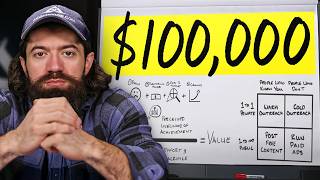
[07:15] talk talk about in this book, it actually increases the perceived likelihood of achievement. So by raising the price, we actually increase the value. And this is why I talk about charging premium prices. Page 48 in the Offers book, I talk about the virtuous cycle of pricing. And so So happens is if you raise your price, you increase the emotional investment, you increase the perceived value, you increase the results, and you decrease the demandingness of the customer.
[07:35] You get more money to actually deliver. And so what happens is a lot of times people will just try and like uh they're so afraid of charging money that they actually sell themselves out of a sale because it's so low price that they're like, "Gosh, this guy seems like a run, you know, uh super seedy duct tape operation." Right? And so many of you, especially newer business owners, I'd say like sub call it three sometimes five
[07:55] million in revenue, some of the biggest levers that exist in the business is simply charging more because people actually believe you can deliver the service now. >> So whenever I hear 80% or over 80% close rates, I usually know that there's room in sale. Basically, what I penciled out was a 10% price raise. This is more asking than telling. We would have to believe that we're not going to drop to 65%. As long as we close
[08:15] more than 65%, we make more money. Thing is is that 10% price raise for you equals roughly a 25% increase in net profit. >> Right. >> So that'd be roughly a hundred plus thousand a year. And that's at last year's volume and profit. So that's number one. Does that sound something like something that you could stomach or not? >> Yeah, 100%. >> So the second thing is how fast you plan on paying off the 60K debt
[08:35] that you have. >> We are planning to pay off completely in the next four to five months. >> Okay, good. That's one of those things that like I'd say this is more of an emotional thing, but it's just this back of mind thing. If there's a a range of like Dave Ramsey and then like, you know, Wall Street, >> [laughter] >> I tend to skew like very close to the Ramsey side and the single argument that
[08:54] I have around it is basically debt increases risk. >> Mhm. >> Risk when multiplied over a long time horizon tends to come due. And so [music] like businesses have seasons, they have volatility, and why did I take the, you know, the debt out to begin with? A lot of times it's like cuz I wanted to grow faster. You know what I mean? If you look at some of the most enduring companies, a lot of like Chick-fil-A
[09:14] operate debt free. Let's do ad stuff first and then I'll circle back to affiliates. So let's pull up the the page that the Google ads are going to. Right now, this is where the ads are going, right? Now, what most people are probably doing is they're clicking the button on the top right if they're desktop or if they're mobile, they're probably clicking the button right there. It's almost like having two landing pages in a row. And
[09:34] so, you might know this, but like typically you'll lose about 50%. Yeah, by like half. Just for every step you add, it's usually about half or more that you lose. Can you shrink that to mobile just so I can see what it looks like on mobile? Okay. That looks a little better. But, what I'd want to do is like I want that to just be a headline. I don't think the ProShine etc. stuff at the Like,
[09:54] see how it's kind of like messy? I think there's a lot of stuff going on. So, I tend to just either really shrink the logo so it's like a very small because it's literally the prime real estate is everything that's above this fold. And the first thing someone sees is the top, which right now is like a lot of blank space. So, I would probably wipe that, probably that button, so it's just the hamburger menu and
[10:13] the ProShine. That'll massively shrink the top bar. You have the home and then the site nav. You can drop that. We want to basically build a specific lander for ads, which isn't the home page because this page is serves one function, which is conversion. We actually don't see an offer. Keep scrolling. Yeah. And so, this is actually where the conversion happens. So, we're we're losing a ton of traffic. >> to the top bar. >> Oh, yeah.
[10:33] The basic level of this is like let's just have this offer clear and then eliminate all the other stuff on the [music] page, basically. So, let's go to the ads real quick. I think the the one takeaway that I have there is you have more opportunity to spend. >> Absolutely. >> So, like I think that at the very least we'd be like, we just want to continue to spend month over month provided our ROAS and our
[10:53] CAC stay more or less the same. And the fact that you're already at 13:1 up front and that's with like what I would consider like a pretty unoptimized page. Like, that might double to like 26 the changes that we do in the funnel. You might be able to go from like 5,000 like 30,000 a month in spend. >> Right. >> Which would be sweet, right? >> So, let me ask you a question. If for every dollar
[11:13] you gave me, I gave you $5 back, what would your budget of dollars that you'd give me be? If you answer that correctly, the answer would be as many dollars as you possibly could. And then once I give you more dollars back, you take those more dollars and give those more dollars to me and then I give you more more dollars back. And fundamentally, that's how good advertising should work. And so, what's interesting is that there's
[11:33] a lot of businesses that you're probably seeing multiple on this show where you'll see somebody getting 10:1, 20:1, 30:1, and they're spending $1,000 a month, and it's like, why are we not spending $2,000 a month or $5,000 a month? Now, if you're not sure, then you have a data problem. So, you got to go make sure the attribution's right. But, if you know that's where the money's coming from, by all means, spend more. And I know
[11:52] that there's like some emotional, you know, barriers cuz I've gone through them where you're like, "Oh my god, I can't believe I'm spending $1,000 a day." Cuz you feel like you're getting $1,000 poorer, and you're like risking it. But, the thing is is that if you already know based on past metrics and the existing campaigns that you're running that you get this expected return, then this is just part of leveling up in business is that you
[12:12] take greater and greater risk, and at the same time, you get greater and greater rewards. Okay. So, let's go Facebook ads. All right. So, the good news is that you got ads up. >> Yeah, right. >> The way that I would try and look at these is that most times when people make ads, especially the creative people, they'll use Canva or whatever. And they're making it on their [music] desktop. But, the thing is is that the
[12:32] way that you need to see it, and the way that your CMO should look at it, you should literally text She should text you the image of the ad cuz it's going to be about as big as it's going to be on someone's phone on social. Can't even see visit our website. You can't see that little You can't even You can barely read it now. Right? You can't see the number. You're not going to be able
[12:52] to read that. That's the checkpoint thing. So, you can't see that either. All we really see is picture of you and your wife >> Yep. >> and Air Duct and Dryer Vent Cleaning Experts. That's actually the only thing that we're seeing. I'll bet you, I don't know, but I'll bet you that's the highest converting. >> Absolutely. >> Yeah. So, >> [laughter] >> So, and that's actually still with pretty rough contrast. Like, the 18-point is actually kind
[13:12] of hard to read. You don't need to worry about logo stuff for when you're doing direct response. >> Okay. [music] >> Hilton Head Bluffton, you want that in the ad copy as the headline. And then, the actual image, if we're just sticking with image ads for now, uh we want the free 18-point inspection to be like, boom. Says, "Get yours today." Just be like, "Get yours." >> [laughter] >> And then, that way it's all the same
[13:31] size, right? And you can probably drop it today. Then, I would run 40 variations. White background, blue background, on white. Like take all the colors that you have for your brand and I would just basically just run a lot of variations there. And you might be amazed by this, but the picture that you choose there, just like it's kind of blocking the work, which is kind of a bummer cuz I want to see what you're actually
[13:51] doing. >> Right, right, right. >> Also, you with pictures with customers like smiling and super happy near their HVAC unit. Like people understand what it's about, but I would be running a ton of different images. Also, do you do any organic like posts on like Instagram or I would take all the best performing organics >> Got you. >> and literally just the last 5 seconds [music] just tack on like, "Hey, if you want an 18 like
[14:11] if this is cool and you want an 18-point inspection, it's absolutely free. Just click the link and we'll come straight out to your house." >> this site. >> Yeah. So, just take the best performing ones, add the 5 seconds on the back, and then basically each one of them become >> Yeah. >> typically pretty good ads cuz the algorithm already does the testing for you. The cheapest ways of testing new ads um is just like post
[14:31] them as organic and then see how they do. Now, let's go funnel CRO. So, this is what the page is going to look like. You're going to have your little hamburger menu here. I think you can just put the the number, 333, whatever, up here. You want to make sure that on mobile this is all one line. So, there's no no other row. Do you do free assessments or not? >> Yeah. >> Okay. Uh >> We
[14:50] actually we saw that just changing the verbage instead of you doing a free assessment to like the 18-point inspection. >> Yeah. >> People love that versus the other way. >> Free 18-point inspection and then I think we have our form right here. Underneath they have the number at the top for the people who want to call cuz I'm guessing cuz you have it all over that you do have somebody who's answering those. And then you have
[15:10] your little, you know, submit whatever thing here. >> Got you. >> And then I would probably put a locations just because I'm thinking what are the most common questions that someone might ask. If you already know these other ones, then I might also include FAQs at the bottom. And that would be it. That's more like that's the page and it should be a free-standing page that's you don't even have to have it navigable from the site.
[15:30] You can just be like, "This is where all my ads go." You might also find though that if you change all the buttons on your site to redirect to this page, >> Right. >> you'll just convert more of the existing traffic. Also, on the SEO side. >> Yeah. >> So, I think this honestly like of all the things I'm going to go over, I think the pricing, the ads, and us doing this funnel change in terms
[15:50] of how we're directing the traffic is probably going to be by far the biggest improvement. I think you probably have something in April that have a 2x or more here. That's going to be really big. The funnel conversion, we've outlined that. You're going to increase Google Ads. You probably have a ton on the Google side. On the Facebook side, we're going to do uh plus plus on images. And we want less text. And basically offer first.
[16:10] >> Yeah. >> Like, basically just lead with the offer. In general, with marketing, like, I don't want to say think the same thing multiple times. I'll say it in different ways, but the same content over and over again like >> Right. >> it just looks cheap. >> Cheap. >> You know, for lack of a better term, which will affect your brand, right? [laughter] So, let's do the reactivation stuff, and then let's pull up the emails. We
[16:29] recommend a yearly free checkup for your dryer vent to ensure it's working safely and efficiently. If you use your dryer frequently or have furry pets, we suggest cleaning it more often. Frequent use means more than three loads per [music] week. If you have pets, consider more frequent Okay. So, what's interesting about this is that this is like I mean, what you've proven is that just telling people you [music] exist tends to get more business, which is
[16:49] like first first objective. Um I would say the second version of this is where it says, "Hey, you know, Pro Shine family, two things that I would probably consider testing. I owe you uh a free checkup or I owe you X amount of money." So, whatever the cost of a checkup is, you do 175 or whatever. Like, "I owe you $175." That'll get a lot of opens. >> Right. >> It's like, "Hey, it turns out that
[17:09] when you signed up, we didn't communicate a component of our offer that we did to other customers. And I want to make sure that we're just trying to do right by you." More like, "Hey, we messed up. Can we make it up to you?" It's a different frame than like >> dryer vent >> like, "We're coming back at you." You know what I mean? So, nice thing is with this, you can just split test it. So,
[17:29] you can run it one week and see what the open response rates are in the next week. And the way you're doing this, you're just doing this manually, like, just looking at your list who was the last time out. [music] Okay, that's fine. Then this I mean, the nice thing is that creates a really easy way to do the split test. You don't have that no cost to you in here. So, would make sure that that
[17:49] is definitely highlighted. >> Yeah, so we recommend yearly and then I put bold, underlined at no cost to you. Cuz people scan these things. [music] Some of the things that I thought of that are like unique angles, kind of like the hey I owe you some money or hey we messed up dot dot dot. Like what will make this business more valuable in the long run? So, number one is savings. So, if you can ask for
[18:08] people's bill from your existing [music] people and be like, "Hey, can you just send us your bills from last 12 months?" And it shows before and after. Cuz then you'll have a 12-month running average. It's such a stronger pitch. Hey, this actually saves money. The reason that I think this is so compelling is that this is what when paired with the larger price will make sense. We're charging 1,500 bucks or $1,700 per unit. So, it's 38
[18:28] whatever 3,400 that you're going [clears throat] to pay. But the average person's getting that back in 18 months. And it's going to increase the value of the house cuz we're going to give you this, you know, this little portal that I'll show you all the the the fix-its and the mess-ups or whatever. One is I would send those stats out about savings. Number two, in terms of themes of the emails, is I would take the exceptional
[18:48] ones and send those. I'd be like, "Hey, this is Casey. Casey was at $600 a month and now she's at 150." You're like, "Holy cow, I could use that kind of It's like, hey, you know, hit us up. It's better for your allergies and it's better for your pocketbook." Like those are pretty the three kind of strong angles, which then leads me to the second kind of stat that I think is worth collecting. So, one we
[19:08] have the stat on savings, which I think will be the most compelling. But interestingly, I'll bet that if you had a different angle on some of the ads, which is like, "Are you sneezing a lot? Are your eyes watery?" Like what are the pains of somebody who has allergies? And I'm somebody who has terrible breathing and so that's why, you know, why I I I recognize it. And if if someone [music] says, "Did you know that
[19:28] allergies are reduced by 33% by just having better air?" And then be like, contrast that with 90% of houses are past their period of time where the the existing filters work or whatever. >> That's why we blow up in April when the pollen season comes and all the windows are open. That's big for us. >> So, the nice thing is that if you have one or two times a year that you know it's going to kind
[19:47] of blow up, then you actually get basically year-round coverage. In the gym world, people want to get in for summer. So for us, we have summer and then we have New Year's as like two kind of polar ends. But we can get year-round sign-ups because as New Year's approaches, it's like you're advertising, "Hey, want to start You want to start getting in shape for the new year." And then once New Year happens, it's like, "Hey, don't
[20:07] you want to make sure you have your New Year's resolution that worked?" And then it's like, "Hey, did you miss your New Year's resolution?" Right as we're getting into like March, April, it's like, "Hey, if you want to get in shape for summer, you got to do it now." Right? And then once summer hits, it's hot as and then they're like, "Fuck, you know what I mean? Like I'm in a bikini, I look like I look
[20:27] terrible. Hey, if you look terrible in a bikini, you should come in now." >> Right. >> It's like, "Hey, did you And then right at then we're going right back into New Year." And so we only need like one or two kind of seasonal pain points to go pre, during, post twice, basically on two cycles a year. >> Yep. >> That theme is what you would communicate to the CMO. All of our messaging for the next
[20:47] 2 months is going to be anti-allergy. And that's going to be through the emails, that's going to be through the ads, it's going to be through Google PPC. Next 2 months, it's going to be like, "Okay, season's here." >> Right. >> Because thing is is also your targeting is going to go to some of your existing customers. And so I'm sure some people are booking through Google search that already are customers of yours. They just don't
[21:06] know how to find you on the internet. >> It's Google search. >> And so this just gives you another opportunity to get in front of them more times. >> So it's really cool that here from Alex that we could start using some anti-allergy or some mildew kind of things that we can implement cuz I know that this is a big issue that many homeowners don't think about until it's unfortunately too late. Real quick, I'm going to
[21:26] show you the exact 10-stage roadmap from zero to 100 million plus that less than 1% of companies finish I've now done multiple times and so I can say with a lot of confidence that these are the stages as head count increases that you need to get through and I broke each of these down by eight different functions of the business, what the constraint feels like, like what are the symptoms of it when you're going through it,
[21:46] and then what steps we actually took to graduate. We've done this across software, physical products, uh service businesses, brick and mortar, all of this and it works. [music] And it's my gift to you, it's absolutely free and so the link's in the description but you just go acquisition.com/roadmap just enter your info and it'll spit it right back to you all free. >> The other thing, do you have retargeting across all platforms set up? >> We're working
[22:06] on it. >> Okay. Yeah, so that would be for me [music] like Probably be number seven. Cross platform retargeting. And the other thing is Number eight is we want to own all terms. Quick pro tip for just about anybody, if you advertise at all or even have some level of word of mouth, people will search for your business or your name. And so for me it would be like I should own Hermosi, Alex Hermosi, you know,
[22:26] Alex Hermosi acquisition, acquisition.com, all these different permutations of things that are words or branded terms that I have been consistently marketing over an extended period of time. And so we just have to think what are people most likely to search for if they know who we are. And we just want to make sure that we're first thing that people see cuz otherwise you you leave that space open for competitors to advertise and scoop your customers for
[22:45] you. And this also helps out businesses who don't have as strong of SEO, so search engine optimization, so that if your customers are searching for you that they find you. And that's the point. And I'm willing to do that even if I have to pay cuz some people are like, well they were going to find me anyways. I don't want to pay for that click. Dude, get bigger problems. Like you're you're not going to lose money
[23:05] on that. Cuz think about the alternative, someone could just outbid you on your own terms and then it becomes a problem. And I'll say this, if someone is outbidding you on your own terms, the good news is you'll always be able to beat them on being more profitable on your name. If we're looking up this stuff, I think we're looking at basically once a month here. One time per month. And I think that these reactivation emails,
[23:25] I'm going to pull this over. Would be one is like IOU. Which I would have a follow-up to this one. So there's difference between like we might email once a month, but we might have a like a two or three email sequence just for like that little segment. If that makes sense. So it's almost like three six mini campaigns more than six individual emails. And so be like I made a mistake on your account. Okay? But
[23:45] that's like kind of like A and then B. We probably have our allergies angle and then we have our savings angle. And then we have our environment. You never know. >> Yeah. Another good one around the allergies like from the polar opposite from obviously April to like the end of year like when it starts to get cold is mildew smell because a lot of times when those heating elements start to kick up in electric heat we're
[24:05] smelling it through the duct work. >> So you've got pollen and then you've got what you say mildew. >> Right. These are kind of like your two variations of your different kind of allergy angles. I would also consider doing case studies >> Okay. >> as the follow up for each of these. So it's like here's the stats behind this and the follow up email is like, "Hey, here's Casey who had the same issue. Maybe you should
[24:24] consider that." And so then this one gets us to like come back. >> [laughter] >> Right? Cuz that's our [music] six months. >> Yeah. >> Like I would be unsurprised if it doesn't do 20 to 30% revenue. >> Yeah. >> Like >> Yeah. Big time. >> Big and the nice thing with this it's all profit. >> Right. It's back. >> All right. So let's talk about affiliates. >> Okay. >> All right. So walk me through your
[24:44] existing affiliate process. >> So right now we've just have a connection with our other partners. Typically they're either in the HVAC space or they're pest control, even remediation companies. We make connections one-on-one with them. They know what we do. >> How do you make the connection? >> Through networking just in general. So we have networking events that we go to. People that we're partnered with refer us out to other companies that they work with. >> Your
[25:04] existing referral program is basically just be like, "I'll send you business, you send me business." And that's worked out okay. But how many would you say are actively sending you business? >> On a consistent basis, one. >> Okay. >> Just the one. >> So I I'm going to guess that's just worked out. But most of the times if you want to have like a true kind of affiliate partner program we need to have some sort of
[25:24] offer for them. I see this is basically two potential avatars and I don't want you to focus on both. I want you to like pick one basically. We've got the events play which is okay, I'm going to go to these HOAs. I'm going to go not during the time that there's an event and say, "Hey, when do you have your HOA events? I did this house and this house in this neighborhood." Cuz that's going to be
[25:44] key, right? Like we already did this house, this house. You can call them up if you want, here are their numbers. We'd love to be able to just know what your schedule is for when you have your HOA events just so we can just show face, you know, we like to be a part of the community, blah blah blah blah. Um but this is an outbound >> Okay. >> effort that you're basically it's you plus car
[26:03] or Nicole plus car going out and shaking hands, kissing babies. And basically what we want to do is create a calendar so that we end up getting to, you know, one to two a week which I think you could totally do. >> The stuff that we're getting from that event, I mean the last event we did we booked 55 inspections. Both RC M&O and Nicole, I mean they rocked that stuff. >> So I see this as
[26:23] a very good way of doing it, but I think we go outbound. Give us your calendar for what your events are and then it's just like once you have their calendar, you're in. And then after every time you're there you're like, "Hey, when's the next one?" And that way you just always go book an event from an event once you're in. Now, on the partner side what I want to talk about is the offer. We want
[26:43] to have a really compelling offer for them. Referrals everyone promises, no one delivers. And so it's like you need to have something [clears throat] that they're going to like, you know, get into bed with you on. Whatever the highest gross margin thing that you can do that's like kind of lower ticket. So that $175 thing, I think that you say, "Hey, you can charge $175, you can keep the whole thing and we'll do [music] the work."
[27:03] But then when you go out, you've got the client and then you can sell the rest of your the rest of your work. >> Right. >> So this is the $100 million book. This is page 223. We're talking about affiliates. And so one of the key parts about making an affiliate work is figuring out the offer that's going to work best for them to sell on your behalf. And so I have a couple different versions of
[27:22] of setting this up. I outline them on pages 237 to 239. So I basically give you three different versions that you can use to get affiliates to promote your stuff. Now, what I'm proposing for him, he offer number two, which is they have the core thing that they're selling, but then they upsell for 175 bucks his lead magnet. So, they're going to sell something that he's going to give away for free to them to give to
[27:42] their customers. And then once that customer comes in with that lead magnet cuz they bought the $175 thing, you then upsell the core offer that applies to you. The reason they do it, the other business, is because they make all this money on the 175 bucks that they don't have to do anything for. You like it because it might cost you only $25 to deliver that $175 thing. So, your cost of acquiring the customer is your
[28:02] conversion rate from lead magnet upsells to your core offer times the cost of delivering it. So, if let's say one out of three people takes the upsell, well, if your cost of delivering that upsell is $25, then it costs you $75 per customer, which is probably exceptional math for his business. >> And it's a very good point because our technicians are trained to even if they're doing just a dryer, to push an inspection to see what's
[28:22] going on while they're there. Okay. >> And so, this we'd give this to affiliates. So, you know, you have your your one guy, but it's like, "Hey, let me talk to 10 other one." I still saw that you guys don't do duct cleaning, we do. It's one thing to say, "Hey, we're going to refer you business," which we will, >> Right. >> but you also only have so much business to refer to. And the thing is
[28:42] this long-term, it's a less scalable option cuz what ends up having to happen is if you're like, "Well, I want 20 referral partners," it's unlikely that you're going to have sufficient referral volume to send them all enough business. >> Yeah, so the good thing about what we have right now set up, it's another set of eyes as as well for us to go through and and diagnose [music] their system. So, it gives them more visible time
[29:01] on their their units in their clients' houses, >> Yeah. >> uh which allows that allows us to say, "Hey, listen, like this is [music] needs to be replaced or this is wrong." >> We'll upsell your stuff if we don't do it. >> Well, but right, well, we send them right back to whoever sent us there. >> Yeah. >> So, you know, depending on what partner we're going in with, solidify some of their sales as well. Uh
[29:21] which is why [music] that affiliate with our biggest one is working so well. >> So, I think that this is the offer I would approach them with and just say, "Listen, you can sell it. I'll send one of my guys out. I'll eat it at 100% of cost. You take all the money, and you just know what your metrics are. Like you're still going to close 87% [music] and it's going to be 3-4K, so who cares?"
[29:41] You would pay 175 cuz the the hard cost of sending the guy out is less than that. So, what's the cost of sending the guy out? >> Uh about 100. >> Okay. So, your actual cost is about 100, but you're probably going to close what percentage do you think you'll close into new business? >> Um probably 75% of that. >> Cool. Let's be conservative and say half. If you had to pay $200 in terms of CAC,
[30:01] who cares? Right. And so, that's the that would be the offer that I lead with because that way you don't feel like you owe [music] them. I mean, obviously you're going to want to try and refer business if you can, but this at least gives them real money, no extra work. Like it's a compelling offer. >> They just send it to us and we get it done. >> Yeah. [music] I don't think you're going to be
[30:21] able to do both of these. >> I agree. >> So, which one do you feel you would be like more equipped to do sooner? >> Equipped to do sooner, I think outbound's probably easier cuz we [music] can obviously have our CMO to start making those reach out calls to see what's going on. Ultimately, I think that this is going to be very interesting for us. We want the activation. I think that at a certain point we're
[30:40] just having people say, "Hey, this [music] the price?" Charge it. So. >> Okay. So, if we're looking at a timeline, it's like probably for the rest of this year you're just going to it's going [music] to take you to spin this up. And so, this is probably a 2026 thing. Realistically. Because for each of these things, you basically need someone who's full-time in charge of the time. As as ugly as that sounds. But the thing is
[31:00] it's going to be worth it because you're going to generate much business. If you get one more partner like your current one, it's already paid for itself. And I think that if one time one person's full-time, that's the only thing they're doing, they'll definitely do more than that. And then you'll run into supply constraints cuz you won't have enough guys, which we can deal with. >> For our affiliate, I think that this is going to be
[31:20] a great program for us. And we always look at how we can get back to everyone around us. So, this is going to fit our model and then just really explode the whole process. Let's look at our our overall our overall improvements. We'll prioritize them. Does that sound good? >> Sounds good. >> Okay. Number one is we're going to do price raise of 10%. So, around 1650 per unit. And as long as close rate stays uh
[31:40] above 65%, we're making money. Okay. Two is you're going to continue to pay off the debt. So, we're going to we're just going to keep debt paid. Number three, change funnel. So, uh optimize landing page and redirect buttons. [music] So, all the buttons on the site should now go to this new page that's already optimized. >> Mhm. >> So, number four is fix ads, which is variety plus organic best >> [music] >> performers >> Mhm. >>
[32:00] with a plus five second >> Yep. >> uh CTA. And then, we're going to increase ad spend. >> [music] >> Now that we fix these two things, so it's like let's go make a better funnel. Let's go fix the ads. >> Mhm. >> Then we will increase the ad spend, and we're just going to keep doing this kind of infinitely. >> Right. >> It should be a There you go. Forever. >> And for the increase ad
[32:19] spend, what are you thinking like how much do I do you want me to designate percentage base on on that or >> The reason that I do it in this order is because if we fix the landing page and we just improve the ads you have, you might already double or triple your lead flow. >> Right. >> And so, you might not even have to spend more because it might be like, "Shoot, I don't have enough
[32:39] guys." Which is a problem I'd love to create for you. Then we go retargeting cross platform plus own Google search terms. The last main one that we're going to do is just going to be outbound to HOAs. Like, you can do one through four in the next like two weeks. >> Right. Right. Right. >> Right. This is kind of like the first thing that happens. This then is kind of happening anyway, so there's not really any
[32:59] work that has to happen. These two happen together. These two will happen together. And then this would be the last thing that I would do. >> Got you. >> Because all of these might even result in me being like, "Shoot, I don't even need to do these events yet. Like I'm we're already [clears throat] crushing it on this part." So, I think that this could reasonably increase profit by 25%. in profit. Um that will also, once
[33:19] you have to not pay off the debt, that'll increase your profit by like >> [music] >> 5%. >> [laughter] >> Right. >> But at least 100% in headache. >> Yeah. >> Um this might be a a 2x that's sitting right here for optimizing the pages. And it might be even more because you have your SEO that's going to feed into that, too. Um fixing the ads and organic, like this could definitely be a 2 to 3x.
[33:38] >> [music] >> I know that sounds wild, but like I think you're getting by with the ads that you have because other people who are in your industry don't know how to advertise more than because the advertising is good. [laughter] >> Right. >> Um the the ad spend is just going to be, you know, one-to-one ratio. Basically, you're you're scaling. Right? If you can If you can keep ROAS the same and we double it, then everything
[33:58] doubles down the funnel, right? This is probably going to be somewhere in the neighborhood of like a 10 to 20 I'll just call it a 10. Conservatively, I'll say it's about a 10. 10% lift, maybe 20% that you might get from the the retargeting side. Um and then outbound is kind of like a uncapped. Uh because you could figuratively just be like, "I'm going to go get 100 agent leads." And then like you're completely plugged in.
[34:18] You do that and you're at 10, 20 leads a year. >> Yeah. >> Oh, you know what? I forgot one. So, um six email reactivation. >> Yeah. Yeah. Yeah. >> There we go. And I think that can give us another probably 20 to 30% lift. >> Yeah. >> Money. >> And that's And that just keeps growing. >> Well, the nice thing with things like that is that if they do compound as the business grows. >> Right.
[34:38] >> And so you don't like once that's installed, it just continues to print. Do you think this will help you grow? >> Absolutely. >> Sweet, man. Awesome. Feel good about this? >> I do. >> All right. Rock and roll, man. Drum roll, please. It's been almost a year since we filmed this episode with Corey. My team jumps on a call to check in on his progress, and I'm going to watch it live. >> Hey Alex. Uh
[34:58] so yeah, so when we were there originally for the recording, we were doing about 1.25 million in sales for the trailing 12 months. Uh currently, we are on our on our goal here for 2.3 to 2.5 a year later. The biggest impact that really that we obviously went over with a lot of like my marketing, which we knew was an issue when we first got there. So, [music] went with a new third party that's been there,
[35:17] done that uh with many other companies before. Um so, they're been amazing to work with. And again, our our lead flow uh after kind of making some of those conversions from the landing page marketing, upping ad spend, uh we were sitting about 120 leads a month, and now we're about closer to 200. Uh which is really great, and they're higher quality. And then, I'm excited and hopefully in the next 12 months, we'll be looking at another
[35:37] location, which is super exciting. Not only for myself, but for my team. Uh I got some some good individuals here that are looking for some new opportunities, and I'm happy to be able to facilitate that. I just want to say I thank you, and I appreciate all everything you do. Um and I love your mission, which again is like very similar to the way I go to all my clients. Um you do it for the right
[35:57] reasons, >> [music] >> and that's something I can respect. >> Well, there you have it. That's Corey. Um you know, crushed it, almost doubled [music] uh within a year just walking through the stuff that we went through. And all the credit really goes to him. I mean, at the end of the day, you can watch 100 of these videos, but if you do nothing with it, nothing's going to happen. So, real businesses, real tactics, real and
[36:17] uh hope to see you on the next one.


⚡ Saved you 0h 36m reading this? Transcribe any YouTube video for free — no signup needed.