
AI Summary
Dr. Patrick discusses the root causes of America's health crisis—obesity, ultra-processed food dominance, micronutrient deficiencies, and physical inactivity—and argues that resistance training, exercise snacks, and whole-food nutrition are the most effective strategies to combat aging and chronic disease.
Chapters
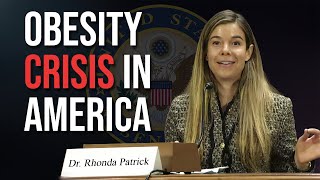
70% of American adults are overweight or obese, healthcare costs are 18% of GDP, yet the US ranks 55th in life expectancy. Obesity is preventable and reinforced by a culture that discourages self-discipline and open conversation.
Obesity is linked to 13 types of cancer, takes 3-10 years off life expectancy, damages DNA through double-stranded breaks (precursor to oncogenic mutations), and accelerates the aging process.
About 60% of average American calories come from ultra-processed foods. They are calorie-rich, nutrient-poor, do not increase satiety, are cheaper than whole foods, and activate dopamine reward pathways, leading to addiction and overeating.
Beyond overconsumption, Americans are micronutrient deficient: 80-90% have low omega-3 (same mortality risk as smoking), vitamin D deficiency is common (affects 5% of the genome), and half the country lacks magnesium (essential for 300+ enzymes including DNA repair).
Physical inactivity carries the same mortality risk as smoking, cardiovascular disease, and type 2 diabetes. Average Americans lose 10% of peak muscle mass by age 50 and 40% by age 70.
Higher muscle mass is associated with 30% lower all-cause mortality. Grip strength is a better predictor of cardiovascular mortality than blood pressure, and strength is linked to a 42% lower dementia risk.
Resistance training increases muscle mass, strength, and bone mineral density, lowering fracture risk by 30-40%. Hip fractures are deadly: 20-60% of sufferers die within a year.
The guidelines vaguely recommend resistance training two days a week without specifics. Dr. Patrick suggests 15-minute resistance workouts, 7-8 times per week, focusing on compound lifts like squats and rows for physical independence.
Short bursts of activity, like 10 body-weight squats every 45 minutes, improve blood sugar regulation better than a 30-minute walk. Unstructured physical activity (stairs, brisk walking) reduces cancer mortality by 40% and cardiovascular mortality by 50%.
The simplest dietary guidance is to eat whole foods and minimize ultra-processed foods. Nutrition education in primary schools, as done in Japan, leads to healthier eating habits later in life.
Aging-related decline is largely preventable through lifestyle choices: resistance training, regular movement, whole foods, and better nutrition education. The current healthcare system is reactive, but shifting to proactive, longevity-focused care can fundamentally improve public health.
Mentioned in this Video
Study Flashcards (10)
What percentage of American adults are overweight or obese?
easy
Click to reveal answer
What percentage of American adults are overweight or obese?
70% (nearly three out of four)
00:02
How many types of cancer are associated with obesity?
easy
Click to reveal answer
How many types of cancer are associated with obesity?
13 different types
00:48
What percentage of daily calories in the average American diet comes from ultra-processed foods?
easy
Click to reveal answer
What percentage of daily calories in the average American diet comes from ultra-processed foods?
About 60%
01:18
What mortality risk is equivalent to low omega-3 levels?
medium
Click to reveal answer
What mortality risk is equivalent to low omega-3 levels?
Smoking
02:15
Over how many enzymes does magnesium play an essential role?
easy
Click to reveal answer
Over how many enzymes does magnesium play an essential role?
Over 300 enzymes
02:45
By age 70, what percentage of peak muscle mass does the average American lose?
medium
Click to reveal answer
By age 70, what percentage of peak muscle mass does the average American lose?
About 40%
03:16
What is the association between higher muscle mass and all-cause mortality?
medium
Click to reveal answer
What is the association between higher muscle mass and all-cause mortality?
Higher muscle mass is associated with a 30% lower all-cause mortality
03:31
How much can resistance training lower fracture risk?
medium
Click to reveal answer
How much can resistance training lower fracture risk?
By 30 to 40%
04:15
What exercise snack study showed improved blood sugar regulation over a 30-minute walk?
hard
Click to reveal answer
What exercise snack study showed improved blood sugar regulation over a 30-minute walk?
Doing 10 body-weight squats every 45 minutes over a 7.5-hour workday
05:49
What does Japan's primary school nutrition education program show?
hard
Click to reveal answer
What does Japan's primary school nutrition education program show?
People educated on nutrition in childhood are more likely to eat healthy later in life
08:31
💡 Key Takeaways
Ultra-processed foods are a triple threat
Explains how low satiety, low cost, and addictive dopamine activation drive obesity and healthcare costs.
01:18Physical inactivity is as deadly as smoking
Challenges the public perception of exercise as optional by equating inactivity with smoking and chronic disease.
03:00Resistance training is a fundamental pillar of aging
Frames strength training not as a luxury but as essential for survival and independence, with concrete fracture prevention data.
03:59Exercise snacks are evidence-based
Cites a recent study showing tiny movement bursts outperform a 30-minute walk for blood sugar control, making exercise accessible to everyone.
05:49Nutrition education in childhood changes lifelong habits
Cites longitudinal data from Japan proving early education is a powerful prevention strategy.
08:31Full Transcript
[00:02] ourselves the greatest nation in the world while 70% nearly three out of four adults are overweight or obese while we spend about 18% of our GDP on healthare more than any other nation and yet we rank 55th in life
[00:17] expectancy um our children are getting type two diabetes at unheard of rates this is not just a Health crisis it is a cultural crisis obesity is not inevitable it is not a of God it is something that can be prevented it is a
[00:33] choice that has been compounded by bad habits over time it is reinforced by a culture that does not Foster good decision-making and self-discipline and we have created a culture where these difficult truths have become personal
[00:48] attacks where Physicians are afraid to talk about a patient's weight because taboo if we can't have a conversation about obesity how can we ever solve the Obesity crisis obesity is associated with with 13 different types of cancers
[01:02] it takes between 3 to 10 years off of life expectancy it damages DNA causes doubl stranded breaks to DNA which is the precursor to oncogenic mutations and it fundamentally accelerates the aging process and yet it is the principal
[01:18] difference between our nation and the longest lived Nations we are overfed but longest lived Nations we are overfed but undernourished so about I would say 60% of daily total calor calories consumed by the average American come from ultr
[01:32] processed foods these foods are caloric Rich they are nutrient poor they do not increase satiety so people do not get satiated they continue to overeat they gain weight they're cheaper than Whole Foods so people are economically
[01:46] incentivized to eat unhealthy and they activate the dopamine reward Pathways in our brain causing addiction so this Trifecta of no satiety low cost and addiction really kind of spiral L into this process of poor health outcomes and
[02:02] runaway Healthcare cost and it's not over overc consumption of calories is actually not the only problem we are also micronutrient deficient so the food we eat is supposed to provide us with essential vitamins and minerals that run
[02:15] our entire metabolism omega-3 so about 80 to 90% of Americans have low omega-3 levels we now know that low omega-3 levels have the same mortality risk as smoking vitamin D deficiency easily correct vitamin D gets converted into a
[02:32] steroid hormone that basically runs about 5% of our protein and coding Human Genome everything from immune function to brain function to cancer very important easily corrected magnesium about half the country does not get
[02:45] enough magnesium from their diet magnesium is essential for over 300 enzymes in the body including repairing damage to our DNA DNA damage is something that you're going to know about on a day to day-to-day basis but
[03:00] it is what is promotes cancer so decades later it rears its ugly head but the real problem is simpler we actually need to start thinking about physical inactivity as a disease we now know that it carries the same mortality risk as
[03:16] smoking cardiovascular disease and type 2 diabetes yet when the average American reaches age 50 they lose about 10% of their Peak muscle mass by the time they reach age 70 they're losing about 40% of their Peak muscle mass and this isn't
[03:31] just about looking strong it's about physical Independence it's about survival so higher muscle mass is associated with a 30% lower all cause mortality grip strength is actually a better predictor of cardiovascular
[03:45] related mortality the number one killer in the United States than high blood pressure and yet nobody talks about it and strength is also associated with a 42% lower dementia risk and yet we think of resistance training as an add-on as a
[03:59] luxury it is not is a fundamental pillar of Aging it increases muscle mass muscle strength and Bone mineral density so fractures are a death sentence between 20 to 60% of Americans that that have a hip fracture die within a year and yet
[04:15] resistance training can lower fracture Risk by 30 to 40% this is preventable we have the information we have the data we need to take action and resistance
[04:27] training exercise getting the right foods are the most important things that we can do to prevent disease and make a difference in our country so thank you Dr Patrick our Health Care system is broken it's reactive not preventative
[04:40] how do we get more longevity focused care into mainstream medicine and what's standing in the way um well I think that the the most important thing that we can do right now for longevity medicine is actually move
[04:54] more and I think that the federal exercise guidelines are sort of out ofd to be honest um we don't focus at all on resistance training it says two days a week what does that mean I mean to be honest people might just start doing
[05:07] some bicep curls and I mean that it there's not information there you need actionable information I think resistance training okay you can do you know 15 minute eight seven or eight 15 minute workouts throughout the week and
[05:22] workouts in terms of gaining muscle mass and strength so so giving some some more specifics in terms of like types of exercise also compound lifts like you want to you want to basically make people be physically independent so you
[05:36] to be doing squats or you want them to be doing um you know rows or you know multi-jointed right um I also think exercise snacks is a big one so there's
[05:49] there's nothing in the guidelines about how people can get exercise benefits by doing these short burst of physical activity tons of research coming out on this I mean we're talking a recent study just showed that doing 10 body weight
[06:01] squats every 45 minutes over a 7 and a half hour work week was better at improving blood sugar regulation than a 30-minute walk I mean that's like two and a half minutes a day there's also tons of evidence coming out on these
[06:14] also something that can be recommended so these are the kind of things that you take the stairs instead of the elevator or you walk briskly instead of you know taking a car to work you know to work and um there have been studies showing
[06:27] that people wearing these accelerometers are able to reduce their cancer mortality by 40% their cardiovascular related mortality by 50% if they're unstructured sorry these yeah unstructured snacks where they're just
[06:40] basically taking advantage of everyday you know situations to get Physically Active it doesn't cost money to do body weight squats you don't have to have a gym membership so I think that's one important way that I think information
[06:53] important way that I think information can be improved and more targeted and I think that's one of the questions I have for uh you know Dr Patrick I mean we've known about this for quite some time right uh I mean the food pyramid was a
[07:07] about that it was it was a marketing deal we've gone to seed oils again the problem we have is as a consumer is again you have all all the books out there you have all these different theories um who do you
[07:23] believe it's a very confusing thing and unless you just go completely simple all Whole Food Foods no Ultra processed food trying and approach it that way um but
[07:35] Dr Patrick just kind of comment on that well I do um I do think that going Whole Foods and trying to uh reduce your Ultra process foods as much as possible is is the way to go and I think we have a lot more information now than we did
[07:50] you know 30 40 years ago we know that these Ultra processed foods are not causing satiety that is we know that they're reort you know activating these addictive reward Pathways in our brain so I think that information is a little
[08:04] more in depth but I also think that some of the information on like why do we eat okay if we have nutrition in primary and secondary school definitely medical school you're right I mean one class in nutrition it's absurd right I mean if we
[08:18] can start educating at an early age children why they eat what are they you want to eat leafy greens magnesium's there what does magnesium do what happens if you don't get magnesium what is cancer you know this there's even
[08:31] some data out of Japan they have that um that program in Japan where they they have in primary schools nutrition education and they've shown longitudinal studies that people that were you know educated with nutrition in in childhood
[08:44] are much more likely to eat healthy nutritious later in life