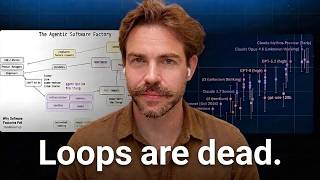

Fable 5: The Biggest Model Since GPT-4
45sOpens with a bold claim about a major AI model upgrade, hooking viewers interested in cutting-edge tech.
▶ Play Clip"Title promises a deep dive into Fable 5 workflow, and the video delivers with extensive practical tips and demos."
This video explores the capabilities of Anthropic's Fable 5 model, focusing on practical workflows and strategies to maximize its potential. The creator shares insights from extensive testing, including how to avoid guardrails and cost-efficient usage tips.
The creator has been testing Fable 5 non-stop, calling it the biggest model jump since GPT-4. The focus is on workflow, not just benchmarks.
Using Fable via OpenRouter is a mistake due to high cost and lack of fallback when safeguards trip. The model can reject normal prompts and downgrade to Opus 4.8.
Cursor and Claude Code are the best environments because they have built-in fallback mechanisms. The Claude app is too limited with guardrails.
Claude Code subscription is subsidized, giving 8-10x more usage than API credits. However, Anthropic will remove Fable from subscriptions on June 23rd, making it API-only.
Avoid mentioning cybersecurity or model distillation to prevent triggering safeguards. Use vague prompts about implementation but clear goals. Let the model figure out details.
Excels at 3D graphics, simulations, and complex coding tasks. Can one-shot apps like a 3D robot or a full app builder in two prompts.
The creator built and open-sourced AutoGit, which automatically stages, commits, and pushes code changes, speeding up development workflow.
Using Cursor's agent view, the creator runs multiple agents simultaneously, switching between projects and building MVPs rapidly.
Consensus from deep research: use Fable for all tasks if affordable, don't micromanage, delete verbose prompts, and use Cursor or Claude Code as harnesses.
Anthropic added mandatory 30-day data retention for Fable, which may deter enterprise clients. Users should be aware of privacy implications.
Fable 5 represents a significant leap in AI capability, enabling rapid development of complex software and simulations. The key to leveraging it is proper setup, cost management, and ambitious prompting.
What are the two best environments to use Fable 5 according to the video?
Cursor and Claude Code.
03:00
Why is using Fable via OpenRouter considered a mistake?
It's expensive and lacks fallback when safeguards trip, causing errors instead of downgrading to Opus.
01:30
What date will Anthropic remove Fable 5 from subscription plans?
June 23rd.
05:00
How much more usage does the Claude Max subscription provide compared to API credits?
8 to 10 times more usage for the same $200.
05:00
What type of prompts can trigger Fable's safeguards and cause it to downgrade?
Prompts about cybersecurity or model distillation.
08:00
What is AutoGit and what does it do?
An open-source tool that automatically stages, commits, and pushes code changes to Git.
15:00
What is the recommended content of an agents.md file?
Instructions on response style, such as making answers concise and clear.
18:00
What is a key power user tip for prompting Fable?
Give it a goal and constraints, but don't micromanage implementation details.
22:00
What data retention policy did Anthropic add for Fable?
Mandatory 30-day data retention, even for API users.
25:00
Biggest model jump since GPT-4
Sets the stage for the significance of Fable 5.
Subscription removal announcement
Critical information for users planning to use Fable cost-effectively.
05:00One-shot 3D robot generation
Demonstrates Fable's superior capability in 3D graphics.
12:00AutoGit open-source release
Practical tool that enhances developer workflow.
15:00Don't micromanage Fable
Key prompting principle for optimal results.
22:00[00:00] So, I'm running Fable 5 inside of C marks, inside of Cursor's agent window, as well as inside of Claude. And while most people will tell you, "Oh, the benchmarks are crazy. This is the new model." which you can just get by reading the official Anthropic article, or by asking Claude to explain Fable 5. In this video, I'm going to take a completely different approach, and I'm going to focus on my workflow, because I've been testing this
[00:24] model non-stop. I slept like a couple of hours, cuz this is perhaps the biggest improvement, the biggest model jump since the release of GPT-4. It's incredible, but again, all of that is useless if you don't know how to use it, and that's going to be the central focus of this video. So, first of all, you might be tempted to use it through Open Router, which is what I did. That was a mistake. There is a few
[00:48] reasons, right? First of all, it's a very expensive model. It's one of the most expensive models in the world. It's double the cost of Opus. But, the reason it's a mistake is because the biggest issue when using Fable is that it can trip the safeguards, and it can automatically reject a good amount of prompts. A lot of people are reporting it rejecting normal stuff, and it happened to me, as well. You can literally ask something like,
[01:12] "Tell me everything there is to know about Fable 5." and just a prompt like this can trip the safeguards, and it will downgrade itself to Opus 4.8, which obviously, we don't want. We want to be using Fable. So, there is a lot of tricks that I developed over the last 12 to 14 hours. And the first thing is not using it through API, because you need to have this built-in mechanism of downgrading, right? That's why I
[01:35] think currently, the two best places to use it is inside of Cursor, and inside of Claude code, or the Claude app, is because these have the built-in mechanism for when there are hap- There it is. You can see, switch to Opus 4.8 for no reason. I didn't do any bio weapons. I didn't do any hacking. So, there is a specific way to prompt it, and after I cannot change my mindset about how to prompt this model
[01:59] versus previous models, this happens to me way, way less. So, first of all, I would advise you to actually avoid the Claude app. This is where most people are going to be using it, and obviously, like, it's convenient, right? You can use your Anthropic subscription. It's a simple user interface. You have the effort level you can switch easily. The issue is here it's way more limited. It has a lot of prompting around it, lot of guardrails.
[02:23] And that's because this app is going to be used by hundreds of millions of people. I mean, tens of millions at the bare minimum, but probably hundreds of millions since Claude is quickly becoming more popular than ChatGPT. So, Anthropic made this very limited in the app, so I would avoid that. So, then the second thing is like, okay, I'm going to use it in the API, right? So, for example, here I'm running Pi Agent inside of
[02:47] Cbox. It's powered by Fable. And this is still really good for a lot of different workflows, and I'm going to explain how I'm using it. But, it has some issues. And the main issue is that it doesn't have the fallback. So, when it trips the safeguard, it just throws errors, and it doesn't try again. It doesn't gently downgrade to Opus. So, I wouldn't use it in the API, either. So, if you're planning to use it inside
[03:11] of Hermas, inside of Open Claude, inside of Pi, it's not the best for most usage. There are still use cases for it, but it's not the best. Currently, I think the best is inside of Cursor. This is where I'm using it, and specifically in the Cursor Agent windows. So, this is what the default one looks like, you know, highly similar to VS Code. After all, it's a fork of VS Code. But, this one is more similar
[03:35] to the Code X app. It's called Agent window, and or Agent view. And this is how you can run many, many agents at once. So, I've done a lot with this model over the past 14 hours. I've built a new tool, which I open source, which I will going to show you later on, called Auto Git. And I also released that to NPM. So, I built it for me me and my team, and I also open
[03:59] sourced it. I also reviewed all areas of my life with Fable. I completely revamped some of our internal software to make it more stable, better designed, uh more reliable, faster. This is incredible model, okay? Let me just say that. It's incredible model, and I'm going to show you a lot of different things it can do in multiple different areas of life and business. Before I go into my workflows, let me show you a little taste of
[04:22] what Claude can cook up with Fable 5. This is like a 3D graphics game for, you know, backrooms Slenderman. Look at the animation. Look at the feel. This is built all inside of Cloud Artifact. So, this is not a full stack web app. This is not inside of an IDE. This is just a Cloud Artifact. Here's a second example of the type of games and assets Fable can cook up. This is a 3D app where Fable
[04:46] 5 logs network packets and displays them as cars. So, this is not just some pointless animation. These are the actual packets going to this computer rendered as 3D cars in a nice cool animation. And stuff like this Fable can one shot without any issues. All right, so let me show you how I actually use Fable currently. And as I said, most of my usage is currently happening in Cursor in the agents view. So, what I do
[05:10] is, you know, I work on a project. So, for example, here is our internal software. I just create a new chat, new thread. I select Fable. I have it default. And I either do extra high or I do max. Obviously, this is going to take a lot of credits and cost cost a lot of money. But, I'm going to be honest with you guys. Um if you aren't prepared to spend multiple thousands of dollars per month
[05:34] on AI, you're not going to have an advantage. Like, the models are becoming more expensive and there is going to be a bigger and bigger gap between people on the cutting edge with the best models who can run them for older agents and people who simply cannot afford them. So, some people call this the permanent underclass. You can call it whatever you want, but that is the harsh reality. Now, for a new project, something like AutoGit,
[05:58] which again, I just built that in a couple of hours with Fable, helped me get clarity about new project I want to build. And then I basically described what I know about it and what I'm not sure about. And it started like interviewing me, right? This model really puts in a lot more effort. It writes a lot more tests. It is competent in terms of when it makes a change, it doesn't just make it and push
[06:22] it. It tries to render the browser, tries to see what it looks like, tries to test it in multiple different ways to make sure it didn't break other things, that it works the way it intended, that it looks good in the front end. It really is like when it was refactoring, for example, the canvas here, previous models were struggling with making this easy, especially when you have a lot of generations. Now, we have only like eight
[06:46] images generating, but once you have 50 or 100 on a on a single canvas, other models, including GPT-5.5-Extra-High, were struggling with this, and they were struggling to fix uh some of the bugs we had here. Fable just one-shots them. It is expensive, you know, so be prepared to burn through your limits, but it is really, really good. Now, let's talk about how to avoid the guardrails and not have Fable rejecting unnecessarily. First of all, you don't
[07:09] want to talk about any like cybersecurity or anything that looks like model distillation, right? So, even before, when I asked it, "Tell me everything there is to know about Fable 5," this is enough to make it think like I'm some Chinese lab trying to distill it, right? So, just be careful, okay? Be careful by not making it sure that you want to know everything about the model. Don't prompt it in a way that seems like you're
[07:33] building a data set out of its responses for distillation. None of that. Second thing is cybersecurity. So, if you ask for your app, like, "Check my app for security," sometimes it can reject that as well. What I did inside of uh cursor here, when I was improving the security for YouTube Alpha, what I did is I first told it to analyze the middleware authentication, all that, to see if if, you know, all endpoints are properly secured,
[07:57] if someone we found an account, could someone get access, just basic stuff. It actually tripped the safeguards on that, and I think Opus ended up finishing it, the analysis, and then giving me a verdict. So, what I did is I copied that verdict, and I gave it to Fable 5 1 million context window max, put it into XML tags, take the output even if it's from Opus or GPT-5.5, and then resend that to Fable in a
[08:21] different window, tell it, "What do you think of this, you know, would you implement this in our codebase?" And usually that doesn't trigger the safeguards. The most cost-efficient way to run it is obviously inside of Claude Code, because uh you're going to get the subscription, so just make sure you do Claude update, right? Claude update for the latest version, and then launch Claude code, boom, and do {slash} model to switch to Fable 5. There it is.
[08:45] You can do effort uh like usual. I recommend staying on high for most of you, but because otherwise you're going to run through limit. Extra high is like for most tasks. Max is Max is really when you need the most, right? Uh personally, I'm I'm running it on these two modes, but really the jump from X high to max is not that substantial. So, if you want, you know, really really good outputs, but you don't want
[09:09] to be unnecessarily burning, stay on ex- extra high. For quick chatting with it inside of, you know, Claude app, stay on high. So, the Claude code is going to be the most cost-efficient way to use it because the Anthropic subscription is subsidized. What that means is that you get way more usage than you would with API credits. So, if you pay $100 a month for the Claude Max plan or $200 a month for the highest Claude
[09:33] Max plan, you're probably getting like $2,000 worth of API credits. So, if you go, for example, to OpenRouter and you want to use it here inside of Pi, like I do, you know, here we can launch a second agent. Inside of Claude code, you'll probably get roughly eight to 10 times more usage for that same $200 than you will get inside of Hermes agent, Pi agent, OpenClaude, anywhere where you have to use the API pricing because
[09:56] it is not subsidized. Now, on that context, I think Anthropic said that subscription, they're going to remove it from the subscriptions, right? Here it is. On June 23rd, we'll remove Fable 5 from those plans. So, it will only be available with uh credits, with API credits. So, that's bad news for anybody who is running multiple Claude code subscriptions to take advantage of these subsidies. And really, this is why people are saying now is the moment when
[10:20] the permanent underclass is starting to happen. Because now, sure, you maybe you're able to pay $100 a month for a Claude subscription, and you can, you know, chat with Fable here. No problems. Maybe you're even paying $200 a month. But the moment you have to switch to API credits and you have to pay the full price for every single prompt, your costs are going to skyrocket and I know that because I'm speaking from experience. I can
[10:44] show you my OpenRouter spendings here. So, this is just the past 1 week. You can see 1K spent. We go just past 1 month. Uh I'm at 6K spent, right? And this is before Fable was even released. So, imagine how this will change now when I'm switching most of my agents to Fable. I'm still using Opus 4.8 fast, by the way, because this model is the same cost as Fable and it's way, way, way faster. So,
[11:08] for the agents where I need speed and I need a highly competent model, I'm still going to be using this. For example, my calorie tracking agent in Open Claw. But for any agent where I need the best model, I'm going to be switching to Fable, right? So, I'm if I'm currently spending roughly 5K, 6K a month on OpenRouter alone, this is not even factoring my Claude subscription, right? Like, Claude Claude subscription is not factored in here.
[11:32] Cursor subscription is not factored in here. This is just OpenRouter. So, my current AI spend is probably 8 to 10K a month. Imagine how that's going to change once I switch everything to Fable. Now, another thing that Fable really excels at is 3D models and creating 3D graphics. So, if you're working with Blender, Maya, or any other 3D modeling software, this is by far the best model in the world at this. Yeah, this prompt it was
[11:56] asked to create a 3D robot and it did that one shot, no problem. That's going to going to be a theme, right? Like, a lot of the apps you have, it can just one shot without issues. In fact, Riley Brown had a good tweet on this, where basically Fable can uh copy any software, right? Any software you want, you give it, you describe it, it can just copy it. Now, if you think about the implications of
[12:20] that, but in this example, it just copied the Lovable, which actually lets you build apps, right? So, it's not just a web app front end. This is a builder. It built a full app builder where you can create any app. And it did that in two prompts. Not 20 prompts, not multiple weeks of development, in two prompts, okay? So, the implications are any software can be cloned with a couple of prompts. And that means it has
[12:43] never been more valuable to open source the software cuz a lot of people are not going to be building with your software at all if it's not open source. And also the implications are you need to know how to use it. And you need to give it these ambitious prompts. Give it tasks that you previously wouldn't even consider giving to AI just because this model is completely different. You cannot treat it like the previous models. You
[13:07] need to give it more ambitious things, less constraints, less restrictions, and give it harder, bigger goals, and explain why you're building it, and let it figure out the best solution for you instead of limiting it too much with too many details and specifications where in fact the model is probably smarter than you. I would say this is probably the first model that I feel like it's close to my intelligence. Like most of the models when you
[13:31] talk to them you can feel like, you know, they're yes-men, they're kind of agreeable. With Fable you don't have that feeling. Like it will push back when you have a bad idea. It will call out patterns in your messages that you don't see. Sometimes they're wrong. It's still not like super intelligent, definitely not. But there is a strong argument that this model is AGI. But also I've used it for analyzing startup ideas, right? So, I'm getting
[13:55] the appetite to build something again, to launch another AI startup. If you have anything you want me to build actually, feel free to comment below. Tell me what problems you have with the software you're using, you know, what type of apps you wish existed, what issues you're facing with the agencies you're using, and maybe I'll pick your idea and build it. So, if you have a clear startup idea you want me to build, make sure to
[14:19] comment below. But anyways, I have more than enough of my ideas, and I used Fable to analyze them, uh picked the best ones, disqualified the worst ones, to analyze it through the optics of people that I respect, right? Like people I had on my podcast, uh people on other podcasts like successfully I found this and review those ideas as if those people were looking at them directly. It's going to be way better at that than Opus
[14:43] Sonnet GPT. It's a lot less agreeable and it's a lot more objective. So here I asked it what to review my ideas that I'm doing which you know has a lot of things in there. Maybe like 50 plus ideas and I asked it which of these are small enough to build a quick MVP during a YouTube video and to give me top five candidates. So here they are. So let's see what we could actually build here.
[15:07] And again I'm inside of the cursor agents view in case you're not familiar with this app. It looks highly similar to the Codex app. So there's definitely some copying going on, but I think that's between everybody on the cutting edge of AI. So let's see. Auto repost to YouTube, poll channel download post a caption. New API glue demo mobile in one sitting. Okay, this is interesting. For project token spend tracker. Yeah, a lot of people are
[15:31] just vibe coding and they have no idea how much they're spending on that project. So let's go with this one. Let's go with this one. I'm going to create a new folder for this. So we have this idea, right? I'm going to say idea boom idea. I want to build the following idea. So first of all create a readme file and write a clear description of that. Keep it super concise. Do not add anything I didn't
[15:54] tell you. Boom, let me start that off. Actually, this is a prompting tip. Do not write super long prompts because you can just send a prompt halfway through and already have the agent working on it while you're sending the second half, right? Now I want you to interview me until you understand 95% about what this idea should look like. I can pre-send this. There it is. And actually I can use my auto get in here. So
[16:18] here in the left sidebar inside of the cursor agents view, I can just go to a different thread here. And here's the description of what Auto Git is. So I can just copy that. Boom. And I can launch a new thread in this new project. Say, "Set up AutoGit for this uh project." Boom. And I just paste in this. Honestly this I just overcomplicated that. The setup is way simpler. It's literally this. npm install AutoGit, AutoGit
[16:42] setup, and then for the repo, just do AutoGit on. So, that's what I should have done. Um You can actually use the integrated terminal here. AutoGit on. Okay, that It's There's no Git It's a public repository, so I can actually turn it off here. Let me instead say that, first off, create a Gitignore and start a Git repo in here. So, we're going to do that in this thread. In the second one, it's interviewing me. Whose
[17:06] YouTube channel are we polling? For the MVP, let's do my channel only. And I'm going to give it the link to my YouTube channel here. Boom. But, make it clear in the readme file that we want to extend it for any YouTube channel in the future. All right, I answered that. Let me see if the Git repo has established. It is established. So, now if we do AutoGit on, it should work. AutoGit auto push on, every
[17:30] agent turn in this repo will push to Git. Amazing. So, now I never have to worry about Git staging, Git commits, or pushing ever again. And one Let me make this clear, this is not ready for large apps with hundreds or thousands of paying users in production. This is for internal software. This is for, you know, hobbies projects, your side projects that you want to build quickly, and you don't want to be constantly pushing to get
[17:54] up, or even telling the agents to push to get up, because all of that slows you down, right? So, um if you are an agentic engineer, and you want to move as fast as possible, definitely check out AutoGit. It's fully open source. It's completely free, available on GitHub. I'm going to link it below the video. All right, so let's see. Uh here, Cursor is interviewing me with these questions. What gets reposted? Twitter caps video length. Uh
[18:18] that's not true at all. That is not true at all, actually. I don't know where you got information. Boom, we can start that. Also, here I'm going to say, create an agents.md file in this project, which is going to explain how AI agents should behave in this project. The first sentence you should add is to make all your responses very concise and clear. That's a classic, always create an agents.md file in every single project. Now, while
[18:41] we're going here, like you can literally switch to somewhere else, and we can, you know, do something. So, I can say, "What would be the next extensions for this? Analyze our codebase, see what's currently implemented, and tell me what is the next sensible move. How could we make this even better, even more useful, even more intuitive? Be very concise." And this is literally the future. You're running multiple agents, switching between projects, speaking uh at the fastest
[19:05] speed you can, tr- like turning your thoughts into reality. This is a taste of what the future look like. The time it takes for your idea to become reality has never been lower. Um it's all about a setup and you knowing how to use these AI models, right? So, if you can set this up, if you can set up Cursor with, you know, multiple projects, with Auto Git, and you just have the setup where you can
[19:29] use Fable as efficiently as possible without running into token limits, and without triggering the safeguards, and that's the setup side. And then, if you can actually use it efficiently and clearly verbalize your thoughts and describe what you're trying to achieve, how you want it to look like, how it should be used, you can build anything. Like, the people with the best ideas and the best work ethic are going to crush everybody else. I don't care if
[19:53] you have 15 years of developer experience, you're going to get destroyed by somebody who's an entrepreneur who can solve any problems, because you really need that problem-solving mindset. With Fable, there is no problem you cannot solve. Also, when it comes to simulations of stuff like 3D fluid dynamics, Fable is significantly better than other ones. So, these are other cutting-edge models. Like, this is not small models. We have Opus 4.8, Gemini 3.1, GPT 5.5. None of them
[20:17] is as realistic as Fable or detail-oriented as Fable. They're not bad. These are still really good models, but if you can look at the wheels, right? The black hole. Like, you can see this as qualitative improvement. This is not a small incremental tweak. This is significantly better at understanding the world. It has better understanding of the entire world. One thing it is limited on is AI or machine learning research on purpose, but other than that, it's
[20:41] basically better all across the board. All right, back to Cursor. Let's see what's happening here. Understood, I have enough What actually is Okay, so I'm going to say, "Make your answer simpler and shorter." Let's see what's here. All right, so basically, I think I have a good clarity about this. Um let's see. That's not true, either. Oh, maybe the API. Okay. Maybe the API That's true. Uh uh uh So, long videos will be down at 720p.
[21:05] Yes. Okay, we should implement a simple mechanic that if the video is over 512 MB, we should use FFmpeg to re-render it to compress it to 720p. And if that's still an issue, we should use a lower bit rate until it is below 512 MB. So, just make that clear in a very concise way. So, um our program has these fallbacks. Okay, I think we should have enough clarity to start building this. So, how do we
[21:28] make this happen? What do you need from me? Can we start running this locally? Can we test this locally before deploying this on a VPS? Or what are the next steps? Do you need me to set up the X API? Work Work with me. You are my partner in this. Help me complete the MVP as quickly and efficiently as possible. And by the way, we should have the auto get here set up. So, let me Let
[21:52] me see if that's true. Okay, I think I activated auto get here. Let me know if it's working or not. Check the get commit history. Yes, it added this auto get undo, and it got automatically committed to the go auto get repo. So, that's kind of meta, you know, this There's auto get running on the auto get repository so it's a self-developing, I guess. I mean, not really self-developing, but self-pushing, you know, it's like a meta
[22:16] concept here. And then, the second thing is readable commit messages. Now, the commit message is the prompt you give to your agent. That's much better. Okay, so investigate how we installed it or how we set it up here on my MacBook for this project and then update it to the latest version. We're not pushing because the GitHub is not configured. So, maybe we can configure it out right now. Check if the GitHub CLI is configured on
[22:40] my MacBook and if so, create a new GitHub repo with it and uh yeah, push everything to GitHub. Okay, we can delegate this task to it. Mhm mhm All right, let's do that. Open this up. Sign up for your X account, add 10 hours of credits, create project plus app. All right, so it's going to help me through the setup. Oh, by the way, I did more deep research on the best power user tips for Fable.
[23:04] So, what I'm going to do is I'm going to do web or a text. Just paste all of this in here. Boom, I also have one from Perplexity AI computer. Let me reload that. Lagged. ChatGPT 5.5 Pro extended. Let me paste that in. And we're going to do this one as well. And basically, I'm going to have Fable summarize the results of these three deep researches to see what are the shared tips that power users have.
[23:28] Let's see what's happening here with the Twitter reposter one. Scroll down. All right, so the GitHub CLI was configured and it did push it. Let me click on that. Hopefully, it made it private. It did make it private, okay. See, like these agents, they can do so much. Like, I don't even have to go to GitHub, create a repo, just use the GitHub CLI to do that. I have auto get which automatically pushes. Auto get has
[23:52] now has a remote to push. So, all all is good. Boom, paste that screenshot. Here is what I see now. Tell me where to go next. Be very concise. Okay, what's Let's look at the top power user tips, okay? Consensus across all three reports. When to use it? Only for hard long horizon work. I completely disagree. I completely disagree. You should use it always if you can afford to. If you can't afford to, then you know,
[24:15] that makes sense. But you should use it as much as you can afford. Like don't use it only for big tasks, you know? Use it anywhere where that intelligence could be squeezed, which I think is most tasks. Anyways, how to prompt it? Commissions, don't micromanage. Okay, that's what I said. Give it a goal, some constraints, success criteria, and let it run. Stop trying to think you know the implementation better. These models are way too competent. They
[24:39] are very very competent. They probably know better than you. They're probably better code base architect than you. They're probably better software engineer than you. Just describe what type of app or program you want, how the software should work, how it's going to be used, and let it figure out the details. Delete all the verbose scaffolding prompts. They now degrade output. Yeah, so all of your prompts that were like for less powerful models, they're just wasting tokens
[25:03] for Fable. You should be more vague while being very clear about what it should look like. Be more vague about the implementation. Add a scope guard. Simplest solution that works, no extra refactoring. It's very important. Agent loop. Run it in a harness. Yes, completely agree. Uh Claude code or Cursor, as I mentioned in this video, are the two best harnesses right now to run it. Not raw chat. Don't use it in Claude.ai. Guardrails and API plumbing.
[25:27] Refusals, HTTP 200, stop reason refusal. Handle explicitly. So, when you're building apps, like if you have an AI agent inside of your software, you need to handle this properly. Because you know, for example, right now using it inside of Pi, it doesn't really handle it properly. That's why it's better to use it in Claude code or Cursor. Oh, yeah, and this is important. Anthropic added a mandatory 30-day data retention. So, and a lot of enterprise clients
[25:51] are not going to use Fable because of this. I think a lot of their employees are going to use it secretly. But, what that means is basically Anthropic has to or has the option to look at your data for 30 days, no matter if you use it in the API, no matter if you use it inside of Claude.ai. In the past, if you used it through the API, they didn't retain any data. But, now with Fable
[26:15] aka Mayforce, they do look at everyone's data, and a lot of companies will not use it because of that. So, we'll see if they change that or not. All right, let's look at what's happening here. It's guiding me more how to set it up. So, let's do that. Gear icon, user authentication, read and write. Okay, so I'm getting this error from the developer API. I don't know if it's down or not. I'm getting this error when
[26:39] trying to access anything in the X developer um dashboard. Let me check if we have agents.md. We do. And uh that's not how it should be rewritten. Update agents.md by removing any and all information about this project architecture. That should be inside of readme.md. Instead, agents.md should be very focused on the response style of the agents, such as make your answers clear and very concise. It's I'm getting this here as well. That's crazy. Check the built-in
[27:02] browser here inside of cursor. I'm still getting the same error. All right, while that's running, let me show you a bit more insane stuff that people have built with Fable. Here's a mechanical engineer task. It can generate intricate working assemblies and mechanism in a single prompt. Let's look at it. Pick up the cube. Damn. Guys, I I don't even know. Like, these models they they basically do anything. Like really, giving it the right harness, the right
[27:26] environment, and an ambitious enough of a task, and it can just do it. Another thing that Fable just one-shotted in a single prompt is this city's traffic simulator with all these boxes, all these 3D properties, physics, one-shotted day-night cycle. If you're not building stuff with AI, I don't know what to tell you. Like, I don't really care what you're building. You need to be building something. Internal software, an AI startup, some open-source repositories, just build something.
[27:50] Improve your skills, get familiar with these tools. Get your hands dirty with these tools. This is the future. The people who know how to control them and how to get the most out of these tools, they're going to have such an immense advantage. There's no even There's no way for me to put it into words even. How big of advantage we'd have. Like, imagine you competing against somebody who cannot use electricity, cannot use internet, cannot use
[28:14] computers. Like, you would destroy that person in business, in communications, in life, in fitness, in health. You would just completely destroy that person in anything, especially in business, okay? Like, imagine competing to somebody who doesn't have a computer, doesn't have a smartphone, doesn't have the internet, doesn't have spreadsheets, calculators, or electricity. You could crush that person so easily. That's going to be 100 times less of a difference than somebody with access to the latest greatest models,
[28:38] who actually have the has the budget to use them, and who has the competence and skill to get the most out of them. Okay, so this is kind of insane. While I was demoing the other things, Fable managed to fix the bug where this was not loading, you know, I was getting this error as I showed you. It managed to figure out it the issue is only with the deep links, and that basically it works, you
[29:02] know, some of these link redirects are broken, and And started setting this up by itself. I had to stop it because I got scared a bit because it was making too much progress and this is my main Twitter account, so I don't want it to do anything anything crazy. But it managed to figure out the bug that I couldn't do myself in two different browsers because the deep links were broken. It figured that out and now
[29:26] it started setting this up. Man, this is this is a bit scary in a good way though. Like it's a bit too good. All right, so at the same time I asked it to do a deep research on idea number four here and to give us a step-by-step plan. You know, basically analyzing comments and creating a pain map, all of that. So again, I'm going to give it my channel and say let's start just for my
[29:49] channel and I need you to go into /documents/code on my MacBook. Create a new folder there and just fully build the MVP end-to-end completely and fully. All four phases. You know, what is this? One to two weeks? No, one to two weeks. We're doing it right now. These models, they never learn, you know, they always think this is like weeks or months. Week three to six? No, we're building this right now, Fable. Um I don't think
[30:13] Fable It's kind of crazy how like Fable legit doesn't understand how powerful it is. Um it's kind of funny. Okay. Nothing saved yet. Both steps knees are okay. Fill the form permissions. Yes. Okay, this is another great example of what Fable can do. Here we have a 3D uh shooter game. You know, if you played Krunker Oh, wait, wait, the bunny hop works as well. Oh, need to reload. These mechanics, okay. The bunny hop is not
[30:37] as good. You know, I'm kind of try-harding now, but this is built I think one shot. I would need a green crosshair. Anyways, um this game is pretty cool. And yeah, this is just a small taste of Like imagine everything that Fable can one shot, it can uh what can it two shot, you know? What can it three shot? Imagine doing 10 prompts. Imagine actually putting some thought and effort and energy into it. Like you you
[31:01] could build a full business faster than ever before. Like really, if you if you don't think so, you're just full of limiting beliefs. So, whether it's building mobile apps, video games, B2B SaaS, internal software, open-source packages. I mean, just do do something, guys. Like that's the main message. Do something. Stop making excuses. Fable is insane. I'm literally building two different MVPs right now. Um And yeah, like all of the ideas I had on the list are
[31:25] just like one prompt away. So, now whether it's, you know, okay, you shouldn't have multiple main businesses, right? So, just pick one bet and put 80% of your time towards it. But the next 20% you should build some like tools for yourself automations um things to speed up your workflows, whatever it is. Whatever it is, just start building it. It's literally one prompt away. When you have a setup like this inside of the cursor agent view,
[31:49] you could just start a new thread and launch it. So, like build this end-to-end or do extensive research how we could build this and ask me the five most important questions about the biggest technical and software design decisions. Something like that. Boom, it does the research, comes back 15 minutes later, asks you a question, you answer them how it should be used, you know, how you imagine it, stuff like that. And then it just builds it,
[32:13] one or two prompts, and it's done. And like internal software has never been easier. External projects at businesses have been really easier. Man, it's going to be crazy. The next one or two months we're going to see incredible renaissance of business, of products, of software. Things that were never possible are now possible.
⚡ Saved you 0h 32m reading this? Transcribe any YouTube video for free — no signup needed.