How to Spot a Dropshipping Store in Seconds
60sThis segment provides a quick, actionable tip that viewers can immediately use, making it highly shareable for aspiring dropshippers.
▶ Play Clip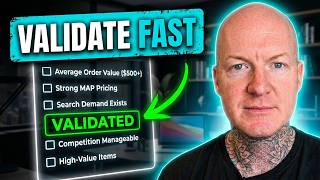
 Ecommerce Paradise | High Ticket Dropshipping
"Delivers a solid, step-by-step validation framework, though it's padded with personal anecdotes and repeated warnings."
This video provides a step-by-step framework for validating a high-ticket dropshipping niche before launching a business. The creator emphasizes the importance of thorough research, including analyzing competitor stores, assessing demand and supply, and evaluating risk factors such as product fragility, complexity, and liability. The goal is to help viewers choose a niche that is profitable, manageable, and aligned with their willingness to handle the unique challenges of high-ticket e-commerce.
Choosing a high-ticket dropshipping niche is the most critical decision before starting a business. The creator offers a free list of 1,000+ niches at ecommerceparadise.com/niches to help viewers begin.
To validate a niche, search for niche-specific Shopify stores using category keywords. Ensure the store is a niche store (not a broad marketplace) and that it does not have a physical retail location, indicating it is a dropshipping operation.
Once you identify a niche store, list all the brands it sells. Plug these brand names back into Google to find more competitors and suppliers. Use the store's best-sellers page to copy product titles and search for them to discover additional high-ticket dropshipping stores.
Use keyword research tools like KWFinder to estimate search volume. The creator looks for a group of keywords totaling around 100,000 searches per month, which with a 1% conversion rate could yield 100 orders per month—enough for a profitable business.
Fragile or delicate products increase shipping damage claims, chargebacks, and return costs. Heavy or oversized items may require freight accounts and handling logistics, adding complexity and potential liability.
Products requiring complex installation or assembly increase customer frustration and support load. Technical products generate more pre- and post-sale questions, so it's wise to choose a niche you understand or are willing to learn about.
Products with many sizes, colors, materials, or custom configurations lead to more ordering mistakes and higher return rates. Variant-heavy catalogs also create inventory sync issues and out-of-stock problems. The creator recommends a custom quote process to verify stock before confirming orders.
High defect or warranty claim rates can destroy margins. A single chargeback can wipe out profits from several orders. Implement fraud prevention measures like reverse lookups and confirm orders with customers to reduce risk.
Products needing replacement parts or service support add management burden. However, selling parts can be a scaling opportunity. Decide whether handling such requests is worth your time.
Safety-sensitive or liability-prone products (e.g., e-bikes, scooters) carry higher business risk. Consider forming an LLC, separating finances, and obtaining business insurance to protect assets.
Long lead times or inconsistent supplier stock can lead to angry customers and chargebacks. For custom orders, use contracts with clear cancellation policies to protect yourself.
Products with complex specifications increase order errors and returns. Ensure product pages are accurate, and include terms that place responsibility on the consumer to verify product suitability.
Products requiring white glove delivery or professional installation add complexity. Coordinate with suppliers to understand delivery options and costs, which may be extra or included.
Big, bulky, expensive products have high return shipping costs. Customers may file disputes even if they lose, so maintain cash reserves to cover potential chargebacks and payment processor reserves (e.g., 15% rolling reserve for 60-90 days).
Supplier mistakes become more expensive with high average order values. For orders over $10,000-$15,000, have customers sign a separate contract to limit liability. Consider wire transfers to avoid high processing fees (5-10%).
Green lights include plenty of competition, suppliers, demand, a suitable price point, and a deep catalog. Red flags include fragile products, high-risk items, and insufficient suppliers or demand. Start with micro-niche sites and go deep rather than wide.
High-ticket dropshipping is not passive income. You must manage finances, supplier relationships, and customer service. Even with VAs, you need to supervise and stay involved to avoid problems.
The video concludes that validating a high-ticket dropshipping niche requires careful analysis of competition, demand, and risk factors. By focusing on manageable risk and going deep into a specific niche, you can build a profitable business, but it requires active management and a willingness to handle the complexities of high-ticket products.
Niche selection is critical
Sets the foundation for the entire validation process, emphasizing that choosing the right niche is the most important decision.
00:02Demand threshold of 100k searches
Provides a concrete, actionable metric for assessing market demand, making the validation process measurable.
04:40Risk factors are deal-breakers
Highlights that fragile, complex, or technical products can lead to operational nightmares, guiding niche selection away from high-risk categories.
07:13Liability protection is essential
Emphasizes the need for legal and financial separation to protect personal assets when selling safety-sensitive products.
14:08High AOV requires contracts
Stresses the importance of formal agreements for large orders to mitigate financial risk and chargebacks.
20:25[00:02] talk about how to validate a high-ticket drop shipping niche. And this is really high-ticket drop shipping because choosing your niche is probably the most consider uh before you start your business. Um now, um before we get into
[00:16] this, I just want to let you know that you can get a free 1,000 plus niche e-commerceparadise.com/niches. Link is in the description below. Um go check that out. You get a ton of high-ticket categories. You can start
[00:28] with those categories. Any of those that actually you might have some experience with or some idea of how they work, and then start with this process of list today e-commerceparadise.com/niches.
[00:40] niche, making sure it's going to work for this business model, is really you competition out there. Um the main thing is is like if there's probably a reason why. Either the suppliers like require a
[00:53] brick-and-mortar store or the margins are way too low, or there's just no or setting up new drop shipping accounts. Um we put every category, product category through this filter list into this criteria list um because
[01:06] number one, and number two, we want to know if it's actually going to work for really start with those generic keywords, the category keywords. Um they're the ones that are on my niches list, things like wine coolers, electric
[01:19] bikes, um you know, range hoods, things like that. Okay? You plug that into Google or Google Shopping, and you're going to look for your first Shopify store. Um really, you want to make sure it's a niche store. So, make sure that
[01:32] the product category or something similar to the category is in the domain because if you're looking at broad stores like marketplaces and stuff, it's not going to give you the data you need. The data you need is you need to find
[01:44] brands that are setting up dealer accounts for new stores. So, number one, two, you want it to be a Shopify store. You can just tell that by the URL. If /product/ If you click on any category page will say {slash} collection {slash}
[01:59] then you know it's a Shopify store. All right, so um you found a niche store? Great. You know it's on Shopify, great. Now you just want to make sure that they do not have a physical retail location.
[02:11] So go look through their website, try to find any kind of evidence of a brick-and-mortar store or warehouse or something like that. Usually it's going header, the about us page, the contact page, things like that. Usually any
[02:24] or any kind of location or a bunch of locations is going to state it very to find cuz they want people to go there and buy from them. So um if you cannot brick-and-mortar store or if they do have an address but it's for some sort
[02:38] of a virtual office address like an office building or a UPS store or even someone's apartment or a house, then you know it's a drop shipping store. Okay, so they're not holding inventory for the products that they're selling online.
[02:50] selling big, bulky, high-ticket products inventory on big, bulky products in an apartment or you know, probably even okay? Or virtual offices aren't going to do that. They'd have to have a 3PL of
[03:03] some sort, a huge fulfillment warehouse to do it for them. Um anyway, so once only, that they don't have a physical location, uh keep looking through the site and find a list of all of their brands.
[03:17] Okay? When you have all their brands, then you know that number one it's not just a direct-to-consumer brand that's selling one brand but it's like a actual retailer that sells multiple brands. And then you're going to take all these
[03:30] have. Usually it's like 5, 10, 20, 30, maybe more. Um and you're going to plug each of those back into Google and then you're going to be able to find more of okay? And the easiest way to do that is actually by going to if it's a if it's a
[03:45] Shopify store, go to the {slash} collection {slash} all and then go to their best sellers and copy the entire product title. Um it should include their brand name, the model name, the SKU number, the category,
[03:59] maybe even some more uh you know, details. But once you have that, you Shopping, and you'll be able to easily find more high-ticket drop shipping that they bid really high on product and SKU-specific traffic. And so, those are
[04:14] at. So, make a list of all the different competitors you find in the niche, and Sometimes they're going to be a little bit broader stores, but usually the on ads.
[04:27] locations and things like that. And [clears throat] you'll find a whole list stores, you're going to find a bunch of uh different suppliers, and you can keep suppliers through products and find more competitors.
[04:40] research, you'll have an idea of how much competition you have to deal with there. You can then use a keyword research tool like KWFinder. Um go check e-commerceparadise.com/kwfinder, get a free account, and uh you can plug
[04:55] the product names, things like that, and you get some idea of the demand. Um so, you'll know your you'll know your uh supply is available, you know, there's decent amount of demand. I'm usually looking for, you know, a group of
[05:09] bundle up to be up around 100,000 searches per month, because then I know with a decent, you know, 1% conversion rate, I can get 100 orders a month, and 100 orders is more than enough to have a very profitable business. Okay, so
[05:22] >> you really want to make sure that uh you have a decent demand, supply, and going to work. Now, there's a lot more that goes into it, but um generally chooses a high-ticket niche that is something that they have some experience
[05:38] with. Um because they're going to you're going to be dealing with risk with this business. You're also going to be dealing with sales, and those uh and going to be the most important things to cover because if you do not do a good
[05:51] job at sales, customer service, and handling your risk, you are not going to be able to do a good job at running your business well. Um it just is what it is. It's pretty much bottom-line stuff. So, um try not to think about this like it's
[06:05] a um a business where you can just get away with drop shipping like AliExpress or something. Try to Try to think of it like it's uh something where you are going to um be, you know, providing solutions for people. And you're going
[06:19] to be shipping large or just expensive complex products. And you need to make sure a few things. That you are going to be willing to take on that risk. You are there is to know about these products and these brands so that you can help
[06:32] for them. You'll have to go back and customer to figure things out. But when you do, you'll have these margins, hopefully, that, you know, are like 15% to 30% on average. And um out of a
[06:46] $10,000, you're going to be making around $1,000 in that profit, um which come through that are like $1,000, $2,000, and you're still making a few on a single order is really, really good. And, you know, these days with
[07:01] software, um you know, uh software expenses are maybe in like a few hundred when you first start getting started and stuff like that, including cloud and all stuff like that, including cloud and all that, and uh AI. But, um you know,
[07:13] pretty low cost to run. The overhead is quite low. So, um it just really depends over some risk factors here you guys have to make sure that you know before you get into it any niche. Number one, is it a fragile or delicate product? Um
[07:29] of shipping damage claims. And that's a pain in the butt because shipping damage can result in chargebacks and also loss to the supplier due to return shipping costs, okay? [snorts] So, usually
[07:43] case of shipping damage. Sometimes they don't, and so you just really got to make sure that you, you know, know their return policy and their warranty policy they handle shipping damage. Um but anything that's more fragile is just
[07:56] things that aren't, you know, like furniture and stuff will get damaged in shipment sometimes. It just happens. So, you have to know how to handle it and um heavy and oversized freight can create expensive delivery issues. Um
[08:09] sometimes with suppliers that have big expensive products, they want you to going to have to set up freight accounts with UPS or FedEx or any, you know, third-party freight forwarder, um maybe even a freight broker, and uh you know,
[08:22] handle the freight, the bills bill lading, and all that stuff yourself. Um of shipping damage issue or something like that and the the customer wants to going to be on you. So, you're going to
[08:34] have to deal with the back and forth on that. So, just keep that in mind, okay? When you're getting into this business model that um big oversized heavy profitable, but it's because shipping is not included and often times you're
[08:47] shipping yourself. Next, uh complex installation or assembly increases customer frustration and support load. So, just keep in mind the niche, like look them up and look up like how to install or how to assemble,
[09:02] products when they're delivered because that's going to make a big difference on to have to deal with um throughout the day every single day. You're going to get calls and emails from customers that are like, "Hey man, like I got this. I
[09:14] blah." You're going to have to be able to find the warranty or sorry, the the product manuals and send them to the customers really quick. And um yeah, so, it's really good idea that you choose a niche you have a really good
[09:26] because generally throughout all the suppliers it's going to work the same want to get into selling air conditioning units, like HVAC and stuff, understanding of how HVAC systems work before you get into selling that niche
[09:40] that and you know, you're going to have to deal with that. So, >> just keep that in mind. All right, next, technical products often create more support. So, this kind of goes along with the same idea, but the more
[09:54] technical the product, um generally speaking, the more, you know, technical questions customers are going to have before and also after on how to use example, you know, quite technical products. A lot of different little
[10:07] buttons and modes you can choose and thing, you know, wires going which way so there's a lot of things customers want to know ahead of time and also a So, more technical, you know, the more headache and the more
[10:20] Now, with all that in mind, these high-risk things um also kind of create knowledge and experience or are learning, willing to learn and network a lot versus the ones that don't, okay? It
[10:34] really keeps those out. So, um these higher-risk niches end up being a even are willing to take it on. So, just [clears throat] keep that in mind, but yourself in certain ways to protect yourself from the downside of that risk.
[10:48] All right, next, products with many sizes, colors, materials, or custom configurations create more ordering mistakes and thus higher return rates. Um and also they create inventory issues cuz often times with high-ticket
[11:01] your inventory with your suppliers. So, you're going to have to deal with that be inventory issues where like the person ordered the size or this color it is. Just know what you're getting yourself into when you have a niche
[11:16] and colors, materials, and custom configurations, and things like that. Next, any variant-heavy catalogs. So, like when you have a catalog, there's variants. There's like different drop-down menus you can choose things.
[11:30] Any variant-heavy catalog increases the inventory sync issues and out of stock you get into like things like appliances, um and you know, anything [clears throat] in the kitchen, um lots
[11:43] very heavy. Um outdoor fireplaces, indoor fireplaces, fireplaces have a lot and things like that. So, variant heavy very variants heavy catalogs and time suppliers will be out of one particular variant or part or whatever. You're
[11:57] things. That's why I really like the custom quote process even with consumers is that when you get an order, you go to the supplier and say, "Hey, is this in exactly like that, then you're going to have to go to back to the customer, say,
[12:11] "Okay, well, that's not in stock, but this is in stock." And it is what it is. >> All right, and then um any product with a high defect warranty claim rate can destroy your margins. Just keep that in mind. So, um really, you want to make
[12:25] sure that you limit the potential for defects, like order defects and warranty claims, um just because any one order that goes astray and you have a chargeback or a dispute to deal with, um that can just completely destroy your
[12:38] orders for the month, all are like a few hundred dollars in profit, um great, I'm at like, you know, a few thousand bucks, um I'm cruising, and all of a sudden you get one chargeback and you're out the cost of the product, too, or something
[12:51] completely two, three thousand dollars right there. Um so, really, you got to make sure you're covering your butt. Um fraud is also a big issue here. Um making sure that every order you get is not fraud by doing reverse lookups or
[13:04] do reverse lookups for you, and or just confirming with the customer by getting because then that way you know for sure it's the customer that's using that >> [clears throat] >> All right, next. Um products needing
[13:17] replacement parts or service support are harder to manage. It just is another There's lots of products that need replacement parts. People going to look find your store and say, "Hey, I have this product I got from somebody else.
[13:30] whether it's worth your time or not, I don't know, it's up to you. You know, with a customer and you want to find them that part and stuff and just kind of build your network that way and get referrals, cool. But if not, if you feel
[13:42] in mind people are always going to be coming to you for replacement parts. And out, it's a great way to scale a business is to sell parts and um to
[13:55] outsource services, like uh figure out how to, you know, sell other people's >> There's a lot of different things you can do to to scale these businesses in the long run if you really want to. Um next, safety sensitive or liability
[14:08] prone products can carry more business risk. Okay, so uh get some business it. Really depends on the assets you have to protect. Um if you have a lot of the beginning setting up a separate LLC for your business altogether. Um
[14:22] bank account, separate payment processor, separate credit cards, um separate finances and bookkeeping and separate tax, you know, uh records and all that stuff. Um but that's what you got to do to um protect
[14:35] your li- protect your assets. Um and if you don't have any assets, then it's not a big deal. Um but just keep in mind that you are going to be more at risk for some kind of lawsuit if you're selling really complex products
[14:47] e-bikes and scooters, for example. Someone gets in an accident, you know, they might try to sue you or something. So, never had [clears throat] it happen happen. Um and there is business insurance out there for you e-commerce
[15:01] owners. It's not cheap, but it is something that's required by suppliers supplier, you might want to get it. And you might be able to find something All right, next. [clears throat] Long lead times or inconsistent supplier
[15:13] stock create angry customers and chargeback risk. So, keep that in mind, shipping in general, but especially with high ticket. Often, um products are custom-made to order and take like sometimes 3 to 6 weeks before they get
[15:28] them knowing that, and then 3 to 6 weeks later, sometimes they change their mind you haven't been, you know, following up with them, you know, People are very fickle and very emotional.
[15:42] So, sometimes if you take these orders for custom products or you, you know, that's like normally in stock, but it's out of stock for 3 to 6 weeks, it can customers that are going to leave you bad feedback or just, you know, cause a
[15:56] agent or you. And then also, they might even just file a dispute. And whenever a dispute is filed, just consider that money gone. supplier. Cancel the order if it's still in process with them. Sometimes, a
[16:09] supplier once it's started. So, you really, if you do take custom orders and signed with the customer to protect really easy to do with AI nowadays. Just have a really simple contract that says,
[16:22] you know, that covers exactly what your cancellation policy fees are. If there's no, you know, cancellations after the supplier has started, you customer needs to know that. All right, and then you can fight the
[16:34] With your payment processor. Anyways, [clears throat] next is hard to explain specs increase order errors and returns. And this is really common, you know, product pages and to make sure the specifications are still there, but AI
[16:48] really don't know. You have to have a third eye on it. Um, it's even a good back and double-check that it's actually correct. And then ask your supplier just make sure everything looks good to them. You know, but having some kind of
[17:03] having it baked into your terms and making sure that any error on your website is not going to be your fault, that it's the consumer's responsibility to make sure the product they're
[17:15] ordering is correct for them. So, you know, going to the supplier important. >> [clears throat]
[17:27] white glove white glove delivery, uh installers, or local service add that in mind. Like, for example, massage chairs. $5,000 massage chair. Okay, you get like $1,000 in profit. But, you know, how does that thing get delivered?
[17:41] You They got to show up in a Mac truck, you know, and and and with a lift gate does the customer do? You can't just pick those things up by yourself. So, delivery, where someone's got to actually come out with the proper
[17:53] equipment, uh the manpower, and move it into your house, place it where you want >> [clears throat] >> And uh that's going to be either something they, you know, pay for extra, or it's included no matter what, just
[18:07] complexity, so you have to figure that out. And usually, you just go directly to the supplier and figure that out with them. They'll know exactly what to do, do it with the the dealers. All right, next. Uh products with high
[18:20] return shipping costs are riskier, and this is always for big, bulky, expensive they're not happy with it. Like, one time I sold a uh patio furniture set, a big patio furniture set, and the person got it, and the gray the color gray was
[18:34] wanted to return the whole thing, cuz it didn't match their other patio furniture "Okay, this is hilarious, because this guy's going to end up spending $500 just back." They said it hadn't even been opened yet. I hard find that hard to
[18:48] the right color? So, they must have opened it to look at it, then they know, "Okay, we want to return it." And they ended up returning it and paying Um and I was surprised, but, you know, sometimes people won't want to pay those
[19:01] complain and be like, "No, this is uh your website was wrong, and blah blah go back and forth with them. But, at the end of the day, keep in mind, you are payments, okay? So, they can file a dispute, even though they might not win,
[19:16] the meantime. So, it's always a good idea to have lots of cash reserves available. So, I tell people, whenever you're starting this business, go into your business checking account, just to cover your, you know, your the worst
[19:29] fight them. Um, also, build up a cash reserve if you take money out of your business right away when you have profits. Um, just cash reserve because you don't want to get into bad terms with your payment
[19:43] placed in your account due to it being high risk, things like that. You might even get, um, reserves set to your account where they hold a certain Shopify payments is pretty common once you start seeing some chargebacks. They
[19:55] chargeback rate. And once they start seeing that, um, they're going to put a 15% rolling reserve in your account that lasts for 60 to 90 days. Usually 60 tough on cash flow when your profit margins are right around 15% to have all
[20:09] How do you pay your VAs? How do you pay software? How do you pay ads? Right? So, just keep that in mind. You're going to do your best job possible, um, but you can. All right, [clears throat] lastly, supplier mistakes become more
[20:25] expensive when the average order value is high. And it just is what it is. When a supplier ships out the wrong product, they know, but, um, you're going to have and stuff like that and, um, it's going to take more time and sometimes time is
[20:37] longer accept the order and you're out the entire order. Um, so, just what is order value is really high, like for example, if you're going to sell, um, hyperbaric chambers that are like 20, 30,000 dollars, um, sometimes up to 50
[20:51] to 70,000 or 100,000 dollars, just make sure that you have a service or like a you ship the product, okay? The the invoice on your website is not enough, okay? Uh, send a contract to them. Make them sign it that limits your liability
[21:06] website. A lot of times they don't read your website. And anything over $10,000, $15,000, definitely just have them sign a separate contract all together before ship the products. Just so that they confirm that, you know, everything is
[21:20] good. And you can even ask them, "Hey, uh if they're interested in buying that dollar amount worth of products, uh you know, make a uh make a uh bank transfer instead. Make a wire transfer. You know, um or you're going to have to pay the
[21:35] the processing fees, 5% or something like that, you know? Even with with Amex to 5% processing fee. With financing providers, sometimes 6 to 10%. So, >> keep that in mind. You can always ask people if they can do wire transfer, um
[21:48] well. Um sometimes it's going to turn them off competition, though. So, you got to look at what your competition is doing. Um >> [clears throat] >> Uh
[22:00] So, we're just going to go over the you know, green lights and red flags. you understand this stuff from a, you know, high perspective. And then you're you're going to have a way better idea when you do the research uh of what to
[22:15] look out for and what to look for. Because um really the main thing is you It's got, you know, plenty of competition. It's got plenty of suppliers. Um it's got, you know, uh plenty of demand. The price point is
[22:28] there. Um you know, there's a deep enough catalog to scale with. Um you in the beginning. You really want to just start, you know, micro niche sites this business model. Like a store just selling saunas or a store just selling
[22:43] >> [clears throat] >> when you sell like an outdoor site or product categories, it's very difficult to uh get a lot of good sales in one some of the top suppliers as well. All right. So, um make sure you look focus
[22:58] on going deep instead of wide. Um make sure the uh search intent is you choose a niche, you know, because if you don't choose a niche, again, you're doesn't really know what your website is about. It's going to take sort of the
[23:11] best the first suppliers you get and rank your website based on that niche. then you see a lot of sales in like one category to begin with, I would just category and make it a niche site. Like
[23:25] started um, a broad site cuz I didn't know what I was doing, um, I started like just like home living site. And um, my first category that took off was like these really unique type of hammocks. It was like uh, they're called cocoon
[23:37] hammocks. And we sold a bunch of these things. And they were like $300, so it like mid ticket, but um, they were decent margins, like 30%. So, we would bucks on a hammock. And I was really impressed. And we just ended up selling
[23:52] a ton of these things. Um, and uh, you know, I just decided, "Hey, like let's And right around that time my e-bike site was taking off, so I decided to but um, really that's what you should do. You
[24:05] sellers. When things start selling, focus your whole site around it. So, you site in the beginning, but really don't keep making it broader if you see one you're going to just get like sparse little orders here and there, and then
[24:20] because you're not Wayfair. You don't have the marketing budget or advertising budget of Wayfair. You don't have your own private label lines of whatnot. You've got to do all the inventory and, you know, pricing updates yourself. Um,
[24:32] so it's really a lot better just to focus on what sells really well instead of trying to go super broad and scale like ridiculously endlessly. Unless you like taking quote requests and stuff like that and helping people one at a
[24:45] >> [clears throat] >> there's different ways to run But, at the end of the day, just make sure the risk is manageable after you complexity issues. That's the main thing, okay? Um and just make sure
[24:58] you're willing to manage the risk. These business models are not passive income business models. These This business model is a active business. You can train them to manage your business for you, but you're just going to have to
[25:11] still be managing your finances. You're still going to be managing like the still going to be managing the supplier relationships. If you outsource supplier relationships, uh you know, supervising everybody for you, um
[25:25] managing your finances, too, um things can just completely get out of hand and because you don't know what the heck is going on. And your VAs are never going to care as much about your business as you do. Okay, so just keep that in mind.
[25:37] really just the main red flags to look out for is um not matching those, you know, uh green lights. The not having enough suppliers, not high enough price point, um you know,
[25:50] not big enough catalogs to work with, um you know, obviously like anything that's too fragile, too delicate, high-risk, high-damage products, um frequent complex, things like this, um really you got to be very careful with this stuff.
[26:05] At the end of the day, um like I said, there is a opportunity there for those understands them and knows how to deal with the problems. But if you don't know get into a high-risk niche, you're going to end up completely getting burnt out
[26:18] problems. Um the profit's not going to be there because of all the issues, um >> what I usually say is definitely choose that's, you know, in a manageable risk range that you're willing to manage,
[26:32] and that matches all these criteria, and just go for it. Um it it can't hurt, you know? A lot of these businesses start and they kind of just sort of fail they go. Guys, and if you want my help to build one of these businesses, I have
[26:45] can do all the work for you with my turnkey business in a box. Go to and learn more about that. Book a free discovery call, speak directly with me, I've been doing this stuff for like 15
[26:59] and system on how to do all the really complex stuff. And uh we can get you launched and scaled. And we offer ongoing scaling services well. So um you know, ecommerceparadise.com/scaling get some idea on that page exactly what you
[27:13] know, is required to keep these stores going and managing them on an ongoing coaching program. You go to ecommerceparadise.com/coaching, in the description below. Um you can also join our Patreon. Um I have a
[27:26] drop shipping masterclass. Join us on school as well. And um go check out to see all the different, you know, software stack that we use to build If you guys have any questions, feel
[27:41] happy to help. Reach out [email protected]. let me know if you guys need any help and I'll see you out there. Take care.
The creator immediately frames niche selection as the most critical decision, creating a sense of urgency and importance. This hooks viewers who are worried about making a costly mistake, and promises a solution to the problem of choosing the wrong niche.
Choosing the right [NICHE] is the most important decision you'll make. If you get it wrong, you'll waste time and money. Here's a step-by-step process to validate [NICHE] before you start.
AI-generated clip ideas for Shorts based on the transcript
This segment provides a quick, actionable tip that viewers can immediately use, making it highly shareable for aspiring dropshippers.
▶ Play ClipThis real-life story about a costly return is both surprising and relatable, highlighting the risks of high-ticket dropshipping in a memorable way.
▶ Play ClipThis segment debunks a common myth, offering a reality check that resonates with viewers tired of 'get rich quick' promises.
▶ Play ClipThis warning about liability and lawsuits in niche products like e-bikes is eye-opening and sparks curiosity about legal risks in e-commerce.
▶ Play ClipThis practical advice, backed by a personal success story, challenges common assumptions about niche selection and offers a clear strategy for beginners.
▶ Play ClipSnapshot 2026-11-18
Every observation TubeSum recorded, plotted as measured.
The vertical axis starts at 147, not zero, so later observations stay readable.
Based on 17 observations · last observed Nov 18, 2026 · solid lines connect consecutive measurements (≤2 days apart); dashed lines span days TubeSum did not measure. · vertical axis focused on the observed range (starts at 147)
Based on 17 observations · last observed Nov 18, 2026 · solid lines connect consecutive measurements (≤2 days apart); dashed lines span days TubeSum did not measure. · vertical axis from zero
Exact daily observations; gaps mean no observation was taken that day.
| Date | Views | Avg views / hour | Channel median |
|---|---|---|---|
| 2026-11-18 | 152 | 0.1 | — |
| 2026-11-17 | 152 | 0.1 | — |
| 2026-11-16 | 152 | 0.1 | — |
| 2026-11-15 | 152 | 0.1 | — |
| 2026-11-14 | 152 | 0.1 | — |
| 2026-11-13 | 152 | 0.1 | — |
| 2026-11-12 | 151 | 0.1 | — |
| 2026-11-10 | 149 | 0.1 | — |
| 2026-11-09 | 149 | 0.1 | — |
| 2026-11-08 | 149 | 0.1 | — |
| 2026-11-07 | 149 | 0.1 | — |
| 2026-11-06 | 149 | 0.1 | — |
| 2026-11-05 | 147 | 0.1 | — |
| 2026-11-04 | 147 | 0.1 | — |
| 2026-11-03 | 147 | 0.1 | — |
| 2026-11-02 | 147 | 0.1 | — |
| 2026-11-01 | 147 | 0.1 | — |
Audience reaction — separate from the performance metrics above.