
AI Summary
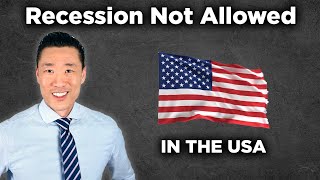
The video examines the transition at the Federal Reserve as Jerome Powell's term ends and President Trump appoints Kevin Warsh as the new chair. It analyzes the conflicting pressures Warsh faces: Trump demanding lower rates and massive money printing versus soaring inflation and market expectations that no cuts will happen in 2026. The host argues that the Fed is trapped and that all roads ultimately lead to more money printing.
Chapters
Jerome Powell's term as Federal Reserve chair has ended. Trump frequently called Powell names because Powell refused to cut interest rates as quickly as Trump wanted.
Trump wanted lower interest rates to boost the economy and labor markets, especially before the midterm elections, but Powell resisted to avoid accelerating inflation.
Trump selected Kevin Warsh to lead the Federal Reserve. Warsh has close ties to the Trump family and is estimated to be worth $200 million.
Warsh was brought in to do two things: print trillions of dollars and lower interest rates. The host questions how Warsh can cut rates while inflation is soaring.
The Fed has tried to get inflation down to 2.0%. Government figures show February at 2.4%, March at 3.3%, and April at 3.8%, though these are likely understated.
The host believes the ongoing war and energy disruption will keep pushing inflation higher, making rate cuts extremely risky.
If Warsh doesn't cut rates, he risks angering Trump, who could launch criminal probes and threats. If he cuts rates, he fuels inflation and hurts the American people.
According to the CME FedWatch tool, there is a 98.9% chance the Fed holds rates on June 17, a 1.1% chance of a 0.25% hike, and a 0% chance of a cut.
For the July 29 meeting, there is a 92.6% chance of no change, a 7.4% chance of a 0.25% hike, and a 0% chance of a cut.
Market expectations through the December 2026 meeting show no rate cuts for the entire year, despite Trump's wishes.
Warsh claims the Fed will shrink its balance sheet instead of printing money. The host dismisses this as fantasy, comparing it to politicians going to prison for insider trading.
The 30-year Treasury yield is 5.13% and the 10-year is 4.6%. Shrinking the balance sheet would dump Treasuries and push interest rates even higher.
The Federal Reserve is already printing billions of dollars a month, which the host says is not enough to stop the cracks from growing.
Raising rates from 3.75% to 4.0% is insignificant. Last time a Fed chair fought inflation, rates had to go to 20%, which is not mathematically possible now.
The host concludes that the Federal Reserve is trapped and all roads lead to money printing. It is inevitable, with no other way out.
Kevin Warsh inherits a Federal Reserve caught between a president demanding cuts and an inflation problem that makes cuts reckless. Market pricing shows no rate cuts in 2026, and the host argues the only real outcome is more money printing.
Mentioned in this Video
Study Flashcards (8)
Who did President Trump select as the new Federal Reserve chair?
easy
Click to reveal answer
Who did President Trump select as the new Federal Reserve chair?
Kevin Warsh.
01:11
What two things was Kevin Warsh brought in to do?
medium
Click to reveal answer
What two things was Kevin Warsh brought in to do?
Print trillions of dollars and lower interest rates.
01:37
What was the reported US inflation rate in April?
easy
Click to reveal answer
What was the reported US inflation rate in April?
3.8%.
02:31
According to the CME FedWatch tool, what was the probability of no rate change at the June 17 meeting?
medium
Click to reveal answer
According to the CME FedWatch tool, what was the probability of no rate change at the June 17 meeting?
98.9%.
04:28
What was the market-implied probability of a rate cut at the December 2026 meeting?
medium
Click to reveal answer
What was the market-implied probability of a rate cut at the December 2026 meeting?
0% (no rate cuts are expected for all of 2026).
05:40
What did Kevin Warsh say the Federal Reserve would do instead of money printing?
easy
Click to reveal answer
What did Kevin Warsh say the Federal Reserve would do instead of money printing?
Shrink its balance sheet.
06:21
What were the 30-year and 10-year Treasury yields mentioned in the video?
hard
Click to reveal answer
What were the 30-year and 10-year Treasury yields mentioned in the video?
5.13% and 4.6%, respectively.
07:04
To what interest rate level did the last Fed chair need to raise rates to fight inflation?
medium
Click to reveal answer
To what interest rate level did the last Fed chair need to raise rates to fight inflation?
20%.
09:05
💡 Key Takeaways
Warsh's conflicting mandate
It reveals the core contradiction: the new Fed chair is expected to print money and cut rates even as inflation surges.
01:37Market defies Trump
CME FedWatch data shows a near-zero chance of rate cuts, directly contradicting Trump's demands.
04:28Balance sheet shrinkage called fantasy
The host dismisses the Fed's stated plan as unrealistic given soaring Treasury yields and debt costs.
06:21Tiny rate hikes won't stop inflation
It highlights the mathematical gap between modest rate changes and the 20% needed historically to crush inflation.
08:53All roads lead to money printing
The video's central thesis: the Fed has no viable exit and will inevitably resort to printing money.
09:33Full Transcript
[00:01] what's the plan. Like what are they going to do? Are they going to cut interest rates? Are they going to print money like crazy? Like how are they going to handle this inflation crisis? So the situation is that Jerome Powell's
[00:15] term as chair of the Federal Reserve has now ended. And as you probably know, President Trump did not get along well with J. Powell. Trump openly called Powell an idiot, a dummy, an imbecile, a
[00:31] in front of reporters, you know, on a numerous occasions. Okay, so I just want President Trump was acting like this towards Powell, especially in front of the media, was because Powell did not want to cut interest rates as quickly as
[00:44] President Trump wanted them to be cut. So Trump wanted to lower interest rates so that it would give a boost to the economy, to the labor markets. And of course it would have been nice leading up to the midterm elections.
[00:56] rates because that would have accelerated the rate of inflation. And President Trump threatened to get rid of J. Powell you know, multiple approaches, numerous occasions, but it all ended up being a
[01:11] bluff because Powell made it to the end of his term, of course. So Trump has selected Kevin Warsh to be the new leader of the Federal Reserve, to be the new Fed chair. Warsh has close connections with the Trump family. Kevin
[01:24] Warsh is worth an estimated $200 million. It is my expectation that Warsh is going to be worth over a billion dollars after this amazing
[01:37] as the new chair of the Federal Reserve. Okay, now here's the problem. I want to point this out. President Trump has brought in Kevin Warsh to do two things as the new Fed chair. The first thing is to print trillions of dollars. And the
[01:49] second thing is to lower interest rates. Now can Kevin Warsh deliver on pleasing President Trump? Because I mean that's the only real why Kevin Warsh got the the only real why Kevin Warsh got the job over much more qualified candidates.
[02:04] But I just want to pose this question to you. How can Fed chair Warsh cut interest rates right now when the rate of inflation is soaring? So here's the rate of inflation ever since the start of the pandemic.
[02:16] The Federal Reserve has been trying to get the rate of inflation down to 2.0% for the past few years. So I've drawn a red line to illustrate So this is why Jerome Powell got ridiculed because he said that this high
[02:31] ridiculed because he said that this high level inflation is just transitory, like 6 years transitory. So when you take a look at the chart in February, the rate of inflation was at 2.4% in March, it rose to 3.3%
[02:46] and in April to 3.8%. Now, I just want you to keep in mind that these are government reported figures, so it's most likely wildly understated, but as you can see, they've been jumping up pretty noticeably.
[03:00] know about you, but it's my belief that this war, which is creating an energy disruption and spiking inflation, I believe that's not going to end in the next few days. Therefore, the price of energy is going
[03:14] and that's going to make the inflation situation worse. That's just my belief. inflation, can we really cut interest rates at this time? Like this is the worst time to even ask for an interest rate cut. Okay, with that being said, I
[03:30] the perspective or like the the shoes of Kevin Warsh, the new Fed chair. if you're Kevin Warsh the guy that got you the job, President cut. So what do you do in this situation? Because, you know,
[03:46] interest rates. So do you not cut interest rates and then you're going to piss off President Trump who got you the job, and then Trump is most likely going to go after you with criminal probes, with threats,
[03:59] and then you're going to risk your opportunity to lose billions of dollars. Or are you going to listen to President rates for him when you really shouldn't be,
[04:12] dollars and help your friends and family and screw over the American people. Like those are your options. But let's see what Kevin Warsh decides to do. Now, what the market expectation is. This is coming from the CME FedWatch tool.
[04:28] going to be on June 17th. The market expectation is that there's a 98.9% chance that the Federal Reserve will not change the interest rate at that In other words, they're going to just maintain it where it is. No cut, no
[04:43] And there's a 1.1% chance that the Federal Reserve will raise interest rates by 0.25%. And there's a 0% chance that the Federal Reserve will lower interest rates. So, although President Trump wants rate
[04:58] cuts, the market does not believe that he's going to get them in June. So, it's very interesting, in my opinion, to see what President Trump's reaction's going to be. Okay, now you have to see this. The meeting after June is going to be on
[05:11] July 29th. There's a 92.6% chance that the interest meeting. And there's a 7.4% chance that the Federal Reserve will raise interest rates by 0.25% by that meeting.
[05:26] So, I would say, I mean, 7.4% that's a meaningful probability. Like that's not nothing. And there's a 0% chance that the Federal Reserve cuts rates by the July meeting. So, as a matter of fact, I want to take
[05:40] you all the way to the end of the year. I want to show you at the December 2026 meeting. The market is expecting that there's not going to be a single rate there's not going to be a single rate cut this year in 2026, entire year.
[05:52] So listen, I think that President Trump may have the patience to hold his tongue about the June meeting. You know, if there's no rate cut, but if Warsh does not cut interest rates at all this year
[06:05] for the entirety of 2026, I expect a bunch of tantrums coming out realistic. Okay, now, do you want to hear something really funny? It's when they create money out of thin air. It causes inflation, but
[06:21] what do the people in power care if they're the ones that control the money So Kevin Warsh is saying that he's going to do the opposite of money printing. print money, rather he's going to have the Federal Reserve start shrinking
[06:36] their balance sheets, which is the opposite of money printing. And to that yeah, right. So that's like saying that the budgets. That's like saying politicians are going to go to prison for insider
[06:49] trading or corruption. Like it's a fantasy. It's a fiction. In my professional opinion, I believe that Kevin Warsh is lying. Reserve is going to shrink their balance sheet and do the opposite of money
[07:04] printing when interest rates on government debts is just skyrocketing to uncomfortable levels. The 30-year yield right now is at 5.13% as of Monday afternoon. You have the 10-year yield at 4.6%. Like
[07:18] this is not good. The bond market is in trouble, and I just want to say good luck to Warsh trying to shrink the Federal Reserve's balance sheets in this type of environments. So you have to understand
[07:30] that if Warsh and the Federal Reserve start shrinking the balance sheets, then that they're going to be dumping US Treasuries into the open markets or letting them run off. And that's going to raise interest rates even higher on
[07:43] And that's going to cause interest rates to go up on mortgages, on student loans, business loans. And the government, of course, they're going to have to pay much more in interest expense, you know, in their
[07:57] So, shrinking the balance sheets, yes, of course, it's going to cause economic rates. And of course, it's going to really upset President Trump. So, I just don't see, realistically, how Kevin Warsh is going to do the opposites
[08:12] shrink the balance sheet. And right now, at this moment, the Federal Reserve is already printing billions of dollars a month, and that doesn't appear enough to stop the cracks from getting bigger. Now, I just want to
[08:26] address this because it appears that it's scaring a lot of people. the year, the expectation is no more interest rate cuts in 2026, and the real possibility of one or two rate hikes.
[08:40] interest rates when the economy is already suffering? You know, people are expecting the Federal Reserve to raise interest rates to bring down inflation, right? Like that would be the purpose of raising interest rates.
[08:53] Okay, first of all, people believing that raising interest rates by the tiny little amount from 3.75% to 4.0%,
[09:05] like is that really going to suppress inflation? Like really? Seriously? Like the last time the Federal Reserve chair wanted to bring down inflation by raising interest rates, they raised the interest rate to 20%,
[09:17] interest rate to 20%, not from 3.75% to 4.0% or to 4.25% to 20%. So, they can raise it to 4.0%, inflation. And we already covered in a separate video why we cannot raise it to
[09:33] separate video why we cannot raise it to 20% or even 15% or even 10%. It's just not possible. I'm talking about mathematically. Listen, all I can tell you is that the Federal Reserve is trapped. All roads are just going to
[09:45] lead to money printing. It is inevitable. There's no other way. you navigate through all these crazy times. Please subscribe. Thank you for the support and I wish you a very nice day. Take care.