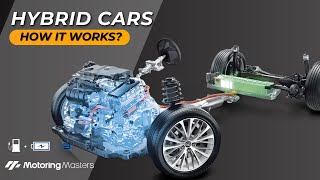
Hybrid Car Components: Engine vs Motor
37sViewers learn the key parts that make hybrids efficient, sparking curiosity about how they differ from regular cars.
▶ Play Clip
[00:00] Have you ever wondered how hybrid cars work? In this video, we will look at how the electric motor is combined with the gasoline engine to provide power to the wheels.
[00:13] Let's start by understanding the main components of a hybrid car. Just like in traditional cars, hybrid vehicles are equipped with an internal combustion engine. It provides power to propel the vehicle.
[00:25] It is responsible for generating electricity to charge the battery pack in certain hybrid configurations. This engine is designed to deliver power at higher speeds and when additional power is
[00:37] required. But it is usually smaller than that of a conventional engine powered car. It can range from around 1 to 2.5 liters and the power output ranging from around 60 to 150
[00:50] horsepower and the torque output can range from around 80 to 200 Newton meters. In addition to the internal combustion engine, hybrid cars are equipped with an electric motor. This motor is powered by battery pack and it is responsible for providing power, especially
[01:07] during low speed driving or during light acceleration. The electric motor in a hybrid car operates at a high voltage, typically in a range of 200 to 400 volts, the torque output of the electric motor is generally high as electric motors provide
[01:23] instant torque. The heart of any hybrid car is its battery pack. This pack consists of a series of smaller batteries that store electrical energy.
[01:35] These batteries are typically lithium ion batteries, however this batteries have become more popular in recent years due to their higher energy density and lighter weight, which allows for better fuel economy and longer driving range.
[01:50] Now let's take a closer look at how they work together. Let's consider three modes, electric mode, power mode and power generation mode. In electric mode, the internal combustion engine is turned off and the vehicle operates solely
[02:05] on electric power. The power split device decouples the internal combustion engine from the wheels. The electric motor takes energy from the battery pack to drive the wheels.
[02:18] This mode propels the vehicle silently and emitting zero tailpipe emissions. This mode is ideal for low speed driving such as urban areas or stop and go traffic.
[02:32] It provides an efficient and eco-friendly solution, helping to reduce fuel consumption and local air pollution. The electric motor provides instant torque and it is more efficient for low speed city driving.
[02:46] Where internal combustion engines are less efficient? Next let's explore hybrid mode, where both the internal combustion engine and electric motor work together to provide power.
[02:59] When more power is required, such as during high speed driving or sudden acceleration, the internal combustion engine kicks in. The engine generates power by burning fuel, which provides energy to propel the vehicle.
[03:14] And also generates electricity to charge the battery pack. The power split device adjusts the rotation speed and torque distribution between the engine and the motor. This allows for efficient blending of power sources, based on driving conditions and power demands.
[03:32] The internal combustion engine operates efficiently at higher speeds and power demands, where electric motors are less efficient. Lastly, we have power generation mode, which comes into play when the engine's power output
[03:46] exceeds the immediate need. There are two types of power generation, one from the engine. And another from regenerative braking. Here, the power split device connects the internal combustion engine to a generator.
[04:04] This excess power is converted into electricity, recharging the battery pack for later use. And it also generated electricity from regenerative braking. When you apply the brakes in a hybrid vehicle, the regenerative braking system engages,
[04:19] the rotating wheels during braking or decelerating, drive the electric motor to act as generators. Converting the kinetic energy of the vehicle into electrical energy, the energy captured through regenerative braking helps to recharge the battery pack.
[04:34] Increasing the overall available energy. Overall, the motor, battery and engine in hybrid cars work collaboratively to provide the right amount of power, depending on driving conditions and driver inputs.
[04:49] This combination of components allows hybrid cars to achieve improved fuel efficiency, reduced emissions, and a balance between electric and internal combustion power sources. Thank you for watching our video on hybrid cars.
[05:03] If you found this information useful, don't forget to like, share, and subscribe to our channel for more insightful content.
⚡ Saved you 0h 05m reading this? Transcribe any YouTube video for free — no signup needed.