
Grapefruit Roulette System Wins Big
45sThe high rating 'grapefruit' and promise of easy money grab attention, making viewers curious about the strategy.
▶ Play Clip"Title claims easy $3000 win, but video shows a lucky run and admits it's an outlier."
This video presents a roulette system called 'Follow That MF Dozen' (or 'Follownacci'), which is a negative progression system based on the Fibonacci sequence. The system involves betting on one of the three dozens, following the last number that hit, and aims to win $1,000 from a buy-in of $2,000 or $3,300. The presenter demonstrates the system with three simulated friends, all of whom hit their target, and then provides simulation results showing success rates around 57-71% depending on the buy-in and wheel type.
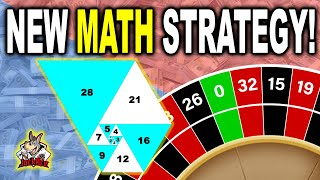
The system is called 'Follow That MF Dozen' and was rated a grapefruit by CEG. It is based on the Fibonacci sequence (1,1,2,3,5,8,13,21,34) and uses $1 units, so bets are $100, $100, $200, $300, $500, $800, $1300.
The system is a negative progression: you increase your bet after a loss following the Fibonacci sequence. You start with a blank spin to determine which dozen to bet on, then bet $100 on that dozen. After a loss, you move to the next Fibonacci number and bet on the dozen that just hit.
The goal is to walk away when up $1,000 (half of a $2,000 buy-in or about a third of a $3,300 buy-in).
With a $2,000 bankroll, you can withstand 6 consecutive losses; with $3,300, you can withstand 7 losses.
Simulation results: For a $3,300 to $4,300 target, success rate is 71.6% on single zero, 69.2% on double zero, 66.7% on triple zero. For $2,000 to $3,000, success rates are 57.3%, 56.1%, 53.7%. For $1,200 to $2,200, success rates are 43.8%, 42.4%, 40.1%.
The simulation compared 'Follownacci' with 'Golden Entry' (betting on the same dozen repeatedly). Results were nearly identical (within 1%), suggesting that following the last number does not affect success rate; it only increases the number of spins due to blank spins and resets on zero.
The presenter shows a heat map of numbers hit during the live trial. Number 1 hit 4 times, several numbers hit 3 times, and many numbers did not hit at all, including zeros. The first column was hot, the third dozen was cold.
The presenter rates the system 5/5 stars for betting simplicity, 5/5 for chip uniformity, 4/5 for jackpot potential, and overall 5/5. However, he notes that the live trial was lucky (no zeros, never bet more than $300).
The 'Follownacci' system is a simple negative progression based on Fibonacci, but simulation shows it does not outperform betting on a fixed dozen. The live demonstration was unusually lucky, and the system carries risk of rapid losses if a losing streak occurs.
What is the Fibonacci sequence used in this system?
1, 1, 2, 3, 5, 8, 13, 21, 34
00:30
What is the unit size used in the demonstration?
$1 units, so bets are $100, $100, $200, $300, etc.
00:48
How many consecutive losses can a $2,000 bankroll withstand?
6 losses
04:40
What is the walking away goal for a $2,000 buy-in?
Up $1,000 (half the buy-in).
03:50
What is the success rate for a $3,300 to $4,300 target on a single zero wheel?
71.6%
14:05
What is the success rate for a $2,000 to $3,000 target on a double zero wheel?
56.1%
14:20
What is the success rate for a $1,200 to $2,200 target on a triple zero wheel?
40.1%
14:33
Does following the last number improve success rate compared to betting on a fixed dozen?
No, the simulation shows nearly identical results (within 1%).
14:46
What happens when zero hits in this system?
Treat it as a loss and reset with a blank spin on the next spin.
15:39
What is the overall rating the presenter gives this system?
5 out of 5 stars.
17:53
Fibonacci Sequence Basis
Explains the core mathematical progression used in the betting system.
00:30Bankroll Survival
Quantifies risk: 6 losses max for $2,000 buy-in.
04:40Simulation Success Rates
Provides objective data on system performance across different wheel types.
13:40Following Dozen vs Fixed Dozen
Demonstrates that following the last number does not improve odds.
14:46System Rating
Presenter gives 5/5 stars despite admitting luck played a role.
17:53[00:01] dozen system that was also rated a grapefruit by the ceg dealer School let's check out follow that MF dozen together today on Jack
[00:17] jack.com and today I have another roulette system for you this system is called follow that MF dozen and was rated a grapefruit by ceg and it's based on Golden entry AKA Fibonacci dozens which was also rated a double grapefruit
[00:30] $2,100 but we're going to be buying for $ 2,000 if you want you can extend your buyin to$ 3,300 that gives you an extra chance to stay alive this system is based on the Fibonacci sequence which is 1 1 2 3 5 8 13 21 34 Etc the Fibonacci
[00:48] sequence starts with 1 one and then you just add the last two numbers to get the just add the last two numbers to get the next number so once again one 1 2 3 5 8 13 21 34 we're going to be playing with $1 units so that's going to be 100 100
[01:02] $1 units so that's going to be 100 100 200 300 500 800 1300 this system is just like golden entry this system is just like Fibonacci dozens except to determine which dozen you bet on you follow the last number that hit that
[01:15] start off with a blank spin we're not going to bet any money and whatever to bet on so our first spin is going to be a blank spin we're betting $0 we're just trying to determine which doesn't to bet on so 30 is the Dozen we're going
[01:31] start off with a $100 bet we're going to be starting with a $7.7 million balance but we're going to be pretending that we're only playing with a $2,000 bankroll so 13 is in the second dozen that's a Miss we're going to move our
[01:46] bet to the second dozen the second number in the Fibonacci sequence is one number in the Fibonacci sequence is one so we're going to still bet
[01:58] dozen that's another whack and we're going to bet $200 on the first dozen so rated it a grapefruit that is their highest rating and the system that it's based on is called Golden entry or Fibonacci dozens that was also rated a
[02:14] double grapefruit so one that's a hit on the first dozen we win $400 we are currently up $200 and we drop back down to the $100 dozen the first dozen so 20 is in the second dozen we're
[02:31] second dozen if you start with a balance of 2,000 that means you can withstand six losses if you start with a starting balance of 3,300 you can withstand seven losses 12 is in the first dozen so
[02:43] that's another whack now we're betting $200 and moving it to the first dozen no $200 and moving it to the first dozen no more
[02:56] again we are currently up 400 we drop down to to $100 bet and we bet on that down to to $100 bet and we bet on that same dozen the first
[03:09] a whack and we're going to move our bet to the second dozen $100 there the expected loss per spin for that first tier is $2.70 on a single zero wheel $526 on a double zero wheel and whatever tier you're working on you would just
[03:22] multiply the Fibonacci number times that number to see what your expected loss is for that round so if you're betting $800 your expected loss is 8 * 5.26 13 that's a hit we win 200 and move to tier
[03:38] 200 and move to tier one keep our bet on that second whack and we move our bet to the first dozen when do you walk we're going to
[03:50] just walk when we're up $1,000 or more that's half of our buying if we buy him for 3,300 that's a little bit under a third 12 that's a hit we win 200 we are the first dozen bet no more
[04:14] step two and move to the third dozen if you enjoy discussing gambling systems you can join my Discord we have a pretty good community of over 700 DJ like you another whack we move to tier three that's the
[04:28] $200 bet and we we move to the first dozen this system is a negative progression system so that means we don't measure our buyin in bullets progression systems with a negative progression system we measure how many
[04:40] losses in a row we can survive $2,000 gives us six losses 3,300 gives us 7 29 gives us six losses 3,300 gives us 7 29 that's another whack minus 200 so on ceg this system was called follow that MF dozen but I'm going to call it Fibonacci
[04:54] follow or we can just call it FCI I kind of like follow NACI so so that's a hit we win 600 we are currently up $800 pretty close to our Target of being up 1,000 and we're going to stay on the third dozen later
[05:08] to show you for the numbers that hit and I'm also going to show you hot and cold bets that would have done well or poorly for this simulation 22 that's the second dozen so we're going to move our bet to the second dozen and we're going to bet
[05:27] currently up 900 and let's stay on this second
[05:40] we're up $1,100 we've hit our goal that friend was successful let's try again start off with the blank spin we could have just continued betting on the second dozen but we're going to start fresh blank spin zero bet see which
[05:53] friend eight that's the first dozen so we're going to bet $100 on the first roulette system for me to review fill out my Google form and if you want me to FastTrack the review of your system join my patreon along with this benefit
[06:06] streams I'm going to be doing for real money they get discounts in my merch store and it also just helps support the channel 17 that's a miss so lose 100 and continue with tier two another $100 bet but this time on the second
[06:27] third dozen now this system is super super easy to scale up or down there's want to scale this down to $1 units you can do that on an ETG and electronic table game you can also bet five or 10 or $25 units if you want 27 that's a hit
[06:43] so we win 400 this player is also up 200 we're starting off just like we did in the last frame we're going to bet 100 on the third
[06:57] on this third dozen no more
[07:10] BET to the second dozen no more
[07:22] row so we move to the third tier $200 we're going to bet on the first dozen as you're just betting on a dozen you can't really consolidate that any further but in terms of do you follow the last number that part is really optional and
[07:36] some people might really argue that that's not the case that you will mix but later on I'm going to show you with my simulator that that does not matter it's irrelevant the only thing that it forces you to do is memorize what the
[07:49] last number was and also sit out of spin when zero hit 12 that's a hit we win 400 when zero hit 12 that's a hit we win 400 reset to Step One
[08:10] whack continue with step two another $100 but this time on the third dozen no $100 but this time on the third dozen no more
[08:23] we're only at plus 400 right now but we're going to be at $200 on the second dozen if you want to see other roulette systems check out my site jack.com there I have a catalog of over 550 roulette systems you can sort them by buying
[08:36] amount by bet size by my rating of the system and if you drill down to each one have a tool called the roulette bet analyzer there you can enter your you're going to win for every result what your expected loss per spin is what
[08:49] your expected comp value per spin is and how much coverage of the wheel you have 18 that's a hit we win 400 we are currently up 800 for this friend and currently up 800 for this friend and continue betting on the second
[09:07] are up a th000 we have hit our goal so friend two is successful now we're two for two and we're going to try maybe one more friend let's do friend number three blank spin we're not going to make a bet this is going to determine which dozen
[09:21] we bet on 23 so that's the second dozen we're going to put 100 on the second we're going to put 100 on the second dozen no more bets
[09:34] our $100 bet to the first dozen what to the pros for this system it's an extremely simple system the only complication is the betting sequence if you're not familiar with Fibonacci already also there's a slower ramp up
[09:46] than in Martin Gale with Martin Gale things get really bad really fast one that's a hit we win 200 this friend is currently up 100 and we're going to reset with uh step one $100 on the first dozen
[10:07] which is still $100 but we're going to move it to the second dozen no more
[10:19] betting 200 what are the cons for this system this can also spiral out of control perhaps not as fast as Martingale but it's still pretty fast another con is that there's a smaller Target than with Martin Gale with Martin
[10:32] Gale you're betting on 18 numbers usually no more bet here we're only betting on 12 so when you start to get stuck it can be hard to get out cuz you're hitting a smaller Target 34 that's a hit we win $400 and we are
[10:44] currently up $300 no more bets five that's a whack we're going to put $100 on the first dozen
[11:09] currently up 400 no more
[11:21] move our $100 bet to the second dozen so does it help if you follow the last number or if you bet the opposite or if you just stay on the same dozen column the entire time we'll see how it does when we look at the Jack a simulator
[11:33] later on 21 we recover we're currently up 500 and reset to step
[11:50] bets 24 another hit we win 200 we are currently up
[12:04] to move this pet to the third dozen no more
[12:17] 800 and don't forget to visit my Jack a merch store shop. Jack a.com there I have a bunch of Jack a branded merch roulette and craps merch blackjack basic strategy cards video game and to merch check it out it's perfect for all DG 11
[12:33] that's a whack bet 100 on the first dozen no more
[12:59] going to move that $100 bet to the second second dozen no more
[13:12] up 1,000 we have hit our goal so we are three for three with our friends all three players hit their goal of being up 1,000 we are currently up 3100 that's a very good result we didn't have to bet more than 300 so we got very very lucky
[13:24] in fact this entire time we only bet $300 once so yeah great result three for the jack a simulator what up donkeys Jack a here and we are simulating another roulette system this one is called follow NACI or
[13:40] follow that MF dozen we're going to be trying to increase our bank roll from trying to increase our bank roll from 3,300 to 4,300 2,000 to 3,000 and 1 1200 3,300 to 4,300 2,000 to 3,000 and 1 1200 to 2200 in each case that's an increase
[13:53] of $1,000 10 units for trying to increase our bank roll from 3,300 to 4,300 we are successful 71.6% of the time on single 0 69.2% of the time on d0
[14:05] time on single 0 69.2% of the time on d0 and 66.7% of the time on Triple 0 so about 5% and then when we try to increase our bank roll from 2,000 to 3,000 that's 50% we are successful 57.3% of the time on
[14:20] we are successful 57.3% of the time on single zero 56.1% of the time on d0 and 53.7% of the time on Triple 0 and finally trying to increase are bankroll finally trying to increase are bankroll from 1,00 to 2200 that's 83% we are
[14:33] successful 43.8% of the time on single zero 42.4% of the time on d0 and 40.1% of the time on Triple 0 now I also ran this simulation against golden entry
[14:46] following the Dozen you're just betting on the same dozen over and over and here are those results you can see that nearly every trial is identical or nearly every trial is identical or within you know 1% of of follow NACI so
[15:01] everything's within the margin of error you know when you run simulations you're going to have some variance in your results it's only when you run millions and millions of Trials when you start to see convergence towards the actual
[15:14] percentage so there's naturally a bit of variance I'm only running 10,000 trials at a time but if I were to run millions and millions of Trials you'd see these numbers converge and you would see that they would be identical now the only
[15:27] difference between these two systems you're going to see is the spins per trial obviously with follow NACI you have more spins per trial because you start with a blank Spin and also you have to have another blank spin whenever
[15:39] you spin a zero or double Zer or triple zero so you'll see that fonci has more spins per trial so basically what I have been suggesting would happen is the success failure percentages are identical or nearly identical you're
[15:54] just sitting out more spins because you have to reset every time a zero comes out a green comes out another thing I'm going to start doing in my reviews is showing you a roulette wheel heat map basically showing you what numbers came
[16:06] up and with what frequency and here's that heat map here you can see we had one big outlier the number one which hit four times four numbers hit three times one and two times and there's quite a few numbers that we didn't hit at all
[16:22] including both zeros we got really lucky with our results we only had to bet 3001 one time and we hit it on that one we never had to bet 500 or more that's quite unusual for almost 50 spins and three friends
[16:37] three trials so we were very fortunate on the plus side so keep that in mind if you choose to try this system out in real life another thing I'm going to be showing you in my reviews is this number
[16:50] map this spreadsheet is going to show you the individual numbers that performed well and were cold it's also going to show you the outside bets that performed performed well or performed poorly along the left hand side you can
[17:02] see each individual number the cold numbers are blue the hot numbers are red so you can see one was red hot 12 13 were hot 8 was hot and then along the bottom everything was kind of lukewarm
[17:15] with the even money bets you can see the First Column was red hot and the coldest bet was the third dozen which it only hit 11 times that's half of the number of hits of the First Column so yeah there was definitely some bunch we hit
[17:29] quite a bit on the second dozen as well we hit at 28% normally you would expect 14 or 15 hits we got 19 so I think definitely that second doesn't hitting that much was a help to
[17:41] us so that is how falloni did in the jack a simulator what do you think of it the bets do you think it helps improve your chances do you think it doesn't matter let me know in the comments below for my review of this system for the
[17:53] betting Simplicity I give it five out of five stars it really doesn't get any simpler than just betting on one dozen you're just making one bet easy to do out of five stars the only complication is that you have to know the Fibonacci
[18:06] memorizing what it is you can just write it down or just figure it out with some simple MTH for chip uniformity I gave it you're not going to bet more than 13
[18:18] chips at a time jackpot potential I give it four out of five stars maybe a little probably going to be a fraction of your bank roll I think for $2,000 I think for $3 $300 I think $11,000 is a good Target that's 10 units scalability we talked
[18:33] about this before it's very easy to scale down if you want to scale up to the thousands if you're a high roller that's easy to do too comp value I maybe give a three and a half or four stars out of five the only bad thing about it
[18:45] is that I don't think you're going to be playing for very long I don't think this play all day system but the units you are betting are certainly good for comps so overall I give this five out of five stars I think it's a great system I
[18:58] think we hit our Target very easily with our three friends but like all systems not something you can quit your job and start doing every day if you have a goal to gamble and you bring $2,000 with you to Vegas this is a good system to play
[19:12] we had a very unusual run we got very lucky we didn't hit any zeros so my live trials are kind of an anomaly they're probably an outlier like I said we didn't bet more than 300 and we only did that once so we were very very fortunate
[19:25] to always hit that following dozen so that's my review of Fibonacci follow or fonci what do you think of it so far let me know in the comments below what do following the last column do you think it's an effective strategy if you enjoy
[19:39] content such as this remember to like And subscribe always gamble responsibly never play triple zero let and peace out donkeys
⚡ Saved you 0h 20m reading this? Transcribe any YouTube video for free — no signup needed.