

Why I'd Never Get Rich Quick
43sThe blunt admission of failure with quick-rich schemes is relatable and hooks viewers with the promise of a better strategy.
▶ Play Clip"Delivers exactly what the title promises: a clear, actionable plan for starting from scratch."
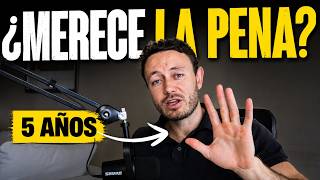
The video offers practical investment advice for beginners, emphasizing a cautious approach: avoid get-rich-quick schemes, build a safety net, and split investments between stable long-term options and higher-risk learning opportunities.
The speaker warns against trying to get rich quickly with investments, stating that such attempts only lead to losses.
Before investing, create a safety net of 3 months' expenses (if you have job stability) and keep it in a high-yield account like Revolut or Trade Republic.
Divide the money you plan to invest into two parts: a large portion for serious, long-term, passive, diversified investing, and a smaller portion for higher-risk opportunities (e.g., cryptocurrencies, AI) to learn faster.
Investing is not about luck. Have a plan, such as investing regularly in an index fund via automatic transfers, and be patient while you continue with your life.
The core takeaway is to invest with a plan, prioritize long-term passive strategies, and maintain patience, while avoiding risky shortcuts.
What should you avoid when investing?
Trying to get rich quick.
00:02
How many months of expenses should you set aside as a safety net?
3 months.
00:14
Where should you keep your safety net?
In a high-yield account.
00:14
How should you split your investment money?
Into two parts: a large portion for long-term passive investing and a smaller portion for higher-risk learning.
00:27
What is recommended for the large portion of investments?
An index fund with automatic transfers.
00:42
What is the key to successful investing according to the speaker?
Having a plan and being patient.
00:42
Avoid get-rich-quick schemes
Sets the foundation for a cautious, realistic investing mindset.
00:02Build a 3-month safety net
Provides a concrete, actionable first step to protect against emergencies.
00:14Split investments into stable and speculative parts
Balances long-term security with learning opportunities.
00:27Use index funds with automatic transfers
Simplifies investing and enforces discipline through automation.
00:42[00:00] Si hoy empezara a invertir desde cero, haría exactamente esto. Lo primero, no intentaría hacerme rico rápido con las inversiones. Créeme, lo he intentado y con eso solo se pierde dinero. Antes de invertir, crearía un pequeño colchón de seguridad para no depender de imprevistos
[00:15] y tampoco tener que rescatar las inversiones importantes. Se suele decir que tiene que ser de 6 meses, pero si tienes estabilidad laboral, yo lo haría de solo 3 meses. Lo pondría en una cuenta remunerada como Revolute o Trade Republic. Después, separaría ese dinero que vamos a invertir en dos partes.
[00:30] Un off grande, aquí va a estar más de nuestro dinero para invertir en serio, a largo plazo, pasivo, diversificado. Esto se hace con fondos indexados y en la descripción te dejo una opción. Y otro con menos dinero para arriesgar un poco más, con esa posible rentabilidad superior, para aprender más rápido algo como criptomonedas, el sector de la inteligencia artificial o algo con lo que tú tengas un cierto instinto.
[00:53] Porque invertir no va de tener suerte, sino tener un plan, como simplemente tener un fondo indexado e invertir recurrentemente, una transferencia automática y listo. Y tener paciencia. De mientras, sigue con tu vida.



⚡ Saved you 0h 01m reading this? Transcribe any YouTube video for free — no signup needed.