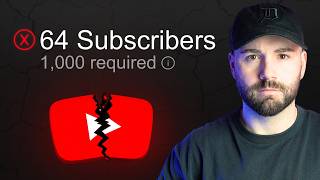

Never Start a Video Talking About Yourself
42sDirectly challenges common creator behavior with a bold claim, sparking curiosity and debate.
▶ Play Clip"The title promises a list of 'never do' actions, and the video delivers exactly that, though the sponsor segment adds some padding."
The video provides a list of five critical mistakes that small YouTube channels (under 1,000 subscribers) should avoid to grow. The creator emphasizes the importance of delivering value, timing subscription requests, embracing niche topics, protecting personal data, and learning from similar-sized channels rather than big ones.
Viewers don't care about you initially; they seek entertainment, education, or information. Every video must have a clear value proposition tied to the title and thumbnail.
Asking for subscriptions before delivering value is like asking for a five-star review before serving food. Instead, ask after providing value or don't ask at all, letting content speak for itself.
Niche channels take longer to grow because the algorithm needs time to find the right audience, but once it does, growth accelerates. Competing in broad niches is harder for small channels.
Sharing your main YouTube email publicly risks account security. Create a separate public email for brand inquiries to protect your account.
What works for large channels rarely works for small ones. Study channels under 10,000 subscribers in your niche and replicate their successful content strategies.
YouTube tests videos with small groups first; getting on the home feed is the best growth strategy. The next video will explain how to achieve this in five steps.
Small YouTube channels should focus on delivering value, protecting their data, and learning from similar-sized creators. Avoid common mistakes like early subscription asks and copying big channels to grow effectively.
What are the three main types of value on YouTube?
Entertainment, education, and information.
00:57
Why should you avoid asking for subscriptions in the first 60 seconds?
Because viewers haven't received value yet, making the request feel cheeky and ineffective.
02:16
What is the recommended approach to subscription requests?
Ask after delivering value or don't ask at all, letting content speak for itself.
03:23
Why do niche channels take longer to grow?
The algorithm needs time to find the right audience, but once it does, growth accelerates.
04:50
What is the risk of sharing your main YouTube email publicly?
It can be misused to gain access to your channel, causing security problems.
06:34
What should you do instead of sharing your main email?
Create a separate public email for brand inquiries to keep your main account private.
07:01
Why should small channels study other small channels instead of big ones?
Because what works for large channels rarely works for small ones; small channels' strategies are more likely to be replicable.
09:38
What is the best way to grow a channel according to the video?
Getting your videos onto the YouTube home feed.
11:52
Value Proposition is Key
Emphasizes that viewers only care about what they gain, not the creator, which is a fundamental principle for content creation.
00:15Timing of Subscription Requests
Provides a clear analogy (restaurant review) that makes the mistake of early subscription asks memorable and actionable.
02:16Niche is an Advantage
Reframes a common fear (niche too small) as a strategic advantage, offering a counterintuitive insight for small creators.
04:22Email Security
Highlights a practical, often overlooked security risk for YouTubers, with a simple solution.
06:20Learn from Small Channels
Challenges the common advice to copy big channels, providing a more realistic growth strategy for small creators.
09:38[00:01] 1,000 subscribers, there are certain things you should never do because if never grow. So, in this video, I'm going to share the five things you're probably doing right now that need to stop immediately. Let's get into it. All
[00:15] right. So, the very first thing on this list of what not to do is this. Never assume that viewers are watching your videos for you because they aren't. And this is why you should never start a video by talking about yourself or
[00:30] talking about your channel. And let me explain why. Because unless you're already someone who is well-known or well-respected or unless you're some sort of like super hot female model, I can guarantee that literally nobody is
[00:43] want to see you specifically. Now, what you need to understand is that when someone opens up YouTube, they are usually looking to either be because they want some sort of information. Like these are the three
[00:57] main types of value on YouTube. Entertainment, education, and information. So, this means when your video appears in their homepage or on their recommended tabs the very first time, they have absolutely no idea who
[01:09] you are. And more importantly, they have no reason to care about you yet either. Literally, the only thing that matters to those viewers in that exact moment is what they think they'll gain from watching your video if they decide to
[01:23] click on it. So, there has to be a value proposition in every video you make. And what I mean is you need to consider are you just entertaining them? Are you teaching them something specific like how to make good lighting? Or are you
[01:37] giving them information? This is why your title and thumbnail are so important because they're essentially making a promise about what value the viewer will get from your video if they click on it. And that promise of value
[01:49] is literally the only reason someone will click on your video. Trust me. So, every video you make from now on should answer one simple question. >> What will my viewers gain from watching this video? And your answer to that
[02:03] question must be related to your title and thumbnail. And if your viewers ever like can't immediately see what value is in it for them, they will just leave your video. So, just bear that in mind. Now, the second thing you should never
[02:16] do is ask people to subscribe to your channel within the first 60 seconds or so of any video. Now, look, time and time again, I see people do their they're like, "Oh, be sure to hit that subscribe button and give the video a
[02:29] thumbs up." Like, before the video has even actually properly started. But look, this makes no sense whatsoever because why would someone subscribe to actually about, whether it's good enough, or who you even are in the first
[02:43] place. Now, look, I know you want as many of your viewers to subscribe to you as possible. But asking for a subscription before you actually deliver any value is basically like going to a restaurant and having the waitress ask
[02:56] you to leave a five-star review before they've even served you the food yet. probably think it was actually very cheeky of them to ask because you haven't even tasted the food yet. But the exact same thing applies to YouTube,
[03:08] think you're cheeky for asking, too, before you've even given them the like the value they came for. So, instead, you need to approach this in one of two ways. The first option is to only ask them to subscribe to you after you
[03:23] deliver the value they came for. When someone watched a large portion of your video and feels like they've gained something from your video, that is the perfect moment to ask for a subscription. But then the second option
[03:35] is simply just to not ask at all, and instead let your content do the work for prefer. So, here in this option, what you really want to focus on is getting the viewer into what I call a hypnotic state, where
[03:50] absorbed by the video and they're focused entirely on the content you're giving them. Now, when someone reaches that state, the state you're probably in right now, the most important thing here is to avoid interrupting that state by
[04:05] asking them to like subscribe to you because it ruins the flow. If your going to subscribe to you without even thinking about it. And this is what most because they understand that the strongest driver of subscribers is
[04:22] simply delivering the best possible content. And then another thing you should never do is worry that your channel may be too niche. Now, I know might feel like the niche your channel is in might be too specific and because
[04:37] of that, you might assume that the reason you're not getting many views is simply because there aren't enough people interested in what your specific niche is. But look, in 99% of cases, that is actually not the problem. Now,
[04:50] the truth is, yes, super niche channels do usually take a little bit longer to because the audience isn't there though, has to work a little bit harder to figure out who exactly the right viewers
[05:04] are for your channel. Now, think of it like this. When you first start uploading, YouTube doesn't yet know which viewers are the right match for your channel. So, it needs time to test your videos with different groups of
[05:17] people and find the right people most likely to enjoy them. So, if your channel is in a super niche space, it will just naturally take the algorithm a little bit longer to find those people and that's fine because once the
[05:30] algorithm does begin to understand who your content is for, after a while, things will start moving much faster for you because those super niche viewers all actually share the same traits and the algorithm will then have a really
[05:44] good data profile to work from and it will make finding the rest of those super niche viewers much, much easier. Plus, anyway, look, having channels in a really big and popular niche means you're competing with thousands and
[05:56] thousands of other experienced creators. And trying to compete with those experienced creators, if you have a new or a small channel, is incredibly difficult. But instead, if you actually focus on a much smaller and much, more
[06:08] specific niche, it becomes much easier to stand out and actually eventually become one of the main voices in that space. So, look, being in a super small niche is actually quite a good thing, not a bad one. So, don't worry about it.
[06:20] Now, the next thing you should never do is publicly share your channel's main email. Now, I've seen so many people make the silly mistake of using their YouTube account email on their public profile and like channel description
[06:34] page. Or you'll share it with brands hoping that they're going to reach out reason you do not want to do this is because your channel's email should always be super private. Like nobody ever should have access to it. Because
[06:48] if someone can get their hands on your channel's email address, they can potentially misuse it to cause you problems with your YouTube account. And someone to try and gain access to your channel if they're determined enough.
[07:01] And there's a lot of people out there who will be. So, the solution here is very simple. You need to create a completely separate email account just for public use. And this one will be the email you put on your about page and in
[07:13] your channel descriptions. That way brands and potential sponsors can still contact you, but your actual YouTube email account stays private and secure. Because it would probably surprise you just how much of your personal
[07:26] information is out there floating around right now. And I'm not just talking about your name or your email. I'm even talking about phone numbers, location data, the websites you visit, and even how long you spend on each website. Now,
[07:39] the scary part about all of this is you probably never gave permission for most possible because there are hundreds of companies out there called online data brokers. And their entire business model is collecting your personal private data
[07:53] and selling it to advertisers, scammers, and pretty much anyone who's willing to pay for it. But that's exactly where Incogni comes in. Now, Incogni is an online data privacy tool that I've personally been using for over about a
[08:06] year now. And what they do is contact those shady data broker companies on your behalf and force them to delete all of your personal information from their databases. And those companies have to actually oblige by it. Now, think of it
[08:19] like having a digital bodyguard that constantly works in the background for you removing all of your sensitive personal information from all of those weird databases across the internet. Now, I can't guarantee that some of you
[08:32] have a ton of your information being sold between companies right at this moment, but you don't know who it is or where it is. And that's not good. So, instead of having to hunt down all of these dozens of companies yourself and
[08:45] sends like request removals, Incogni actually handles all of this automatically. And they've actually also released a new feature called custom removals, where if you find a website that's exposing your personal
[08:57] information, you can simply send Incogni the link and their privacy experts will try to get that data removed for you. Now, it literally takes a couple of so much peace of mind knowing that
[09:10] someone is actively working to keep my personal information off the internet. So, if you want to protect your online presence as a YouTuber, I highly recommend checking them out. So, take your personal data back now with
[09:22] your personal data back now with Incogni. Use [email protected]/creator annual plan. I promise you, it's worth it. All right, so the fifth thing you should never do on a channel with less than 1,000 subscribers is copy what the
[09:38] big channels are doing. Instead, what you actually need to do is look at what the other small channels are doing. And let me explain why. Now, there are way too many YouTube growth gurus out there telling you guys to look at the big
[09:50] channels and basically just copy their best performing videos. Now, at first, this might seem like a smart strategy, but the problem here is this. What works for a channel with, let's say, 2 million subscribers will rarely ever, if not
[10:03] possibly never, work for a channel with only 200 subscribers. So, instead, what I suggest to all of my students is this. The much smarter approach is to study niche and look at what works and performs well for those guys. Ignore the
[10:18] big guys for now. For example, if you're in the travel niche, only ever look at travel accounts in your space with less than like 10,000 subscribers, or even less than 5,000 subscribers. And just pay attention to all of their best
[10:31] performing content instead of the big boys. And this is because if those videos worked for other small channels in your niche, it's pretty much guaranteed to work for you, too. Now, for me, when I had like one or 2,000
[10:43] subscribers, I actually studied channels like this guy, a guy called Jevin. I looked at his best performing video ideas and I used those ideas in my own content strategy because he also only had a couple of thousand subscribers at
[10:56] the time. So, I knew that the video topics that worked for him had a really didn't even bother looking at the big channels like Ali Abdal or VidIQ at the worked for them aren't going to work for me. So, what I would suggest is go out
[11:11] there, find a ton of channels with less than 10,000 subscribers, and really, really study them. Then, last but not least, you should never expect the algorithm to just push your videos out for you. Unfortunately, as you probably
[11:25] already know by now, it's not as simple as uploading a video and then waiting and recommend it to everyone, everywhere. Instead, YouTube actually rigorously tests your videos with small groups of viewers first. And based on
[11:39] how those small groups of viewers respond, it will then decide whether or not your video deserves to be shown to more people or not. And the most important place where these tests happen is a YouTube home feed. Getting your
[11:52] videos pushed to the YouTube home feed is the best way to grow your channel and get more views, hands down, like the best way. So, if you want the algorithm to start pushing your videos, what you really need to understand is how to get
[12:04] your content onto the home feed in the first place. And in the next video that pops up around here, I'm going to show you exactly how you can do this in five easy steps, even if you're a small channel. So, if you want to massively
[12:17] increase your chances of having the algorithm recommend your videos, click algorithm recommend your videos, click on this video here and give it a watch.


⚡ Saved you 0h 12m reading this? Transcribe any YouTube video for free — no signup needed.