
AI Summary
The video discusses a viral post by a Japanese anime producer arguing that anime/manga should remain Japanese, sparking a debate about localization, Crunchyroll's practices, and piracy. It also explores the complex relationship between piracy and the industry, questioning whether it could be used to identify market opportunities.
Chapters
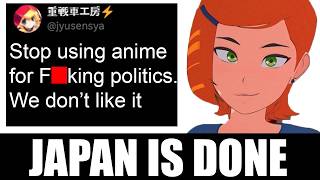
A Japanese anime producer's post went viral with 5.2 million views, arguing that manga is made almost 100% for Japanese people and that the anime's popularity stems from its unique Japanese style.
The discussion includes criticisms of Crunchyroll and other translators for 'forcing their agenda' and altering works, with examples given from Gundam and Crayon Shin-chan.
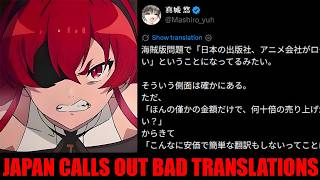
A second post by Japanese producer Yumashiro clarified that localization issues are about the butchering of Japanese culture, not about rejecting foreign fans.
Crunchyroll's co-founder acknowledged the site was a pirate site when approaching Japanese right holders, leading to a licensing deal that eventually saw Sony buy it for 130 billion yen.
The video suggests that instead of solely condemning piracy, the industry could learn from it to find new markets where demand is high, as seen by pirated content.
The creator suggests that hiring fan translators could be a win-win, providing accurate translations and goodwill while addressing the localization problem.
Mentioned in this Video
💡 Key Takeaways
Anime's success is tied to its Japanese identity
Highlights a fundamental creative stance that contrasts with global Western entertainment norms.
00:32Localization can destroy series
Shows the tangible impact of poor translation on cultural products and fan engagement.
02:21Crunchyroll started as a pirate site
Provides historical context for the current debate on legal versus illegal anime distribution.
05:18Piracy as market data
Offers a data-driven perspective on a typically negative issue, suggesting a new business approach.
08:16Hiring fan translators
Presents a practical solution to the localization problem that aligns with community goodwill.
09:12Full Transcript
[00:04] now. 5.2 million views on this post and this is breaking containment. Like this about it. There is a lot of people within the Japanese circles that are producers that are animators, mang offers and writers and artists in
[00:19] general that are talking about this situation. And I think it's important that I talk about what is going on. So, this post has gone viral and the post starts off as followed. I really want people overseas to believe me, but
[00:32] people overseas to believe me, but Japanese manga is made almost 100% for Japanese manga is made almost 100% for Japanese people. That is so incredibly base to hear from an anime producer to hear them actually say that that anime
[00:45] and manga needs to remain Japanese because the reason why it is popular to manga is enjoyed by people around the world that actually got into it is because of how different it is because it is not the copypaste formula that
[01:00] people have gotten used to from Hollywood for example. It is not the same type of formula with politics and all that. It's a completely different style, completely different way of depicting characters that people enjoy
[01:14] and love. And so, for instance, having the work to continue focusing and prioritizing the Japanese is the best way to keep anime popular and to continuously succeed with anime and manga because obviously the reason why
[01:28] it became popular is because it's such a stark contrast to everything else within the West. However, that is one point of what has caused this post to go viral. And there is a second post that has bubbled to the surface, and that is the
[01:42] bubbled to the surface, and that is the whole topic in discussion around piracy, localization, and crunchyroll. Yes, those three topics are pretty big bombshells in of itself. And basically, this has caused a lot of people within
[01:55] Japan to discuss this. A lot of people being obviously outright against anime and manga piracy for obvious reasons, but also those understanding and starting to see why a lot of people, for instance, myself, are constantly talking
[02:07] localizations from Crunchyroll or different manga translators because of what they do. They force their agenda in politics within these different forms of writing and media. And the Japanese are completely unaware of it. For example,
[02:21] I'm going to showcase a few things here. So, first off, this this person here that it caused the post to go trending and viral. That's anime producer. They start talking about basically the global market of Japan and anime and all that
[02:33] and how important it is, but also how it isn't the the biggest, but they also start going into localizations and how manga has been localized and how different its interpretation is and how bad it actually is. And for instance,
[02:46] there is a post that was made back in um April of this year that um basically is people are starting to bring this post back up and it's now going viral alongside of that post that this person made. But they directly call out very
[02:59] botch translations for for instance to Gundam or to Crayon Shinshan. They call out how bad translations and localization can outright destroy a series from being properly introduced into other countries. And so this
[03:14] that anime manga needs to remain Japanese is actually against butchering of Japanese culture. So, good job. However, there is more nuance to this that needs to be discussed and that is anime trends post. So, this post went
[03:29] viral alongside of the Japanese, you know, producers post and it's now got 1.4 million views and this is what they have to say. So, Japanese producer Yumashiro responded to foreign readers who demanded official translations and
[03:43] justified piracy when they don't receive them. The manga is created with Japan in mind and it's the cells in that country that turn determined whether a series continues or ends up cancelled. Moshu explained that the industry has gone
[03:56] from being surprised by foreign interest to not understanding why some readers treat translations as an obligation. Publishing a manga outside of Japan involves adapting cultural references, redoing paneling, and assuming costs
[04:10] that are often not ever recovered. But the problems don't end with money. Mashro recalls how the English version of Crayon Shinshan Americanized its humor, how non-existent science fiction terms were invented in Gundam, and how
[04:23] some translators alter dialogue to insert their own personal opinions. So, I want to explain this. This second paragraph obviously makes Mashro look very pro- localization, very pro butchering of Japanese anime and manga,
[04:36] probably just a very poor translation and wording since this original poster in Spanish. So, I'm going to assume it's just a very poor translation. But more or less, Mushroom as an anime producer, they are against butchering of
[04:51] translations. However, they are very antipiriracy and most of the Japanese are. Basically, 99% of them are. And so, let's take a few moments to really talk about this situation. So, because of this situation, there is now Japanese
[05:04] accounts, big officials within Japan that are talking about Crunch Roll and translation and how bad it's gotten. For instance, SA talks about the situation says this. It's not a lawsuit, but I've heard about the experience of Kungal,
[05:18] co-founder of Crunchroll, negotiating with Japanese anime companies on some program. At the time, knowing full well that Crunch was still just a pirate as a pirate site when they approached Japanese right holders with a licensing
[05:32] deal, some of the people involved apparently flew into a rage. Well, yeah, of course they did. On top of that, Gal said, "We understand that it's illegal. content, but if we do that, the fans will just flock to other pirate sites."
[05:46] sites when you chop off the head of a hydra, another three forms in its place. We've seen this time and time again, and this is what old Crunch Roll was arguing with the Japanese. By the way, it is crazy how different Crunch Roll of Old
[06:01] is to what it is in 2026. It is actually insane. But anyways, let's continue rating. So anyways, um he negotiated that stance. What's more, at the time, uh Shinichiro Ishiawa from anime production company Gonzo while
[06:14] criticizing Crunch Rolls illegal uploads also made a statements acknowledging the company's potential. Well, in reality, some uh well, in reality, since they ended up granting license to a pirate site, even without those statements, it
[06:27] pretty much amounted to recognition. It all started from nothing more than a hot bed of piracy. But whether you see this as caving to pirates or as a heartwarming tale born from piracy is where opinions really split. Back then,
[06:41] I was one of the people who saw it as caving. That said, it's also a fact that a platform was born from piracy, one that lets people around the world access and enjoy content officially. And it's also a fact that Sony later bought it
[06:54] also a fact that Sony later bought it for 130 billion yen. Fully aware of the legit illegality at its founding, for instance, being an illegal site. NO MATTER WHAT stance Japanese users take on piracy, or even if people like me re
[07:07] against the deprivity of the pirate business model, the Japanese anime industry did in fact recognize the market for piracy back in the day and went down the path of ending up under the umbrella of a major corporation like
[07:19] Sony. Seeing this history, my conclusion is that one-sided opinions like piracy is evil, it's theft, may not actually be a good thing for Japan's IP content a good thing for Japan's IP content industry. And so, this is Japanese
[07:33] individuals actually talking about the situation with piracy. And this is a surface and gaining a lot of traction lot of people are talking about is that Japan is very antipiriracy. Okay, they
[07:47] reasons. They're very protective of their IP. That's completely fine. However, they are very upset. Even if you give an actual reason to why people the material in like let's say a certain country and you can't legally buy, watch
[08:02] or whatever to actually experience the series, obviously people will turn to clear because of that these companies, for instance, these Japanese companies, the reason why they won't lose any money is because obviously they were never
[08:16] begin with. So it's not like they're losing any money. However, what it does do is actually build a base, a actual foundation block that there is a market country. So for instance, these different people a part of the anime and
[08:32] like the amount of piracy in a certain, let's say, country for a certain given series, they could determine like, huh, if we sell this work and sell it very good, it's not butchered to these people, they most likely will buy it to
[08:45] support the series. So the point here is is instead of like completely saying piracy is instantly evil, embracing it at times could be able to be to the benefit of Japanese like the Japanese anime industry and the manga industry.
[08:59] important, this ties into everything with keeping anime Japanese and localization, stuff like that, is that there is conversations now to where a are butchering, you know, manga and
[09:12] anime, you know, why don't you hire fan translators to be able to do the work? for free that are doing a very good job that people love. Why don't you hire them? Like, why doesn't these Japanese studios hire them to do the
[09:26] translations? and then they would get obviously goodwill from the community overseas, but also there would be proper accurate translations. It seems like a win-win. So, there is a lot going on here. This entire conversation is still
[09:39] evolving by the hour. And I think that it's very fascinating seeing the Japanese really diving into the whole localization issue and kind of even calling out crunchy roll. Like, it's actually kind of crazy. I mean, I I I'm
[09:53] all for it. And literally what I talked about like months uh years now at this should, you know, embrace these fan translators. Well, it seems like Japan's might even set up their own business model to do that. So, uh yeah, right.
[10:08] Once again, who would have guessed? Anyways, I leave it at that. If you enjoy my content, please subscribe. Does help me out a lot. But be safe, stay help me out a lot. But be safe, stay healthy. She be out.