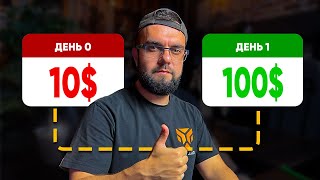

Small Deposit Is Not a Death Sentence
45sChallenges common belief that small deposits limit traders, offering hope and a contrarian perspective.
▶ Play Clip"Title promises practical advice for small deposits, and the video delivers with clear strategies and a live example."
This video explains how to trade effectively with a small deposit, emphasizing that a small account is not a limitation but an opportunity to learn and grow. The presenter argues that starting with $50–100 is ideal for beginners to avoid catastrophic losses and build discipline. The key is to treat a small deposit like a large one, focusing on precision, risk management, and gradual growth rather than chasing quick profits with high leverage.
A small deposit (e.g., $50–100) is a reality for many newbies and is actually recommended for starting, as it prevents critical mistakes and allows learning with real money.
Beginners often deposit small amounts and immediately use large leverage (e.g., 30x–125x) to try to grow fast, which leads to draining the account. Instead, they should focus on learning.
With a small deposit, initial income is small (e.g., $0.30–$2.10 per trade), but as the deposit grows, each percentage profit yields more. For example, 1% on $100 is $1, but on $110 it's $1.10.
Always treat your deposit as if it were $100,000. Enter with 1% risk, take small profits, and value every dollar. The goal is to learn first, then grow.
Acceleration is deliberately trying to multiply a small amount quickly, often with high risk. Trading is steady, disciplined growth. With a small deposit, focus on trading, not acceleration.
High leverage can wipe out a small deposit in one trade. With 1x leverage, you'd need 100 losing trades in a row to lose everything, which is nearly impossible. Stay in the market as long as possible.
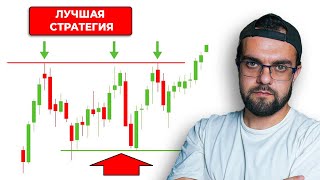
For small deposits, rebound trading (buying at support levels) is recommended for its simplicity and consistency. The presenter personally uses it and finds it effective for learning.
Target 0.5–1.5% per trade. Use tight stop-losses (0.3–0.5%) and aim for a risk-reward ratio of at least 1:3. On volatile coins, reduce position size to manage risk.
A configured DOM with hotkeys allows quick execution, essential for scalping. Pre-set volumes and stop-losses help avoid mistakes.
The presenter demonstrates trading ORDI and UNI using rebound strategy. He enters with 3x leverage, places limit orders near levels, and manages risk with tight stop-losses.
Two trades yielded about 4% profit ($4 on $100). One trade was break-even, the other profitable. The presenter emphasizes that not every day will be profitable, but consistent discipline leads to growth.
Stick to your strategy, avoid emotional trades, and maintain consistent risk parameters. Adjust only when you have a stable track record. Filter information and test strategies.
Trading with a small deposit is not only possible but recommended for beginners. By focusing on discipline, risk management, and gradual growth, a small account can eventually become a large one. The key is to treat every dollar seriously and avoid the temptation of high leverage.
What is the recommended leverage for a small deposit according to the video?
Up to 3x leverage. Avoid high leverage like 30x–125x.
01:40
Why does the presenter recommend starting with a small deposit?
To prevent critical mistakes and learn with real money without risking large amounts.
00:29
What is the difference between 'trading' and 'acceleration'?
Trading is steady, disciplined growth; acceleration is deliberately trying to multiply a small amount quickly with high risk.
04:34
What is the recommended risk-reward ratio for small deposit trades?
At least 1:3, e.g., stop-loss 0.5% and target 1.5%.
07:05
What strategy does the presenter recommend for small deposits?
Rebound trading (buying at support levels).
05:43
How should you treat a small deposit according to the video?
Treat it as if it were a large deposit (e.g., $100,000), with the same risk management and discipline.
02:55
What is the purpose of using a DOM (depth of market) in scalping?
To execute trades quickly via hotkeys, essential for scalping with a small deposit.
07:18
What filter does the presenter use to select coins for trading?
Turnover filter of at least $100–200 million to find active coins.
12:03
What should you do if a trade is not moving and another trade is profitable?
Close the stagnant trade to avoid unnecessary risk.
19:55
What is the main cause of losing a small deposit according to the video?
Using high leverage and improper risk management.
01:24
Small deposit is not a death sentence
Reframes a common fear into an opportunity for learning and growth.
00:01Treat small deposit like a large one
Key principle: same risk management applies regardless of account size.
02:55Avoid high leverage to stay in the market
Explains mathematically why low leverage protects against total loss.
05:00Rebound trading recommended
Practical strategy that the presenter personally uses and teaches.
05:43Discipline is key to success
Emphasizes consistency and emotional control over chasing profits.
21:20[00:01] trade effectively with a small deposit and why a small deposit isn't a death sentence for a trader. If you have a small deposit and you think that this limits your possibilities, then this video is just for you. A small deposit
[00:15] is a reality for many newbies. And it’s difficult to increase capital when there are only a few dollars in the account, 50-100, right? And, although everyone often faces this, and I will say more, I recommend starting with this kind of money,
[00:29] because you will not be able to make a critical mistake, waste a huge amount that will somehow seriously affect your life or do some other stupid things. Many traders say that it is impossible to do anything with a small deposit, but I
[00:44] believe that this is not true, and you need to start with a small one. And the ability to trade with small amounts of money, most importantly, real money, not a demo account, gives us a lot of experience, and a small deposit can eventually turn into a large one with the
[00:56] right approach. Beginners often make a big mistake: by depositing a small amount into an exchange or a broker, they immediately begin to rely on large leverage. Instead of learning with small amounts of money, they immediately
[01:11] try to earn money and grow their deposit. This is wrong. for a small deposit. We must learn, learn trading. What do we do instead? We are starting to increase our deposit. For what? It's not clear. What does this lead to?
[01:24] Of course, to the drain. Large leverage is a violation of risk management. step in with big shoulders. This is reduced volatility, but it is not a thirty-forty shoulder. Yes, if we trade the first dash with the third leverage, then
[01:40] on Bitcoin we can enter with the sixth, seventh, eighth, but not with the thirtieth, fortieth, fiftieth, or even worse, 125. Inexperience and lack of knowledge often lead to improper risk management. This is what I'm getting at.
[01:55] And this makes the situation much worse. By the way, guys, I'm preparing a tutorial on scalping for beginners for you, which will have modules for everyone. I'm trying very hard. And write in the comments what you think about it. Today I'll
[02:10] tell you how you can trade with a small deposit and gradually increase it—that is, roughly speaking, make money over time. And at first this income will be ridiculous, yes, starting from 30-210 cents to 2-3
[02:25] this video, and we'll see how much we can earn with $100. Let's hold a ministerial session. Trading with a small deposit requires a special approach. This is not just a smaller version of trading with a larger
[02:39] deposit. What's important here is precision, discipline, and speed of decision-making, because with a large deposit we might fall short somewhere, take profit, or overextend somewhere, and even leaving this portion will yield a hefty income, which is not the case with a
[02:55] small deposit. Although a small deposit is a complete copy of a large deposit. That is, you should always treat your deposit as if you had $100,000 in deposit and treat it that way.
[03:08] Just imagine, if we entered 1% of 100,000 dollars, that’s 1,000 dollars for us , right? That is, they entered, or rather, extended the profit by 1%, took 1% of only $1,000 on $100 - that's $1. You feel the difference, right? But
[03:24] with each profitable percentage, our deposit increases and our income increases. And in your first learning time, you have to value every dollar, take every dollar that the market gives you. There is no need to pull off
[03:38] scalping, that is, do the same thing that we would do with a large deposit. But we can pull out a large deposit with the goal of still pulling out some profit in order to live on it. But our task with a small deposit is to
[03:52] learn first and then increase it. So every next dollar increases your next income. So 1% on $110 is $1.10, and 1% on $100 is just $1.00. That means every 10
[04:07] dollars already increases your next income. Therefore, it is necessary to understand this. There is no need to rush to increase it. It will grow on its own when you come to your trading strategy. By the way, there is a great video out about the rebound trading strategy
[04:20] that will be very helpful to you. Don't forget, come and have a look. It is also important to understand that with a small deposit you cannot allow yourself to take large risks. This again relates to your desire to quickly increase your deposit. We don't have
[04:34] acceleration, we have trade. Acceleration is something else. Acceleration is when we take a small amount and deliberately accelerate it, knowing full well that we can lose it. We are engaged in trade. This is when you can
[04:46] make just $20 more in a month on your $10. Yes, for those with more experience, you can of course make more. Someone somewhere will get lucky, the market is good, something else. But what can big shoulders do to us? They can simply knock us out of the market.
[05:00] important in your life, you cannot allow yourself to enter with tenths, twenties of shoulders, because in just one transaction you can lose everything. Now imagine with the first leverage, you need to make -1% 100 times in a row
[05:18] of course, the math is a little different there , because there is constantly less money, but it’s roughly like that. 100 trades in a row, it’s unrealistic right now, sit me down and say: “Make 100 trades in a row in the red.” I can't
[05:31] do this. And our task is to stay in the market for these 100 dollars as long as possible. That is, set yourself a goal, limit yourself, and there is no need to put in big shoulders with the goal of doubling, tripling, or anything else
[05:43] like that. For small deposits, it is important to choose the right strategy. For small deposits, I would recommend, for training purposes and to keep the trading strategy simple, of course, choosing rebound trading. I traded it. I still
[05:56] trade it. I didn't start with it, I started with breakouts, but I followed a logical chain to trading rebounds, since I couldn't get breakouts, but rebounds were constant, and I learned to see them, I learned to trade them, that's why I
[06:11] recommend it. They really boosted me in terms of knowledge and experience. The focus should, of course , be on short trades. There is no need to sit and try to pull out 3, 4, or 5% from a deal. Somewhere it will be, somewhere the coins will be
[06:25] volatile. By the way, on volatile coins, learn to reduce the volume in the opposite way. Don't increase it to get a profit, but rather decrease it so that you have a normal profit even on super-volatile coins. This will be an important skill for you in the future,
[06:39] because being able to control position sizes is very important, focusing on volatility. So the point is to focus on short focus on short trades, where 0.5 to 1.5% is a pretty
[06:53] good trade. A lot will also depend on your stop loss. Under no circumstances should you drag out losses . Remember what I said: no one can make 100 losing trades in a row . It's practically impossible.
[07:05] Therefore, your stop losses have nothing scary behind them. There will be profits after the stop loss. stop loss 0.3-05%, for example, profit 1.5 1.2, 1.3 2%. It
[07:18] will cover everything. Therefore, this should not be neglected. Also, of course, I recommend, since I am a scalper, to use a drive, because the ability to use a drive is very important and greatly simplifies our
[07:32] trading and speeds it up. It takes us very little time from making decisions to implementing them . We don't need to enter anything, we don't need to configure anything. trading. We just click and do everything through hot keys, everything through the mouse. Everything is as
[07:47] simple and fast as possible, which is very important for scalping, for trading deposit, because we need to quickly pull off trades. The settings, of course, must be configured, even if you
[08:02] are trading according to the chart. There are some densities somewhere, especially at levels, in rebounds. This is doubly important for us. By the way, I want to say that the densities are showing themselves quite well now, and that’s why this is important.
[08:16] Detailed settings for glasses will also be included in our training program. That is, a configured glass, pre-configured volumes, and a configured glass depth. All this must be done. You have to sit down and just be ready to
[08:31] press buttons, enter, open, close a position, get there, dump parts. You should have all this set up and ready. If you're not sure you can do something on the fly, for example, when I find a graphical
[08:44] situation, I can go into an unconfigured stacker, open a position, and then once on streams, and it happens in make a decision immediately. I quickly went in, opened a position and ran
[08:58] to set up everything else. Here. Because we can always set a stop-loss even on an unset order book. What is different about trading in general? small deposit and trading on a large deposit. With a large deposit, you can afford
[09:12] more aggressive trading and greater risks, but these risks will be, you see, less in percentage terms on our deposit than on our $100. For example, we enter a position with the third, fifth leverage, yes, for example, we
[09:29] can trade on a large deposit even with a smaller leverage. That is, if we have a deposit of 10,000 dollars. We can enter for 5,000 dollars. These will already be reduced losses. We can go for two, three, four, seven thousand
[09:41] dollars. This means we reduce our risks even more. But this in no way means that you need to immediately make a large deposit. In general, I recommend trading your small deposit, as I did in my time. And now I
[09:53] already have several spare deposits. I could combine them into one and trade large volumes, but for now I keep them as a safety net in case I hit some kind of breakout, pump, or something like that,
[10:07] which is, of course, very unlikely, but quite possible. I choose to feel as calm as possible because I have things that allow such as several spare deposits. As for a small deposit,
[10:22] this is, of course, strict adherence to risks; you can’t overdraw anywhere, because we can’t enter with a smaller volume . Somewhere we can, yes, for 50 dollars, if we have 100, but we can’t go for 10, for 20. That is, these are the
[10:35] coins that give us few. That is, there are fewer variations in trading, but the principle is the same, so there are few differences, as I already said, and we should treat a small deposit exactly the same as a large one. Let's now move
[10:50] directly to the rebound trading itself and try to find something to trade. I don’t know if there will be pros or cons, we’ll see. And yes, I forgot to say, dollars, we take 100 dollars for them and we will trade. Guys, I want to remind
[11:06] you that for active scalping I use Tiger Broker in order to save on commissions. I get 35% cashback on commission from each trading session the next day. Any operations with crypto. I also open medium-term transactions
[11:21] on the BYbiit exchange. These are my two main trading tools. to follow the links in the description, create one, and receive maximum bonuses using my links. So, friends, how do we select coins for trading?
[11:36] You can see that I already have the Oord coin open. This is a situation that I wanted to trade, and not for the video, but now I will tell you the logic of how I selected it and why I decided to show it to you on video. First of all, I want to say that
[11:50] Tiger Trade already has this thing at tiger.com, yes, it has been slightly rebranded . Here you can see such a thing as filters. To filter out unnecessary coins and leave the more active ones in terms of volume, we go to the
[12:03] can see, here you will have no written everywhere. We press the turnover and more and write 200 million. We can more and write 200 million. We can write 150, right? Still, I even write from
[12:15] 100 decisions. I just entered 200 here for the video. And so you can see, yes, I'm looking for 100 or more; when there's no situation at all, I can get into smaller coins. I have already spoken about this many times. I am not a supporter of strictly trading only coins
[12:29] on super volumes. There are coins that have great situations, but they have no volume. I'm not taking into account the maximum illiquidity, where 5 million volumes are going through , but nevertheless, coins worth 50-70-80 million can also be
[12:43] interesting level or a rebound from density. Moreover, on less liquid coins, densities work much more interestingly. That is how we have can watch. Why did I highlight the buyer zone here, from
[12:58] which I will now enter long? Because there is a level here that has been broken through, and now the price is heading towards its retest. That is, you can enter here from a retest, but I would enter the first part from a retest. Let me immediately
[13:10] throw in 3147 and from the zone, from the upper boundary of the zone, I and from the zone, from the upper boundary of the zone, I will get to the rest of the volume. We, as I said earlier, in the video take up to the third leverage, therefore, having 100
[13:23] dollars, we have a small deposit, yes, we enter 100 dollars here, okay. And we distribute our limits. We 're entering from retest 3148. 're entering from retest 3148. We're throwing in the first limit. Then I throw 31 and
[13:37] 3. The remaining two are limit. That is, in this interval we gain strength. These are the kind of limits we throw. Perhaps you need to disable trading according to the schedule. And we are waiting for the situation. What can I add here? Why did I decide
[13:51] to add myself more precisely here, expecting that there would be a slight hitch in this retest? Because there is a zone below here. If the density here was lower, I would also go from density. The same thing often happens during a breakout of a level, when we are sitting, we have
[14:05] a situation for a breakout. The same thing often happens on the rebound, when we are sitting, we have a rebound situation. We want to take a rebound from the level, and above in the glass the density is slightly higher than the level. And most likely there will be a pinching and rebound from
[14:18] this density. This needs to be taken into account. The glass needs to be adjusted and observed. How to set up a glass. There will be separate lectures in the course, of course, in more detail. We'll figure everything out there, how I set it up and how I use it. Now,
[14:30] in this video, we will not pay attention to this. That is, such situations do happen, and they must be observed. Where should I place my stop loss here? I will place a stop-loss here , without even waiting for the zone to be broken
[14:43] . Here I will set the stop loss to approximately these values. That is, the stop-loss will be approximately 0.6% with a potential of approximately 1.8 - 1.3. We are waiting.
[14:55] Also, guys, while I'm waiting for Horde, I still have this level in mind for Yunia to rebound.
[15:07] I'm waiting. Please note that while I am waiting for two situations, I have noted them down, I am waiting and not getting involved in anything else. That is the essence of trading. Find your situations and try to work through them, don’t interfere in anything else. Yes, we can scroll through and
[15:22] search for something according to our strategy, but if there is nothing, there is no need to short or long anything there. It's just because Ai is falling now, and we'll take it and go short. No, you don't need to do that. This is the main mistake.
[15:37] So we're just waiting for two situations to happen. We'll distribute the applications immediately. 6 648. We'll distribute the applications immediately. 6 648. short slightly before the level two applications and one for a call. 667. And we wait, we wait. Something didn't work out for us
[15:55] , but we can't influence it in any way , so we're just waiting. If they take away the Uni, I'll come in and immediately file an application here. It is important to keep this in mind and not forget to withdraw these very applications.
[16:09] This is very important, guys. We're still waiting for Ordi in June. Interesting situation from Loy. June. Interesting situation from Loy. Attempt to restore the price. During her test, I will enter and open a long position. The value is 6329.
[16:22] And here we will submit purchase orders in this manner. We've scattered it, we're waiting, we'll try it. So, we have a third shoulder, so there are three applications third shoulder, so there are three applications after all, right? This is how we wait.
[16:35] So, friends, the coin has come up, and some kind of slowdown begins. And I will open the first application here directly from the current ones manually, because I did not I'm talking now, maybe it will open. I still opened one order because the
[16:52] level is slowing down. And a new candle opens. I decide to open the full position, cancel the orders and set the stop-loss to breakeven. As I said, the braking began at the very level. Already here literally two ticks did not finish
[17:06] him off. And now there is a full-fledged rebound. Everything, in principle, is according to plan so far, except that there could have been a little movement a little movement below the level of the stake due to the lack of density, but it did not happen.
[17:20] It was clearly visible how the price had stopped and was not moving anywhere further, only the tail of the candle was popping out, which indicates a local buyback. We are already pulling 0.36% . Plus 1 dollar. And, in principle, there is nothing complicated. With a good deposit, it would already be
[17:36] possible to fix part of the position, because our task here is to take away a small reaction. A small reaction implies that half a percent is already quite enough for us to open a position. Initially,
[17:50] as I said, I wanted to wait for the upper limit, yes, to take a rebound from above, but there was no approach there. The market is flooded. We also have a lot of trade with the Horde.
[18:02] Here there may be a local spike and a spike into our zone and a rebound from it, that is, an exit. Here the local level is being pinned down, yes, for the trade. The lower border is pinned and popped out. I will not be withdrawing applications here either and
[18:15] am waiting for some resolution to the situation. He will take it, he will take it, he will not take it, he will not He will take it, he will take it, he will not take it, he will not take it. We are already in the singing position and waiting. We do nothing. You can just set a stop loss. If we expect
[18:28] about 1.5% here, then a stop loss of half a percent will suit us just fine. It now gives us plus 0.6. Well, yes, I can count exactly half a percent from here. That is, we have a 1 to 3 potential. We watch and wait. So, guys, the Horde is also taking over ours.
[18:44] Here on the chart you can see that I accidentally opened it manually, I wanted to remove the signal level, but it didn’t stick and the position opened. He closed it right there and then . Well, that is to say, it’s neither a plus nor a minus. just a coincidence. And we either
[18:58] minus. just a coincidence. And we either take one or two applications. And here I'm filming, I'll put two applications on the shoot just in case here. And we wait. And June is also currently
[19:12] being traded here, nothing has changed. I'm sitting here, keeping an eye on things. In general, we are observing. Guys, Uni just closed at take profit and gave us
[19:25] just closed at take profit and gave us 1.5% from our positions. Roughly speaking, 1.4, 1.5. 1.5% from our positions. Roughly speaking, 1.4, 1.5. The order was at zero near the stop-loss, but it did not hit the stop-loss. Gives - 014. I'll sit a little longer , wait, and if anything happens, I'll close. In
[19:40] any case, we are already in the black. We're waiting for the outcome of this situation, guys. The deal for the horde of telepays is about zero. Uh, I'll close the position. I've been sitting for too long . It makes no sense. Considering that Uni has provided a good profit,
[19:55] I consider it necessary to close this deal. Here it turns out to be -30 cents, and in that deal it’s plus, uh, a dollar or so. In total, we managed to take him from two positions by plus 1.5%.
[20:08] made. And let's move on with you. So, guys, this is how we managed to trade. They took a small profit. Well, how can I say, small. almost 4% for two trades, yes, one break-even, the second in profit and 4 dollars, there are three and a
[20:24] bit more in the plus for us, just for a short period of time. If this happens in a day, imagine that in a month you will double, and then so on. Of course, not every day will be profitable and there is no need to be upset. It must be.
[20:38] Systemic losses are the norm. I want to say that the most important thing, of course, is discipline. Discipline is the key to success. Always stick to your trading strategy. Even if emotions overwhelm you and push you into
[20:52] some unnecessary situations, you shouldn’t do that. 2 days in profit, one day in loss. 3 days in profit, one day without loss. These swings will continue constantly. But over time you will begin to understand that this is normal. The worst losses are when
[21:06] you lose half of your deposit, or the entire deposit. Even half of the deposit is not scary. It's scary when you don't have him anymore . You will hate yourself. You will blame yourself very much for this. So it's better not to do this and that's it. A
[21:20] common question is how to do this, simply don’t do it. Trade with tiny, tiny leverage. They raised it a little somewhere, you trade third, fourth, you see, the coin moves weakly, well, fifth, okay. You are trading a highly volatile coin, well, the
[21:32] first leverage. And when you start messing around , you can't even adjust your trading strategy. But when you do the same thing every day , I trade like this. I always try to trade with the third shoulder, with such a stop-loss, there, with
[21:47] such a risk-reward ratio . If something doesn't work, you start making adjustments. You can only adjust actions that are constantly the same, that is, introduce some, remove some,
[21:59] add something, and, on the contrary, exclude something. But when you have constantly random adjust your trading. This is where the big downside lies. I've already said about the risk: don't take risks, don't raise your shoulders, constantly learn, watch my
[22:13] channel, it's very useful. Look there, I don’t know who to recommend, some other channels that you like, but learn to filter information. This is very important. And don’t take, don’t trade everything in a row, but try
[22:27] to test more often, test some specific time strategy there. But in our business of scalping there are few strategies, everything revolves around the same thing. Therefore, choose, test what you like best, what is better, and try
[22:40] trading. Don't give up if your first attempts are unsuccessful. Every professional trader started with a small deposit. And the fact that you are on it example that there is nothing scary about it
[22:52] . Everything is fine, everything will work out, you too will have deposits of 10,000 dollars. That's how it is, guys. We talked a little about how to behave and how to trade. He showed an example of trading with a small deposit. I hope
[23:05] you found this video helpful. Apply this knowledge and your capital will certainly grow. Good luck in trading. See you in the next videos on the streams. Yeah.
⚡ Saved you 0h 23m reading this? Transcribe any YouTube video for free — no signup needed.