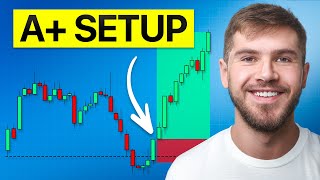

ICT Made Simple: 9-Minute Promise
41sThe creator sets a high-stakes promise to simplify complex ICT concepts in a short time, appealing to traders frustrated with overcomplicated information.
▶ Play Clip"The title promises to teach ICT concepts for profitability, and the video delivers a structured, simplified guide, though results depend on practice."
This video teaches a simplified list of ICT (Inner Circle Trader) concepts for profitable trading, covering liquidity, market structure, market maker models, the power of three, and entry models. The presenter shares personal experience and strategies to help traders avoid common pitfalls and achieve consistent profits.
The presenter promises to teach every essential ICT concept needed to become a profitable trader, emphasizing simplicity and consistency.
Liquidity is the foundation of ICT. Price moves towards liquidity where stop-losses are. Two types: external (swing highs) and internal (fair value gaps).
Market structure is a series of highs and lows. A break in structure requires displacement through a point with a fair value gap; otherwise, it's a structure shift.
MMM combines liquidity and market structure. Look for two or more consolidations on the way to a fair value gap, then a manipulation and displacement for entry.
The market moves from accumulation to stop runs to reversals. Used to make $41,000 in a day by waiting for lows to be run and then entering on a pattern back into range.
Without an entry model, it's just theory. Key levels must be tapped. Examples: inverted fair value gap and change in state of delivery (CSD).
Organize from key level to entry time frame. For weekly IRL or fair value gap, use 4-hour for MMM or entry models.
By mastering these simplified ICT concepts—liquidity, market structure, market maker models, power of three, and entry models—traders can achieve consistent profits without wasting years on complexity.
What are the two types of liquidity in ICT?
External liquidity (at swing highs) and internal liquidity (fair value gaps).
00:58
What defines a valid break in market structure?
Price must displace energetically through a point of structure, creating a fair value gap and closing beyond it.
02:30
What is a market structure shift?
When price goes from making lower highs and lower lows to making a true new higher high (or vice versa) with a fair value gap.
02:43
What pattern defines a market maker model (MMM)?
Two or more consolidations on the way to a fair value gap, followed by a manipulation and displacement creating a new lower time frame fair value gap.
03:48
What is the power of three?
The market moves from accumulation to stop runs to reversals.
05:22
What is an inverted fair value gap?
When the market closes a candle through a fair value gap, indicating a reversal.
07:06
What is a change in the state of delivery (CSD)?
A pattern where a down move with all down close candles is followed by an up close candle that engulfs the previous down move, signaling entry.
07:59
Liquidity as Foundation
Establishes the core principle that price moves toward liquidity, which is essential for understanding all ICT concepts.
00:43Structure Shift vs Break
Clarifies the critical difference between a break in structure (requires displacement) and a structure shift (change in trend direction), a common point of confusion.
02:43Market Maker Models Explained
Provides a clear, actionable pattern to anticipate stop hunts and enter trades with higher probability.
03:22Power of Three Example
Demonstrates a real-world application of the concept that led to a $41,000 profit, showing its potential.
05:09Inverted Fair Value Gap Entry
Introduces a specific entry model that confirms reversal, increasing trade confidence.
07:06[00:00] In the next nine minutes, I'm going to teach you every ICT concept that you need in order to become a profitable trader. I wasted years trying so hard to make ICT work, but everything changed whenever I put together a simple and effective list of all ICT concepts.
[00:14] And this is why I'm able to get consistent profits like this, this, and this. So if you're the kind of person who doesn't just want information, but you want implementation, well then you're in the right place. Now let's dive into the first concept.
[00:27] I want you guys to make a promise to me. If I simplify ICT so it finally clicks, can you commit to staying consistent and keeping things simple? If the answer is yes, then you're in the right place. So today I'm going to teach you everything from liquidity, market structure, market maker models, the power of three,
[00:41] how to put it all together into a profitable strategy, and which time frames to use. First on our list is liquidity, which is the foundation of all ICT concepts. You need to understand that price is always moving towards liquidity because this is where the most stop losses are,
[00:54] and the larger market participants are going to manipulate retail traders. That way they can take their stop losses and enter positions. There are two key types of liquidity. They have external, which is at swing highs, and we have internal, which is at fair value gaps.
[01:07] If you don't know what a fair value gap is, it's just when we have a big candle, which creates a gap between the candle after it's wick right here and the candle before it's wick. This area is a fair value gap. Always remember that price moves like a magnet from one liquidity pool to the next.
[01:21] So it goes from IRL to ERL. Once price has moved from a fair value gap to a swing point, if we create a new fair value gap, you expect the market to trade back into it. And once it does, we expect it to trade back to the next swing point.
[01:34] This is because markets are always moving from one point of liquidity to the next. As you can see, the market moves up to this high. And this pattern will continue because this is how the markets work. Liquidity is powerful, but understanding it is just the first step.
[01:48] In order to trade and execute using it, you need market structure. If you could spot a signal that tells you when the trend is over or when it's likely to continue, would that change the way that you trade? Simply put, market structure is just a series of highs and lows, but not all highs and lows are created equal.
[02:02] So we have to use a tool called manipulation and displacement to tell which we want to pay attention to. Now, first, I want you to take note of what classifies as a high or a low. In this example, I want you to pay attention to anything that has a higher low on either side of it, meaning we have a three candle formation.
[02:17] This candle is the lowest low We have higher lows on either side that is considered a low And then anything that has a lower high on either side of it well that candle is considered a high Now, what happens at highs and lows tells you everything that you need to know.
[02:32] So pay attention right here. What is happening to this low and this low? Notice we're not closing below it. Now, some people would say this is a break in structure, but they'd be wrong. Because when the market doesn't displace or push energetically through a point of structure, it's likely to reverse.
[02:46] Now, this becomes even higher probability with a market structure shift. All a market structure shift is, is if we go from making lower highs and lower lows to making a true new higher high. Now, what makes it a true and valid higher high?
[02:59] Well, we created a fair value gap and closed beyond this point of structure. You can use this with liquidity or key level taps, which we'll get to later in the video. Now, another trick that you can use with this is anytime that a low gets manipulated,
[03:11] meaning we don't push through energetically, and you get a reversal pattern, then you can target the high that failed to do its job because this high, well, its job was to push us down lower and it failed to make the lower low. So this gives us a nice target for trades.
[03:23] Now that you've learned liquidity and market structure, let's combine them into how you're going to make money using these concepts, which is market maker models. Now, if you've ever caught a trade that looked perfect and then you get stopped out and it just runs without you, then this is going to explain why and solve that mistake for good.
[03:37] Now, I can't stress the importance of this enough. I mean, just imagine for a second what it would feel like to finally anticipate these stop hunts instead of getting caught in them. We know that price goes from fair value gaps to swing points, but how do you actually make money on this move? On the higher time frame, we see
[03:50] price trade into a fair value gap and go straight to liquidity, but the lower time frame tells a different story. What you want to look for for a market maker model is just two or more consolidations on the way down to your fair value gap. Now, consolidation is just when price moves sideways.
[04:06] A lot of traders are going to be early here, meaning they're going to get stopped out when the market goes under these consolidations. What you want to see once the market comes into your higher time frame fair value gap is you want to see a manipulation and then a displacement,
[04:18] creating a new lower time frame fair value gap right here. And this is where you can enter the trade and then take profits at that higher time frame shrink point. So this helps you catch the move from this internal liquidity to external. Now, another trick is once this is activated,
[04:32] anytime you come under a low, if you're bullish, then you look at this like a likely manipulation. And if you see that there you can also catch trades later in the setup or trail up your stops to reduce risk So let take a look at this example We have a consolidation and then we have another consolidation here At the bottom we see a manipulation
[04:50] and the market displaces through a high. So at this time, you could look to go long using one of the entry models I'm gonna teach you later in the video. And anytime the market comes under a low, you expect this to be a fake out and the markets likely continue up to the upside.
[05:04] Now remember, it's a higher time frame fair value gap to a lower time frame market maker model. Now I remember whenever I started trading, I would look over my trades and wonder why some of them exploded and were great trades while others stalled and were very slow moving.
[05:16] And that is where the power of three comes in. And this is one of the most powerful concepts. This helped me make $41,000 in a single day just using the power of three. The power of three is very simple. It states that the market moves from accumulation to stop runs and reversals.
[05:30] Now if you look right here, we have this accumulation, aka a consolidation. So if we're bullish, what we expect is a stop run. And if we're bullish, we're going to expect lows to get run. So on this day, I waited for the lows to get ran.
[05:42] And then once the market gave a good entry pattern back into the range, I knew that I had a great opportunity for a long because the market is likely to have a big move. And that is exactly how I use the power of three to make that 41K.
[05:54] But in order to execute, I had to use an entry model. So let's hop right into those. I want to be brutally honest, guys. Without an entry model, everything else that you've learned today is just theory. All right, guys, so tell me. If I gave you a consistent entry setup right now, would you actually commit to staying
[06:07] consistent with it? I'm going to teach you three entry models. But before we get into that, you have to understand that if there is not a key level tapped, then you have no trade. This makes sure you're only taking high probability trades. So I want you to look at this example over here.
[06:20] Notice how we traded into this liquidity, but the market didn't displace, meaning it didn't create a fair value gap. So that alone gives us the idea that we're likely to trade back up to the high that failed
[06:32] to make a new low. Now, this can be looked at as a key level because it's that external range liquidity. And if we don't have a fair value gap in the middle of this range, that means that the market's likely to go from one area of liquidity to the next.
[06:44] Now, another thing to keep in mind here is not only that, but we're also trading inside of this bullish fair value gap. So if the market is turned into two key levels, at that time, you could then scale down to the lower time frames to look for a trade.
[06:58] So the first entry model we're going to talk about is the inverted fair value gap. Once the market has hit into a key level on your higher timeframe like we have here what you want to watch for is fair value gaps going down into the level Now notice right here we had a fair value gap What happened
[07:13] to the fair value gap? Well, the market closed the candle through it. That shows that the market is responding in a bullish way because this shouldn't happen if the market were bearish. And if the market is doing bullish things at these key levels, then we know there's a high probability the market
[07:28] is going to move up. So as soon as this happened, which was technically on this candle's closure, you could put a trade on and put your SOP at the lowest low that was made, and you would just target this area up here. Now, you want to make sure that you're getting at least a two-to-one risk-to-reward
[07:42] on any trade setup you have. And when you pair key levels and an entry model, you can have confidence that the trade is going to go in your direction, as we can see that it does right here. However, there were two other types of entry models that occurred. And the first we're going to talk about
[07:54] is a change in the state of delivery. So, let's just say you missed that trade entry. What you want to pay attention to for a change in the state of delivery, which is one of my favorite entry models is notice how we have this down move right here we have a down move
[08:06] where all these down close handles are in control they're engulfing the up close handles and even right here the up close handles do not engulf this down move but look at what happens next the market engulfs this down move that right
[08:19] there is a change in the state of delivery and at that time you could enter the trade now something else is happening right at this moment as well and that is a market structure shift because if you notice right here we took out this high and created a fair value gap through it so at that time you could
[08:34] enter the trade just based off that. So anytime you get these patterns or the inverted fair value gap you would just enter the market right when these patterns confirm, put your stop at the lowest low and then target the high that
[08:46] you got from the higher time frame. As I said before time frame alignment is super important so this list right here is organized from T level to the entry time frame meaning if you use a weekly IRL or a fair value gap or a weekly swing
[08:58] point you would then use the floor hour to look for your market maker models or entry models. Now take a screenshot of this that way you have it and can take consistent trades. Now you've got everything you need to start trading ICT like a pro without having to waste years like I did
[09:11] and more importantly without all of the over complicated fluff. Now if you want to learn my full trading system from front to back I'll leave a link down in the description. Also make sure to subscribe to the channel. I post tons of free value here on YouTube. I even have a two hour
[09:24] long free course. I'll leave that somewhere on the screen but thank you guys for watching and I'll see you in the next video
⚡ Saved you 0h 09m reading this? Transcribe any YouTube video for free — no signup needed.