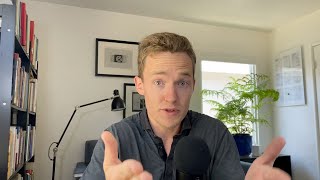

3Blue1Brown's Math Contest Announcement
45sDirect announcement from a popular math channel with a clear call to action, appealing to creators and math enthusiasts.
▶ Play Clip"The title promises a competition announcement and delivers that, plus a bonus of genuinely useful advice for creators."
Grant Sanderson (3Blue1Brown) announces the Summer of Math Exposition, a competition inviting creators to submit math explainers in any format. He shares personal advice on creating effective educational content, covering topic selection, explanation structure, and production quality, and introduces a companion podcast.
Invites anyone to submit a math explainer (video, blog post, or interactive) by August 22nd. Winners will be featured in a 3Blue1Brown video and on the website.
Entries must be new (not previously published) and must have a mathematical component, broadly defined. The goal is to encourage first-time creators.
Particularly interested in teachers with classroom experience and students with energy/time. Suggests partnerships between them to create and share effective explanations.
Announces a new podcast interviewing YouTubers and mathematicians to inspire and inform aspiring creators. The podcast is 20% about the competition and 80% general curiosity.
The most common advice is to just start. Success is not about prior experience but a generative spirit. Early videos are often embarrassing, but that's okay.
Be aware of concrete vs. abstract layers. Structure explanations from concrete to abstract, letting the learner's brain do the abstraction. Avoid building from the top floor down.
The topic and explanation determine the majority of value. Production quality is secondary. Spend more time on topic selection and workshopping ideas.
For beginners, choose esoteric, specific topics rather than broad ones. Niche topics build loyal audiences and are less competitive. Overestimate how niche things are.
Decide whether you're an expert explainer, a co-learner, a homework helper, or an inspirer. Be aware of which lane you're in and don't pattern-match incorrectly.
Let definitions be well-motivated, so learners feel they discovered them. Don't hand them down as starting points.
Sound quality is important, especially in the Zoom era. A good microphone is a respite for learners. (Acknowledges hypocrisy.)
Well-chosen illustrations/animations clarify math. Mentions Manim (and the Manim Community fork), smoothstep.io for shaders, and other libraries. Use programmatic animation only when it authentically reflects the math.
Discord space for community engagement. Encourages encouraging comments. Mentions the podcast with Alex Kontorovich and a second channel (Grant Sanderson).
The video is a call to action for the Summer of Math Exposition, combined with practical advice for creating math explainers. The core message is to start, focus on content, and structure explanations effectively.
What is the deadline for the Summer of Math Exposition?
August 22nd.
00:30
What are the constraints for entries in the competition?
Entries must be new (not previously published) and must have a mathematical component, broadly defined.
02:13
What is the most common advice for getting started with making math explainers?
Just start. Success is not about prior experience but a generative spirit.
06:12
What is the advice about layers of abstraction in explanations?
Structure explanations from concrete to abstract, letting the learner's brain do the abstraction.
08:37
What is the advice about topic selection for beginners?
Choose esoteric, specific topics rather than broad ones to build a loyal audience and avoid competition.
12:23
What are the four genres of explainers mentioned?
Expert explainer, co-learner, homework helper, and inspirer.
14:12
What is the advice about definitions in math explanations?
Let definitions be well-motivated so learners feel they discovered them, not handed down as starting points.
16:39
What is the advice about sound quality?
Sound quality matters, especially in the Zoom era; a good microphone is a respite for learners.
18:05
What is the advice about using programmatic animations?
Use them only when they authentically reflect the math, not for flashiness.
19:30
Just Start
The core advice for aspiring creators, emphasizing action over preparation.
06:12Layers of Abstraction
A concrete technique for structuring explanations to improve learning.
08:37Content is King
Reinforces that topic selection outweighs production quality.
11:15Niche Topics Build Loyalty
Strategic advice for new creators to find an audience.
12:23Sound Quality Matters
Practical production advice that is often overlooked.
18:05[00:00] James Schloss, who some of you might recognize from the YouTube Also, now there's a 3b1b podcast, but more on that in just a moment.
[00:16] and we want to encourage more people to get started actually doing it. where essentially we're just inviting anyone who wants to to submit some kind
[00:30] of math explainer, whether that's a video or a blog post or an interactive to the link that's on screen now by August 22nd. Yes, I see you.
[00:49] Oh yes, that's very sweet. You're a very affectionate creature. Anyway, after August 22nd, we're going to have a selection process to choose
[01:02] some winners from among them, and then I'll feature them in a 3b1b video. videos and a list of links on the website somewhere to all the project submissions. like creating some custom gold plushie pie creatures or something like that.
[01:20] and hopefully get it out to a few more people. would be really good at doing this, would have some excellent explanation that would
[01:32] genuinely help a lot of people or show a topic that's not really covered very well You know, there's that back of your mind spot that says maybe one But you just never really got around to it.
[01:47] It seems like there's a lot of other things out there. And my hope is that by dangling the tiniest carrot that I can provide, just mentioning good work when it exists, then maybe that gets a couple more
[01:59] people over this hump who might otherwise not have made something and then actually So one of the very few constraints on entries for this It can't be a thing that you made a while ago and you're just submitting
[02:13] And the real spirit of this all is to encourage people who have never tried it before to get started in it somehow. but math in the broadest possible sense of the term.
[02:29] as long as it's got some mathy components to it. don't shy away from those formulas. algorithmic complexity or something mathematical to it,
[02:44] Other than that, the topic matter is completely up to you. but what you really feel aren't covered well online anywhere. Maybe you're a physics buff who is interested in the philosophical side of things,
[03:01] and you want to talk about it and whether that's an appropriate name, or just share with people what it is. Or maybe you're someone who's into information theory and things like that,
[03:15] some things about the distributions of primes, Kolmogorov complexity in the first place. if that's you, you should definitely consider submitting.
[03:31] ever covered or that's severely under covered online. Even if it's something that's very standard, and especially if it's something coming up with a better way to explain it, kind of thinking about what's
[03:45] that could also add a lot to the space. Say for example you've taught students about partial fraction decomposition and tutoring explaining it that makes it a little bit more memorable, you should definitely submit.
[04:01] identities that students run into that keeps them from very rote and instead sheds a light on how beautiful math can be and all that kind of thing. If that's you and you feel passionate about it, you should definitely submit that.
[04:16] One set of people who I'm particularly interested in for this competition boots-to-the-ground experience seeing people learn and seeing what actually works.
[04:28] Because I think there's a lot of outstanding explanations out there that stay whereas if just a little bit of effort was put into producing it or sharing it
[04:40] online in some way, those lessons might actually reach and benefit one to two orders And I get it, teachers are absurdly busy, they don't have time for extra things on the side, and it's kind of hard to know where to get started.
[04:53] So maybe one potential partnership here would be the teachers who have really good instincts for what works in education, and then a student who maybe has a lot of energy or desire to get started on YouTube or otherwise just has more free time on their hands,
[05:06] and pairing something together like that might actually make for a good partnership. I do know there's a lot of people who do want to get started with this, well I don't know where to get started, I want to make a video but I don't really have
[05:23] And I have a couple things to say for who feels like they're in that boat. I decided to start a podcast where for the first many conversations I'll
[05:40] be interviewing people who have some kind of experience in the space of So that could be other YouTubers, but it could also include mathematicians like this, and essentially have conversations which act to either inspire
[05:57] or otherwise inform anyone who might be getting started with this. After doing several of these interviews, one of the most useful pieces and unprofessional the setup for a lot of people is in the very beginning.
[06:12] And as a result, it should come as no surprise that one of the most common advice would you give to someone getting started with this is to just start. The things that differentiate the people who actually put stuff out there versus
[06:27] the ones who don't is not a matter of having a lot more experience with it beforehand. It's a matter of having a kind of generative spirit that just wants to make stuff. Because my, I say persona, but this is, you know,
[06:39] You're probably going to fail, but it's worth a try. I've always wanted to make YouTube videos. And they're like, no, no, but I need to buy a nice camera and I need to get a good set.
[06:53] There's always this temptation. And I just say, Sal, press record and start, see what happens. there are so many really embarrassing things about the early videos on this channel or
[07:10] I mean, the sound quality was pretty terrible for a long time is that's one big thing. Uh, I edited in iMovie for way longer than I care to admit. when it comes to cameras and actually filming things like this,
[07:28] Like right now, I'm just using a phone, which I guess is fine. just talking to a camera incredibly awkward. This is actually my second time recording this whole video because the first time
[07:43] I thought I had a phone, I thought I would be really clever and have some notes to like guide what I wanted to say and I'd put them on the monitor next to the camera. darting back and forth between the two without me consciously realizing it.
[07:58] But this isn't a self-effacing thing. you want to make, but you're a little self-conscious about how to start,
[08:10] Just dive right in. So many of us have no idea what we're doing when we begin. All that said, sometimes this just do it advice is a
[08:24] You say okay I'm gonna start, but then upon starting it tells you nothing. I do have a couple things that I might want to pass along that are specific
[08:37] The first one, and I do actually find this quite important, is when you're putting together the explanation, whatever form, whatever medium, whatever genre you choose, try to be aware of the layers of abstraction that are
[08:50] So like if you're teaching a young child about fractions and there's two different layers of abstraction that that expression lives in. There's one where you have a very concrete example of two-thirds of something,
[09:03] and trying to get a sense of what that means. And then there's the symbols, and a big part of the lesson at play here rules that we apply to the symbols make sense in light of the concrete case.
[09:19] than actually trying to reason about you know two-thirds of a cake plus one-fifth of a If you're teaching a calculus class and you're talking about optimizing functions,
[09:32] you know there's the idea of a function as a very abstract thing that could be And then there's lots of specific examples or maybe specific cases where they come up like a function defining the profit of a company and that's the thing you want to
[09:47] I made a whole video about group theory where in the middle I went on for a while about the difference between thinking of group actions as and why there exists the two and what the benefits and trade-offs are.
[10:01] But my point in this first piece of advice is not merely to address the layers of abstraction, you don't even have to, but if you're clear in your own head try very hard to structure your explanation to go from the concrete to the abstract.
[10:14] the natural inclination is to go the other way around. I find myself doing this in pretty much any first draft of a script that I have. You start with the abstract idea, you put the examples later,
[10:30] but I really do think that in the case of learning first trying to populate the between them and letting their brain do the abstraction, see that similar pattern between things such that when you bring in that higher
[10:44] symbolic manipulations with particular rules. That once that happens you're articulating something in the brain of the learner that was already sitting there in the first place, it wasn't just handed to them in a vacuum.
[10:58] Otherwise it's a little bit like trying to build a building from the top floor down. As a more generic idea, piece of advice number two would be keep in the very that the thing that you're explaining, the choice of the topic or how you're
[11:15] explaining it, determines the majority of the value and the quality of the All the things about production quality or you know how fancy the animations are or the lighting or whatever it is, all of that is secondary to making sure you've
[11:29] chosen an actually good topic and it's something that people would want to consume. Now that's so easy to nod along with and say like yes yes of course content is king, but the thing is you end up spending about one percent of your time if
[11:44] it and then like 99% of the time just carrying it out in some way and as So my encouragement to you would be spend more time
[11:57] So maybe workshop a couple different things by doing sample lessons with could and ask are they actually fresh, are they actually adding something to the space,
[12:10] Spending that extra little bit of time on the thing that determines the majority of the value is almost certainly worth it. And the third piece of advice which maybe plays into this a little bit is when you're
[12:23] beginning if you're starting something fresh and there's no presence online at this point, try to choose something much more esoteric and specific than you might be inclined I've seen a lot of people who want to get started on YouTube for example and the way
[12:36] that they try to go about it is to choose a topic that will appeal to the most people. want a lot of subscribers and things like that. First of all it's a much more competitive space if you're going to
[12:48] So if you go in saying I'm going to do a series about quantum mechanics, stand out for some reason and you don't have a foothold at that point.
[13:01] But another one is that the very specific and niche things build a much more loyal audience in that beginning because you're offering something which they could not find anywhere else and sometimes to be the consumer of something very specific is such a
[13:13] good feeling that you want to pay it back and you find yourself rooting for the creator. So you're more likely to get very good faith feedback, just a warmer community. And also oftentimes we tend to overestimate just how niche things are.
[13:28] some very esoteric bit of engineering actually appeals to hundreds of thousands or millions of people, especially if you yourself are enthusiastic about it and So by doing that you find yourself often with a topic that actually does have
[13:44] a broader appeal but it's not competitive with the things that everyone thinks will have broader appeal and you potentially get that audience loyalty. I did not think it would be a thing that a lot of people would want to watch.
[13:59] for, that was kind of the original conception that I wavered from a little bit afterward. The fourth piece of advice is to pick a genre that your piece falls into.
[14:12] of them wanted to get started making online explainers and they asked whether it was ethical for someone who's just barely learning a topic, just starting to learn it, to also make explainers of it online.
[14:26] they don't know the broader context, and there's so many things I like It's already demonstrating a kind of care and consideration for factual accuracy and doing right by the student that more people who are making online explanations should
[14:41] So that very fact suggested to me that this person probably should be doing it. there are different types of explainers out there. they're kind of standing on top of a hill and explaining the way that things are,
[14:58] You should probably know 10 times as much about the topic as what you're actually actually leads or you're being cognizant of whatever nuances there are, things like that.
[15:13] where the person who is learning the topic kind of just admits that fact or is open about the fact that they're just starting with it and taking the viewer
[15:25] And many times that's actually a better piece of content, this inbuilt piece of humility that a lot of online content lacks. There's the worked example where you're explicitly helping people with homework,
[15:41] there's the try to find an interesting demo and serve mainly to inspire, and basically just before you get started, decide which one of those you feel like you're the best fit for, and then when you're looking at other pieces out there,
[15:53] other explainers and trying to index off of what seems to work, what doesn't, be aware of which ones are in the lane that you intend to be in and don't necessarily You know, one of the mistakes I think I made with my very first video is I
[16:07] the internet, that sort of works, that's like a satisfying thing to consume. Because there are videos out there that are this fire hose of information, but what I didn't really appreciate was the fact that math should fall into a completely
[16:26] It is not fun at all to have math come at you at this fire hose rate, and basically I was just pattern matching off of things that I should not have been As point number five, or I don't actually know where I am at the list at this point,
[16:39] especially in the case of math, if you're bringing up definitions of things, Try to let them be well motivated. Try to make it something that the learner feels like they discovered themselves,
[16:54] because too often we hand these things down on high as the starting point, So all of that is just on the content side, you know, the sound and the video and all that.
[17:09] And like I said, content is king, that definitely determines the majority of quality, least a little bit of production quality, I think. So I was watching this lecture the other day by Tadashi Tokieda on just a really
[17:26] interesting set of ideas about applying physical intuition to solving math problems. And he had in there maybe seven or eight outstanding little arguments that each one of which could have been just a beautiful video in its own right.
[17:38] and the sound quality is everything that you assume from Zoom, And I do think, you know, it's great that it's online and a lot of people will be
[17:52] the actual set of ideas, was instead, say, a Numberphile video, And more than that, it would be a more pleasant experience for those who are consuming it.
[18:05] So I'll just end with a couple pieces of advice on that front. The first one, which again I acknowledge is very hypocritical here, is sound quality actually matters, especially in an era of Zoom where we are all
[18:18] inundated with this sort of sub-optimal version of the voices of all the people The learner will appreciate a respite from all that with something that actually comes from a good microphone that you learned how to use at some point.
[18:33] On the side of visuals, you know, I'm obviously a big believer in the idea that a well-chosen illustration or an animation can really make a mathematical idea a lot more clear and be an example of that concretization and kind of going from the lower
[18:47] layer of abstraction on upward by just showing exactly what it is on screen in some way. I sort of wrote this custom library called Manum to do that. And last year, actually, a group of people that called themselves the Manum
[19:02] Community created a fork of it with the hope of making it a lot more user-friendly. There's a lot better documentation, it's better tested, just all around friendlier to use. actually a lot easier than it used to be.
[19:16] There's some other libraries that I've seen that mention Manum as an inspiration, you know, one that's written in Julia or one in Haskell. I think where programmatic animations make sense for math is if you're
[19:30] somehow leveraging loops or conditionals or layers of abstraction. the visuals authentically reflect the math that you're describing, if the code is essentially just that math as it's illustrating things.
[19:45] And a lot of times people use Manum or other programmatic animations for things that do not need to be programmatic, that you could have easily done in something like Keynote or which add flashiness for flashiness's sake that doesn't actually aid with the explanation.
[19:59] animation software is the channel Boerbach Tree. So he really has these friendly handwritten kind of whiteboard lectures, but uses animation to help those whiteboards come alive.
[20:13] And I think it's a really nice way to make this friendly hand-drawn environment this is precisely what the math would draw when you're illustrating a surface or
[20:26] Also, I see a lot of people use Manum to manipulate But if you look at other videos, things like Mathologer, And again, content is king.
[20:39] The first thing is to focus on what are you actually describing and then just showing it, You don't need anything extremely precise or that I recognize a kind of hypocrisy here, but you know,
[20:54] I have walked myself into a certain corner with the style that I want for the channel. another tool which has popped up recently is something called smoothstep.io,
[21:06] which I think is a really nice way for people to get started with shaders, And it's written by this guy, Matt Henderson, who has a Twitter most beautiful math illustrations that I think I've ever seen.
[21:22] So experimenting with software like that is another rabbit hole that you could go down something that you've always wanted to get started with, Now, if you have some pieces of advice that you want to pass along to people,
[21:38] or if you want to just engage with the community in some way to see what other people talk about software, anything like that, we did set up a Discord space associated with There's a link in the description.
[21:53] Just be mindful if you do contribute to that community that you want your comments to be encouraging to others who are getting started and productive to that goal. And, you know, try to avoid anything that is the opposite of that goal.
[22:08] some inspirational or informative things will be the podcast. It's with the mathematician Alex Kontorovich, who some of you may recognize
[22:20] from the video he did with Quanta or the video he did with Veritasium on Pi Day. And there's just a really interesting lineup of people here. You can get it wherever you get your podcasts.
[22:33] a second channel that is just my name, Grant Sanderson. that's not really animated math, but other stuff, So keep an eye on that channel if that's something that you're interested in.
[22:50] was something that was very much tied to this competition and the idea a lot of the times I would find myself with an interesting guest and I just have a whole bunch of other things that I want to ask them that have
[23:05] So maybe the better framing here is to say that the podcast is 20% about that goal. style podcast vibe where you have interesting guests.
[23:17] And I just want to ask things that I'm genuinely curious to know about them. And then I get to grad school and I'm moving into my office in grad school and I have my, all my old papers and I just started, you know, for fun leafing through them.
[23:30] I don't know if you ever look back at the stuff you wrote freshman year. Oh my God, this is garbage. You can't have the epsilons and deltas be backwards.
[23:43] I would have taken off, you know, nine or something like Ramy was so nice. So if lean was around back then, boy, would it have straightened me out. It's actually very inspiring to me because I feel one of the common pieces
[23:56] of advice that I'll give to someone if they like want to learn more math.

⚡ Saved you 0h 24m reading this? Transcribe any YouTube video for free — no signup needed.