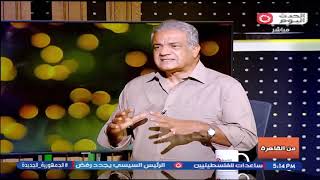

Egypt's National Security Circles REVEALED
55sExpert analysis of shifting geopolitical priorities sparks debate on Egypt's role in Africa and the Arab world.
▶ Play Clip"Title accurately reflects the interview format and guest; content delivers exactly what is promised."
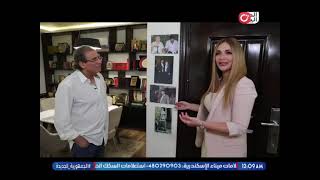
In this episode of 'From Cairo,' host Ayman Abdel Latif interviews Dr. Saad El-Zant, Director of the Center for Strategic Studies, about Egypt's evolving national security circles, the strategic importance of Africa, and the complex geopolitical challenges facing the Arab world. The discussion covers Egypt's re-engineering of its foreign policy priorities under President El-Sisi, the persistent Nile water issue with Ethiopia, and the broader regional conflicts involving Iran, Israel, and the United States.
Egypt's traditional national security circles included the Arab, European, American, and African circles, but priorities have shifted over time.
Under Nasser and Sadat, Africa and the Arab world were prioritized, but after 1973, the focus shifted to America and Europe, with Africa becoming nearly nonexistent in national security.
Mubarak, with Boutros Ghali and Osama El-Baz, revived Africa as a priority, building on Nasser's legacy of support for liberation movements and projects.
President El-Sisi made Africa a top priority, re-engineering security circles to include the Arab, African, and Eastern Mediterranean circles.
Egypt developed strong economic and military ties with Greece and Cyprus, creating a vital Eastern Mediterranean circle, especially regarding gas processing and Libyan issues.
The biggest challenge in Africa is Ethiopia and the Nile water issue, with Egypt's share of 55 billion cubic meters under threat since the late Mubarak era.
Egypt focuses on the eastern Horn of Africa (Ethiopia, Eritrea, Somalia, Somaliland) due to the strategic Bab el-Mandeb Strait and Israeli involvement.
Egypt gifted Tanzania a dam, a huge project that strengthens bilateral ties and showcases Egypt's soft power in Africa.
The Trump administration uses crisis management for its own benefit, creating and exploiting crises economically, politically, and militarily.
Britain historically created terrorist organizations like the Muslim Brotherhood, and America manages conflicts for its own interests, not resolution.
The US used Iran to pressure Gulf states for money, but now that role is ending, with attacks on Hezbollah, Houthis, and the fall of Assad.
Israel, backed by Trump, desires to dominate the region, and the Arab world has surrendered its will and wealth.
Trump's strategy declares Latin America off-limits to rivals, and the US will seize oil, mineral, and rare earth resources globally, including control of straits.
Egypt proposed an Arab Army in 2015 as a strategic necessity, but the idea was abandoned due to lack of will among Gulf states.
The region faces a determined effort to dissolve geography and falsify history, with Syria, Lebanon, Iraq, Yemen, and Sudan being reshaped.
The Arab world is on the brink of an identity crisis, with America and Israel pushing for expansion, but 7 million Jews cannot rule 350-400 million Arabs without surrender.
Egypt has strong economic foundations (tourism, industry, water revolution) but suffers from poor management and corruption in institutions.
Morocco receives twice as many tourists as Egypt despite fewer attractions, highlighting Egypt's decline in soft power and service quality.
President El-Sisi's directives to rebuild the Egyptian individual through moral, national, and professional values have not been effectively implemented.
Egypt needs a revolution in management, not politics, with a mechanism to discover and train competent leaders for all institutions.
The solution is a strategic plan to rebuild the Egyptian individual through education, media, and moral values, with oversight and accountability.
Egypt remains a resilient nation with strong foundations, but it must confront internal management issues and rebuild its soft power to navigate regional threats. The country's strategic importance and military strength provide a buffer, but long-term stability requires a comprehensive overhaul of education, media, and governance.
What are Egypt's traditional national security circles?
Arab, European, American, and African circles.
00:37
Under which president did Africa become a top priority again?
President El-Sisi.
03:03
What is Egypt's share of Nile water in billion cubic meters?
55 billion cubic meters.
06:05
Which two countries helped Egypt build the Eastern Mediterranean circle?
Greece and Cyprus.
04:05
What major project did Egypt gift to Tanzania?
A dam.
07:55
According to Dr. El-Zant, what is America's approach to conflicts?
America manages conflicts for its own benefit, not resolution.
10:43
What did Trump's strategy declare about Latin America?
Latin America is off-limits to both Russia and China.
17:34
What was the proposed Arab Army idea and when was it proposed?
A unified Arab military force proposed by Egypt in 2015.
18:46
How many Jews and Arabs are in the region according to the discussion?
7 million Jews and 350-400 million Arabs.
25:08
What three integrated systems are needed to rebuild the Egyptian individual?
Moral values, national values, and professional values.
32:04
Which country receives twice as many tourists as Egypt despite fewer attractions?
Morocco.
27:44
What did the British do with Sheikh Khazal al-Kaabi in 1925?
Executed him and handed his region to the Shah of Iran.
23:59
What three places are mentioned in the Quran according to the guest?
Mecca, Egypt, and Paradise.
44:39
El-Sisi's Africa Priority
Highlights a major shift in Egyptian foreign policy under the current president.
03:03America as Conflict Manager
Provides a critical perspective on US foreign policy in the region.
10:43Trump's Resource Strategy
Reveals a key strategic document outlining US intentions to seize resources globally.
17:34Demographic Imbalance
Emphasizes the numerical advantage of Arabs over Jews, questioning Israel's ability to dominate.
25:08Rebuilding the Egyptian Individual
Outlines a framework for national development through moral, national, and professional values.
32:04[00:03] to a new episode of our program "From Cairo." We hope you are all well.
[00:20] Professor Dr. Saad El-Zant, Director of the Center for Strategic Studies. Welcome, sir. Welcome, honor. First of all, we will be discussing the most critical issue: the circles of Yes, Israel—where does Africa fit in? And where do the
[00:37] Gulf states fit in? Let's look at the reality. Let's take a step back. The traditional circles of Egyptian national security were a well-known group: the Arab circle, the
[00:50] well-known group: the Arab circle, the European circle, the American circle, and the European circle, the American circle, and the African circle. They had some influence. However, African circle. They had some influence. However, some developments led to a kind of re-
[01:04] some developments led to a kind of re- engineering of priorities for these circles, especially Africa. The African and Arab circles were generally given priority, particularly during the
[01:19] eras of Nasser and Sadat. May God have mercy on him. I mentioned Africa a and Sadat. May God have mercy on him. I mentioned Africa a little because, if we remember, after 1973, we started little because, if we remember, after 1973, we started working on peace agreements with Israel, and
[01:33] America was the sponsor. President Sadat, may God have mercy on him, was certain that America game. Therefore, the Therefore, the priority was entirely with America, and a little with
[01:47] Europe. Our relations with the Arabs weren't all good, but they were mostly a second or third priority. Africa was practically nonexistent in terms of
[02:00] national security. When Mubarak, may God have mercy on him, came to power, he understood the situation and started When Mubarak, may God have mercy on him, came to power, he understood the situation and started working on it, especially since he had some work with Dr. Boutros Ghali, may God have mercy on him, and Dr. Osama El- Baz, may God have mercy on him. These two were the
[02:15] architects of foreign relations. Dr. Boutros Ghali was very focused on Africa and had a belief—a correct belief—that Africa is like us and is our support. The Arabs sometimes come and go, but
[02:33] we did very good work in Africa during the time of President Nasser, may God have mercy on him. So he wanted to build on that work. Egypt has truly done a lot in Africa. All projects and a lot of work, and the important liberation movements, the
[02:48] projects and a lot of work, and the important liberation movements, the great Dr. El-Baz and Dr. Bassam Ghali worked on it, and then in 1995, the turning point was that we had in 1995, the turning point was that we had
[03:03] until President El-Sisi came along. President El-Sisi had a very good awareness that Africa is a top good awareness that Africa is a top priority for us. 52 countries out of about 190 or 198 countries out of 200, that's not a small number, and you
[03:17] had almost all of Africa. If you joined them, they would support you because Africa, even if you distanced yourself for a while, we still see that Serras was in Tanzania and his visit is still ongoing. He has visited several
[03:35] Egypt. So, the important thing is that with President El-Sisi, the circles were re- engineered, and the Arab circle became important for us, the African circle became important important for us, the African circle became important for us, and he truly deserves credit for establishing There's a
[03:49] Eastern Mediterranean circle. Yes, and back then, we said in 2015 and 2016, and we said in 2011 that it was an important circle because, you know, there was a problem. They believed that what happened in
[04:05] what happened in 2013 was a revolution against democracy and a Okay, you needed someone to build a good bridge or channel of communication between you and the Europeans. So, in reality, Greece and Euboea played this role very well for you, and
[04:21] this circle was one of the most important circles, and we developed it. In reality, we developed it into a kind of strong economic relationship. You know, in the gas complex that was built for
[04:34] You know, in the gas complex that was built for you, or the gas processing center you, or the gas processing center that was built for you. And even when a problem arose with the Turks, if we remember, regarding the Libyan issue, the two countries, especially Greece, said, "We are with Egypt, and
[04:49] two countries, especially Greece, said, "We are with Egypt, and if anything happens, anything military, we are with Okay, what does that mean? You succeeded in creating the Eastern Mediterranean circle and benefited from it very well. Let's return to the African circle, since it's practically the
[05:04] Let's return to the African circle, since it's practically the main focus for us. The president, if Egypt there. chose Egypt as a non-permanent member of the Security Council for two years. So, you worked with
[05:20] for two years. So, you worked with Africa, meaning you focused on some important circles work on in the future. good work, but you have challenges within Africa. The biggest challenge was Ethiopia and the Nile issue,
[05:37] biggest challenge was Ethiopia and the Nile issue, because it started a long time ago. You know, towards the end of the era of the late because it started a long time ago. You know, towards the end of the era of the late President, may God have mercy on him, the problem began. They started working, and then you had to make the March 2015 agreement to
[05:50] contain it, because at that time they were collecting signatures from the because at that time they were collecting signatures from the Nile Basin countries to exclude Egypt or redistribute
[06:05] or redistribute the shares again. Your share is 55 billion cubic meters. This has been going on for years. It was a long process, and agreements governed the process from 1915.
[06:18] stopped. There was one remaining country. You were able to stop this wave, which was truly wrong for Egypt and
[06:30] Africa. There are always wise people, always wise people, so they stopped the matter. What are you doing now? To avoid going on too long, you did a very good job today because the most important part for you
[06:42] in Africa today is the eastern Horn of Africa. You have what is in Ethiopia, in Eritrea, in Somalia, and the newly invented Somaliland. Bab el- Mandeb is an important entry point for you. The
[06:59] Mandeb is an important entry point for you. The Bab el-Mandeb Strait is important. This region, by the way, has had Bab el-Mandeb Strait is important. This region, by the way, has had
[07:13] nuclear base, by the way. So, you had to decipher the code in this region, and you did a very good job with Djibouti. You did work with
[07:25] Somalia because Israel started to get involved in the region. This challenge or threat This challenge or threat from Ethiopia regarding the water issue still exists, and from Ethiopia regarding the water issue still exists, and you're working with a mindset that's far from ideal. She was referring to
[07:40] you're working with a mindset that's far from ideal. She was referring to the Ministry of the President in Tanzania. Tanzania is governed by a the Ministry of the President in Tanzania. Tanzania is governed by a very educated president, Dr. Samia, who is very educated president, Dr. Samia, who is also highly educated. She also has a special relationship with Egypt and the president.
[07:55] You know, he's good at it. You know, there are people who can deal with things openly, honestly, and sincerely, so the other person believes you and works with you on the same level.
[08:07] works with you on the same level. You did something in Tanzania; you gave them a You did something in Tanzania; you gave them a huge gift, which is the dam. This was a dream for Tanzania. Yes, Tanzania is an old and large country, but economically, there are
[08:23] projects that are much larger than the country's capabilities. You got involved and worked on it. This was the last thing with Africa. But in any case, the bottom line is that Africa case, the bottom line is that Africa will always be Egypt's support and backbone, and the extension of
[08:37] will always be Egypt's support and backbone, and the extension of life and existence is in life and existence is in the Nile. This will remain not just a challenge, it has become more than just a challenge. The threat phase, and I believe the president is handling this matter with a degree of wisdom.
[08:53] president is handling this matter with a degree of wisdom. If we move to a completely different topic, which is
[09:06] I need the appropriate term—then regarding the Trump administration, what are they doing? First, look at the technical aspects. Since First, look at the technical aspects. Since the man is a specialist in crisis management,
[09:18] that's fine. And management through crises, okay, there's a management through crises, okay, there's a happen suddenly. By the way, the man yesterday asked for $100 billion. He's
[09:32] the man yesterday asked for $100 billion. He's taken trillions before; he's taken huge sums. Look, let me tell you something: since you were forced to surrender the will—and the will was n't surrendered today, it's been surrendered for many years—anyone who reads the history of the
[09:49] many years—anyone who reads the history of the region's relationship with the West will realize that Britain remained dominant over most of the region and only
[10:01] dominant over most of the region and only withdrew after... I handed it over, or rather, I handed it over to the Muslim Brotherhood organization. And by the way, the Muslim Brotherhood isn't just in Egypt; it's in several countries. They created it, and I'm certain that Britain created all the
[10:15] terrorist organizations in the region. But the one who manages and invests in these organizations is America. Crisis management means that if you have a Crisis management means that if you have a problem that you neglected, it grew until it reached a crisis. There are
[10:29] problem that you neglected, it grew until it reached a crisis. There are people who resolve crises; it's easy to resolve any crisis. But managing a crisis means that you But managing a crisis means that you direct its course to your advantage,
[10:43] direct its course to your advantage, like conflict resolution and conflict management. America has never been a conflict resolution center, nor has like conflict resolution and conflict management. America has never been a conflict resolution center, nor has Britain. It Britain. It manages conflicts for its own benefit or for the benefit of its partners. The
[10:55] SDF is part of its tools. Crisis management, on the other hand, means that you create a crisis, and this happens a lot in the world so that you can also exploit this crisis for your own benefit, whether it's economic,
[11:10] political, or even military interests. What's happening now in the region is truly a very now in the region is truly a very complex matter. We said a long time ago that there were complex matter. We said a long time ago that there were things planted in the region,
[11:23] things planted in the region, including the Muslim Brotherhood organization, and this is the organization. including the Muslim Brotherhood organization, and this is the organization. Historically, some say it started in 2929, others say 36, but it began much earlier, in 1793.
[11:37] 1793. The British had a specific The British had a specific purpose behind this organization, as you mentioned, to use the "divide and conquer" strategy. This was part of their strategy. The world today
[11:51] world today criticizes Iran for its alleged influence criticizes Iran for its alleged influence in Lebanon, Iraq, Yemen, and in Lebanon, Iraq, Yemen, and Syria. Iran wasn't the first country to use such influence;
[12:04] Britain was the first to implement this strategy—the strategy of cultivating influence. strategy of cultivating influence. Britain Britain handed over the region to America after 45 years, following World War II.
[12:19] America then began its work, and that's how we reached our current situation. To avoid being too lengthy for the viewers, although historical context is important, what's important, what's
[12:37] brought the entire region to the brink of collapse. We have a war that has been going on for years, not months. the Americans, I think, and others, worked with the Persians or Iran as a
[12:55] worked with the Persians or Iran as a means of pressuring the Gulf states to extract money—a scarecrow to use as leverage. Yes, until this role ended, or nearly ended, what did they do? They started attacking its arms, breaking them. This is what happened recently. We saw the
[13:12] first attack on Hezbollah, then the Houthis, and in Syria, with then the Houthis, and in Syria, with the help of some countries, including Arab states, they got rid of the help of some countries, including Arab states, they got rid of Bashar al-Assad and the Alawite regime. Today,
[13:26] when you look, you find that these arms, even if they were aborted or broken, still have a if they were aborted or broken, still have a role to play. The core, meaning even if the
[13:39] role to play. The core, meaning even if the limbs are being cut, the core, which is limbs are being cut, the core, which is Iran, remains.
[13:52] conflict in its own interest. Now, we've been in a major war for almost a year. been in a major war for almost a year. Many weapons are being bought and tested; the old are
[14:05] Many weapons are being bought and tested; the old are being used, and the new are being tested in the region. The issue is that until last year, people were saying that there was A major war is brewing and Iran. Anyone who reads history knows that a
[14:24] Iran. Anyone who reads history knows that a real conflict between the Persians and real conflict between the Persians and the Jews was unthinkable due to their historical background, dating back to Khazan Nasr and the long story of the Babylonian civilization and the great captivity. It seemed
[14:37] impossible. But today, Israel has the desire to dominate the region, especially the desire to dominate the region, especially with an American president who is practically
[14:51] supported in everything. He's forced to support everything, I swear. Look, the you recall, and there's much more. But these were
[15:04] But these were individual efforts to pressure specific individuals. This was a large-scale effort to pressure not just him, but
[15:16] all the influential figures in the American political establishment. They have a president who is truly audacious. American political establishment. They have a president who is truly audacious. Trump has an unusual boldness, but with the mindset of a Trump has an unusual boldness, but with the mindset of a
[15:31] diplomacy. At the same time, you have an Arab region that has surrendered its will and its wealth, meaning it's ready to surrender. The will was there from the beginning, and today, as
[15:43] surrender. The will was there from the beginning, and today, as we see, last year in May, approximately 4 trillion dollars were spent, and a major aircraft and many other things were involved. The bases
[15:57] that are located in the Gulf region are the region's weak point today. You established region's weak point today. You established bases at my expense, so that in the end, these bases become targets for America and Israel, and you are targeted by these
[16:10] bases. Despite the fact that the American navy and other things are far from the Gulf, you could strike them. You spent a few months, or something, and there were
[16:22] missiles in Israel. Why didn't the American navy strike them? The American navy is present in Why didn't the American navy strike them? The American navy is present in the Strait, at the entrances to the Strait. So, in the Strait, at the entrances to the Strait. So, in reality, what is happening in the region is happening. Why is it being
[16:37] used against Arab countries now, and not against Israel? I mean, now, the war is between Israel and America against Iran. What is it now? Why is the Gulf being attacked? important point: Kuwait is in a mess right now. And it's
[16:50] not just Kuwait; Bahrain, Jordan, and Qatar are all in the same boat. Almost all the Gulf countries are facing a Qatar are all in the same boat. Almost all the Gulf countries are facing a
[17:02] major problem. They're really in a huge predicament. But I want to draw attention to an important point: we always focus on the symptoms and don't pay attention to the disease. What's yes, ultimately has objectives. There are objectives for America, objectives for Israel, and objectives shared
[17:17] by both. But we haven't noticed that on November 23rd of last year, President Trump, or rather the American administration, announced its strategies for the coming period. What did Trump say in his strategy? He said the Americas are our
[17:34] own affair. Latin America is off-limits to both Russia and China. Number one, number two: Number one, number two: all the regions with oil,
[17:48] mineral, or rare earth resources, we will start working on them, even if we have to take them by force. There are five or six straits in the world, and we will work on them. We will work on all international trade routes.
[18:03] What does that mean? It means things were clear from the beginning. You couldn't stand the Middle East. Of course, it started with Venezuela from the beginning of January,
[18:16] but you know what they're after. What did you do? What did you do to achieve this? What was your vision? What scenarios did you anticipate and work on? I don't think anyone worked and work on? I don't think anyone worked on all the scenarios. We paid for
[18:31] these bases and funded their establishment and increased their combat efficiency, and now they've become and funded their establishment and increased their combat efficiency, and now they've become your weakness. You paid a lot of money. The weakness is that
[18:46] in 2015, the political leadership, the president, actually proposed establishing the Arab Army. This was like Noah's Ark for this era, future strategic reading.
[18:59] Yes, and then they went astray and stopped, and then they came back again. They said, "Okay, we'll work on it," and we saw the president's appearance at the conference. The summit was attended by Egyptians themselves, and they were all upset with him. They said the president was angry. Of course, because
[19:11] you're part of it, after all. On the contrary, you're the one who carries the burden of the Arab region. When people, carries the burden of the Arab region. When people, or the general public in the Gulf, understood that Egypt had lagged behind the Gulf when the war started, we saw them complaining about us in all the
[19:28] media. And then there were those who came out, like Al-Baghli and others, I do n't know their names, Al-Baghli and Al-Mubarak, and they started writing that Egypt had abandoned us and what we had paid. The truth is, the situation was shameful,
[19:40] even though you acted correctly. The president, not just now, the president is still in the war zone. He goes out in his car and comes back. No one dares president, not just now, the president is still in the war zone. He goes out in his car and comes back. No one dares
[19:52] his visit. Both sides stop firing. Look, Doctor, you have your respect, and Egypt has its weight that no one can diminish. But what I'm talking about is that our brothers
[20:05] in the Gulf, not at the official level, I'm talking about the media. The book, and we saw the truth, many insults were directed at Egypt, claiming that Egypt didn't do what was supposed to be done. No, we did what was supposed to be done, but what we didn't do was fight for you, and that's
[20:23] unacceptable. You want support? I'll support you, like what happened in the Gulf War—two wars, not one. happened in the Gulf War—two wars, not one. But for me to fight in your place? That's a different matter, especially since you spent 4 or 5 trillion dollars every day. We're not saying Egypt wants to,
[20:41] day. We're not saying Egypt wants to, but you can build a very strong Arab army if you have the will. You have the wealth, but the will is lacking. Your will has been surrendered for far. Right? So,
[20:55] back to our topic, what's happening in the Gulf today. I'm certain that if we look at the roots of today. I'm certain that if we look at the roots of the problem, it won't end easily. The the problem, it won't end easily. The political situation is extremely complex, even if the
[21:10] political situation is extremely complex, even if the results are clear. I see a determination to dissolve the region's geography and a determination to falsify the region's history. The world is going crazy, no, I'm saying the right thing. Where is
[21:24] Syria today? Where is Lebanon today? Where is Iraq today? Where is Yemen? What does this mean? What does it mean for Sudan? What does it mean? It means that geography is
[21:37] Sudan? What does it mean? It means that geography is shifting, not just shifting, but shifting by the dissolution of Israel. They took a large part of Syria. It wasn't just the atmosphere, no, they took another part. Some of our no, they took another part. Some of our Syrian brothers are announcing their joining
[21:51] Israel and accepting that Israel will manage these areas. Some of the people who are near the borders. So today you have a problem. The truth is, if the Arabs don't pay attention, and
[22:03] we have warned about this more than once, if the Arabs don't pay attention to what is happening in the region in terms of the dissolution of Arabs don't pay attention to what is happening in the region in terms of the dissolution of geography and the falsification of history, then you
[22:15] geography and the falsification of history, then you will actually solve it later, maybe you won't be able to solve it. will actually solve it later, maybe you won't be able to solve it. Egypt is the spearhead of the Arab will, but as you said a little while ago when we saw the president sitting lost in thought and not happy,
[22:32] president sitting lost in thought and not happy, why is that? Because I see that the path here, and the Arabs' path here, was all focused on America, and they put Europe as a sister to America. At that moment, you saw what Spain was doing,
[22:44] look at what Italy was doing, what Portugal did. There are many European countries, France took a stance. So today, the problem for you as Arabs is not with the Jews or Israel, nor with the
[22:58] Persians. By the way, a year or two ago, there was a kind of Iranian-Gulf rapprochement, if we remember, and Iranian-Gulf rapprochement, if we remember, and people understood that this was a great or good option. No, it was Omar
[23:14] people understood that this was a great or good option. No, it was Omar Ibn Al-Khattab, not anyone else, when he entered, when he entered, when he triumphed over the Persians, he stood on the mountains of the Gross, which were called the Mountains of Fire, and he stood and said, "O God, make these
[23:27] mountains, the Mountains of Fire, a dividing line between the Arabs and the Persians, for his nation does not forget revenge." Perhaps some don't Persians, for his nation does not forget revenge." Perhaps some don't see, they don't know that the western part of which is
[23:44] Qom, Qom, Qom, and the scientific note is nothing but Qom, and this talk is Ahwaz, Ahwaz, Ahwaz. nothing but Qom, and this talk is Ahwaz, Ahwaz, Ahwaz. until the year 25. The
[23:59] British executed Sheikh Khazal al-Kaabi, who was the king of this region and handed it over to the Shah of Iran in 25 so that it would become a state, part of the new Iranian state. I mean, there is a blood
[24:11] Persians that will not end. That's one point. The second point is that there is the opposite of the falcon. There is something of value between the Persians and the Jews that will not be forgotten. We must pay attention
[24:24] to this when we are assessing the situation. Yes, the assessing the situation. Yes, the new changes and interests change, but there are we must pay attention to. The point of what I am saying, Dr. Ayman, is that the region is on the brink of identity. We
[24:40] may be swept into something much bigger, and America is determined to continue the story because it has an interest, and determined to continue the story because it has an interest, and Israel is pressuring the
[24:53] American administration with what is permissible and impermissible, or what is allowed and impermissible, on the American administration. Why? Because it has a goal, it is expanding, but we must pay attention to something: 7 million pay attention to something: 7 million Jews cannot rule a region with
[25:08] Jews cannot rule a region with more than 350 or 400 million Arabs unless you more than 350 or 400 million Arabs unless you surrender willingly and completely, not just surrender, but with more will than what we have now. Now,
[25:22] economically, we are fighting an economic war now. I have nothing to do with the Gulf, I am talking Yes, we are fighting in everything: the water file, the economic file, the are fighting in everything: the water file, the economic file, the military file, the refugee file, the file of everything.
[25:35] You are in a comprehensive economic war. How do we manage this? Look, let me tell you something. I'll speak more this? Look, let me tell you something. I'll speak more broadly, without going into details. broadly, without going into details. Egypt is a very rich country. Egypt has the foundations for a
[25:49] Egypt is a very rich country. Egypt has the foundations for a very strong economy. This isn't just my very strong economy. This isn't just my opinion; it's what the experts say. Listen to the new Minister of Industry, a brilliant young man. Listen to what the Minister of Petroleum is saying about the water revolution. What he's
[26:03] Listen to what the Minister of Petroleum is saying about the water revolution. What he's You have tourism; you have the foundations—the foundations of any economy—all of which exist in Egypt.
[26:17] Our problem will remain, as we always say, and we don't pay attention to the lack of management. I'm saying something that might upset you, but this is the truth. For 10, 11, 12 years, Egypt has been
[26:30] transforming from a corrupt administration into a corrupt management system. Every institution in our country today corrupt management system. Every institution in our country today has a problem. We need leadership to change our institutions. And whoever says that Egypt doesn't have leaders, no, Egypt does.
[26:43] whoever says that Egypt doesn't have leaders, no, Egypt does. Egypt has leaders who can truly act, who can make a difference, real leaders of change in all institutions. all institutions. Give me a chance. If your
[26:56] economy is based on investment, you've built a solid infrastructure over the past 10 years— not just physical infrastructure, but also a
[27:14] investment and investment promotion, is still riddled with corruption. Their sole concern is either siding with incoming investors or driving them away. You have a real problem. We
[27:29] need to reconsider our investment laws and the people responsible for implementing them. Regarding tourism, we wish you had tourism, we wish you had 30-40 million tourists annually today.
[27:44] Morocco, which has practically nothing, receives twice as many tourists as Egypt. Yes, you're not the only one. People appreciate it. I'm not going to talk about Morocco because it's a country I truly love and know very well. Its people are different from us in their
[27:59] mindset, culture, and behavior. It's completely different. Back in the day, little in schools—the old primary schools you didn't attend, but
[28:11] your father might have—the level of national awareness among Egyptians was extremely high. The level of moral values, which started at home, was also very high. These
[28:23] moral values, which started at home, was also very high. These without having any connection to them. You wouldn't work in tourism; you'd help them, and they'd say nice things, leaving a good impression. You don't have that now. Go to
[28:40] tourist destinations, and you'll find people who are below standard, who have allowed things to get out of hand and scare away tourists. This is standard, who have allowed things to get out of hand and scare away tourists. This is unacceptable. You need to... I think we need to raise our standards. People say, "Okay, we need to start changing the people
[28:57] there as much as possible." This requires a vision, and there are people who can develop strategic plans. Mr. President, the National Training Academy, and now the Military Academy—any job in the
[29:09] country requires a six-month probationary period. He is already preparing, Doctor. Look, with all due respect to the President's efforts, the truth is he gives directives every day about President's efforts, the truth is he gives directives every day about great things. You see, just a few days ago he spoke about the
[29:23] great things. You see, just a few days ago he spoke about the media issue. Ever since he came to power, he has been talking about the media, about culture, about education. What happened? Nothing. A few days ago, the
[29:35] Minister of Information, with all due respect to him personally, held a meeting and they are seeing what he will put in place to personally, held a meeting and they are seeing what he will put in place to prepare for the first media conference. My brother, you spent a year doing a talk called the National Dialogue, and
[29:50] part of it was about the media. What did you accomplish? It was media, economics, all the It was media, economics, all the main axes. What did we get to? Look, the president, may God grant him success, I'm saying this with complete conviction. The president
[30:06] gives directives, but there are people who specialize in undermining those directives and trying to sabotage or distort people's interests. To the point that today, Dr. Ayman, when you look
[30:18] at the situation in Egypt, whether it's media, culture, youth, or sports—these are the very institutions that reject awareness, which are supposed to raise people's standards—that's the point I'll come to later. You'll find that, unfortunately, we need a great deal of effort. That's why
[30:35] You'll find that, unfortunately, we need a great deal of effort. That's why I'm saying we should try to develop what we have, but we have to I'm saying we should try to develop what we have, but we have to start with an early generation. We established the National Training Academy, we established the Anti-Corruption Academy for
[30:47] Administrative Control. Something, sir, and you are our teacher, we are all going to say this with complete honesty: Our media is incapable. Where is Egypt's soft power to impose a
[31:01] wrong? Why are you saying this? Look, we're always asking you why, but I'm telling you, we're focusing on the symptoms. What's the problem? You're the president. Look at Madbouly's government and the one before it. The directives he
[31:19] gave to the government—one of the most important things, one of the key points—was rebuilding the Egyptian individual. of the key points—was rebuilding the Egyptian individual. supposed to define the foundations and areas to work on: religiously, in the media, morally, and educationally. You haven't
[31:36] worked on any of them. You did build a basic infrastructure, as we said, very Okay, you built very good academies. You started to get people involved. You did many good things. You raised the efficiency of the
[31:50] armed forces, and this is extremely important. This is a crucial point, the most important point. Yes, you did everything, actually. And important point. Yes, you did everything, actually. And then you directed the government to focus on building the Egyptian individual. What does building the Egyptian individual mean? It means an individual with three
[32:04] mean? It means an individual with three integrated systems: a system of moral values, a system of national values, and a system of professional values. These three... They guarantee that you'll have a person if you work They guarantee that you'll have a person if you work on them properly, with a clear vision and a
[32:18] proper distribution of roles, and if there's some kind of oversight and accountability. What will these guarantees if done? It will produce a person who is strong psychologically, spiritually, physically, and mentally. That's what you want. So what have you done about this?
[32:31] That's what you want. So what have you done about this? You just sit there saying nice things, You just sit there saying nice things, and then they produce a role model—an artist wearing a woman's and then they produce a role model—an artist wearing a woman's shirt and going out. Unfortunately, this generation, because they didn't
[32:46] find proper upbringing or a system of moral values, sees this as a role Today, many people don't even know the names of the ministers, the names of the governorates in Egypt, or the names of
[32:59] their governors. What does this mean? Someone tells me, "I've memorized 60 parts of the Quran." So what? 60 parts? So what? We need to be governors? What are we saying? What are we saying? We
[33:14] We need to revisit this. I mean, I don't want to say we need to... A new revolution, but you really need a revolution, not a revolution in the political sense. There must be leadership for change, and you need a judge of change.
[33:31] You still have the generation of masterminds; it hasn't ended. There are still pillars of strength in the Egyptian countryside or outside Cairo. Egyptian countryside or outside Cairo. In recent years, due to In recent years, due to my work, I've traveled around Egypt about 10 or 15 times, meeting
[33:46] examples of pillars of strength for this country in universities and institutions. Of course, reading is the foundation, but there are very institutions. Of course, reading is the foundation, but there are very good people. I don't have an archive. Instead of one Minister of Education, I need 100. Instead of one governor, I need
[34:04] bank of information—an information bank— what do we need? Therefore, you're taking us to the realm of truth, and this was a request I made to the President more than once, and I wrote about it extensively. There must be a mechanism for discovering, researching, and identifying
[34:20] the elements that can be reconciled. Then they should undergo training courses, and then you'll have... You need a Minister of Agriculture. There are 50 suitable candidates for the position. Well, that's what you need, sir. Which is the coordination of youth
[34:32] parties and this is the National Training Academy, all of this, all of this was just talk. Excuse me, Dr. Ayman, but when you're serious and have a Ayman, but when you're serious and have a disciplined vision and an implementable plan, and you support and question those who
[34:47] disciplined vision and an implementable plan, and you support and question those who implement it, you hold them accountable. Today you're holding a implement it, you hold them accountable. Today you're holding a minister accountable, and a minister, male or female, left the ministry, either through dismissal, resignation, or arrest and being brought to trial on corruption charges. Who
[35:02] reported this person? Who wrote the oversight report about this person? Who wrote it? Who provided the information? and come back. Go ahead, go ahead,
[35:17] exaggerate it, and it's up to you. I'll tell you, look, Doctor, go not honest. We were just saying that the of course, and the president has complained several times. And
[35:30] logically, if we really want to change for the better, we must confront ourselves. We have a problem that has arisen in the government in recent days regarding appointments. We've always had
[35:44] problems, actually. Are we going to continue with every ministry having a problem, or someone having a problem? Why don't we have a respectable body, reporting directly to the Prime Minister and the
[35:56] respectable body, reporting directly to the Prime Minister and the President, responsible for nominations and responsibility as a database. But when will you put it in your archives or database? First, you nominate, then you search, then you nominate, then you select, then you train. It's necessary,
[36:13] like the courses you mentioned from the National Academy or the Military Academy. People object to this, saying we're militarizing the country. No, we're not militarizing the country. I worked there for a long time, both at the Nasser Academy and the Anti-Corruption Academy. It's
[36:29] Nasser Academy and the Anti-Corruption Academy. It's very important, but we're late, and people are getting older. We need to start early. We don't nominate and select just one person, but a
[36:41] early. We don't nominate and select just one person, but a larger number, and they train for six months to a year. You have 101 candidates, and in the end, you choose 50 or 25 from each specialization. You won't be teaching them their specific specialization or lecturing them on it. Instead, you try as much as possible to deepen their
[36:58] try as much as possible to deepen their understanding so that when they start working, they understand what it means to be a true son of the nation when making a decision. I swear to God, we have university professors, scholars, professors in management, and respected professors and university presidents.
[37:12] fine, but people aren't getting their due yet. n't want to talk about anyone because they're my friend, but I'm talking about people I know personally. Look, Doctor, if two people apply for the job,
[37:27] apply for the job, fine. They might both be qualified, or one might be more qualified than the other. Who will be accepted? The one with a sponsor? Sponsorship these days is the
[37:44] substitute for competence. That's what you're saying. No one will understand what you mean. The point is, we need to tell each other this: when someone with the necessary qualifications comes forward, don't expect them to have a sponsor.
[37:56] this: when someone with the necessary qualifications comes forward, don't expect them to have a sponsor. Forget the media talk about sponsors; let's move beyond the whatever the name or what it is. See if it's what we want for this country. We all criticize
[38:11] the truth, and our problems have increased, not just because of the decline in education standards. We used to be very advanced in education rankings, but now our soft power—the
[38:24] but now our soft power—the art—is gone. That was our strength, our blessing. So
[38:37] what's the solution? The solution, as I'm telling you, is to research and implement solutions. Forget about personal interpretations. All the ministries are working, by the way, even the media is working, but they're all isolated islands. We've talked for
[38:50] years about how Egyptians have suffered from a kind of awareness anemia. Where did it come from? It came from the fact that the educational dose is low. Your drama is wrong and negative. New technology puts pressure on things.
[39:06] Social media puts pressure on the whole world. Yes, you have things. So what do we do? What I said a little while ago, what's the problem? We fall behind when we raise a generation or two, meaning 10 or 15 years. And the people listening to us have seen videos and
[39:21] And the people listening to us have seen videos and lectures on how to destroy a country from within, and that's what's being done to us as Arabs. By the way, where is your identity? People are questioning your identity. People are stealing your
[39:33] where is your identity? People are questioning your identity. People are stealing your identity. That's what happened in 2001, Doctor. Why am I saying 2001? 2001, if we remember the events of events of 9/11. Yes, they started destroying all the countries that
[39:48] 9/11. Yes, they started destroying all the countries that have a national identity and deep cultural heritage: Afghanistan, Iraq, Syria, Lebanon, civilizations, civilizations, civilizations. Yes, and what happened in Egypt on the night of January 29th when they stormed
[40:03] Yes, and what happened in Egypt on the night of January 29th when they stormed the museum to destroy it, and an Egyptian youth stood the museum to destroy it, and an Egyptian youth stood making the victory sign in front of the Scientific Complex, and he What does "burnt" mean? Okay, the
[40:15] Arabic language, the Arabic script, the army's stance, the special forces' stance, the army, the police, and the security services' stance are what stopped Egypt. Muhammad Hamad, Egypt, if it weren't for the armed forces in the first four months of 2002, Egypt would have been gone. The important thing is that you are
[40:30] destroying your identity. Okay, so what do you do? As we said, sacrifice a generation, delay a little, go back, build a delay a little, go back, build a good house, my brother. We, we,
[40:43] your father is still alive, right? May God bless him. Ask him, may God grant him a long life. Ask him how he was raised. Ask him if he ever now. And your older brother's brother—no, not brother, no, I'm the older one, his brother is the older one. He was the older one too. There was a
[40:58] older brother's brother—no, not brother, no, I'm the older one, his brother is the older one. He was the older one too. There was a attacked a neighbor, this was something they used to study in national education.
[41:10] I'm telling you, no, nationalism is the patriotic part, but the moral or ethical part—what are the Religion, customs and traditions, a
[41:24] customs and traditions, a leader, a role model, loving for yourself what you love for others— these are some of the things that make up this moral list. Where do you find them? What made us disciplined? There was a mother in the house raising her children, telling them right and wrong, permissible and forbidden, and instilling
[41:41] raising her children, telling them right and wrong, permissible and forbidden, and instilling exists today. Today, you walk into your children's room, each one holding their phone and sitting in a corner. Good evening, but no one answers. My little brother,
[41:53] for them, and they all went out. So, what do we need? We need a we need? We need a good God. The truth is, we need to control the sources of strength, the blessings that form your culture. What do you want? You want a culture of moral quality.
[42:10] How do you get that culture of moral quality? Home, media, drama, sources of storytelling, your strengths, blessings— that's part of the story. And then you have to stand and salute the world. You're in Egypt, Doctor. There are six or seven
[42:24] world. You're in Egypt, Doctor. There are six or seven educational systems, and some education doesn't even teach. Geography and history in some parts of the Egyptian education system claim that Israel won Egyptian education system claim that Israel won in '73. This is true, but the
[42:39] decline in the educational system is evident. Some say it's inoculation and fosters culture. No, of course not. Up to a it's inoculation and fosters culture. No, of course not. Up to a certain age, you must learn Arabic, religion, and ethics.
[42:52] Otherwise, our level of atheism has increased in many ways, many diseases will emerge, the divorce rate has increased many ways, many diseases will emerge, the divorce rate has increased dramatically, and drug use is rampant in rural areas. So, we're asking you how to raise children with a system of moral values, because this is the beginning of instilling
[43:09] then yes, a minute for the solution. how to proceed. Well, we're saying the solution for Well, we're saying the solution for today is to develop a strategic plan or vision
[43:24] for how to rebuild the Egyptian individual and media, bring all the sources of culture formation, moral quality, and put everything in place. A
[43:41] moral quality, and put everything in place. A certain entity with a specific vision and a specific plan, monitoring and certain entity with a specific vision and a specific plan, monitoring and evaluating its progress, will produce a generation that will pull us out of the quagmire we're in today. But in any case, just so we don't do this to the people of Egypt—
[43:57] on a human level, on a political level, on a human level, on a political level, on a military level—I rely first on God's promise, military level—I rely first on God's promise, then on the prayers of good people, and on what has been accomplished in the
[44:11] past 10 years. Because people used to mock us, saying, "We need to eat first! What kind of weapons have us, saying, "We need to eat first! What kind of weapons have you acquired?" If you didn't have these weapons or these military bases today, you would be in a very difficult situation. But Egypt will remain,
[44:27] God willing, protected by Him. I want to say one thing before I conclude: God Almighty has only mentioned three places in His Holy Book, the only mentioned three places in His Holy Book, the Quran: Mecca, Egypt, and
[44:39] Paradise. Egypt is the only land that God Almighty has not set foot on. Thank you, sir, you have honored us. Thank you, dear viewers, and see you in the next episode from Cairo.
⚡ Saved you 0h 44m reading this? Transcribe any YouTube video for free — no signup needed.