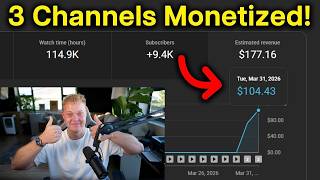

I Make $40K/Month With Faceless Channels
45sImmediate income claims and proof of earnings hook viewers with curiosity and desire for financial freedom.
▶ Play Clip"The title promises a 10-day monetization result, but the video is a generic guide with heavy promotion, lacking specific evidence for the claim."
Stefan, a 23-year-old YouTuber, shares his method for creating and scaling faceless YouTube channels, claiming to earn $30,000-$40,000 per month. He outlines a step-by-step process covering account setup, niche research, content creation, and testing, emphasizing the importance of supply and demand and avoiding common pitfalls.
Stefan introduces himself, claiming to make $30,000-$40,000 per month with faceless YouTube channels and has helped others achieve similar results.
Explains different YouTube account types (brand new, aged, pre-monetized, personal) and the concept of a 'trust score' that affects shadow bans. Recommends warming up new accounts by using them as a normal user for 1-2 hours daily for at least a week.
Lists criteria for a good niche: under 5 smaller channels getting more views than subscribers, no channels over 100k subs, no failing channels, niche not older than 6 months, ability to create better content, personal interest, monetizability, and potential for long videos.
Recommends tools like NextLevel and VidiQ for niche research. Describes using a 'dummy account' to train the YouTube algorithm to show faceless niches, then analyzing channels for RPM, views, and revenue.
Presents three options: doing everything yourself (low cost, not scalable), hybrid method (low cost, partially scalable), and full outsourcing (requires ~$500/month, highly scalable, over 80% profit margin).
Describes a testing process: do niche research, select an account, create 10-15 videos with good topics, and post them. If the channel doesn't pick up, analyze why (niche, topics, packaging, etc.) and potentially repost to a different channel.
Emphasizes supply and demand for topics. Avoid copying the most popular videos; instead, look for outlier videos and trending formats. Use the 'topic transfer' method to adapt winning topics from other niches.
Uses ChatGPT for scripting, 11 Labs for voiceover, freelancers for editing ($15-$30 per video), and thumbnail designers. Recommends videos be at least 1.5 times longer than competitors and packaging (title/thumbnail) based on proven formats.
Posts videos in a non-rhythmic pattern (post, skip, post) to avoid being flagged as spam. If a channel blows up, continue posting; if not, analyze and potentially repost to a new channel. Emphasizes doubling down on what works (80% proven, 20% new).
The video provides a comprehensive, albeit promotional, guide to starting faceless YouTube channels, emphasizing research, testing, and speed. The core takeaway is to follow a systematic process and take action, as learning by doing is more valuable than watching videos.
What is a 'trust score' in the context of YouTube accounts?
A metric that indicates how much the platform trusts your account, affecting the likelihood of shadow bans.
01:36
What are the three types of YouTube accounts mentioned?
Brand new, aged, and pre-monetized accounts.
02:05
What is the recommended warm-up period for a new YouTube account?
At least one week, using the account as a normal user for 1-2 hours daily.
02:43
What are the criteria for a good niche?
Under 5 smaller channels getting more views than subscribers, no channels over 100k subs, no failing channels, niche not older than 6 months, ability to create better content, personal interest, monetizability, and potential for long videos.
03:37
What is the 'topic transfer' method?
Finding winning video topics in other niches and adapting them to your own niche.
17:06
What is the recommended budget for fully outsourcing video creation?
Around $500 per month.
13:43
What is the recommended posting pattern to avoid being flagged as spam?
A non-rhythmic pattern like post, skip, post, skip, post, post, skip.
19:58
Supply and Demand is Key
Explains why 99% of people fail on YouTube: they don't understand supply and demand in their niche.
03:50Research is Critical
Stresses that niche research is the most important thing and rushing it leads to doing the process twice.
05:20Avoid Copying Popular Videos
Warns that copying the most popular video in a niche is a guaranteed way to fail due to oversaturation.
15:28Double Down on What Works
Recommends allocating 80% of effort to proven topics and 20% to testing new ones for sustainable growth.
18:20[00:02] in this video, I'll show you guys exactly how you can do this, too. Now, for the people who don't know who I am, I'm Stefan, currently 23 years old and I'm currently making between 30 and 40,000 dollars a month with my own
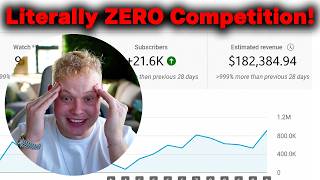
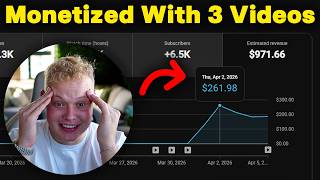
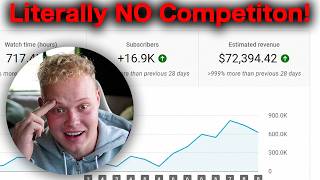
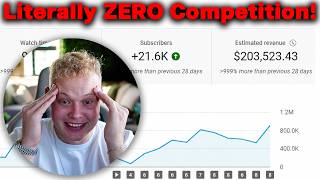
[00:17] faceless YouTube channels and I'm constantly starting new ones as you can see right here that I've made 42,000 dollars with just two videos and then, you know, I've scaled the channel from literally zero to 48,000 dollars in one
[00:31] single month as we can see right here. And then I've helped hundreds of other people do the exact same thing. So, here for example, Martin who I've helped to scale to 31,000 dollars in one single month. Then here a student where we
[00:44] here a student, you know, blowing up getting monetized in 20 days. Then here a student making 24,000 dollars in one single month. Here absolutely blowing up a channel again. Here 12,000 dollars a
[00:57] month again. Now, if you're interested in getting the exact same results, then check out the first link in the video description, book a completely free call with me and we'll have a look if I can help you scale up as well, okay? Now,
[01:10] with that being said, I would say, let's get into the video. Let's not drag it out too much. So, the first thing we need to do if we want to start a new faceless YouTube channel, we need to get a channel ready, all right? Now, what do
[01:23] you actually need to do and what do you actually need to keep in mind when you you know, shadow bans are real. That's something you just need to know and you need to, you know, live with that if you're going
[01:36] to do YouTube. Now, you can kind of try to avoid it um with something called, you know, trust score. There's a trust score. Every single account has a trust score which basically just says like, hey, how much does the platform actually
[01:50] trust your account? Now, this is something that we want to actually improve or up so we don't get a shadow ban, all right? Now, there are three and improve this in a second, but before that, there are a few different type of
[02:05] YouTube accounts. They are brand new YouTube accounts, they are aged YouTube accounts, and then they're pre-monetized accounts and personal accounts. So, personal accounts are basically accounts that, you know,
[02:17] you, for example, use to watch this current video here right here or right now. The brand new account is just a brand new YouTube channel. Aged accounts are just very old accounts and pre-monetized accounts are, you know,
[02:30] old accounts or not old accounts, but accounts that are already in the YouTube partnership program, all right? Now, how do you actually go ahead and warm up your account to increase your trust score? Very simple, you use your account
[02:43] as a normal user. You watch 1 to 1 to 2 hours of content per day, and then, you know, subscribe, comment, and like to to different YouTube channels, different YouTube videos, but very important, do not use this account as a bot, all
[02:56] bot, like, you're going to immediately tank your trust score, okay? Then, do this for 1 week plus to lower the risk of a low trust score, all right? This does not work 100% of the time,
[03:10] but it can work, and I always say, like, everything we can do to improve our chances to actually blow up on YouTube, let's just do it. Like, it doesn't cost let's just do it. Like, it doesn't cost us anything, right? So, yes. Next up, we
[03:22] you know, while we're warming up our account, we already want to use that at that time, and that's exactly what I do, too. We already want to use that time to do niche research. So, let's first speak about the criteria of a good niche. So,
[03:37] firstly, there are under five smaller channels creating content in this niche that are constantly getting more views than they have subscribers. This means there's high demand and low supply in that niche. This is one of the most
[03:50] important things of YouTube automation, And this is also the the reason why 99% of people fail that start YouTube is because they don't understand supply and demand on YouTube. Then there are no channels with over 100,000 subscribers.
[04:05] There are no smaller channels failing. Very important because if there are a should your channel succeed? All right, channel to succeed if there are a bunch of channels failing already. Then the
[04:18] niche, especially if you're going to do the exact same thing as everyone else in that niche. Then the niche is not older than 6 months. Super important. All old niches because in most cases then this year will not be you won't be able
[04:33] to take this off. Then you know, I can create better content than my competitors. This can also just be longer content that is in most cases okay as well, okay? Then am I interested in this niche? This is not a must as
[04:49] interest in that niche. Then is the niche monetizable? If it's not money with it, all right? So always make sure that the niche is actually monetizable. And then huge bonus if you can post long videos in that specific
[05:04] niche. Now, a very very very important thing and I always like to say this is research and do not rush the process because if you're going to rush the process, you're going to do the process twice, okay? And I see that with every
[05:20] single person who thinks that niche research is not important. It is, no joke, the most important thing out there, okay? This is what you This is kind of determine if your channel is going to win or succeed. So take it
[05:33] seriously from the beginning and your chances are then going to be pretty high all right? Now, there are some tools that I would highly recommend for niche research, which is next level, it's like 13 euros a the I'll link it in the video
[05:46] description. I'll show you guys in a second as well how Next Level works. I'll show you guys in a second how I use these two tools to do niche research. Now, how do we do niche research? We use a dummy account. So,
[06:01] we basically just have a we create a YouTube account that we only use for niche research. So, this is basically an account that we only use for niche research. Now, the the the YouTube homepage changed to our of four our
[06:15] advantage because YouTube got extremely good at predicting what we want to watch and we can use this to our advantage to train the YouTube algorithm to only show us faceless niches on our home tab and specifically only faceless niches that
[06:29] we are actually interested in or that we might want to go into, right? So, instead of explaining me, you know, how all of this looks like, let me show you how you can set up that up, too, because once you have a dummy account set up,
[06:42] you can literally find endless niches with it. All right? This right here is my own dummy account and as we can see, my whole homepage is literally just full of faceless niches, all right? Everything you see on my homepage is
[06:55] Everything is just faceless and that is exactly what we need to be able to find a bunch of niches. Now, how do you set an account up like this? So, let me just kind of simulate the whole thing in an incognito window.
[07:09] So, what you do is, you know, you create a brand new account like I'd have like a brand new account like I'd have like right here. Now, just imagine that I am logged into an account here. Then you go ahead and you, no joke, look up anything
[07:21] you're interested in. For example, um top car mistakes. Just as an example. This can be anything you are interested faceless channel. So, very important is always to that you just click on
[07:35] whatever you're interested in, scroll down, and then click on faceless videos, faceless. Now, if you are logged in, you actually go ahead, you subscribe to this channel, you like this video, and then you click
[07:50] on the next channel, all right? On the next video. Again, same thing. You watch video is going, you can then already scroll down here on the sidebar and click on the next video. So, let's say for example now, let's click on Hmm,
[08:06] which one do we click on? Let's click on this one, right? So, here now already we can see, okay, here's a smaller channel, you know, getting quite good views. Then we can already have a look at this at this channel, and we can have a look and
[08:19] see, okay, it's getting quite decent views. It's now not bad views, but it's not posting anymore. So, this would now be the perfect time for us to actually look deep into this niche and see if we can find other channels in this exact
[08:33] same niche that are also performing well. And if we can, then this would for sure be worth a test, all right? So, let's click on a few more videos. So, And then um you know, you want to do this for
[08:46] quite a little bit, and then you actually go back to you you you to your homepage, you will then see, okay, here is a faceless channel, here is a doesn't look faceless, but it's faceless. Um here's a faceless channel,
[09:00] face not faceless, faceless. So, a bunch of faceless channels. Now, the more you do it, and if you now go on your YouTube homepage and you click on these kind of videos here that already that you're already interested in, you know, YouTube
[09:12] and more of these car videos just as an example, all right? And as I said, like you want to give this time to really set up the account um for a while, you know, just click through videos, and somewhere the account is going to be really really
[09:26] good, and it's just going to have videos in your niche on your YouTube homepage. Here's another one. Uh let's have a look um at this one. Still posting. Not doing that well anymore. The car niche is now like an
[09:39] extreme example, a bit more difficult niche, but that's what you would do, all right? Now, let me show you how you can use Next Level and VidiQ, all right? So, let's have for example here this this channel here. I've just found it on my
[09:52] YouTube homepage. Here we can see not a lot of subscribers, quite good views. Then we click on this channel. Then, first thing we can do with Next Level immediately or with VidiQ is you can click here and you can see, okay, this
[10:04] channel is still getting views. It's getting 180,000 views in the last 7 days, which looks very good. But the next thing you can see with Next Level, and this makes Next Level super super cool, is firstly you can find similar
[10:16] channels, all right? And as I said, like this is €13 a month, so it's saving so much time, um like just looking for similar channels of similar channels. But what we can
[10:28] here on analytics, and inside here we can now see the RPM. We can see the views. We can see the revenue. We can see where the audience is coming from. We can see everything about this channel, which is a huge help for when
[10:42] channel, right? Because this is now actually going to give us some more information that is very good to know, like for example the RPM, because we don't want to go into any into a niche where the RPM is going to be like $1 or
[10:55] something, all right? So, here we can see $5 RPM, and this channel is making see $5 RPM, and this channel is making $6,600 a month. Now, you have to decide for yourself like, "Hey, am I happy with $6,600 a month or am I not happy with
[11:09] now you guys know how to do niche research super super easy, okay? Niche research is not difficult anymore in 2026. Then, is key. YouTube is player versus player, and the
[11:25] player who's going to play the game the fastest is always going to win, right? So, you must have a team that can implement very quickly. This is exactly the reason why we are giving our students a team. All right, we're giving
[11:39] them a team. Okay, we're giving them freelancers. And this is one of the reasons why most of our students on average our students get monetized within 3 to 6 weeks. All right, because we have speed. And if you're interested
[11:52] check out the first link in the video description. Um book your call with me, all right? Now, when it comes to concentration, you have three options. concentration yourself, you can do the
[12:06] hybrid method, or you can fully outsource it. Now, if you do everything yourself, the advantages are there basically no costs, you have 100% profit margin, you learn new skills, and you have full control over the whole
[12:19] process. The disadvantages are it is not scalable, extremely time-consuming, learning takes a lot of time, and without you you don't make any money because no videos are being created. All right? Then we have the hybrid method or
[12:33] hybrid. This is, you know, the method that most of our students start with. All right, just because, you know, you can start this with a lower budget. Okay? Now, the advantages with this is that you have low costs, you do
[12:47] what you enjoy, you have more control over the whole process. The disadvantages or you still have control over the the whole process. The disadvantages are it's only partially scalable, very time-consuming, some
[13:00] capital is required, and without you there's no income because still, you without you because you still do something um like, for example, the scripting for the video. All right? The good thing with the hybrid method is
[13:15] that you only do what you like to do or what you want to do. Okay? Then we have students start with this, then they move over to this. Now, if you fully outsource, you know, the freelancers do the complete video for you. Now, the
[13:29] advantages of this is this is not time-consuming. It's extremely scalable. Still over 80% profit margin. You have time freedom. You work with experienced freelancers. And without you, you know, you're still having income.
[13:43] The only disadvantages this has is that this actually requires some capital, all right? So, if you want to fully outsource, you will need like $500 a month, round about, all right? Depending on the niche down all of these things,
[13:57] but $500 a month for fully outsourcing is, you know, pretty good to start with, okay? Then, you know, once we get the videos created, we actually go into our niche testing framework. This is where we test
[14:10] channels to kind of see like, "Hey, does it make sense or does this even work?" All right? Now, in most cases, if we hit this criteria, we have a very, very good chance of, you know, the channel actually working. But, I still follow
[14:23] this exact process for every niche I get into to avoid spending money on videos that will never work. So, first thing we do is we do niche research, then we select an account, all right? I always like brand new accounts or personal
[14:36] accounts or aged accounts. I kind of mix these up always. Um pre-monetized mainly use them for trendy channels just had the account before you, so you never know if the account is actually going to
[14:49] be safe or not. Then, you know, we need 10 to 15 videos. Um and not just any videos, but we actually need good video topics. So, let me
[15:01] quickly show you guys how a good video topic looks like. So, everyone needs to know that supply and demand is not just important in your niche, but also in the video topics you choose, all right? Many people stress about the niche, but they
[15:14] topics, and then their channels fail, right? Now, how do you find demand in in outlier videos on competitive channels. Look for recent trending formats and you know, very important, do not go ahead
[15:28] and copy the most popular video from competitors. This is what everyone does and you will 1 million percent fail if you go ahead and you for example go to this channel right here and you you know, just go ahead and you copy this
[15:40] video here just as an example. Why? Because a bunch of people I will have already copied this. Okay? A bunch of people that don't know what I'm just And then, how do you actually go ahead and find the supply? Use your YouTube
[15:55] search bar and look for how many people have created the exact same video as for example this exact topic right here. Then, if it's been done more than three times and you don't have a different angle to that specific video, look for a
[16:08] different topic. YouTube will always show the videos to the hardcore fans of that niche first. All right? That's why we do don't want to copy. And if they have already seen that video multiple times, they do not have a reason for
[16:23] clicking on your video except if it follows a different angle. Okay? Now, how does a perfect topic look like? The topic actually resonates with your audience. So, ask yourself, do they even want to watch this? Some topics
[16:38] sound very interesting but are super boring. So, make sure your topic is not boring. Your topic has to be posted on time especially if it's a trend. Then, repeat what has done well in the past. I'll tell you guys more on this later.
[16:51] Like absolutely crazy. So, make sure to keep on watching. Then, leverage negativity because humans respond better to negative things. Okay? Now, one very cool way to kind of do or choose video topics is by using the topic transfer
[17:06] method. This is by far the most powerful way to choose video topics. So, what you essentially do is you you know, find winning topics or video topics in other niches and you move them over to your niche. This can work insanely well if
[17:20] this is done correctly. Um let me show you an example. So, here just as an example from a deep from the medieval space why you wouldn't last 24 hours in medieval times. Then then, you know, this channel took it
[17:33] over to the caveman space why you wouldn't last um 24 hours in Stone Age. Same exact thing here. This video has been done for cats, did very very well, and this uh person here did for dogs did very well as well. All right? Now, this
[17:50] is exactly what we did with, you know, Scott went from getting 50 to 100 views a video to almost, you know, giving up on his channel to a 5K month just 1 absolutely crazy here even with the highest day of $450.
[18:06] Then, you know, extremely good doubled down on what works. Once you find something that works and gets views, why reinvent the wheel? Double down on that topic until it does not work anymore. If you have something that works, do 80% of
[18:20] you have something that works, do 80% of what works and 20% test new stuff, all right? We've done this with with Andre. We scaled to $31,000 a month in just 4 months, okay? As I said, if you want the same results, just check out the first
[18:33] link in the video description. Book a call with me, and, you know, we'll have together, and let's scale you up, all right? So, go ahead and book your call now. Now, once we have our video topics, we're going to write our script with
[18:46] ChatGPT. We're going to do our voice over it with 11 Labs. Then, for the editor, we're actually going to use a freelancer, okay? Now, we don't want to pay the freelancers too much, all right, especially if we are just starting out.
[19:00] So, try to get a freelancer for $15, all right, round about 15 to $30 at max, your videos. Then, you want to get a thumbnail designer. You can either work with a freelancer, or you can do it yourself.
[19:14] thumbnails or actually do good thumbnails or decent niches like the thumbnails are super easy to do. Like for example here, especially with AI, you can very very quickly generate an image exactly like
[19:29] And then for your video length, you want to make sure that your video is 1.5 video. Your thumbnail and your title should be something that has worked in the past. If you do not do research into your
[19:44] like all of the work that you put in before that is for waste. Okay? Do research into your thumbnail and your title. Work with stuff that has already worked in the past. Okay? Now, once you have all of that ready, we
[19:58] actually get into the posting phase. So, we post, skip, post, skip, post, post, skip, post. All right? So, we don't want to be too uh botty. Like when we're posting, we don't want to be be too spammy. So, we kind of don't want to
[20:11] have a rhythm. Sounds funny, but yeah. Now, one of two things is going to Either, you know, the channel is actually going to pick up and blow up. get views in the beginning. But if it
[20:23] blows up, then we are actually going to continue to post here at the going to post. So, we're only going to post 15 videos. If one of those videos to post. If nothing happens, all right?
[20:38] We're actually going to, you know, figure out a reason why this channel failed. So, it can be either the niche, can be the video topics, the packaging, the video length, or it could be a bad channel. All right? A bad channel is
[20:52] impressions. Right? Impressions. >> [laughter] >> So, in this case here, you're actually to delete them from YouTube, and you're going to post them to a different
[21:05] channel. All right? Post them to a different channel, and if still nothing happens, then it's probably bad niche, all right? Or one of these other things, okay? If it blows up, then you just go ahead
[21:18] and you continue to post. Now, instead of the channel failing, you just like kind of repeat this cycle over and over and over and over again until you get you if you just take action and stop watching these videos, you would have a
[21:32] channel that is monetized already. All right? You just need to go through the cycle because you will learn way more by doing than anything anything else, all right? Now, again, guys, if you're interested in working closely
[21:44] with me, uh like here for example, the student who made $8,000 in a single month, or this one, $18,000 in a single month, then check out the first link in completely free call with me, and with that being said, I'll see you in the
[21:56] that being said, I'll see you in the next video.
⚡ Saved you 0h 21m reading this? Transcribe any YouTube video for free — no signup needed.