
Limitless Movie vs Book: The Real Cautionary Tale
31sThe contrast between the movie's hero narrative and the book's realistic, cautionary tale about wealth is surprising and makes viewers question the film's portrayal.
▶ Play Clip"Delivers on its promise of exploring the bonkers franchise, though the sponsor section at the end feels tacked on."
The video analyzes the Limitless franchise across the original novel, film, TV series, and sequel novel, focusing on how each adaptation treats the protagonist's motivation regarding wealth and altruism. It contrasts the book's cynical portrayal of greed with the movie's heroic framing, and examines the TV show's reinterpretation of Eddie Morra as a villain. The analysis critiques the myth of the benevolent billionaire and argues that systemic change, not technological breakthroughs, is needed to solve societal problems.
In the original novel, Eddie enters the stock market solely to make money with no higher purpose. In the film, Eddie claims he wants to have an impact on the world, but his plan is vague.
The film portrays Eddie as a hero who will use his wealth for good, but the subtext suggests he is power-hungry and unrepentant. The audience is left to trust his unspecified plan.
The TV series takes the premise of the drug and blends it with a case-of-the-week FBI procedural. The protagonist Brian Finch is a more traditional hero, using the pill to help people.
The show explicitly portrays Eddie Morra as an egotistical, power-hungry villain, addressing the ambiguity of the film. His plan is revealed to be solving world hunger with genetically modified rice.
The novel 'Under The Night' argues that capitalism's profit motive prevents meaningful change. It ends with the characters deciding to release the smart pill to the public, contrasting the show's elitist stance.
The novel reveals that the tobacco industry killed Ned Sweeney because the drug also cured nicotine addiction. It explicitly states that corporations will suppress anything that hurts their profits.
The Limitless franchise presents a fascinating internal debate about wealth, power, and altruism, with each installment taking a different stance. Ultimately, the critique of billionaire saviorism in the later novels offers the most incisive commentary.
What is the main difference in Eddie's motivation between the book and the film?
In the book, Eddie wants to make money for its own sake; in the film, he claims he wants to have an impact on the world.
01:01
How does the TV show reinterpret Eddie Morra compared to the film?
The show portrays him as an egotistical, power-hungry villain, unlike the film's heroic framing.
08:25
What is Eddie's plan in the TV show?
He has invented genetically modified rice that can end world hunger but claims he cannot release it due to public opposition and bureaucracy.
08:40
What is the conclusion of the novel 'Under The Night' regarding the smart pill?
The characters decide to release the pill to the public so everyone can benefit, contrasting with the show's elitism.
14:15
What killed Ned Sweeney in 'Under The Night'?
The tobacco industry killed him because the drug also cured nicotine addiction, threatening their profits.
13:47
Empty Hole at the Center
Critiques the film's vague altruism as a reflection of modern capitalism where good intentions are subsumed by wealth accumulation.
04:59Self-Appointed Saviors
The show's depiction of Eddie as a billionaire trying to fix problems he helped create is an authentic critique of real-world philanthropy.
09:28Distribution vs. Production
The novel argues that global hunger is a distribution issue, not a production issue, challenging the need for technological fixes.
11:22Franchise's Internal Tension
Each installment disagrees with the others, creating a fascinating back-and-forth conversation about wealth and power.
15:01[00:02] A few months ago, I made a video about the 2011 film Limitless and the book it was based on. I called it “Limitless is a Bonkers Franchise” but I only managed to I only talked about the book and the movie. There’s some other stuff to talk about too.
[00:20] To recap, Limitless is a film starring Bradley Cooper about a struggling writer who finds an intelligence boosting pill that lets him become extraordinarily wealthy on the stock market. wildest dreams and ends the story in the midst of running for the senate.
[00:37] In the original 2001 novel, the story is more of a cautionary tale with the main character succumbing to the after effects of the drug, showing the consequences of the unfettered pursuit of wealth.
[00:49] But there’s another key difference between the two that I’ve saved for this video. money and makes no claims that his actions are for the betterment of society.
[01:01] In the film, Eddie plans to save the world. In the original novel, after his initial uses of the drug, Eddie cycles through a list of
[01:14] potential ambitions. What grand thing could he do with his newfound cognitive abilities? are too high. He thinks about going back to school for a second career
[01:26] as a doctor or an engineer, but is exhausted by the idea of school work. in it. None of them would transform his life as quickly as he wants to. “What then — I asked myself — was I left with? Well, what do you think? Making money.
[01:41] Making money… how? By making telephone calls. Hhn? The stock market, stupid.” So, he enters the stock market with no higher purpose. He just wants to make as much money as possible, which is at least, refreshingly honest, right?
[01:56] He’s not trying to convince the reader that he’s a good person for doing this. He’s simply and after that he just likes seeing the numbers go up. “Being a guerrilla market-maker wasn’t going to be anywhere near enough to keep me happy.
[02:10] The fact is, I wanted to know what it would be like to trade from the inside, and at the highest levels… what it would be like and how it would feel to buy millions of shares at a time…” There’s no plan for the money once he has it. He just wants to have it.
[02:22] wondering if he’d be able to become president with it. This was back in And again, he doesn’t do this with any kind of altruistic motive in mind. It’s not like
[02:36] he sees some problem in the world he wants to solve. If he ran, it’d only be a vanity project, just to see if he could do it, if the drug could help him be successful in that arena. The movie, on the other hand, is the complete opposite of all of this.
[02:51] Morra: “I’d come this close to having an impact on the world. And now the only thing I was going to have an impact on was the sidewalk.” Those are some of the first lines that Eddie Morra speaks in the film, and they point to a
[03:06] subtle adaptational shift between this character and the character in the book. There are a lot of superficial changes to the plot between the two — the movie has a lot more thriller action sequences — but the biggest difference is right here, at the heart of the character, the idea
[03:21] that motivates him. Book Eddie doesn’t care about having an impact on the world. Movie Eddie does. Eddie decides that he wants more in life than the pleasures of wealth. He has… an epiphany…
[03:37] Morra: “And then I began to form an idea. Suddenly I knew what I needed to do. It wasn’t writing. It wasn’t books. It was much bigger than that.
[03:51] From then on, Eddie Morra constantly reassures the audience that everything he’s doing? It’s actually for a good reason. You just have to trust him. He’s going to get rich and then
[04:03] do something good with it. Give him all the money because he’s a genius, and he’ll be a philanthropist who will save the world after he wins at capitalism. I’m sorry, you’d like details on what his plans are? No, no, he can’t be specific or anything,
[04:17] EDDIE: “Time someone shook up the free world and got things done.” I find the decision to characterize Eddie this way SO GODDAMN INTERESTING.
[04:29] On one level, it’s probably the result of a studio note saying Eddie should be more likeable. If he is given a noble pursuit, then maybe the audience will identify with him more. But it’s really the nebulousness of his motivations that is truly interesting.
[04:43] It’s the empty hole at the center of the movie that is never explained and is yet crucial to everything. What is Eddie actually going to do if he accumulates enough money and power? What is his big plan? We just have to have faith that there is indeed a plan.
[04:59] And is there any better depiction of modern capitalism than that? That even when you enter into it with the thought of doing good for others, the pursuit of that wealth takes up all your time, And yes, I know that Eddie ends this film running for office, but that’s not an
[05:15] inherently altruistic thing to be doing, not when we don’t know what his actual goals in office are. As much as this movie tries to characterize Eddie as a good guy, as a hero, I always get this really ominous feeling when watching the conclusion of the film. This man has
[05:29] gotten away with everything. He’s completely unrepentant and power hungry. The text wants us to think of him as a hero, but the subtext and framing make this feel like a villain. because it’s basically the main idea of the sequel to the movie.
[05:49] CBS made a TV spin-off sequel show to capitalize off its success. but only ran for one season before it was cancelled.
[06:01] It takes place in the same universe as the film and really wants you to know it. But apart from the pilot episode, the show bears very little resemblance to the movie.
[06:14] The pilot somewhat eerily goes through the same plot motions as the film, which is weird again because this is happening in the same universe. The show begins with a failure-to-launch twenty-something artist. This time his name is Brian Finch.
[06:28] just like Morra’s writing career hadn’t in the movie. of the drug, then later finds out that the guy who sold him the drug is dead.
[06:40] After episode one, Brian gets hired by the FBI but secretly he’s actually there to be Eddie Morra’s eyes and ears within the organization.
[06:54] police procedural with case-of-the-week style storytelling. It’s like they took the first third of the Limitless movie and stapled it on to a basic cop show. And… it’s fine? Relative to other procedurals… it’s fine?
[07:10] To the extent that you can stomach shows that romanticize law enforcement in 2020… it’s fine? are on here on a mission of goodwill from the FBI. See, we even brought you donuts.”
[07:24] To its credit, the show recognized that the original premise of Limitless was basically a superhero story, takes that idea and runs with it, because this is basically a Spider-Man story, echoing the themes of “with great power
[07:38] comes great responsibility.” He’s even got a wholesome dad to fill in the role of Uncle Ben. Brian: “I just want you to know that the reason I take the pill isn’t because I’m some junkie. It’s to help people. That’s what it’s always been about. That’s what you taught me.”
[07:53] Probably the strongest element of the show is its frenetic visual style meant to illustrate the way Brian’s mind works. And since he’s characterized as a millennial man-child, of course he defaults to superhero tropes and imagery, using comic book style thought bubbles,
[08:08] and dubbing the group of mysterious bad guys at the end of the season the “Legion of Whom.” Brian: “I have decided that we will refer to them as the Legion of Whom.” So if Brian is our plucky superhero working to solve crimes, then who is Eddie Morra?
[08:25] The writers of the show, smartly I think, reinterpret the film and come to the conclusion that, this Eddie Morra guy, he’s kind of an egotistical, power-hungry, amoral villain. Unlike the movie, the show actually has an answer for what Eddie’s plan is.
[08:40] The giant gaping hole at the center of Eddie’s character is finally addressed in Episode Six. Morra: “This rice contains a complete nutritional profile, everything the human body needs, can grow in the harshest environments. With a little more research, this rice can feed the world.”
[09:00] He’s got an invention that will cure world hunger. If only the stupid governments of the world would just get out of the way. If only the dumb public would just shut up and let themselves be saved then the brilliant chosen heroes of the world like Eddie.
[09:15] you shouting it from the rooftops?” Morra: “Because people won’t want it. I make an announcement. Lobbyist bring it to action, people rave about GMOs and it’s buried.” I find this characterization of Eddie so authentic to the way that actual
[09:28] real world billionaires think, it’s kind of amazing. Self-appointed saviors who pledge to use the wealth they’ve hoarded to fix the problems the hoarding of that wealth created. That’s a bit controversial. So to get to the problems of Eddie’s way of thinking here,
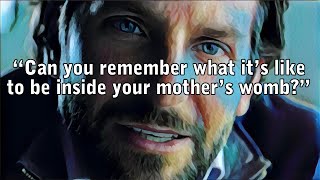
[09:42] let’s take a look at a novel that is basically a critique of this position. Morra: “Can you remember what’s it’s like to be inside your mother’s womb? I can.”
[09:56] Under The Night is actually both a prequel and a sequel to the original Limitless book, telling two parallel stories. One is in 1953 and is about an ad man named Ned Sweeney who uses an early version of the mind-altering drug.
[10:12] his grandson is investigating the mysterious circumstances around Ned’s alleged suicide. In an early chapter, Ned takes the drug and has a kind of awakening about how capitalism works
[10:25] Sweeney: “here we are in 1953, eight years on from the war, and as a society we’re already capable of producing whatever we need to survive, more than enough, in fact, and I mean for everyone — food, automobiles, TV sets,
[10:39] It’s not that we’re not producing enough stuff — we are. It’s that we’re not consuming enough.” The need for production to increase year after year means we need to consume more every year;
[10:57] but it has little to do with what we actually want or need for survival. This was true of the world in the 1950s; it’s even more comically true today. Our problems as
[11:10] a society are not because we lack resources. It’s because of how we distribute resources. genetically modified rice or whatever is completely absurd.
[11:22] We could solve global hunger today with the technology we currently have if he had the political and economic willpower to do so. We don’t need some scientific breakthrough to solve the problem. We need people like Morra to give up SOME of their wealth and power to make it happen.
[11:37] But the thing with the show, and I suspect it’s because it’s being produced on network television, is that isn’t not really interested in depicting a world with believable politics or with making a statement. I mean, early on in the season, a tv anchor says the following.
[11:51] TV Anchor: “Preliminary polls show New York Senator Eddie Morra would At which point you just know that the world of Limitless bears little resemblance to our reality. It’s a show that unironically uses the phrase “Radical Canadian Nationalist.”
[12:08] And as a Canadian I find the show very culturally insensitive. That’s not even cool, eh? The show’s rejection of making any political statement — outside of FBI good actually — is
[12:25] cemented in how it abandons Eddie Morra’s character in the final run of episodes. With Eddie, they’ve got an interesting conflict here. He’s clearly power-hungry, but he claims to have good intentions. Are those intentions actually good? How should
[12:38] he be handled? How much power should he have? How much power should any one person have? Is the good he means to do outweighed by the bad he’s doing? Those are interesting questions that I suspect the show maybe intended to tackle in a second season.
[12:51] so that they could convince Bradley Cooper to show up for more than four cameos in it. Like season one ends with them setting up Morra as the next big bad evil guy to take down.
[13:03] But that leaves Season One with all this build up about who Eddie Morra is, but then having to do a little switcheroo at the end and making Eddie’s security guy, Jarrod Sands, the main villain. Sands doesn’t have any interesting goals though. He just wants to steal some NZT and then get rich
[13:19] with this convoluted plot to profit off a stock market bubble. Oops he died there. The end. At one point near the end, Sands releases NZT out to the public as a kind of 4D-Chess move to out-fox Morra, and it’s treated as an obviously bad thing: like
[13:35] “NO! We can’t just let average people use the smart pill. It’d be chaos!” Even though we have a second magic drug that gets rid of the bad side-effects of the first with no downsides. Only Brian can use the pill! Only he can protect us.
[13:47] And all of that is kind of funny because Under The Night ends with the promise At the conclusion of the novel we learn that the smoking industry killed Ned Sweeney in 1953 because he discovered that, in addition to making you smart,
[14:01] NZT also cures nicotine addiction. The message is bluntly that corporations would quash anything that actually helps people if it interferes with their profit margins. After learning this, the characters in the present day resolve to get the smart pill
[14:15] out into the world so that everyone can share its power. The book isn’t subtle. It explicitly argues that the profit motive gets in the way of our well-being as a society. Corporations and the Eddie Morra’s that run them can say they are
[14:28] concerned about this-or-that issue, but they can never act in a way that makes them lose money. mostly as a means of improving their public image or avoiding taxes. And even the ones that
[14:42] are sincere in their concern are compromised when it comes to dealing with problems that capitalism creates. They can’t solve global hunger if their fortunes are based on starvation and exploitation. In its four installments, the Limitless franchise is in constant tension with itself. Not a single
[15:01] text agrees with the one next to it, but within it is a fascinating back and forth conversation between the novels and the screen adaptations on this issue. As a franchise, Limitless might not have a lot of cultural influence, but I find the figure of Eddie Morra for the
[15:16] ways we valorize the rich and fall for the lie that they are capable of or willing to save us.
[15:28] So one of the challenges I face with this channel is demonetization. videos aren’t making any money because of Youtube’s policies. teamed up to create our own platform where we don’t have to worry about demonetization
[15:47] It’s called Nebula, a streaming service featuring Youtube’s best educational content creations, including a bunch of video essayists like Patrick Willems and Lessons From the Screenplay.
[16:01] We’ve also partnered with Curiosity Stream. So if you sign up for CuriosityStream, you’ll also get Nebula for FREE. And it’ll be free for as long as you’re a Curiosity stream member.
[16:13] And since it’s the holiday’s, it’s an especially good time to sign up for CuriosityStream, since an annual membership is currently 40% off. That’s just $11.99 a YEAR for two amazing educational streaming services.
[16:26] Cause if you don’t know, CuriosityStream is all about documentaries. Like this one which is fitting to today’s video, “The Origins of Alturism” which takes a look at how and why humans do act altruistically, which might just be a little bit of a
[16:41] refreshing story to think about at the end of this year in particular. So click the link in the description below, get both CuriosityStream and Nebula, and you'll be supporting my channel and educational content in general. That’s curiositystream.com/justwrite.
[16:58] And I also want to thank my patrons for supporting this channel on patreon. Keep writing everyone.
⚡ Saved you 0h 17m reading this? Transcribe any YouTube video for free — no signup needed.