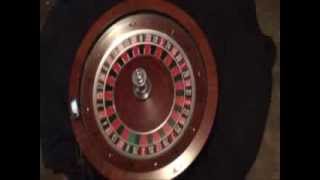

Calibrating a Roulette Computer: First Predictions
49sShows the mysterious calibration process of a roulette prediction device, sparking curiosity about how it works.
▶ Play Clip"The title accurately describes the demo: a roulette computer on a MK7 John Huxley wheel with basic settings."
This video demonstrates a roulette computer system in action on a MK7 John Huxley wheel using basic settings. The presenter explains the calibration process, prediction accuracy, and how to interpret the data charts over multiple spins.
The presenter uses a bouncy ball and any lobe as long as it's consistent. They begin taking ball samples.
Calibration requires about 50 spins depending on wheel condition. Automatic training is off initially to avoid premature calibration.
The bolt oscillates at about one second per revolution. Early predictions appear but are not accurate until calibration.
A chart scrolls left to right showing two values. Automatic training is off to track results easily.
The chart shows grouping around positive 8, which is the computer-selected area. A peak appears around positive 8.
A prediction of 24.4 lands almost exactly opposite zero. The chart's initial peak at 8 shifts to selecting a seven-part.
After 29 spins, the peak is around 14. Calibration can take up to 15 or so spins.
The computer selects 70 (seven) after 38 spins. The main area is still around the original peak.
Full calibration of 50 spins is only needed once per wheel. Subsequent sessions take 4-5 spins to recalibrate.
The chart shows how far predictions land from zero. Ideal is close to zero with less in the middle.
After 60 spins, a clear peak is visible. The presenter notes it's not as sharp as with other settings.
The final chart shows a clear peak at 8 with lower areas on either side. Basic settings with a bouncy ball on a MK7 wheel.
The demo shows that with basic settings and a bouncy ball, the roulette computer can identify a peak prediction area after about 60 spins, though calibration requires patience and multiple spins.
How many spins are typically needed for initial calibration of a roulette wheel?
About 50 spins, depending on wheel condition.
01:31
What is the oscillation rate of the bolt on the pole?
About one second per revolution.
02:08
What does the chart show when scrolling from left to right?
Two values: the computer-selected prediction area and the actual landing positions.
03:25
After how many spins did the peak shift from 8 to a seven-part?
After 16 spins.
14:33
How many spins are needed for recalibration in subsequent sessions?
Roughly 4-5 spins.
34:44
What is the ideal position for predictions on the accuracy chart?
Close to zero, with less in the middle.
36:09
What was the final peak prediction number after 60 spins?
8.
52:54
Calibration Requires 50 Spins
Establishes the baseline for accurate predictions.
01:31One-Time Full Calibration
Only need full calibration once per wheel; subsequent sessions are faster.
34:23Prediction Accuracy Chart
Key tool for evaluating prediction performance.
36:09Final Peak at 8
Demonstrates the system's ability to identify a consistent prediction area.
52:54[00:35] reference diamonds of a year you can use any lobe as long as it's consistent so any lobe as long as it's consistent so just taking the ball sample now
[01:31] just put the volume up here probably now to calibrate on this wheel this is a to calibrate on this wheel this is a reasonable level wheel usually takes 50 or so spins and depends on the condition at the time so now we start getting
[01:44] predictions but we won't get accurate predictions for some time accuracy will rather it improve but I've got automatic training off at this stage so we don't calibrate this yet although we'll still look at the chat from time to time
[02:08] oscillating the bolt on the pole is about one second there revolution that's about one second there revolution that's when we get prediction say 33 yeah
[03:25] the data gets say to a chart I'll just show you that chart scrolling from left show you that chart scrolling from left to right there's two values on there I'm just going to make sure that we've got automatic training switched off just so
[03:38] automatic training switched off just so it's easy to follow the results so one calibrated yet we'll quite a while off of calibration
[03:58] automatic reading just for now so a curious will gradually improve but we still have the chance to look at the show us the untrue invitation
[04:38] shouldn't expect accuracy ice on top anyone you calibrated
[06:08] the screen might be a bit difficult to see you can see the racetrack and the see you can see the racetrack and the dot where 30 30 years so just here we
[06:22] make it that way it's just so where the players below
[08:35] it's still very early have a look at the chart it's going from left to right there's more of a grouping around this area which is the computer selected
[08:49] area which is the computer selected positive 8 as a jump which is just there scroll back so you can see the whole chart then you should get a peak around
[09:07] chart then you should get a peak around about positive 8
[13:12] settings as before my demonstrations the videos if you visit me in person you see videos if you visit me in person you see much more advanced spaces between my
[13:26] much more advanced spaces between my three predictions for people right here three predictions for people right here twelve slipped to zero
[14:17] that was 24.4 almost exactly opposite zero okay I'll just have a quick look at
[14:33] zero okay I'll just have a quick look at the charts again there's our initial the charts again there's our initial peak at 8 it's now snout automatically peak at 8 it's now snout automatically selecting a seven-part so it's a bit of
[14:50] other develops over time we've only done 16 spins with this wheel using this bouncy ball sometimes it can take as much as two teaspoons to calibrate
[15:32] mr. Nicole for a few reasons could be to the commies will bag that's a few the commies will bag that's a few reasons and you can adjust the premise
[18:06] that's a long time the shortest time you get will simply 30 or so spins but it get will simply 30 or so spins but it depends on the wheel
[18:43] fifty-five just in zero just let this slip
[21:10] risks like that something's challenging with the ball could be bit of dirt grit on load from the ball track they during this period they can't readjust
[22:23] maintain it you can hear the did bring on the important that's a bull rattles
[26:27] and a piece of food slaughter you across okay so starting from the left scrolling okay so starting from the left scrolling right we can see that our peak is around
[26:39] right we can see that our peak is around about here computers selected 14 which about here computers selected 14 which is around about to here now we're done 29 things at this stage we're still not calibrated again it can take up to 15 or
[26:57] calibrated again it can take up to 15 or so spins the calibrations
[33:29] a little bit try it again scrolling from left to right okay the computer selected 70 gallon I'll show you if you can see that seven there so back to the original that seven there so back to the original peak we're focusing on and there's still
[33:41] values over this area that's our main area that's where our edges without thirty-eight spinning so far at this stage we could possibly bet but I ran stage we could possibly bet but I ran about seven plus everybody's in normal
[34:02] settings it takes a little longer to calibrate
[34:23] - also you only need to do this calibration of the 50 or so spins the very first time you come to a wheel you don't have to repeat it again there's a don't have to repeat it again there's a classroom here my select on the resume
[34:44] nature takes roughly four or five spins before it's fully calibrated again that why you enter down at the same time I'm much less fun
[36:09] this chart shows us how far the predictions are oh how far the ball lands from the actual prediction we already only want them close to zero as possible so on the left side of the chart that's zero there and we should
[36:24] have less in the middle which is around about there which we do but not by a lot and more just this just left of zero that's negative one negative two so
[36:37] we'll just scroll out now normally you would look at this chart until you've actually calibrated these are all spins combined you can see hang on that's a
[36:49] combined you can see hang on that's a bit hard to see we've only got 41 spins
[37:03] the hyeri's just right of zero and around zero and just left to zero then you shouldn't really look at that child until much later one reason being that
[37:18] chart shows all the calibration spins as well
[38:42] should look at the areas it's much more important much more relevant
[41:23] MainTop channel selected his aids that's a bit hard to see Wow so here's our peak here here's the lower area and it starts to go back up again definitely got an
[41:37] to go back up again definitely got an inch it's not it's not anything compared inch it's not it's not anything compared to what you can get with that
[42:14] we'll finish it about 60 spins and when we could split foot into 2030
[43:07] sticking up a point on spins so do roughly roughly 10 a little more
[44:06] settings possible nothing fancy no daughter targeting no adjustments for me he was a different road of speeds the ball will bounce differently
[44:44] coming you come with videos simply because I want to control who that's see everything is if you're actually becoming a title person or visiting you
[44:58] for a public demonstration in which case it's cool sentence all possibilities
[47:16] specially knew these settings isolating to a particular time than the spin we do have settings that can do with predictions anytime in fact especially with the two player position you can have one person clapping the rotor the
[47:31] other at the ball same time I can give predictions in assume there's two predictions in assume there's two seconds after ball release
[49:11] the 56 pins when an abuse from the terrible winter say anything
[52:54] to right there's our peak there we started up at around about eight you can see we're finished at about eight as well or actually right on eight you know like this clear and over here much lower area so if we scroll back and
[53:12] much lower area so if we scroll back and have a look at the whole chart we can see our peak very clear that's with the very basic settings the Overeem ball which is very bouncy map seven wheel it's going to be the tilt on the wheel
[53:27] it's going to be the tilt on the wheel but no more than average wheel now if we including very importantly including all spins including the calibration spins it
[53:40] scrolling from left to right we want to have the predictions or the actual bars have the predictions or the actual bars close to the edges of the chart so so close to the edges of the chart so so they're to the left and to the right
[53:54] with less in the middle which is what we're getting again if we erase that channel started from the beginning then we have the
[54:06] let's put that kind of definition that's the original tab




⚡ Saved you 0h 54m reading this? Transcribe any YouTube video for free — no signup needed.